Author

Jennifer Boyd

Browsing

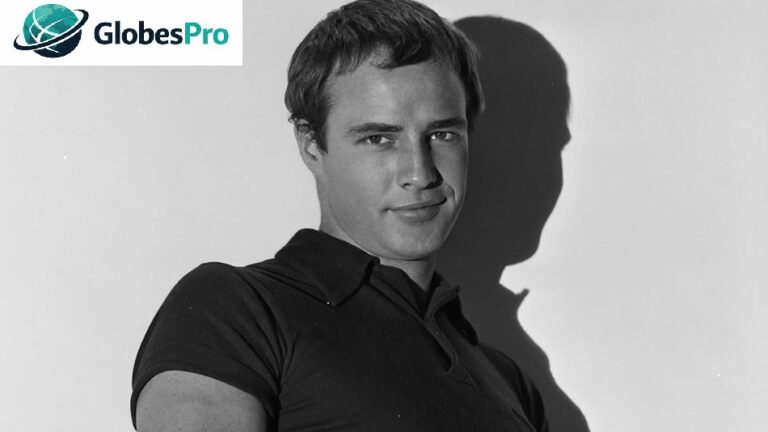
Marlon Brando did not merely change American acting — he made everything that came before him look like a different art form entirely. When he walked onto a Broadway stage as Stanley Kowalski in 1947, something shifted permanently in what audiences expected from a performer. The raw psychological truth he brought to that role, and to the screen performances that followed, created the template against which every American actor since has been measured.

The paradox at the center of his life is this: the man who revolutionized his profession held it in open contempt, describing acting as a neurotic impulse and a bum’s life. He produced some of the most indelible performances in cinema history while spending large portions of his career in deliberate self-sabotage, exile, and excess. He was, simultaneously, the best and the most wasteful actor of his generation — and both things are completely true.

Wiki Info Table

Field Details
Full Name Marlon Brando Jr.
Born April 3, 1924 — Omaha, Nebraska
Died July 1, 2004 — UCLA Medical Center, Los Angeles (aged 80)
Cause of Death Pulmonary fibrosis; congestive heart failure
Nationality American
Heritage Dutch, Irish, English, German
Father Marlon Brando Sr. — traveling salesman
Mother Dorothy “Dodie” Pennebaker Brando — amateur actress; alcoholic
Sisters Jocelyn Brando (actress); Frances Brando
First Wife Anna Kashfi (m. 1957 — div. 1959)
Second Wife Movita Castaneda (m. 1960 — div. 1962)
Third Partner Tarita Teriipaia — co-star, Mutiny on the Bounty; long-term partner
Children At least 11 recognized children including Christian Brando, Cheyenne Brando, Miko Brando, Simon Teihotu Brando, Rebecca Brando, Ninna Priscilla Brando, Myles Jonathan Brando, Timothy Gahan Brando
Education Shattuck Military Academy (expelled); New School for Social Research — studied under Stella Adler
Occupation Actor; Director; Activist
Known For A Streetcar Named Desire; The Godfather; On the Waterfront; Apocalypse Now
Academy Awards Best Actor — On the Waterfront (1954); Best Actor — The Godfather (1972, declined)
Other Awards Two Golden Globes; three BAFTAs; Cannes Film Festival Award; Emmy Award
Oscar Nominations Eight total — a record at the time
Notable Activism Civil rights movement; Native American rights; declined 1972 Oscar in protest
Tetiaroa Purchased private Polynesian atoll — 1966; his primary retreat from Hollywood
Autobiography Songs My Mother Taught Me (1994)
Net Worth at Death Estimated $26 million — significantly diminished by legal fees, alimony, and lifestyle

Early Life: Omaha, Illinois, and a Difficult Childhood

Marlon Brando Jr. was born April 3, 1924, in Omaha, Nebraska, the only son and youngest of three children in a household that projected middle-class stability while concealing significant dysfunction. His father, Marlon Sr., was a traveling salesman — stern, emotionally withholding, and contemptuous of his son’s sensitivity and artistic inclinations. His mother Dorothy, known as Dodie, was an amateur actress with genuine theatrical connections — she was instrumental in encouraging Henry Fonda toward a professional acting career in Omaha’s community theater scene — but was also a serious alcoholic whose unreliability as a parent left lasting damage.

The family moved to Evanston, Illinois when Brando was six, and later to Libertyville, Illinois after his parents separated and reconciled. Growing up between a cold, dismissive father and an alcoholic mother who was the great love of his childhood, Brando developed the combination of emotional hunger and defensive self-sufficiency that would define both his acting and his personal life.

He was expelled from Shattuck Military Academy in Minnesota after years of rebellion and academic failure. His father, exhausted and at a loss, gave him a job digging ditches. When his sister Frances invited him to New York to pursue acting, he left the ditch without looking back. He was eighteen years old.

New York and Stella Adler: The Education That Mattered

Brando arrived in New York in 1943 with no formal training and an instinctive talent that immediately attracted serious attention. He began studying at the New School for Social Research under Stella Adler — a teacher whose influence on American acting is difficult to overstate. Adler had studied directly with Konstantin Stanislavski and brought his system to American theater with a rigor and intelligence that distinguished her approach from the more psychologically intense Method teaching of Lee Strasberg at the Actors Studio.

What Adler gave Brando was a framework for what he already did naturally: finding the psychological truth of a character from the inside out, using imagination and emotional memory to produce behavior that was genuinely felt rather than technically demonstrated. She also opened him, by her own account, to great literature, music, and theater beyond the American commercial tradition. He credited her throughout his life as the most important teacher he ever had.

He made his Broadway debut in I Remember Mama in 1944, earned Theater World Awards for his performances in Candida and Truckline Cafe in 1946, and was voted Broadway’s Most Promising Actor by New York theater critics the same year. The stage work established his reputation in the industry before the role arrived that would establish it with the world.

A Streetcar Named Desire: The Role That Changed Everything

A Streetcar Named Desire

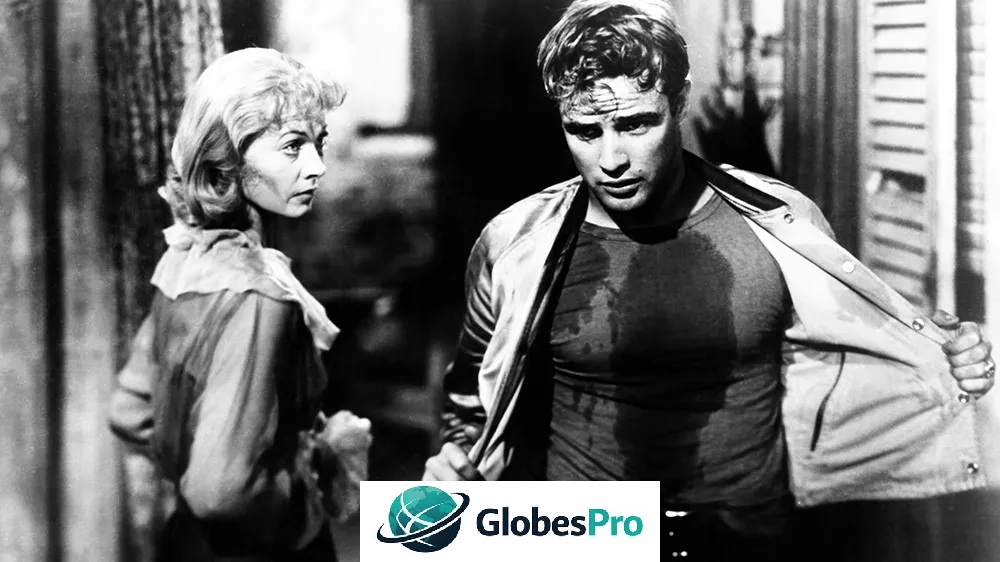
In 1947, director Elia Kazan cast Brando as Stanley Kowalski in Tennessee Williams’s A Streetcar Named Desire on Broadway, opposite Jessica Tandy as Blanche DuBois. The performance was a cultural event. Brando’s Stanley was not the theatrical villain the material might have suggested — he was raw, sexual, violent, and utterly real in a way that American stage acting had not publicly produced before. Audiences and critics responded with something close to shock.

The 1951 film adaptation, also directed by Kazan, fixed the performance permanently in American cultural memory. Brando was nominated for the Academy Award for Best Actor. He lost to Humphrey Bogart for The African Queen — a decision history has not been particularly kind to. The film established him as the most talked-about actor in Hollywood before he had made five pictures.

What made the Kowalski performance revolutionary was not the mumbling or the T-shirt — those were surface details that critics and imitators fixated on. What was revolutionary was the quality of attention Brando brought to every moment, the sense that the character existed independently of the script, that something real was happening rather than something performed. No American film actor had produced that quality so completely and consistently before.

The Golden Decade: 1951–1960

The years following Streetcar established Brando as the most versatile and most scrutinized actor in Hollywood. He was nominated for the Academy Award for Best Actor four consecutive years — for Viva Zapata! (1952), Julius Caesar (1953), On the Waterfront (1954), and Sayonara (1957) — winning once, for On the Waterfront.

On the Waterfront, directed again by Kazan, gave him his most complete dramatic performance of the decade. As Terry Malloy, the washed-up boxer who decides to testify against his mob-controlled union, Brando produced a performance of such concentrated emotional truth that it remains the reference point for naturalistic screen acting. The “I coulda been a contender” scene with Rod Steiger — improvised in significant part, shot in a taxi — is one of the most studied pieces of film acting ever recorded.

Julius Caesar (1953) demonstrated a range his detractors had questioned — the mumbling method actor from the American streets delivering Shakespeare’s Mark Antony with sufficient classical authority that John Gielgud, one of the great Shakespearean actors of the century, offered him a full season at the Hammersmith Theatre. Brando declined, as he declined most things that would have confirmed he took the craft seriously.

He also demonstrated commercial flexibility during this period — Napoleon in Désirée (1954), Sky Masterson in Guys and Dolls (1955), a singing and dancing role that nobody expected him to attempt, and a Nazi officer in The Young Lions (1958). From 1955 to 1958, theater exhibitors voted him one of the top ten box office draws in America. He was, briefly, the biggest star in Hollywood — a position he seemed to find actively uncomfortable.

The Long Decline: 1960–1971

What followed the golden decade is one of Hollywood history’s most documented cases of talent in deliberate retreat. The causes were multiple and interconnected: growing disillusionment with the film industry, the death of his mother in 1954 which by all accounts permanently diminished his drive, complicated personal relationships, and a growing conviction that acting was beneath a serious person’s sustained investment.

One-Eyed Jacks (1961), the only film he ever directed, consuming enormous time and money, was a financial disappointment. Mutiny on the Bounty (1962) became a scandal — Brando was accused of deliberately sabotaging production, running up costs through behavioral excess, and treating the enterprise with contempt. The Saturday Evening Post ran a headline calling it “Six Million Dollars Down the Drain.” Studios began to fear him as much as they wanted him.

He made films throughout the 1960s — The Chase, Reflections in a Golden Eye, Candy — none of which approached his earlier work. Critics noted his fluctuating weight, his apparent disengagement, and the waste of a talent that had seemed limitless a decade earlier. He retreated increasingly to Tetiaroa, the Polynesian atoll he purchased in 1966, treating Hollywood as a place to extract money from rather than a community to belong to.

The Godfather: The Second Coming

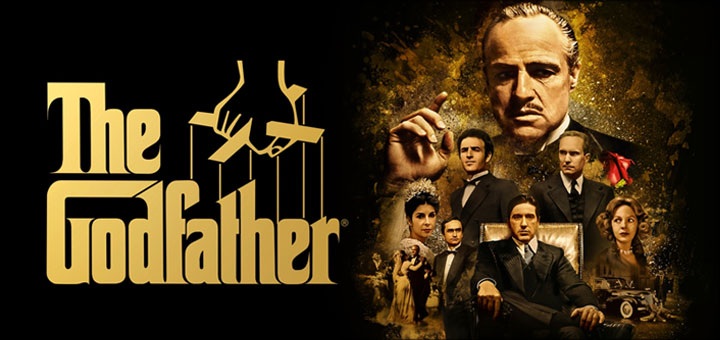
Francis Ford Coppola’s The Godfather in 1972 is one of cinema’s great second acts — for the film and for its central performer. The studio did not want Brando. He had spent a decade proving himself unbankable, difficult, and physically transformed from the lean intensity of his early career. Coppola fought for him. Brando screen-tested with cotton stuffed in his cheeks and shoe polish in his hair, and Paramount relented.

Don Vito Corleone is among the most fully realized characters in American film history — a patriarch of genuine warmth and absolute authority, whose power rests not on violence but on the gravity of his presence and the weight of his obligations. Brando played him at sixty-seven years old in the story’s timeline — a man whose body had aged while his mind retained complete clarity — with a physical specificity and vocal invention that transformed a gangster into a figure of genuine tragic dimension.

The performance won him the Academy Award for Best Actor. He declined it — sending Sacheen Littlefeather to the ceremony to read a statement protesting Hollywood’s treatment of Native Americans. The protest was genuine; Brando’s activism on behalf of Native American rights and the civil rights movement was a consistent thread through his adult life, not a publicity exercise. The image of Littlefeather on the Oscar stage remains one of the most discussed moments in Academy Awards history.

Last Tango in Paris (1973), Bernardo Bertolucci’s sexually explicit psychological drama, demonstrated that the Godfather performance was not a nostalgic peak but an active creative resurgence. He received his eighth Oscar nomination. The film’s controversy — particularly regarding a scene whose production ethics have been extensively debated — complicated its legacy without diminishing the performance’s raw power.

The Later Years: Superman, Apocalypse Now, and Selective Engagement

After Last Tango, Brando largely withdrew from sustained film work and extracted extraordinary fees for minimal appearances. He earned nearly four million dollars for approximately twelve minutes of screen time in Superman (1978) — making him the highest-paid actor per minute of screen time in history at that point. Apocalypse Now (1979), Coppola again, gave him Colonel Kurtz — a role of perhaps fifteen minutes that carries the entire film’s philosophical weight. He arrived on set overweight and underprepared, improvised extensively, and delivered something genuinely haunting.

The pattern continued through the 1980s and 1990s — A Dry White Season (1989) earned him an Oscar nomination for Best Supporting Actor, his first supporting nomination after seven lead nominations. The Freshman (1990) showed a self-awareness and comic lightness that surprised audiences. Don Juan DeMarco (1994) demonstrated he could still command a screen. The Island of Dr. Moreau (1996) was a disaster by all accounts.

His final film appearance was in The Score (2001), alongside Robert De Niro and Edward Norton — a passing of the torch that he seemed to approach with characteristic ambivalence.

Family: The Complicated Legacy

Brando’s personal life generated as many headlines as his professional one — and far more tragedy. He was married three times: to actress Anna Kashfi in 1957, Mexican actress Movita Castaneda in 1960, and his Mutiny on the Bounty co-star Tarita Teriipaia, with whom he had a long partnership centered on Tetiaroa. He recognized at least eleven children in his will, born to multiple women across decades.

The family tragedies were severe. His son Christian, born to Anna Kashfi in 1958, shot and killed Dag Drollet — the boyfriend of his half-sister Cheyenne — at Brando’s Los Angeles home in 1990, claiming the shooting was accidental during a confrontation over Drollet’s alleged abuse of Cheyenne. Christian was convicted of voluntary manslaughter and served five years. The trial consumed Brando financially and emotionally.

Cheyenne, born to Tarita Teriipaia in 1970, had been severely injured in a car accident in Tahiti in 1989 that left her with lasting psychological and cognitive effects. The Drollet killing deepened her trauma. She attempted suicide multiple times. On April 16, 1995, she died by suicide at her mother’s home in Tahiti. She was twenty-five years old.

Christian Brando died of pneumonia in January 2008, four years after his father. He was forty-nine.

Timothy Gahan Brando — born January 6, 1994, to Brando and Maria Cristina Ruiz, his youngest child — has lived entirely privately, avoiding the public life that consumed and damaged so many members of his family.

Activism and Legacy Beyond Film

Brando’s activism was not peripheral to his identity — it was central to it. His involvement in the civil rights movement included marching with Martin Luther King Jr. He was a vocal and financially generous supporter of Native American rights for decades before the 1973 Oscar protest made it his most famous public act. He traveled to the South during the Freedom Rides. He put money and presence behind causes at personal professional cost.

His autobiography, Songs My Mother Taught Me, published in 1994, revealed a man who had spent his entire career resisting the reduction of his identity to his performances — who wanted to be understood as a person with political and philosophical commitments, not merely as a vessel for other people’s characters. The book is notably more engaged when discussing his mother, his activism, and Tetiaroa than when discussing his films. That tells its own story.

Death and Enduring Influence

Marlon Brando died on July 1, 2004, at UCLA Medical Center, of pulmonary fibrosis complicated by congestive heart failure, diabetes, and liver cancer. He was eighty years old. The tributes were universal and, for once, warranted — the consensus that he was the most influential American actor of the twentieth century had been settled long before his death.

His influence runs through every serious American screen actor who followed him. Al Pacino, Robert De Niro, Dustin Hoffman, Jack Nicholson — the generation that dominated American film in the 1970s grew up with Brando as the standard. James Dean, who died at twenty-four, was already working to define himself in relation to Brando’s example. The chain extends unbroken to the present.

Conclusion

Marlon Brando spent eighty years on earth, fifty of them performing, and managed to permanently transform an art form while simultaneously treating it with contempt. The performances survive — Kowalski, Terry Malloy, Don Corleone, Kurtz — each one a different argument for what screen acting can be at its highest. The waste survives too, honestly accounted for. Both belong to the full picture of who he was.

FAQs

What is Marlon Brando best known for? His performances as Stanley Kowalski in A Streetcar Named Desire, Terry Malloy in On the Waterfront, Don Vito Corleone in The Godfather, and Colonel Kurtz in Apocalypse Now — four of the most studied roles in American film history.

How many Academy Awards did Brando win? Two — Best Actor for On the Waterfront (1954) and Best Actor for The Godfather (1972). He accepted the first and famously declined the second in protest of Hollywood’s treatment of Native Americans.

Why did he decline the Oscar for The Godfather? He sent Native American activist Sacheen Littlefeather to the ceremony to read a statement protesting Hollywood’s historical stereotyping and mistreatment of Native Americans — a cause he had supported for decades.

What tragedies affected his family? His son Christian was convicted of voluntary manslaughter in 1990 for killing his half-sister Cheyenne’s boyfriend. Cheyenne died by suicide in 1995 at twenty-five. Christian died of pneumonia in 2008.

Who was Stella Adler and why did she matter to Brando? A legendary acting teacher who had studied directly with Stanislavski and brought his system to America. Brando credited her as the most important teacher of his life — she gave intellectual and emotional framework to a talent that had previously operated entirely on instinct.

Where did Brando retire? Tetiaroa, a private Polynesian atoll he purchased in 1966, became his primary retreat from Hollywood. He spent increasing amounts of time there from the late 1960s onward and considered it his true home.

Few voices in rock history are as immediately recognisable as Pat Benatar’s — the classically trained mezzo-soprano who took a four-and-a-half octave instrument into the male-dominated arena rock world of the late 1970s and proceeded to win four consecutive Grammy Awards while becoming one of the defining artists of the MTV era.

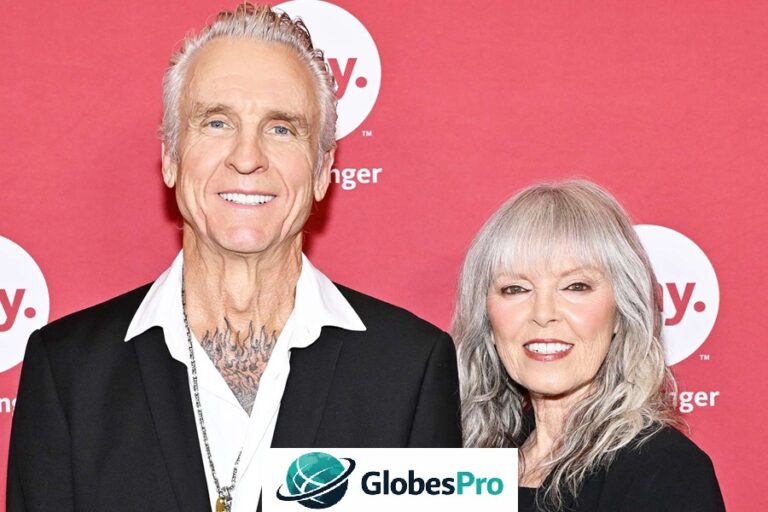
Patricia Mae Andrzejewski — known professionally as Pat Benatar — was born on January 10, 1953, in Greenpoint, Brooklyn, New York. She has sold 36 million albums worldwide, won four consecutive Grammy Awards for Best Rock Vocal Performance Female (1980–1983), and was inducted into the Rock and Roll Hall of Fame in 2022. She has been married to guitarist and producer Neil Giraldo since 1982.

Quick Facts

Field Details
Full Name Patricia Mae Andrzejewski (later Patricia Mae Giraldo)
Born January 10, 1953
Birthplace Greenpoint, Brooklyn, New York
Raised Lindenhurst, Long Island
Nationality American
Known For Hit Me With Your Best Shot; Love Is a Battlefield; We Belong; Heartbreaker
Voice Classically trained mezzo-soprano — 4.5 octave range
Genre Rock; Pop Rock; New Wave; Hard Rock
First Husband Dennis Benatar (m. ~1972; div. 1979)
Second Husband Neil Giraldo (m. February 20, 1982 — present)
Daughters Haley Giraldo (b. February 16, 1985); Hana Giraldo (b. March 12, 1994)
Grammy Awards Four consecutive — Best Rock Vocal Performance Female (1980–1983)
Rock Hall of Fame Inducted 2022
Albums Sold 36 million worldwide — 10 platinum albums
Memoir Between a Heart and a Rock Place (2010)
Lives Malibu, California
Net Worth ~$30 million estimated
Activism Women’s rights; animal welfare; cancer research

Early Life: Brooklyn and Long Island

Pat Benatar was born Patricia Mae Andrzejewski on January 10, 1953, in Greenpoint, Brooklyn — a working-class neighbourhood whose specific Polish-American character reflected her family’s Eastern European heritage.

The family moved to Lindenhurst on Long Island when she was a child — the suburban relocation that characterised the postwar movement of New York’s working-class families away from the city’s densest neighbourhoods. Lindenhurst gave her a more conventional suburban adolescence than Brooklyn would have — though the specific musical sensibility she was developing was anything but conventional.

Her musical ability was apparent from childhood — a voice of unusual power and range that stood out in the specific way that genuinely exceptional natural talent always does. Her parents recognised it and supported the formal training that would develop it into the instrument that eventually won four Grammy Awards.

Classical Training: The Voice

Pat Benatar’s voice is not simply a rock instrument — it is a classically trained mezzo-soprano with a documented range of four and a half octaves that she developed through years of formal vocal training before rock music became her primary vehicle.

She studied opera seriously — pursuing the classical training that her voice’s natural qualities made a logical path. The Juilliard School was her ambition — the most prestigious music conservatory in America and the natural destination for a young singer of her ability and seriousness.

The Juilliard dream did not materialise as planned — financial constraints and the practical demands of early adult life redirected her path — but the classical foundation she built remained the technical bedrock of everything she subsequently did in rock music.

The specific quality that distinguishes her rock performances — the ability to project power without sacrificing precision, to sustain notes at full intensity without vocal damage, to move between registers with complete control — is the classical training expressing itself through a rock context. Most rock singers have one or the other. Pat Benatar had both.

Early Career: Waitressing and the Nightclub Years

Before Hit Me With Your Best Shot and the Grammy Awards and the MTV videos, Pat Benatar was a bank teller and subsequently a waitress at a Manhattan restaurant called Catch a Rising Star — a comedy and music club whose open mic nights gave her the first professional performance platform her career required.

She had married Dennis Benatar — an army soldier — around 1972, taking the surname she would carry professionally for her entire career. The marriage relocated her briefly but she returned to New York when it became clear that the musical ambitions she carried required the specific environment that only New York could provide.

The nightclub performances at Catch a Rising Star — where she delivered her classical-trained voice to audiences expecting conventional cabaret — produced the immediate and striking impression that genuine exceptional talent always produces when it finds the right room. She was noticed. Word spread.

By the mid-1970s she was performing regularly across New York’s club circuit — building the reputation and the performance confidence that the subsequent record label interest would eventually formalise.

First Marriage: Dennis Benatar

Dennis Benatar


Pat married Dennis Benatar — an army soldier she had known from her Long Island years — around 1972. The marriage gave her the surname that would become one of rock music’s most recognisable.

The relationship did not survive the competing demands of his military career and her musical ambitions — they divorced in 1979, the same year her recording career began in earnest. She retained the Benatar name professionally — a decision whose practical logic was clear by the time the first album made the name famous.

Meeting Neil Giraldo: The Partnership

Neil Giraldo

The most significant professional and personal relationship of Pat Benatar’s life began when she met Neil Giraldo — a guitarist and producer from Cleveland, Ohio — during the recording sessions for her debut album in 1979.

Chrysalis Records had signed her and assembled a band. Neil Giraldo was brought in as guitarist and musical director. What developed between them — initially professional, quickly personal — became the defining partnership of both their careers.

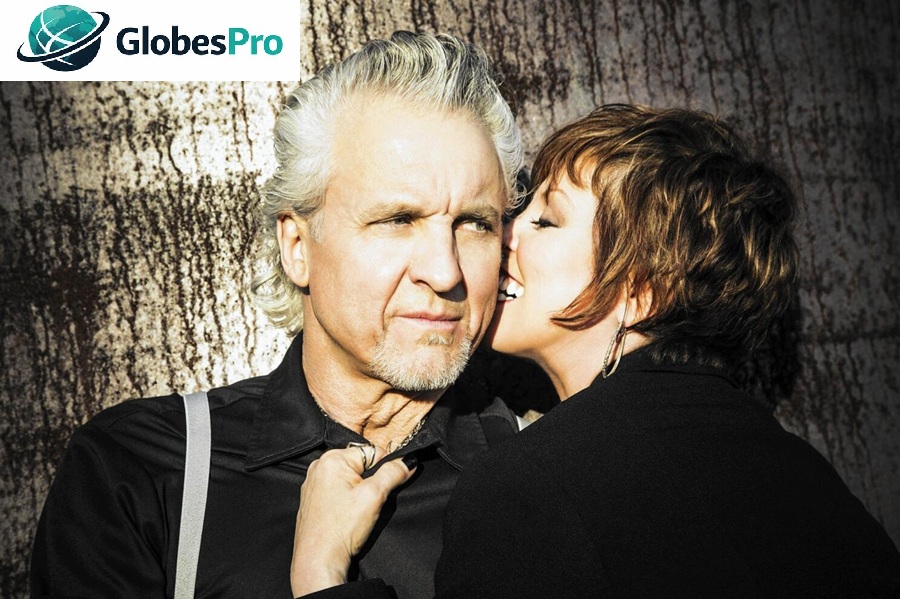
Neil Giraldo is not simply Pat Benatar’s husband. He is her primary creative collaborator — co-writing her most celebrated songs, producing her albums, playing guitar on every record, and functioning as the specific musical intelligence that translated her extraordinary vocal instrument into the commercial and artistic success that the 1980s produced.

The partnership is one of rock music’s most complete — the vocalist and the musician whose creative instincts are so precisely complementary that the output consistently exceeds what either could produce independently.

Chrysalis Records and the Breakthrough

Chrysalis Records signed Pat Benatar in 1979 — one of the more straightforward commercial decisions in the label’s history, given the specific quality of what they were signing.

Her debut album In the Heat of the Night (1979) established the template immediately — the powerful voice, the hard rock instrumentation, the specific combination of vulnerability and strength that would define her artistic identity across the decade. The album went platinum and produced her first major hit — Heartbreaker — announcing her arrival with the specific force of someone who had been building toward this moment for years.

Pat Benatar — Studio Albums Year Album Certification
In the Heat of the Night 1979 Debut Platinum
Crimes of Passion 1980 Breakthrough 4x Platinum
Precious Time 1981 Peak commercial 2x Platinum
Get Nervous 1982 Continued success Platinum
Live From Earth 1983 Live album 3x Platinum
Tropico 1984 Platinum
Seven the Hard Way 1985 Platinum

Crimes of Passion (1980) — the second album — was the commercial breakthrough that confirmed the debut’s promise. It went 4x platinum, produced Hit Me With Your Best Shot, and won her the first of four consecutive Grammy Awards.

Four Consecutive Grammys: 1980–1983

The Grammy record that Pat Benatar established across four consecutive years — Best Rock Vocal Performance Female from 1980 through 1983 — remains one of the more remarkable sustained achievements in the award’s history.

Grammy Wins — Pat Benatar Year Category Song/Album
First Grammy 1980 Best Rock Vocal Performance Female Crimes of Passion
Second Grammy 1981 Best Rock Vocal Performance Female Fire and Ice
Third Grammy 1982 Best Rock Vocal Performance Female Going to the Movies
Fourth Grammy 1983 Best Rock Vocal Performance Female Love Is a Battlefield

Four consecutive wins in the same category — against the full field of female rock vocalists across four separate years — is not statistical luck. It is the formal acknowledgment of sustained dominance in a competitive field at the peak of the rock era’s commercial and cultural power.

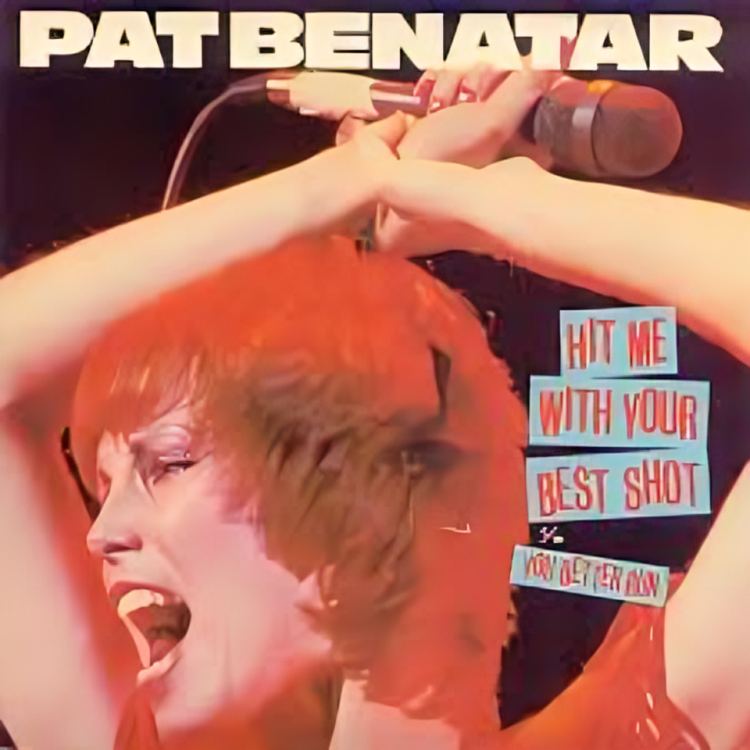
Hit Me With Your Best Shot

Hit Me With Your Best Shot

Hit Me With Your Best Shot — released in 1980 from Crimes of Passion — is Pat Benatar’s most enduring single and one of the most recognisable rock songs of its era.

The song’s combination of hard rock instrumentation, defiant lyric, and the specific quality of Benatar’s vocal delivery — powerful, controlled, entirely without the vulnerability its surface content might suggest — made it an immediate anthem whose cultural staying power has never diminished.

It remains a fixture of sporting events, film soundtracks, and cultural references across four decades — the specific test of a song’s genuine quality being whether it survives the distance from the moment that produced it.

Love Is a Battlefield

Love Is a Battlefield (1983) is the performance that most completely captures what Pat Benatar was capable of at her artistic peak — and the music video that most completely defined her visual identity in the MTV era.

The song — co-written by Mike Chapman and Holly Knight — gave her the specific combination of melodic accessibility and emotional weight that her greatest recordings consistently achieve. The extended music video — featuring a narrative arc of a young woman leaving home, working in a club, and standing up to an abusive boss — was one of MTV’s most ambitious early productions and one of the first music videos to tell a genuinely complete story.

The video’s visual language — the specific combination of vulnerability and defiance that Benatar embodied more completely than any of her contemporaries — became the defining image of her career.

We Belong

We Belong (1984) demonstrated a different dimension of Pat Benatar’s range — a sweeping, anthemic ballad whose emotional scale required the full deployment of the classical training that underpinned everything she did.

The song reached #5 on the Billboard Hot 100 and became one of her most commercially successful singles — demonstrating that the hard rock identity that Hit Me With Your Best Shot had established was the expression of a genuinely versatile artist rather than a one-dimensional rocker.

The MTV Era: Visual Identity

Pat Benatar was one of the defining visual presences of the MTV era — the specific combination of her physical appearance, her performance style, and the narrative ambition of her music videos making her one of the channel’s most compelling early stars.

Her look — the layered hair, the athletic physicality, the specific combination of feminine presentation and rock attitude — became one of the decade’s most imitated visual identities. She understood, earlier than most of her contemporaries, that the music video was not simply a promotional tool but a creative medium with its own specific demands and possibilities.

The collaboration with Neil Giraldo extended to the visual dimension of their work — the creative partnership producing music videos that were among the most ambitious and most watched of the early MTV period.

Marriage to Neil Giraldo

Marriage to Neil Giraldo

Pat Benatar and Neil Giraldo married on February 20, 1982 — three years after meeting on the debut album sessions and at the peak of their commercial success together.

The marriage — now in its 43rd year — is one of the more enduring partnerships in rock music history. The specific combination of professional collaboration and personal commitment has sustained both the creative output and the relationship through the full arc of a career that has encompassed commercial peaks, industry changes, personal losses, and the sustained challenge of maintaining artistic integrity across four decades.

Neil has described their relationship as the specific kind of partnership that makes both dimensions — professional and personal — stronger rather than creating the tension that professional collaboration between romantic partners frequently produces.

Daughters: Haley and Hana

Haley and Hana

Pat and Neil have two daughters whose upbringing reflected the specific challenges of a touring rock household balanced against the genuine parental commitment both parents have consistently expressed.

Haley Giraldo — born February 16, 1985 — grew up as the rock world’s demands were at their most intense. She has maintained a private life largely away from the entertainment industry.

Hana Giraldo — born March 12, 1994 — has followed her parents into music and entertainment — building an independent career as a singer and model that reflects both the family’s creative heritage and her own genuine artistic identity. She has released original music and built a social media following that stands independently of her parents’ legacy.

The 1990s: Career Challenges

The 1990s presented the specific challenge that every artist who peaked in the 1980s faced — the radical shift in musical taste that grunge and alternative rock produced made the arena rock sound that had defined the previous decade suddenly commercially and critically unfashionable.

Pat Benatar’s response — stepping back from the commercial mainstream, focusing on touring, and maintaining artistic integrity rather than chasing the new trends — reflects the specific courage of someone who understood that compromising the work to chase a market produces neither good art nor sustainable commercial success.

She continued recording and touring through the decade — maintaining the audience connection that genuine quality always sustains even when the broader commercial tide has turned.

Memoir: Between a Heart and a Rock Place (2010)

Between a Heart and a Rock Place — published in 2010 — is Pat Benatar’s memoir account of her career, her marriages, her creative process, and the specific challenges of being a woman in the male-dominated rock industry of the late 1970s and 1980s.

The book — co-written with Patsi Bale Cox — received strong reviews for its candour and its specific detail about the industry’s treatment of female artists during the period of her peak success. She documented the pressure to present herself in sexually exploitative ways that she consistently resisted, the specific battles she fought with record labels and promoters, and the creative partnership with Neil that produced the work she is most proud of.

Rock and Roll Hall of Fame: 2022

Pat Benatar and Neil Giraldo were inducted into the Rock and Roll Hall of Fame in 2022 — a recognition that had been notably delayed given the commercial and cultural significance of her work during the 1980s.

The induction — received alongside Eminem, Dolly Parton, Duane Eddy, Eurythmics, Lionel Richie, and Carly Simon — was widely celebrated as both overdue and completely deserved. Her acceptance speech — characteristically direct and emotionally genuine — reflected the specific quality of someone who had earned the recognition through sustained work rather than simply waited for institutional acknowledgment.

Activism

Pat Benatar’s public engagement extends beyond music into sustained advocacy across several causes — women’s rights, animal welfare, and cancer research representing the primary focuses of her philanthropic attention.

Her women’s rights advocacy reflects the specific personal experience of fighting for creative and professional autonomy in an industry that consistently tried to define her on its own terms rather than hers. The animal welfare commitment is a longstanding personal passion. The cancer research advocacy reflects the specific impact of the disease on people in her personal life.

Conclusion

Pat Benatar took a four-and-a-half octave classical voice into the arena rock world and won four consecutive Grammys with it. She resisted industry pressure, built a 43-year marriage with her creative partner, raised two daughters, and was eventually inducted into the Rock and Roll Hall of Fame. The voice did all of it. The determination kept it going.

Frequently Asked Questions

1. What is Pat Benatar’s real name? Patricia Mae Andrzejewski — she took the surname Benatar from her first husband Dennis Benatar.

2. How many Grammys has Pat Benatar won? Four consecutive — Best Rock Vocal Performance Female from 1980 through 1983.

3. Who is Pat Benatar married to? Neil Giraldo — guitarist, producer, and creative partner — married February 20, 1982. They have been together for over 40 years.

4. When was Pat Benatar inducted into the Rock Hall of Fame? 2022 — alongside Eminem, Dolly Parton, Eurythmics, and others.

5. How many albums has Pat Benatar sold? Approximately 36 million worldwide across 10 platinum albums.

6. What are Pat Benatar’s most famous songs? Hit Me With Your Best Shot, Love Is a Battlefield, We Belong, and Heartbreaker — all from her 1979–1984 commercial peak.

There is a line between fiction and reality in The Godfather that is famously thin — the film drew on real organised crime figures, real locations, real cultural codes, and real human experiences of the Italian-American world it portrayed. But no single participant in the film embodies that blurred line more completely than Gianni Russo — the man who played Carlo Rizzi, the wife-beating, brother-in-law-betraying, ultimately garroted villain of the Corleone family saga. Russo had no acting experience when he walked onto the set of the greatest American film of its era. What he had instead was something that no acting school could have provided — a childhood shaped by one of New York’s most powerful mob bosses, years in the Las Vegas underworld, and a personal history so vivid and so dangerous that playing a fictional criminal was, by comparison, a relatively straightforward exercise. He didn’t have to research Carlo Rizzi. He had spent his entire adult life in rooms with people exactly like him.

For readers looking for a quick answer — Gianni Russo — born Louis Giovanni Russo on December 12, 1943, in Manhattan, New York City — is an American actor, singer, and entrepreneur best known for playing Carlo Rizzi in The Godfather (1972). He had no prior acting experience when he was cast. He has claimed a childhood mentorship under mob boss Frank Costello, a role as messenger for Carlos Marcello, a justified homicide ruling after shooting a Medellín Cartel member, and a personal friendship with Frank Sinatra who became godfather to his son. His memoir Hollywood Godfather was published in 2019 by St. Martin’s Press.

Quick Facts — Wiki Style

Field Details
Full Name Louis Giovanni Russo
Born December 12, 1943
Birthplace Manhattan, New York City, USA
Nationality American
Heritage Italian-American
Known For Carlo Rizzi — The Godfather (1972)
Acting Experience at Casting None
Occupation Actor, Singer, Entrepreneur, Author
Children 11 children with 10 women
Memoir Hollywood Godfather (2019) — St. Martin’s Press
Wine Brand Gianni Russo Wines (2009)
Music Debut album Reflections (2004)

Early Life: Little Italy and Staten Island

Louis Giovanni Russo was born on December 12, 1943, in Manhattan, New York City — and raised in the two environments that would shape everything about who he became and how he operated for the rest of his life.

Little Italy — the lower Manhattan neighbourhood whose streets were the social and commercial centre of New York’s Italian-American community in the mid-twentieth century — was the first world. A neighbourhood where everyone knew everyone, where the boundaries between legitimate business and organised crime were functionally invisible, and where the specific codes of Italian-American urban life were transmitted through daily proximity rather than formal instruction.

Rosebank, Staten Island — a working-class neighbourhood with its own strong Italian-American community — was the second. Staten Island in the 1940s and 1950s was a place where the values of the old neighbourhood persisted in a slightly more suburban context — where family, loyalty, and the specific hierarchy of respect that the Italian-American community maintained were the organising principles of social life.

His childhood was marked early by physical adversity — he contracted polio as a child, an illness whose potential consequences in the pre-vaccine era were serious and whose physical demands required the specific kind of determined recovery that builds character in ways that comfortable childhoods rarely produce.

By the age of twelve he was on the streets of Little Italy selling pens and erasers — the first demonstration of the entrepreneurial instinct and the comfort with self-promotion that would characterise every subsequent chapter of his life. A twelve-year-old running his own street business in Little Italy in the mid-1950s was not unusual. What was unusual was the specific energy and ambition that Russo brought to it — and the attention it attracted from people whose own business interests operated at considerably higher levels of both profit and danger.

Frank Costello: The Mentor Nobody Should Have Had

The most consequential relationship of Gianni Russo’s early life — and the one that most directly connects his personal history to the world he would later portray on screen — was his connection to Frank Costello, one of the most powerful organised crime figures in American history.

Gianni Russo

Frank Costello — known as the “Prime Minister of the Underworld” — was at the peak of his influence in the 1950s, running the Luciano crime family and maintaining political connections that extended throughout New York’s civic and law enforcement infrastructure. He was, by any measure, one of the most powerful men in New York — operating in the specific intersection of legitimate authority and criminal enterprise that made him both feared and respected across the full social spectrum of the city.

The young Russo — selling his pens and erasers in Little Italy — came to Costello’s attention through the neighbourhood connections that made such encounters structurally likely in that specific social environment. Costello took a liking to him.

What followed was the specific education that proximity to genuine power provides — and that no classroom or institution can replicate.

Frank Costello — Who He Was Details
Full Name Francesco Castiglia
Known As “Prime Minister of the Underworld”
Position Boss of the Luciano crime family
Political Connections Extensive — judges, politicians, law enforcement
Cultural Status One of the most powerful men in New York
Russo’s Role Errand boy; envelope deliverer
What He Taught The specific codes of power and loyalty
Frank Sinatra Connection Both operated in the same world

Russo has described his role in Costello’s world as that of an errand boy — delivering envelopes, running messages, performing the small logistical tasks that the operations of any large organisation require and that a trusted, discreet young person can perform without attracting the kind of attention that adult associates would generate.

The education was not formal. It was absorbed through proximity — watching how Costello operated, how he commanded respect, how he navigated the complex social world of New York’s intertwined legitimate and illegitimate power structures. It was an education in human behaviour at its most concentrated and most consequential.

Russo has also described a Frank Sinatra connection emerging through Costello’s world — the specific social overlap between the entertainment industry and organised crime that characterised mid-century American popular culture and that would eventually make Sinatra’s subsequent role in Russo’s life feel less surprising than it might otherwise appear.

The Las Vegas Years: Reinvention and Showmanship

By the time he was eighteen, Gianni Russo had moved to Miami — the first geographical step away from the New York world that had formed him and toward the entertainment industry world that would eventually define his public identity.

Las Vegas was the next destination — and the city that in the late 1950s and early 1960s was simultaneously the entertainment capital of America and one of the most significant operational territories of organised crime was precisely the environment where Russo’s specific combination of street credentials and showmanship instincts could find their most natural expression.

He worked as a nightclub emcee — the specific performance role that requires the combination of physical confidence, quick wit, audience management skills, and the ability to control a room that his Little Italy upbringing had built in him. He worked as a radio personality. He ran jewellery business ventures — the entrepreneurial instinct that had started with pens and erasers in Little Italy finding more sophisticated commercial expression in the Las Vegas marketplace.

The Las Vegas years were the period of sustained self-invention — the transformation of Louis Giovanni Russo from a Little Italy street kid with mob connections into the polished, confident, multifaceted operator who would eventually walk onto the set of The Godfather and convince Francis Ford Coppola that he was exactly right for the role of Carlo Rizzi.

Carlos Marcello and the Disputed Chapter

Carlos Marcello

The most controversial claim in Gianni Russo’s personal history — detailed in his 2019 memoir and discussed in various interviews across the preceding decades — involves his alleged role as a messenger for Carlos Marcello, the New Orleans mob boss whose name has appeared in various accounts of the circumstances surrounding the assassination of President John F. Kennedy in 1963.

Russo has claimed a specific role in events connected to Marcello’s operations during this period — assertions that are, by their nature, impossible to independently verify and that exist in the specific territory between genuine insider knowledge and the embellishment that colourful personal histories sometimes accumulate over decades of retelling.

The Carlos Marcello Claim Details
Carlos Marcello New Orleans mob boss — powerful national figure
Russo’s Claimed Role Messenger for Marcello’s operations
JFK Connection Marcello’s name appears in various assassination accounts
Verifiability Cannot be independently confirmed
Memoir Treatment Detailed in Hollywood Godfather (2019)
Critical Reception Treated with appropriate scepticism

What can be said with confidence is that Russo’s world — the world of Little Italy, Frank Costello’s operations, and Las Vegas nightclub culture — placed him in genuine proximity to the organised crime figures whose activities intersected with some of the most significant events of mid-century American history. The specific nature and extent of that proximity is, as with many such claims, a matter of ongoing dispute.

How He Got The Godfather Role: The Real Story

gianni russo godfather

The story of how Gianni Russo came to play Carlo Rizzi is one of the more extraordinary casting stories in Hollywood history — involving self-funded screen tests, a mob organisation’s political demands, and the specific audacity of a man with no acting experience deciding that he belonged in the greatest American film of its era.

Russo has described reading about the Godfather production in the Los Angeles Times and deciding, with characteristic confidence, that he should be in the film. He then funded his own screen tests — not just for Carlo Rizzi but for Michael Corleone and Sonny Corleone as well — and submitted them to Paramount.

Paramount rejected him. He received a letter saying no.

What happened next is where the story becomes genuinely extraordinary. Joe Colombo — the head of the Italian-American Civil Rights League — was engaged in a sustained campaign against the Godfather production, arguing that it perpetuated damaging stereotypes about Italian-Americans. The League was threatening to disrupt production through organised protest and labour actions.

Russo — through his existing connections in the Italian-American community — positioned himself as an intermediary between Paramount and the League. The deal that eventually emerged involved the production making certain accommodations to the League’s concerns — including a commitment to casting Italian-Americans in Italian-American roles.

Russo has claimed that part of his role in brokering this arrangement was securing a commitment that he himself would receive a role in the film.

The Casting Circumstances Details
Russo’s Initial Move Self-funded screen tests — Michael, Sonny, Carlo
Paramount’s Response Rejection letter
Joe Colombo Italian-American Civil Rights League head
The League’s Demand Italians playing Italian roles
Russo’s Position Intermediary between Paramount and the League
The Outcome Russo receives the Carlo Rizzi role
Mario Puzo’s Response Disputed the mob connection claim
The Screen Test Worked on its own merits regardless of politics

Mario Puzo — the novel’s author and co-screenwriter — was dismissive of the mob connection angle of Russo’s casting story, suggesting in various accounts that the screen test itself was what secured the role. The truth, as with most Hollywood casting stories, likely contains elements of both — the political context that created the opportunity and the screen test that demonstrated the specific quality that Coppola needed.

What is not disputed is the outcome — Gianni Russo, with no professional acting experience, was cast in the greatest American film of its era alongside Marlon Brando, Al Pacino, James Caan, Robert Duvall, and an ensemble of some of the most formidable performers in American cinema history.

Carlo Rizzi: The Character

Carlo Rizzi — described by Mario Puzo himself as “a punk, sore at the world” — is one of cinema’s great villains despite limited screen time. He is the outsider who married his way into the Corleone family — an ambitious, resentful man whose sense of entitlement consistently exceeds both his capabilities and his loyalty.

He is not a Corleone. He married Connie — the youngest Corleone daughter — and in doing so acquired both the protection of the most powerful family in New York and the specific resentment of someone who knows that the protection is conditional on a respect he will never genuinely receive.

Carlo Rizzi — Character Profile Details
Position Connie’s husband; family outsider
Core Quality Resentful ambition; outsider’s chip on shoulder
The Abuse Domestic violence against Connie — calculated and deliberate
The Betrayal Setting up Sonny’s murder for Barzini
Motivation Wanting position and respect he was never given
Fate Garroted in a car by Peter Clemenza
Puzo’s Description “A punk, sore at the world”
Screen Time Limited — but maximum impact

His domestic abuse of Connie is not simply cruelty — it is calculated. He beats her specifically to provoke Sonny’s protective rage — knowing that Sonny, hotheaded and devoted to his sister, will drive alone to confront him. The ambush on the causeway that kills Sonny is the direct result of Carlo’s deliberate manipulation of the family’s most volatile member through the body of his own wife.

It is one of the coldest acts in the entire trilogy — and Russo plays it with the specific quality of someone who understands, from personal experience, exactly what that kind of calculated manipulation looks like in practice.

His eventual fate — garroted in a car by Peter Clemenza after being forced to confess his betrayal to Michael — is the trilogy’s most efficiently brutal piece of retributive justice. Richard S. Castellano’s Clemenza performs the execution with the same matter-of-fact practicality with which he makes tomato sauce. Carlo Rizzi’s death is, to Clemenza, simply another task that needs doing.

No Acting Experience: Learning on the Job

The specific challenge that Gianni Russo faced on the set of The Godfather — surrounded by performers whose combined craft represented decades of serious theatrical and cinematic training — was not simply technical. It was psychological.

He was twenty-eight years old. He had never acted professionally. He was sharing scenes with Marlon Brando — widely considered the greatest screen actor of his generation. He was being directed by Francis Ford Coppola in one of the most precisely controlled productions in Hollywood history. The pressure to perform credibly in that context, without the technical foundation that his co-stars had spent careers building, was significant.

What Russo had instead of training was authenticity. He knew the world he was portraying from the inside. He understood the specific social codes — the gestures of respect and contempt, the particular body language of men operating in environments where physical capability and the willingness to use it are the primary currencies — from lived experience rather than research.

And then there was Marlon Brando.

Marlon Brando: The Unexpected Mentor

One of the more surprising and more personally significant relationships that developed on the Godfather set was the friendship between Marlon Brando and Gianni Russo — two men whose backgrounds could hardly have been more different but who found in each other a genuine personal connection.

Brando took a liking to Russo early in the production — drawn, perhaps, by the specific quality of authentic experience that Russo brought to the set alongside his evident inexperience as a professional actor. Brando — whose entire acting philosophy was built around the primacy of genuine human truth over technical performance — recognised in Russo’s background a kind of authenticity that no amount of conservatory training could replicate.

What followed was an informal mentorship — Brando offering observations and guidance about the specific demands of screen acting that his decades of experience had taught him, and Russo absorbing those lessons with the specific attentiveness of someone who understood that he was receiving instruction from the greatest practitioner of the craft he was attempting to learn on the job.

The friendship extended well beyond the production — reuniting professionally in The Freshman (1990), a film in which Brando deliberately echoed his Godfather performance in a comedic context, and maintaining the personal connection that the set had established.

Brando and Russo Details
Connection Genuine friendship — from early in production
What Brando Offered Informal mentorship; acting guidance
What Russo Offered Authentic experience; genuine admiration
Reunion The Freshman (1990)
Legacy Lifelong friendship and professional respect

For Russo — the man with no acting training surrounded by the greatest ensemble in American cinema — Brando’s mentorship was the specific professional education that the circumstances required. The man who had learned from Frank Costello how power operates in the real world learned from Marlon Brando how to communicate that knowledge on screen.

The Set Stories: James Caan’s Real Fists

The filming of Carlo Rizzi’s domestic abuse of Connie — the scene in which James Caan’s Sonny discovers Carlo beating his sister and delivers a street-level beating of his own — produced one of the more physically eventful behind-the-scenes stories of the entire production.

James Caan — whose commitment to physical authenticity in performance was well established — brought that commitment to the beating scene with results that Russo experienced more directly than he had anticipated.

Caan actually hit Russo during the filming. Not with the controlled, choreographed approximations that film fights usually involve — but with genuine, impactful physical contact that produced two cracked ribs and a chipped elbow in his co-star.

The Beating Scene Details
Scene Sonny’s street beating of Carlo
James Caan’s Approach Physical commitment — genuine contact
Russo’s Injuries Two cracked ribs; chipped elbow
Russo’s Response Completed the scene; maintained character
On-Set Tension Reported friction between Caan and Russo
Effect on the Scene The physical reality communicates on screen

The on-set tension between Caan and Russo — which various accounts suggest extended beyond the requirements of their characters’ antagonistic relationship — added its own layer of genuine friction to a scene whose effectiveness depends on the audience believing in the physical reality of what they are watching.

The irony that the man with no acting experience handled two cracked ribs and a chipped elbow by completing the scene and maintaining his character is its own kind of acting lesson — the specific lesson that genuine toughness, absorbed from real-world experience, is occasionally more useful than technique.

What He Witnessed: The Production in Chaos

The production of The Godfather was, by multiple accounts, a genuinely chaotic and frequently threatened enterprise — and Russo’s ringside position gave him a specific perspective on the near-misses and political battles that nearly prevented the greatest American film of its era from being completed.

He witnessed the sustained battle over Al Pacino’s casting — Paramount’s resistance to the young, unknown New York actor whom Coppola was fighting to keep in the role of Michael Corleone. The specific deal that eventually secured Pacino — exchanging him for another actor in a Columbia Pictures arrangement — was one of the more complex and consequential negotiations in Hollywood history.

He witnessed Paramount threatening to shut down the production entirely at various points — the commercial anxiety of studio executives who were spending significant money on a film whose artistic ambitions they didn’t fully share creating a sustained background tension throughout the shoot.

He witnessed the specific creative process through which Marlon Brando constructed Vito Corleone — the cotton stuffed in the cheeks during the audition, the specific vocal quality that emerged from Brando’s deliberate choices about how the character should sound, the complete physical transformation that preceded any consideration of the scripted words.

The wedding scene — in which nearly the entire cast assembled for the extended opening sequence — was, in Russo’s account, the crucible in which the film’s extraordinary ensemble chemistry was first fully demonstrated. Standing in that crowd, watching the most ambitious opening sequence in American cinema being assembled around him, with no professional acting experience and a recently completed deal that had placed him there through a combination of audacity, connection, and the specific quality of what Coppola had seen in his screen test — was an experience whose specific quality no other position in that production could have replicated.

Frank Sinatra: Godfather to His Son

The relationship between Gianni Russo and Frank Sinatra — which he has described across multiple interviews and in his memoir — represents the most personally significant of the connections his specific background produced.

Sinatra became the godfather to one of Russo’s sons — a gesture of personal loyalty and affection that in the Italian-American cultural tradition carries the specific weight of genuine family commitment rather than honorary title.

The connection between Russo and Sinatra ran through the overlapping world of Las Vegas entertainment and the specific social ecosystem of Italian-American performers and businessmen that made the two men’s paths naturally intersecting.

Sinatra’s influence on Russo’s music career — the nightclub performances, the orchestral shows, the Sinatra and Dean Martin tribute material that Russo eventually recorded and performed — reflects both the genuine admiration Russo has always expressed for Sinatra’s artistry and the specific mentorship that the friendship provided for his own musical ambitions.

Frank Sinatra and Gianni Russo Details
Connection Personal friendship — through shared world
Sinatra’s Role Godfather to Russo’s son
Musical Influence Sinatra tribute material; orchestral performances
Cultural Context Overlapping Las Vegas and Italian-American worlds
Legacy Sustained influence on Russo’s musical identity

The specific detail of Sinatra becoming godfather to his son — in a cultural tradition where the godfather relationship carries genuine obligations of protection, guidance, and loyalty — reflects the depth of personal connection that Russo’s accounts consistently emphasise.

The Colombian Shooting: 1988

The most dramatic episode in Gianni Russo’s post-Godfather life — and the one that most completely illustrates the continued intersection of his personal history with the organised crime world — occurred in 1988 at State Street, a Las Vegas nightclub he owned.

A member of the Medellín Cartel — the Colombian cocaine operation whose reach across American criminal enterprises in the 1980s was comprehensive and violent — was harassing a woman in the club. Russo intervened.

The confrontation escalated. The cartel member smashed a bottle in Russo’s face. Russo drew a weapon and fired twice. The cartel member died.

The subsequent legal investigation reached a clear conclusion — justified homicide. Russo had acted in self-defence. No charges were filed.

What followed was considerably more dangerous than any legal proceeding. Pablo Escobar — the head of the Medellín Cartel and one of the most violent men in the world at the peak of his power — put out a contract on Russo’s life.

The 1988 Shooting Details
Location State Street club — Las Vegas
Incident Medellín Cartel member harassing a woman
Escalation Bottle smashed in Russo’s face
Russo’s Response Fired twice — cartel member died
Legal Outcome Justified homicide — no charges
Escobar’s Response Contract on Russo’s life
Resolution Escobar called off the hit
The Reason Because of The Godfather

The resolution of that contract is the most extraordinary footnote in the history of the Godfather franchise. Escobar — who was, like many of the world’s most powerful criminals of his era, a devoted fan of the film — reportedly called off the hit because of his respect for Russo’s role in The Godfather.

The man who played Carlo Rizzi — the betrayer who sold out the Corleone family — had his life saved by the film in which he played that betrayer. The specific irony of that outcome is complete and perfect.

Post-Godfather Career: 40-Plus Films

The career that followed The Godfather demonstrated both the typecasting reality that significant roles in landmark films produce and the sustained professional energy that Russo brought to whatever material was available.

He appeared in more than forty films across the subsequent decades — the majority of them exploiting the specific Italian-American authority that the Godfather had established as his cinematic identity, but ranging more widely than simple repetition.

Gianni Russo — Notable Post-Godfather Work Year Film/Show Role/Notes
Lepke 1975 Film Albert Anastasia — mob figure
The Freshman 1990 Film With Brando — Godfather parody
Super Mario Bros. 1993 Film Supporting role
Any Given Sunday 1999 Film Oliver Stone — with Pacino
Rush Hour 2 2001 Film Commercial blockbuster
Seabiscuit 2003 Film Serious drama
Kojak 1970s Television Guest appearance
The Rockford Files 1970s Television Guest appearance
Prison Break 2000s Television Guest appearance

Any Given Sunday (1999) — Oliver Stone’s football epic — reunited him with Al Pacino in a production whose serious dramatic ambitions placed Russo back in a creative context comparable to the one that had launched his career. Seabiscuit (2003) demonstrated a different dimension of his professional range — a serious historical drama far removed from the Italian-American organised crime territory he was most consistently associated with.

The Freshman (1990) — the film that reunited him with Brando in a knowing, comedic echo of the Godfather — was the most personally significant of his post-Godfather credits. Working again with the man who had mentored him on the original production, in a film that openly acknowledged and played with their shared history, was the specific kind of creative reunion that only the most significant professional relationships produce.

The Music Career: Following Sinatra

Gianni Russo’s music career — built on the foundation of his Las Vegas emcee years and shaped by his personal connection to Frank Sinatra — represents a dimension of his professional identity that his acting work occasionally overshadows but that reflects a genuine personal passion.

His debut album Reflections (2004) placed him in the specific register of the Great American Songbook — the orchestral pop tradition that Sinatra had defined and that Russo’s personal connection to that world made a natural creative home.

He has performed sold-out shows with full orchestra across the country — touring a repertoire built around Sinatra and Dean Martin material alongside original recordings that reflect his own vocal personality.

Gianni Russo — Music Career Details
Debut Album Reflections (2004)
Style Great American Songbook; Sinatra/Dean Martin tradition
Performance Sold-out shows with orchestra — national touring
Second CD 2010
Sinatra Connection Personal friendship informing artistic identity
What It Represents Genuine passion; Las Vegas roots

The second CD — released in 2010 — demonstrated the sustained creative commitment to the musical dimension of his career rather than simply an early-career gesture toward another industry.

Gianni Russo Wines

The entrepreneurial instinct that started with pens and erasers in Little Italy has found its most recent and most sustained expression in Gianni Russo Wines — a wine brand launched in 2009 that achieved national distribution across the United States.

The wine business reflects the specific combination of Italian heritage, brand identity, and commercial instinct that has characterised Russo’s approach to every professional opportunity across his career.

Gianni Russo Wines Details
Founded 2009
Distribution National — across the United States
Brand Identity Italian heritage; Godfather association
Significance Latest expression of lifelong entrepreneurial instinct

Hollywood Godfather: The Memoir (2019)

Hollywood Godfather: My Life in the Movies and the Mob — published by St. Martin’s Press in 2019 — is Gianni Russo’s most complete public account of the extraordinary life whose highlights have been circulating in various forms across decades of interviews and public appearances.

The book covers the full arc — Frank Costello’s mentorship, the Las Vegas years, the Godfather casting story, the Sinatra friendship, the 1988 shooting, the Escobar contract, the music and wine careers — with the specific combination of genuine insider knowledge and showman’s instinct for a good story that characterises everything Russo does publicly.

Hollywood Godfather (2019) Details
Publisher St. Martin’s Press
Full Title Hollywood Godfather: My Life in the Movies and the Mob
Key Claims Costello mentorship; Marcello connection; Escobar story
Critical Reception Publishers Weekly; Kirkus Reviews — treated with appropriate scepticism
Sinatra Material Detailed account of friendship and godfather role
Escobar Story The hit called off because of The Godfather
Tone Colourful; entertaining; occasionally disputed

Critical reception was consistent — acknowledging the entertainment value and the genuine insider texture of the material while applying appropriate scepticism to claims that resist independent verification. Publishers Weekly and Kirkus Reviews both engaged with the book in the specific register of the colourful Hollywood memoir — a genre whose relationship with strict factual accuracy is understood by both writers and readers to be flexible.

Personal Life: 11 Children, 10 Women

Gianni Russo’s personal life is, by his own account and his own description, the dimension of his story that he finds most difficult to defend.

He has eleven children with ten different women — a personal history that he has discussed publicly with a combination of genuine candour and the self-awareness of someone who has examined his own behaviour clearly enough to understand its costs.

“I was a lousy father,” he has said — the specific honesty of someone who is not seeking absolution but is choosing truthfulness over self-justification.

The relationships across his life have included a claimed connection to Marilyn Monroe — an encounter he has described in various interviews whose specific nature and verifiability sit in the same territory as other aspects of his personal history. A twelve-year relationship with Dionne Warwick represents the most sustained of his documented romantic partnerships.

His wedding — he has described Tommy Bilotti, the Gambino family associate who was murdered alongside Paul Castellano outside Sparks Steakhouse in 1985, as his best man — places the personal connections of his life squarely in the specific world his professional career has always circled.

Gianni Russo — Personal Life Details
Children 11 children with 10 women
Self-Assessment “A lousy father” — his own words
Marilyn Monroe Claimed connection — disputed/unverifiable
Dionne Warwick 12-year relationship
Best Man Tommy Bilotti — Gambino associate; murdered 1985
Sinatra Godfather to one of his sons

The personal life is the dimension of his story that most completely resists the romanticisation that his professional narrative occasionally invites. The eleven children and the candid self-assessment of his fathering are the human cost of the lifestyle whose more glamorous dimensions fill the memoir’s pages.

The Authentic and the Embellished

Any honest account of Gianni Russo’s story requires engaging with the question that his memoir and his various public claims inevitably raise — the distinction between what is genuinely documented, what is plausibly authentic, and what reflects the natural embellishment of a lifetime of storytelling.

The Frank Costello connection — the childhood proximity to one of New York’s most powerful mob figures — is the most credible of his claims, rooted in the specific geography and social reality of Little Italy in the 1950s where such encounters were structurally likely.

The Carlos Marcello claim and its Kennedy assassination adjacency sits in the more disputed territory — neither verifiable nor definitively disproved, existing in the specific historical fog that surrounds those events.

The 1988 shooting — with its legal record of justified homicide — is documented fact. The Escobar contract and its resolution through Godfather respect is the kind of story that, if invented, would be impossible to disprove and, if true, represents one of the more extraordinary footnotes in cinema history.

Mario Puzo’s scepticism about the mob connection casting story is the most authoritative single challenge to Russo’s self-mythologising — but Puzo was also someone with his own reasons for maintaining the fiction that the film’s creation was untouched by the world it portrayed.

The truth of Gianni Russo — as with most compelling human stories — is probably somewhere in the specific and irreducible territory between the documentary and the theatrical.

Gianni Russo Today

As of 2025, Gianni Russo is 81 years old — still active, still performing his orchestral shows across the country, still engaging with the public legacy of a career that began with the most unlikely casting story in Hollywood history and produced one of The Godfather’s most memorably villainous characters.

His wine brand continues. His music continues. His public engagement with the Godfather legacy — through appearances, interviews, and the sustained cultural conversation around the film’s fiftieth anniversary — continues with the energy of someone for whom the story has never stopped being worth telling.

At eighty-one, the specific combination of genuine history and showman’s instinct that has defined every chapter of his life remains intact. The Little Italy kid who sold pens and erasers at twelve, who learned about power from Frank Costello, who crashed the greatest American film of its era through a combination of audacity and connection, who shot a cartel member and had his life saved by the same film — is still, at eighty-one, telling the story.

It is worth listening to.

Legacy: The Outsider Who Crashed the Greatest Film

Gianni Russo’s legacy in the context of The Godfather is the legacy of the outsider — the man who was not supposed to be there, who had no business being in that ensemble, and who delivered a performance of sufficient quality and authenticity that Carlo Rizzi remains one of cinema’s most effectively hateable supporting villains fifty years after the film’s release.

Gianni Russo’s Legacy Details
Carlo Rizzi One of cinema’s great supporting villains
No acting experience The man who learned on the job — from Brando
Authentic background The real world informing the fictional one
The Escobar story The Godfather saving its own cast member’s life
40+ films Sustained career built on one extraordinary beginning
Music and wine The entrepreneur who never stopped reinventing
The memoir A life that needed — and deserved — a book

He is not the most celebrated member of the Godfather ensemble. He is not the most critically recognised. He is almost certainly the most personally colourful — the man whose real life story is genuinely more extraordinary than the fictional one he portrayed on screen.

That distinction is its own kind of legacy.

Conclusion

Gianni Russo walked onto the greatest film set in American cinema history with no acting experience, a childhood education from a mob boss, and the specific audacity of someone who has never accepted that the doors marked for other people are closed to him. He played a wife-beater, a betrayer, and a man who sold out the most powerful family in New York for a position they were never going to give him — and he played it with an authenticity that required no technique because it drew on something more fundamental. He had cracked ribs from James Caan, a contract from Pablo Escobar, and a personal friendship with Frank Sinatra. The character he played was a punk sore at the world. The man who played him has never, for a single day of his eighty-one years, been anything of the sort.

Frequently Asked Questions

1. Who is Gianni Russo? The American actor who played Carlo Rizzi in The Godfather (1972) — his very first acting role, despite having no prior professional experience.

2. How did Gianni Russo get cast in The Godfather? A combination of self-funded screen tests, his role as intermediary between Paramount and the Italian-American Civil Rights League, and a screen test that Coppola found convincing.

3. Was Gianni Russo actually connected to the mob? He has claimed childhood mentorship under Frank Costello and connections to Carlos Marcello. The claims are colourful, partially credible, and impossible to independently verify in full.

4. Did Gianni Russo really shoot someone? Yes — in 1988 at his Las Vegas club. The ruling was justified homicide. Pablo Escobar subsequently put a contract on his life that was reportedly called off out of respect for The Godfather.

5. Who was Frank Sinatra to Gianni Russo? A personal friend who became godfather to one of Russo’s sons — a connection that also significantly influenced his music career.

6. What is Gianni Russo doing now? At 81, he continues touring with his orchestra, running his wine brand, and engaging with the enduring legacy of The Godfather.


In the world of The Godfather — a universe populated by some of the most charismatic and commanding screen presences in the history of American cinema — there is a man who says almost nothing and does everything. He stands behind Michael Corleone at critical moments across three films and eighteen years of story. He shoots Emilio Barzini on the steps of a courthouse disguised as a police officer. He rows a boat onto a lake in Nevada and shoots Michael’s own brother in the back of the head. He is Al Neri — Michael Corleone’s most trusted enforcer, his conscience’s darkest instrument, the man who does what must be done without being asked twice. The actor who played him across all three films, with a consistency and a stillness that makes the character one of cinema’s great silent presences, was a Brooklyn shipbuilder’s son named Richard Bright. Almost nobody knows his name. Almost everybody remembers his face.

For readers looking for a quick answer — Richard Bright was an American actor born Richard James Bright on June 28, 1937, in Bay Ridge, Brooklyn, New York City. He is best known for playing Al Neri — Michael Corleone’s enforcer — across all three Godfather films (1972, 1974, 1990), making him one of only four actors to appear in the entire trilogy. He had a distinguished career spanning nearly five decades that included work with Al Pacino, Sam Peckinpah, Sergio Leone, Steve McQueen, and Dustin Hoffman. He died on February 18, 2006, at the age of 68, after being struck by a tour bus on the Upper West Side of Manhattan.

Quick Facts

Field Details
Full Name Richard James Bright
Born June 28, 1937
Birthplace Bay Ridge, Brooklyn, New York City
Died February 18, 2006 (age 68)
Cause of Death Struck by tour bus — Upper West Side, Manhattan
Nationality American
Occupation Actor
Known For Al Neri — The Godfather trilogy (all three films)
Spouse Rutanya Alda (m. 1977 — until his death)
Children Jeremy Bright; Diane
Active Years 1955–2006

Early Life: Bay Ridge, Brooklyn

Richard James Bright was born on June 28, 1937, in Bay Ridge — a working-class neighbourhood in the southwestern corner of Brooklyn that sits above the Narrows and looks across the water toward Staten Island and the approach to New York Harbor.

Bay Ridge in the late 1930s and 1940s was a specific kind of New York neighbourhood — predominantly working-class, ethnically mixed, with a strong Scandinavian and Irish presence alongside the Italian and Jewish communities that characterised much of Brooklyn’s social geography. It was a neighbourhood of shipbuilders, dock workers, tradespeople, and the families of people who did physical work for a living.

His father Ernest Bright was a shipbuilder — a trade whose physical demands and proximity to the industrial waterfront gave young Richard an early education in the specific kind of masculine authority that comes from work done with the body in demanding conditions. The shipbuilder’s son who would eventually play the silent enforcer of the most powerful crime family in American cinema was shaped from the beginning by an environment where what you did spoke louder than what you said.

His mother Matilda — née Scott — brought Scottish ancestry to the family’s heritage, adding another cultural layer to the Brooklyn immigrant mosaic that shaped the neighbourhood’s specific character.

Growing up in postwar Bay Ridge meant growing up in a community still absorbing the changes that World War II had produced — the returning veterans, the economic expansion of the late 1940s, the specific social dynamics of a neighbourhood balanced between its working-class roots and the upward mobility that postwar prosperity was beginning to make possible.

What the neighbourhood gave Richard Bright was something that no acting school can provide — an early immersion in the specific physical and social language of working-class New York men, the vocabulary of gesture and posture and the quality of watchful stillness that he would later deploy to such devastating effect as Al Neri.

Early Career: Live Television and the First Film

Richard Bright began his professional acting career at the remarkably young age of eighteen — entering the world of live Manhattan television at a time when the medium was developing its own aesthetic and professional standards from scratch.

Live television in the mid-1950s was an extraordinarily demanding performance environment — there were no retakes, no editing, no second chances. Every moment of every broadcast was performed in real time before a live audience and transmitted simultaneously to viewers across the country. The discipline that live television instilled — absolute preparation, total present-moment commitment, the ability to recover from anything without breaking character — was the foundation of a performance training that no controlled rehearsal environment could replicate.

His film debut came in Odds Against Tomorrow (1959) — directed by Robert Wise and starring Harry Belafonte and Robert Ryan in a racially charged heist thriller that was among the more serious and substantive American films of its era. It was not a starring role — it was the beginning of a career — but it placed him immediately in a professional context of genuine quality.

The New York film and theatre world of the late 1950s was a specific and exciting environment — the Method acting tradition was at its cultural peak, the Off-Broadway movement was expanding what theatre could be, and the independent film scene was beginning to develop the aesthetic and commercial infrastructure that would eventually produce the New Hollywood revolution of the 1970s. Richard Bright was building his career in exactly the right place at exactly the right historical moment.

The Beard (1965): Free Speech Fighter

Before Richard Bright became famous for his silences, he became briefly notorious for a theatrical production that generated one of the more significant First Amendment cases in the history of American theatre.

The Beard was a two-person play by Michael McClure — a Beat Generation poet whose theatrical work pushed at every available boundary of what was permissible in a public performance. The play featured two historical figures — Billy the Kid and Jean Harlow — in a confrontational, sexually explicit encounter that concluded with a simulated sex act on stage.

Richard Bright played Billy the Kid — opposite Billie Dixon as Jean Harlow — in a production that when performed in San Francisco and Los Angeles resulted in the arrests of both actors on obscenity charges.

The Beard — First Amendment Case Details
Playwright Michael McClure — Beat Generation poet
Richard’s Role Billy the Kid
Co-Star Billie Dixon as Jean Harlow
Content Sexually explicit two-person confrontation
Arrests San Francisco and Los Angeles — obscenity charges
Legal Defence ACLU — First Amendment argument
Outcome Charges dismissed — landmark free speech ruling
Subsequent Productions London and New York — after charges dropped
Significance Established important theatrical free speech precedent

The American Civil Liberties Union took up the defence — arguing that the play’s explicit content was protected expression under the First Amendment and that arresting performers for the content of a theatrical work constituted an unconstitutional restriction on artistic expression.

The charges were eventually dismissed — establishing a precedent for theatrical free speech that had implications beyond the immediate case. Richard Bright had not simply performed in a controversial play. He had, by virtue of being arrested and fighting the charges, participated in a genuine civil liberties case whose outcome mattered to American artistic freedom more broadly.

The willingness to be arrested for a role — to face genuine legal consequences rather than walk away from material that the authorities found objectionable — reflects a specific kind of artistic commitment and personal courage that distinguishes serious performers from merely professional ones.

Sam Peckinpah: An Important Friendship

Sam Peckinpah

One of the most significant professional relationships of Richard Bright’s career was his connection to Sam Peckinpah — the controversial, brilliant, and extraordinarily demanding director whose films redefined American screen violence and whose working methods were as legendarily difficult as his films were visually extraordinary.

Peckinpah was drawn to actors who carried physical authenticity and moral complexity in their faces and bodies — performers who could suggest a full human history in a glance or a silence without explaining it in dialogue. Richard Bright was exactly that kind of actor, and the two men developed a professional relationship that produced some of Bright’s most interesting work.

Their collaboration on Pat Garrett and Billy the Kid (1973) — a revisionist Western starring James Coburn and Kris Kristofferson — placed Bright in one of the more significant American films of the decade. The Peckinpah connection also gave him a professional credential and a stylistic education that directly informed his work on The Godfather — both films sharing a fascination with loyalty, violence, and the moral costs of operating inside institutional power structures.

What Peckinpah taught — through his demanding, sometimes chaotic working methods — was the specific value of physical truth in performance. For Peckinpah, the performance that came from genuine physical and emotional commitment was always more valuable than the performance that came from technical execution. Richard Bright absorbed that lesson completely.

The Panic in Needle Park (1971): Meeting Al Pacino

The Panic in Needle Park (1971)


The professional relationship that would prove most consequential for Richard Bright’s career began not on The Godfather set but on the production of The Panic in Needle Park (1971) — a raw, documentary-style film about heroin addiction in New York City that introduced Al Pacino to the film world and that placed Richard Bright in the role of Hank — Pacino’s brother.

The Panic in Needle Park (1971) Details
Director Jerry Schatzberg
Richard’s Role Hank — Al Pacino’s brother
Al Pacino’s Role Bobby — his film breakthrough
Style Raw; documentary; New York locations
Significance Pacino’s first major film role
Connection Established Bright-Pacino professional relationship
Critical Reception Strong — praised for authenticity
Legacy Led directly to both being cast in The Godfather

The film was Pacino’s genuine breakthrough — the performance that demonstrated to Hollywood, and specifically to Francis Ford Coppola and the Godfather casting process, that this young New York actor was capable of the kind of work that the role of Michael Corleone required.

For Richard Bright, the Needle Park connection to Pacino created a professional bond and a demonstrated on-screen chemistry that made his subsequent casting in The Godfather — as the man who stands closest to Michael Corleone throughout the trilogy — feel like both a creative and a personal inevitability.

The Getaway (1972): Steve McQueen and Peckinpah

The Getaway (1972)

In the same year that The Godfather was released, Richard Bright appeared in another of the defining films of early 1970s American cinema — The Getaway (1972), directed by Sam Peckinpah and starring Steve McQueen and Ali MacGraw.

His role in the film — playing a con artist whose pursuit of the McQueen character drives a significant portion of the narrative — placed him in a production of genuine commercial and artistic significance and further demonstrated the range and professional credibility that his career was steadily accumulating.

Working with Steve McQueen — whose specific screen magnetism and technical approach to performance were quite different from Pacino’s Method-derived intensity — gave Bright another point of professional reference and another demonstration of how different actors of genuine quality approach the same fundamental challenge.

The fact that The Getaway and The Godfather appeared in the same year reflects the specific professional momentum that Bright’s career had developed by the early 1970s — he was working at the highest level of American filmmaking simultaneously across multiple major productions.

The Godfather (1972): Becoming Al Neri

The Godfather (1972)

When Francis Ford Coppola cast The Godfather, the role of Al Neri — Michael Corleone’s personal enforcer and bodyguard — required a very specific kind of actor. Not a star. Not a scene-stealer. Someone whose physical presence communicated absolute reliability, absolute loyalty, and absolute capability without requiring a single word of explanation.

The character of Al Neri in Mario Puzo’s novel is former New York City police officer who was dismissed from the force for killing a suspect and was subsequently recruited by the Corleone family as their most trusted operative. He is Michael’s weapon of last resort — the instrument through which the most consequential and most morally devastating acts of Michael’s reign are executed.

Richard Bright — with his watchful blue eyes, his compact physical authority, and his ability to communicate volumes through stillness — was perfect.

Al Neri — Character Profile Details
Character Al Neri — Michael Corleone’s personal enforcer
Background Former NYC police officer — dismissed for killing suspect
Role Michael’s most trusted and most lethal instrument
Dialogue Almost none across all three films
First Film Appearance The Godfather (1972)
Most Significant Act Shooting Fredo Corleone — Part II
Physical Communication Stillness; watchfulness; absolute readiness
Richard’s Age 34 in The Godfather

His most visible moment in the first film is during the baptism sequence — one of the most celebrated pieces of parallel editing in cinema history, in which Michael’s godfather ceremony for his sister’s baby is intercut with the simultaneous murder of all the rival family heads.

Neri appears in this sequence disguised as a police officer — using the uniform of his former profession as the instrument of the Corleone family’s consolidation of power. He shoots Emilio Barzini on the courthouse steps — and the image of a police uniform used as cover for assassination carries its own specific commentary on the relationship between institutional authority and organised crime.

The film’s final shot — Neri closing the door on Kay (Diane Keaton) as she watches Michael receive the homage of the family’s capos — is one of cinema’s most perfectly composed closing images. Neri closing the door is the visual statement of what Michael has become. Richard Bright does it with the complete, unhurried authority of someone who has been closing doors on uncomfortable truths his entire professional life.

Al Neri’s Key Moments — The Godfather (1972) Scene Significance
Baptism sequence Disguised as police officer; kills Barzini Corleone consolidation of power
Courthouse steps Shoots Barzini Most visible act of Part I
Final shot Closes door on Kay Visual statement of Michael’s transformation
Throughout Standing behind Michael Presence as performance

The Fredo Scene: The Most Devastating Act

If the first Godfather established Al Neri as Michael’s instrument of power, The Godfather Part II (1974) established him as something more morally complex and more genuinely devastating — the man who kills Michael’s own brother.

The Fredo sequence is among the most emotionally devastating moments in the entire trilogy — and by extension, in the history of American cinema. Fredo Corleone (John Cazale) — Michael’s weak, betraying older brother — has been kept alive by Michael’s promise to their mother that he will not be harmed. When their mother dies, that protection is withdrawn.

Neri rows Fredo out onto Lake Tahoe in a small boat on the pretext of fishing. As Fredo recites a Hail Mary — a detail of heartbreaking religious irony — Neri shoots him once in the back of the head.

The Fredo Scene — Part II Details
Location Lake Tahoe — small boat on open water
Setup Fishing trip; false sense of security
Fredo’s last words Hail Mary recitation
The Act Single shot — back of the head
Neri’s expression Absolute impassivity — duty performed
Michael’s position Watching from shore
Emotional Impact One of cinema’s most devastating moments
What it says about Neri Loyalty beyond all human feeling

Richard Bright performs the scene with absolute impassivity — the face of a man performing a task rather than committing a murder. That impassivity is precisely what makes the scene so devastating. Neri’s complete absence of visible conflict — his total subordination of whatever human feelings he might have to the act his loyalty requires — communicates something more disturbing than visible anguish would.

The performance demands the actor to communicate, through the complete absence of external expression, the presence of something buried so deep that it cannot surface. It is one of the most difficult things an actor can be asked to do. Richard Bright does it with a completeness that makes the scene permanently unwatchable for anyone who has ever loved a sibling.

The Godfather Part III (1990): Sixteen Years Later

The Godfather Part III (1990)


When Francis Ford Coppola returned to the Godfather world in 1990 — sixteen years after Part II — the decision to bring back Richard Bright as Al Neri was a creative and personal acknowledgment of what the character and the actor represented in the trilogy’s architecture.

By Part III, Neri has risen to the position of underboss — reflecting the natural progression of absolute loyalty within the Corleone hierarchy. He is older, as Bright is older, and the physical evidence of the passing years is visible in both the character and the performer in ways that Coppola incorporated into the film’s visual language rather than attempting to conceal.

Al Neri’s Role — Part III (1990) Details
Position Underboss of the Corleone family
Richard’s Age 52 at filming
Key Act Killing Archbishop Gilday in the Vatican
Significance Neri’s most audacious act across trilogy
Context Michael’s attempt to legitimise family through Vatican banking

His killing of Archbishop Gilday in the Vatican — plunging a syringe of air into the corrupt churchman’s arm to simulate a heart attack — is Neri’s most audacious act across the three films. The location, the method, and the target all reflect how far the Corleone family’s reach has extended — and how completely Neri has remained its instrument regardless of the moral landscape the acts require him to traverse.

One of Only Four: The Exclusive Trilogy Club

Richard Bright’s appearance in all three Godfather films places him in an extraordinarily exclusive group — the four actors who appear across the entire trilogy and who represent the through-line of the Corleone story from its beginning to its end.

Actors in All Three Godfather Films Character Notes
Al Pacino Michael Corleone The central figure across all three
Diane Keaton Kay Adams/Corleone Michael’s wife; moral conscience
Talia Shire Connie Corleone Michael’s sister; three-film arc
Richard Bright Al Neri The enforcer; silent presence throughout

The company he keeps in that group — Pacino, Keaton, Shire — reflects the significance of the Al Neri character to the trilogy’s architecture. Coppola did not return to Bright for Part II and Part III because it was convenient. He returned because the character required the specific qualities that Bright provided and because the continuity of that presence was essential to the visual and emotional language of the films.

Sergio Leone: Once Upon a Time in America (1984)

Richard Bright’s appearance in Sergio Leone’s Once Upon a Time in America (1984) placed him in another of the defining crime epics of his era — alongside Robert De Niro, James Woods, Tuesday Weld, and Elizabeth McGovern in a film that many critics regard as the greatest American gangster film after the Godfather itself.

Playing Chicken Joe — a supporting role in a film whose ensemble was among the most accomplished of the decade — gave Bright another significant credit in the gangster genre and another professional connection to the highest level of the form.

The fact that he was trusted by both Coppola and Leone — the two directors who defined the cinematic gangster in the 1970s and 1980s — reflects the specific professional recognition that his career had earned. These were not directors who settled for adequate. Both chose Bright because he was exactly right for what they needed.

Other Notable Film Work

Across nearly five decades of professional activity, Richard Bright accumulated a filmography of genuine substance — appearing in films that represent the best of American cinema across multiple decades and genres.

Richard Bright — Notable Filmography Year Film Co-Stars/Director
Odds Against Tomorrow 1959 Film Robert Wise; Harry Belafonte
The Panic in Needle Park 1971 Film Al Pacino; Jerry Schatzberg
The Getaway 1972 Film Steve McQueen; Sam Peckinpah
The Godfather 1972 Film Pacino; Brando; Coppola
Pat Garrett and Billy the Kid 1973 Film James Coburn; Sam Peckinpah
The Godfather Part II 1974 Film Pacino; De Niro; Coppola
Marathon Man 1976 Film Dustin Hoffman; John Schlesinger
Looking for Mr. Goodbar 1977 Film Diane Keaton
Hair 1979 Film Milos Forman musical
Once Upon a Time in America 1984 Film De Niro; Leone
Red Heat 1988 Film Schwarzenegger; Walter Hill
The Godfather Part III 1990 Film Pacino; Coppola
Beautiful Girls 1996 Film Matt Dillon; Timothy Hutton

Marathon Man (1976) — with Dustin Hoffman and Laurence Olivier in one of the decade’s most celebrated thrillers — and Hair (1979) — Milos Forman’s landmark musical adaptation — demonstrate the range that his career encompassed beyond the gangster genre that generated most of his public recognition.

Television: Law & Order to The Sopranos

Law & Order to The Sopranos

Richard Bright’s television career ran parallel to his film work across the same decades — providing the consistent professional activity that sustains a working actor between major film productions.

His most significant television relationship was with Law & Order — the long-running procedural drama that became one of New York television’s defining institutions — where he made multiple appearances between 1992 and 2002 across different roles.

Richard Bright — Television Credits Show Year Notes
One Life to Live Soap opera Various Early television work
Hawaii Five-O Drama 1970s Guest appearances
Third Watch Drama 1999 Guest role
Oz HBO drama 2000 Guest appearance
Law & Order Procedural 1992–2002 Multiple appearances
The Sopranos HBO drama 2002 Frank Crisci

His appearance in The Sopranos (2002) as Frank Crisci placed him — appropriately — in the television series that most directly inherited the Godfather’s legacy and that represented the dominant expression of the American gangster narrative in the early twenty-first century. The casting was a knowing acknowledgment of his place in the genre’s history.

One of the more poignant details of his later television work involves the emphysema that affected his health in his final years — he was occasionally seen using oxygen tanks on set, which were sometimes incorporated into his characters as props rather than disclosed as medical necessities. The professional dedication of continuing to work through serious illness — and the creative pragmatism of making the medical equipment part of the performance — reflects a commitment to the craft that his entire career had demonstrated.

Shakespeare With Al Pacino

The professional relationship between Richard Bright and Al Pacino extended beyond the Godfather trilogy into the theatrical world that both actors regarded as the foundation of their craft.

In 1979, Bright appeared in a stage production of Richard III opposite Al Pacino — bringing Shakespeare to the New York theatre world with the same commitment and intensity that both men brought to their film work.

The production reflected the specific seriousness about craft that characterises actors who genuinely love the work rather than simply the career — the willingness to do Shakespeare for theatre audiences when the film work had made both men recognisable to millions was a statement about where their artistic priorities actually lay.

For Richard Bright specifically, the theatrical work was a reminder that the film roles — including Al Neri — were built on a foundation of stage training and stage discipline that the screen work depended on and that the stage periodically needed to replenish.

Personal Life: Rutanya Alda and Family

Richard Bright married actress Rutanya Alda in 1977 — a union that lasted until his death in 2006 and that provided the personal stability and genuine partnership that a working actor’s life makes structurally difficult to sustain.

Rutanya Alda — a Romanian-born actress whose own career included significant work in American film and television — was both a professional peer and a personal anchor. The marriage of two working actors in New York creates a shared understanding of the professional demands and uncertainties that sustained partnerships between people in very different fields must negotiate across a much wider experiential gap.

Richard Bright’s Personal Life Details
Wife Rutanya Alda — actress (m. 1977)
Marriage Duration 29 years — until his death
Son Jeremy Bright (born 1988)
Daughter Diane
Home New York City
Personal Approach Private; work-focused; away from celebrity culture

Their son Jeremy Bright was born in 1988 — late in both parents’ careers, a child who grew up surrounded by the professional world of working New York actors rather than the Hollywood celebrity culture that their film credits might have suggested as a natural environment.

Richard Bright’s personal life was, like his professional persona, characterised by the absence of unnecessary noise. He did not cultivate a public celebrity identity. He did not seek profile beyond what the work produced. He was a working actor in New York who happened to have appeared in some of the greatest films ever made.

Physical Presence: The Cold Blue Eyes

The physical qualities that made Richard Bright such an effective screen presence — and that made him so perfectly cast as Al Neri — deserve specific acknowledgment because they were central to what the character required and what he consistently delivered.

His piercing blue eyes — noted repeatedly by directors, critics, and colleagues across his career — communicated a specific quality that is almost impossible to manufacture through technique. They were watchful without being warm. Intelligent without being expressive. They held information rather than offering it.

The contrast between his fair complexion and dark hair — characteristic of his Celtic heritage — gave his face a visual distinctiveness that registered immediately on camera. His features had the specific quality of a man who has seen difficult things and has chosen not to discuss them.

His compact physical authority — not large but completely solid, moving with the economical purposefulness of someone who never wastes effort — communicated capability without requiring demonstration. You believed he could do what Al Neri did because his body told you he could before the script gave him the opportunity.

And above all, his stillness — the quality of watchful readiness that made his silences as communicative as other actors’ most elaborate speeches — was the instrument through which the entire Al Neri characterisation was built and sustained across three films and eighteen years.

Death: February 18, 2006

On the morning of February 18, 2006, Richard Bright was walking on the Upper West Side of Manhattan — the neighbourhood he had lived and worked in for decades — when he was struck by a tour bus at the intersection of Columbus Avenue and 86th Street.

He was in a marked crosswalk with the pedestrian walk signal in his favour. The tour bus driver was apparently unaware of the collision until notified by Port Authority officers at a subsequent stop.

Richard Bright’s Death Details
Date February 18, 2006
Location Columbus Avenue at 86th Street — Upper West Side
Circumstances Struck by tour bus in marked crosswalk with walk signal
Transported To Roosevelt Hospital, Manhattan
Pronounced Dead Roosevelt Hospital
Age 68
Criminal Charges None filed against driver
Driver Consequence License suspended
Career at Death Still actively working — nearly 50-year career

He was transported to Roosevelt Hospital where he was pronounced dead. He was 68 years old — still actively working, still available to the profession that had claimed his entire adult life.

No criminal charges were filed against the bus driver. The driver’s license was suspended — a consequence that the circumstances of the accident suggest is inadequate, whatever the legal determination of culpability.

The manner of his death — a working actor struck by a tourist vehicle on a Manhattan street he had walked thousands of times, in a crosswalk, with the legal right of way — is the kind of arbitrary cruelty that resists meaningful interpretation. There is nothing instructive or meaningful about it. It is simply the tragic end of a half-century career that deserved a better conclusion.

Legacy: The Silent Man at the Centre

Richard Bright’s legacy is built on a paradox — a career defined by silence that speaks more loudly than most careers built on words.

Richard Bright’s Legacy Details
Al Neri legacy One of cinema’s great silent presences
Godfather trilogy One of only four actors in all three films
Fredo scene One of cinema’s most devastating moments
Directors Trusted by Coppola, Peckinpah, Leone simultaneously
Free speech ACLU case — The Beard — genuine civil liberties contribution
Professional longevity Nearly 50 years of consistent serious work
Character actor model The invisible architecture of great ensemble cinema
Brooklyn roots Shipbuilder’s son to cinematic icon

He appeared in three of the greatest crime films ever made — the Godfather trilogy, The Getaway, and Once Upon a Time in America. He worked with directors who defined American cinema in the 1970s and 1980s — Coppola, Peckinpah, Leone. He fought for free speech in a theatre in 1965 when it cost him his liberty temporarily. He played Shakespeare with Al Pacino. He married a fellow actress and raised two children in New York. He worked until the year he died.

And across all three Godfather films — spanning eighteen years of American cinema’s most celebrated trilogy — he stood behind Michael Corleone and did what was necessary without a word of complaint or explanation.

That is Al Neri. That is Richard Bright. The distinction, by the end, is nearly impossible to make.

Frequently Asked Questions

1. Who was Richard Bright? A Brooklyn-born character actor who played Al Neri — Michael Corleone’s enforcer — across all three Godfather films. One of only four actors to appear in the entire trilogy. He died in 2006 at age 68 after being struck by a tour bus in Manhattan.

2. What is Richard Bright most famous for? Playing Al Neri in The Godfather (1972), The Godfather Part II (1974), and The Godfather Part III (1990) — Michael Corleone’s silent, utterly loyal enforcer.

3. Which actors appeared in all three Godfather films? Only four — Al Pacino, Diane Keaton, Talia Shire, and Richard Bright.

4. What is Al Neri’s most memorable scene? The Fredo scene in Part II — rowing John Cazale’s character onto Lake Tahoe and shooting him in the back of the head while Fredo recites a Hail Mary. One of cinema’s most devastating moments.

5. How did Richard Bright die? He was struck by a tour bus on Columbus Avenue at 86th Street on the Upper West Side of Manhattan on February 18, 2006. He was in a marked crosswalk with the walk signal. He was 68 years old.

6. What other major films did Richard Bright appear in? The Panic in Needle Park (1971), The Getaway (1972), Marathon Man (1976), Once Upon a Time in America (1984), and Pat Garrett and Billy the Kid (1973) among many others.

7. Was Richard Bright ever arrested? Yes — for performing in The Beard (1965), a controversial two-person play. The ACLU defended him and charges were dismissed in a landmark First Amendment ruling.

8. Who was Richard Bright married to? He was married to actress Rutanya Alda from 1977 until his death in 2006. They had two children — son Jeremy and daughter Diane.

Conclusion: The Door Closer

The final image of The Godfather — Al Neri closing the door on Kay as Michael receives the family’s homage — is one of cinema’s most perfect closing shots. It says everything about what Michael has become, about what the Corleone world requires, and about the specific kind of loyal service that makes that world function.

Richard Bright closes that door with the unhurried certainty of someone who has always understood exactly what his job is and has never once flinched from doing it. The blue eyes give nothing away. The face communicates nothing that the scene has not already established. He closes the door and the film ends.

The Brooklyn shipbuilder’s son spent nearly fifty years building the craft that made that moment possible. He fought for free speech in San Francisco. He worked with the greatest directors of his generation. He played Shakespeare. He rowed a boat across Lake Tahoe and performed one of cinema’s most devastating acts with complete impassivity. He stood behind Al Pacino across three films and eighteen years and communicated, through absolute stillness, the weight of absolute loyalty.

He was struck by a tour bus on a Manhattan street he had walked a thousand times and died with his boots on — a working actor until the moment the work stopped.

The door is still closed. Richard Bright closed it.


There are performances in cinema that last ten minutes and live forever. Jack Woltz — the arrogant Hollywood mogul who dismisses the Corleone family’s request with contemptuous certainty and wakes up screaming in a bed soaked with the blood of his prized racehorse — is on screen for perhaps fifteen minutes across two scenes. Those fifteen minutes, delivered by a character actor named John Marley who had spent forty years in near-obscurity before anyone outside the theatre world knew his name, constitute one of the most perfectly executed supporting performances in the history of American cinema. The horse head is what everyone remembers. John Marley is why it works.

For readers looking for a quick answer — John Marley was an American actor born Mortimer Leon Marlieb on October 17, 1907, in Harlem, New York City, the son of Russian-Jewish immigrant parents. He spent four decades building his craft in theatre and minor film roles before achieving recognition with his Venice Film Festival Volpi Cup for Faces (1968) and an Academy Award nomination for Best Supporting Actor for Love Story (1970). He is best known to general audiences as Jack Woltz in The Godfather (1972) — the Hollywood producer who wakes to find the severed head of his prize horse in his bed. He died on May 22, 1984, at the age of 76.

Quick Facts

Field Details
Full Name John Marley (born Mortimer Leon Marlieb)
Born October 17, 1907
Birthplace Harlem, New York City, USA
Died May 22, 1984 (age 76)
Cause of Death Complications from open-heart surgery
Nationality American
Occupation Actor, Theatre Director
Known For Jack Woltz — The Godfather (1972)
Oscar Nomination Best Supporting Actor — Love Story (1970)
Venice Film Festival Volpi Cup Best Actor — Faces (1968)
Marriages Sandra Marley; Stanja Lowe
Children Four
Active Years 1947–1984

Early Life: Harlem, 1907

John Marley was born Mortimer Leon Marlieb on October 17, 1907, in Harlem, New York City — a neighbourhood that in the early twentieth century was undergoing the rapid demographic transformation that would eventually make it one of the most culturally significant urban communities in American history.

His parents were Russian-Jewish immigrants — part of the enormous wave of Eastern European Jewish migration to New York City in the late nineteenth and early twentieth centuries that brought millions of people fleeing poverty, persecution, and the particular violence of the Russian Empire’s treatment of its Jewish population to the tenement districts of Lower Manhattan and the expanding immigrant communities of upper Manhattan.

Growing up in Harlem as the child of Russian-Jewish immigrants in the 1910s and 1920s meant growing up in a specific kind of urban toughness — the neighbourhood was simultaneously culturally rich and physically demanding, a place where the combination of immigrant ambition and economic constraint produced people with a specific kind of resilience and directness.

The young Mortimer Marlieb — who would eventually reshape himself as John Marley for professional purposes — was drawn to performance early. In a neighbourhood where the streets provided one kind of education and the cultural institutions of immigrant New York provided another, he found his way toward theatre rather than the gangs and street culture that claimed other young men from similar backgrounds.

He attended City College of New York — the tuition-free institution that served as the intellectual passport for generations of New York working-class and immigrant families — before dropping out to pursue acting more directly. The decision to leave City College was the decision of someone who had already concluded that the formal academic path was not going to lead where he wanted to go.

World War II: The Army Signal Corps

Like virtually every American man of his generation, John Marley’s career was interrupted by World War II — he served in the US Army Signal Corps, the branch responsible for military communications, intelligence, and the technical infrastructure that modern warfare requires.

The Signal Corps attracted people with specific technical and communications abilities — and the experience of serving in that capacity during the most significant conflict in human history gave Marley the kind of direct encounter with the full range of human experience that no acting class can replicate.

Actors who served in World War II — and there were many who became the defining performers of postwar American cinema — consistently describe the war as a transformative experience that deepened their understanding of human behaviour under extreme conditions. For John Marley, the Signal Corps years were part of the long, slow accumulation of life experience that eventually made his performances so convincingly grounded in human reality.

He returned to civilian life after the war and refocused his professional energies on acting — embarking on the long apprenticeship that would consume the next two decades of his career.

Early Career: The Forty-Year Apprenticeship

John Marley’s career before his late-life recognition is a testament to a specific kind of professional dedication that the contemporary entertainment industry — with its emphasis on rapid breakthrough and instant visibility — rarely produces or rewards.

He made his Broadway debut in 1947 in Skipper Next to God — a production that placed him in the legitimate theatre world and established the theatrical foundation from which all of his subsequent work would draw. Broadway in the late 1940s was the serious actor’s primary proving ground — the place where craft was developed, tested, and measured against the highest available standards.

From that beginning, he built a career through the 1950s and 1960s across a combination of stage work, small film roles, and the growing television industry — accumulating credits in the enormous volume of work that sustains a working actor without ever quite producing the breakthrough moment that transforms a career.

John Marley — Early Career Credits Year Production Notes
Skipper Next to God 1947 Broadway Stage debut
My Six Convicts 1952 Film Early film role
Carrie 1952 Film With Laurence Olivier
The Rack 1956 Film With Paul Newman
I Want to Live! 1958 Film Supporting role
Cat Ballou 1965 Film Supporting role
Nevada Smith 1966 Film Supporting role
Hawaii Five-O 1960s Television Guest appearances

The credit alongside Laurence Olivier in Carrie (1952) and Paul Newman in The Rack (1956) indicates a professional level that was genuine and consistent — he was working alongside serious actors in serious productions, building the craft and the professional relationships that would eventually produce his recognition.

The forty years between the Broadway debut and the Godfather were not wasted years. They were the years in which John Marley became the actor who could deliver Jack Woltz with the specific gravity and conviction that the role required.

Faces (1968): The Late Breakthrough

John Marley

The turning point in John Marley’s career came not through a Hollywood studio production but through his collaboration with John Cassavetes — the pioneering independent filmmaker whose improvisational, character-driven approach to cinema was producing some of the most distinctive American films of the 1960s.

Faces (1968) was Cassavetes at his most demanding — a raw, improvisational examination of a crumbling marriage, shot in black and white with a documentary intensity that stripped away every conventional element of Hollywood filmmaking and demanded performances of absolute authenticity.

John Marley played Richard Forst — a middle-aged businessman whose marriage is disintegrating — and the performance he delivered in Cassavetes’ specific working method was extraordinary. Cassavetes’ process required actors to find the truth of their characters through improvisation and emotional availability rather than scripted certainty — and Marley, whose forty years of craft had built exactly the kind of deep emotional access that process required, delivered work that was immediately recognised as exceptional.

Faces (1968) Details
Director John Cassavetes
John’s Role Richard Forst — disintegrating marriage
Format Black and white; improvisational
Venice Film Festival Volpi Cup — Best Actor
John’s Age 60 at time of filming
Significance First major recognition after 40-year apprenticeship
Critical Reception Immediate recognition as extraordinary performance
Legacy Confirmed Cassavetes as major American filmmaker

The Venice Film Festival Volpi Cup for Best Actor — awarded to John Marley at the age of sixty for his work in Faces — is one of the more moving moments in the history of acting recognition. Here was a man who had spent four decades doing serious work in professional obscurity, finally receiving the kind of formal acknowledgment that his craft deserved.

The award did not immediately transform his career into mainstream stardom — the world of independent cinema and major studio production were still largely separate in 1968 — but it established his serious credentials in a way that the subsequent casting decisions that produced Love Story and The Godfather clearly reflect.

Love Story (1970): The Oscar Nomination

Love Story (1970)

Love Story (1970) — directed by Arthur Hiller from Erich Segal’s enormously popular novel — was one of the most commercially successful films of its era, generating both massive box office returns and the cultural penetration that produced its famous tagline as one of the most recognised phrases in American popular culture.

John Marley played Phil Cavalleri — the working-class Italian-American father of Jenny Cavalleri (Ali MacGraw), whose relationship with wealthy Harvard student Oliver Barrett IV (Ryan O’Neal) forms the film’s central emotional architecture.

The role required a specific combination of roughness and tenderness — a man whose working-class dignity and genuine love for his daughter are expressed through the particular emotional vocabulary of someone who has never learned to say what he feels in the language of middle-class emotional fluency.

Love Story (1970) Details
Director Arthur Hiller
John’s Role Phil Cavalleri — Jenny’s father
Co-Stars Ali MacGraw, Ryan O’Neal
Box Office $106 million on $2.2 million budget
Oscar Nomination Best Supporting Actor — John Marley
Golden Globe Nominated — Best Supporting Actor
Lost To John Mills — Ryan’s Daughter
John’s Age 62 at release
Significance Brought him to mainstream Hollywood attention

The Academy Award nomination for Best Supporting Actor placed John Marley — at sixty-two years old — in the company of the most recognised performers of the year. He did not win — John Mills took the award for Ryan’s Daughter — but the nomination confirmed what the Venice Volpi Cup had established: that the craft he had built across forty years of professional work was genuine and significant.

It also placed him directly in the awareness of Francis Ford Coppola and the Paramount Pictures casting apparatus that was assembling the extraordinary ensemble for the film that would define both the studio and the decade.

The Godfather (1972): Immortality in Fifteen Minutes

The Godfather (1972)

When Francis Ford Coppola was casting The Godfather in 1971, he was assembling what would become one of the greatest acting ensembles in the history of American cinema. Every role — from the central Corleone family to the most peripheral supporting part — was cast with the specific gravity and authenticity that Coppola’s vision required.

Jack Woltz — the arrogant Hollywood studio mogul who refuses the Corleone family’s request to cast singer Johnny Fontane in his new war film — is a pivotal character who appears in only two scenes and yet whose role in establishing the nature of the Corleone family’s power is absolutely essential to the film’s architecture.

John Marley was cast as Woltz — and the reasons are immediately apparent to anyone who watches the performance. His craggy face, dark intense eyes, and the specific quality of authority mixed with arrogance that his physical presence communicated made him the perfect embodiment of a certain kind of powerful, self-made man who has convinced himself that his power is absolute.

Jack Woltz — Character Profile Details
Character Jack Woltz — Hollywood studio mogul
First Scene Dismisses Tom Hagen’s request contemptuously
Key Line “I’m gonna make him an offer he can’t refuse” — what he refuses
Relationship to Story Establishes Corleone power through what he refuses
Second Scene Wakes screaming in blood-soaked bed
Screen Time Approximately 15 minutes across two scenes
Impact One of cinema’s most unforgettable scenes
John’s Performance Contempt to terror — complete and convincing

The first Woltz scene — the dinner at his estate with Tom Hagen (Robert Duvall) — is a masterclass in the performance of arrogance. Woltz is charming enough to be initially welcoming, confident enough to be dismissive without embarrassment, and specific enough in his contempt to make the subsequent retribution feel completely earned. John Marley plays every beat with the precision of someone who has spent forty years learning exactly how human beings reveal themselves in conversation.

The transition between the dinner scene’s contemptuous dismissal and the bedroom scene’s primal terror — separated in the narrative by the implied horror of what happens in between — requires the audience to believe completely in both states. John Marley makes both states completely believable.

The Horse Head: Behind the Cinema’s Most Shocking Scene

horse head

The horse head scene in The Godfather is one of the most discussed, most analysed, and most frequently referenced moments in the history of cinema. The story of how it was filmed — and specifically of the decision to use a real horse head — is one of the production’s most enduring behind-the-scenes narratives.

The production initially worked with a fake horse head — a prop that was used in rehearsals and early preparations for the scene. The fake head was, by the accounts of everyone involved, unconvincing — not because the craftsmanship was poor but because the specific quality of something genuinely dead is simply not reproducible in synthetic materials.

Francis Ford Coppola made the decision to source a real horse head from a New Jersey slaughterhouse — an animal that had been scheduled for slaughter and whose head was obtained and preserved specifically for the film.

The Horse Head Scene — Behind the Scenes Details
Initial Plan Fake prop horse head for the scene
Problem Fake head unconvincing; lacked authenticity
Coppola’s Decision Use real horse head
Source New Jersey slaughterhouse
John Marley’s Knowledge Did NOT know real head would be used
His Reaction Genuine terror — not acting
Why It Works Real fear is impossible to replicate
Cultural Impact Permanent fixture in cinema history
Phrase Generated “I’ll make him an offer he can’t refuse” — connected

The critical detail — the one that explains why John Marley’s reaction in that scene has the specific quality that distinguishes it from every similar moment in cinema — is that he did not know the real head would be used.

When the bedsheets were pulled back and John Marley encountered the genuine, preserved head of a horse — with all the visceral reality that entails — his scream was not a performance. It was a genuine human reaction to a genuinely horrifying stimulus. The terror on his face is real because the terror was real.

Coppola’s decision to withhold this information from his actor — to engineer genuine shock rather than asking for a performance of shock — is one of the more morally complicated directorial decisions in the history of Hollywood filmmaking. It is also, undeniably, one of the most effective. The scene works because John Marley’s reaction is authentic — and it is authentic because Coppola ensured he had no opportunity to prepare for it.

The scene’s cultural legacy is permanent. The horse head has become one of cinema’s most recognisable images — referenced, parodied, quoted, and analysed across more than fifty years of subsequent film culture. And at the centre of that image, captured in a single unguarded moment of genuine human terror, is John Marley.

Why the Woltz Scenes Are Essential

Why the Woltz Scenes Are Essential

The Jack Woltz sequence in The Godfather does something that is structurally essential to the entire film — it establishes, early and with absolute clarity, the nature and the reach of the Corleone family’s power before the film has fully committed to its central narrative.

Without the Woltz sequence, the audience’s understanding of what the Corleone family is capable of remains theoretical rather than demonstrated. Woltz is the proof — the powerful man who says no, who believes his power protects him from consequences, and who discovers in the most visceral possible way that the Corleone family operates in a world where his kind of power is irrelevant.

The economy of the storytelling — two scenes, fifteen minutes, a complete arc from contemptuous authority to primal horror — is a demonstration of how efficiently great cinema can communicate when the casting, the writing, and the performance are all operating at their highest level simultaneously.

John Marley’s specific contribution is to make Woltz real enough to feel genuine consequences for. A cardboard villain who is obviously going to get what’s coming to him produces no emotional resonance. A fully realised human being — arrogant, powerful, specific in his cruelties, and comprehensible in his motivations — produces the horror that the horse head requires.

Career After The Godfather

The recognition that Love Story and The Godfather brought John Marley produced a final decade of professional activity that was more visible and more commercially significant than anything that had preceded it — though the character actor’s path, by definition, never produces the kind of starring vehicles that generate headline-level attention.

He worked consistently through the 1970s and into the early 1980s — appearing in a wide range of productions that demonstrated the versatility and professional reliability that forty years of craft had built.

Post-Godfather Filmography Highlights Year Film/Show Notes
The Car 1977 Film Horror — James Brolin
Hooper 1978 Film With Burt Reynolds
Tribute 1980 Film Canadian Genie Award win
The Amateur 1981 Film Thriller
Hawaii Five-O 1970s Television Guest appearances
Kolchak: The Night Stalker 1974 Television Guest role
The Incredible Hulk 1970s Television Guest appearance
On the Edge 1985 Film Posthumous release

His work in Tribute (1980) — a Canadian production in which he played opposite Jack Lemmon — earned him a Canadian Genie Award for Best Supporting Actor, adding another formal recognition to a late-career body of work that the earlier decades had not produced.

The television work — guest appearances across the major dramatic series of the 1970s — reflects the working actor’s reality: consistent professional activity across whatever platforms the industry provides, maintaining the craft and the professional relationships that sustain a career.

Theatre: The First Love

Throughout his film and television career, John Marley maintained a parallel commitment to the theatre — the world in which his professional identity had been formed and that continued to claim a significant part of his creative energy.

His Broadway credits extended across multiple productions through the 1950s and 1960s — building on the 1947 debut in Skipper Next to God with a body of stage work that his film career’s growing demands eventually made structurally difficult to sustain at the same level.

He also directed Little Theatre productions — taking on the creative responsibility of the director’s role in smaller theatrical contexts that allowed him to engage with the full architecture of dramatic production rather than simply the actor’s portion of it.

The theatrical training is visible in everything about his film work — the economy of gesture, the precision of emotional transition, the ability to hold a scene through internal rather than external performance. These are qualities developed on stage, where the audience’s attention cannot be manipulated through editing or camera movement and where the actor’s instrument must be capable of complete and self-sufficient expression.

Personal Life

John Marley’s personal life was conducted with the privacy that characterises people who understand clearly that the work is the public thing and the life is their own.

His first marriage to Sandra Marley — herself an actress — produced three children and lasted through the middle portion of his career. The marriage to a fellow actor reflected the practical reality of a professional life in which the people most likely to understand the demands of the work are those doing the same work.

His second marriage to Stanja Lowe — a script supervisor whose own professional life kept her close to the film industry — produced a fourth child and sustained through the final years of his life.

John Marley’s Personal Life Details
First Wife Sandra Marley — actress
Children from First Marriage Three
Second Wife Stanja Lowe — script supervisor
Fourth Child From second marriage
Personal Approach Consistently private
Professional Reputation Respected; reliable; serious

The four children he raised — largely away from public attention — are the personal legacy of a man whose professional legacy is so dramatically defined by a single fifteen-minute sequence that the fuller human picture requires deliberate recovery.

Physical Presence and Acting Style

John Marley possessed a physical appearance that communicated specific things immediately and reliably — qualities that casting directors and directors recognised as exactly what certain roles required.

The craggy face — weathered, deeply lined, carrying the visible evidence of decades of experience — communicated a specific kind of hard-won authority. The dark, bushy eyebrows — which in his later career had turned to a distinctive silver-and-dark combination — gave his eyes an intensity and weight that registered powerfully on camera. The compact, solid physicality communicated strength and self-possession without requiring size.

These qualities made him the perfect Jack Woltz — a man whose entire life story is visible in his face, who has built himself from nothing into enormous power and who carries both the evidence of the building and the pride of the having-built in his physical presence.

His acting style was grounded in the specific — the particular gesture, the precise vocal quality, the exact emotional temperature of a given moment — that characterises performers trained in the Method and its related approaches. He did not generalise. He specified. And that specificity is what makes performances that occupy fifteen minutes of screen time feel as complete and as real as performances that occupy two hours.

Death: May 22, 1984

John Marley died on May 22, 1984, at Cedars-Sinai Medical Center in Los Angeles — fourteen days after undergoing open-heart surgery on May 8. He was 76 years old.

The surgery — a procedure that in 1984 carried significantly higher risk than it does in the contemporary medical environment — was an attempt to address the cardiac condition that would ultimately claim his life. He did not survive the post-operative period.

He was interred at Cedar Park Cemetery in Paramus, New Jersey — returning, in death, to the northeastern geography of his origins.

His final film — On the Edge (1985) — was released posthumously, adding a final credit to a filmography that by the end of his career extended to nearly 250 film and television productions across four decades of professional activity.

John Marley’s Death Details
Date May 22, 1984
Location Cedars-Sinai Medical Center, Los Angeles
Cause Complications from open-heart surgery (May 8)
Age 76
Burial Cedar Park Cemetery, Paramus, New Jersey
Final Film On the Edge (1985) — posthumous release
Total Credits Nearly 250 film and television productions

Legacy: The Unsung Actor Who Woke Up Screaming

John Marley’s legacy operates on multiple levels that deserve careful distinction.

At the broadest cultural level, he is the man in the horse head scene — the actor whose genuine terror, captured in a single unguarded moment by Francis Ford Coppola’s calculated directorial deception, produced one of cinema’s most indelible images. That association will persist as long as The Godfather is watched and discussed — which is to say, indefinitely.

At the craft level, he is a demonstration of what sustained professional dedication produces over time — the Venice Film Festival award at sixty, the Oscar nomination at sixty-two, the Godfather immortality at sixty-four. These are not the achievements of a career that peaked early and faded. They are the achievements of a career that spent forty years building toward a peak that most actors never reach at any age.

John Marley’s Legacy Details
The Godfather scene Permanent fixture in cinema history
Venice Volpi Cup Major international acting recognition
Oscar Nomination Academy acknowledgment at 62
Nearly 250 credits Extraordinary professional longevity
Character actor model The backbone of great ensemble cinema
Late bloomer Definitive example of sustained craft over rapid stardom
Genuine reaction The authenticity that makes great cinema great

At the personal level, he is a Russian-Jewish immigrant’s son from Harlem who changed his name, learned his craft on Broadway, served his country in wartime, and spent four decades doing serious professional work before the world caught up with what he was doing.

Why John Marley’s Story Matters

John Marley’s story matters because it challenges the entertainment industry’s prevailing narrative about what a career looks like and when success arrives.

He was sixty years old when John Cassavetes recognised what he was capable of. He was sixty-two when the Academy nominated him. He was sixty-four when Coppola placed him in the scene that would define his cultural legacy.

The forty years that preceded those moments were not failure. They were preparation — the long, serious, unglamorous accumulation of craft that made those moments possible.

In an industry that fetishises youth and rapid breakthrough, John Marley’s career is a standing argument for the different kind of value that patience, dedication, and sustained professional seriousness produce.

The horse head scene is famous. The actor who made it work spent forty years becoming capable of doing so.

That is the more important story.

Frequently Asked Questions

1. Who was John Marley? An American character actor born in 1907 in Harlem, best known for playing Jack Woltz in The Godfather (1972) and earning an Oscar nomination for Love Story (1970). He died in 1984 at age 76.

2. What is John Marley most famous for? The horse head scene in The Godfather — playing Hollywood mogul Jack Woltz who wakes to find a severed horse head in his bed. His genuine reaction of terror is one of cinema’s most memorable moments.

3. Did John Marley win an Oscar? He was nominated for Best Supporting Actor for Love Story (1970) but did not win. He won the Venice Film Festival Volpi Cup for Best Actor for Faces (1968).

4. Was John Marley’s reaction to the horse head real? Yes — Coppola used a real horse head from a New Jersey slaughterhouse without telling Marley, ensuring his reaction of genuine shock and terror rather than a performance of it.

5. What was John Marley’s background? He was born Mortimer Leon Marlieb to Russian-Jewish immigrant parents in Harlem. He served in the US Army Signal Corps in World War II before building his acting career.

6. How many films did John Marley appear in? He accumulated nearly 250 film and television credits across a career spanning from 1947 to his death in 1984.

7. When did John Marley become famous? He achieved recognition relatively late — his breakthrough came with Faces (1968) at age 60, followed by Love Story (1970) and The Godfather (1972). His career peak came after four decades of professional work.

8. What was John Marley’s last film? On the Edge (1985) — released posthumously after his death on May 22, 1984, from complications following open-heart surgery.

Conclusion: Forty Years for Fifteen Minutes That Last Forever

John Marley spent forty years becoming good enough to play Jack Woltz. He built his craft on Broadway in the late 1940s. He worked through the 1950s in the minor supporting roles that sustain a career without defining it. He found John Cassavetes and discovered what his forty years had actually made him capable of. He sat across from Robert Duvall and made contempt look completely natural. And then he pulled back the bedsheets and screamed — genuinely, authentically, without preparation — and gave cinema one of its defining moments.

The horse head is what people remember. But John Marley is what makes it matter.

He was the son of Russian immigrants who came to America with nothing and built something. He was a character actor who understood that the supporting role done perfectly is as significant as the starring role done brilliantly. He was a man who spent forty years in near-obscurity and never stopped working, never stopped learning, and never stopped being exactly as good as the craft required.

Hollywood woke up screaming because of what the Corleone family was capable of. Cinema is richer because of what John Marley was capable of.

Both things are permanently true.

There is a particular kind of success that never makes headlines — the kind built quietly, methodically, and without any particular interest in public recognition. Peter Buchignani is that kind of success story. A Princeton-educated finance professional who played Ivy League football, built a serious career in securitized products sales across some of the world’s most respected financial institutions, and happened to marry one of Fox News’s most recognisable anchors along the way. He has done all of it without a public social media presence, without a single solo interview, and without any apparent desire to leverage his wife’s considerable platform for personal visibility. In a media landscape that treats proximity to fame as a resource to be exploited, Peter Buchignani has simply continued doing his job.

For readers looking for a quick answer — Peter Buchignani is an American finance professional born on September 21, 1986, in Bloomington, Illinois. He attended Princeton University where he studied Politics and played defensive end for the Princeton Tigers football team, earning two All-Ivy honorable mentions. He has built a career in securitized products sales at institutions including Barclays, Deutsche Bank, and Amherst Pierpont Securities. He married Fox News anchor Carley Shimkus on August 8, 2015, and the couple have a son, Brock Edward Buchignani, born in January 2023.

Quick Facts

Field Details
Full Name Peter Buchignani
Born September 21, 1986
Birthplace Bloomington, Illinois, USA
Nationality American
Occupation Finance Professional — Securitized Products Sales
Known For Husband of Fox News anchor Carley Shimkus
Spouse Carley Shimkus (m. August 8, 2015)
Children Brock Edward Buchignani (b. January 2023)
Education Princeton University — BA Politics (2005–2009)
Career Barclays; Deutsche Bank; Amherst Pierpont Securities
College Sport Defensive End — Princeton Tigers football

Early Life: Bloomington, Illinois

Peter Buchignani was born on September 21, 1986, in Bloomington, Illinois — a mid-sized Midwestern city whose character is shaped by the specific combination of agricultural heritage, professional community, and the quietly ambitious academic culture that tends to produce people who work hard without making a particular performance of it.

Bloomington sits in the heart of Illinois — a city that has produced more than its share of quietly accomplished people whose names never become nationally famous but whose professional contributions are real and substantial. Growing up there in the late 1980s and 1990s meant growing up with the Midwestern values that have become something of a cultural cliché precisely because they are genuinely real — hard work, community responsibility, intellectual seriousness, and the particular discomfort with self-promotion that distinguishes the Midwest from the coasts.

His family background reflects those values directly. His father Leo Buchignani is a respected lawyer with a Harvard Law degree whose career has encompassed both legal practice and commercial real estate finance — a professional background that provided Peter with an early model of the combination of intellectual rigour and practical application that characterises serious professional achievement.

His mother Mary Edna provided the emotional foundation of the household — the stability and warmth that allowed three children to develop with both the ambition to reach for significant goals and the groundedness to pursue them without losing perspective.

He grew up alongside siblings Leo Jr. and Lainey — a family unit whose closeness is visible in the occasional glimpses Peter has provided of his personal life and in Carley Shimkus’s various public references to the family she married into.

His high school years in Bloomington established the dual identity — serious student and serious athlete — that would define his Princeton years and that reflects a fundamental truth about his character. He was not an athlete who happened to study, or a student who happened to play sport. He was genuinely both, with equal commitment to each.

He earned All-Conference football honours at the high school level — a distinction that reflected genuine athletic ability and the kind of competitive intensity that attracts the attention of college programmes, including those at the Ivy League level that require their student athletes to meet the same academic standards as every other applicant.

Princeton University: Where Character Meets Credential

Getting into Princeton University requires, in the language of admissions offices, a combination of academic excellence and personal distinction. In practice, it requires being the kind of person who has developed genuine ability across multiple domains and who has demonstrated the intellectual seriousness that one of America’s most demanding universities expects from its students.

Peter Buchignani was exactly that kind of person.

He enrolled at Princeton in 2005 — part of the class that would graduate in 2009 — and chose to study Politics, a degree whose intellectual demands are often underestimated by people who assume that the finance world requires a finance degree. In reality, a Politics degree from Princeton provides rigorous training in analytical thinking, institutional analysis, economic systems, and the kind of complex multi-variable reasoning that financial markets demand at their most sophisticated levels.

The Politics curriculum at Princeton — which encompasses political theory, comparative politics, international relations, and political economy — gave Peter a conceptual framework for understanding the systemic forces that drive markets and institutions. That framework would later prove directly applicable to a career in securitized products, where understanding the regulatory, political, and economic context of financial instruments is as important as understanding the instruments themselves.

Peter Buchignani at Princeton Details
University Princeton University — Princeton, New Jersey
Years 2005–2009
Degree BA Politics
Athletic Role Defensive End — Princeton Tigers football
Athletic Honours Two All-Ivy Honorable Mentions
Academic Distinction Politics degree — analytical foundation for finance
Legacy Father Leo also Ivy League educated — Harvard Law

He was not simply attending Princeton to collect a prestigious credential and move on. He was engaging with the academic material seriously while simultaneously competing at a level of collegiate athletics that required genuine physical commitment and significant time investment.

That combination — sustained across four years of one of America’s most demanding academic environments — is the foundation of everything Peter Buchignani has built since.

Princeton Football: Ivy League Athlete

The Princeton Tigers football programme is not the SEC or the Big Ten — but Ivy League football is competitive, serious, and played by athletes who have been recruited specifically because they can compete at a high level while also meeting the academic requirements of universities that do not offer athletic scholarships.

Peter played defensive end for the Tigers — a position that requires the combination of size, speed, technical skill, and the specific kind of disciplined aggression that effective pass rushing demands. Defensive end is not a position for the physically unprepared or the tactically unsophisticated. It requires understanding blocking schemes, reading offensive formations, and executing complex techniques under competitive pressure.

He earned two All-Ivy Honorable Mentions across his playing career — a distinction that reflects consistent performance at a level that earns recognition from coaches and selectors across the conference. In the 2007 season particularly, his contributions to the defensive unit were visible and significant.

Princeton Football Career Details
Position Defensive End
Programme Princeton Tigers — Ivy League
Key Seasons 2006–2008
Distinctions Two All-Ivy Honorable Mentions
Conference Ivy League
Significance No athletic scholarships — pure merit
Character Development Discipline; competition; team commitment

What the football career gave Peter Buchignani is not primarily visible on a resume — it is visible in how he operates professionally and personally. The discipline of training and competing at a collegiate level while maintaining academic standards develops specific mental qualities — the ability to prepare thoroughly, to perform under pressure, to accept coaching, and to subordinate individual preference to collective goal — that transfer directly to professional contexts.

The finance world, like football, rewards preparation, discipline, and the ability to execute consistently under conditions of uncertainty and pressure. The connection between the two is more direct than it might initially appear.

His Wife: Carley Shimkus

Carley Shimkus

To understand the context of Peter Buchignani’s public profile — such as it is — you need to understand who Carley Shimkus is and the scale of the professional presence he married into.

Carley Shimkus was born on November 7, 1986, in Long Valley, New Jersey — making her and Peter near-exact contemporaries, a generational alignment that reflects shared cultural references and life stage understanding.

She studied broadcast journalism at Quinnipiac University and built her television career through a combination of genuine on-camera talent, professional persistence, and the specific ability to communicate across a wide range of news topics with the clarity and authority that major television networks require.

Carley Shimkus — Career Highlights Details
Full Name Carley Shimkus
Born November 7, 1986 — Long Valley, New Jersey
Education Quinnipiac University — Broadcast Journalism
Network Fox News
Roles Fox and Friends First co-host; Fox and Friends co-host
Speciality Breaking news; social media reporting; morning television
Profile One of Fox News’s most recognised morning anchors
Public Presence High — daily television; active social media

She joined Fox News and built her profile through Fox and Friends First — the early morning programme that precedes Fox and Friends — before moving to the flagship morning show itself. Her daily presence on one of America’s most-watched morning news programmes has made her one of the most recognisable faces on cable news.

For Peter, being married to someone with that level of daily public visibility while maintaining his own deliberately private professional life requires a specific kind of psychological clarity and personal security. He is not competing with Carley’s public profile. He is not diminished by it. He simply occupies a completely different relationship with public life — and the marriage appears to work precisely because both parties understand and respect that difference.

How They Met: A Long Road to the Altar

The story of how Peter Buchignani and Carley Shimkus came together has a quality that distinguishes it from the typical celebrity couple narrative — it is a story that unfolded slowly, across years and distance, rather than with the sudden intensity that makes for better tabloid copy but rarely makes for better relationships.

They first knew each other as far back as 2003 — as teenagers, before either had built the professional identities that would later define them publicly. That early connection planted something without immediately producing anything — the way early connections sometimes do.

They reconnected and began dating seriously in 2013 — a decade after first knowing each other, and at a point when both had significant professional foundations and clear senses of who they were and what they wanted from life.

The relationship that developed was a long-distance one — Peter based in Chicago for his finance career, Carley in New York for her Fox News work. Long-distance relationships between two professionally committed people in their late twenties are a specific test of both the relationship’s strength and each person’s organisational and emotional discipline.

They passed that test across two years of sustained long-distance before marrying in 2015 — a timeline that reflects the seriousness with which both approached the commitment.

The Wedding: August 8, 2015

Carley Shimkus

Peter Buchignani and Carley Shimkus married on August 8, 2015, in a ceremony held at Carley’s family home in New Jersey — a choice of venue that reflected the values both brought to the occasion.

A family home wedding rather than a high-profile venue in New York or a destination ceremony abroad is a specific choice — one that prioritises personal meaning over visual spectacle, intimate community over impressive guest lists, and the actual significance of the occasion over its photographic and media value.

The Wedding Details
Date August 8, 2015
Location Carley’s family home — New Jersey
Format Intimate private ceremony
Guest List Close family and friends
Media Coverage Limited — personal and private
Significance Reflected both parties’ values around privacy and family

The New Jersey home setting connected the occasion to Carley’s family roots while simultaneously reflecting the joint decision to mark the commitment personally rather than publicly. For Peter — whose entire professional and personal life has been conducted with deliberate privacy — a home ceremony was the only kind of wedding that made genuine sense.

Career: Building a Finance Identity

Peter Buchignani’s professional career is the part of his story that receives the least public attention and that deserves the most — because it is the part that is entirely and completely his own, built through ability and effort without any celebrity adjacency or family connection to ease the path.

Barclays Investment Bank — The Foundation

His first professional role after Princeton was as a Sales Analyst at Barclays Investment Bank — one of the world’s most respected financial institutions and a genuinely demanding environment in which to begin a finance career.

The period from 2009 to 2011 at Barclays gave Peter his foundational professional education — the specific operational knowledge, market understanding, and professional culture absorption that turns an academically prepared graduate into a functioning finance professional.

Sales roles at investment banks require a specific combination of technical knowledge and interpersonal skill — understanding the products well enough to explain them accurately and persuasively to sophisticated institutional clients, while building the professional relationships that sustain commercial activity over time. It is exactly the kind of work that a Princeton Politics degree, combined with the competitive discipline of Ivy League football, prepares someone to do.

Deutsche Bank — Developing Expertise

From Barclays, Peter moved to Deutsche Bank — where he developed specific expertise in mortgage-backed securities (MBS) sales. This move represented a deliberate professional narrowing — moving from general investment bank sales work into the specific area of structured finance products that would define his career expertise.

Peter Buchignani — Career Timeline Institution Period Role
Barclays Barclays Investment Bank 2009–2011 Sales Analyst
Deutsche Bank Deutsche Bank 2011–2015 MBS Sales
Amherst Pierpont Amherst Pierpont Securities 2015–Present Securitized Products Sales

Mortgage-backed securities are financial instruments whose value derives from pools of underlying mortgage loans — a product category that became globally significant (and globally notorious) following the 2008 financial crisis and whose subsequent regulatory and market evolution has made expertise in the area both valuable and genuinely intellectually demanding.

Working in MBS sales at Deutsche Bank — a global institution with significant structured finance operations — gave Peter the deep product knowledge and client relationship experience that positioned him for the next career step.

Amherst Pierpont Securities — Current Role

Peter’s current role is in Securitized Products Sales at Amherst Pierpont Securities — a firm that specialises in fixed income securities and that is recognised in the industry for its expertise in mortgage and asset-backed securities.

Amherst Pierpont is not a household name in the way that Goldman Sachs or JPMorgan are household names — but in the specific world of securitized products, it is a respected specialist institution whose professionals are regarded seriously by the institutional clients they serve.

His role involves the sale of securitized financial products to institutional investors — pension funds, asset managers, hedge funds, and other sophisticated financial entities whose investment decisions involve complex analysis of risk, yield, and portfolio fit. The work requires the ability to understand complex financial structures, to communicate that understanding clearly to clients with their own sophisticated analytical frameworks, and to build the trust-based relationships that sustain commercial activity in a market where reputation and relationship quality matter enormously.

What Securitized Products Sales Actually Means

For readers without a financial background, “securitized products sales” is a phrase that communicates almost nothing without some translation.

Securitization is the process of pooling financial assets — mortgages, auto loans, credit card receivables, student loans — and converting them into tradeable securities that can be sold to investors. The resulting instruments — mortgage-backed securities (MBS), asset-backed securities (ABS), collateralized loan obligations (CLOs) — allow institutional investors to access the income streams generated by those underlying assets.

Securitized Products — Plain English Concept Explanation
Securitization Pooling assets into tradeable securities Mortgages bundled and sold to investors
MBS Mortgage-backed securities Securities backed by home loan pools
ABS Asset-backed securities Auto loans, credit cards, student loans
CLO Collateralized loan obligation Corporate loan pools
Sales Role Connecting products with institutional buyers Peter’s specific function
Client Base Pension funds, asset managers, hedge funds Sophisticated institutional investors

Peter’s job is to connect institutional investors with the specific securitized products that meet their investment needs — which requires understanding both the technical characteristics of the products and the specific investment mandates, risk tolerances, and portfolio requirements of each client.

It is intellectually demanding work that sits at the intersection of financial engineering, market analysis, and client relationship management. The Princeton Politics degree — with its analytical framework and systemic thinking — is more directly applicable to this work than it might initially appear.

Son Brock Edward Buchignani

Brock Edward

In September 2022, Carley Shimkus announced her pregnancy on Fox and Friends — sharing the news with the programme’s audience in the warm, personal style that has characterised her Fox News presence.

Brock Edward Buchignani was born in January 2023 — the arrival that transformed Peter and Carley from a couple into a family and that has visibly shaped both of their public and private orientations in the months since.

Brock Edward Buchignani Details
Full Name Brock Edward Buchignani
Born January 2023
Pregnancy Announced September 2022 — on Fox and Friends
Parents Peter Buchignani and Carley Shimkus
Name Significance Edward — family heritage connection
Family Dynamic First child for both Peter and Carley

The name Brock Edward carries the weight of family heritage — the kind of naming choice that reflects deliberate connection to family identity rather than celebrity trend-following. The Edward element connects to family history in ways that reflect the Buchignani family’s sense of continuity and tradition.

Carley has spoken about motherhood with the enthusiasm and occasional exhaustion of a working parent navigating the specific challenges of a demanding television schedule alongside the demands of a new baby. Peter’s role in the family — visible through Carley’s occasional references — is that of the grounded, present, genuinely involved father that his personal values and family background would suggest.

The Chicago-New York Marriage: Distance as a Test

One of the more unusual dimensions of Peter and Carley’s marriage has been its sustained geographic complexity — Peter’s career in Chicago and Carley’s career in New York creating a practical distance that most couples would find structurally difficult to sustain.

They have navigated this not by immediately resolving it in one direction but by building a marriage that functions across the distance — treating the regular commuting and scheduling complexity as a practical problem to be managed rather than an existential threat to the relationship.

Carley has referenced the long-distance dimension of their marriage in various interviews and social media posts — with a combination of good humour and genuine appreciation for what it requires of both parties. The consistent message is that the distance has been manageable precisely because the relationship’s foundation is strong enough to sustain it.

For Peter — whose career in Chicago is built on professional relationships and institutional knowledge accumulated over years — relocating to New York is not a simple logistical decision. His professional identity is rooted in the Chicago financial community in ways that would be disrupted by a move. The long-distance arrangement is the pragmatic accommodation of two seriously committed professional identities that happen to be anchored to different cities.

The arrival of Brock in 2023 has added both urgency and complexity to the geographic question — raising the ordinary parental considerations about stability, schooling, and community that tend to eventually resolve long-distance arrangements in one direction or another.

Personal Character: The Athlete Who Became a Financier

Beyond the professional credentials and the marriage that generates most of the public interest in his story, Peter Buchignani is — by the limited accounts available — a genuinely grounded and intellectually curious person whose character reflects both his Midwestern upbringing and his Princeton education.

He is a sports enthusiast — the college football and basketball culture of the Midwest is part of his cultural identity, and his Princeton football career reflects a genuine love of athletic competition rather than simply a resume-building exercise.

He is, by all available evidence, private without being secretive — the distinction being important. He does not maintain public social media accounts. He does not give interviews. He does not appear at public events unless family occasions make his presence natural and desired. But this is not the privacy of someone managing a complicated public narrative. It is simply the preference of someone who has decided that his life is his own and that its substance does not require external validation.

Colleagues in the financial industry have described him in terms that are consistent with the character profile his background suggests — professionally rigorous, relationship-focused, and possessed of the kind of quiet confidence that comes from knowing what you know and being comfortable with what you don’t.

What Carley Has Said About Peter

The most publicly visible record of Peter Buchignani’s personal qualities comes from Carley Shimkus herself — in the various interviews, social media posts, and on-air moments where she has spoken about her husband.

The picture she paints is consistent across different contexts and different periods — a man who provides genuine emotional stability, whose calm is a genuine asset during the high-pressure news cycles that define morning television, and whose presence in her life is the foundational personal support that makes a demanding professional life sustainable.

She has described him as her anchor — the person whose groundedness provides the personal stability that allows her to operate at the level her career demands. The language she uses suggests not simply appreciation but genuine reliance — the specific acknowledgment of someone who understands clearly what they would be without the support they have.

For Peter, those public tributes represent the only kind of public recognition that appears to matter to him — not professional visibility or media attention, but the genuine appreciation of the person whose opinion of him matters most.

Peter Buchignani Today

As of 2025, Peter Buchignani is thirty-eight years old — in the career phase where the foundations built across the first decade of professional work begin to produce their most significant results.

His work at Amherst Pierpont Securities continues — building the client relationships and market reputation that sustain a serious career in institutional finance. The specific expertise he has developed in securitized products over fifteen years of professional work represents genuine intellectual capital that grows more valuable with experience rather than depreciating.

His family life — with Carley and son Brock, navigating the practical complexities of a two-city marriage with a young child — is clearly the personal priority that shapes everything else. The decisions he makes professionally in the coming years will increasingly be shaped by what makes sense for the family unit rather than simply by individual career optimisation.

The quiet, methodical, deliberately private professional and personal life he has built is exactly what it appears to be — the genuine expression of a person whose values and character were established in Bloomington, developed at Princeton, and have remained fundamentally consistent ever since.

Legacy: The Quiet Model of Success

Peter Buchignani’s story is not one that generates headlines — and that is precisely the point.

Peter Buchignani’s Story Details
Academic Achievement Princeton University — Politics degree
Athletic Achievement Two All-Ivy Honorable Mentions
Professional Achievement 15+ years in structured finance
Personal Achievement Stable marriage; engaged fatherhood
Privacy Maintained consistently despite public adjacency
Character Midwestern values; Ivy League training; genuine substance
Model Success built entirely on merit and effort

He attended one of America’s great universities on academic merit and competed on its football team on athletic merit. He built a finance career at respected institutions through professional ability. He married a woman he had known for a decade before committing to the relationship permanently. He became a father with evident genuine engagement. He maintained his privacy throughout all of it with a consistency that reflects genuine values rather than strategic calculation.

That combination — academic excellence, athletic commitment, professional seriousness, family dedication, and personal integrity — is exactly what it sounds like. A life well built. Quietly, methodically, and without particular interest in whether anyone was watching.

Frequently Asked Questions

1. Who is Peter Buchignani? A Princeton-educated finance professional and husband of Fox News anchor Carley Shimkus. He works in securitized products sales and played defensive end for the Princeton Tigers football team.

2. Where did Peter Buchignani go to college? Princeton University — graduating in 2009 with a BA in Politics. He earned two All-Ivy Honorable Mentions as a defensive end on the football team.

3. What does Peter Buchignani do for work? He works in securitized products sales at Amherst Pierpont Securities — having previously worked at Barclays and Deutsche Bank in similar structured finance roles.

4. When did Peter Buchignani and Carley Shimkus marry? They married on August 8, 2015, in a private ceremony at Carley’s family home in New Jersey.

5. Does Peter Buchignani have children? Yes — son Brock Edward Buchignani, born in January 2023.

6. Where is Peter Buchignani from? He was born and raised in Bloomington, Illinois.

7. Why does Peter Buchignani maintain privacy? He has never publicly explained his privacy preference — it appears to be a consistent personal value rather than a strategic decision, maintained across his entire adult life.

8. Who are Peter Buchignani’s parents? His father is Leo Buchignani — a Harvard Law-educated lawyer and commercial real estate finance professional. His mother is Mary Edna Buchignani.

Conclusion: The Man Who Didn’t Need the Spotlight

Peter Buchignani could have used his marriage to Carley Shimkus as a platform. He could have cultivated a social media presence. He could have appeared alongside her at industry events and leveraged the visibility that proximity to a daily television personality makes structurally available.

He did none of those things. He went to work, built his career, married the woman he loved, became a father, and continued living the grounded, purposeful, deliberately private life that his Bloomington upbringing and Princeton education had prepared him for.

The Ivy League degree is real. The football career is real. The finance expertise is real. The marriage is real. The son is real. The privacy is real.

None of it required an audience. All of it required the kind of sustained effort and genuine character that the most substantive lives are always built on — quietly, methodically, and without particular interest in whether anyone was watching.

In a world that consistently rewards the loudest voices, Peter Buchignani is a reminder that the quietest ones are sometimes building the most.

There is a specific kind of public figure that the celebrity media ecosystem struggles to process — the person who refuses to become one. Berniece Julien was briefly pulled into the orbit of significant public attention through her marriage to one of the most famous male models in the world, and then, when that marriage ended, she simply stepped back out of it. No reality television. No tell-all interviews. No leveraging of a famous ex-husband’s name for personal brand building. Just a quiet return to the professional life and personal values she had built before the spotlight found her. In a media landscape that treats celebrity adjacency as a resource to be monetised, Berniece Julien’s consistent refusal to do so is its own kind of statement.

For readers looking for a quick answer — Berniece Julien is a British-American businesswoman and entrepreneur born in approximately 1970 in Huddersfield, West Yorkshire, England. She is best known as the ex-wife of supermodel and actor Tyson Beckford — one of the most celebrated male models in fashion history. They married on January 4, 2007, in a private ceremony in Grenada and divorced in 2009. Berniece has maintained an extremely private personal and professional life before, during, and after the marriage — building a career in the fashion and business sectors on her own terms.

Quick Facts

Field Details
Full Name Berniece Julien
Born Circa 1970
Birthplace Huddersfield, West Yorkshire, England
Nationality British-American
Occupation Businesswoman, Entrepreneur
Known For Ex-wife of Tyson Beckford
Ex-Spouse Tyson Beckford (m. January 4, 2007; div. 2009)
Education Huddersfield Technical College
Professional Background Fashion, marketing, entrepreneurship
Public Profile Extremely private

Early Life: Huddersfield, West Yorkshire

Berniece Julien was born in approximately 1970 in Huddersfield — a market town in West Yorkshire, England whose character is shaped by its industrial heritage, its strong multicultural community, and the particular blend of Northern English values that tends to produce people who are direct, grounded, and disinclined toward pretension.

Huddersfield is not a place that generates many international public figures — which is precisely why the people it does produce tend to carry a specific groundedness that sets them apart from those raised in more media-saturated environments. Growing up there in the 1970s and early 1980s meant growing up in a community where hard work was the primary social currency and where the idea of fame for its own sake held relatively little cultural value.

Her parents — Lloyd Julien and Hillary Dixon Hall — raised her with the working-class values that characterise families of that generation and that region. The emphasis on practical achievement, personal integrity, and community contribution that those values instil tends to persist regardless of what subsequent circumstances bring — and in Berniece’s case, it clearly has.

Her multicultural background — reflecting the West Indian community that has been part of Huddersfield’s social fabric since the postwar Windrush generation — gave her an early relationship with questions of identity, belonging, and cultural fluency that would later serve her well in professional contexts that required the ability to navigate multiple worlds simultaneously.

Growing up as a British woman of Caribbean heritage in Northern England in the 1970s and 1980s meant navigating a specific set of social dynamics that required resilience, adaptability, and a clear sense of personal identity. Those qualities are visible in how Berniece has conducted herself across every subsequent chapter of her life.

Education: Building Practical Foundations

Berniece attended Huddersfield Technical College — an institution whose curriculum was oriented toward practical, vocational skills rather than purely academic preparation. The choice reflects both the educational culture of the time and place and a personal inclination toward applied knowledge over theoretical study.

Technical colleges in 1980s Britain provided serious, substantive education in business, marketing, and applied professional skills — training that was often more directly useful to a career in commerce or entrepreneurship than the academic route that attracted more cultural prestige.

Her studies in business and marketing gave her the analytical and practical foundation that would later inform her professional work in fashion and entrepreneurship. Understanding market dynamics, consumer behaviour, brand positioning, and the financial mechanics of running a business — these are not skills that emerge from natural talent alone. They are developed through deliberate study and applied practice, and Berniece invested in that development from early.

The Huddersfield Technical College education is a detail that tells you something important about her character — she chose preparation over prestige, practical knowledge over social cachet. That preference has been consistently visible in how she has built her professional life ever since.

Early Career: Before the Spotlight

Before Tyson Beckford, before the marriage that briefly placed her in the public eye, Berniece Julien was building a professional identity in the fashion and beauty industries that drew on both her educational foundation and her natural business instincts.

Her early career was rooted in the fashion and beauty sector — an industry whose intersection of creativity and commerce suited someone with both artistic sensibility and business training. She worked across marketing and brand development contexts — developing the professional skills and industry relationships that would later support her entrepreneurial ventures.

Berniece Julien — Career Foundation Details
Industry Fashion and beauty sector
Focus Marketing, brand development, entrepreneurship
Geographic Range UK and US markets
Approach Combining creative instinct with analytical thinking
Professional Reputation Built on merit; not celebrity connection
Timeline Developed through 1990s and early 2000s

The fashion industry in the 1990s — particularly the transatlantic world that connected London and New York — was a genuinely exciting professional environment for someone with Berniece’s background. The decade saw enormous shifts in how fashion brands communicated with consumers, how marketing channels were evolving, and how new voices and perspectives were beginning to reshape an industry that had historically been quite narrow in its cultural references.

She navigated this environment with the combination of professional competence and personal groundedness that has characterised her approach to everything. She was building something real — not a celebrity-adjacent career, but a genuine professional identity built through consistent work and demonstrated ability.

Her Ex-Husband: Tyson Beckford

Tyson Beckford

To understand the context of Berniece Julien’s brief entry into widespread public attention, you need to understand who Tyson Beckford is — and the scale of the cultural presence she married into.

Tyson Craig Beckford was born on December 19, 1970, in Rochester, New York — making him and Berniece near contemporaries, a generational alignment that reflects shared cultural references and life stage understanding.

He was discovered by a talent scout in the early 1990s and signed to Ralph Lauren’s Polo campaign — a relationship that would define his career and his cultural significance. As the face of Polo Ralph Lauren, he became the first Black male model to achieve the kind of sustained, mainstream commercial prominence that the fashion industry had historically reserved for white male faces.

Tyson Beckford — Career Highlights Details
Full Name Tyson Craig Beckford
Born December 19, 1970 — Rochester, New York
Heritage Jamaican, Chinese, Panamanian
Discovery Early 1990s — talent scout in New York
Career Defining Role Ralph Lauren Polo model
Significance First Black male model at this commercial level
People Magazine Named “Sexiest Man Alive” 1995
Modeling Agency Ford Models
Acting Various film and television roles
Cultural Impact Redefined standards of male beauty in mainstream fashion

People Magazine named him “Sexiest Man Alive” in 1995 — a designation that reflected both his extraordinary physical presence and the cultural moment his career represented. He was not simply a successful model. He was a figure who changed what the mainstream fashion industry considered commercially viable and aesthetically desirable in its male representation.

His acting career added another dimension to his public profile — appearing in films and television productions that extended his visibility beyond the fashion world. He has maintained a consistent public presence across three decades — a longevity that reflects genuine professional management and a public persona that has retained its cultural relevance.

For Berniece, entering a relationship with someone of that profile meant entering a world of public attention that was structurally incompatible with the private, professionally grounded life she had built. The fact that she maintained her own identity and values throughout the marriage — and returned to them completely after the divorce — reflects the solidity of that foundation.

How They Met

The specific circumstances of how Berniece Julien and Tyson Beckford met are not extensively documented publicly — consistent with Berniece’s general approach to privacy and with the couple’s shared preference for keeping personal details out of the media during their relationship.

What is known is that their connection developed through the overlapping social and professional worlds of the fashion and entertainment industries — the specific environment where someone with Berniece’s professional background and someone with Tyson’s modelling career would naturally intersect.

Their relationship developed with a privacy that was clearly important to both of them — particularly Berniece, whose natural inclination toward personal discretion would have shaped how the relationship was managed publicly from its earliest stages.

The decision to marry in Grenada — rather than in a high-profile venue in New York or Los Angeles — reflected this shared preference for privacy over spectacle. A private island ceremony in the Caribbean is both romantically significant and practically effective at limiting media access and public scrutiny.

The Wedding: Grenada, January 4, 2007

Berniece Julien and Tyson Beckford married on January 4, 2007, in a private ceremony in Grenada — the Caribbean island nation whose natural beauty and geographical remoteness made it a perfect setting for two people who wanted to mark the occasion meaningfully without turning it into a media event.

The Wedding Details
Date January 4, 2007
Location Grenada, Caribbean
Format Private ceremony — intimate guest list
Media Coverage Limited by design
Significance Reflected Berniece’s privacy values
Setting Caribbean — connecting to both parties’ heritage

The Caribbean location was not simply aesthetically appealing — it carried cultural and personal resonance for both Tyson and Berniece, whose backgrounds both connect to the Caribbean diaspora that has shaped significant parts of both British and American cultural identity.

The wedding’s intimacy — a deliberate choice rather than a logistical necessity — set the tone for how the marriage would be navigated publicly. These were two people who intended to build a personal life together without performing it for external consumption, and the wedding reflected that intention completely.

Marriage: Navigating Fame and Privacy

The two years of Berniece and Tyson’s marriage were characterised, from the outside, by the same privacy that had defined the relationship from its beginning. They were not a couple whose domestic life generated regular media coverage. They were not a couple who appeared at every industry event as a performed unit. They were, to the extent that public life allowed, simply two people in a marriage.

For Berniece specifically, maintaining that privacy alongside a partner whose professional life was inherently public required deliberate effort and consistent boundary-setting. The fashion and entertainment industries create constant social pressure toward visibility — events, appearances, the expectation that a public figure’s partner will be part of the public narrative.

Berniece navigated those pressures with the same groundedness she had brought to everything else. She appeared where it was appropriate and desired. She declined where it was not. She maintained the professional identity and personal values she had developed long before the marriage and which she clearly intended to maintain regardless of how the marriage developed.

The marriage also reflected the personal chemistry between two people who shared Caribbean heritage, generational proximity, and a mutual understanding of what they each brought to the relationship from their respective backgrounds.

The Divorce: 2009

The marriage ended in 2009 — approximately two years after the Grenada wedding. The divorce was handled with a dignity and discretion that reflected the same values both had brought to the marriage itself.

There was no public drama. No competing media narratives from opposing camps. No tell-all interviews. No visible acrimony.

The Divorce Details
Year 2009
Duration of Marriage Approximately 2 years
Public Handling Extremely private; no media spectacle
Drama Level Minimal publicly visible conflict
Both Parties’ Approach Dignified; mutual respect maintained
Berniece’s Response Returned to private professional life

The reasons behind the divorce are not publicly documented in any reliable detail — and given Berniece’s consistent approach to privacy, any specific claims about the causes would be speculation rather than fact. What can be said is that the marriage ended, that it ended without public damage to either party, and that both moved forward from it with their dignity intact.

For Berniece, the post-divorce chapter was not a public story of recovery and reinvention performed for media consumption. It was a private return to the professional and personal life that had always been her primary identity — a return that required no announcement because it was simply the continuation of who she had always been.

Professional Identity: Entrepreneur and Businesswoman

The most substantive and most enduring dimension of Berniece Julien’s story is not her marriage to Tyson Beckford — it is the professional identity she has built through her own work and her own decisions across decades of consistent effort.

Her entrepreneurial work in the fashion and lifestyle sectors reflects the combination of creative intelligence and business discipline that her education and early career developed. She operates in the intersection between aesthetics and commerce — the specific space where brand identity, consumer psychology, and market positioning converge.

Berniece Julien — Professional Profile Details
Primary Sector Fashion, beauty, lifestyle
Approach Creative vision + analytical thinking
Business Philosophy Ethical; sustainable; community-conscious
Professional Network UK and US markets
Reputation Built on professional merit
Post-Divorce Focus Strengthened entrepreneurial activities

What distinguishes her professional approach — from the limited information publicly available — is the ethical dimension of her business thinking. She has been associated with approaches to fashion and business that emphasise community impact, sustainability, and the broader social responsibility of commercial activity.

This ethical dimension is not a recent addition to her professional identity — it appears to be a consistent thread that runs back to the values instilled in her Huddersfield upbringing and that has shaped how she thinks about the purpose of professional activity.

Philanthropy and Community Work

Beyond the directly commercial dimensions of her professional life, Berniece has been associated with philanthropic and community-focused activities — reflecting the community values of her background and the sense of social responsibility that her ethical business philosophy implies.

Her advocacy work has touched on youth development, community empowerment, and environmental awareness — areas that reflect both genuine personal commitment and the practical ability to contribute meaningfully through the professional platform she has built.

Philanthropy and Advocacy Details
Youth Development Community programmes supporting young people
Environmental Awareness Sustainable business and lifestyle advocacy
Social Justice Business as a platform for positive change
Community Roots in both British and Caribbean-American communities
Approach Practical contribution over public visibility

The philanthropy, like everything else about Berniece Julien, is not performed for public recognition. It is simply part of how she has chosen to use the resources and platform that her professional success has generated.

British-American Identity: Between Two Worlds

One of the more interesting dimensions of Berniece Julien’s personal identity is its genuinely bicultural nature — the specific combination of British upbringing and Caribbean heritage that has been shaped further by her professional and personal connections to the American context.

Growing up in Huddersfield as part of the British-Caribbean community gave her an identity that was inherently plural — simultaneously rooted in Northern English working-class values and connected to the Caribbean cultural traditions that her family carried. That plurality is not a complication to be managed. It is a resource — a cultural fluency across multiple contexts that has served her well professionally and personally.

Her American connections — through professional work and through her marriage — added another layer to an identity that was already comfortable with cultural multiplicity. She is a British woman who has operated effectively in American professional contexts, a Caribbean-heritage person who has navigated predominantly white professional environments, and a private individual who has moved through very public spaces without losing herself in them.

That combination of identities and the resilience required to maintain coherent personal values across all of them is one of the most interesting and least-discussed aspects of her story.

Refusing the Celebrity Ex-Wife Narrative

Perhaps the most significant and most deliberate choice Berniece Julien has made in her public life is the choice not to leverage her connection to Tyson Beckford as a resource for personal visibility or career advancement.

The celebrity ex-wife narrative is a well-established media template — the divorce, the tell-all, the reality television appearance, the carefully managed rehabilitation of public image through strategic media engagement. It is a path that has been taken by many people in comparable situations and that generates genuine short-term attention and occasional longer-term career opportunities.

Berniece has not taken this path. Not even slightly.

Celebrity Ex Narrative vs. Berniece’s Choice Celebrity Ex Path Berniece’s Path
Media Tell-all interviews Complete silence
Television Reality TV appearances None
Social Media High-profile presence No public accounts
Brand Built on famous ex connection Built on professional merit
Public Events Strategic visibility Private by choice
Narrative Divorce as public story Divorce as private matter

The choice not to take the celebrity ex path is not a passive default — it is an active, maintained decision that requires consistent resistance to opportunities that are genuinely available. Her professional background and personal values clearly provide the foundation for that resistance.

What that choice communicates about Berniece Julien is something that no amount of media coverage could communicate as clearly — that her identity has never been defined by her proximity to someone else’s fame, and that she has never needed it to be.

What Tyson Beckford Has Said

Tyson Beckford has maintained a respectful silence about the specifics of his marriage to Berniece and its ending — consistent with the private approach both have taken to the relationship.

In the various interviews and social media engagement that characterise his continued public presence, he has not used the marriage or the divorce as material for public narrative-building. The relationship is part of his personal history rather than his public story — and he has treated it accordingly.

This mutual respect for the privacy of what was a genuine personal relationship — even after it ended — reflects well on both parties and stands in instructive contrast to the celebrity divorce culture that generates so much less dignified media content.

Berniece Julien Today

Berniece Julien

As of 2025, Berniece Julien is in her mid-fifties — an age at which the professional foundations built across decades of consistent work tend to produce their most substantive results.

She is based between the United Kingdom and the United States — maintaining the transatlantic professional connections that her career has developed while retaining the British roots that remain central to her personal identity.

Her professional activities continue in the fashion and lifestyle sectors — with the specific focus on ethical business practice and community impact that has characterised her approach throughout. She maintains no public social media presence and continues to give no public interviews — a consistency of privacy that has become one of the most defining characteristics of her public persona, in the paradoxical sense that a complete absence of public persona is itself a kind of presence.

What is evident from the limited public record is someone who has built a genuinely substantial life — professionally accomplished, personally grounded, and clearly satisfied with choices that prioritised authenticity over visibility.

Why Berniece Julien’s Story Matters

Berniece Julien’s story matters for reasons that are easier to feel than to articulate — because it is fundamentally a story about the value of things that don’t generate media coverage.

It is a story about professional identity built through consistent merit rather than celebrity adjacency. It is a story about personal values maintained through circumstances that would have provided ample justification for abandoning them. It is a story about privacy as a genuine and considered choice rather than an absence of opportunity.

Why Berniece’s Story Matters Details
Professional Merit Career built independently of famous marriage
Privacy as Value Consistent choice maintained across decades
Post-Divorce Dignity Refused celebrity ex narrative completely
Cultural Identity Navigated multiple identities with coherence
Community Values Huddersfield roots visible throughout adult life
Female Agency Defined herself on her own terms consistently

In a media environment that consistently reduces women to their relationships with more famous men, Berniece Julien has spent decades demonstrating that she is more interesting, more substantial, and more fully herself than any such reduction could capture.

That demonstration — quiet, consistent, and entirely without public announcement — is the most compelling thing about her story.

Frequently Asked Questions

1. Who is Berniece Julien? A British-American businesswoman born in Huddersfield, England. Best known as the ex-wife of supermodel Tyson Beckford, though she has built a professional career in fashion and entrepreneurship entirely on her own terms.

2. When did Berniece Julien and Tyson Beckford marry? They married on January 4, 2007, in a private ceremony in Grenada.

3. When did Berniece Julien and Tyson Beckford divorce? Their marriage ended in 2009 — approximately two years after the wedding.

4. Where is Berniece Julien from? She was born and raised in Huddersfield, West Yorkshire, England.

5. What does Berniece Julien do professionally? She works as a businesswoman and entrepreneur in the fashion and lifestyle sectors — focused on ethical business and community impact.

6. Does Berniece Julien have social media? No — she maintains no known public social media presence.

7. Who is Tyson Beckford? A supermodel and actor born in 1970 — best known as the face of Ralph Lauren Polo and named People Magazine’s Sexiest Man Alive in 1995.

8. Does Berniece Julien have children? There is no publicly documented information confirming children from her marriage to Tyson Beckford or otherwise.

Conclusion: The Quiet Power of Choosing Yourself

Berniece Julien grew up in Huddersfield with working-class values, Caribbean heritage, and a clear sense of what actually matters in a life. She studied, she worked, she built a professional identity in a competitive industry through consistent effort and genuine ability. She fell in love, got married, got divorced, and walked away from the entire experience without turning any of it into a public performance.

She did not leverage Tyson Beckford’s fame. She did not perform her recovery. She did not build a brand on the ruins of a marriage. She simply returned to herself — to the professional work, the personal values, and the private life that had always been the actual substance of her story.

That choice — unglamorous, unspectacular, and entirely admirable — is what Berniece Julien’s story is ultimately about.

In a world that rewards visibility above almost everything else, she has consistently chosen substance. The record, quiet as it is, shows clearly that she was right to do so.

There is a moment in the original Rocky where a broke, unknown fighter from Philadelphia stands in front of a mirror in his tiny apartment and talks to himself about the fight ahead. No special effects. No swelling orchestra. Just a man and a mirror and the particular kind of desperation that comes from knowing that this might be your only shot. It is one of the most quietly powerful moments in American cinema — and it was written by a man who was himself broke, unknown, and staring down his own last chance. That alignment between creator and character is the secret at the heart of everything the Rocky franchise has ever been.

For readers looking for a quick answer — Rocky is an American sports drama franchise created by and starring Sylvester Stallone, beginning with the original film in 1976 and continuing through six Rocky films and three Creed films as of 2023. The original Rocky won the Academy Award for Best Picture and launched one of the most commercially successful and culturally enduring franchises in cinema history. The series has grossed over $1.4 billion worldwide and produced some of the most recognisable moments, characters, and music in the history of film.

Quick Facts

Field Details
Franchise Name Rocky / Creed Universe
Created By Sylvester Stallone
First Film Rocky (1976)
Latest Entry Creed III (2023)
Total Films 9 (Rocky I–VI + Creed I–III)
Total Box Office $1.4+ billion worldwide
Academy Awards Rocky — Best Picture, Best Director, Best Film Editing (1977)
Main Character Rocky Balboa — Sylvester Stallone
Studios United Artists / MGM / Warner Bros
Franchise Span 1976 – Present (47+ years)

The Origin Story: A Broke Actor, a Fight, and Three Days

The story of how Rocky came to exist is one of Hollywood’s most retold origin stories — and it has been retold so many times that it risks losing the genuine improbability at its centre. So here it is, as clearly as possible.

In March 1975, Sylvester Stallone — a struggling actor with barely enough money to feed himself, who had famously sold his dog to pay bills — watched a heavyweight championship fight between Muhammad Ali and Chuck Wepner. Wepner was a journeyman fighter from New Jersey with no realistic chance of winning. He was knocked down. He got up. He was knocked down again. He got up again. He lasted fifteen rounds against the greatest boxer alive and was only stopped with nineteen seconds remaining.

Stallone went home and wrote a screenplay in three and a half days.

The script that became Rocky was not a polished Hollywood product. It was a raw, urgent piece of writing produced by someone who felt the story viscerally because he was living a version of it himself. The themes of the film — dignity in the face of long odds, the difference between winning and proving something, what it means to go the distance — were not invented. They were observed and felt.

When he tried to sell the script, studios were interested. United Artists offered him $360,000 for the screenplay — an extraordinary sum for an unknown writer.

He turned it down.

He would only sell the script if he could star in it. The studios wanted an established name — James Caan, Ryan O’Neal, Burt Reynolds were all mentioned as preferred alternatives. Stallone was nobody. He had appeared in minor roles and one film — The Lords of Flatbush (1974) — that had generated no significant attention.

He held firm. Eventually, United Artists agreed — but reduced the budget to approximately $1 million to limit their risk. Stallone got his script and his role. In exchange, he accepted a significantly lower upfront payment.

Rocky grossed $225 million on its initial release and won the Academy Award for Best Picture.

The gamble paid off in a way that has never been fully replicated in Hollywood history.

Rocky (1976): The Film That Changed Everything

Rocky

Rocky (1976) — Key Facts Details
Director John G. Avildsen
Written By Sylvester Stallone
Budget Approx. $1 million
Box Office $225 million worldwide
Academy Awards Won Best Picture, Best Director, Best Film Editing
Other Nominations Best Actor (Stallone), Best Supporting Actor (Meredith), Best Supporting Actress (Shire), Best Original Screenplay (Stallone)
Release Date November 21, 1976
Stallone’s Nominations Best Actor AND Best Original Screenplay simultaneously

The film that resulted from Stallone’s gamble was not what anyone expected. It was tender where boxing films were usually brutal. It was character-driven where the genre typically focused on action. It treated its protagonist’s love story with the same seriousness as his athletic journey — and it was this emotional intelligence, as much as the training montages and fight sequences, that made it resonate so completely.

Rocky Balboa is not primarily a boxer in the film. He is a man trying to prove that he is not a bum — that his life has meaning, that he matters, that going the distance with the world champion counts for something even without a victory. That search for dignity resonates universally because it is, in some form, everyone’s search.

The Academy Awards ceremony of 1977 produced one of the evening’s genuine upsets when Rocky beat All the President’s Men, Network, and Taxi Driver for Best Picture — three films that critics widely considered superior and that have, in the decades since, accumulated considerably more critical prestige. The win was controversial then and remains debated now. But it reflected something real about what the film achieved — a connection with audiences at a level that more artistically ambitious films sometimes miss.

Behind the Scenes: The Trivia That Makes the Original Even Better

The behind-the-scenes story of the original Rocky is full of details that add layers to an already rich film.

Behind the Scenes — Rocky (1976) The Story
The Steps Stallone ran the Philadelphia Museum of Art steps genuinely — no stunt double, no multiple takes for convenience. The joy at the top was real exhaustion and real elation.
The Chicken Chase The scene where Rocky chases a chicken to improve his footwork was genuinely difficult to film. The chickens were uncooperative. Multiple takes were required. The chaos was largely real.
Burgess Meredith’s Casting Meredith — a distinguished stage and film actor — was cast as Mickey partly because Stallone admired his work and partly because his age and physicality perfectly suited the role. His Academy nomination confirmed the instinct.
The Budget Constraint Aesthetic The film’s gritty, documentary-style visual quality was not entirely a stylistic choice — it was partly a necessity of the budget. The limited funds meant shooting quickly, in real locations, with natural light where possible. The resulting look became the film’s visual identity.
Talia Shire’s Performance Talia Shire — sister of Francis Ford Coppola — played Adrian with a vulnerability that earned her an Academy nomination. She has said the character’s shyness came from a genuine personal understanding of feeling overlooked.
The Pet Shop Scene The scene where Rocky visits Adrian at the pet shop was largely improvised — Stallone and Shire found the chemistry in real time, and director Avildsen kept the cameras rolling.
Carl Weathers’ Audition Carl Weathers came to audition for Apollo Creed and told Stallone he could do better than the actor Stallone was reading with. Stallone took it as confidence rather than insult and gave him the role.

Rocky II (1979): Stallone Takes the Chair

Rocky II

Rocky II marked a significant transition — Sylvester Stallone directed the film himself, beginning a pattern of creative control over the franchise that would define its subsequent development.

The film picked up immediately where the original left off — Rocky and Apollo’s rematch, Rocky’s marriage to Adrian, the complications of sudden fame on a man who was fundamentally unprepared for it. It was a competent and commercially successful sequel that gave audiences what they wanted without quite matching the emotional depth of the original.

Rocky II — Key Facts Details
Director Sylvester Stallone
Budget $7 million
Box Office $200 million worldwide
Key Development Stallone directs for first time
Outcome Rocky wins — reverses original ending
Surprising Fact Stallone wrote and directed while simultaneously training for the role

The decision to have Rocky actually win the rematch — reversing the original film’s emotionally sophisticated ending — was a commercial calculation that Stallone has since acknowledged was driven partly by audience expectation. Whether it was the right artistic choice remains debatable. Whether it was the right commercial choice is not — the film earned $200 million.

Rocky III (1982): Mr. T, Hulk Hogan, and Eye of the Tiger

Rocky III

Rocky III is where the franchise fully embraced its own mythology — and where it introduced two of the most memorable supporting presences in the entire series.

Mr. T

Mr. T — cast as the ferocious Clubber Lang — had virtually no acting experience before the film. He had been a bodyguard and had caught Stallone’s attention through sheer physical presence and personality. His performance is one of the most genuinely entertaining villain turns in the franchise — all barely contained aggression and extraordinary charisma.

Hulk Hogan

Hulk Hogan appeared as Thunderlips in one of cinema’s more surreal cameos — a professional wrestler playing a professional wrestler in a charity exhibition match against Rocky. It is a genuinely strange scene that works entirely because both participants commit to it completely.

Rocky III — Surprising Facts Details
Mr. T’s Background Virtually no acting experience; former bodyguard
Hulk Hogan One of his first major film appearances
Eye of the Tiger Origin Survivor wrote the song specifically for the film after Queen declined to license “Another One Bites the Dust”
Budget $15 million
Box Office $270 million worldwide
Rocky’s Character Arc First film to explore what happens when the underdog becomes the champion

The Eye of the Tiger story is one of the franchise’s best pieces of trivia. Stallone originally wanted Queen’s “Another One Bites the Dust” for the film’s training montage. Queen declined to license it. Stallone approached Survivor — a Chicago rock band — and asked them to write something specifically for the film. What they produced became one of the best-selling singles in American chart history and one of the most instantly recognisable pieces of music ever attached to a sports film.

Sometimes the backup plan is better than the original.

Rocky IV (1985): Ivan Drago and the Cold War

Rocky IV

Rocky IV is simultaneously the most ridiculous and most culturally significant film in the franchise — a contradiction that it inhabits with complete confidence.

Dolph Lundgren’s Ivan Drago is one of cinema’s great physical villains — a towering, apparently robotic Soviet boxer who kills Apollo Creed in the ring and then trains with the most advanced sports science technology available while Rocky runs through snow and lifts rocks in the mountains of Russia. The symbolism is approximately as subtle as a twelve-round knockout.

Rocky IV — Surprising Facts Details
Dolph Lundgren’s Real Background Fulbright Scholar; master’s degree in chemical engineering; genuinely elite martial artist
The Robot Rocky buys his trainer Paulie a domestic robot as a birthday gift — a subplot so bizarre it was edited out of Stallone’s 2021 re-cut
Apollo’s Death The decision to kill Apollo Creed was controversial; Carl Weathers has spoken about mixed feelings
Training Montage Length Approximately 30% of the film’s runtime consists of training montages
Budget vs Box Office $28 million budget; $300 million box office
Cold War Context Released at the height of Reagan-era Cold War tension; Rocky defeating Drago was genuine cultural wish-fulfilment
Lundgren Hit Stallone During filming, Lundgren hit Stallone so hard he was hospitalised with heart inflammation for days

The detail about Dolph Lundgren’s academic background remains one of the franchise’s most startling pieces of trivia. The man playing a Soviet killing machine was simultaneously a Fulbright Scholar and holder of a master’s degree in chemical engineering from MIT. He was also a genuine martial arts champion. Ivan Drago was not entirely fiction.

The robot, however, was entirely fiction — and entirely inexplicable. It appears in the film, interacts with characters, and is then never mentioned again. Stallone removed it from his 2021 director’s cut of the film, which he titled Rocky IV: Rocky vs. Drago. Its removal is one of the least controversial editorial decisions in cinema history.

Rocky V (1990): The One Everyone Agrees Was Wrong

Rocky V

Rocky V is the franchise’s acknowledged weak point — a film that Stallone himself has called a mistake and that represents the only genuine misfire in the original six-film run.

The film brought Rocky back to the streets of Philadelphia after brain damage from the Drago fight forces his retirement. It attempted to return to the gritty, character-driven tone of the original — but arrived at that tone through a series of narrative decisions that felt forced rather than organic.

The most interesting element of Rocky V — from a personal and historical perspective — is the casting of Sage Moonblood Stallone as Robert Balboa Jr., Rocky’s son. Sage, who was fourteen at the time of filming, brought a natural authenticity to the role that came directly from his real relationship with his father. (For the full story of Sage Stallone’s life, creative work, and tragic early death at 36, you can read our dedicated piece on him.)

Rocky V — Key Facts Details
Director John G. Avildsen (original director returns)
Sage Stallone’s Role Robert Balboa Jr. — Rocky’s son
Budget $42 million
Box Office $119 million — franchise low at the time
Stallone’s Assessment Has called it his least favourite Rocky film
Ending Street fight rather than boxing match — widely criticised
What It Got Wrong Tried to recapture original’s tone without original’s emotional truth

The street fight ending — in which Rocky defeats the antagonist in an alley rather than a boxing ring — was a decision that divided audiences immediately and has not improved with time. It felt like a compromise between the franchise’s two competing impulses — gritty realism and crowd-pleasing spectacle — that satisfied neither.

Rocky Balboa (2006): The Comeback Nobody Expected

Rocky Balboa (2006)

When Rocky Balboa was announced — a sixth Rocky film, coming sixteen years after the franchise’s worst entry, with a sixty-year-old Stallone returning to the role — the reaction was largely sceptical. The jokes wrote themselves. The cultural conversation was not kind.

And then the film came out. And it was genuinely good.

Rocky Balboa is arguably the second-best film in the franchise — a quiet, character-driven piece that returned to the emotional authenticity of the original without trying to replicate its plot. Rocky is old, alone (Adrian has died between films), and still carrying the need to prove something. The fight at the centre of the film — a sanctioned exhibition against the current heavyweight champion — is not the point. The point is why Rocky needs it.

Rocky Balboa (2006) — Key Facts Details
Director Sylvester Stallone
Budget $18 million
Box Office $156 million worldwide
Gap Since Last Film 16 years
Key Concept ESPN computer simulation suggests Rocky could compete; sparks real fight
Adrian’s Fate Died of cancer between films; her absence shapes the entire film
Critical Reception Significantly better than expected; widely considered franchise redemption
Stallone’s Age 60 years old during filming

The ESPN simulation concept — in which a fictional computer simulation matching Rocky’s historical data against the current champion sparks public interest in a real fight — was a genuinely clever piece of narrative architecture that grounded the implausible premise in something that felt contemporary and plausible.

Stallone trained seriously for the role at sixty — a physical commitment that generated its own media coverage and that was visible on screen in ways that made the fighting sequences credible rather than embarrassing.

The Creed Era: When the Franchise Reinvented Itself

The most surprising chapter in the Rocky franchise’s history began in 2015 — when director Ryan Coogler (later of Black Panther) approached the material with a completely fresh perspective and produced a film that didn’t just continue the franchise but genuinely reinvented it.

Creed told the story of Adonis Creed — the illegitimate son of Apollo Creed — training under an aging Rocky Balboa. The premise sounds like a straightforward legacy sequel. What Coogler made was something considerably more ambitious — a film about fathers and sons, about inherited legacy, about what it means to fight for your own identity rather than someone else’s.

Michael B. Jordan’s performance as Adonis was immediately recognised as one of the best in the franchise. Sylvester Stallone’s performance as an older, diminished, cancer-stricken Rocky earned him a Golden Globe Award and an Academy Award nomination — his first since the original film nearly forty years earlier.

The Creed Films Year Director Key Story Box Office
Creed 2015 Ryan Coogler Adonis trains with Rocky; Rocky battles cancer $173 million
Creed II 2018 Steven Caple Jr. Adonis vs Viktor Drago (Ivan’s son) $214 million
Creed III 2023 Michael B. Jordan Adonis vs childhood friend Damian Anderson $271 million

Creed III

Creed III — directed by Michael B. Jordan himself, making his directorial debut — was notable for being the first entry in the franchise in which Rocky Balboa does not appear. The torch had been passed completely. The franchise that Stallone built in three days in 1975 had become something large enough to exist without him — which is, in its own way, the most complete vindication of everything he built.

Surprising Facts & Trivia: The Complete Collection

Trivia Details
Stallone sold his dog Before selling the Rocky script, Stallone was so broke he sold his dog Butkus for $40. After the deal, he bought him back for $15,000. Butkus appears in Rocky I and II.
The real Chuck Wepner The man who inspired Rocky sued Stallone for compensation years later, claiming inadequate credit for his role in inspiring the character. They eventually reached a settlement.
Adrian almost wasn’t Adrian The role of Adrian was offered to several actresses before Talia Shire. Carrie Snodgress was the original choice but negotiations broke down.
The steps count The Philadelphia Museum of Art steps that Rocky runs up have 72 steps. They are now officially called the Rocky Steps.
Mickey’s casting Burt Young — who played Paulie — was cast after Stallone saw him in a single scene in a film and called him directly.
Drago’s punch force Ivan Drago’s punch force was stated in the film as 2,000 PSI. The number was invented for dramatic effect but was cited in real sports science discussions for years afterward.
The Duke’s bell The bell used in the climactic fight of the original Rocky was a real boxing gym bell rented for $5.
Rocky’s trunks Rocky wears the wrong colour trunks in his fight with Apollo — the promoter switched them for visual reasons without telling him, which became part of the film’s authenticity.
Stallone’s directorial record Stallone directed Rocky II, III, IV, and Balboa — four of the six original films.
Eye of the Tiger sales The song sold over 4 million copies in the US alone and reached number one in multiple countries.
Creed’s single take Ryan Coogler filmed Adonis’s first professional fight in Creed in a single continuous take — an extraordinary technical achievement that runs approximately four minutes.
Rocky’s IQ The character’s intelligence has been debated by fans for decades. Stallone has said Rocky is not unintelligent — he is simply uneducated, which is a different thing.

The Philadelphia Connection

Philadelphia is not just the setting of the Rocky films — it is a character in them. The city’s working-class identity, its particular mixture of civic pride and grinding difficulty, its relationship with its own history and its own mythology — all of these things are woven into the fabric of what Rocky is.

The relationship between the franchise and the city has become one of cinema’s most enduring geographical love stories.

The Rocky statue — a bronze sculpture of Stallone in fighting pose — has a history almost as interesting as the films themselves. It was created for Rocky III as a prop, displayed on the steps of the Philadelphia Museum of Art within the film, and then became a genuine point of civic contention when Stallone donated it to the city. Some felt it was inappropriate to display a movie prop alongside serious public art. The statue was eventually moved to a permanent location at the base of the museum steps — a compromise that has pleased most parties and turned the site into one of Philadelphia’s most visited tourist locations.

The Rocky Steps Today Details
Location Philadelphia Museum of Art
Steps 72 — officially named “The Rocky Steps”
Annual Visitors Hundreds of thousands run the steps annually
Rocky Statue Permanent installation at base of steps
Cultural Status One of Philadelphia’s most recognised landmarks
Tourism Impact Significant contribution to Philadelphia’s tourism economy

People from around the world travel to Philadelphia specifically to run those 72 steps and recreate the moment from the film. They play “Gonna Fly Now” on their phones as they run. They raise their arms at the top. They feel something — the same thing the film makes them feel — in a real location with real stone under their feet.

That is a remarkable thing for a movie to achieve.

The Music: More Than Eye of the Tiger

The Rocky franchise has produced some of the most recognisable music in film history — and the story behind that music is as interesting as the films themselves.

Gonna Fly Now

Bill Conti’s original score for Rocky is one of cinema’s great musical achievements. “Gonna Fly Now” — the training montage theme that became the franchise’s signature — was not an obvious commercial proposition. It was a complex orchestral piece with a gospel-influenced structure that Conti constructed to capture the specific emotional arc of Rocky’s preparation. It reached number one on the Billboard Hot 100 in the summer of 1977 — an extraordinary achievement for an orchestral film theme.

Rocky Franchise Music Details
“Gonna Fly Now” Bill Conti; #1 Billboard Hot 100 (1977); Rocky’s signature theme
“Eye of the Tiger” Survivor; written specifically for Rocky III; #1 in multiple countries
“Hearts on Fire” John Cafferty; Rocky IV training montage
“Burning Heart” Survivor returns; also Rocky IV
“Take You Back” Creed soundtrack; reflects franchise’s new musical identity
Creed Soundtrack Hip-hop and R&B influence; reflects Adonis’s generation

The shift in musical identity between the Rocky and Creed eras is itself a story about how the franchise evolved. Bill Conti’s orchestral grandeur gave way to the rock anthems of the 1980s entries, which gave way to the hip-hop and R&B-influenced soundtracks of the Creed films. Each transition reflected both the era in which the film was made and the cultural identity of its central character.

Legacy: Why Rocky Refuses to Die

The Rocky franchise has been culturally relevant across five decades — an achievement that very few film series can claim and that deserves serious examination.

Part of the answer is the universality of the underdog narrative. Every human being who has ever felt overlooked, underestimated, or dismissed understands something about what Rocky Balboa wants. The specific setting changes — Philadelphia boxing gyms, Cold War arenas, Los Angeles gyms in the Creed era — but the emotional core remains constant.

Part of the answer is Stallone’s willingness to let the franchise grow. The Creed films represented a genuine creative risk — passing the central role to a new character and a new generation of filmmakers. It would have been easier and safer to either stop the franchise or continue it with Stallone at the centre. The decision to step back required a confidence in the material that the results justified completely.

And part of the answer is simply that the original film was genuinely great — not just commercially successful, but emotionally true in ways that hold up regardless of when you watch it. The Best Picture Oscar was controversial. But the film that won it was not unworthy of the honour.

Rocky Franchise Legacy Details
Cultural Longevity Relevant across 5 decades and counting
Underdog Narrative Universal emotional core that transcends sport and era
Philadelphia Identity Permanently associated with the city’s public identity
Music Legacy Multiple iconic songs that outlasted the films
Creed Evolution Successfully passed torch to new generation
Stallone’s Legacy Defines his creative and personal identity
Sporting Influence Changed how sports films approach character over competition

Conclusion: Going the Distance

Sylvester Stallone wrote Rocky in three and a half days because he watched a man get knocked down and get up and decided that story mattered. He sold it for less than he was offered because he believed in it enough to bet his career on it. He played the character six times across thirty years and then stepped back far enough to let someone else carry it forward.

The franchise that resulted has grossed over a billion dollars, won multiple Academy Awards, turned 72 museum steps in Philadelphia into a pilgrimage site, produced some of the most recognisable music in film history, and told the same fundamental story — about dignity, about resilience, about the difference between winning and going the distance — across nine films and nearly five decades.

Rocky Balboa never became heavyweight champion of the world in the original film. He went fifteen rounds with the best fighter on earth and didn’t quit. That was enough. That was, in fact, everything.

The franchise built on that moment has done something similar. It has been knocked down — Rocky V is right there in the record — and it has gotten up. It has been dismissed and returned. It has passed its legacy forward and watched it grow into something larger than the original.

In the history of Hollywood, very few stories have deserved their own mythology as completely as Rocky deserves his.

Bonus Trivia Table

Category Fact
Fastest script Written in 3.5 days by Stallone
Lowest budget Rocky (1976) — approximately $1 million
Highest grossing Creed III (2023) — $271 million
Most Oscars Rocky (1976) — 3 wins including Best Picture
Best villain Debated endlessly; Clubber Lang and Ivan Drago are perennial top two
Most iconic line “Yo, Adrian!” — never actually said as “Yo, Adrian, I did it!” in original
Real boxer cameos Roberto Duran, Larry Holmes, Mike Tyson (Creed) all appeared
Stallone’s dog Sold for $40; bought back for $15,000; starred in two films
Rocky’s record 57 wins (44 KOs), 23 losses, 1 draw — official in-universe record
The steps today 72 steps; officially named Rocky Steps; visited by millions annually

Some stories don’t have the endings they deserve. Sage Stallone’s story is one of them. Born into one of Hollywood’s most recognisable families, he spent his adult life quietly building something genuinely his own — an identity rooted not in his father’s action movie legacy but in a deep, almost scholarly love for cinema’s forgotten corners. He was a filmmaker, a film preservationist, a founder of a cult film company, and a person whose passion for movies went considerably deeper than his famous last name. And then, at thirty-six, he was gone — leaving behind a creative legacy that deserved decades more time to develop.

For readers looking for a quick answer — Sage Moonblood Stallone was an American actor, director, and film producer born on May 5, 1976, in Los Angeles, California. He was the eldest son of Sylvester Stallone and his first wife Sasha Czack. He is best known for playing Robert Balboa Jr. — Rocky’s son — in Rocky V (1990), and for founding Chaos Productions, a company dedicated to releasing rare and cult horror films. He passed away on July 13, 2012, at the age of 36, from atherosclerotic coronary artery disease. His death was a devastating blow to his family and to the cult film community that had come to know and respect his work.

Quick Facts

Field Details
Full Name Sage Moonblood Stallone
Born May 5, 1976
Birthplace Los Angeles, California, USA
Died July 13, 2012
Age at Death 36
Cause of Death Atherosclerotic coronary artery disease
Father Sylvester Stallone
Mother Sasha Czack
Siblings Seargeoh Stallone (brother); Sophia, Sistine, Scarlet Stallone (half-sisters)
Occupation Actor, Director, Film Producer
Known For Rocky V; Chaos Productions; film preservation
Company Founded Chaos Productions

Early Life: Growing Up as Stallone’s Son

Sage Moonblood Stallone was born on May 5, 1976, in Los Angeles, California — and the world he was born into was already extraordinary.

His father Sylvester Stallone had released the original Rocky just months before Sage’s birth — a film that would go on to win the Academy Award for Best Picture and transform Stallone from a struggling actor into one of the most recognisable faces in the world. By the time Sage was old enough to form memories, his father was a global superstar and the Rocky and Rambo franchises were defining the cultural landscape of the 1980s.

His name — Sage Moonblood — was an unusual choice that reflected a certain artistic sensibility and a desire to give their son an identity that stood apart from the conventional. Sage, meaning wisdom. Moonblood — a more poetic, almost mystical construction. It was not the name of someone whose parents expected him to live an ordinary life.

Growing up in Los Angeles as Sylvester Stallone’s son meant growing up surrounded by the film industry in a way that was simultaneously exciting and complicated. The access was extraordinary — film sets, premiere events, the company of people who made movies at the highest level. But the shadow of an enormously famous parent is also a weight, and finding your own identity inside that shadow requires a particular kind of determination.

Sage had that determination. And he found his own path — not by running from cinema, but by falling in love with it on his own terms.

His Father: Sylvester Stallone

Sylvester Stallone

To understand the context of Sage’s life, you need to understand the man whose name he carried and whose shadow he navigated.

Sylvester Enzio Stallone was born on July 6, 1946, in New York City — the product of a difficult childhood and a relentless personal ambition that eventually produced one of the most unlikely success stories in Hollywood history.

He wrote the screenplay for Rocky in three days, sold it on the condition that he could star in it despite studios wanting an established actor in the lead, and delivered a performance that earned him Academy Award nominations for Best Actor and Best Original Screenplay simultaneously — one of only three people in Oscar history to achieve that distinction.

Sylvester Stallone — Career Highlights Details
Full Name Sylvester Enzio Stallone
Born July 6, 1946 — New York City
Breakthrough Rocky (1976)
Major Franchises Rocky (1976–2006), Rambo (1982–2019), Expendables (2010–2023)
Academy Awards Nominated Best Actor and Best Original Screenplay — Rocky
Rocky Films Rocky I through VI; Creed (as Rocky Balboa)
Other Notable Films Cop Land (1997), Cliffhanger (1993), Demolition Man (1993)
Creed Legacy Continued Rocky universe as trainer/mentor
Personal Married three times; five children

As a father, Stallone has spoken about his relationship with Sage with the kind of raw honesty that only comes from genuine grief. He was not always the most present parent during the peak years of his career — the demands of franchise filmmaking and global stardom made consistent availability difficult. That absence, and the complicated feelings it generated on both sides, was part of the texture of the father-son relationship that Sage navigated throughout his life.

His Mother: Sasha Czack

Sasha Czack

Sasha Czack is a figure who tends to be mentioned briefly in coverage of Sage Stallone and then set aside — which significantly undersells her importance in his story.

Born Sandra Czack in 1950 in Chester, Pennsylvania, Sasha was a photographer and actress who met Sylvester Stallone before his career took off. They married in 1974 — two years before Rocky changed everything — which means Sasha knew and chose Stallone when he was still a struggling, largely unknown actor with more ambition than prospects.

Sasha Czack — Key Facts Details
Full Name Sandra Czack
Born 1950 — Chester, Pennsylvania
Occupation Actress, Photographer
Married Stallone 1974
Divorced 1985
Children Sage Stallone, Seargeoh Stallone
Known For First wife of Sylvester Stallone; mother of Sage and Seargeoh

Their marriage lasted eleven years before ending in divorce in 1985 — a period that covered the entirety of Rocky’s early cultural dominance and the launch of the Rambo franchise. The divorce, when it came, was a significant personal disruption for Sage — who was nine years old at the time and whose family structure was reorganised around the split.

Sasha raised Sage and his younger brother Seargeoh with the kind of grounded values that her own background suggested — not Hollywood glamour, but genuine parental presence and commitment. Her influence on Sage’s artistic sensibility — his love of photography, his eye for detail, his appreciation for the craft behind the image — is visible in the kind of filmmaker and preservationist he eventually became.

His Brother: Seargeoh Stallone

Seargeoh Stallone

Sage’s younger brother Seargeoh Stallone — born in 1979 — was diagnosed with autism in early childhood, a diagnosis that had a significant impact on the entire family.

Sylvester Stallone became a prominent advocate for autism awareness following Seargeoh’s diagnosis — using his public platform to raise awareness and funds for autism research at a time when the condition was considerably less understood and less publicly discussed than it is today.

For Sage, growing up alongside a brother with autism meant growing up with an early understanding of difference, of the complexity of human experience, and of the particular kind of love that asks nothing in return. Those lessons tend to shape people in ways that aren’t always visible on the surface but run deep.

Seargeoh has maintained an extremely private life — far more so even than most Hollywood family members — and very little is publicly known about his adult life.

The Full Stallone Sibling Picture

Sibling Mother Birth Year Notes
Sage Moonblood Stallone Sasha Czack 1976 Eldest; actor/director/producer
Seargeoh Stallone Sasha Czack 1979 Diagnosed with autism; private life
Sophia Rose Stallone Jennifer Flavin 1996 Model; public profile
Sistine Rose Stallone Jennifer Flavin 1998 Model and actress
Scarlet Rose Stallone Jennifer Flavin 2002 Youngest; emerging public profile

Sage was the eldest of five children across two family chapters — and the twenty-year age gap between him and his youngest half-sister Scarlet reflects the sweeping timeline of his father’s personal life.

Acting Career: Rocky V and the Role That Defined Him Publicly

Sage Stallone’s most publicly visible acting role came in 1990 when he played Robert Balboa Jr. — Rocky’s son — in Rocky V.

The casting was not purely nepotistic — Sage genuinely looked the part and brought a natural authenticity to the role that came partly from actually being Sylvester Stallone’s son. The father-son dynamic on screen carried real emotional weight precisely because it was a real father-son relationship being channelled through a fictional one.

The film itself received mixed reviews — it is generally considered the weakest entry in the Rocky franchise — but Sage’s performance was noted positively by reviewers who recognised the genuine chemistry between him and his father on screen.

Sage Stallone — Acting Credits Year Role Notes
Rocky V 1990 Robert Balboa Jr. Most famous role; alongside father
Daylight 1996 Kit Latura’s nephew Supporting role; Stallone film
Vic 2005 Lead role Independent film
Promises Written in Water 2010 Supporting role Vincent Gallo film
Reflections of Evil 2002 Appeared Cult film
Various independent productions 2000s Various Consistent indie work

What the filmography reveals is a consistent pattern — Sage was not chasing mainstream Hollywood stardom. He was making deliberate choices toward independent, artistic cinema that interested him personally rather than projects that would maximise his public profile. That consistent preference for creative authenticity over commercial convenience is one of the most telling things about who he was as a filmmaker.

Chaos Productions: His Real Legacy

If Rocky V is what most people know about Sage Stallone, Chaos Productions is what the film community actually remembers him for — and it is considerably more interesting.

Sage founded Chaos Productions with business partner Wout Thielemans — a company dedicated to releasing, restoring, and distributing rare and cult horror films that would otherwise remain inaccessible to modern audiences. In the world of cult cinema, this was genuinely important work.

The cult film ecosystem operates very differently from mainstream Hollywood. Films get lost. Prints deteriorate. Distribution rights get tangled in legal complications that keep important pieces of cinema history locked away from the audiences who would value them. The people who do the work of finding these films, restoring them, and getting them back into circulation are not glamorous figures — they are passionate archivists operating at the margins of the industry out of genuine love for the material.

Sage Stallone was one of those people.

Chaos Productions Details
Founded By Sage Stallone and Wout Thielemans
Focus Rare and cult horror film distribution
Mission Preserving and releasing inaccessible cult cinema
Significance Genuinely important archival work in cult film community
Reputation Highly respected among film enthusiasts and collectors
Legacy Restored and distributed films that would otherwise be lost

The specific titles that Chaos Productions released — obscure Italian horror films, rare American exploitation cinema, forgotten genre pieces that serious film scholars care deeply about — reflect a knowledge base that goes well beyond casual interest. Sage had done the work. He had watched the films, understood their context, developed the relationships with rights holders and archivists, and built a business around that expertise.

This is not what people expect from a famous actor’s son. It is the work of someone who genuinely loves cinema in its most overlooked corners — and who was willing to build something meaningful around that love rather than taking the easier path his surname made available.

Film Preservation: The Deeper Passion

Behind the Chaos Productions business model was something even more personal — a genuine commitment to film preservation that connected Sage to one of cinema’s most important but least publicly recognised conversations.

Film preservation is a serious and urgent matter. Enormous quantities of cinema history have been lost — to deteriorating nitrate stock, to fires, to simple institutional neglect. The films that survive are often in poor condition, and the work of finding, restoring, and archiving them requires both expertise and resources that are perpetually in short supply.

Sage was known in film collector and preservation circles as someone with genuine knowledge and genuine commitment — not a celebrity dabbling in a hobby, but a serious participant in conversations about how to protect cinema history. He developed relationships with collectors, archivists, and rights holders around the world that reflected years of consistent engagement with the field.

His passion for this work was, by all accounts, completely authentic. Friends and colleagues from the cult film world have consistently described someone who could talk about obscure cinema for hours with infectious enthusiasm — someone for whom the discovery of a previously inaccessible print was a genuine occasion for excitement.

That enthusiasm — combined with the practical infrastructure of Chaos Productions — was producing genuinely valuable results. And then it stopped.

Personal Life: Away from the Spotlight

Sage Stallone’s personal life was kept carefully away from public view — a choice that was both instinctive and deliberate for someone who had grown up understanding exactly what public attention costs.

He was known among friends as warm, funny, and intellectually generous — someone whose passion for film made him an engaging companion for anyone who shared that interest, and whose famous last name was, in his own social world, considerably less important than his actual knowledge and personality.

He had a genuine circle of friends in the cult film and independent cinema worlds — people who knew him through Chaos Productions and through shared enthusiasms rather than through his family connections. Those friendships were clearly meaningful to him and represented a social world he had built himself rather than inherited.

His romantic life was not extensively documented publicly — consistent with his general approach to privacy. He was not a figure who appeared in gossip columns or generated celebrity relationship coverage. He lived, as much as possible, like a normal person who happened to have an abnormal surname.

What friends have described in the years since his death is someone who was going through a difficult period in the months before he died — dealing with the ordinary complications of adult life with the ordinary mix of resilience and struggle that most people experience. Nothing that suggested what was coming.

Death: July 13, 2012

On July 13, 2012, Sage Stallone was found dead at his home in Los Angeles by his housekeeper. He was 36 years old.

The discovery generated immediate and widespread media coverage — partly because of his famous father and partly because of the shock of someone so young dying without apparent warning. Initial coverage was accompanied by speculation that was, as is so often the case in these situations, both premature and in some cases irresponsible.

The Los Angeles County coroner conducted a thorough investigation. The official cause of death was determined to be atherosclerotic coronary artery disease — a cardiovascular condition in which the arteries that supply blood to the heart become narrowed by plaque buildup, eventually restricting blood flow sufficiently to cause cardiac arrest.

Sage Stallone’s Death — Official Facts Details
Date July 13, 2012
Location His home — Los Angeles, California
Found By His housekeeper
Age 36
Official Cause Atherosclerotic coronary artery disease
Investigation Los Angeles County coroner
Ruling Natural causes
Speculation Initial media speculation was not supported by official findings

Atherosclerotic coronary artery disease is not a condition exclusively associated with old age — it can develop in younger people through a combination of genetic predisposition, lifestyle factors, and circumstances that are not always visible or predictable. The official ruling of natural causes closed the investigative chapter but did nothing to diminish the grief that surrounded it.

Sylvester Stallone’s Grief

The death of a child is the most devastating loss a parent can experience — and Sylvester Stallone’s grief over Sage was visible and raw in ways that cut through the carefully managed public persona he had maintained for decades.

His public statement following Sage’s death was brief and heartbreaking — describing Sage as his best friend and expressing the kind of devastation that no amount of public experience prepares anyone for. The loss hit in the way these losses always hit — suddenly, completely, and without any of the gradual preparation that other kinds of grief sometimes allow.

Stallone has referenced Sage in subsequent interviews with a careful, quiet pain that suggests grief that has been worked with rather than resolved. He has spoken about the regrets that come with any parent-child relationship — the times he wasn’t present enough, the conversations that didn’t happen, the ordinary moments that in retrospect become precious precisely because they were ordinary.

He has also spoken about Sage with genuine pride — about the Chaos Productions work, about the film passion, about the person his son was becoming. There is love and there is loss in equal measure in everything Stallone has said about Sage publicly — and the combination is more affecting than either alone would be.

Legacy: What He Left Behind

Sage Stallone’s legacy operates on two levels — the visible one that most people associate with his name, and the more specialised one that the cult film community carries.

For the general public, he is primarily remembered as Sylvester Stallone’s son who played Rocky’s son in Rocky V — a piece of cinematic trivia that connects him to one of the most famous franchises in film history but doesn’t capture who he actually was.

For the cult film community, he is remembered as someone who did genuinely important work — who cared about cinema’s forgotten corners in ways that produced real results, and whose early death cut short a body of work that was clearly still developing.

Sage Stallone’s Legacy Details
Rocky V Permanent place in one of cinema’s most beloved franchises
Chaos Productions Genuine contribution to cult film preservation and distribution
Film Passion Respected member of cult cinema community
Independent Film Work Consistent artistic integrity in career choices
Personal Legacy Remembered by friends as warm, funny, genuinely passionate
Family Legacy Eldest son of Stallone dynasty; part of Hollywood history

The films that Chaos Productions released continue to exist — available to audiences who might never have encountered them without Sage’s work. That is a real contribution that outlasts the grief and the tabloid coverage and the brief, tragic headline of his death.

Why Sage Stallone’s Story Matters

Sage Stallone’s story matters because it is the story of someone who refused to take the easy path — who had a famous name and a Hollywood address and every opportunity to coast on both, and instead built something of genuine value through genuine work and genuine passion.

He was not a celebrity performing creativity. He was a filmmaker and archivist who happened to be famous by association — and who navigated that distinction with a consistency and integrity that deserves acknowledgment.

His death at thirty-six is a genuine loss — not just to his family, but to cinema. The work he was doing at Chaos Productions was valuable. The expertise he had developed in cult film preservation was real. The creative trajectory he was on had decades of potential still ahead of it.

Thirty-six is too young. It is always too young. But it is especially too young for someone who had only recently found the fullest expression of what he was actually for.

Frequently Asked Questions

1. Who was Sage Stallone? Sage Moonblood Stallone was an American actor, director, and film producer — the eldest son of Sylvester Stallone and his first wife Sasha Czack. He is best known for playing Robert Balboa Jr. in Rocky V and for founding Chaos Productions, a cult film distribution company.

2. How did Sage Stallone die? Sage Stallone died on July 13, 2012, at his home in Los Angeles. The official cause of death, determined by the Los Angeles County coroner, was atherosclerotic coronary artery disease — a cardiovascular condition. He was 36 years old.

3. Who was Sage Stallone’s mother? His mother was Sasha Czack — a photographer and actress who was Sylvester Stallone’s first wife from 1974 to 1985. She raised Sage and his younger brother Seargeoh following the divorce.

4. What was Chaos Productions? Chaos Productions was a company founded by Sage Stallone and Wout Thielemans dedicated to releasing, restoring, and distributing rare and cult horror films that would otherwise be inaccessible to modern audiences. It was a genuinely respected operation within the cult film community.

5. Did Sage Stallone appear in any Rocky films? Yes — Sage played Robert Balboa Jr., Rocky’s son, in Rocky V (1990). The role cast him alongside his real father Sylvester Stallone, bringing genuine father-son chemistry to the screen.

6. Did Sage Stallone have siblings? Yes. He had a younger brother, Seargeoh Stallone (born 1979), who was diagnosed with autism. He also had three half-sisters from his father’s marriage to Jennifer Flavin — Sophia, Sistine, and Scarlet Stallone.

7. How did Sylvester Stallone respond to Sage’s death? Sylvester Stallone was devastated by his son’s death. He issued a public statement describing Sage as his best friend and has spoken about the loss in subsequent interviews with evident ongoing grief and love for his eldest son.

8. What is Sage Stallone’s legacy? Sage is remembered for his role in Rocky V, for his genuine contribution to cult film preservation through Chaos Productions, and as a filmmaker of artistic integrity who built a real creative identity independent of his famous surname. His death at 36 cut short a career that had significant unrealised potential.

Conclusion: Thirty-Six Years Was Not Enough

Sage Moonblood Stallone had a famous father and an unusual name and a Hollywood upbringing — all the raw material for a story that writes itself in the most predictable direction. He refused to let it.

He found cinema in its most overlooked corners and decided that was where he wanted to work. He built a company, developed expertise, made films, preserved other people’s films, and created a genuine professional identity that had nothing to do with the Rocky franchise and everything to do with who he actually was.

He was thirty-six when he died in his Los Angeles home on a July morning in 2012. The coroner gave a clinical explanation. The headlines gave a brief moment of attention. And then the world moved on — as it always does — leaving behind a body of work that deserved decades more to develop.

Sage Moonblood Stallone was more than Sylvester Stallone’s son. He was a filmmaker who loved cinema deeply, honestly, and without any need for the love to be publicly acknowledged. That kind of love — quiet, consistent, and completely genuine — is rarer than fame.

And it deserved more time.


Some films age. Some films date. And then there are films like Willy Wonka & the Chocolate Factory — films that seem to exist outside of time entirely, getting richer and stranger and more layered the further we get from their original release. A movie made in 1971 on a modest budget, shot in Germany, funded by a candy company, starring an actor who agreed to the role only if he could walk with a fake limp — and somehow, impossibly, it became one of the most beloved films in cinema history.

For readers looking for a quick answer — Willy Wonka & the Chocolate Factory is a 1971 American musical fantasy film directed by Mel Stuart, starring Gene Wilder as the eccentric chocolatier Willy Wonka. It was based on Roald Dahl’s 1964 novel Charlie and the Chocolate Factory — with Dahl himself writing the screenplay. The film was produced with funding from Quaker Oats as part of a candy bar marketing campaign, shot entirely in Munich, Germany, and was a box office disappointment on release before becoming one of the most enduring classics in film history through television broadcasts and re-releases.

Quick Facts

Field Details
Title Willy Wonka & the Chocolate Factory
Release Date June 30, 1971
Director Mel Stuart
Screenplay Roald Dahl
Based On Charlie and the Chocolate Factory (1964) by Roald Dahl
Starring Gene Wilder, Jack Albertson, Peter Ostrum
Music Leslie Bricusse & Anthony Newley
Production Company Wolper Pictures / Quaker Oats Company
Distributor Paramount Pictures
Budget Approx. $3 million
Box Office ~$4 million (initial run)
Filming Location Munich, Germany (Bavaria Film Studios)
Running Time 100 minutes
Rating G

The Source Material: Roald Dahl’s Dark Masterpiece

Roald Dahl's Dark Masterpiece

Before there was a film, there was a book — and understanding the book is essential to understanding everything that followed.

Roald Dahl published Charlie and the Chocolate Factory in 1964. It was, on the surface, a children’s story about a poor boy who wins a golden ticket to visit the world’s most magical chocolate factory. Underneath that surface, it was something considerably darker — a morality tale in which children with specific character flaws are punished in increasingly elaborate and disturbing ways, presided over by a factory owner whose warmth and menace existed in unsettling balance.

Dahl’s genius was in that duality. The world of Wonka was genuinely magical — but it was also genuinely dangerous. Children disappeared into pipes, got turned into blueberries, shrank to miniature size. The consequences were always framed as lessons, but the relish with which Wonka observed them suggested something more complex than simple moral instruction.

The book became a massive success and was quickly identified as a strong candidate for film adaptation. What nobody anticipated was quite how strange the road to production would turn out to be.

The Most Unusual Origin Story in Hollywood History

Here is a sentence you don’t often encounter in film history: a major motion picture was funded by a cereal and oatmeal company primarily to sell chocolate bars.

That is, with only slight simplification, the origin story of Willy Wonka & the Chocolate Factory.

The Quaker Oats Company

The Quaker Oats Company approached producer David L. Wolper in the late 1960s with an unusual proposition. They wanted to produce a film based on Dahl’s novel — not primarily because they were passionate about cinema, but because they planned to simultaneously launch a line of Wonka-branded candy bars. The film was, in their conception, an elaborate piece of marketing infrastructure.

The Quaker Oats Deal Details
Funder The Quaker Oats Company
Motivation Launch Wonka-branded chocolate bar line
Investment Partial funding of the $3 million budget
Marketing Plan Film release timed with candy bar launch
What Happened Wonka Bars failed commercially; film initially underperformed
Long-term Irony Film became a classic; Wonka brand eventually became enormously successful

The Wonka Bars launched alongside the film — and promptly failed. They melted too easily in warm weather, the distribution was inconsistent, and consumers weren’t as enthusiastic as Quaker Oats had hoped. The candy bars that were supposed to be the whole point of the exercise disappeared from shelves fairly quickly.

The film they funded to sell those bars became immortal.

The irony is almost too perfect. Quaker Oats invested in a movie to move product, the product failed, and the movie outlasted both the product and the company’s involvement with the confectionery industry entirely. The Wonka brand eventually passed through various hands and became genuinely valuable — but by that point, it was the film’s legacy driving the brand rather than the other way around.

The Search for Willy Wonka

Finding the right actor to play Willy Wonka was, by all accounts, one of the most consequential casting decisions in Hollywood history — and it came remarkably close to going very differently.

The role required something almost impossible to define on paper. Wonka needed to be warm enough to make children love him, strange enough to make audiences uneasy, funny enough to carry musical numbers, and dramatic enough to deliver moments of genuine menace — all in the same performance, sometimes in the same scene.

Gene Wilder

Several names were reportedly considered before the role was offered to Gene Wilder. The most frequently cited alternative is Ron Moody, who had recently played Fagin in Oliver! (1968) with great success and seemed a natural fit for an eccentric theatrical character. Other names circulated as well — but none of them had what Gene Wilder had.

What Wilder had was the ability to make you uncertain. When he was warm, you weren’t entirely sure the warmth was real. When he was threatening, you weren’t entirely sure the threat was serious. That productive uncertainty — that permanent ambiguity about what Wonka was actually thinking or feeling — is what made the performance work at every level simultaneously.

But Gene Wilder had a condition.

The Limp: Gene Wilder’s Famous Demand

When Gene Wilder agreed to play Willy Wonka, he came with one non-negotiable requirement — and it was one of the most psychologically astute creative decisions in the film’s production.

He insisted that Wonka would walk with a limp, using a cane — but that at his very first public appearance in the film, he would suddenly abandon the limp and walk perfectly normally.

Gene Wilder

His reasoning, which he articulated clearly to the producers, was precise: if Wonka does something that inexplicable right at the start — something the audience cannot explain or reconcile — then nobody will ever be sure what’s real about him. Every subsequent moment of warmth, every flash of menace, every smile and every threat, would be filtered through that permanent uncertainty.

The producers agreed. Watch the film again knowing this — Wonka’s first entrance is one of the most carefully constructed character introductions in cinema. The limp. The pause. And then, suddenly, nothing. Just a man walking normally, as if nothing happened, while the audience sits slightly unsettled and completely hooked.

It was entirely Gene Wilder’s idea. It cost nothing. And it defines the entire film.

Casting the Children: A Worldwide Search

Finding the right children to play Charlie Bucket and the four golden ticket winners was a genuinely massive undertaking — a worldwide casting search that eventually settled on a mix of American and European child actors.

Character Actor Background After the Film
Charlie Bucket Peter Ostrum American; no prior acting experience Never acted again; became a veterinarian
Augustus Gloop Michael Bollner German Became a tax attorney
Veruca Salt Julie Dawn Cole British Continued acting career
Violet Beauregarde Denise Nickerson American Continued acting; appeared in various TV roles
Mike Teavee Paris Themmen American Occasional acting; later became travel writer

The most remarkable story belongs to Peter Ostrum — the boy who played Charlie Bucket. He had no acting experience before being cast, was discovered through a regional theater search in Cleveland, Ohio, and delivered a performance of genuine warmth and naturalism that anchors the entire film.

After Willy Wonka & the Chocolate Factory, Ostrum received offers to continue acting — including a three-picture contract. He turned them all down. He had decided that acting wasn’t what he wanted from his life. He went on to study veterinary medicine and has worked as a large-animal vet in upstate New York for decades.

He has given occasional interviews over the years reflecting warmly on the experience — a man who was briefly at the centre of one of cinema’s most beloved films and then walked quietly away into an entirely different kind of life. The parallel with some of the children of famous people we’ve written about recently is striking.

Why Munich? Filming in Germany

One of the less-discussed facts about Willy Wonka & the Chocolate Factory is that it was filmed almost entirely in Munich, Germany — specifically at the Bavaria Film Studios.

The decision was primarily financial. European production costs in the early 1970s were significantly lower than Hollywood equivalents, and the Bavaria Film Studios offered world-class facilities at a fraction of the American price. For a film with a modest $3 million budget that needed to build elaborate fantasy sets, this was a practical necessity rather than an artistic choice.

What the German location gave the production, somewhat accidentally, was a slightly otherworldly quality. The streets of Munich used for the exterior scenes of Charlie’s hometown have a distinctly European character that contributes to the film’s sense of existing in a place that isn’t quite anywhere specific — not quite America, not quite England, not quite anywhere real. That geographical ambiguity serves the story perfectly.

The production team spent considerable time and budget constructing the interior sets at Bavaria Film Studios — and those sets, particularly the Chocolate Room, became some of the most celebrated production design in film history.

Building the Chocolate Room: The Most Edible Set Ever Made

If you ask most people what they remember first about Willy Wonka & the Chocolate Factory, the answer is almost always the same — the moment the doors open and Wonka’s Chocolate Room is revealed for the first time.

Building the Chocolate Room

It is one of cinema’s great visual moments. A landscape of impossible colour and abundance — chocolate waterfalls, edible flowers, candy grass, mushrooms you can eat, a river of liquid chocolate running through the middle of it all. The production design team, led by Harper Goff, created something that looked genuinely magical onscreen.

What makes it even more remarkable is how much of it was actually real.

Chocolate Room Elements Real or Fake?
Chocolate river Real chocolate (with added food colouring)
Edible flowers and mushrooms Genuinely edible; made from sugar and candy
Lickable wallpaper Real — covered in edible flavoured paper
Candy canes and lollipops Real sugar confections
Chocolate waterfall Real chocolate — caused problems in summer heat
Grass Real grass dyed green; some edible candy versions

The cast was encouraged to genuinely interact with the set — eating, tasting, exploring. Gene Wilder famously bit into a flower during filming because it was genuinely edible and he wanted the moment to feel real. It made it into the film.

The chocolate waterfall created significant practical problems. Real chocolate, under studio lighting, melts — and keeping it flowing consistently throughout the shoot required constant temperature management and considerable logistical effort.

The smell on set was reportedly extraordinary. Child actors have since recalled that walking onto the Chocolate Room set for the first time was genuinely overwhelming — the combination of real chocolate, sugar confections, and edible flowers created an aroma that matched the visual spectacle completely.

The Music: Songs That Outlived the Film

A film lives or dies by its music as much as its visuals — and Willy Wonka & the Chocolate Factory got its music exactly right.

Leslie Bricusse and Anthony Newley

Leslie Bricusse and Anthony Newley wrote the film’s score and songs, producing a collection of musical numbers that range from the deeply strange to the genuinely transcendent.

Song Moment in Film Legacy
Pure Imagination Wonka reveals the Chocolate Room Became one of cinema’s most beloved songs; covered hundreds of times
The Candy Man Opening sequence Billboard hit for Sammy Davis Jr. in 1972
I’ve Got a Golden Ticket Charlie finds his ticket Joyful set piece; quintessential musical moment
Oompa Loompa Songs After each child’s elimination Culturally iconic; immediately recognisable
Cheer Up, Charlie Emotional midpoint Often cited as underrated; genuinely moving

“Pure Imagination” deserves particular attention. Gene Wilder’s delivery of the song — quiet, tender, completely sincere — is one of the great vocal performances in musical cinema. He wasn’t a trained singer, and that rawness works entirely in the song’s favour. It doesn’t sound like a performance. It sounds like a confession.

The song has been covered by hundreds of artists across genres and decades. It appears in commercials, television shows, emotional film moments, and cultural references so frequently that many younger audiences know it without knowing its origin. That is the definition of a song that transcends its source material entirely.

The Oompa Loompas: Casting Reality

Oompa Loompas

The Oompa Loompas — Wonka’s mysterious factory workers who deliver sung moral lessons after each child’s downfall — are among the film’s most memorable elements. Getting them on screen involved a casting and production process that was both creative and, by today’s standards, complicated.

The Oompa Loompas were played by a group of actors of short stature, primarily sourced from the UK and Europe. They wore distinctive orange makeup and green wigs — a visual that became immediately iconic.

The makeup process was reportedly lengthy and uncomfortable — actors spent significant time in the makeup chair each morning achieving the orange skin tone, and the wigs required careful maintenance throughout the shoot. Despite the discomfort, the group reportedly had a strong collective energy on set and contributed significantly to the film’s atmosphere.

In later years and re-releases, the original casting was revisited due to changing sensibilities around representation — a conversation that reflects how cultural standards have evolved since the film’s production. The original casting decisions were made without the frameworks that exist today, and the conversation around them is part of the film’s complex legacy.

Roald Dahl’s Fury: The Author Who Hated His Own Adaptation

Here is one of film history’s great ironies — the author who wrote the source novel, wrote the screenplay himself, and had significant creative involvement in the production ended up hating the finished film with considerable passion.

Roald Dahl’s falling out with Willy Wonka & the Chocolate Factory was real, documented, and surprisingly specific in its complaints.

His primary objection was to Gene Wilder’s portrayal of Wonka. Dahl felt that Wonka should be played as a warmer, more straightforwardly benevolent figure — closer to the character’s surface presentation in the novel. Wilder’s version, with its undercurrent of menace and permanent ambiguity, felt wrong to Dahl. He believed it fundamentally misrepresented the character he had created.

Dahl’s Specific Complaints Details
Gene Wilder’s Wonka Too sinister; not warm enough
Script Changes Producers altered his screenplay without full consultation
Title Change Novel was Charlie and the Chocolate Factory; film renamed to centre Wonka
Slugworth subplot Added by producers; not in original novel
Overall tone Felt the film strayed from his vision

The title change alone irritated him. The novel was called Charlie and the Chocolate Factory — centering the boy. The film was renamed Willy Wonka & the Chocolate Factory — centering the adult character. To Dahl, this was a fundamental misreading of what the story was actually about.

He was so unhappy with the result that he refused to grant the rights for any sequel — a refusal that held until after his death in 1990. It is one of the reasons the 1971 film stands alone as its own complete entity rather than spawning a franchise.

The deep irony, of course, is that posterity has sided almost entirely with the film rather than Dahl’s objections. The elements he disliked most — Wilder’s ambiguous menace, the Slugworth subplot, the renamed title — are precisely the elements that have given the film its enduring power.

The Tunnel Scene: Hollywood’s Most Unsettling Two Minutes

No discussion of Willy Wonka & the Chocolate Factory is complete without addressing the scene that has disturbed, confused, and fascinated audiences for over fifty years.

Midway through the film, Wonka takes his guests on a boat ride through a tunnel. The lights go out. Images begin appearing on the tunnel walls — a centipede crawling across a face, a chicken being decapitated, surreal and disturbing imagery that escalates rapidly. And Wonka, rather than reassuring his terrified passengers, begins reciting an increasingly unhinged poem in a voice that starts controlled and ends at something close to a scream.

The poem — “There’s no earthly way of knowing / Which direction we are going” — was not in Roald Dahl’s screenplay. It was added during production and delivered by Gene Wilder in a way that the director Mel Stuart later admitted he hadn’t fully anticipated.

Wilder has spoken about the scene in interviews. He made a deliberate decision to play it with escalating intensity — starting quietly and building to genuine menace. The choice was his own. Nobody told him to do it that way. He simply decided that this was the moment where Wonka’s mask slipped completely, and he committed to it without reservation.

The result is two of the most genuinely unsettling minutes in a film nominally aimed at children. Parents watching with their kids have reported children hiding behind cushions. Adults watching alone have reported feeling deeply uncomfortable. Film scholars have written about it as a moment of genuine psychological horror buried inside a family musical.

It works because Wilder commits completely. There is no winking at the camera, no reassurance that this is all part of the fun. For those two minutes, something real and dark surfaces — and then the boat stops and the tour continues as if nothing happened.

That tonal whiplash is, arguably, the most Roald Dahl moment in the entire film.

Box Office Disappointment and the Television Miracle

When Willy Wonka & the Chocolate Factory opened on June 30, 1971, it did not set the world on fire.

The initial theatrical run was modest. The film earned approximately $4 million against its $3 million budget — technically profitable but hardly a triumph. Critics were mixed. The Wonka chocolate bars that were supposed to drive awareness had already faltered. The film slipped out of theatres without making a significant cultural impression.

And then television happened.

ABC acquired the broadcast rights and began airing the film on American television — initially in 1972 and then repeatedly through the 1970s. Each broadcast reached audiences measured in the tens of millions. Children who hadn’t seen it in theatres saw it at home. Those children grew up, had children of their own, and showed it to them. The cycle repeated across decades.

Reception Timeline Details
June 1971 Theatrical release; modest performance
1972 First US television broadcast on ABC
1970s–80s Annual/biannual TV broadcasts build massive audience
1980s VHS release introduces home video audience
1990s Cable television broadcasts; new generation discovers film
2005 Tim Burton remake brings renewed attention to original
2010s–present Streaming era; meme culture; continued cultural relevance

The film’s journey from box office disappointment to beloved classic is one of the purest examples of television’s power to rehabilitate and elevate cinema. Without those ABC broadcasts, Willy Wonka & the Chocolate Factory might have been a forgotten footnote. With them, it became a generational touchstone.

Roald Dahl, the Sequels That Never Were, and What Happened Next

Because Dahl refused to grant sequel rights during his lifetime, the 1971 film exists in permanent isolation — a single, complete, self-contained vision with no official continuation.

After Dahl’s death in 1990, the rights situation eventually changed. Tim Burton directed a remake — Charlie and the Chocolate Factory — in 2005, starring Johnny Depp as Wonka. It returned to Dahl’s original title and attempted a more faithful adaptation of the novel’s tone. It was commercially successful but critically divisive, with many viewers finding Depp’s interpretation — more overtly strange, with a backstory added for Wonka — less satisfying than Wilder’s.

The comparison between the two performances is one of cinema’s more interesting ongoing debates. Depp’s Wonka is weirder on the surface. Wilder’s Wonka is stranger underneath. Most people, given time and distance, tend to return to Wilder.

Wonka

In 2023, a prequel film simply titled Wonka was released, starring Timothée Chalamet as a young Wonka. It was a warmer, more straightforwardly optimistic take on the character — closer to Dahl’s original conception in some ways — and performed strongly at the box office.

The Wonka Films Year Star Notes
Willy Wonka & the Chocolate Factory 1971 Gene Wilder The original; became a classic
Charlie and the Chocolate Factory 2005 Johnny Depp Tim Burton remake; commercially successful
Wonka 2023 Timothée Chalamet Prequel; strong box office performance

None of the subsequent films have displaced the 1971 version in the cultural imagination. It remains the Wonka film — the one people mean when they reference the character, the one whose images and songs surface in memes and cultural references constantly.

Legacy: Why It Endures

The question of why Willy Wonka & the Chocolate Factory has lasted when so many films of its era have not is worth sitting with seriously.

Part of the answer is Gene Wilder — a performance so specific and so strange that no subsequent interpretation has been able to fully replace it in the audience’s imagination.

Part of the answer is the music — particularly “Pure Imagination,” which has taken on a cultural life entirely independent of the film.

Part of the answer is the production design — the Chocolate Room remains one of cinema’s great visual achievements, and the film’s overall aesthetic has aged remarkably well.

But the deepest answer is probably the tonal complexity. The film takes children seriously. It doesn’t condescend. It allows genuine darkness — the tunnel scene, Wonka’s ambiguity, the fates of the other children — to coexist with genuine wonder. That combination is rare in family cinema and almost impossible to manufacture deliberately. It happened partly by accident, partly through Gene Wilder’s insistence on playing Wonka his own way, and partly through the collision of a Quaker Oats marketing budget, a German film studio, a difficult author, and one of the most unlikely casting decisions in Hollywood history.

Fun Facts & Trivia

Fact Details
Funded by cereal company Quaker Oats funded the film to launch Wonka chocolate bars
Filmed in Germany Entire film shot at Bavaria Film Studios, Munich
Peter Ostrum’s only film Charlie Bucket actor never acted again; became a vet
Wilder’s limp condition Insisted on the fake limp before agreeing to take the role
Edible chocolate room Much of the set was genuinely edible
Dahl hated it The author publicly disliked the finished film
Tunnel poem not in script Wilder delivered it his own way; director hadn’t anticipated the intensity
Initial box office flop Made only $4M; became a classic through TV broadcasts
“Pure Imagination” not Oscar nominated Remarkably, the song was not nominated for an Academy Award
Wonka brand lives on The Wonka candy brand eventually became hugely successful — long after the bars that inspired the film failed

Conclusion: The Accidental Masterpiece

Willy Wonka & the Chocolate Factory should not exist in the form it does. It was funded by a company that wanted to sell chocolate bars. It was shot in a country chosen for its cheap production costs. Its author hated it. Its star insisted on walking with a fake limp. It flopped at the box office.

And yet — here we are, over fifty years later, still talking about it. Still watching it. Still being unsettled by that tunnel. Still feeling something real when Gene Wilder whispers “Pure Imagination” to a room full of children in a world made entirely of candy.

That gap between what a film is supposed to be and what it actually becomes is where the real magic lives. Not in the Quaker Oats marketing plan. Not in the Wonka chocolate bars that melted in the heat. In the performance of a man who knew that the most interesting thing about a character who promises you everything is making you permanently unsure whether he means it.

Gene Wilder knew. And that knowing made a film that will probably outlast all of us.