
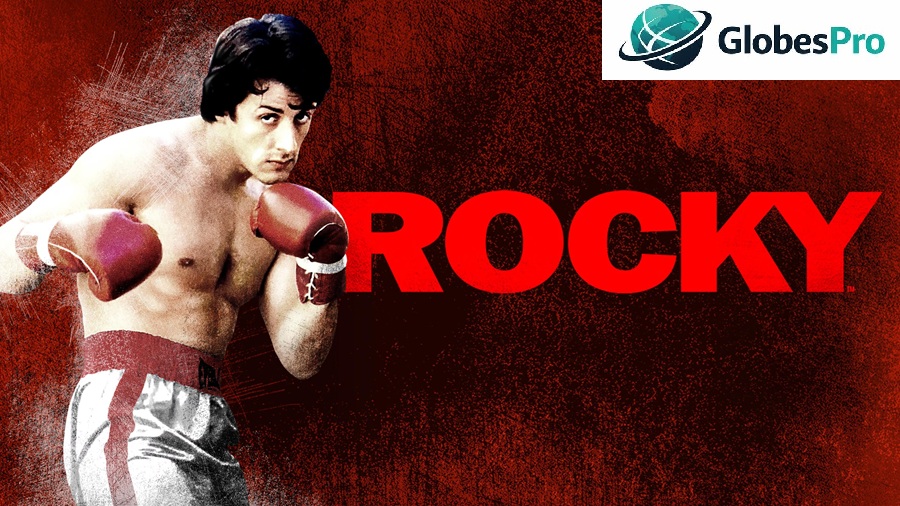
There is a moment in the original Rocky where a broke, unknown fighter from Philadelphia stands in front of a mirror in his tiny apartment and talks to himself about the fight ahead. No special effects. No swelling orchestra. Just a man and a mirror and the particular kind of desperation that comes from knowing that this might be your only shot. It is one of the most quietly powerful moments in American cinema — and it was written by a man who was himself broke, unknown, and staring down his own last chance. That alignment between creator and character is the secret at the heart of everything the Rocky franchise has ever been.
For readers looking for a quick answer — Rocky is an American sports drama franchise created by and starring Sylvester Stallone, beginning with the original film in 1976 and continuing through six Rocky films and three Creed films as of 2023. The original Rocky won the Academy Award for Best Picture and launched one of the most commercially successful and culturally enduring franchises in cinema history. The series has grossed over $1.4 billion worldwide and produced some of the most recognisable moments, characters, and music in the history of film.
Quick Facts
| Field | Details |
|---|---|
| Franchise Name | Rocky / Creed Universe |
| Created By | Sylvester Stallone |
| First Film | Rocky (1976) |
| Latest Entry | Creed III (2023) |
| Total Films | 9 (Rocky I–VI + Creed I–III) |
| Total Box Office | $1.4+ billion worldwide |
| Academy Awards | Rocky — Best Picture, Best Director, Best Film Editing (1977) |
| Main Character | Rocky Balboa — Sylvester Stallone |
| Studios | United Artists / MGM / Warner Bros |
| Franchise Span | 1976 – Present (47+ years) |
The Origin Story: A Broke Actor, a Fight, and Three Days
The story of how Rocky came to exist is one of Hollywood’s most retold origin stories — and it has been retold so many times that it risks losing the genuine improbability at its centre. So here it is, as clearly as possible.
In March 1975, Sylvester Stallone — a struggling actor with barely enough money to feed himself, who had famously sold his dog to pay bills — watched a heavyweight championship fight between Muhammad Ali and Chuck Wepner. Wepner was a journeyman fighter from New Jersey with no realistic chance of winning. He was knocked down. He got up. He was knocked down again. He got up again. He lasted fifteen rounds against the greatest boxer alive and was only stopped with nineteen seconds remaining.
Stallone went home and wrote a screenplay in three and a half days.
The script that became Rocky was not a polished Hollywood product. It was a raw, urgent piece of writing produced by someone who felt the story viscerally because he was living a version of it himself. The themes of the film — dignity in the face of long odds, the difference between winning and proving something, what it means to go the distance — were not invented. They were observed and felt.
When he tried to sell the script, studios were interested. United Artists offered him $360,000 for the screenplay — an extraordinary sum for an unknown writer.
He turned it down.
He would only sell the script if he could star in it. The studios wanted an established name — James Caan, Ryan O’Neal, Burt Reynolds were all mentioned as preferred alternatives. Stallone was nobody. He had appeared in minor roles and one film — The Lords of Flatbush (1974) — that had generated no significant attention.
He held firm. Eventually, United Artists agreed — but reduced the budget to approximately $1 million to limit their risk. Stallone got his script and his role. In exchange, he accepted a significantly lower upfront payment.
Rocky grossed $225 million on its initial release and won the Academy Award for Best Picture.
The gamble paid off in a way that has never been fully replicated in Hollywood history.
Rocky (1976): The Film That Changed Everything

| Rocky (1976) — Key Facts | Details |
|---|---|
| Director | John G. Avildsen |
| Written By | Sylvester Stallone |
| Budget | Approx. $1 million |
| Box Office | $225 million worldwide |
| Academy Awards Won | Best Picture, Best Director, Best Film Editing |
| Other Nominations | Best Actor (Stallone), Best Supporting Actor (Meredith), Best Supporting Actress (Shire), Best Original Screenplay (Stallone) |
| Release Date | November 21, 1976 |
| Stallone’s Nominations | Best Actor AND Best Original Screenplay simultaneously |
The film that resulted from Stallone’s gamble was not what anyone expected. It was tender where boxing films were usually brutal. It was character-driven where the genre typically focused on action. It treated its protagonist’s love story with the same seriousness as his athletic journey — and it was this emotional intelligence, as much as the training montages and fight sequences, that made it resonate so completely.
Rocky Balboa is not primarily a boxer in the film. He is a man trying to prove that he is not a bum — that his life has meaning, that he matters, that going the distance with the world champion counts for something even without a victory. That search for dignity resonates universally because it is, in some form, everyone’s search.
The Academy Awards ceremony of 1977 produced one of the evening’s genuine upsets when Rocky beat All the President’s Men, Network, and Taxi Driver for Best Picture — three films that critics widely considered superior and that have, in the decades since, accumulated considerably more critical prestige. The win was controversial then and remains debated now. But it reflected something real about what the film achieved — a connection with audiences at a level that more artistically ambitious films sometimes miss.
Behind the Scenes: The Trivia That Makes the Original Even Better
The behind-the-scenes story of the original Rocky is full of details that add layers to an already rich film.
| Behind the Scenes — Rocky (1976) | The Story |
|---|---|
| The Steps | Stallone ran the Philadelphia Museum of Art steps genuinely — no stunt double, no multiple takes for convenience. The joy at the top was real exhaustion and real elation. |
| The Chicken Chase | The scene where Rocky chases a chicken to improve his footwork was genuinely difficult to film. The chickens were uncooperative. Multiple takes were required. The chaos was largely real. |
| Burgess Meredith’s Casting | Meredith — a distinguished stage and film actor — was cast as Mickey partly because Stallone admired his work and partly because his age and physicality perfectly suited the role. His Academy nomination confirmed the instinct. |
| The Budget Constraint Aesthetic | The film’s gritty, documentary-style visual quality was not entirely a stylistic choice — it was partly a necessity of the budget. The limited funds meant shooting quickly, in real locations, with natural light where possible. The resulting look became the film’s visual identity. |
| Talia Shire’s Performance | Talia Shire — sister of Francis Ford Coppola — played Adrian with a vulnerability that earned her an Academy nomination. She has said the character’s shyness came from a genuine personal understanding of feeling overlooked. |
| The Pet Shop Scene | The scene where Rocky visits Adrian at the pet shop was largely improvised — Stallone and Shire found the chemistry in real time, and director Avildsen kept the cameras rolling. |
| Carl Weathers’ Audition | Carl Weathers came to audition for Apollo Creed and told Stallone he could do better than the actor Stallone was reading with. Stallone took it as confidence rather than insult and gave him the role. |
Rocky II (1979): Stallone Takes the Chair

Rocky II marked a significant transition — Sylvester Stallone directed the film himself, beginning a pattern of creative control over the franchise that would define its subsequent development.
The film picked up immediately where the original left off — Rocky and Apollo’s rematch, Rocky’s marriage to Adrian, the complications of sudden fame on a man who was fundamentally unprepared for it. It was a competent and commercially successful sequel that gave audiences what they wanted without quite matching the emotional depth of the original.
| Rocky II — Key Facts | Details |
|---|---|
| Director | Sylvester Stallone |
| Budget | $7 million |
| Box Office | $200 million worldwide |
| Key Development | Stallone directs for first time |
| Outcome | Rocky wins — reverses original ending |
| Surprising Fact | Stallone wrote and directed while simultaneously training for the role |
The decision to have Rocky actually win the rematch — reversing the original film’s emotionally sophisticated ending — was a commercial calculation that Stallone has since acknowledged was driven partly by audience expectation. Whether it was the right artistic choice remains debatable. Whether it was the right commercial choice is not — the film earned $200 million.
Rocky III (1982): Mr. T, Hulk Hogan, and Eye of the Tiger

Rocky III is where the franchise fully embraced its own mythology — and where it introduced two of the most memorable supporting presences in the entire series.

Mr. T — cast as the ferocious Clubber Lang — had virtually no acting experience before the film. He had been a bodyguard and had caught Stallone’s attention through sheer physical presence and personality. His performance is one of the most genuinely entertaining villain turns in the franchise — all barely contained aggression and extraordinary charisma.

Hulk Hogan appeared as Thunderlips in one of cinema’s more surreal cameos — a professional wrestler playing a professional wrestler in a charity exhibition match against Rocky. It is a genuinely strange scene that works entirely because both participants commit to it completely.
| Rocky III — Surprising Facts | Details |
|---|---|
| Mr. T’s Background | Virtually no acting experience; former bodyguard |
| Hulk Hogan | One of his first major film appearances |
| Eye of the Tiger Origin | Survivor wrote the song specifically for the film after Queen declined to license “Another One Bites the Dust” |
| Budget | $15 million |
| Box Office | $270 million worldwide |
| Rocky’s Character Arc | First film to explore what happens when the underdog becomes the champion |
The Eye of the Tiger story is one of the franchise’s best pieces of trivia. Stallone originally wanted Queen’s “Another One Bites the Dust” for the film’s training montage. Queen declined to license it. Stallone approached Survivor — a Chicago rock band — and asked them to write something specifically for the film. What they produced became one of the best-selling singles in American chart history and one of the most instantly recognisable pieces of music ever attached to a sports film.
Sometimes the backup plan is better than the original.
Rocky IV (1985): Ivan Drago and the Cold War

Rocky IV is simultaneously the most ridiculous and most culturally significant film in the franchise — a contradiction that it inhabits with complete confidence.
Dolph Lundgren’s Ivan Drago is one of cinema’s great physical villains — a towering, apparently robotic Soviet boxer who kills Apollo Creed in the ring and then trains with the most advanced sports science technology available while Rocky runs through snow and lifts rocks in the mountains of Russia. The symbolism is approximately as subtle as a twelve-round knockout.
| Rocky IV — Surprising Facts | Details |
|---|---|
| Dolph Lundgren’s Real Background | Fulbright Scholar; master’s degree in chemical engineering; genuinely elite martial artist |
| The Robot | Rocky buys his trainer Paulie a domestic robot as a birthday gift — a subplot so bizarre it was edited out of Stallone’s 2021 re-cut |
| Apollo’s Death | The decision to kill Apollo Creed was controversial; Carl Weathers has spoken about mixed feelings |
| Training Montage Length | Approximately 30% of the film’s runtime consists of training montages |
| Budget vs Box Office | $28 million budget; $300 million box office |
| Cold War Context | Released at the height of Reagan-era Cold War tension; Rocky defeating Drago was genuine cultural wish-fulfilment |
| Lundgren Hit Stallone | During filming, Lundgren hit Stallone so hard he was hospitalised with heart inflammation for days |
The detail about Dolph Lundgren’s academic background remains one of the franchise’s most startling pieces of trivia. The man playing a Soviet killing machine was simultaneously a Fulbright Scholar and holder of a master’s degree in chemical engineering from MIT. He was also a genuine martial arts champion. Ivan Drago was not entirely fiction.
The robot, however, was entirely fiction — and entirely inexplicable. It appears in the film, interacts with characters, and is then never mentioned again. Stallone removed it from his 2021 director’s cut of the film, which he titled Rocky IV: Rocky vs. Drago. Its removal is one of the least controversial editorial decisions in cinema history.
Rocky V (1990): The One Everyone Agrees Was Wrong

Rocky V is the franchise’s acknowledged weak point — a film that Stallone himself has called a mistake and that represents the only genuine misfire in the original six-film run.
The film brought Rocky back to the streets of Philadelphia after brain damage from the Drago fight forces his retirement. It attempted to return to the gritty, character-driven tone of the original — but arrived at that tone through a series of narrative decisions that felt forced rather than organic.
The most interesting element of Rocky V — from a personal and historical perspective — is the casting of Sage Moonblood Stallone as Robert Balboa Jr., Rocky’s son. Sage, who was fourteen at the time of filming, brought a natural authenticity to the role that came directly from his real relationship with his father. (For the full story of Sage Stallone’s life, creative work, and tragic early death at 36, you can read our dedicated piece on him.)
| Rocky V — Key Facts | Details |
|---|---|
| Director | John G. Avildsen (original director returns) |
| Sage Stallone’s Role | Robert Balboa Jr. — Rocky’s son |
| Budget | $42 million |
| Box Office | $119 million — franchise low at the time |
| Stallone’s Assessment | Has called it his least favourite Rocky film |
| Ending | Street fight rather than boxing match — widely criticised |
| What It Got Wrong | Tried to recapture original’s tone without original’s emotional truth |
The street fight ending — in which Rocky defeats the antagonist in an alley rather than a boxing ring — was a decision that divided audiences immediately and has not improved with time. It felt like a compromise between the franchise’s two competing impulses — gritty realism and crowd-pleasing spectacle — that satisfied neither.
Rocky Balboa (2006): The Comeback Nobody Expected

When Rocky Balboa was announced — a sixth Rocky film, coming sixteen years after the franchise’s worst entry, with a sixty-year-old Stallone returning to the role — the reaction was largely sceptical. The jokes wrote themselves. The cultural conversation was not kind.
And then the film came out. And it was genuinely good.
Rocky Balboa is arguably the second-best film in the franchise — a quiet, character-driven piece that returned to the emotional authenticity of the original without trying to replicate its plot. Rocky is old, alone (Adrian has died between films), and still carrying the need to prove something. The fight at the centre of the film — a sanctioned exhibition against the current heavyweight champion — is not the point. The point is why Rocky needs it.
| Rocky Balboa (2006) — Key Facts | Details |
|---|---|
| Director | Sylvester Stallone |
| Budget | $18 million |
| Box Office | $156 million worldwide |
| Gap Since Last Film | 16 years |
| Key Concept | ESPN computer simulation suggests Rocky could compete; sparks real fight |
| Adrian’s Fate | Died of cancer between films; her absence shapes the entire film |
| Critical Reception | Significantly better than expected; widely considered franchise redemption |
| Stallone’s Age | 60 years old during filming |
The ESPN simulation concept — in which a fictional computer simulation matching Rocky’s historical data against the current champion sparks public interest in a real fight — was a genuinely clever piece of narrative architecture that grounded the implausible premise in something that felt contemporary and plausible.
Stallone trained seriously for the role at sixty — a physical commitment that generated its own media coverage and that was visible on screen in ways that made the fighting sequences credible rather than embarrassing.
The Creed Era: When the Franchise Reinvented Itself
The most surprising chapter in the Rocky franchise’s history began in 2015 — when director Ryan Coogler (later of Black Panther) approached the material with a completely fresh perspective and produced a film that didn’t just continue the franchise but genuinely reinvented it.
Creed told the story of Adonis Creed — the illegitimate son of Apollo Creed — training under an aging Rocky Balboa. The premise sounds like a straightforward legacy sequel. What Coogler made was something considerably more ambitious — a film about fathers and sons, about inherited legacy, about what it means to fight for your own identity rather than someone else’s.
Michael B. Jordan’s performance as Adonis was immediately recognised as one of the best in the franchise. Sylvester Stallone’s performance as an older, diminished, cancer-stricken Rocky earned him a Golden Globe Award and an Academy Award nomination — his first since the original film nearly forty years earlier.
| The Creed Films | Year | Director | Key Story | Box Office |
|---|---|---|---|---|
| Creed | 2015 | Ryan Coogler | Adonis trains with Rocky; Rocky battles cancer | $173 million |
| Creed II | 2018 | Steven Caple Jr. | Adonis vs Viktor Drago (Ivan’s son) | $214 million |
| Creed III | 2023 | Michael B. Jordan | Adonis vs childhood friend Damian Anderson | $271 million |

Creed III — directed by Michael B. Jordan himself, making his directorial debut — was notable for being the first entry in the franchise in which Rocky Balboa does not appear. The torch had been passed completely. The franchise that Stallone built in three days in 1975 had become something large enough to exist without him — which is, in its own way, the most complete vindication of everything he built.
Surprising Facts & Trivia: The Complete Collection
| Trivia | Details |
|---|---|
| Stallone sold his dog | Before selling the Rocky script, Stallone was so broke he sold his dog Butkus for $40. After the deal, he bought him back for $15,000. Butkus appears in Rocky I and II. |
| The real Chuck Wepner | The man who inspired Rocky sued Stallone for compensation years later, claiming inadequate credit for his role in inspiring the character. They eventually reached a settlement. |
| Adrian almost wasn’t Adrian | The role of Adrian was offered to several actresses before Talia Shire. Carrie Snodgress was the original choice but negotiations broke down. |
| The steps count | The Philadelphia Museum of Art steps that Rocky runs up have 72 steps. They are now officially called the Rocky Steps. |
| Mickey’s casting | Burt Young — who played Paulie — was cast after Stallone saw him in a single scene in a film and called him directly. |
| Drago’s punch force | Ivan Drago’s punch force was stated in the film as 2,000 PSI. The number was invented for dramatic effect but was cited in real sports science discussions for years afterward. |
| The Duke’s bell | The bell used in the climactic fight of the original Rocky was a real boxing gym bell rented for $5. |
| Rocky’s trunks | Rocky wears the wrong colour trunks in his fight with Apollo — the promoter switched them for visual reasons without telling him, which became part of the film’s authenticity. |
| Stallone’s directorial record | Stallone directed Rocky II, III, IV, and Balboa — four of the six original films. |
| Eye of the Tiger sales | The song sold over 4 million copies in the US alone and reached number one in multiple countries. |
| Creed’s single take | Ryan Coogler filmed Adonis’s first professional fight in Creed in a single continuous take — an extraordinary technical achievement that runs approximately four minutes. |
| Rocky’s IQ | The character’s intelligence has been debated by fans for decades. Stallone has said Rocky is not unintelligent — he is simply uneducated, which is a different thing. |
The Philadelphia Connection
Philadelphia is not just the setting of the Rocky films — it is a character in them. The city’s working-class identity, its particular mixture of civic pride and grinding difficulty, its relationship with its own history and its own mythology — all of these things are woven into the fabric of what Rocky is.
The relationship between the franchise and the city has become one of cinema’s most enduring geographical love stories.
The Rocky statue — a bronze sculpture of Stallone in fighting pose — has a history almost as interesting as the films themselves. It was created for Rocky III as a prop, displayed on the steps of the Philadelphia Museum of Art within the film, and then became a genuine point of civic contention when Stallone donated it to the city. Some felt it was inappropriate to display a movie prop alongside serious public art. The statue was eventually moved to a permanent location at the base of the museum steps — a compromise that has pleased most parties and turned the site into one of Philadelphia’s most visited tourist locations.
| The Rocky Steps Today | Details |
|---|---|
| Location | Philadelphia Museum of Art |
| Steps | 72 — officially named “The Rocky Steps” |
| Annual Visitors | Hundreds of thousands run the steps annually |
| Rocky Statue | Permanent installation at base of steps |
| Cultural Status | One of Philadelphia’s most recognised landmarks |
| Tourism Impact | Significant contribution to Philadelphia’s tourism economy |
People from around the world travel to Philadelphia specifically to run those 72 steps and recreate the moment from the film. They play “Gonna Fly Now” on their phones as they run. They raise their arms at the top. They feel something — the same thing the film makes them feel — in a real location with real stone under their feet.
That is a remarkable thing for a movie to achieve.
The Music: More Than Eye of the Tiger
The Rocky franchise has produced some of the most recognisable music in film history — and the story behind that music is as interesting as the films themselves.

Bill Conti’s original score for Rocky is one of cinema’s great musical achievements. “Gonna Fly Now” — the training montage theme that became the franchise’s signature — was not an obvious commercial proposition. It was a complex orchestral piece with a gospel-influenced structure that Conti constructed to capture the specific emotional arc of Rocky’s preparation. It reached number one on the Billboard Hot 100 in the summer of 1977 — an extraordinary achievement for an orchestral film theme.
| Rocky Franchise Music | Details |
|---|---|
| “Gonna Fly Now” | Bill Conti; #1 Billboard Hot 100 (1977); Rocky’s signature theme |
| “Eye of the Tiger” | Survivor; written specifically for Rocky III; #1 in multiple countries |
| “Hearts on Fire” | John Cafferty; Rocky IV training montage |
| “Burning Heart” | Survivor returns; also Rocky IV |
| “Take You Back” | Creed soundtrack; reflects franchise’s new musical identity |
| Creed Soundtrack | Hip-hop and R&B influence; reflects Adonis’s generation |
The shift in musical identity between the Rocky and Creed eras is itself a story about how the franchise evolved. Bill Conti’s orchestral grandeur gave way to the rock anthems of the 1980s entries, which gave way to the hip-hop and R&B-influenced soundtracks of the Creed films. Each transition reflected both the era in which the film was made and the cultural identity of its central character.
Legacy: Why Rocky Refuses to Die
The Rocky franchise has been culturally relevant across five decades — an achievement that very few film series can claim and that deserves serious examination.
Part of the answer is the universality of the underdog narrative. Every human being who has ever felt overlooked, underestimated, or dismissed understands something about what Rocky Balboa wants. The specific setting changes — Philadelphia boxing gyms, Cold War arenas, Los Angeles gyms in the Creed era — but the emotional core remains constant.
Part of the answer is Stallone’s willingness to let the franchise grow. The Creed films represented a genuine creative risk — passing the central role to a new character and a new generation of filmmakers. It would have been easier and safer to either stop the franchise or continue it with Stallone at the centre. The decision to step back required a confidence in the material that the results justified completely.
And part of the answer is simply that the original film was genuinely great — not just commercially successful, but emotionally true in ways that hold up regardless of when you watch it. The Best Picture Oscar was controversial. But the film that won it was not unworthy of the honour.
| Rocky Franchise Legacy | Details |
|---|---|
| Cultural Longevity | Relevant across 5 decades and counting |
| Underdog Narrative | Universal emotional core that transcends sport and era |
| Philadelphia Identity | Permanently associated with the city’s public identity |
| Music Legacy | Multiple iconic songs that outlasted the films |
| Creed Evolution | Successfully passed torch to new generation |
| Stallone’s Legacy | Defines his creative and personal identity |
| Sporting Influence | Changed how sports films approach character over competition |
Conclusion: Going the Distance
Sylvester Stallone wrote Rocky in three and a half days because he watched a man get knocked down and get up and decided that story mattered. He sold it for less than he was offered because he believed in it enough to bet his career on it. He played the character six times across thirty years and then stepped back far enough to let someone else carry it forward.
The franchise that resulted has grossed over a billion dollars, won multiple Academy Awards, turned 72 museum steps in Philadelphia into a pilgrimage site, produced some of the most recognisable music in film history, and told the same fundamental story — about dignity, about resilience, about the difference between winning and going the distance — across nine films and nearly five decades.
Rocky Balboa never became heavyweight champion of the world in the original film. He went fifteen rounds with the best fighter on earth and didn’t quit. That was enough. That was, in fact, everything.
The franchise built on that moment has done something similar. It has been knocked down — Rocky V is right there in the record — and it has gotten up. It has been dismissed and returned. It has passed its legacy forward and watched it grow into something larger than the original.
In the history of Hollywood, very few stories have deserved their own mythology as completely as Rocky deserves his.
Bonus Trivia Table
| Category | Fact |
|---|---|
| Fastest script | Written in 3.5 days by Stallone |
| Lowest budget | Rocky (1976) — approximately $1 million |
| Highest grossing | Creed III (2023) — $271 million |
| Most Oscars | Rocky (1976) — 3 wins including Best Picture |
| Best villain | Debated endlessly; Clubber Lang and Ivan Drago are perennial top two |
| Most iconic line | “Yo, Adrian!” — never actually said as “Yo, Adrian, I did it!” in original |
| Real boxer cameos | Roberto Duran, Larry Holmes, Mike Tyson (Creed) all appeared |
| Stallone’s dog | Sold for $40; bought back for $15,000; starred in two films |
| Rocky’s record | 57 wins (44 KOs), 23 losses, 1 draw — official in-universe record |
| The steps today | 72 steps; officially named Rocky Steps; visited by millions annually |
