
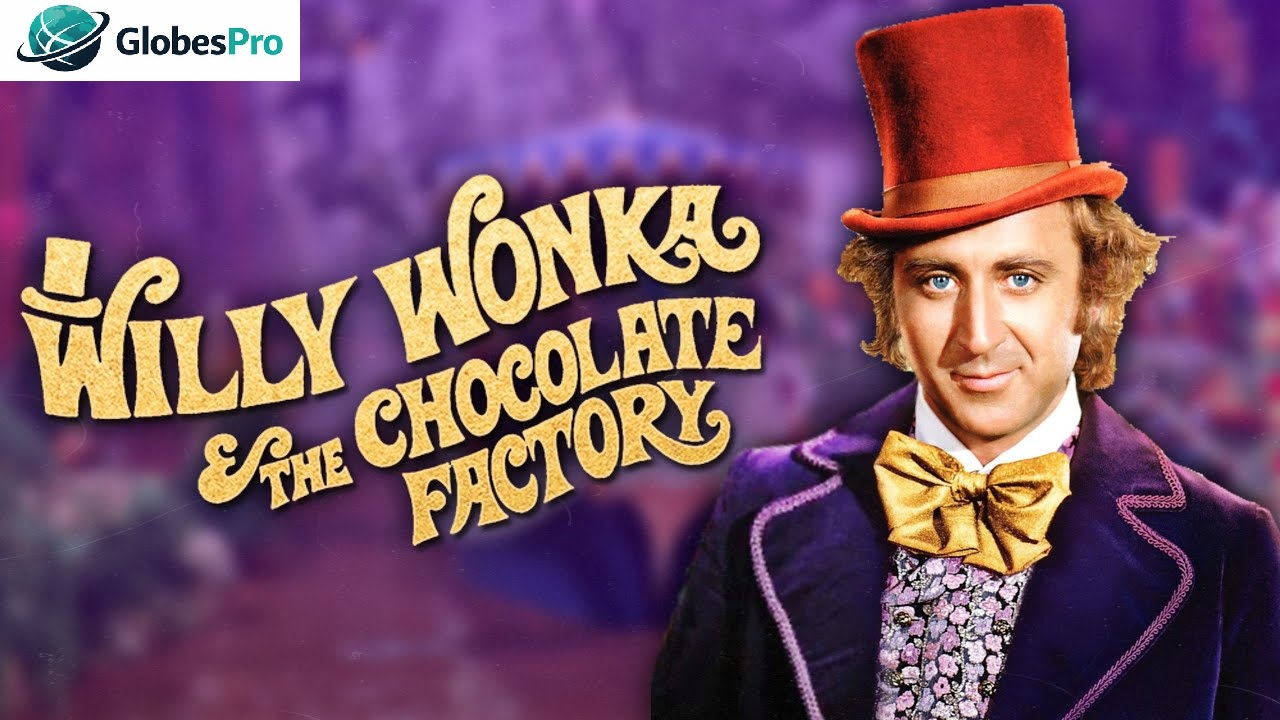
Some films age. Some films date. And then there are films like Willy Wonka & the Chocolate Factory — films that seem to exist outside of time entirely, getting richer and stranger and more layered the further we get from their original release. A movie made in 1971 on a modest budget, shot in Germany, funded by a candy company, starring an actor who agreed to the role only if he could walk with a fake limp — and somehow, impossibly, it became one of the most beloved films in cinema history.
For readers looking for a quick answer — Willy Wonka & the Chocolate Factory is a 1971 American musical fantasy film directed by Mel Stuart, starring Gene Wilder as the eccentric chocolatier Willy Wonka. It was based on Roald Dahl’s 1964 novel Charlie and the Chocolate Factory — with Dahl himself writing the screenplay. The film was produced with funding from Quaker Oats as part of a candy bar marketing campaign, shot entirely in Munich, Germany, and was a box office disappointment on release before becoming one of the most enduring classics in film history through television broadcasts and re-releases.
Quick Facts
| Field | Details |
|---|---|
| Title | Willy Wonka & the Chocolate Factory |
| Release Date | June 30, 1971 |
| Director | Mel Stuart |
| Screenplay | Roald Dahl |
| Based On | Charlie and the Chocolate Factory (1964) by Roald Dahl |
| Starring | Gene Wilder, Jack Albertson, Peter Ostrum |
| Music | Leslie Bricusse & Anthony Newley |
| Production Company | Wolper Pictures / Quaker Oats Company |
| Distributor | Paramount Pictures |
| Budget | Approx. $3 million |
| Box Office | ~$4 million (initial run) |
| Filming Location | Munich, Germany (Bavaria Film Studios) |
| Running Time | 100 minutes |
| Rating | G |
The Source Material: Roald Dahl’s Dark Masterpiece

Before there was a film, there was a book — and understanding the book is essential to understanding everything that followed.
Roald Dahl published Charlie and the Chocolate Factory in 1964. It was, on the surface, a children’s story about a poor boy who wins a golden ticket to visit the world’s most magical chocolate factory. Underneath that surface, it was something considerably darker — a morality tale in which children with specific character flaws are punished in increasingly elaborate and disturbing ways, presided over by a factory owner whose warmth and menace existed in unsettling balance.
Dahl’s genius was in that duality. The world of Wonka was genuinely magical — but it was also genuinely dangerous. Children disappeared into pipes, got turned into blueberries, shrank to miniature size. The consequences were always framed as lessons, but the relish with which Wonka observed them suggested something more complex than simple moral instruction.
The book became a massive success and was quickly identified as a strong candidate for film adaptation. What nobody anticipated was quite how strange the road to production would turn out to be.
The Most Unusual Origin Story in Hollywood History
Here is a sentence you don’t often encounter in film history: a major motion picture was funded by a cereal and oatmeal company primarily to sell chocolate bars.
That is, with only slight simplification, the origin story of Willy Wonka & the Chocolate Factory.

The Quaker Oats Company approached producer David L. Wolper in the late 1960s with an unusual proposition. They wanted to produce a film based on Dahl’s novel — not primarily because they were passionate about cinema, but because they planned to simultaneously launch a line of Wonka-branded candy bars. The film was, in their conception, an elaborate piece of marketing infrastructure.
| The Quaker Oats Deal | Details |
|---|---|
| Funder | The Quaker Oats Company |
| Motivation | Launch Wonka-branded chocolate bar line |
| Investment | Partial funding of the $3 million budget |
| Marketing Plan | Film release timed with candy bar launch |
| What Happened | Wonka Bars failed commercially; film initially underperformed |
| Long-term Irony | Film became a classic; Wonka brand eventually became enormously successful |
The Wonka Bars launched alongside the film — and promptly failed. They melted too easily in warm weather, the distribution was inconsistent, and consumers weren’t as enthusiastic as Quaker Oats had hoped. The candy bars that were supposed to be the whole point of the exercise disappeared from shelves fairly quickly.
The film they funded to sell those bars became immortal.
The irony is almost too perfect. Quaker Oats invested in a movie to move product, the product failed, and the movie outlasted both the product and the company’s involvement with the confectionery industry entirely. The Wonka brand eventually passed through various hands and became genuinely valuable — but by that point, it was the film’s legacy driving the brand rather than the other way around.
The Search for Willy Wonka
Finding the right actor to play Willy Wonka was, by all accounts, one of the most consequential casting decisions in Hollywood history — and it came remarkably close to going very differently.
The role required something almost impossible to define on paper. Wonka needed to be warm enough to make children love him, strange enough to make audiences uneasy, funny enough to carry musical numbers, and dramatic enough to deliver moments of genuine menace — all in the same performance, sometimes in the same scene.

Several names were reportedly considered before the role was offered to Gene Wilder. The most frequently cited alternative is Ron Moody, who had recently played Fagin in Oliver! (1968) with great success and seemed a natural fit for an eccentric theatrical character. Other names circulated as well — but none of them had what Gene Wilder had.
What Wilder had was the ability to make you uncertain. When he was warm, you weren’t entirely sure the warmth was real. When he was threatening, you weren’t entirely sure the threat was serious. That productive uncertainty — that permanent ambiguity about what Wonka was actually thinking or feeling — is what made the performance work at every level simultaneously.
But Gene Wilder had a condition.
The Limp: Gene Wilder’s Famous Demand
When Gene Wilder agreed to play Willy Wonka, he came with one non-negotiable requirement — and it was one of the most psychologically astute creative decisions in the film’s production.
He insisted that Wonka would walk with a limp, using a cane — but that at his very first public appearance in the film, he would suddenly abandon the limp and walk perfectly normally.

His reasoning, which he articulated clearly to the producers, was precise: if Wonka does something that inexplicable right at the start — something the audience cannot explain or reconcile — then nobody will ever be sure what’s real about him. Every subsequent moment of warmth, every flash of menace, every smile and every threat, would be filtered through that permanent uncertainty.
The producers agreed. Watch the film again knowing this — Wonka’s first entrance is one of the most carefully constructed character introductions in cinema. The limp. The pause. And then, suddenly, nothing. Just a man walking normally, as if nothing happened, while the audience sits slightly unsettled and completely hooked.
It was entirely Gene Wilder’s idea. It cost nothing. And it defines the entire film.
Casting the Children: A Worldwide Search
Finding the right children to play Charlie Bucket and the four golden ticket winners was a genuinely massive undertaking — a worldwide casting search that eventually settled on a mix of American and European child actors.
| Character | Actor | Background | After the Film |
|---|---|---|---|
| Charlie Bucket | Peter Ostrum | American; no prior acting experience | Never acted again; became a veterinarian |
| Augustus Gloop | Michael Bollner | German | Became a tax attorney |
| Veruca Salt | Julie Dawn Cole | British | Continued acting career |
| Violet Beauregarde | Denise Nickerson | American | Continued acting; appeared in various TV roles |
| Mike Teavee | Paris Themmen | American | Occasional acting; later became travel writer |
The most remarkable story belongs to Peter Ostrum — the boy who played Charlie Bucket. He had no acting experience before being cast, was discovered through a regional theater search in Cleveland, Ohio, and delivered a performance of genuine warmth and naturalism that anchors the entire film.
After Willy Wonka & the Chocolate Factory, Ostrum received offers to continue acting — including a three-picture contract. He turned them all down. He had decided that acting wasn’t what he wanted from his life. He went on to study veterinary medicine and has worked as a large-animal vet in upstate New York for decades.
He has given occasional interviews over the years reflecting warmly on the experience — a man who was briefly at the centre of one of cinema’s most beloved films and then walked quietly away into an entirely different kind of life. The parallel with some of the children of famous people we’ve written about recently is striking.
Why Munich? Filming in Germany
One of the less-discussed facts about Willy Wonka & the Chocolate Factory is that it was filmed almost entirely in Munich, Germany — specifically at the Bavaria Film Studios.
The decision was primarily financial. European production costs in the early 1970s were significantly lower than Hollywood equivalents, and the Bavaria Film Studios offered world-class facilities at a fraction of the American price. For a film with a modest $3 million budget that needed to build elaborate fantasy sets, this was a practical necessity rather than an artistic choice.
What the German location gave the production, somewhat accidentally, was a slightly otherworldly quality. The streets of Munich used for the exterior scenes of Charlie’s hometown have a distinctly European character that contributes to the film’s sense of existing in a place that isn’t quite anywhere specific — not quite America, not quite England, not quite anywhere real. That geographical ambiguity serves the story perfectly.
The production team spent considerable time and budget constructing the interior sets at Bavaria Film Studios — and those sets, particularly the Chocolate Room, became some of the most celebrated production design in film history.
Building the Chocolate Room: The Most Edible Set Ever Made
If you ask most people what they remember first about Willy Wonka & the Chocolate Factory, the answer is almost always the same — the moment the doors open and Wonka’s Chocolate Room is revealed for the first time.

It is one of cinema’s great visual moments. A landscape of impossible colour and abundance — chocolate waterfalls, edible flowers, candy grass, mushrooms you can eat, a river of liquid chocolate running through the middle of it all. The production design team, led by Harper Goff, created something that looked genuinely magical onscreen.
What makes it even more remarkable is how much of it was actually real.
| Chocolate Room Elements | Real or Fake? |
|---|---|
| Chocolate river | Real chocolate (with added food colouring) |
| Edible flowers and mushrooms | Genuinely edible; made from sugar and candy |
| Lickable wallpaper | Real — covered in edible flavoured paper |
| Candy canes and lollipops | Real sugar confections |
| Chocolate waterfall | Real chocolate — caused problems in summer heat |
| Grass | Real grass dyed green; some edible candy versions |
The cast was encouraged to genuinely interact with the set — eating, tasting, exploring. Gene Wilder famously bit into a flower during filming because it was genuinely edible and he wanted the moment to feel real. It made it into the film.
The chocolate waterfall created significant practical problems. Real chocolate, under studio lighting, melts — and keeping it flowing consistently throughout the shoot required constant temperature management and considerable logistical effort.
The smell on set was reportedly extraordinary. Child actors have since recalled that walking onto the Chocolate Room set for the first time was genuinely overwhelming — the combination of real chocolate, sugar confections, and edible flowers created an aroma that matched the visual spectacle completely.
The Music: Songs That Outlived the Film
A film lives or dies by its music as much as its visuals — and Willy Wonka & the Chocolate Factory got its music exactly right.

Leslie Bricusse and Anthony Newley wrote the film’s score and songs, producing a collection of musical numbers that range from the deeply strange to the genuinely transcendent.
| Song | Moment in Film | Legacy |
|---|---|---|
| Pure Imagination | Wonka reveals the Chocolate Room | Became one of cinema’s most beloved songs; covered hundreds of times |
| The Candy Man | Opening sequence | Billboard hit for Sammy Davis Jr. in 1972 |
| I’ve Got a Golden Ticket | Charlie finds his ticket | Joyful set piece; quintessential musical moment |
| Oompa Loompa Songs | After each child’s elimination | Culturally iconic; immediately recognisable |
| Cheer Up, Charlie | Emotional midpoint | Often cited as underrated; genuinely moving |
“Pure Imagination” deserves particular attention. Gene Wilder’s delivery of the song — quiet, tender, completely sincere — is one of the great vocal performances in musical cinema. He wasn’t a trained singer, and that rawness works entirely in the song’s favour. It doesn’t sound like a performance. It sounds like a confession.
The song has been covered by hundreds of artists across genres and decades. It appears in commercials, television shows, emotional film moments, and cultural references so frequently that many younger audiences know it without knowing its origin. That is the definition of a song that transcends its source material entirely.
The Oompa Loompas: Casting Reality

The Oompa Loompas — Wonka’s mysterious factory workers who deliver sung moral lessons after each child’s downfall — are among the film’s most memorable elements. Getting them on screen involved a casting and production process that was both creative and, by today’s standards, complicated.
The Oompa Loompas were played by a group of actors of short stature, primarily sourced from the UK and Europe. They wore distinctive orange makeup and green wigs — a visual that became immediately iconic.
The makeup process was reportedly lengthy and uncomfortable — actors spent significant time in the makeup chair each morning achieving the orange skin tone, and the wigs required careful maintenance throughout the shoot. Despite the discomfort, the group reportedly had a strong collective energy on set and contributed significantly to the film’s atmosphere.
In later years and re-releases, the original casting was revisited due to changing sensibilities around representation — a conversation that reflects how cultural standards have evolved since the film’s production. The original casting decisions were made without the frameworks that exist today, and the conversation around them is part of the film’s complex legacy.
Roald Dahl’s Fury: The Author Who Hated His Own Adaptation
Here is one of film history’s great ironies — the author who wrote the source novel, wrote the screenplay himself, and had significant creative involvement in the production ended up hating the finished film with considerable passion.
Roald Dahl’s falling out with Willy Wonka & the Chocolate Factory was real, documented, and surprisingly specific in its complaints.
His primary objection was to Gene Wilder’s portrayal of Wonka. Dahl felt that Wonka should be played as a warmer, more straightforwardly benevolent figure — closer to the character’s surface presentation in the novel. Wilder’s version, with its undercurrent of menace and permanent ambiguity, felt wrong to Dahl. He believed it fundamentally misrepresented the character he had created.
| Dahl’s Specific Complaints | Details |
|---|---|
| Gene Wilder’s Wonka | Too sinister; not warm enough |
| Script Changes | Producers altered his screenplay without full consultation |
| Title Change | Novel was Charlie and the Chocolate Factory; film renamed to centre Wonka |
| Slugworth subplot | Added by producers; not in original novel |
| Overall tone | Felt the film strayed from his vision |
The title change alone irritated him. The novel was called Charlie and the Chocolate Factory — centering the boy. The film was renamed Willy Wonka & the Chocolate Factory — centering the adult character. To Dahl, this was a fundamental misreading of what the story was actually about.
He was so unhappy with the result that he refused to grant the rights for any sequel — a refusal that held until after his death in 1990. It is one of the reasons the 1971 film stands alone as its own complete entity rather than spawning a franchise.
The deep irony, of course, is that posterity has sided almost entirely with the film rather than Dahl’s objections. The elements he disliked most — Wilder’s ambiguous menace, the Slugworth subplot, the renamed title — are precisely the elements that have given the film its enduring power.
The Tunnel Scene: Hollywood’s Most Unsettling Two Minutes
No discussion of Willy Wonka & the Chocolate Factory is complete without addressing the scene that has disturbed, confused, and fascinated audiences for over fifty years.
Midway through the film, Wonka takes his guests on a boat ride through a tunnel. The lights go out. Images begin appearing on the tunnel walls — a centipede crawling across a face, a chicken being decapitated, surreal and disturbing imagery that escalates rapidly. And Wonka, rather than reassuring his terrified passengers, begins reciting an increasingly unhinged poem in a voice that starts controlled and ends at something close to a scream.
The poem — “There’s no earthly way of knowing / Which direction we are going” — was not in Roald Dahl’s screenplay. It was added during production and delivered by Gene Wilder in a way that the director Mel Stuart later admitted he hadn’t fully anticipated.
Wilder has spoken about the scene in interviews. He made a deliberate decision to play it with escalating intensity — starting quietly and building to genuine menace. The choice was his own. Nobody told him to do it that way. He simply decided that this was the moment where Wonka’s mask slipped completely, and he committed to it without reservation.
The result is two of the most genuinely unsettling minutes in a film nominally aimed at children. Parents watching with their kids have reported children hiding behind cushions. Adults watching alone have reported feeling deeply uncomfortable. Film scholars have written about it as a moment of genuine psychological horror buried inside a family musical.
It works because Wilder commits completely. There is no winking at the camera, no reassurance that this is all part of the fun. For those two minutes, something real and dark surfaces — and then the boat stops and the tour continues as if nothing happened.
That tonal whiplash is, arguably, the most Roald Dahl moment in the entire film.
Box Office Disappointment and the Television Miracle
When Willy Wonka & the Chocolate Factory opened on June 30, 1971, it did not set the world on fire.
The initial theatrical run was modest. The film earned approximately $4 million against its $3 million budget — technically profitable but hardly a triumph. Critics were mixed. The Wonka chocolate bars that were supposed to drive awareness had already faltered. The film slipped out of theatres without making a significant cultural impression.
And then television happened.
ABC acquired the broadcast rights and began airing the film on American television — initially in 1972 and then repeatedly through the 1970s. Each broadcast reached audiences measured in the tens of millions. Children who hadn’t seen it in theatres saw it at home. Those children grew up, had children of their own, and showed it to them. The cycle repeated across decades.
| Reception Timeline | Details |
|---|---|
| June 1971 | Theatrical release; modest performance |
| 1972 | First US television broadcast on ABC |
| 1970s–80s | Annual/biannual TV broadcasts build massive audience |
| 1980s | VHS release introduces home video audience |
| 1990s | Cable television broadcasts; new generation discovers film |
| 2005 | Tim Burton remake brings renewed attention to original |
| 2010s–present | Streaming era; meme culture; continued cultural relevance |
The film’s journey from box office disappointment to beloved classic is one of the purest examples of television’s power to rehabilitate and elevate cinema. Without those ABC broadcasts, Willy Wonka & the Chocolate Factory might have been a forgotten footnote. With them, it became a generational touchstone.
Roald Dahl, the Sequels That Never Were, and What Happened Next
Because Dahl refused to grant sequel rights during his lifetime, the 1971 film exists in permanent isolation — a single, complete, self-contained vision with no official continuation.
After Dahl’s death in 1990, the rights situation eventually changed. Tim Burton directed a remake — Charlie and the Chocolate Factory — in 2005, starring Johnny Depp as Wonka. It returned to Dahl’s original title and attempted a more faithful adaptation of the novel’s tone. It was commercially successful but critically divisive, with many viewers finding Depp’s interpretation — more overtly strange, with a backstory added for Wonka — less satisfying than Wilder’s.
The comparison between the two performances is one of cinema’s more interesting ongoing debates. Depp’s Wonka is weirder on the surface. Wilder’s Wonka is stranger underneath. Most people, given time and distance, tend to return to Wilder.

In 2023, a prequel film simply titled Wonka was released, starring Timothée Chalamet as a young Wonka. It was a warmer, more straightforwardly optimistic take on the character — closer to Dahl’s original conception in some ways — and performed strongly at the box office.
| The Wonka Films | Year | Star | Notes |
|---|---|---|---|
| Willy Wonka & the Chocolate Factory | 1971 | Gene Wilder | The original; became a classic |
| Charlie and the Chocolate Factory | 2005 | Johnny Depp | Tim Burton remake; commercially successful |
| Wonka | 2023 | Timothée Chalamet | Prequel; strong box office performance |
None of the subsequent films have displaced the 1971 version in the cultural imagination. It remains the Wonka film — the one people mean when they reference the character, the one whose images and songs surface in memes and cultural references constantly.
Legacy: Why It Endures
The question of why Willy Wonka & the Chocolate Factory has lasted when so many films of its era have not is worth sitting with seriously.
Part of the answer is Gene Wilder — a performance so specific and so strange that no subsequent interpretation has been able to fully replace it in the audience’s imagination.
Part of the answer is the music — particularly “Pure Imagination,” which has taken on a cultural life entirely independent of the film.
Part of the answer is the production design — the Chocolate Room remains one of cinema’s great visual achievements, and the film’s overall aesthetic has aged remarkably well.
But the deepest answer is probably the tonal complexity. The film takes children seriously. It doesn’t condescend. It allows genuine darkness — the tunnel scene, Wonka’s ambiguity, the fates of the other children — to coexist with genuine wonder. That combination is rare in family cinema and almost impossible to manufacture deliberately. It happened partly by accident, partly through Gene Wilder’s insistence on playing Wonka his own way, and partly through the collision of a Quaker Oats marketing budget, a German film studio, a difficult author, and one of the most unlikely casting decisions in Hollywood history.
Fun Facts & Trivia
| Fact | Details |
|---|---|
| Funded by cereal company | Quaker Oats funded the film to launch Wonka chocolate bars |
| Filmed in Germany | Entire film shot at Bavaria Film Studios, Munich |
| Peter Ostrum’s only film | Charlie Bucket actor never acted again; became a vet |
| Wilder’s limp condition | Insisted on the fake limp before agreeing to take the role |
| Edible chocolate room | Much of the set was genuinely edible |
| Dahl hated it | The author publicly disliked the finished film |
| Tunnel poem not in script | Wilder delivered it his own way; director hadn’t anticipated the intensity |
| Initial box office flop | Made only $4M; became a classic through TV broadcasts |
| “Pure Imagination” not Oscar nominated | Remarkably, the song was not nominated for an Academy Award |
| Wonka brand lives on | The Wonka candy brand eventually became hugely successful — long after the bars that inspired the film failed |
Conclusion: The Accidental Masterpiece
Willy Wonka & the Chocolate Factory should not exist in the form it does. It was funded by a company that wanted to sell chocolate bars. It was shot in a country chosen for its cheap production costs. Its author hated it. Its star insisted on walking with a fake limp. It flopped at the box office.
And yet — here we are, over fifty years later, still talking about it. Still watching it. Still being unsettled by that tunnel. Still feeling something real when Gene Wilder whispers “Pure Imagination” to a room full of children in a world made entirely of candy.
That gap between what a film is supposed to be and what it actually becomes is where the real magic lives. Not in the Quaker Oats marketing plan. Not in the Wonka chocolate bars that melted in the heat. In the performance of a man who knew that the most interesting thing about a character who promises you everything is making you permanently unsure whether he means it.
Gene Wilder knew. And that knowing made a film that will probably outlast all of us.
