Category

People

Category

There are performances in cinema that last ten minutes and live forever. Jack Woltz — the arrogant Hollywood mogul who dismisses the Corleone family’s request with contemptuous certainty and wakes up screaming in a bed soaked with the blood of his prized racehorse — is on screen for perhaps fifteen minutes across two scenes. Those fifteen minutes, delivered by a character actor named John Marley who had spent forty years in near-obscurity before anyone outside the theatre world knew his name, constitute one of the most perfectly executed supporting performances in the history of American cinema. The horse head is what everyone remembers. John Marley is why it works.

For readers looking for a quick answer — John Marley was an American actor born Mortimer Leon Marlieb on October 17, 1907, in Harlem, New York City, the son of Russian-Jewish immigrant parents. He spent four decades building his craft in theatre and minor film roles before achieving recognition with his Venice Film Festival Volpi Cup for Faces (1968) and an Academy Award nomination for Best Supporting Actor for Love Story (1970). He is best known to general audiences as Jack Woltz in The Godfather (1972) — the Hollywood producer who wakes to find the severed head of his prize horse in his bed. He died on May 22, 1984, at the age of 76.

Quick Facts

Field Details
Full Name John Marley (born Mortimer Leon Marlieb)
Born October 17, 1907
Birthplace Harlem, New York City, USA
Died May 22, 1984 (age 76)
Cause of Death Complications from open-heart surgery
Nationality American
Occupation Actor, Theatre Director
Known For Jack Woltz — The Godfather (1972)
Oscar Nomination Best Supporting Actor — Love Story (1970)
Venice Film Festival Volpi Cup Best Actor — Faces (1968)
Marriages Sandra Marley; Stanja Lowe
Children Four
Active Years 1947–1984

Early Life: Harlem, 1907

John Marley was born Mortimer Leon Marlieb on October 17, 1907, in Harlem, New York City — a neighbourhood that in the early twentieth century was undergoing the rapid demographic transformation that would eventually make it one of the most culturally significant urban communities in American history.

His parents were Russian-Jewish immigrants — part of the enormous wave of Eastern European Jewish migration to New York City in the late nineteenth and early twentieth centuries that brought millions of people fleeing poverty, persecution, and the particular violence of the Russian Empire’s treatment of its Jewish population to the tenement districts of Lower Manhattan and the expanding immigrant communities of upper Manhattan.

Growing up in Harlem as the child of Russian-Jewish immigrants in the 1910s and 1920s meant growing up in a specific kind of urban toughness — the neighbourhood was simultaneously culturally rich and physically demanding, a place where the combination of immigrant ambition and economic constraint produced people with a specific kind of resilience and directness.

The young Mortimer Marlieb — who would eventually reshape himself as John Marley for professional purposes — was drawn to performance early. In a neighbourhood where the streets provided one kind of education and the cultural institutions of immigrant New York provided another, he found his way toward theatre rather than the gangs and street culture that claimed other young men from similar backgrounds.

He attended City College of New York — the tuition-free institution that served as the intellectual passport for generations of New York working-class and immigrant families — before dropping out to pursue acting more directly. The decision to leave City College was the decision of someone who had already concluded that the formal academic path was not going to lead where he wanted to go.

World War II: The Army Signal Corps

Like virtually every American man of his generation, John Marley’s career was interrupted by World War II — he served in the US Army Signal Corps, the branch responsible for military communications, intelligence, and the technical infrastructure that modern warfare requires.

The Signal Corps attracted people with specific technical and communications abilities — and the experience of serving in that capacity during the most significant conflict in human history gave Marley the kind of direct encounter with the full range of human experience that no acting class can replicate.

Actors who served in World War II — and there were many who became the defining performers of postwar American cinema — consistently describe the war as a transformative experience that deepened their understanding of human behaviour under extreme conditions. For John Marley, the Signal Corps years were part of the long, slow accumulation of life experience that eventually made his performances so convincingly grounded in human reality.

He returned to civilian life after the war and refocused his professional energies on acting — embarking on the long apprenticeship that would consume the next two decades of his career.

Early Career: The Forty-Year Apprenticeship

John Marley’s career before his late-life recognition is a testament to a specific kind of professional dedication that the contemporary entertainment industry — with its emphasis on rapid breakthrough and instant visibility — rarely produces or rewards.

He made his Broadway debut in 1947 in Skipper Next to God — a production that placed him in the legitimate theatre world and established the theatrical foundation from which all of his subsequent work would draw. Broadway in the late 1940s was the serious actor’s primary proving ground — the place where craft was developed, tested, and measured against the highest available standards.

From that beginning, he built a career through the 1950s and 1960s across a combination of stage work, small film roles, and the growing television industry — accumulating credits in the enormous volume of work that sustains a working actor without ever quite producing the breakthrough moment that transforms a career.

John Marley — Early Career Credits Year Production Notes
Skipper Next to God 1947 Broadway Stage debut
My Six Convicts 1952 Film Early film role
Carrie 1952 Film With Laurence Olivier
The Rack 1956 Film With Paul Newman
I Want to Live! 1958 Film Supporting role
Cat Ballou 1965 Film Supporting role
Nevada Smith 1966 Film Supporting role
Hawaii Five-O 1960s Television Guest appearances

The credit alongside Laurence Olivier in Carrie (1952) and Paul Newman in The Rack (1956) indicates a professional level that was genuine and consistent — he was working alongside serious actors in serious productions, building the craft and the professional relationships that would eventually produce his recognition.

The forty years between the Broadway debut and the Godfather were not wasted years. They were the years in which John Marley became the actor who could deliver Jack Woltz with the specific gravity and conviction that the role required.

Faces (1968): The Late Breakthrough

John Marley

The turning point in John Marley’s career came not through a Hollywood studio production but through his collaboration with John Cassavetes — the pioneering independent filmmaker whose improvisational, character-driven approach to cinema was producing some of the most distinctive American films of the 1960s.

Faces (1968) was Cassavetes at his most demanding — a raw, improvisational examination of a crumbling marriage, shot in black and white with a documentary intensity that stripped away every conventional element of Hollywood filmmaking and demanded performances of absolute authenticity.

John Marley played Richard Forst — a middle-aged businessman whose marriage is disintegrating — and the performance he delivered in Cassavetes’ specific working method was extraordinary. Cassavetes’ process required actors to find the truth of their characters through improvisation and emotional availability rather than scripted certainty — and Marley, whose forty years of craft had built exactly the kind of deep emotional access that process required, delivered work that was immediately recognised as exceptional.

Faces (1968) Details
Director John Cassavetes
John’s Role Richard Forst — disintegrating marriage
Format Black and white; improvisational
Venice Film Festival Volpi Cup — Best Actor
John’s Age 60 at time of filming
Significance First major recognition after 40-year apprenticeship
Critical Reception Immediate recognition as extraordinary performance
Legacy Confirmed Cassavetes as major American filmmaker

The Venice Film Festival Volpi Cup for Best Actor — awarded to John Marley at the age of sixty for his work in Faces — is one of the more moving moments in the history of acting recognition. Here was a man who had spent four decades doing serious work in professional obscurity, finally receiving the kind of formal acknowledgment that his craft deserved.

The award did not immediately transform his career into mainstream stardom — the world of independent cinema and major studio production were still largely separate in 1968 — but it established his serious credentials in a way that the subsequent casting decisions that produced Love Story and The Godfather clearly reflect.

Love Story (1970): The Oscar Nomination

Love Story (1970)

Love Story (1970) — directed by Arthur Hiller from Erich Segal’s enormously popular novel — was one of the most commercially successful films of its era, generating both massive box office returns and the cultural penetration that produced its famous tagline as one of the most recognised phrases in American popular culture.

John Marley played Phil Cavalleri — the working-class Italian-American father of Jenny Cavalleri (Ali MacGraw), whose relationship with wealthy Harvard student Oliver Barrett IV (Ryan O’Neal) forms the film’s central emotional architecture.

The role required a specific combination of roughness and tenderness — a man whose working-class dignity and genuine love for his daughter are expressed through the particular emotional vocabulary of someone who has never learned to say what he feels in the language of middle-class emotional fluency.

Love Story (1970) Details
Director Arthur Hiller
John’s Role Phil Cavalleri — Jenny’s father
Co-Stars Ali MacGraw, Ryan O’Neal
Box Office $106 million on $2.2 million budget
Oscar Nomination Best Supporting Actor — John Marley
Golden Globe Nominated — Best Supporting Actor
Lost To John Mills — Ryan’s Daughter
John’s Age 62 at release
Significance Brought him to mainstream Hollywood attention

The Academy Award nomination for Best Supporting Actor placed John Marley — at sixty-two years old — in the company of the most recognised performers of the year. He did not win — John Mills took the award for Ryan’s Daughter — but the nomination confirmed what the Venice Volpi Cup had established: that the craft he had built across forty years of professional work was genuine and significant.

It also placed him directly in the awareness of Francis Ford Coppola and the Paramount Pictures casting apparatus that was assembling the extraordinary ensemble for the film that would define both the studio and the decade.

The Godfather (1972): Immortality in Fifteen Minutes
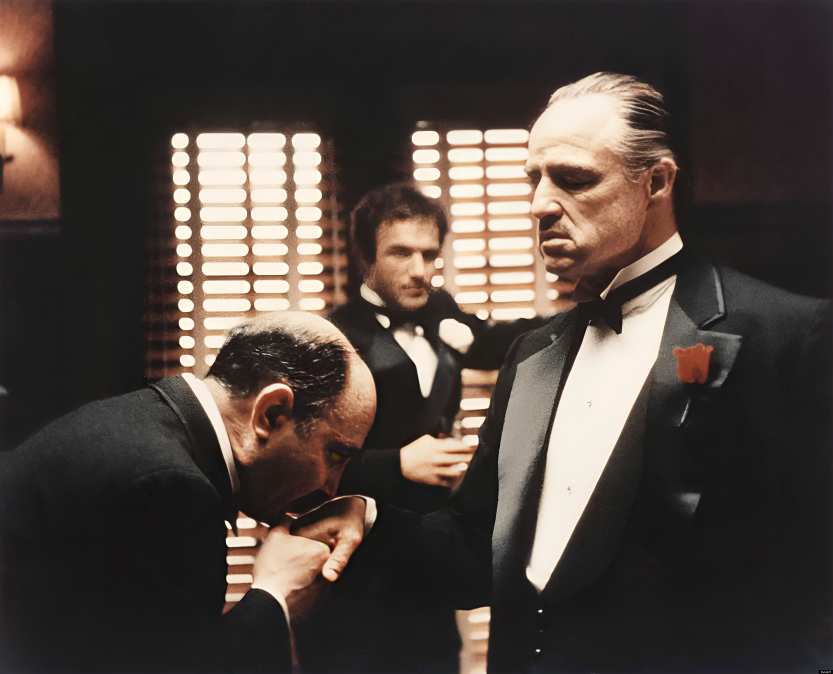
The Godfather (1972)

When Francis Ford Coppola was casting The Godfather in 1971, he was assembling what would become one of the greatest acting ensembles in the history of American cinema. Every role — from the central Corleone family to the most peripheral supporting part — was cast with the specific gravity and authenticity that Coppola’s vision required.

Jack Woltz — the arrogant Hollywood studio mogul who refuses the Corleone family’s request to cast singer Johnny Fontane in his new war film — is a pivotal character who appears in only two scenes and yet whose role in establishing the nature of the Corleone family’s power is absolutely essential to the film’s architecture.

John Marley was cast as Woltz — and the reasons are immediately apparent to anyone who watches the performance. His craggy face, dark intense eyes, and the specific quality of authority mixed with arrogance that his physical presence communicated made him the perfect embodiment of a certain kind of powerful, self-made man who has convinced himself that his power is absolute.

Jack Woltz — Character Profile Details
Character Jack Woltz — Hollywood studio mogul
First Scene Dismisses Tom Hagen’s request contemptuously
Key Line “I’m gonna make him an offer he can’t refuse” — what he refuses
Relationship to Story Establishes Corleone power through what he refuses
Second Scene Wakes screaming in blood-soaked bed
Screen Time Approximately 15 minutes across two scenes
Impact One of cinema’s most unforgettable scenes
John’s Performance Contempt to terror — complete and convincing

The first Woltz scene — the dinner at his estate with Tom Hagen (Robert Duvall) — is a masterclass in the performance of arrogance. Woltz is charming enough to be initially welcoming, confident enough to be dismissive without embarrassment, and specific enough in his contempt to make the subsequent retribution feel completely earned. John Marley plays every beat with the precision of someone who has spent forty years learning exactly how human beings reveal themselves in conversation.

The transition between the dinner scene’s contemptuous dismissal and the bedroom scene’s primal terror — separated in the narrative by the implied horror of what happens in between — requires the audience to believe completely in both states. John Marley makes both states completely believable.

The Horse Head: Behind the Cinema’s Most Shocking Scene

horse head

The horse head scene in The Godfather is one of the most discussed, most analysed, and most frequently referenced moments in the history of cinema. The story of how it was filmed — and specifically of the decision to use a real horse head — is one of the production’s most enduring behind-the-scenes narratives.

The production initially worked with a fake horse head — a prop that was used in rehearsals and early preparations for the scene. The fake head was, by the accounts of everyone involved, unconvincing — not because the craftsmanship was poor but because the specific quality of something genuinely dead is simply not reproducible in synthetic materials.

Francis Ford Coppola made the decision to source a real horse head from a New Jersey slaughterhouse — an animal that had been scheduled for slaughter and whose head was obtained and preserved specifically for the film.

The Horse Head Scene — Behind the Scenes Details
Initial Plan Fake prop horse head for the scene
Problem Fake head unconvincing; lacked authenticity
Coppola’s Decision Use real horse head
Source New Jersey slaughterhouse
John Marley’s Knowledge Did NOT know real head would be used
His Reaction Genuine terror — not acting
Why It Works Real fear is impossible to replicate
Cultural Impact Permanent fixture in cinema history
Phrase Generated “I’ll make him an offer he can’t refuse” — connected

The critical detail — the one that explains why John Marley’s reaction in that scene has the specific quality that distinguishes it from every similar moment in cinema — is that he did not know the real head would be used.

When the bedsheets were pulled back and John Marley encountered the genuine, preserved head of a horse — with all the visceral reality that entails — his scream was not a performance. It was a genuine human reaction to a genuinely horrifying stimulus. The terror on his face is real because the terror was real.

Coppola’s decision to withhold this information from his actor — to engineer genuine shock rather than asking for a performance of shock — is one of the more morally complicated directorial decisions in the history of Hollywood filmmaking. It is also, undeniably, one of the most effective. The scene works because John Marley’s reaction is authentic — and it is authentic because Coppola ensured he had no opportunity to prepare for it.

The scene’s cultural legacy is permanent. The horse head has become one of cinema’s most recognisable images — referenced, parodied, quoted, and analysed across more than fifty years of subsequent film culture. And at the centre of that image, captured in a single unguarded moment of genuine human terror, is John Marley.

Why the Woltz Scenes Are Essential
Why the Woltz Scenes Are Essential

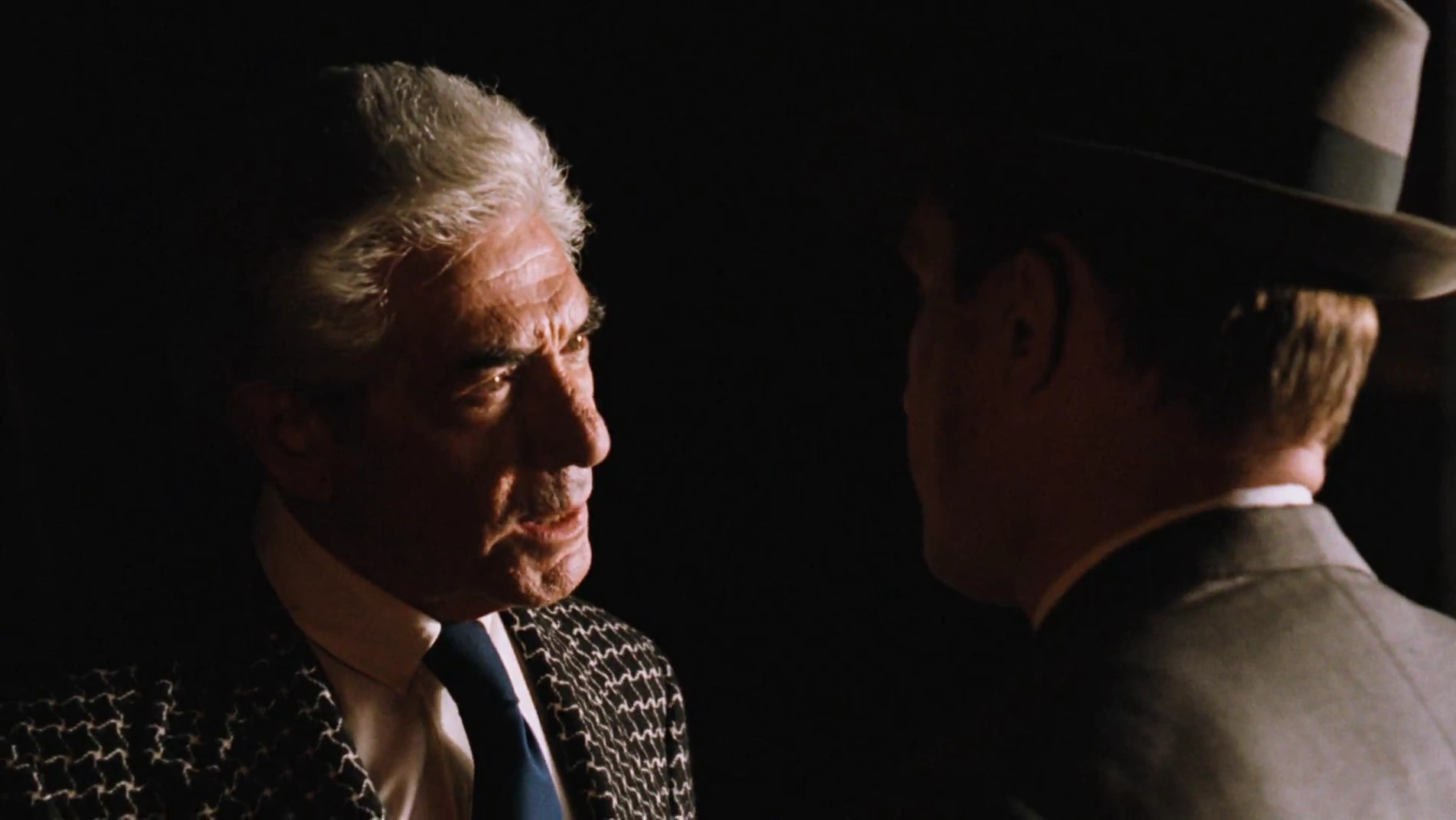
The Jack Woltz sequence in The Godfather does something that is structurally essential to the entire film — it establishes, early and with absolute clarity, the nature and the reach of the Corleone family’s power before the film has fully committed to its central narrative.

Without the Woltz sequence, the audience’s understanding of what the Corleone family is capable of remains theoretical rather than demonstrated. Woltz is the proof — the powerful man who says no, who believes his power protects him from consequences, and who discovers in the most visceral possible way that the Corleone family operates in a world where his kind of power is irrelevant.

The economy of the storytelling — two scenes, fifteen minutes, a complete arc from contemptuous authority to primal horror — is a demonstration of how efficiently great cinema can communicate when the casting, the writing, and the performance are all operating at their highest level simultaneously.

John Marley’s specific contribution is to make Woltz real enough to feel genuine consequences for. A cardboard villain who is obviously going to get what’s coming to him produces no emotional resonance. A fully realised human being — arrogant, powerful, specific in his cruelties, and comprehensible in his motivations — produces the horror that the horse head requires.

Career After The Godfather

The recognition that Love Story and The Godfather brought John Marley produced a final decade of professional activity that was more visible and more commercially significant than anything that had preceded it — though the character actor’s path, by definition, never produces the kind of starring vehicles that generate headline-level attention.

He worked consistently through the 1970s and into the early 1980s — appearing in a wide range of productions that demonstrated the versatility and professional reliability that forty years of craft had built.

Post-Godfather Filmography Highlights Year Film/Show Notes
The Car 1977 Film Horror — James Brolin
Hooper 1978 Film With Burt Reynolds
Tribute 1980 Film Canadian Genie Award win
The Amateur 1981 Film Thriller
Hawaii Five-O 1970s Television Guest appearances
Kolchak: The Night Stalker 1974 Television Guest role
The Incredible Hulk 1970s Television Guest appearance
On the Edge 1985 Film Posthumous release

His work in Tribute (1980) — a Canadian production in which he played opposite Jack Lemmon — earned him a Canadian Genie Award for Best Supporting Actor, adding another formal recognition to a late-career body of work that the earlier decades had not produced.

The television work — guest appearances across the major dramatic series of the 1970s — reflects the working actor’s reality: consistent professional activity across whatever platforms the industry provides, maintaining the craft and the professional relationships that sustain a career.

Theatre: The First Love

Throughout his film and television career, John Marley maintained a parallel commitment to the theatre — the world in which his professional identity had been formed and that continued to claim a significant part of his creative energy.

His Broadway credits extended across multiple productions through the 1950s and 1960s — building on the 1947 debut in Skipper Next to God with a body of stage work that his film career’s growing demands eventually made structurally difficult to sustain at the same level.

He also directed Little Theatre productions — taking on the creative responsibility of the director’s role in smaller theatrical contexts that allowed him to engage with the full architecture of dramatic production rather than simply the actor’s portion of it.

The theatrical training is visible in everything about his film work — the economy of gesture, the precision of emotional transition, the ability to hold a scene through internal rather than external performance. These are qualities developed on stage, where the audience’s attention cannot be manipulated through editing or camera movement and where the actor’s instrument must be capable of complete and self-sufficient expression.

Personal Life

John Marley’s personal life was conducted with the privacy that characterises people who understand clearly that the work is the public thing and the life is their own.

His first marriage to Sandra Marley — herself an actress — produced three children and lasted through the middle portion of his career. The marriage to a fellow actor reflected the practical reality of a professional life in which the people most likely to understand the demands of the work are those doing the same work.

His second marriage to Stanja Lowe — a script supervisor whose own professional life kept her close to the film industry — produced a fourth child and sustained through the final years of his life.

John Marley’s Personal Life Details
First Wife Sandra Marley — actress
Children from First Marriage Three
Second Wife Stanja Lowe — script supervisor
Fourth Child From second marriage
Personal Approach Consistently private
Professional Reputation Respected; reliable; serious

The four children he raised — largely away from public attention — are the personal legacy of a man whose professional legacy is so dramatically defined by a single fifteen-minute sequence that the fuller human picture requires deliberate recovery.

Physical Presence and Acting Style

John Marley possessed a physical appearance that communicated specific things immediately and reliably — qualities that casting directors and directors recognised as exactly what certain roles required.

The craggy face — weathered, deeply lined, carrying the visible evidence of decades of experience — communicated a specific kind of hard-won authority. The dark, bushy eyebrows — which in his later career had turned to a distinctive silver-and-dark combination — gave his eyes an intensity and weight that registered powerfully on camera. The compact, solid physicality communicated strength and self-possession without requiring size.

These qualities made him the perfect Jack Woltz — a man whose entire life story is visible in his face, who has built himself from nothing into enormous power and who carries both the evidence of the building and the pride of the having-built in his physical presence.

His acting style was grounded in the specific — the particular gesture, the precise vocal quality, the exact emotional temperature of a given moment — that characterises performers trained in the Method and its related approaches. He did not generalise. He specified. And that specificity is what makes performances that occupy fifteen minutes of screen time feel as complete and as real as performances that occupy two hours.

Death: May 22, 1984

John Marley died on May 22, 1984, at Cedars-Sinai Medical Center in Los Angeles — fourteen days after undergoing open-heart surgery on May 8. He was 76 years old.

The surgery — a procedure that in 1984 carried significantly higher risk than it does in the contemporary medical environment — was an attempt to address the cardiac condition that would ultimately claim his life. He did not survive the post-operative period.

He was interred at Cedar Park Cemetery in Paramus, New Jersey — returning, in death, to the northeastern geography of his origins.

His final film — On the Edge (1985) — was released posthumously, adding a final credit to a filmography that by the end of his career extended to nearly 250 film and television productions across four decades of professional activity.

John Marley’s Death Details
Date May 22, 1984
Location Cedars-Sinai Medical Center, Los Angeles
Cause Complications from open-heart surgery (May 8)
Age 76
Burial Cedar Park Cemetery, Paramus, New Jersey
Final Film On the Edge (1985) — posthumous release
Total Credits Nearly 250 film and television productions

Legacy: The Unsung Actor Who Woke Up Screaming

John Marley’s legacy operates on multiple levels that deserve careful distinction.

At the broadest cultural level, he is the man in the horse head scene — the actor whose genuine terror, captured in a single unguarded moment by Francis Ford Coppola’s calculated directorial deception, produced one of cinema’s most indelible images. That association will persist as long as The Godfather is watched and discussed — which is to say, indefinitely.

At the craft level, he is a demonstration of what sustained professional dedication produces over time — the Venice Film Festival award at sixty, the Oscar nomination at sixty-two, the Godfather immortality at sixty-four. These are not the achievements of a career that peaked early and faded. They are the achievements of a career that spent forty years building toward a peak that most actors never reach at any age.

John Marley’s Legacy Details
The Godfather scene Permanent fixture in cinema history
Venice Volpi Cup Major international acting recognition
Oscar Nomination Academy acknowledgment at 62
Nearly 250 credits Extraordinary professional longevity
Character actor model The backbone of great ensemble cinema
Late bloomer Definitive example of sustained craft over rapid stardom
Genuine reaction The authenticity that makes great cinema great

At the personal level, he is a Russian-Jewish immigrant’s son from Harlem who changed his name, learned his craft on Broadway, served his country in wartime, and spent four decades doing serious professional work before the world caught up with what he was doing.

Why John Marley’s Story Matters

John Marley’s story matters because it challenges the entertainment industry’s prevailing narrative about what a career looks like and when success arrives.

He was sixty years old when John Cassavetes recognised what he was capable of. He was sixty-two when the Academy nominated him. He was sixty-four when Coppola placed him in the scene that would define his cultural legacy.

The forty years that preceded those moments were not failure. They were preparation — the long, serious, unglamorous accumulation of craft that made those moments possible.

In an industry that fetishises youth and rapid breakthrough, John Marley’s career is a standing argument for the different kind of value that patience, dedication, and sustained professional seriousness produce.

The horse head scene is famous. The actor who made it work spent forty years becoming capable of doing so.

That is the more important story.

Frequently Asked Questions

1. Who was John Marley? An American character actor born in 1907 in Harlem, best known for playing Jack Woltz in The Godfather (1972) and earning an Oscar nomination for Love Story (1970). He died in 1984 at age 76.

2. What is John Marley most famous for? The horse head scene in The Godfather — playing Hollywood mogul Jack Woltz who wakes to find a severed horse head in his bed. His genuine reaction of terror is one of cinema’s most memorable moments.

3. Did John Marley win an Oscar? He was nominated for Best Supporting Actor for Love Story (1970) but did not win. He won the Venice Film Festival Volpi Cup for Best Actor for Faces (1968).

4. Was John Marley’s reaction to the horse head real? Yes — Coppola used a real horse head from a New Jersey slaughterhouse without telling Marley, ensuring his reaction of genuine shock and terror rather than a performance of it.

5. What was John Marley’s background? He was born Mortimer Leon Marlieb to Russian-Jewish immigrant parents in Harlem. He served in the US Army Signal Corps in World War II before building his acting career.

6. How many films did John Marley appear in? He accumulated nearly 250 film and television credits across a career spanning from 1947 to his death in 1984.

7. When did John Marley become famous? He achieved recognition relatively late — his breakthrough came with Faces (1968) at age 60, followed by Love Story (1970) and The Godfather (1972). His career peak came after four decades of professional work.

8. What was John Marley’s last film? On the Edge (1985) — released posthumously after his death on May 22, 1984, from complications following open-heart surgery.

Conclusion: Forty Years for Fifteen Minutes That Last Forever

John Marley spent forty years becoming good enough to play Jack Woltz. He built his craft on Broadway in the late 1940s. He worked through the 1950s in the minor supporting roles that sustain a career without defining it. He found John Cassavetes and discovered what his forty years had actually made him capable of. He sat across from Robert Duvall and made contempt look completely natural. And then he pulled back the bedsheets and screamed — genuinely, authentically, without preparation — and gave cinema one of its defining moments.

The horse head is what people remember. But John Marley is what makes it matter.

He was the son of Russian immigrants who came to America with nothing and built something. He was a character actor who understood that the supporting role done perfectly is as significant as the starring role done brilliantly. He was a man who spent forty years in near-obscurity and never stopped working, never stopped learning, and never stopped being exactly as good as the craft required.

Hollywood woke up screaming because of what the Corleone family was capable of. Cinema is richer because of what John Marley was capable of.

Both things are permanently true.

Being born into a famous family is not a choice. What you do with that fact — how much of your identity you allow it to define, how deliberately you build something of your own, how gracefully you navigate the complications that come with a parent whose personal life occasionally becomes public spectacle — those things are entirely choices. Kennedy Owen has made all of those choices with a consistency and maturity that reflects a young woman who knows exactly who she is and where she is going. Summa cum laude from an HBCU. A journalism career built on genuine academic foundation. A dignified silence through a public family rupture that lesser people would have weaponised for social media attention. She is Gary Owen’s daughter. She is also considerably more than that.

For readers looking for a quick answer — Kennedy Owen is an American young woman born on July 3, 2002, in Cincinnati, Ohio, best known as the daughter of comedian and actor Gary Owen and entrepreneur Kenya Duke. She attended North Carolina A&T State University — a historically Black university — where she studied journalism and graduated summa cum laude. She has maintained a deliberately private personal life through the public divorce of her parents and is building a career in journalism on the foundation of her own academic achievement rather than her famous surname.

Quick Facts

Field Details
Full Name Kennedy Owen
Born July 3, 2002
Birthplace Cincinnati, Ohio, USA
Nationality American
Known For Daughter of Gary Owen and Kenya Duke
Father Gary Owen — comedian and actor
Mother Kenya Duke — entrepreneur
Siblings Austin Owen (brother); Emilio Owen (half-brother)
University NC A&T State University
Major Journalism
Graduation Honour Summa Cum Laude

Early Life: Cincinnati, Ohio

Kennedy Owen was born on July 3, 2002, in Cincinnati, Ohio — a city whose character sits at the intersection of Midwestern groundedness and Southern warmth, shaped by its position on the Ohio River and its long history as a culturally significant American city.

Growing up in Cincinnati rather than Los Angeles or New York — the cities most associated with entertainment industry families — gave Kennedy a specific kind of upbringing that was adjacent to her father’s public world without being consumed by it. Cincinnati is a city where you can be the child of a comedian without the full weight of Hollywood celebrity culture defining your daily social environment.

The household she grew up in was shaped by two distinctly different but complementary parental influences. Her father Gary Owen brought the creativity, energy, and public performance orientation of a professional comedian — a household where humour was currency and where the ability to read a room and connect with people was modelled daily. Her mother Kenya Duke brought the entrepreneurial seriousness and business discipline of someone who had built professional success through her own effort and intelligence.

That combination — creative energy and business rigour, performance ability and professional discipline — is visible in how Kennedy has approached her own development. She is not simply the product of one parent’s influence. She is the synthesis of both.

Her Father: Gary Owen

Gary Owen is a stand-up comedian and actor whose career trajectory is one of the more interesting stories in American comedy — a white comedian from Cincinnati who became one of the most beloved performers in Black comedy circles, building an audience and a reputation through genuine connection with African-American culture rather than the cultural appropriation that a less self-aware performer might have fallen into.

He was born Gary Owen Hernandez on May 20, 1973, in Cincinnati — and his career began in the US Navy, where he won the title of Armed Forces Entertainment Comedian of the Year and discovered that performing for diverse military audiences was his natural professional environment.

Gary Owen — Career Highlights Details
Full Name Gary Owen Hernandez
Born May 20, 1973 — Cincinnati, Ohio
Career Start US Navy — Armed Forces Entertainment
Stand-Up BET’s Comic View; Shaquille O’Neal’s All-Star Comedy Jam
Acting Think Like a Man (2012); Ride Along (2014);
Think Like a Man Franchise role — significant commercial film
Television Various appearances; own comedy specials
Cultural Position One of few white comedians with major Black comedy following
Comedy Style Self-deprecating; culturally observant; family-based

His appearances on BET’s Comic View established him in the Black comedy world — a credential that reflected genuine audience acceptance rather than industry positioning. The Think Like a Man franchise gave him his most commercially significant acting exposure — appearing alongside a cast that included Kevin Hart, Taraji P. Henson, Michael Ealy, and Gabrielle Union in films that grossed over $200 million combined.

For Kennedy, growing up with Gary Owen as a father meant growing up with someone whose professional life involved constant performance, audience analysis, and the specific kind of social intelligence that successful stand-up comedy requires. Those are not the worst qualities to absorb from a parent — though the complications of having a comedian for a father, whose material frequently draws on family life, are their own specific experience.

Her Mother: Kenya Duke

Kenya Duke is an entrepreneur and businesswoman whose professional identity has always been built on her own terms rather than through her relationship with Gary Owen — a quality that has clearly influenced how Kennedy has approached her own professional development.

Kenya built business ventures across multiple sectors — demonstrating the entrepreneurial range and commercial intelligence that characterises genuinely capable business people rather than those who pursue a single opportunity. Her background in business and her evident professional seriousness provided Kennedy with a daily model of what female professional achievement looks like when it is built on merit and sustained effort.

Kenya Duke Details
Occupation Entrepreneur, Businesswoman
Professional Identity Built independently of Gary Owen’s profile
Business Approach Multiple ventures; commercially serious
Public Profile Moderate — more visible post-divorce
Influence on Kennedy Entrepreneurial ambition; professional independence
Post-Divorce Has spoken publicly about marriage and its end

Kenya’s influence on Kennedy is visible in the choices Kennedy has made — the HBCU selection, the academic seriousness, the professional ambition that is clearly oriented toward building something real rather than leveraging a famous surname. These are the values of a mother who modelled professional independence and who transmitted that model effectively to her daughter.

The public dissolution of Kenya and Gary’s marriage — which involved Kenya’s public statements about the end of the relationship and the subsequent media coverage — placed Kennedy in a position that required genuine maturity. The way she has handled that position reflects Kenya’s influence as clearly as any professional achievement.

Growing Up With a Comedian Father

There is a specific quality to growing up in a household where one parent is a professional comedian — and it is more complicated than the obvious assumption that it must have been constantly fun and funny.

Professional comedians are people whose livelihood depends on their ability to find the humorous dimension of human experience — including family experience — and communicate it to audiences in ways that generate genuine laughter. For the family members whose lives provide the material, that arrangement involves its own particular negotiations around privacy, dignity, and the question of what is funny versus what is simply personal.

Gary Owen’s comedy has frequently drawn on his family life — his marriage to Kenya, his experience as a white man in a Black family, his observations about race, relationships, and parenthood. For Kennedy, growing up as material as well as a person required developing a specific relationship with her own privacy and public identity from early.

What the comedian household clearly did provide was a genuine education in the mechanics of human connection — how to read people, how to communicate across cultural differences, how to use humour as a bridge, and how to be genuinely present with an audience. Those skills, absorbed through daily proximity rather than formal instruction, are directly applicable to journalism — which is, at its core, about human connection and effective communication.

Siblings: Austin and Emilio

Kennedy grew up alongside two brothers whose own relationships with the Owen family’s public profile reflect different aspects of what it means to grow up in a family with a famous parent.

Austin Owen — her older brother — has maintained a similarly private profile to Kennedy’s, building his own life and identity without particular interest in leveraging the family name for public visibility.

Emilio Owen — Kennedy’s half-brother, adopted by Gary — represents the expanded family structure that Gary and Kenya built across their marriage. Emilio’s adoption reflected the genuine family commitment that Gary and Kenya brought to parenthood and that shaped the household Kennedy grew up in.

The Owen Siblings Details
Austin Owen Older brother; private profile
Emilio Owen Half-brother; adopted by Gary
Family Dynamic Three children; close family unit
Post-Divorce Each navigating family changes differently
Kennedy’s Position Youngest; closest publicly to mother

The sibling relationships — and the specific positions each child occupies within the family dynamic — have shaped Kennedy’s development in ways that are visible in her choices and her values even if the specifics remain appropriately private.

Education: NC A&T State University and the HBCU Choice

The most publicly significant decision Kennedy Owen has made — more revealing of her character and values than any social media post or public statement — is her choice to attend North Carolina Agricultural and Technical State University for her undergraduate education.

NC A&T is one of America’s most respected Historically Black Colleges and Universities (HBCUs) — an institution with a distinguished academic record, a strong journalism programme, and a cultural significance that goes far beyond its rankings in conventional university league tables.

NC A&T State University Details
Full Name North Carolina Agricultural and Technical State University
Location Greensboro, North Carolina
Type HBCU — Historically Black College and University
Founded 1891
Journalism Programme Strong — nationally recognised
Cultural Significance One of America’s most respected HBCUs
Notable Alumni Jesse Jackson; Ronald McNair; various journalism figures
Kennedy’s Major Journalism
Kennedy’s Graduation Summa Cum Laude

The HBCU choice is not a neutral academic decision. It is a statement about identity, community, and values — a deliberate alignment with the African-American intellectual and cultural tradition that her mother’s heritage represents and that her father’s career has always operated in close relationship with.

For Kennedy — whose identity spans multiple cultural contexts — the choice of an HBCU was a specific affirmation of one dimension of that identity. It was a choice to immerse herself in an educational community that shared her heritage and that offered a specific kind of intellectual and personal development that predominantly white institutions cannot replicate.

The academic outcome validates the choice completely — graduating summa cum laude is the highest academic honour available, awarded to students whose grade point average places them at the very top of their graduating class. It is not a participation trophy or a social honour. It is the hard-won result of sustained academic excellence across an entire undergraduate career.

In a family context where her father’s fame could have provided a much easier path to public visibility, Kennedy Owen chose instead to earn the hardest kind of recognition — the kind that comes from doing the work better than almost everyone else.

The HBCU Experience: More Than a Degree

Attending an HBCU is a specific educational experience that offers dimensions unavailable at predominantly white institutions — and those dimensions are a genuine part of why Kennedy’s choice matters.

HBCUs were founded during and after the period of American history when Black Americans were legally excluded from most educational institutions. They developed as centres of Black intellectual life, professional development, and community formation — and they have retained that cultural function even as legal segregation ended and the formal exclusions that created them were removed.

The experience of being surrounded by a community of Black scholars, professionals, and peers — of learning in an environment where Black excellence is the assumed baseline rather than the exception — shapes graduates in ways that are difficult to quantify but genuinely significant.

For Kennedy specifically — building her identity as a young Black woman in journalism, a field whose historical underrepresentation of Black voices is both documented and ongoing — the HBCU experience provided a foundation of community and cultural grounding that will inform her professional work in valuable ways.

Journalism: The Career She Is Building

Kennedy Owen’s choice of journalism as her professional direction is not incidental — it reflects a genuine intellectual and creative orientation toward storytelling, information, and the specific kind of human connection that good journalism requires.

Journalism at its best is exactly what Kennedy’s background has prepared her for — the ability to find and tell stories that matter, to communicate across cultural contexts with genuine understanding, to ask the questions that produce real answers, and to build the kind of trust with subjects and audiences that sustains a long career in the field.

Her father’s career has given her an intimate education in audience connection and the mechanics of human communication. Her mother’s entrepreneurial background has given her a framework for thinking about professional development and independent achievement. Her HBCU education has given her academic rigour, cultural grounding, and a community of peers and mentors whose experience in journalism will support her development.

Kennedy’s Journalism Foundation Source What It Provides
Gary Owen’s influence Father — comedian Communication; audience connection; storytelling
Kenya Duke’s influence Mother — entrepreneur Professional independence; ambition
NC A&T education HBCU journalism programme Academic rigour; cultural grounding
Summa cum laude Academic achievement Demonstrated intellectual seriousness
Cultural identity Black heritage; HBCU experience Perspective; community; representation

The journalism career Kennedy is building will be shaped by all of these foundations — and the specific perspective she brings to the field, as a young Black woman with a comedian father and an entrepreneurial mother who graduated at the top of her class from an HBCU, is genuinely distinctive.

The Parents’ Divorce: Navigating Public Family Rupture

In 2021, Gary Owen and Kenya Duke’s marriage ended — publicly, with Kenya making statements about the circumstances of the relationship’s end that generated significant media coverage and that placed their children, including Kennedy, in the uncomfortable position of being adjacent to a very public family rupture.

The specifics of what Kenya said publicly, and how Gary responded, were covered extensively in entertainment media — the kind of coverage that makes discretion and dignity genuinely difficult to maintain when the family drama is playing out on social media and in gossip publications.

The Owen Divorce Details
Year 2021
Public Profile High — Kenya’s public statements generated media coverage
Gary’s Response Public statements about relationship end
Kennedy’s Position Maintained silence; stayed close to mother
Media Coverage Extensive — entertainment and comedy media
Impact on Family Significant; ongoing navigation

Kennedy’s response to the public divorce was to maintain the same dignified silence that has characterised her entire public life — refusing to become a participant in a media narrative that she had not created and did not benefit from.

That silence is not passivity. It is the active, maintained choice of someone who understands clearly that engaging with public family drama on social media terms produces no good outcome and that the people who matter most in the situation are best served by privacy rather than performance.

Her alignment with her mother through and after the divorce reflects both natural family loyalty and the specific influence of the woman who has been Kennedy’s primary role model throughout her life.

Relationship With Her Father Post-Divorce

Kennedy Owen

The relationship between Kennedy and Gary Owen in the period following the divorce is not publicly documented in detail — and that absence of public documentation is itself a reflection of Kennedy’s consistent approach to privacy.

What has been visible publicly suggests that the family rupture produced the kind of complicated emotional terrain that divorces always produce when children are involved — terrain that Kennedy has navigated with the maturity and discretion that have characterised her public presence throughout.

She has not made public statements about her father. She has not used social media to process or perform her feelings about the family situation. She has simply continued building her own life — which is, in the context of a family situation that generated genuine public drama, one of the more impressive demonstrations of personal discipline available.

Identity: Building Beyond the Famous Surname

One of the most deliberate and most important choices Kennedy Owen has made is the choice to build her identity on foundations that are entirely her own rather than on the reflected light of her father’s celebrity.

This is harder than it sounds. The entertainment industry — and the social media landscape that surrounds it — consistently offers celebrity children the path of least resistance: leverage the famous name, build a following on the basis of family connection, translate celebrity adjacency into personal visibility.

Kennedy has declined that path at every available opportunity. The HBCU choice. The summa cum laude graduation. The journalism career built on academic foundation. The consistent privacy. All of these are choices that prioritise genuine achievement over easy visibility.

Building Identity Beyond the Famous Surname Choice What It Says
HBCU attendance NC A&T — personal values choice Cultural identity matters more than prestige branding
Summa cum laude Academic excellence Merit over celebrity
Journalism Serious professional direction Communication on her own terms
Privacy No public social media exploitation Identity is not a product
Post-divorce silence Dignity over drama Character over clicks

The surname Owen will always be part of how people initially encounter her story. What Kennedy has done — quietly, consistently, and with apparent genuine conviction — is ensure that the surname is the least interesting thing about her.

Kennedy Owen Today

As of 2025, Kennedy Owen is twenty-two years old — at the beginning of the professional chapter that her academic preparation has built toward.

Her journalism career is in its earliest stage — the post-graduation period where the foundations of professional identity are established and where the combination of academic preparation and personal character either translates into genuine professional contribution or doesn’t.

Everything about Kennedy’s story to this point suggests it will translate completely. The academic seriousness is real. The cultural foundation is solid. The communication skills — absorbed from a comedian father and developed through a journalism education — are genuine. The personal character is evident in every choice she has made.

She is based in the US — the specific city not publicly documented, consistent with her privacy preferences — and is building the early career that her summa cum laude degree and her HBCU experience have prepared her for.

Why Kennedy Owen’s Story Matters

Kennedy Owen’s story matters for reasons that extend beyond the celebrity family context that generates most of the public interest in her name.

It is a story about what deliberate identity-building looks like in a media environment that consistently offers easier paths. It is a story about academic excellence as a form of quiet power. It is a story about navigating complicated family circumstances with dignity and without making them someone else’s entertainment. It is a story about an HBCU choice as a genuine values statement rather than a diversity credential.

Why Kennedy’s Story Matters Details
Academic Achievement Summa cum laude — earned on merit
HBCU Choice Cultural identity statement
Privacy Deliberate choice in visibility-saturated environment
Post-Divorce Dignity Maturity beyond her years
Journalism Path Building on genuine foundation
Identity Defined on her own terms

She is twenty-two years old and has already demonstrated more genuine character than many people three times her age. The journalism career she is building will be better for everything she has already done — and the stories she will eventually tell will be shaped by a perspective that is genuinely distinctive and genuinely earned.

Frequently Asked Questions

1. Who is Kennedy Owen? Kennedy Owen is the daughter of comedian Gary Owen and entrepreneur Kenya Duke. She graduated summa cum laude from NC A&T State University with a journalism degree and is building a career in media.

2. Who are Kennedy Owen’s parents? Her father is comedian and actor Gary Owen and her mother is entrepreneur Kenya Duke. They divorced in 2021.

3. Where did Kennedy Owen go to college? She attended North Carolina A&T State University — an HBCU in Greensboro, North Carolina — where she studied journalism and graduated summa cum laude.

4. What does summa cum laude mean? It is the highest academic honour awarded at graduation — given to students with the highest grade point averages. It reflects sustained academic excellence across an entire degree programme.

5. Does Kennedy Owen have siblings? Yes — brother Austin Owen and half-brother Emilio Owen, who was adopted by Gary Owen.

6. How did Kennedy handle her parents’ divorce? She maintained a dignified public silence — staying close to her mother and refusing to engage with the media coverage of the family situation publicly.

7. What career is Kennedy Owen pursuing? She is pursuing a career in journalism — building on her NC A&T degree and the communication skills developed throughout her upbringing.

8. Is Kennedy Owen on social media? She maintains a deliberately limited social media presence — consistent with her overall approach to privacy throughout her public life.

Conclusion: More Than a Famous Last Name

Kennedy Owen was born into a household that could have given her an easy path — a famous father, a public profile available for the taking, the machinery of celebrity adjacency ready to produce visibility without effort.

She chose a different path. She chose an HBCU over easy prestige. She chose academic excellence over social media followers. She chose journalism — real journalism, built on real education — over the reality television appearances and sponsored content that celebrity children routinely choose instead. She chose dignity through a public family rupture that would have given her every social media justification for doing otherwise.

The summa cum laude degree is not a small thing. It is the documented evidence of four years of sustained intellectual effort at an institution that takes academic seriousness seriously. It is the hardest kind of public achievement — the kind that cannot be faked, cannot be purchased, and cannot be inherited from a famous parent.

She is Gary Owen’s daughter. She is Kenya Duke’s daughter. She is also, and most importantly, Kennedy Owen — and what she is building, on the foundation of her own choices and her own effort, is more interesting than either parent’s famous surname could fully contain.

There is a particular kind of success that never makes headlines — the kind built quietly, methodically, and without any particular interest in public recognition. Peter Buchignani is that kind of success story. A Princeton-educated finance professional who played Ivy League football, built a serious career in securitized products sales across some of the world’s most respected financial institutions, and happened to marry one of Fox News’s most recognisable anchors along the way. He has done all of it without a public social media presence, without a single solo interview, and without any apparent desire to leverage his wife’s considerable platform for personal visibility. In a media landscape that treats proximity to fame as a resource to be exploited, Peter Buchignani has simply continued doing his job.

For readers looking for a quick answer — Peter Buchignani is an American finance professional born on September 21, 1986, in Bloomington, Illinois. He attended Princeton University where he studied Politics and played defensive end for the Princeton Tigers football team, earning two All-Ivy honorable mentions. He has built a career in securitized products sales at institutions including Barclays, Deutsche Bank, and Amherst Pierpont Securities. He married Fox News anchor Carley Shimkus on August 8, 2015, and the couple have a son, Brock Edward Buchignani, born in January 2023.

Quick Facts

Field Details
Full Name Peter Buchignani
Born September 21, 1986
Birthplace Bloomington, Illinois, USA
Nationality American
Occupation Finance Professional — Securitized Products Sales
Known For Husband of Fox News anchor Carley Shimkus
Spouse Carley Shimkus (m. August 8, 2015)
Children Brock Edward Buchignani (b. January 2023)
Education Princeton University — BA Politics (2005–2009)
Career Barclays; Deutsche Bank; Amherst Pierpont Securities
College Sport Defensive End — Princeton Tigers football

Early Life: Bloomington, Illinois

Peter Buchignani was born on September 21, 1986, in Bloomington, Illinois — a mid-sized Midwestern city whose character is shaped by the specific combination of agricultural heritage, professional community, and the quietly ambitious academic culture that tends to produce people who work hard without making a particular performance of it.

Bloomington sits in the heart of Illinois — a city that has produced more than its share of quietly accomplished people whose names never become nationally famous but whose professional contributions are real and substantial. Growing up there in the late 1980s and 1990s meant growing up with the Midwestern values that have become something of a cultural cliché precisely because they are genuinely real — hard work, community responsibility, intellectual seriousness, and the particular discomfort with self-promotion that distinguishes the Midwest from the coasts.

His family background reflects those values directly. His father Leo Buchignani is a respected lawyer with a Harvard Law degree whose career has encompassed both legal practice and commercial real estate finance — a professional background that provided Peter with an early model of the combination of intellectual rigour and practical application that characterises serious professional achievement.

His mother Mary Edna provided the emotional foundation of the household — the stability and warmth that allowed three children to develop with both the ambition to reach for significant goals and the groundedness to pursue them without losing perspective.

He grew up alongside siblings Leo Jr. and Lainey — a family unit whose closeness is visible in the occasional glimpses Peter has provided of his personal life and in Carley Shimkus’s various public references to the family she married into.

His high school years in Bloomington established the dual identity — serious student and serious athlete — that would define his Princeton years and that reflects a fundamental truth about his character. He was not an athlete who happened to study, or a student who happened to play sport. He was genuinely both, with equal commitment to each.

He earned All-Conference football honours at the high school level — a distinction that reflected genuine athletic ability and the kind of competitive intensity that attracts the attention of college programmes, including those at the Ivy League level that require their student athletes to meet the same academic standards as every other applicant.

Princeton University: Where Character Meets Credential

Getting into Princeton University requires, in the language of admissions offices, a combination of academic excellence and personal distinction. In practice, it requires being the kind of person who has developed genuine ability across multiple domains and who has demonstrated the intellectual seriousness that one of America’s most demanding universities expects from its students.

Peter Buchignani was exactly that kind of person.

He enrolled at Princeton in 2005 — part of the class that would graduate in 2009 — and chose to study Politics, a degree whose intellectual demands are often underestimated by people who assume that the finance world requires a finance degree. In reality, a Politics degree from Princeton provides rigorous training in analytical thinking, institutional analysis, economic systems, and the kind of complex multi-variable reasoning that financial markets demand at their most sophisticated levels.

The Politics curriculum at Princeton — which encompasses political theory, comparative politics, international relations, and political economy — gave Peter a conceptual framework for understanding the systemic forces that drive markets and institutions. That framework would later prove directly applicable to a career in securitized products, where understanding the regulatory, political, and economic context of financial instruments is as important as understanding the instruments themselves.

Peter Buchignani at Princeton Details
University Princeton University — Princeton, New Jersey
Years 2005–2009
Degree BA Politics
Athletic Role Defensive End — Princeton Tigers football
Athletic Honours Two All-Ivy Honorable Mentions
Academic Distinction Politics degree — analytical foundation for finance
Legacy Father Leo also Ivy League educated — Harvard Law

He was not simply attending Princeton to collect a prestigious credential and move on. He was engaging with the academic material seriously while simultaneously competing at a level of collegiate athletics that required genuine physical commitment and significant time investment.

That combination — sustained across four years of one of America’s most demanding academic environments — is the foundation of everything Peter Buchignani has built since.

Princeton Football: Ivy League Athlete

The Princeton Tigers football programme is not the SEC or the Big Ten — but Ivy League football is competitive, serious, and played by athletes who have been recruited specifically because they can compete at a high level while also meeting the academic requirements of universities that do not offer athletic scholarships.

Peter played defensive end for the Tigers — a position that requires the combination of size, speed, technical skill, and the specific kind of disciplined aggression that effective pass rushing demands. Defensive end is not a position for the physically unprepared or the tactically unsophisticated. It requires understanding blocking schemes, reading offensive formations, and executing complex techniques under competitive pressure.

He earned two All-Ivy Honorable Mentions across his playing career — a distinction that reflects consistent performance at a level that earns recognition from coaches and selectors across the conference. In the 2007 season particularly, his contributions to the defensive unit were visible and significant.

Princeton Football Career Details
Position Defensive End
Programme Princeton Tigers — Ivy League
Key Seasons 2006–2008
Distinctions Two All-Ivy Honorable Mentions
Conference Ivy League
Significance No athletic scholarships — pure merit
Character Development Discipline; competition; team commitment

What the football career gave Peter Buchignani is not primarily visible on a resume — it is visible in how he operates professionally and personally. The discipline of training and competing at a collegiate level while maintaining academic standards develops specific mental qualities — the ability to prepare thoroughly, to perform under pressure, to accept coaching, and to subordinate individual preference to collective goal — that transfer directly to professional contexts.

The finance world, like football, rewards preparation, discipline, and the ability to execute consistently under conditions of uncertainty and pressure. The connection between the two is more direct than it might initially appear.

His Wife: Carley Shimkus

Carley Shimkus

To understand the context of Peter Buchignani’s public profile — such as it is — you need to understand who Carley Shimkus is and the scale of the professional presence he married into.

Carley Shimkus was born on November 7, 1986, in Long Valley, New Jersey — making her and Peter near-exact contemporaries, a generational alignment that reflects shared cultural references and life stage understanding.

She studied broadcast journalism at Quinnipiac University and built her television career through a combination of genuine on-camera talent, professional persistence, and the specific ability to communicate across a wide range of news topics with the clarity and authority that major television networks require.

Carley Shimkus — Career Highlights Details
Full Name Carley Shimkus
Born November 7, 1986 — Long Valley, New Jersey
Education Quinnipiac University — Broadcast Journalism
Network Fox News
Roles Fox and Friends First co-host; Fox and Friends co-host
Speciality Breaking news; social media reporting; morning television
Profile One of Fox News’s most recognised morning anchors
Public Presence High — daily television; active social media

She joined Fox News and built her profile through Fox and Friends First — the early morning programme that precedes Fox and Friends — before moving to the flagship morning show itself. Her daily presence on one of America’s most-watched morning news programmes has made her one of the most recognisable faces on cable news.

For Peter, being married to someone with that level of daily public visibility while maintaining his own deliberately private professional life requires a specific kind of psychological clarity and personal security. He is not competing with Carley’s public profile. He is not diminished by it. He simply occupies a completely different relationship with public life — and the marriage appears to work precisely because both parties understand and respect that difference.

How They Met: A Long Road to the Altar

The story of how Peter Buchignani and Carley Shimkus came together has a quality that distinguishes it from the typical celebrity couple narrative — it is a story that unfolded slowly, across years and distance, rather than with the sudden intensity that makes for better tabloid copy but rarely makes for better relationships.

They first knew each other as far back as 2003 — as teenagers, before either had built the professional identities that would later define them publicly. That early connection planted something without immediately producing anything — the way early connections sometimes do.

They reconnected and began dating seriously in 2013 — a decade after first knowing each other, and at a point when both had significant professional foundations and clear senses of who they were and what they wanted from life.

The relationship that developed was a long-distance one — Peter based in Chicago for his finance career, Carley in New York for her Fox News work. Long-distance relationships between two professionally committed people in their late twenties are a specific test of both the relationship’s strength and each person’s organisational and emotional discipline.

They passed that test across two years of sustained long-distance before marrying in 2015 — a timeline that reflects the seriousness with which both approached the commitment.

The Wedding: August 8, 2015

Carley Shimkus

Peter Buchignani and Carley Shimkus married on August 8, 2015, in a ceremony held at Carley’s family home in New Jersey — a choice of venue that reflected the values both brought to the occasion.

A family home wedding rather than a high-profile venue in New York or a destination ceremony abroad is a specific choice — one that prioritises personal meaning over visual spectacle, intimate community over impressive guest lists, and the actual significance of the occasion over its photographic and media value.

The Wedding Details
Date August 8, 2015
Location Carley’s family home — New Jersey
Format Intimate private ceremony
Guest List Close family and friends
Media Coverage Limited — personal and private
Significance Reflected both parties’ values around privacy and family

The New Jersey home setting connected the occasion to Carley’s family roots while simultaneously reflecting the joint decision to mark the commitment personally rather than publicly. For Peter — whose entire professional and personal life has been conducted with deliberate privacy — a home ceremony was the only kind of wedding that made genuine sense.

Career: Building a Finance Identity

Peter Buchignani’s professional career is the part of his story that receives the least public attention and that deserves the most — because it is the part that is entirely and completely his own, built through ability and effort without any celebrity adjacency or family connection to ease the path.

Barclays Investment Bank — The Foundation

His first professional role after Princeton was as a Sales Analyst at Barclays Investment Bank — one of the world’s most respected financial institutions and a genuinely demanding environment in which to begin a finance career.

The period from 2009 to 2011 at Barclays gave Peter his foundational professional education — the specific operational knowledge, market understanding, and professional culture absorption that turns an academically prepared graduate into a functioning finance professional.

Sales roles at investment banks require a specific combination of technical knowledge and interpersonal skill — understanding the products well enough to explain them accurately and persuasively to sophisticated institutional clients, while building the professional relationships that sustain commercial activity over time. It is exactly the kind of work that a Princeton Politics degree, combined with the competitive discipline of Ivy League football, prepares someone to do.

Deutsche Bank — Developing Expertise

From Barclays, Peter moved to Deutsche Bank — where he developed specific expertise in mortgage-backed securities (MBS) sales. This move represented a deliberate professional narrowing — moving from general investment bank sales work into the specific area of structured finance products that would define his career expertise.

Peter Buchignani — Career Timeline Institution Period Role
Barclays Barclays Investment Bank 2009–2011 Sales Analyst
Deutsche Bank Deutsche Bank 2011–2015 MBS Sales
Amherst Pierpont Amherst Pierpont Securities 2015–Present Securitized Products Sales

Mortgage-backed securities are financial instruments whose value derives from pools of underlying mortgage loans — a product category that became globally significant (and globally notorious) following the 2008 financial crisis and whose subsequent regulatory and market evolution has made expertise in the area both valuable and genuinely intellectually demanding.

Working in MBS sales at Deutsche Bank — a global institution with significant structured finance operations — gave Peter the deep product knowledge and client relationship experience that positioned him for the next career step.

Amherst Pierpont Securities — Current Role

Peter’s current role is in Securitized Products Sales at Amherst Pierpont Securities — a firm that specialises in fixed income securities and that is recognised in the industry for its expertise in mortgage and asset-backed securities.

Amherst Pierpont is not a household name in the way that Goldman Sachs or JPMorgan are household names — but in the specific world of securitized products, it is a respected specialist institution whose professionals are regarded seriously by the institutional clients they serve.

His role involves the sale of securitized financial products to institutional investors — pension funds, asset managers, hedge funds, and other sophisticated financial entities whose investment decisions involve complex analysis of risk, yield, and portfolio fit. The work requires the ability to understand complex financial structures, to communicate that understanding clearly to clients with their own sophisticated analytical frameworks, and to build the trust-based relationships that sustain commercial activity in a market where reputation and relationship quality matter enormously.

What Securitized Products Sales Actually Means

For readers without a financial background, “securitized products sales” is a phrase that communicates almost nothing without some translation.

Securitization is the process of pooling financial assets — mortgages, auto loans, credit card receivables, student loans — and converting them into tradeable securities that can be sold to investors. The resulting instruments — mortgage-backed securities (MBS), asset-backed securities (ABS), collateralized loan obligations (CLOs) — allow institutional investors to access the income streams generated by those underlying assets.

Securitized Products — Plain English Concept Explanation
Securitization Pooling assets into tradeable securities Mortgages bundled and sold to investors
MBS Mortgage-backed securities Securities backed by home loan pools
ABS Asset-backed securities Auto loans, credit cards, student loans
CLO Collateralized loan obligation Corporate loan pools
Sales Role Connecting products with institutional buyers Peter’s specific function
Client Base Pension funds, asset managers, hedge funds Sophisticated institutional investors

Peter’s job is to connect institutional investors with the specific securitized products that meet their investment needs — which requires understanding both the technical characteristics of the products and the specific investment mandates, risk tolerances, and portfolio requirements of each client.

It is intellectually demanding work that sits at the intersection of financial engineering, market analysis, and client relationship management. The Princeton Politics degree — with its analytical framework and systemic thinking — is more directly applicable to this work than it might initially appear.

Son Brock Edward Buchignani

Brock Edward

In September 2022, Carley Shimkus announced her pregnancy on Fox and Friends — sharing the news with the programme’s audience in the warm, personal style that has characterised her Fox News presence.

Brock Edward Buchignani was born in January 2023 — the arrival that transformed Peter and Carley from a couple into a family and that has visibly shaped both of their public and private orientations in the months since.

Brock Edward Buchignani Details
Full Name Brock Edward Buchignani
Born January 2023
Pregnancy Announced September 2022 — on Fox and Friends
Parents Peter Buchignani and Carley Shimkus
Name Significance Edward — family heritage connection
Family Dynamic First child for both Peter and Carley

The name Brock Edward carries the weight of family heritage — the kind of naming choice that reflects deliberate connection to family identity rather than celebrity trend-following. The Edward element connects to family history in ways that reflect the Buchignani family’s sense of continuity and tradition.

Carley has spoken about motherhood with the enthusiasm and occasional exhaustion of a working parent navigating the specific challenges of a demanding television schedule alongside the demands of a new baby. Peter’s role in the family — visible through Carley’s occasional references — is that of the grounded, present, genuinely involved father that his personal values and family background would suggest.

The Chicago-New York Marriage: Distance as a Test

One of the more unusual dimensions of Peter and Carley’s marriage has been its sustained geographic complexity — Peter’s career in Chicago and Carley’s career in New York creating a practical distance that most couples would find structurally difficult to sustain.

They have navigated this not by immediately resolving it in one direction but by building a marriage that functions across the distance — treating the regular commuting and scheduling complexity as a practical problem to be managed rather than an existential threat to the relationship.

Carley has referenced the long-distance dimension of their marriage in various interviews and social media posts — with a combination of good humour and genuine appreciation for what it requires of both parties. The consistent message is that the distance has been manageable precisely because the relationship’s foundation is strong enough to sustain it.

For Peter — whose career in Chicago is built on professional relationships and institutional knowledge accumulated over years — relocating to New York is not a simple logistical decision. His professional identity is rooted in the Chicago financial community in ways that would be disrupted by a move. The long-distance arrangement is the pragmatic accommodation of two seriously committed professional identities that happen to be anchored to different cities.

The arrival of Brock in 2023 has added both urgency and complexity to the geographic question — raising the ordinary parental considerations about stability, schooling, and community that tend to eventually resolve long-distance arrangements in one direction or another.

Personal Character: The Athlete Who Became a Financier

Beyond the professional credentials and the marriage that generates most of the public interest in his story, Peter Buchignani is — by the limited accounts available — a genuinely grounded and intellectually curious person whose character reflects both his Midwestern upbringing and his Princeton education.

He is a sports enthusiast — the college football and basketball culture of the Midwest is part of his cultural identity, and his Princeton football career reflects a genuine love of athletic competition rather than simply a resume-building exercise.

He is, by all available evidence, private without being secretive — the distinction being important. He does not maintain public social media accounts. He does not give interviews. He does not appear at public events unless family occasions make his presence natural and desired. But this is not the privacy of someone managing a complicated public narrative. It is simply the preference of someone who has decided that his life is his own and that its substance does not require external validation.

Colleagues in the financial industry have described him in terms that are consistent with the character profile his background suggests — professionally rigorous, relationship-focused, and possessed of the kind of quiet confidence that comes from knowing what you know and being comfortable with what you don’t.

What Carley Has Said About Peter

The most publicly visible record of Peter Buchignani’s personal qualities comes from Carley Shimkus herself — in the various interviews, social media posts, and on-air moments where she has spoken about her husband.

The picture she paints is consistent across different contexts and different periods — a man who provides genuine emotional stability, whose calm is a genuine asset during the high-pressure news cycles that define morning television, and whose presence in her life is the foundational personal support that makes a demanding professional life sustainable.

She has described him as her anchor — the person whose groundedness provides the personal stability that allows her to operate at the level her career demands. The language she uses suggests not simply appreciation but genuine reliance — the specific acknowledgment of someone who understands clearly what they would be without the support they have.

For Peter, those public tributes represent the only kind of public recognition that appears to matter to him — not professional visibility or media attention, but the genuine appreciation of the person whose opinion of him matters most.

Peter Buchignani Today

As of 2025, Peter Buchignani is thirty-eight years old — in the career phase where the foundations built across the first decade of professional work begin to produce their most significant results.

His work at Amherst Pierpont Securities continues — building the client relationships and market reputation that sustain a serious career in institutional finance. The specific expertise he has developed in securitized products over fifteen years of professional work represents genuine intellectual capital that grows more valuable with experience rather than depreciating.

His family life — with Carley and son Brock, navigating the practical complexities of a two-city marriage with a young child — is clearly the personal priority that shapes everything else. The decisions he makes professionally in the coming years will increasingly be shaped by what makes sense for the family unit rather than simply by individual career optimisation.

The quiet, methodical, deliberately private professional and personal life he has built is exactly what it appears to be — the genuine expression of a person whose values and character were established in Bloomington, developed at Princeton, and have remained fundamentally consistent ever since.

Legacy: The Quiet Model of Success

Peter Buchignani’s story is not one that generates headlines — and that is precisely the point.

Peter Buchignani’s Story Details
Academic Achievement Princeton University — Politics degree
Athletic Achievement Two All-Ivy Honorable Mentions
Professional Achievement 15+ years in structured finance
Personal Achievement Stable marriage; engaged fatherhood
Privacy Maintained consistently despite public adjacency
Character Midwestern values; Ivy League training; genuine substance
Model Success built entirely on merit and effort

He attended one of America’s great universities on academic merit and competed on its football team on athletic merit. He built a finance career at respected institutions through professional ability. He married a woman he had known for a decade before committing to the relationship permanently. He became a father with evident genuine engagement. He maintained his privacy throughout all of it with a consistency that reflects genuine values rather than strategic calculation.

That combination — academic excellence, athletic commitment, professional seriousness, family dedication, and personal integrity — is exactly what it sounds like. A life well built. Quietly, methodically, and without particular interest in whether anyone was watching.

Frequently Asked Questions

1. Who is Peter Buchignani? A Princeton-educated finance professional and husband of Fox News anchor Carley Shimkus. He works in securitized products sales and played defensive end for the Princeton Tigers football team.

2. Where did Peter Buchignani go to college? Princeton University — graduating in 2009 with a BA in Politics. He earned two All-Ivy Honorable Mentions as a defensive end on the football team.

3. What does Peter Buchignani do for work? He works in securitized products sales at Amherst Pierpont Securities — having previously worked at Barclays and Deutsche Bank in similar structured finance roles.

4. When did Peter Buchignani and Carley Shimkus marry? They married on August 8, 2015, in a private ceremony at Carley’s family home in New Jersey.

5. Does Peter Buchignani have children? Yes — son Brock Edward Buchignani, born in January 2023.

6. Where is Peter Buchignani from? He was born and raised in Bloomington, Illinois.

7. Why does Peter Buchignani maintain privacy? He has never publicly explained his privacy preference — it appears to be a consistent personal value rather than a strategic decision, maintained across his entire adult life.

8. Who are Peter Buchignani’s parents? His father is Leo Buchignani — a Harvard Law-educated lawyer and commercial real estate finance professional. His mother is Mary Edna Buchignani.

Conclusion: The Man Who Didn’t Need the Spotlight

Peter Buchignani could have used his marriage to Carley Shimkus as a platform. He could have cultivated a social media presence. He could have appeared alongside her at industry events and leveraged the visibility that proximity to a daily television personality makes structurally available.

He did none of those things. He went to work, built his career, married the woman he loved, became a father, and continued living the grounded, purposeful, deliberately private life that his Bloomington upbringing and Princeton education had prepared him for.

The Ivy League degree is real. The football career is real. The finance expertise is real. The marriage is real. The son is real. The privacy is real.

None of it required an audience. All of it required the kind of sustained effort and genuine character that the most substantive lives are always built on — quietly, methodically, and without particular interest in whether anyone was watching.

In a world that consistently rewards the loudest voices, Peter Buchignani is a reminder that the quietest ones are sometimes building the most.

There is a specific kind of public figure that the celebrity media ecosystem struggles to process — the person who refuses to become one. Berniece Julien was briefly pulled into the orbit of significant public attention through her marriage to one of the most famous male models in the world, and then, when that marriage ended, she simply stepped back out of it. No reality television. No tell-all interviews. No leveraging of a famous ex-husband’s name for personal brand building. Just a quiet return to the professional life and personal values she had built before the spotlight found her. In a media landscape that treats celebrity adjacency as a resource to be monetised, Berniece Julien’s consistent refusal to do so is its own kind of statement.

For readers looking for a quick answer — Berniece Julien is a British-American businesswoman and entrepreneur born in approximately 1970 in Huddersfield, West Yorkshire, England. She is best known as the ex-wife of supermodel and actor Tyson Beckford — one of the most celebrated male models in fashion history. They married on January 4, 2007, in a private ceremony in Grenada and divorced in 2009. Berniece has maintained an extremely private personal and professional life before, during, and after the marriage — building a career in the fashion and business sectors on her own terms.

Quick Facts

Field Details
Full Name Berniece Julien
Born Circa 1970
Birthplace Huddersfield, West Yorkshire, England
Nationality British-American
Occupation Businesswoman, Entrepreneur
Known For Ex-wife of Tyson Beckford
Ex-Spouse Tyson Beckford (m. January 4, 2007; div. 2009)
Education Huddersfield Technical College
Professional Background Fashion, marketing, entrepreneurship
Public Profile Extremely private

Early Life: Huddersfield, West Yorkshire

Berniece Julien was born in approximately 1970 in Huddersfield — a market town in West Yorkshire, England whose character is shaped by its industrial heritage, its strong multicultural community, and the particular blend of Northern English values that tends to produce people who are direct, grounded, and disinclined toward pretension.

Huddersfield is not a place that generates many international public figures — which is precisely why the people it does produce tend to carry a specific groundedness that sets them apart from those raised in more media-saturated environments. Growing up there in the 1970s and early 1980s meant growing up in a community where hard work was the primary social currency and where the idea of fame for its own sake held relatively little cultural value.

Her parents — Lloyd Julien and Hillary Dixon Hall — raised her with the working-class values that characterise families of that generation and that region. The emphasis on practical achievement, personal integrity, and community contribution that those values instil tends to persist regardless of what subsequent circumstances bring — and in Berniece’s case, it clearly has.

Her multicultural background — reflecting the West Indian community that has been part of Huddersfield’s social fabric since the postwar Windrush generation — gave her an early relationship with questions of identity, belonging, and cultural fluency that would later serve her well in professional contexts that required the ability to navigate multiple worlds simultaneously.

Growing up as a British woman of Caribbean heritage in Northern England in the 1970s and 1980s meant navigating a specific set of social dynamics that required resilience, adaptability, and a clear sense of personal identity. Those qualities are visible in how Berniece has conducted herself across every subsequent chapter of her life.

Education: Building Practical Foundations

Berniece attended Huddersfield Technical College — an institution whose curriculum was oriented toward practical, vocational skills rather than purely academic preparation. The choice reflects both the educational culture of the time and place and a personal inclination toward applied knowledge over theoretical study.

Technical colleges in 1980s Britain provided serious, substantive education in business, marketing, and applied professional skills — training that was often more directly useful to a career in commerce or entrepreneurship than the academic route that attracted more cultural prestige.

Her studies in business and marketing gave her the analytical and practical foundation that would later inform her professional work in fashion and entrepreneurship. Understanding market dynamics, consumer behaviour, brand positioning, and the financial mechanics of running a business — these are not skills that emerge from natural talent alone. They are developed through deliberate study and applied practice, and Berniece invested in that development from early.

The Huddersfield Technical College education is a detail that tells you something important about her character — she chose preparation over prestige, practical knowledge over social cachet. That preference has been consistently visible in how she has built her professional life ever since.

Early Career: Before the Spotlight

Before Tyson Beckford, before the marriage that briefly placed her in the public eye, Berniece Julien was building a professional identity in the fashion and beauty industries that drew on both her educational foundation and her natural business instincts.

Her early career was rooted in the fashion and beauty sector — an industry whose intersection of creativity and commerce suited someone with both artistic sensibility and business training. She worked across marketing and brand development contexts — developing the professional skills and industry relationships that would later support her entrepreneurial ventures.

Berniece Julien — Career Foundation Details
Industry Fashion and beauty sector
Focus Marketing, brand development, entrepreneurship
Geographic Range UK and US markets
Approach Combining creative instinct with analytical thinking
Professional Reputation Built on merit; not celebrity connection
Timeline Developed through 1990s and early 2000s

The fashion industry in the 1990s — particularly the transatlantic world that connected London and New York — was a genuinely exciting professional environment for someone with Berniece’s background. The decade saw enormous shifts in how fashion brands communicated with consumers, how marketing channels were evolving, and how new voices and perspectives were beginning to reshape an industry that had historically been quite narrow in its cultural references.

She navigated this environment with the combination of professional competence and personal groundedness that has characterised her approach to everything. She was building something real — not a celebrity-adjacent career, but a genuine professional identity built through consistent work and demonstrated ability.

Her Ex-Husband: Tyson Beckford

Tyson Beckford

To understand the context of Berniece Julien’s brief entry into widespread public attention, you need to understand who Tyson Beckford is — and the scale of the cultural presence she married into.

Tyson Craig Beckford was born on December 19, 1970, in Rochester, New York — making him and Berniece near contemporaries, a generational alignment that reflects shared cultural references and life stage understanding.

He was discovered by a talent scout in the early 1990s and signed to Ralph Lauren’s Polo campaign — a relationship that would define his career and his cultural significance. As the face of Polo Ralph Lauren, he became the first Black male model to achieve the kind of sustained, mainstream commercial prominence that the fashion industry had historically reserved for white male faces.

Tyson Beckford — Career Highlights Details
Full Name Tyson Craig Beckford
Born December 19, 1970 — Rochester, New York
Heritage Jamaican, Chinese, Panamanian
Discovery Early 1990s — talent scout in New York
Career Defining Role Ralph Lauren Polo model
Significance First Black male model at this commercial level
People Magazine Named “Sexiest Man Alive” 1995
Modeling Agency Ford Models
Acting Various film and television roles
Cultural Impact Redefined standards of male beauty in mainstream fashion

People Magazine named him “Sexiest Man Alive” in 1995 — a designation that reflected both his extraordinary physical presence and the cultural moment his career represented. He was not simply a successful model. He was a figure who changed what the mainstream fashion industry considered commercially viable and aesthetically desirable in its male representation.

His acting career added another dimension to his public profile — appearing in films and television productions that extended his visibility beyond the fashion world. He has maintained a consistent public presence across three decades — a longevity that reflects genuine professional management and a public persona that has retained its cultural relevance.

For Berniece, entering a relationship with someone of that profile meant entering a world of public attention that was structurally incompatible with the private, professionally grounded life she had built. The fact that she maintained her own identity and values throughout the marriage — and returned to them completely after the divorce — reflects the solidity of that foundation.

How They Met

The specific circumstances of how Berniece Julien and Tyson Beckford met are not extensively documented publicly — consistent with Berniece’s general approach to privacy and with the couple’s shared preference for keeping personal details out of the media during their relationship.

What is known is that their connection developed through the overlapping social and professional worlds of the fashion and entertainment industries — the specific environment where someone with Berniece’s professional background and someone with Tyson’s modelling career would naturally intersect.

Their relationship developed with a privacy that was clearly important to both of them — particularly Berniece, whose natural inclination toward personal discretion would have shaped how the relationship was managed publicly from its earliest stages.

The decision to marry in Grenada — rather than in a high-profile venue in New York or Los Angeles — reflected this shared preference for privacy over spectacle. A private island ceremony in the Caribbean is both romantically significant and practically effective at limiting media access and public scrutiny.

The Wedding: Grenada, January 4, 2007

Berniece Julien and Tyson Beckford married on January 4, 2007, in a private ceremony in Grenada — the Caribbean island nation whose natural beauty and geographical remoteness made it a perfect setting for two people who wanted to mark the occasion meaningfully without turning it into a media event.

The Wedding Details
Date January 4, 2007
Location Grenada, Caribbean
Format Private ceremony — intimate guest list
Media Coverage Limited by design
Significance Reflected Berniece’s privacy values
Setting Caribbean — connecting to both parties’ heritage

The Caribbean location was not simply aesthetically appealing — it carried cultural and personal resonance for both Tyson and Berniece, whose backgrounds both connect to the Caribbean diaspora that has shaped significant parts of both British and American cultural identity.

The wedding’s intimacy — a deliberate choice rather than a logistical necessity — set the tone for how the marriage would be navigated publicly. These were two people who intended to build a personal life together without performing it for external consumption, and the wedding reflected that intention completely.

Marriage: Navigating Fame and Privacy

The two years of Berniece and Tyson’s marriage were characterised, from the outside, by the same privacy that had defined the relationship from its beginning. They were not a couple whose domestic life generated regular media coverage. They were not a couple who appeared at every industry event as a performed unit. They were, to the extent that public life allowed, simply two people in a marriage.

For Berniece specifically, maintaining that privacy alongside a partner whose professional life was inherently public required deliberate effort and consistent boundary-setting. The fashion and entertainment industries create constant social pressure toward visibility — events, appearances, the expectation that a public figure’s partner will be part of the public narrative.

Berniece navigated those pressures with the same groundedness she had brought to everything else. She appeared where it was appropriate and desired. She declined where it was not. She maintained the professional identity and personal values she had developed long before the marriage and which she clearly intended to maintain regardless of how the marriage developed.

The marriage also reflected the personal chemistry between two people who shared Caribbean heritage, generational proximity, and a mutual understanding of what they each brought to the relationship from their respective backgrounds.

The Divorce: 2009

The marriage ended in 2009 — approximately two years after the Grenada wedding. The divorce was handled with a dignity and discretion that reflected the same values both had brought to the marriage itself.

There was no public drama. No competing media narratives from opposing camps. No tell-all interviews. No visible acrimony.

The Divorce Details
Year 2009
Duration of Marriage Approximately 2 years
Public Handling Extremely private; no media spectacle
Drama Level Minimal publicly visible conflict
Both Parties’ Approach Dignified; mutual respect maintained
Berniece’s Response Returned to private professional life

The reasons behind the divorce are not publicly documented in any reliable detail — and given Berniece’s consistent approach to privacy, any specific claims about the causes would be speculation rather than fact. What can be said is that the marriage ended, that it ended without public damage to either party, and that both moved forward from it with their dignity intact.

For Berniece, the post-divorce chapter was not a public story of recovery and reinvention performed for media consumption. It was a private return to the professional and personal life that had always been her primary identity — a return that required no announcement because it was simply the continuation of who she had always been.

Professional Identity: Entrepreneur and Businesswoman

The most substantive and most enduring dimension of Berniece Julien’s story is not her marriage to Tyson Beckford — it is the professional identity she has built through her own work and her own decisions across decades of consistent effort.

Her entrepreneurial work in the fashion and lifestyle sectors reflects the combination of creative intelligence and business discipline that her education and early career developed. She operates in the intersection between aesthetics and commerce — the specific space where brand identity, consumer psychology, and market positioning converge.

Berniece Julien — Professional Profile Details
Primary Sector Fashion, beauty, lifestyle
Approach Creative vision + analytical thinking
Business Philosophy Ethical; sustainable; community-conscious
Professional Network UK and US markets
Reputation Built on professional merit
Post-Divorce Focus Strengthened entrepreneurial activities

What distinguishes her professional approach — from the limited information publicly available — is the ethical dimension of her business thinking. She has been associated with approaches to fashion and business that emphasise community impact, sustainability, and the broader social responsibility of commercial activity.

This ethical dimension is not a recent addition to her professional identity — it appears to be a consistent thread that runs back to the values instilled in her Huddersfield upbringing and that has shaped how she thinks about the purpose of professional activity.

Philanthropy and Community Work

Beyond the directly commercial dimensions of her professional life, Berniece has been associated with philanthropic and community-focused activities — reflecting the community values of her background and the sense of social responsibility that her ethical business philosophy implies.

Her advocacy work has touched on youth development, community empowerment, and environmental awareness — areas that reflect both genuine personal commitment and the practical ability to contribute meaningfully through the professional platform she has built.

Philanthropy and Advocacy Details
Youth Development Community programmes supporting young people
Environmental Awareness Sustainable business and lifestyle advocacy
Social Justice Business as a platform for positive change
Community Roots in both British and Caribbean-American communities
Approach Practical contribution over public visibility

The philanthropy, like everything else about Berniece Julien, is not performed for public recognition. It is simply part of how she has chosen to use the resources and platform that her professional success has generated.

British-American Identity: Between Two Worlds

One of the more interesting dimensions of Berniece Julien’s personal identity is its genuinely bicultural nature — the specific combination of British upbringing and Caribbean heritage that has been shaped further by her professional and personal connections to the American context.

Growing up in Huddersfield as part of the British-Caribbean community gave her an identity that was inherently plural — simultaneously rooted in Northern English working-class values and connected to the Caribbean cultural traditions that her family carried. That plurality is not a complication to be managed. It is a resource — a cultural fluency across multiple contexts that has served her well professionally and personally.

Her American connections — through professional work and through her marriage — added another layer to an identity that was already comfortable with cultural multiplicity. She is a British woman who has operated effectively in American professional contexts, a Caribbean-heritage person who has navigated predominantly white professional environments, and a private individual who has moved through very public spaces without losing herself in them.

That combination of identities and the resilience required to maintain coherent personal values across all of them is one of the most interesting and least-discussed aspects of her story.

Refusing the Celebrity Ex-Wife Narrative

Perhaps the most significant and most deliberate choice Berniece Julien has made in her public life is the choice not to leverage her connection to Tyson Beckford as a resource for personal visibility or career advancement.

The celebrity ex-wife narrative is a well-established media template — the divorce, the tell-all, the reality television appearance, the carefully managed rehabilitation of public image through strategic media engagement. It is a path that has been taken by many people in comparable situations and that generates genuine short-term attention and occasional longer-term career opportunities.

Berniece has not taken this path. Not even slightly.

Celebrity Ex Narrative vs. Berniece’s Choice Celebrity Ex Path Berniece’s Path
Media Tell-all interviews Complete silence
Television Reality TV appearances None
Social Media High-profile presence No public accounts
Brand Built on famous ex connection Built on professional merit
Public Events Strategic visibility Private by choice
Narrative Divorce as public story Divorce as private matter

The choice not to take the celebrity ex path is not a passive default — it is an active, maintained decision that requires consistent resistance to opportunities that are genuinely available. Her professional background and personal values clearly provide the foundation for that resistance.

What that choice communicates about Berniece Julien is something that no amount of media coverage could communicate as clearly — that her identity has never been defined by her proximity to someone else’s fame, and that she has never needed it to be.

What Tyson Beckford Has Said

Tyson Beckford has maintained a respectful silence about the specifics of his marriage to Berniece and its ending — consistent with the private approach both have taken to the relationship.

In the various interviews and social media engagement that characterise his continued public presence, he has not used the marriage or the divorce as material for public narrative-building. The relationship is part of his personal history rather than his public story — and he has treated it accordingly.

This mutual respect for the privacy of what was a genuine personal relationship — even after it ended — reflects well on both parties and stands in instructive contrast to the celebrity divorce culture that generates so much less dignified media content.

Berniece Julien Today

Berniece Julien

As of 2025, Berniece Julien is in her mid-fifties — an age at which the professional foundations built across decades of consistent work tend to produce their most substantive results.

She is based between the United Kingdom and the United States — maintaining the transatlantic professional connections that her career has developed while retaining the British roots that remain central to her personal identity.

Her professional activities continue in the fashion and lifestyle sectors — with the specific focus on ethical business practice and community impact that has characterised her approach throughout. She maintains no public social media presence and continues to give no public interviews — a consistency of privacy that has become one of the most defining characteristics of her public persona, in the paradoxical sense that a complete absence of public persona is itself a kind of presence.

What is evident from the limited public record is someone who has built a genuinely substantial life — professionally accomplished, personally grounded, and clearly satisfied with choices that prioritised authenticity over visibility.

Why Berniece Julien’s Story Matters

Berniece Julien’s story matters for reasons that are easier to feel than to articulate — because it is fundamentally a story about the value of things that don’t generate media coverage.

It is a story about professional identity built through consistent merit rather than celebrity adjacency. It is a story about personal values maintained through circumstances that would have provided ample justification for abandoning them. It is a story about privacy as a genuine and considered choice rather than an absence of opportunity.

Why Berniece’s Story Matters Details
Professional Merit Career built independently of famous marriage
Privacy as Value Consistent choice maintained across decades
Post-Divorce Dignity Refused celebrity ex narrative completely
Cultural Identity Navigated multiple identities with coherence
Community Values Huddersfield roots visible throughout adult life
Female Agency Defined herself on her own terms consistently

In a media environment that consistently reduces women to their relationships with more famous men, Berniece Julien has spent decades demonstrating that she is more interesting, more substantial, and more fully herself than any such reduction could capture.

That demonstration — quiet, consistent, and entirely without public announcement — is the most compelling thing about her story.

Frequently Asked Questions

1. Who is Berniece Julien? A British-American businesswoman born in Huddersfield, England. Best known as the ex-wife of supermodel Tyson Beckford, though she has built a professional career in fashion and entrepreneurship entirely on her own terms.

2. When did Berniece Julien and Tyson Beckford marry? They married on January 4, 2007, in a private ceremony in Grenada.

3. When did Berniece Julien and Tyson Beckford divorce? Their marriage ended in 2009 — approximately two years after the wedding.

4. Where is Berniece Julien from? She was born and raised in Huddersfield, West Yorkshire, England.

5. What does Berniece Julien do professionally? She works as a businesswoman and entrepreneur in the fashion and lifestyle sectors — focused on ethical business and community impact.

6. Does Berniece Julien have social media? No — she maintains no known public social media presence.

7. Who is Tyson Beckford? A supermodel and actor born in 1970 — best known as the face of Ralph Lauren Polo and named People Magazine’s Sexiest Man Alive in 1995.

8. Does Berniece Julien have children? There is no publicly documented information confirming children from her marriage to Tyson Beckford or otherwise.

Conclusion: The Quiet Power of Choosing Yourself

Berniece Julien grew up in Huddersfield with working-class values, Caribbean heritage, and a clear sense of what actually matters in a life. She studied, she worked, she built a professional identity in a competitive industry through consistent effort and genuine ability. She fell in love, got married, got divorced, and walked away from the entire experience without turning any of it into a public performance.

She did not leverage Tyson Beckford’s fame. She did not perform her recovery. She did not build a brand on the ruins of a marriage. She simply returned to herself — to the professional work, the personal values, and the private life that had always been the actual substance of her story.

That choice — unglamorous, unspectacular, and entirely admirable — is what Berniece Julien’s story is ultimately about.

In a world that rewards visibility above almost everything else, she has consistently chosen substance. The record, quiet as it is, shows clearly that she was right to do so.

In the world of professional football, the names that generate attention are almost always the ones on the sideline — the coaches whose decisions are dissected on Monday mornings, whose contract extensions make headlines, and whose legacies are measured in wins, losses, and championship rings. The people who make those careers possible — who hold the domestic world together through relentless travel, constant relocation, and the particular pressure of a life lived entirely in the public eye — rarely receive anything close to equivalent attention. Glena Goranson has spent nearly five decades being precisely that person for one of the NFL’s most celebrated coaches. And Pete Carroll, to his credit, has never pretended otherwise.

For readers looking for a quick answer — Glena Goranson is an American woman born in approximately 1955 in San Francisco, California, best known as the wife of NFL coaching legend Pete Carroll. She met Pete at the University of the Pacific where both were student athletes — she played volleyball — and they married on May 21, 1976. Together they have three children — Brennan, Jaime, and Nate Carroll — and seven grandchildren. Pete Carroll has publicly described Glena as “the angel of my life” and credited her as the foundational support behind a coaching career that includes a Super Bowl XLVIII championship with the Seattle Seahawks.

Quick Facts

Field Details
Full Name Glena Goranson Carroll
Born Circa 1955
Birthplace San Francisco, California, USA
Nationality American
Occupation Private individual; former collegiate athlete
Known For Wife of NFL coach Pete Carroll
Spouse Pete Carroll (m. May 21, 1976)
Children Brennan Carroll, Jaime Carroll, Nate Carroll
Grandchildren Seven
Education University of the Pacific
Sport Volleyball — collegiate level
Marriage Duration Nearly 50 years

Early Life: San Francisco in the 1950s

Glena Goranson was born in approximately 1955 in San Francisco, California — a city whose particular cultural identity in the postwar decades combined progressive values, strong community roots, and a Bay Area athletic culture that placed genuine value on physical activity and competitive sport.

Growing up in San Francisco in the late 1950s and 1960s meant growing up in a city that was simultaneously deeply traditional in its neighbourhood structures and at the leading edge of American cultural change. The Bay Area was developing the specific blend of competitive ambition and open-minded values that would eventually make it one of the most distinctive cultural regions in the country.

Her family background reflects the solid, community-rooted values of a Bay Area family of that generation. Her parents Dean and Dolores Goranson raised Glena alongside her sisters Greta and Carla — a household where family bonds were clearly central and where the values that have characterised Glena’s adult life were first established.

The athletic dimension of her upbringing was significant. She developed as a competitive volleyball player — a sport that requires the combination of individual skill, spatial intelligence, and team chemistry that tends to produce people with a specific kind of collaborative competitive drive. That athletic foundation would later connect her to the world of competitive sport that Pete Carroll inhabited and that she would spend her adult life supporting.

University of the Pacific: Where Everything Began

Glena Goranson attended the University of the Pacific in Stockton, California — a private university with a strong athletic programme that was, in the early 1970s, producing competitive teams across multiple sports.

She played volleyball at the collegiate level — a commitment that placed her in the athletic community of the university and that reflected the genuine sporting ability she had developed through her San Francisco upbringing.

It was at the University of the Pacific that she met Pete Carroll — a defensive back on the football team who was simultaneously developing the competitive philosophy and the personal energy that would eventually make him one of the NFL’s most celebrated coaches.

The meeting of two competitive athletes at a small California university in the early 1970s is not, on its face, a remarkable story. But the relationship that developed from it — nearly fifty years of marriage, three children, seven grandchildren, multiple Super Bowl appearances, and a partnership that Pete Carroll has described as the foundation of everything he has achieved — turned out to be one of the more significant meetings of that era.

They were college sweethearts in the most complete sense — two young people who found each other at the beginning of their adult lives and decided, after years of knowing each other, that the person they had found was the person they wanted to build their entire life with.

Her Husband: Pete Carroll

To understand the life Glena Goranson has lived, you need to understand the scale and shape of her husband’s career — because that career has been the structural framework around which their shared life has been built across five decades.

Glena Goranson

Peter Clay Carroll was born on September 15, 1951, in San Francisco — which means he and Glena share Bay Area roots, a detail that reflects a shared cultural foundation beneath the shared personal history.

He played defensive back at the University of the Pacific before embarking on a coaching career that began modestly and eventually reached the highest level of professional football.

Pete Carroll — Career Highlights Details
Born September 15, 1951 — San Francisco
College University of the Pacific
First Coaching Roles Various college assistant positions 1970s–80s
NFL Head Coach — Jets New York Jets 1994
NFL Head Coach — Patriots New England Patriots 1997–1999
USC Trojans Head Coach 2001–2009; 2 national championships
Seattle Seahawks Head Coach 2010–2024
Super Bowl XLVIII Won January 2014 — 43–8 vs Denver Broncos
Super Bowl XLIX Lost — controversial final play call
Las Vegas Raiders Head Coach 2025
Overall Record One of most successful coaches in modern NFL

His first NFL head coaching experience — with the New York Jets in 1994 and the New England Patriots from 1997 to 1999 — ended without the success that would later define his career. The Patriot years were particularly difficult — he was replaced after three seasons by Bill Belichick, whose subsequent dynasty with the Patriots gave that coaching transition a particular historical resonance.

The rebuilding chapter came at USC — where Pete Carroll took over a programme in 2001 and transformed it into one of college football’s dominant forces over nine years, winning two national championships and establishing the coaching philosophy — built around competition, positivity, and the concept of “Win Forever” — that would define his subsequent NFL work.

The Seattle Seahawks era was his greatest professional achievement — fourteen seasons that culminated in the Super Bowl XLVIII victory over the Denver Broncos, one of the most lopsided championship wins in Super Bowl history, and that established him as one of the defining coaches of his era.

For Glena, each chapter of that career represented a relocation, a new community, a new set of social and professional obligations — and throughout all of it, the fundamental task of maintaining a stable family life for three children in circumstances that made stability structurally difficult.

How They Met and Their Early Relationship

The story of Pete Carroll’s romantic life before Glena is part of the full picture — he was briefly married to Wendy Pearl in 1973, a marriage that ended in 1975 after approximately two years.

The dissolution of that first marriage, and the relationship with Glena that developed either alongside or in the wake of it, is not extensively documented publicly. What is clear is that Pete and Glena’s relationship became serious and committed in the mid-1970s — and that by the time they married, they had built a foundation of genuine knowledge of each other that has sustained nearly five decades since.

They married on May 21, 1976 — Pete was twenty-four, Glena was approximately twenty-one — at the beginning of what would be a coaching career that neither of them could have fully anticipated at that point.

The early years of the marriage coincided with the early years of Pete’s coaching career — assistant positions at various college programmes, the long hours and modest compensation that characterise the bottom of the coaching ladder, and the particular uncertainty of a career path whose success is never guaranteed and whose timeline is determined by other people’s hiring decisions.

Glena supported all of it — not passively, but with the active investment of someone who had chosen this life with full understanding of what it would require.

Marriage: Nearly Five Decades Together

A marriage of nearly fifty years in the entertainment and sports industry is genuinely remarkable — an achievement that is easier to acknowledge than to explain, because the ingredients that make long marriages work are personal and specific rather than generic and reproducible.

What Pete Carroll has said publicly about Glena gives some indication of what those ingredients look like in their specific case.

He has described her as “the angel of my life” — a characterisation that appears in multiple interviews across different periods of his career and that reflects the consistency of his attribution of his personal stability and professional success to her presence.

He has spoken about her as his genuine partner — not in the performative language of celebrity spousal acknowledgment but in the specific, personal terms of someone describing the actual operational reality of their daily life and their emotional foundation.

Glena and Pete — Marriage Timeline Details
Met University of the Pacific — early 1970s
Married May 21, 1976
Duration Nearly 50 years
Pete’s Description “The angel of my life”
Shared Background Both collegiate athletes; Bay Area roots
Children Together Three — Brennan, Jaime, Nate
Grandchildren Seven
Relocations Together Multiple — New York, New England, Los Angeles, Seattle

The marriage has survived everything that a five-decade coaching career at the highest level throws at a partnership — the professional failures of the Jets and Patriots years, the reconstruction at USC, the Seattle success and its complications, the departure from the Seahawks in January 2024, and the new chapter of the Las Vegas Raiders in 2025.

That kind of sustained partnership — through failure and success, through relocations and departures, through the ordinary and extraordinary pressures of a very public professional life — is not accidental. It is the product of genuine commitment and genuine compatibility maintained through deliberate effort across half a century.

Life as an NFL Coach’s Wife: The Reality Behind the Glamour

The lifestyle that comes with being married to an NFL head coach sounds, from the outside, like one of the more privileged versions of American professional life. And in some material respects, that characterisation is accurate.

But the lived reality of that lifestyle — particularly across the arc of a career that has moved through multiple cities and multiple professional contexts — involves a specific set of demands that are not trivial.

Life as an NFL Coach’s Wife Reality
Schedule NFL season runs August through January/February minimum
Hours Head coaches routinely work 80–100 hour weeks in season
Relocation Career moves require entire family to move cities
Pressure Every loss is public and extensively analysed
Social Obligations Public-facing role in team community
Parenting Effectively single parent during season
Privacy Constant public attention on family
Identity Maintaining personal identity alongside spouse’s fame

During Pete Carroll’s long coaching seasons, Glena was effectively managing the family independently — raising three children through their schooling years in cities that changed as Pete’s career moved. The New York Jets stint. The New England Patriots years. The nearly decade in Los Angeles during the USC period. The fourteen years in Seattle.

Each move meant new schools for the children, new communities for Glena, new social networks to build from scratch. The adaptability required for that kind of sustained geographical mobility reflects a personal resilience and flexibility that deserves acknowledgment.

Through all of it, she maintained the stability that the family needed — a consistency of home and values that persisted regardless of which city they were in or what the professional circumstances required.

Their Children: A Football Family

The Carroll family’s relationship with football has extended well beyond Pete’s playing and coaching career — becoming a genuine multi-generational family profession in ways that reflect both inherited passion and deliberate choice.

Brennan Carroll

Brennan Carroll

Brennan Carroll has built a coaching career of his own — following his father into the profession with sufficient ability and determination to reach the college football level in his own right.

He has served in various offensive coaching roles at college programmes including stints connected to his father’s coaching networks, and most recently with the Arizona Wildcats. His career reflects both the genuine football knowledge absorbed from growing up in a coaching household and the independent professional development required to build credibility on his own terms.

Jaime Carroll

Jaime Carroll

Jaime Carroll — Pete and Glena’s daughter — has maintained a significantly lower public profile than her brothers. She is married and has children of her own — contributing to the seven grandchildren that have made the Carroll family’s most recent chapter a genuinely multigenerational one.

Nate Carroll

Nate Carroll

Nate Carroll has worked directly within his father’s coaching staff — serving as a senior offensive assistant with the Seattle Seahawks during Pete’s tenure there. Working for a parent in a high-profile professional environment requires a specific combination of genuine ability and psychological clarity about the relationship dynamics involved. Nate’s sustained role in the organisation reflected genuine professional contribution rather than simply family connection.

The Carroll Children Details
Brennan Carroll College football coach; offensive specialist; Arizona Wildcats
Jaime Carroll Private; married with children
Nate Carroll Senior offensive assistant; worked under Pete at Seahawks
Family Football Legacy Multiple generations in the coaching profession
Glena’s Role Foundation of the family that produced this legacy

Seven Grandchildren: The Newest Chapter

The arrival of seven grandchildren has added a dimension to Glena and Pete’s life that the coaching career, for all its achievements, could never provide — the particular joy of being grandparents, which carries none of the professional pressure and all of the personal warmth.

Pete Carroll has spoken about his grandchildren with an enthusiasm and warmth that reflects genuine personal delight — describing the experience of grandparenthood as one of the most uncomplicated pleasures of his life. For Glena, who has been the primary family anchor through decades of professional demands, the grandchildren represent the most direct return on that investment.

The values she instilled in Brennan, Jaime, and Nate — the competitive spirit, the family commitment, the athletic work ethic — are now being passed to another generation through the family she built.

Glena’s Athletic Background: More Than a Supporting Role

One of the aspects of Glena Goranson’s story that gets consistently underemphasised in coverage that focuses primarily on her role as Pete Carroll’s wife is her own athletic background — and what that background means for understanding the partnership.

She was a collegiate volleyball player at the University of the Pacific — a competitive athlete in her own right who understood from personal experience what it means to train seriously, compete under pressure, and build team chemistry through sustained shared effort.

That shared athletic background is not a trivial detail. It means that when Pete Carroll talks about competition, preparation, and the mental demands of performing at a high level, he is talking to someone who has genuine personal experience of those things rather than someone who has only observed them from the outside.

It means their conversations about sport and competition have always been conversations between equals in terms of direct personal understanding — which is a different kind of partnership than one built across a complete experiential divide.

The volleyball background also gave Glena a specific understanding of what serious athletic commitment requires of a person and a family — an understanding that informed how she raised three children in a household where professional sport was the central organising fact of daily life.

The Seattle Seahawks Era: The Peak

Seattle Seahawks Era

The fourteen years Pete Carroll spent as head coach of the Seattle Seahawks from 2010 to 2024 represent the peak of his professional achievement — and they represent for Glena the longest single chapter of their adult life in one city.

Seattle provided something that the earlier career had rarely offered — genuine stability. Fourteen years in one place meant genuine community roots, genuine friendships built over time rather than hastily before the next move, and the particular comfort of a city that had become genuinely home rather than simply the current posting.

The Super Bowl XLVIII victory in January 2014 — a 43–8 demolition of the Denver Broncos that remains one of the most lopsided championship wins in Super Bowl history — was the professional peak. Pete’s description of that moment, in various interviews, always circles back to the people around him — the staff, the players, and Glena.

The Super Bowl XLIX loss the following year — ended by one of the most debated play calls in NFL history, when a pass interception in the final seconds cost Seattle a likely second consecutive championship — was the valley that followed the peak. Pete Carroll’s ability to maintain his coaching identity and his team’s competitive culture through that loss and its aftermath is one of the more impressive demonstrations of professional resilience in modern coaching history.

Glena was present for both — the triumph and the heartbreak — as she had been present for the Jets disappointments and the Patriots departure two decades earlier.

Pete’s Departure from the Seahawks

In January 2024, Pete Carroll departed the Seattle Seahawks — ending a fourteen-year association with the franchise in circumstances that were presented as a mutual agreement but that clearly involved the organisation’s desire to move in a different direction.

For Glena, the departure was another transition in a career built on transitions. At approximately sixty-eight or sixty-nine years old, the prospect of relocating again — this time to Las Vegas for Pete’s role with the Raiders in 2025 — was a different kind of challenge than the relocations of their thirties and forties. But the evidence of nearly fifty years of marriage suggests that navigating transitions together is something the Carroll partnership does well.

Pete Carroll’s Seahawks Departure Details
Date January 2024
Framing Mutual agreement — move in new direction
Glena’s Response Private; consistent with approach to all major transitions
Next Chapter Las Vegas Raiders — 2025
Significance End of 14-year Seattle chapter

Glena’s Approach to Public Life

One of the most consistent and defining characteristics of Glena Goranson’s public presence — across nearly fifty years of being married to a man whose professional life has generated enormous public attention — is her deliberate and sustained commitment to privacy.

She does not maintain public social media accounts. She does not give solo interviews. She does not cultivate a public profile that runs parallel to her husband’s. She does not appear at public events unless family occasions make her presence appropriate and desired.

In the contemporary sports world — where the partners of coaches and athletes are increasingly visible, increasingly present on social media, and increasingly treated as public figures in their own right — Glena’s approach is genuinely countercultural. The infrastructure for a public profile has been available to her for decades. She has simply never used it.

This is not the privacy of someone hiding something or avoiding scrutiny. It is the privacy of someone who decided — apparently early and apparently firmly — that her life would be lived for her family and herself rather than for public consumption.

That decision, maintained consistently across half a century of public-adjacent life, is itself a meaningful choice that reflects genuine self-knowledge and genuine values.

What Pete Has Said About Glena

The most public record of Glena Goranson’s significance in Pete Carroll’s life comes from Pete Carroll himself — in the various interviews, press conferences, and public statements across his career in which he has spoken about his wife.

The consistency of those statements is striking. Across different periods, different contexts, and different professional circumstances, the same themes appear — gratitude, admiration, and the clear attribution of his personal stability and professional effectiveness to her presence.

“The angel of my life” is the most quoted characterisation — but it is one of many. He has spoken about her as the person who has made everything else possible, as the foundation of his family and therefore of his professional identity, and as someone whose support has been genuine and unconditional rather than circumstantial or conditional on professional success.

Those are not the words of someone performing spousal appreciation for public relations purposes. They are the words of someone who has genuinely examined what his life is built on and arrived at a clear and consistent answer.

Glena Goranson Today

As of 2025, Glena Goranson Carroll is in her late sixties — navigating the newest chapter of a life that has always been defined by its willingness to adapt to the next thing.

The Las Vegas chapter — Pete’s role with the Raiders — represents another city, another community, another set of practical and social adjustments. Whether this is the final coaching posting or another waypoint in a career that has consistently defied expectation is not knowable. What is knowable is that Glena will navigate it the way she has navigated everything else — with the quiet, grounded competence that has been her defining characteristic across fifty years of public-adjacent private life.

The seven grandchildren are the most recent and most personally significant dimension of her present life — the direct evidence of the family she built and what it has produced.

Why Glena Goranson’s Story Matters

Glena Goranson’s story matters for reasons that resist easy summarisation — partly because it is a story about what genuine partnership looks like over a very long time, partly because it is a story about the person behind a famous career whose contribution to that career is real but rarely acknowledged, and partly because it is a story about the particular courage of choosing privacy in an environment that consistently rewards visibility.

Why Glena’s Story Matters Details
Partnership Nearly 50 years of genuine marriage through success and failure
Athletic Background Her own competitive history; peer understanding of Pete’s world
Family Building Three children; football coaching legacy; seven grandchildren
Privacy as Choice Maintained personal life despite decades of public exposure
Support Through Transitions Multiple relocations; career highs and lows
Pete’s Own Words “Angel of my life” — attribution of success to her presence

She is not famous in the way Pete Carroll is famous. She has not sought that kind of fame and has actively declined the opportunities that proximity to it provided. What she has built instead — a marriage of extraordinary duration and apparent genuine quality, a family whose values and achievements reflect her investment in them, and a private life of evident substance and satisfaction — is a different kind of achievement. Less visible. No less real.

Frequently Asked Questions

1. Who is Glena Goranson? Glena Goranson is the wife of NFL coach Pete Carroll. They met at the University of the Pacific in the early 1970s and married in May 1976. She is a former collegiate volleyball player and mother of three.

2. How long have Glena Goranson and Pete Carroll been married? They married on May 21, 1976 — nearly 50 years as of 2025.

3. How did Glena Goranson meet Pete Carroll? They met as student athletes at the University of the Pacific in Stockton, California in the early 1970s.

4. Does Glena Goranson have children? Yes — three children: Brennan Carroll (college football coach), Jaime Carroll (private), and Nate Carroll (NFL coaching staff). She also has seven grandchildren.

5. What sport did Glena Goranson play? She played volleyball at the collegiate level at the University of the Pacific.

6. What has Pete Carroll said about Glena? Pete has publicly described Glena as “the angel of my life” and consistently credited her as the foundational support behind his coaching career.

7. Where does Glena Goranson live now? She has been based in Seattle during Pete’s Seahawks tenure and is transitioning to Las Vegas following Pete’s appointment with the Raiders in 2025.

8. Was Pete Carroll married before Glena? Yes — Pete was briefly married to Wendy Pearl from 1973 to 1975 before his relationship with Glena developed into their marriage in 1976.

Conclusion: The Angel Behind the Legend

Pete Carroll has won Super Bowls, built dynasties, and coached some of the most celebrated players in NFL history. His philosophy — compete, be positive, trust the process — has been written about, studied, and replicated across multiple levels of the game. His legacy in coaching is secure and significant.

And through every year of building that legacy — the Jets disappointments and the Patriots departure and the USC rebuilding and the Seattle championship and the heartbreaking Super Bowl loss and the fourteen years of sustained excellence — Glena Goranson was the person he came home to.

She was a volleyball player from San Francisco who met a football player from across the Bay Area at a small California university in the early 1970s. She built a marriage that has lasted nearly fifty years through more transitions than most people experience in a lifetime. She raised three children who went on to careers of their own. She watched seven grandchildren arrive. She relocated every time the career required it and built a home in each new city without complaint.

She is the angel of his life. She is also, in her own quiet and entirely private way, one of the more remarkable people in the story of a remarkable career.

That story deserves to be told.

There is a particular kind of acting greatness that the film world consistently undervalues — the greatness of restraint. The greatness of the actor who does less, who finds the character in the silences rather than the speeches, who makes you feel something by holding back rather than pushing forward. Talia Shire has that greatness. In two of the most celebrated film franchises in Hollywood history, she created performances of such quiet emotional precision that they became the beating hearts of stories ostensibly about men, violence, and power. Without Adrian, Rocky is just a boxing movie. Without Connie Corleone, The Godfather loses one of its most human threads. Talia Shire understood both characters in ways that went beyond the page — and delivered them in ways that have lasted fifty years.

For readers looking for a quick answer — Talia Shire is an American actress born Talia Rose Coppola on April 25, 1946, in Lake Success, New York. She is the sister of legendary director Francis Ford Coppola and is best known for playing Adrian Pennino-Balboa in the Rocky franchise and Connie Corleone in The Godfather series. She received two Academy Award nominations — Best Supporting Actress for The Godfather Part II (1974) and Best Actress for Rocky (1976) — making her one of the few actors in history to receive major nominations for two of cinema’s most iconic franchises simultaneously. She is also the mother of actor Jason Schwartzman and musician Robert Schwartzman.

Quick Facts

Field Details
Full Name Talia Rose Coppola
Stage Name Talia Shire
Born April 25, 1946
Birthplace Lake Success, New York, USA
Nationality American
Occupation Actress, Producer
Known For Adrian — Rocky franchise; Connie Corleone — The Godfather
Brother Francis Ford Coppola
Academy Award Nominations 2 — Godfather Part II (Supporting Actress); Rocky (Actress)
Children Matthew Orlando Shire, Jason Schwartzman, Robert Schwartzman
Active Years 1968 – Present
Famous Nephew Nicolas Cage (born Coppola)

Early Life: Growing Up Coppola

Talia Rose Coppola was born on April 25, 1946, in Lake Success, New York — a small village on Long Island that sits about as far from Hollywood’s mythology as it is possible to be while still being on the American East Coast.

She was born into a family for whom creativity was not an aspiration but a condition of existence. Her father Carmine Coppola was a musician and composer — a man whose relationship with art was professional and passionate simultaneously. Her brother Francis Ford Coppola was already demonstrating the extraordinary creative intelligence that would eventually make him one of the most celebrated directors in American film history.

Growing up in that environment meant growing up with the assumption that making things — films, music, stories — was simply what serious people did. It was not a rarefied pursuit reserved for the specially gifted. It was work. It was craft. It was something you developed through discipline and genuine engagement rather than waiting for inspiration to arrive.

Talia absorbed that framework completely. But she also had to navigate something that came with it — the particular challenge of establishing her own identity within a family whose creative reputation preceded her everywhere she went.

She studied at the Yale School of Drama — one of the most rigorous and respected acting programs in the United States. The decision to pursue formal training rather than relying on family connections reflected both personal integrity and a clear-eyed understanding that the Coppola name would open doors but couldn’t do the actual work for her. She needed to be able to act — genuinely, technically, with the full toolkit that serious dramatic training provides.

That training would eventually allow her to do things in front of a camera that most actors simply cannot do.

The Coppola Connection: Gift and Challenge

Connie Corleone

Being Francis Ford Coppola’s sister in 1970s Hollywood was simultaneously one of the greatest advantages and one of the most complicated burdens an actor could carry.

By the time Talia’s career was developing in earnest, Francis had already made The Godfather (1972) — a film that immediately entered the conversation about the greatest American movies ever made. He was, without question, one of the most powerful creative figures in Hollywood. His name on a project meant something. His support meant something.

But it also meant that every role Talia was considered for came with the question of whether she was being cast for her talent or her last name. It meant that every performance she gave would be evaluated partly through the lens of her family connection. It meant that the genuine craft she had developed at Yale and through years of professional work would always have to fight through the noise of the famous surname to be seen clearly.

She has spoken about this dynamic in interviews with characteristic directness — acknowledging both the genuine advantages her background provided and the genuine work required to build a reputation that stood independently of it.

The stage name Talia Shire — adopted professionally rather than performing under her birth name Coppola — was partly a response to this challenge. It was a declaration that she intended to be evaluated on her own terms, in her own right, separate from the family mythology.

The subsequent career more than justified that intention.

The Godfather: Connie Corleone

In 1972, Francis Ford Coppola cast his sister as Connie Corleone — the only daughter of the Corleone family — in The Godfather. The casting generated exactly the kind of nepotism conversation that Talia had been navigating her entire professional life.

And then the film came out. And the conversation changed.

Connie Corleone is not a large role in the original Godfather — but it is a demanding one. She is the daughter of a man who controls everything and protects everyone except, crucially, her. Her marriage to Carlo Rizzi — an abusive, corrupt man who ultimately betrays the family — is one of the film’s darkest subplots. The scenes of domestic violence that Talia was required to perform were not comfortable or easy. She played them with a raw authenticity that was immediately recognised.

Talia Shire in The Godfather Franchise Film Role Notes
The Godfather 1972 Connie Corleone Domestic abuse storyline; Carlo’s wife
The Godfather Part II 1974 Connie Corleone Expanded role; Academy nomination
The Godfather Part III 1990 Connie Corleone Central role; Connie as power figure

In The Godfather Part II (1974), Connie’s role expanded significantly — and Talia’s performance expanded with it. The character’s arc across the three films is one of the most interesting in the franchise — from abused wife to grieving daughter to, by Part III, a figure of genuine power within the family structure. Playing that arc across nearly two decades of filmmaking required the kind of sustained character intelligence that distinguishes great actors from merely competent ones.

The Academy Award nomination for Best Supporting Actress for Part II confirmed what serious film observers already knew — Talia Shire was not riding her brother’s coattails. She was doing genuinely remarkable work.

How She Became Adrian

The story of how Talia Shire was cast as Adrian Pennino in Rocky is one of Hollywood’s better casting stories — and it involves Sylvester Stallone making a decision that was, by his own account, both instinctive and non-negotiable.

When Stallone was developing Rocky, he had a very specific sense of who Adrian needed to be. She was not a glamorous love interest. She was not a conventional romantic heroine. She was a shy, overlooked woman working in a pet shop — someone who had spent her life being made to feel invisible and who had never fully believed she deserved to be seen.

Finding an actress who could play that kind of invisible person — who could make an audience care deeply about someone who barely takes up space in a room — was not straightforward. The instinct to cast someone conventionally attractive and simply dress her down was a constant temptation that Stallone resisted.

When he met Talia Shire — already an Academy Award-nominated actress for The Godfather Part II — he recognised immediately that she understood what Adrian required. She had the technical training to find the character’s stillness. She had the emotional intelligence to make that stillness feel genuine rather than performed. And she had a quality on screen that was specific and real rather than generic and polished.

He pushed for her casting with the same determination he had pushed for his own — and the result was one of the great romantic partnerships in American cinema.

Adrian Pennino: Understanding the Performance

Adrian Pennino

Adrian Pennino is one of the most underappreciated characters in the Rocky franchise — consistently discussed as secondary to Rocky himself, consistently described as simply “the love interest,” and consistently misunderstood as a passive figure rather than the active emotional anchor she actually is.

Talia Shire understood Adrian in ways that went well beyond the surface description. Adrian is not shy because she is weak. She is reserved because she has been told — by her brother Paulie, by her circumstances, by the grinding invisibility of her daily life — that she doesn’t matter. Her quietness is not a character flaw. It is a response to a world that has consistently confirmed her worst fears about her own worth.

The journey from that starting point to the woman who stands at Rocky’s corner and gives him permission to fight — who becomes his genuine partner rather than simply his supporter — is one of the most carefully constructed character arcs in the franchise. And Talia Shire plays every step of it with complete conviction.

Adrian’s Arc — Film by Film Details
Rocky (1976) Shy pet shop worker; first relationship; famous ice rink scene
Rocky II (1979) Marriage; pregnancy; coma; “Win!” — one of franchise’s great moments
Rocky III (1982) Stable presence; the beach conversation that defines their relationship
Rocky IV (1985) Supports Rocky’s decision to fight Drago despite grief over Apollo
Rocky V (1990) Family under financial pressure; concerned mother
Rocky Balboa (2006) Died between films from cancer; her absence shapes the entire film

The “Win!” moment in Rocky II — where Adrian emerges from her coma, locks eyes with Rocky, and gives him the one word of permission he has been waiting for — is one of the franchise’s most emotionally powerful moments. It is powerful not because of what is said but because of everything Talia Shire has built into the character across two films that makes those three letters carry the weight they do.

The decision to kill Adrian between films — revealed at the start of Rocky Balboa (2006) — was controversial precisely because her absence is so felt throughout the final film. Stallone has spoken about the decision as a deliberate choice to explore what Rocky is without the person who defined his emotional world. The fact that her death creates that much narrative weight is itself a testament to what Talia Shire built across five films.

The Pet Shop Scene: Where Adrian Was Born

No discussion of Talia Shire’s performance as Adrian is complete without the pet shop scene — the first extended interaction between Rocky and Adrian that establishes their entire relationship dynamic.

Rocky comes into the pet shop where Adrian works — awkward, over-eager, clearly nervous in a way that his physical toughness makes almost comically incongruous. Adrian barely looks at him. She answers in single words. She gives him nothing to work with.

And yet the scene crackles with genuine chemistry — because Talia Shire was not simply playing shy. She was playing someone who desperately wants to be seen and is absolutely terrified of what happens if she is. Every deflection Adrian offers in that scene contains its opposite — the hope that Rocky won’t accept the deflection. That double layer of meaning, communicated almost entirely through physical restraint and micro-expressions, is pure acting craft.

Director John G. Avildsen kept the cameras rolling through multiple variations of the scene — recognising that something real was happening between Stallone and Shire that wouldn’t survive over-direction. Much of what ended up in the film was genuinely improvised — the two actors finding the scene’s truth in real time.

That quality of genuine discovery in performance is one of the rarest things in cinema. Talia Shire had it.

Two Academy Award Nominations: The Full Story

In the history of the Academy Awards, very few actors have received nominations for two completely different iconic franchises in the same period of their career. Talia Shire is one of them.

Academy Award Nominations Year Category Film Result
Best Supporting Actress 1975 Supporting Actress The Godfather Part II Lost to Ingrid Bergman (Murder on the Orient Express)
Best Actress 1977 Lead Actress Rocky Lost to Faye Dunaway (Network)

The 1975 nomination for The Godfather Part II placed her in company that included Diane Ladd, Madeline Kahn, Valentina Cortese, and Ingrid Bergman — who won. It was recognition from the Academy that her work in the Godfather franchise was of the highest standard.

The 1977 nomination for Rocky — in the Lead Actress category — was arguably more remarkable. It acknowledged that Adrian was not a supporting character in the traditional sense but the film’s genuine emotional co-lead. The nomination placed her alongside Marie-Christine Barrault, Liv Ullmann, Sissy Spacek, and Faye Dunaway — who won for Network.

The fact that she didn’t win either is one of those Academy Award outcomes that looks increasingly questionable with the passage of time. Both performances have demonstrably outlasted most of the films they competed against in the cultural conversation.

Being nominated in both the Supporting and Lead categories for two different iconic franchises within three years — while navigating the constant noise about her family connections — is an achievement that deserves considerably more acknowledgment than it typically receives.

Personal Life: Two Marriages, Three Sons

Talia Shire’s personal life has been shaped by love, loss, and the particular richness that comes from building a creative family across generations.

Her first marriage was to David Shire — a highly respected film and theatre composer whose credits include The Conversation, All the President’s Men, and Farewell My Lovely. The marriage produced one son — Matthew Orlando Shire — before the couple divorced.

Her second marriage was to film producer Jack Schwartzman — a significant figure in independent film production whose credits included the James Bond film Never Say Never Again (1983). Together they had two sons — Jason Schwartzman and Robert Schwartzman.

Jack Schwartzman died in 1994 from kidney cancer — leaving Talia widowed with her sons still young. His death was a profound personal loss that she has spoken about with quiet grief in the years since.

Talia Shire — Family Details Details
First Husband David Shire — composer (m. 1970, div. 1980)
Son Matthew Orlando Shire
Second Husband Jack Schwartzman — producer (m. 1980)
Sons Jason Schwartzman (b. 1980), Robert Schwartzman (b. 1982)
Widowed 1994 — Jack died of kidney cancer
Brother Francis Ford Coppola
Famous Nephew Nicolas Cage
Famous Niece Sofia Coppola

Her Famous Sons: Jason and Robert

If Talia Shire’s own career placed her at the centre of Hollywood history, her sons have ensured that the creative legacy continues into the next generation.

Jason Schwartzman has become one of the most distinctive actors of his generation — known for his work with Wes Anderson across multiple films including Rushmore (1998), The Darjeeling Limited (2007), and Asteroid City (2023). His deadpan comedic intelligence and genuine dramatic ability have made him a consistently compelling screen presence. He was nominated for a Screen Actors Guild Award for his work in The Hunger Games franchise.

Robert Schwartzman has built a career as both an actor and musician — fronting the band Rooney and appearing in films including The Princess Diaries (2001). He has also moved into directing and production — extending the family’s creative reach across yet another generation.

Talia’s Sons Career Notable Work
Jason Schwartzman Actor Rushmore, Darjeeling Limited, Asteroid City, Hunger Games
Robert Schwartzman Actor, Musician, Director The Princess Diaries; Rooney (band)

The creative dynasty that Talia sits at the centre of — with Francis Ford Coppola as her brother, Nicolas Cage and Sofia Coppola as her nephew and niece, and Jason and Robert Schwartzman as her sons — represents one of the most extraordinary concentrations of creative talent in American entertainment history.

The Coppola Family Dynasty

The Coppola family’s collective impact on American cinema is genuinely without parallel. Understanding Talia’s place within it adds another dimension to her story.

The Coppola Creative Family Relation to Talia Known For
Francis Ford Coppola Brother The Godfather, Apocalypse Now, The Conversation
Carmine Coppola Father Composer; worked on Godfather films
Nicolas Cage Nephew (born Coppola) Leaving Las Vegas, Face/Off, Moonstruck
Sofia Coppola Niece Lost in Translation, The Virgin Suicides, Priscilla
Jason Schwartzman Son Rushmore, Wes Anderson films
Robert Schwartzman Son Actor, musician, director
Roman Coppola Nephew Director, screenwriter

Nicolas Cage — born Nicolas Coppola — adopted his stage name partly to escape the same family-connection pressure that Talia had navigated with her own name change. The parallel between aunt and nephew in this regard is striking — both talented enough to build extraordinary careers on their own terms, both choosing to modify their public names as a declaration of independent identity.

Sofia Coppola has become one of the most respected directors of her generation — a creative trajectory that mirrors her father’s in ambition if not in style. The Coppola family has effectively shaped American cinema across three generations — an achievement that Talia’s own work is inseparably part of.

Selected Filmography: Beyond Rocky and Godfather

Film / Project Year Role Notes
The Godfather 1972 Connie Corleone Franchise debut
The Godfather Part II 1974 Connie Corleone Academy nomination
Rocky 1976 Adrian Pennino Academy nomination; franchise debut
Rocky II 1979 Adrian Balboa “Win!” scene
Rocky III 1982 Adrian Balboa Beach scene
Rocky IV 1985 Adrian Balboa Supporting Rocky after Apollo’s death
Rocky V 1990 Adrian Balboa Sage Stallone’s film — see our piece on him
The Godfather Part III 1990 Connie Corleone Expanded role
Rocky Balboa 2006 Adrian (flashbacks) Died between films; remembered throughout
Various TV and theatre 1970s–2000s Various Consistent work beyond franchise roles

Talia Shire Today

As of 2025, Talia Shire remains a respected and active figure in the entertainment world — though she has always operated more quietly than her public achievements might suggest.

She has continued to take selective acting roles across television and film — maintaining the same standard of craft that defined her peak years without chasing the kind of commercial visibility that her family connections could easily provide.

Her public appearances are measured and purposeful — she is not a figure who seeks the spotlight for its own sake, which is consistent with everything about how she has conducted her career. She appears at industry events that matter to her, supports the work of her sons and other family members, and continues to be recognised by serious film observers as one of the most genuinely accomplished actors of her generation.

The Rocky franchise’s continued cultural relevance — particularly through the Creed trilogy — means that Adrian Balboa remains a living presence in popular culture rather than a purely historical one. New audiences discovering the original films encounter Talia Shire’s performance for the first time and respond to it with the same recognition that audiences did in 1976. That is the definition of a performance that has outlasted its moment.

Legacy: The Greatness of Restraint

Talia Shire’s legacy rests on something that is genuinely difficult to quantify — the greatness of doing less than the scene seems to require and trusting that the audience will meet you there.

In an acting culture that has often valued the demonstrative over the precise — the big speech over the held breath, the dramatic breakdown over the controlled containment — Talia Shire consistently chose precision. She trusted stillness. She trusted silence. She trusted the audience’s intelligence to feel what she was feeling without being told to feel it.

That approach produced two of cinema’s most enduring female characters — Connie Corleone and Adrian Balboa — in two of cinema’s most enduring franchises. The fact that both characters are often discussed as secondary to their male counterparts is a reflection of how those franchises are typically framed rather than a reflection of what Talia Shire actually contributed to them.

Talia Shire’s Legacy Details
Two iconic franchises Only actor with major roles in both Rocky and Godfather
Two Academy nominations Recognised for both in same career period
Adrian’s emotional legacy Defined the Rocky franchise’s heart
Connie’s dramatic arc One of Godfather’s most complete character journeys
Acting approach Master of restraint and emotional precision
Family legacy Central figure in Hollywood’s most creative dynasty
Influence Template for playing vulnerability without weakness

Why Talia Shire’s Story Matters

Talia Shire’s story matters because it is the story of a woman who built a genuine artistic legacy inside one of Hollywood’s most complicated personal contexts — a famous family, a famous brother, a famous name — and did so through craft, discipline, and an unwillingness to take the shortcuts that her circumstances made available.

She played two of cinema’s most beloved female characters in two of its most beloved franchises. She received two Academy Award nominations that are more impressive in retrospect than they were acknowledged to be at the time. She raised two sons who became significant creative figures in their own right. She navigated the Coppola family mythology with her own identity intact.

And she did all of it with the same quality she brought to Adrian and Connie — quietly, precisely, and with complete conviction.

Frequently Asked Questions

1. Who is Talia Shire? Talia Shire is an American actress born Talia Rose Coppola on April 25, 1946. She is best known for playing Adrian in the Rocky franchise and Connie Corleone in The Godfather series. She is the sister of director Francis Ford Coppola and received two Academy Award nominations for both roles.

2. What is Talia Shire’s real name? Her real name is Talia Rose Coppola. She adopted the stage name Talia Shire professionally — taking her first husband’s surname — partly to establish an identity independent of her famous brother Francis Ford Coppola.

3. How many Academy Award nominations did Talia Shire receive? She received two Academy Award nominations — Best Supporting Actress for The Godfather Part II (1974) and Best Actress for Rocky (1976). She did not win either but remains one of very few actors nominated for two different iconic franchises in the same career period.

4. Who are Talia Shire’s sons? She has three sons — Matthew Orlando Shire (from her first marriage to composer David Shire), and Jason Schwartzman and Robert Schwartzman (from her second marriage to producer Jack Schwartzman). Jason has become a highly regarded actor known for his work with Wes Anderson.

5. Is Talia Shire related to Nicolas Cage? Yes. Nicolas Cage — born Nicolas Coppola — is Talia Shire’s nephew. He is the son of her brother August Coppola and adopted his stage name for similar reasons to Talia’s own name change.

6. What happened to Adrian in Rocky Balboa? Adrian Balboa — Talia Shire’s character — died of cancer between the events of Rocky V and Rocky Balboa (2006). Her death is revealed at the start of the film and shapes Rocky’s entire emotional journey throughout it. Talia Shire does not appear in the film except in brief flashbacks.

7. What was Talia Shire’s role in The Godfather? She played Connie Corleone — the only daughter of Vito Corleone — across all three Godfather films. Her character’s arc across the trilogy is one of its most complete — from abused wife in the original to a figure of genuine family power in Part III.

8. Is Talia Shire still acting? Yes — as of 2025, Talia Shire remains active in the entertainment industry, taking selective roles in film and television while maintaining the measured public profile that has characterised her entire career.

Conclusion: The Quiet Heart of Hollywood’s Greatest Stories

The Rocky franchise has its fighter. The Godfather has its patriarch. But both of those stories — in the ways that matter most emotionally — belong equally to the women at their centres. And the woman who gave one of those franchises its heart, and gave the other one of its most quietly devastating character arcs, is Talia Shire.

She grew up in the shadow of one of cinema’s great creative families and built her own shadow — equally long, equally real, and entirely her own. She played quiet women who contained enormous depths and made audiences understand that restraint is not absence but presence of a different kind. She raised sons who became artists. She navigated loss and love and the perpetual noise of a famous surname with the same precision she brought to every character she ever played.

Two Academy Award nominations. Two of cinema’s most enduring franchises. One genuine acting legacy that deserves to be discussed with the seriousness it has always merited.

Talia Shire did the work. The record shows it clearly — for anyone willing to look past the famous last name and the famous husband’s name and the famous son’s name and simply watch what she does when the camera is rolling.

What she does is extraordinary.

Some stories don’t have the endings they deserve. Sage Stallone’s story is one of them. Born into one of Hollywood’s most recognisable families, he spent his adult life quietly building something genuinely his own — an identity rooted not in his father’s action movie legacy but in a deep, almost scholarly love for cinema’s forgotten corners. He was a filmmaker, a film preservationist, a founder of a cult film company, and a person whose passion for movies went considerably deeper than his famous last name. And then, at thirty-six, he was gone — leaving behind a creative legacy that deserved decades more time to develop.

For readers looking for a quick answer — Sage Moonblood Stallone was an American actor, director, and film producer born on May 5, 1976, in Los Angeles, California. He was the eldest son of Sylvester Stallone and his first wife Sasha Czack. He is best known for playing Robert Balboa Jr. — Rocky’s son — in Rocky V (1990), and for founding Chaos Productions, a company dedicated to releasing rare and cult horror films. He passed away on July 13, 2012, at the age of 36, from atherosclerotic coronary artery disease. His death was a devastating blow to his family and to the cult film community that had come to know and respect his work.

Quick Facts

Field Details
Full Name Sage Moonblood Stallone
Born May 5, 1976
Birthplace Los Angeles, California, USA
Died July 13, 2012
Age at Death 36
Cause of Death Atherosclerotic coronary artery disease
Father Sylvester Stallone
Mother Sasha Czack
Siblings Seargeoh Stallone (brother); Sophia, Sistine, Scarlet Stallone (half-sisters)
Occupation Actor, Director, Film Producer
Known For Rocky V; Chaos Productions; film preservation
Company Founded Chaos Productions

Early Life: Growing Up as Stallone’s Son

Sage Moonblood Stallone was born on May 5, 1976, in Los Angeles, California — and the world he was born into was already extraordinary.

His father Sylvester Stallone had released the original Rocky just months before Sage’s birth — a film that would go on to win the Academy Award for Best Picture and transform Stallone from a struggling actor into one of the most recognisable faces in the world. By the time Sage was old enough to form memories, his father was a global superstar and the Rocky and Rambo franchises were defining the cultural landscape of the 1980s.

His name — Sage Moonblood — was an unusual choice that reflected a certain artistic sensibility and a desire to give their son an identity that stood apart from the conventional. Sage, meaning wisdom. Moonblood — a more poetic, almost mystical construction. It was not the name of someone whose parents expected him to live an ordinary life.

Growing up in Los Angeles as Sylvester Stallone’s son meant growing up surrounded by the film industry in a way that was simultaneously exciting and complicated. The access was extraordinary — film sets, premiere events, the company of people who made movies at the highest level. But the shadow of an enormously famous parent is also a weight, and finding your own identity inside that shadow requires a particular kind of determination.

Sage had that determination. And he found his own path — not by running from cinema, but by falling in love with it on his own terms.

His Father: Sylvester Stallone

Sylvester Stallone

To understand the context of Sage’s life, you need to understand the man whose name he carried and whose shadow he navigated.

Sylvester Enzio Stallone was born on July 6, 1946, in New York City — the product of a difficult childhood and a relentless personal ambition that eventually produced one of the most unlikely success stories in Hollywood history.

He wrote the screenplay for Rocky in three days, sold it on the condition that he could star in it despite studios wanting an established actor in the lead, and delivered a performance that earned him Academy Award nominations for Best Actor and Best Original Screenplay simultaneously — one of only three people in Oscar history to achieve that distinction.

Sylvester Stallone — Career Highlights Details
Full Name Sylvester Enzio Stallone
Born July 6, 1946 — New York City
Breakthrough Rocky (1976)
Major Franchises Rocky (1976–2006), Rambo (1982–2019), Expendables (2010–2023)
Academy Awards Nominated Best Actor and Best Original Screenplay — Rocky
Rocky Films Rocky I through VI; Creed (as Rocky Balboa)
Other Notable Films Cop Land (1997), Cliffhanger (1993), Demolition Man (1993)
Creed Legacy Continued Rocky universe as trainer/mentor
Personal Married three times; five children

As a father, Stallone has spoken about his relationship with Sage with the kind of raw honesty that only comes from genuine grief. He was not always the most present parent during the peak years of his career — the demands of franchise filmmaking and global stardom made consistent availability difficult. That absence, and the complicated feelings it generated on both sides, was part of the texture of the father-son relationship that Sage navigated throughout his life.

His Mother: Sasha Czack

Sasha Czack

Sasha Czack is a figure who tends to be mentioned briefly in coverage of Sage Stallone and then set aside — which significantly undersells her importance in his story.

Born Sandra Czack in 1950 in Chester, Pennsylvania, Sasha was a photographer and actress who met Sylvester Stallone before his career took off. They married in 1974 — two years before Rocky changed everything — which means Sasha knew and chose Stallone when he was still a struggling, largely unknown actor with more ambition than prospects.

Sasha Czack — Key Facts Details
Full Name Sandra Czack
Born 1950 — Chester, Pennsylvania
Occupation Actress, Photographer
Married Stallone 1974
Divorced 1985
Children Sage Stallone, Seargeoh Stallone
Known For First wife of Sylvester Stallone; mother of Sage and Seargeoh

Their marriage lasted eleven years before ending in divorce in 1985 — a period that covered the entirety of Rocky’s early cultural dominance and the launch of the Rambo franchise. The divorce, when it came, was a significant personal disruption for Sage — who was nine years old at the time and whose family structure was reorganised around the split.

Sasha raised Sage and his younger brother Seargeoh with the kind of grounded values that her own background suggested — not Hollywood glamour, but genuine parental presence and commitment. Her influence on Sage’s artistic sensibility — his love of photography, his eye for detail, his appreciation for the craft behind the image — is visible in the kind of filmmaker and preservationist he eventually became.

His Brother: Seargeoh Stallone

Seargeoh Stallone

Sage’s younger brother Seargeoh Stallone — born in 1979 — was diagnosed with autism in early childhood, a diagnosis that had a significant impact on the entire family.

Sylvester Stallone became a prominent advocate for autism awareness following Seargeoh’s diagnosis — using his public platform to raise awareness and funds for autism research at a time when the condition was considerably less understood and less publicly discussed than it is today.

For Sage, growing up alongside a brother with autism meant growing up with an early understanding of difference, of the complexity of human experience, and of the particular kind of love that asks nothing in return. Those lessons tend to shape people in ways that aren’t always visible on the surface but run deep.

Seargeoh has maintained an extremely private life — far more so even than most Hollywood family members — and very little is publicly known about his adult life.

The Full Stallone Sibling Picture

Sibling Mother Birth Year Notes
Sage Moonblood Stallone Sasha Czack 1976 Eldest; actor/director/producer
Seargeoh Stallone Sasha Czack 1979 Diagnosed with autism; private life
Sophia Rose Stallone Jennifer Flavin 1996 Model; public profile
Sistine Rose Stallone Jennifer Flavin 1998 Model and actress
Scarlet Rose Stallone Jennifer Flavin 2002 Youngest; emerging public profile

Sage was the eldest of five children across two family chapters — and the twenty-year age gap between him and his youngest half-sister Scarlet reflects the sweeping timeline of his father’s personal life.

Acting Career: Rocky V and the Role That Defined Him Publicly

Sage Stallone’s most publicly visible acting role came in 1990 when he played Robert Balboa Jr. — Rocky’s son — in Rocky V.

The casting was not purely nepotistic — Sage genuinely looked the part and brought a natural authenticity to the role that came partly from actually being Sylvester Stallone’s son. The father-son dynamic on screen carried real emotional weight precisely because it was a real father-son relationship being channelled through a fictional one.

The film itself received mixed reviews — it is generally considered the weakest entry in the Rocky franchise — but Sage’s performance was noted positively by reviewers who recognised the genuine chemistry between him and his father on screen.

Sage Stallone — Acting Credits Year Role Notes
Rocky V 1990 Robert Balboa Jr. Most famous role; alongside father
Daylight 1996 Kit Latura’s nephew Supporting role; Stallone film
Vic 2005 Lead role Independent film
Promises Written in Water 2010 Supporting role Vincent Gallo film
Reflections of Evil 2002 Appeared Cult film
Various independent productions 2000s Various Consistent indie work

What the filmography reveals is a consistent pattern — Sage was not chasing mainstream Hollywood stardom. He was making deliberate choices toward independent, artistic cinema that interested him personally rather than projects that would maximise his public profile. That consistent preference for creative authenticity over commercial convenience is one of the most telling things about who he was as a filmmaker.

Chaos Productions: His Real Legacy

If Rocky V is what most people know about Sage Stallone, Chaos Productions is what the film community actually remembers him for — and it is considerably more interesting.

Sage founded Chaos Productions with business partner Wout Thielemans — a company dedicated to releasing, restoring, and distributing rare and cult horror films that would otherwise remain inaccessible to modern audiences. In the world of cult cinema, this was genuinely important work.

The cult film ecosystem operates very differently from mainstream Hollywood. Films get lost. Prints deteriorate. Distribution rights get tangled in legal complications that keep important pieces of cinema history locked away from the audiences who would value them. The people who do the work of finding these films, restoring them, and getting them back into circulation are not glamorous figures — they are passionate archivists operating at the margins of the industry out of genuine love for the material.

Sage Stallone was one of those people.

Chaos Productions Details
Founded By Sage Stallone and Wout Thielemans
Focus Rare and cult horror film distribution
Mission Preserving and releasing inaccessible cult cinema
Significance Genuinely important archival work in cult film community
Reputation Highly respected among film enthusiasts and collectors
Legacy Restored and distributed films that would otherwise be lost

The specific titles that Chaos Productions released — obscure Italian horror films, rare American exploitation cinema, forgotten genre pieces that serious film scholars care deeply about — reflect a knowledge base that goes well beyond casual interest. Sage had done the work. He had watched the films, understood their context, developed the relationships with rights holders and archivists, and built a business around that expertise.

This is not what people expect from a famous actor’s son. It is the work of someone who genuinely loves cinema in its most overlooked corners — and who was willing to build something meaningful around that love rather than taking the easier path his surname made available.

Film Preservation: The Deeper Passion

Behind the Chaos Productions business model was something even more personal — a genuine commitment to film preservation that connected Sage to one of cinema’s most important but least publicly recognised conversations.

Film preservation is a serious and urgent matter. Enormous quantities of cinema history have been lost — to deteriorating nitrate stock, to fires, to simple institutional neglect. The films that survive are often in poor condition, and the work of finding, restoring, and archiving them requires both expertise and resources that are perpetually in short supply.

Sage was known in film collector and preservation circles as someone with genuine knowledge and genuine commitment — not a celebrity dabbling in a hobby, but a serious participant in conversations about how to protect cinema history. He developed relationships with collectors, archivists, and rights holders around the world that reflected years of consistent engagement with the field.

His passion for this work was, by all accounts, completely authentic. Friends and colleagues from the cult film world have consistently described someone who could talk about obscure cinema for hours with infectious enthusiasm — someone for whom the discovery of a previously inaccessible print was a genuine occasion for excitement.

That enthusiasm — combined with the practical infrastructure of Chaos Productions — was producing genuinely valuable results. And then it stopped.

Personal Life: Away from the Spotlight

Sage Stallone’s personal life was kept carefully away from public view — a choice that was both instinctive and deliberate for someone who had grown up understanding exactly what public attention costs.

He was known among friends as warm, funny, and intellectually generous — someone whose passion for film made him an engaging companion for anyone who shared that interest, and whose famous last name was, in his own social world, considerably less important than his actual knowledge and personality.

He had a genuine circle of friends in the cult film and independent cinema worlds — people who knew him through Chaos Productions and through shared enthusiasms rather than through his family connections. Those friendships were clearly meaningful to him and represented a social world he had built himself rather than inherited.

His romantic life was not extensively documented publicly — consistent with his general approach to privacy. He was not a figure who appeared in gossip columns or generated celebrity relationship coverage. He lived, as much as possible, like a normal person who happened to have an abnormal surname.

What friends have described in the years since his death is someone who was going through a difficult period in the months before he died — dealing with the ordinary complications of adult life with the ordinary mix of resilience and struggle that most people experience. Nothing that suggested what was coming.

Death: July 13, 2012

On July 13, 2012, Sage Stallone was found dead at his home in Los Angeles by his housekeeper. He was 36 years old.

The discovery generated immediate and widespread media coverage — partly because of his famous father and partly because of the shock of someone so young dying without apparent warning. Initial coverage was accompanied by speculation that was, as is so often the case in these situations, both premature and in some cases irresponsible.

The Los Angeles County coroner conducted a thorough investigation. The official cause of death was determined to be atherosclerotic coronary artery disease — a cardiovascular condition in which the arteries that supply blood to the heart become narrowed by plaque buildup, eventually restricting blood flow sufficiently to cause cardiac arrest.

Sage Stallone’s Death — Official Facts Details
Date July 13, 2012
Location His home — Los Angeles, California
Found By His housekeeper
Age 36
Official Cause Atherosclerotic coronary artery disease
Investigation Los Angeles County coroner
Ruling Natural causes
Speculation Initial media speculation was not supported by official findings

Atherosclerotic coronary artery disease is not a condition exclusively associated with old age — it can develop in younger people through a combination of genetic predisposition, lifestyle factors, and circumstances that are not always visible or predictable. The official ruling of natural causes closed the investigative chapter but did nothing to diminish the grief that surrounded it.

Sylvester Stallone’s Grief

The death of a child is the most devastating loss a parent can experience — and Sylvester Stallone’s grief over Sage was visible and raw in ways that cut through the carefully managed public persona he had maintained for decades.

His public statement following Sage’s death was brief and heartbreaking — describing Sage as his best friend and expressing the kind of devastation that no amount of public experience prepares anyone for. The loss hit in the way these losses always hit — suddenly, completely, and without any of the gradual preparation that other kinds of grief sometimes allow.

Stallone has referenced Sage in subsequent interviews with a careful, quiet pain that suggests grief that has been worked with rather than resolved. He has spoken about the regrets that come with any parent-child relationship — the times he wasn’t present enough, the conversations that didn’t happen, the ordinary moments that in retrospect become precious precisely because they were ordinary.

He has also spoken about Sage with genuine pride — about the Chaos Productions work, about the film passion, about the person his son was becoming. There is love and there is loss in equal measure in everything Stallone has said about Sage publicly — and the combination is more affecting than either alone would be.

Legacy: What He Left Behind

Sage Stallone’s legacy operates on two levels — the visible one that most people associate with his name, and the more specialised one that the cult film community carries.

For the general public, he is primarily remembered as Sylvester Stallone’s son who played Rocky’s son in Rocky V — a piece of cinematic trivia that connects him to one of the most famous franchises in film history but doesn’t capture who he actually was.

For the cult film community, he is remembered as someone who did genuinely important work — who cared about cinema’s forgotten corners in ways that produced real results, and whose early death cut short a body of work that was clearly still developing.

Sage Stallone’s Legacy Details
Rocky V Permanent place in one of cinema’s most beloved franchises
Chaos Productions Genuine contribution to cult film preservation and distribution
Film Passion Respected member of cult cinema community
Independent Film Work Consistent artistic integrity in career choices
Personal Legacy Remembered by friends as warm, funny, genuinely passionate
Family Legacy Eldest son of Stallone dynasty; part of Hollywood history

The films that Chaos Productions released continue to exist — available to audiences who might never have encountered them without Sage’s work. That is a real contribution that outlasts the grief and the tabloid coverage and the brief, tragic headline of his death.

Why Sage Stallone’s Story Matters

Sage Stallone’s story matters because it is the story of someone who refused to take the easy path — who had a famous name and a Hollywood address and every opportunity to coast on both, and instead built something of genuine value through genuine work and genuine passion.

He was not a celebrity performing creativity. He was a filmmaker and archivist who happened to be famous by association — and who navigated that distinction with a consistency and integrity that deserves acknowledgment.

His death at thirty-six is a genuine loss — not just to his family, but to cinema. The work he was doing at Chaos Productions was valuable. The expertise he had developed in cult film preservation was real. The creative trajectory he was on had decades of potential still ahead of it.

Thirty-six is too young. It is always too young. But it is especially too young for someone who had only recently found the fullest expression of what he was actually for.

Frequently Asked Questions

1. Who was Sage Stallone? Sage Moonblood Stallone was an American actor, director, and film producer — the eldest son of Sylvester Stallone and his first wife Sasha Czack. He is best known for playing Robert Balboa Jr. in Rocky V and for founding Chaos Productions, a cult film distribution company.

2. How did Sage Stallone die? Sage Stallone died on July 13, 2012, at his home in Los Angeles. The official cause of death, determined by the Los Angeles County coroner, was atherosclerotic coronary artery disease — a cardiovascular condition. He was 36 years old.

3. Who was Sage Stallone’s mother? His mother was Sasha Czack — a photographer and actress who was Sylvester Stallone’s first wife from 1974 to 1985. She raised Sage and his younger brother Seargeoh following the divorce.

4. What was Chaos Productions? Chaos Productions was a company founded by Sage Stallone and Wout Thielemans dedicated to releasing, restoring, and distributing rare and cult horror films that would otherwise be inaccessible to modern audiences. It was a genuinely respected operation within the cult film community.

5. Did Sage Stallone appear in any Rocky films? Yes — Sage played Robert Balboa Jr., Rocky’s son, in Rocky V (1990). The role cast him alongside his real father Sylvester Stallone, bringing genuine father-son chemistry to the screen.

6. Did Sage Stallone have siblings? Yes. He had a younger brother, Seargeoh Stallone (born 1979), who was diagnosed with autism. He also had three half-sisters from his father’s marriage to Jennifer Flavin — Sophia, Sistine, and Scarlet Stallone.

7. How did Sylvester Stallone respond to Sage’s death? Sylvester Stallone was devastated by his son’s death. He issued a public statement describing Sage as his best friend and has spoken about the loss in subsequent interviews with evident ongoing grief and love for his eldest son.

8. What is Sage Stallone’s legacy? Sage is remembered for his role in Rocky V, for his genuine contribution to cult film preservation through Chaos Productions, and as a filmmaker of artistic integrity who built a real creative identity independent of his famous surname. His death at 36 cut short a career that had significant unrealised potential.

Conclusion: Thirty-Six Years Was Not Enough

Sage Moonblood Stallone had a famous father and an unusual name and a Hollywood upbringing — all the raw material for a story that writes itself in the most predictable direction. He refused to let it.

He found cinema in its most overlooked corners and decided that was where he wanted to work. He built a company, developed expertise, made films, preserved other people’s films, and created a genuine professional identity that had nothing to do with the Rocky franchise and everything to do with who he actually was.

He was thirty-six when he died in his Los Angeles home on a July morning in 2012. The coroner gave a clinical explanation. The headlines gave a brief moment of attention. And then the world moved on — as it always does — leaving behind a body of work that deserved decades more to develop.

Sage Moonblood Stallone was more than Sylvester Stallone’s son. He was a filmmaker who loved cinema deeply, honestly, and without any need for the love to be publicly acknowledged. That kind of love — quiet, consistent, and completely genuine — is rarer than fame.

And it deserved more time.


Some people enter public consciousness through their own work and ambition. Others arrive there through the relationships they build — and then spend years quietly demonstrating that there is considerably more to them than the famous name they share. Yvette Prieto belongs to the second category, though the full picture of who she is deserves considerably more attention than it typically receives. She arrived in the United States from Cuba with nothing guaranteed, built a modeling career in one of the world’s most competitive markets, and established a life and identity entirely her own — before Michael Jordan ever entered the picture.

For readers looking for a quick answer — Yvette Prieto is a Cuban-American model and entrepreneur born on March 26, 1979, in Cuba. She is best known as the wife of NBA legend Michael Jordan — widely regarded as the greatest basketball player of all time — whom she married on April 27, 2013. Together they have twin daughters, Victoria and Ysabel Jordan, born in February 2014. Yvette built a successful modeling career in Miami before meeting Jordan in 2008 and has maintained a private but clearly grounded personal identity throughout their high-profile marriage.

Quick Facts

Field Details
Full Name Yvette Prieto
Born March 26, 1979
Birthplace Cuba
Nationality Cuban-American
Occupation Model, Entrepreneur
Known For Wife of Michael Jordan; modeling career
Spouse Michael Jordan (m. April 27, 2013)
Children Victoria Jordan, Ysabel Jordan (twins, born February 2014)
Stepchildren Jeffrey Jordan, Marcus Jordan, Jasmine Jordan
Residence Florida, USA
Heritage Cuban

Early Life: From Cuba to Miami

Yvette Prieto was born on March 26, 1979, in Cuba — and the journey from there to the life she eventually built in the United States is a story that deserves to be told on its own terms, separate from any famous marriage.

Cuba in the late 1970s and 1980s was a country defined by its political and economic isolation — a place where opportunity was limited and leaving was complicated. The decision to emigrate, whether made by Yvette herself or by her family on her behalf, was not a casual one. Immigration from Cuba to the United States has historically involved genuine sacrifice, genuine courage, and the particular kind of determination that comes from leaving everything familiar behind in pursuit of something better.

Yvette eventually settled in Miami, Florida — the natural landing point for Cuban immigrants, a city with a large and deeply rooted Cuban-American community that provided both cultural familiarity and genuine economic opportunity. Miami’s Cuban community is not a peripheral part of the city’s identity — it is central to it. The language, the food, the values, the social structures — Miami’s Cuban-American culture is one of the most vibrant immigrant community identities in the United States.

Growing up within that community gave Yvette a cultural foundation that has remained visible throughout her public life. She has carried her Cuban identity with pride rather than trying to dissolve it into a more generic American public persona — and that cultural rootedness is part of what makes her story interesting beyond the obvious headline.

Modeling Career: Building Something Real

Yvette Prieto

Before Michael Jordan, before the wedding that generated international media coverage, before the twin daughters and the Charlotte Hornets and the Jupiter, Florida mansion — there was a young Cuban-American woman building a modeling career in Miami on her own terms.

Miami is one of the world’s genuine fashion and modeling markets. It sits at the intersection of American fashion, Latin American style, and the particular aesthetic energy of a city that is simultaneously a major metropolitan centre and a sun-drenched resort destination. Breaking through in that market requires more than a striking appearance — it requires professionalism, reliability, and the ability to compete in an environment where the talent pool is genuinely deep.

Yvette built a legitimate modeling career in that environment. She worked with fashion brands and appeared in campaigns that established her as a credible presence in Miami’s fashion world. Her look — elegant, striking, and carrying the particular confidence that comes from someone who has built something real rather than simply been discovered — made her a natural fit for high-end brand work.

Modeling Career Highlights Details
Base Market Miami, Florida
Specialty Fashion and lifestyle modeling
Brand Work High-end fashion and lifestyle campaigns
Cultural Connection Strong presence in Miami’s Latin fashion scene
Pre-Jordan Profile Established career and social profile independent of relationship

The modeling career also placed her in the social world where Miami’s fashion, entertainment, and sports industries intersect — a world populated by people whose professional lives generate significant public attention. Yvette navigated that world with a self-possession that reflected genuine personal security rather than the performance of confidence.

It was in that world that she eventually encountered Michael Jordan.

How She Met Michael Jordan

The story of how Yvette Prieto and Michael Jordan came together begins in 2008 — in Miami, the city that had become Yvette’s home and that Jordan had strong connections to through his post-playing life.

They met at a Miami nightclub — a setting that might seem unremarkable but that reflects the reality of how people in their social world actually encounter each other. Miami’s nightlife at that level is genuinely its own ecosystem — a space where athletes, entertainers, models, and business figures mix in ways that don’t happen in most other contexts.

Jordan was several years removed from his final NBA season, in the middle of a complicated personal period that followed his divorce from Juanita Vanoy. Yvette was an established presence in Miami’s social and fashion scene with her own clear sense of identity. Neither of them needed the other for professional reasons — which meant that whatever connection developed between them was built on something more genuine than mutual career benefit.

Their early relationship developed with a combination of the normal pleasures of two people discovering each other and the particular complications that come with dating someone whose face is recognisable to virtually every human being on earth. Michael Jordan does not get to have anonymous dates. Everything he does in public generates attention — and the woman beside him is immediately subject to scrutiny whether she seeks it or not.

Yvette handled that scrutiny with a composure that impressed observers and clearly impressed Jordan himself. She was not destabilised by the attention. She did not perform for it. She simply continued being who she already was — which, it turned out, was exactly what he needed.

Yvette Prieto

Her Husband: Michael Jordan

The name Michael Jordan requires very little introduction — but the full picture of his achievements deserves proper acknowledgment because understanding the scale of what Yvette married into is essential to understanding the life she has navigated.

Michael Jeffrey Jordan was born on February 17, 1963, in Brooklyn, New York, and grew up in Wilmington, North Carolina. He was selected by the Chicago Bulls as the third overall pick in the 1984 NBA Draft — and what followed is the most celebrated individual career in basketball history.

Michael Jordan — Career Highlights Details
Full Name Michael Jeffrey Jordan
Born February 17, 1963 — Brooklyn, New York
Position Shooting Guard
NBA Team Chicago Bulls (1984–1993, 1995–1998); Washington Wizards (2001–2003)
NBA Championships 6 (1991, 1992, 1993, 1996, 1997, 1998)
Finals MVP 6 (all 6 championships)
Regular Season MVP 5 (1988, 1991, 1992, 1996, 1998)
Defensive Player of Year 1988
Olympic Gold Medals 2 (1984, 1992 Dream Team)
Hall of Fame Inducted 2009
Scoring Titles 10
Business Former majority owner — Charlotte Hornets
Brand Jordan Brand (Nike) — one of sport’s most valuable endorsements

Six championships. Six Finals MVPs. Five regular season MVPs. Ten scoring titles. The 1992 Dream Team. Space Jam. The Jordan Brand — a Nike sub-brand that generates billions in revenue annually and has transcended basketball entirely to become one of the most recognisable consumer brands in the world.

Michael Jordan is not merely a basketball legend. He is one of the most recognisable human beings on earth — a cultural figure whose influence extends into fashion, business, and popular culture in ways that go well beyond sport. The Netflix documentary series “The Last Dance” (2020) introduced his story to an entirely new generation and confirmed that his cultural relevance has not diminished with the passage of time.

For Yvette, this is the context of her married life. The constant public attention. The business empire. The legacy that follows her husband into every room. The weight of being associated with someone whose name generates that level of immediate recognition globally.

Michael Jordan’s Previous Marriage

Before Yvette Prieto, Michael Jordan was married to Juanita Vanoy — a relationship that produced three children and lasted seventeen years before ending in one of the most expensive divorces in sports history.

Michael Jordan’s First Marriage Details
First Wife Juanita Vanoy
Married September 2, 1989
Divorced December 29, 2006
Duration 17 years
Children Jeffrey Jordan (b. 1988), Marcus Jordan (b. 1990), Jasmine Jordan (b. 1992)
Divorce Settlement Reported $168 million — one of sport’s largest

The divorce settlement — reported at approximately $168 million — generated enormous media coverage and became one of the most discussed financial settlements in sports history. It closed a chapter of Jordan’s personal life that had run alongside the entirety of his playing career.

For Yvette, the existence of three children from that marriage was a dimension of her relationship with Michael that she navigated from the very beginning. Becoming a stepmother to Jeffrey, Marcus, and Jasmine Jordan — all of whom were already young adults when their father began dating Yvette — required a particular kind of sensitivity and interpersonal skill that doesn’t get discussed much in coverage of their marriage.

Relationship Timeline: From Miami to Forever

Yvette and Michael’s relationship followed a timeline that moved from chance encounter to genuine partnership to one of sport’s most talked-about weddings over the course of five years.

Relationship Timeline Details
Met 2008 — Miami nightclub
Began Dating 2008
Relationship Goes Public Gradually through 2009–2010
Engagement Christmas Day — December 25, 2011
Wedding April 27, 2013
Twin Daughters Born February 2014
Jordan Sells Hornets 2023

The engagement came on Christmas Day 2011 — a timing that was either romantically perfect or strategically impeccable, and probably both. Jordan proposed with a ring that generated its own media coverage — a piece of jewellery reportedly worth several million dollars that reflected both his resources and his serious intentions.

The two-year engagement before the 2013 wedding gave both of them time to plan a ceremony that matched the scale of who they were — and to do so on their own terms rather than rushing toward a public event.

The Wedding: April 27, 2013

The wedding of Michael Jordan and Yvette Prieto on April 27, 2013 was one of the most talked-about sporting and entertainment events of that year — a ceremony that matched the scale of Jordan’s cultural stature without becoming a media circus.

The venue was Bear’s Club in Jupiter, Florida — a private golf club in the exclusive enclave where Jordan had built his Florida life. The setting was elegant and deliberately intimate relative to what a figure of Jordan’s profile could have staged — a choice that reflected Yvette’s influence on the event’s tone.

The Wedding — Key Details Details
Date April 27, 2013
Venue Bear’s Club — Jupiter, Florida
Guest List Approximately 300 guests
Celebrity Guests Usher, Robin Thicke, Patrick Ewing, Scottie Pippen, Tiger Woods
Yvette’s Dress Custom Burak Uyan gown — reported $7,000 price tag
Reception Continued at Jordan’s nearby estate
Media Coverage Extensive; carefully managed

The guest list read like a cross-section of the sporting and entertainment world’s most recognisable names. Usher performed at the reception. Tiger Woods, Patrick Ewing, and Scottie Pippen were among the guests — a gathering that reflected the breadth of Jordan’s personal and professional relationships.

Yvette’s wedding dress — a custom Burak Uyan gown — was widely discussed and admired. She carried herself through the event with a grace that drew genuine compliments from observers who had expected the occasion to feel overwhelming and found instead something that felt surprisingly personal.

Their Twin Daughters: Victoria and Ysabel

In February 2014 — less than a year after their wedding — Yvette and Michael welcomed twin daughters: Victoria Jordan and Ysabel Jordan.

Yvette Prieto

The birth of the twins was one of the more joyful public moments in Jordan’s post-playing life. He was fifty years old when his daughters were born — a father at fifty to two children who would grow up in a very different world than the one his older children had inhabited during his playing years.

The Twins Details
Names Victoria Jordan and Ysabel Jordan
Born February 2014
Father’s Age at Birth 50
Mother’s Age at Birth 34
Public Profile Protected; kept largely private
Significance Jordan’s first children with Yvette

Both parents have been deliberate about protecting their daughters’ privacy — keeping them away from the kind of media exposure that Jordan’s older children grew up alongside. Victoria and Ysabel have appeared in family photographs shared on social media on occasion but have not been made into public figures in any meaningful sense.

For Yvette, motherhood clearly brought a new dimension to an already full life — and the Cuban family values she grew up with, centred on strong family bonds and fierce protection of children, have been visible in how she has approached raising her daughters.

Life as Michael Jordan’s Wife

Living alongside Michael Jordan is not a lifestyle that comes with a manual. The practical reality of being married to one of the most recognisable people on earth involves a set of everyday experiences that most people never have to navigate.

Security considerations shape everything from grocery shopping to school runs. Every public appearance is photographed and analysed. The social obligations that come with being the wife of a major sports franchise owner — until Jordan’s sale of the Charlotte Hornets in 2023 — included a public-facing role in the NBA community that required its own particular set of skills.

The Charlotte chapter of their marriage meant significant time in North Carolina alongside the Jupiter, Florida base. Moving between cities, maintaining household infrastructure in multiple locations, managing the social and professional obligations of a franchise ownership family — these are not trivial demands.

Through all of it, Yvette has carried herself with a composure and self-possession that reflects genuine personal security. She is not a woman who appears overwhelmed by the life she is living. She appears, from available evidence, to be someone who has simply continued being who she already was — which happened to be strong enough for the circumstances.

Yvette’s Cuban Heritage: Keeping the Roots Alive

One of the most consistent and meaningful threads through Yvette Prieto’s public identity is her connection to her Cuban heritage — a cultural rootedness that has not been dissolved by wealth, fame, or the very American public world she now inhabits.

Cuban culture places enormous value on family, on food, on community, and on the particular resilience that comes from a history of navigating extraordinary difficulty. These values don’t disappear when circumstances improve. They become the foundation on which better circumstances are built.

Cuban Heritage in Yvette’s Life Details
Language Spanish remains part of family life
Cultural Values Family centrality; community bonds; resilience
Miami Connection Strong ties to Miami’s Cuban-American community
Children’s Identity Raising bicultural daughters
Public Identity Consistently identifies with Cuban heritage

Raising Victoria and Ysabel in a household that honours their mother’s Cuban roots alongside their father’s African-American heritage gives the girls a bicultural identity that is increasingly common in American families and increasingly recognised as an asset rather than a complication. Two languages, two cultural traditions, two sets of values and histories — the twins are growing up with more than most children get.

Blended Family: The Full Picture

Yvette Prieto stepped into a family picture that already had significant history when she entered Jordan’s life in 2008. His three children from his first marriage — Jeffrey, Marcus, and Jasmine — were already teenagers and young adults.

Jordan’s Children from First Marriage Birth Year Notes
Jeffrey Jordan 1988 Former college basketball player
Marcus Jordan 1990 Entrepreneur; owns Trophy Room sneaker store
Jasmine Jordan 1992 Works in NBA marketing; married Rakeem Christmas

All three have built their own public identities to varying degrees. Marcus Jordan has been particularly visible — partly through his relationship with Larsa Pippen (ex-wife of Scottie Pippen) which generated significant media coverage — and through his Trophy Room sneaker boutique in Orlando.

Jasmine Jordan works in marketing for the NBA and has been open about the experience of growing up as Michael Jordan’s daughter in ways that give genuine insight into what that family life actually looked like.

Yvette’s relationship with all three has not been extensively documented publicly — but the absence of visible conflict or tension in a blended family that has been under significant media scrutiny for over a decade suggests a dynamic that has been handled with genuine care and interpersonal skill.

Yvette Prieto Today

As of 2025, Yvette Prieto lives primarily in Jupiter, Florida — the base she and Michael have maintained throughout their marriage and the location of the home that has been the centre of their family life.

Michael Jordan’s sale of the Charlotte Hornets in 2023 — a transaction that ended his tenure as the NBA’s only Black majority team owner — removed one of the major structural commitments that had shaped the family’s schedule and public obligations. The post-Hornets chapter appears to be a quieter one — less defined by franchise ownership obligations and more oriented toward family life, personal interests, and the particular freedom that comes from no longer having a professional sports team’s performance as a daily preoccupation.

Yvette maintains a social media presence that is active but carefully curated — sharing glimpses of family life, personal style, and occasional public appearances without turning her platforms into a window onto every aspect of their private world. It is the social media approach of someone who understands the value of connection with an audience without being driven by the need for its approval.

Why Yvette Prieto’s Story Matters

Yvette Prieto’s story is worth telling on its own terms — not as an appendage to Michael Jordan’s biography, but as the story of a Cuban immigrant who built something real in a competitive market, maintained her identity through a marriage that exists under extraordinary public scrutiny, and raised a family with evident care and genuine cultural intentionality.

What Yvette’s Story Teaches Details
Immigrant success story Built career and life in America from Cuban immigrant starting point
Identity preservation Maintained Cuban heritage and personal identity through fame
Pre-Jordan achievement Established modeling career independently before relationship
Family navigation Handled blended family complexity with apparent grace
Privacy under scrutiny Maintained genuine personal life under extraordinary public attention
Bicultural parenting Raising daughters with both Cuban and American identity

She is not a passive figure in her own story. She is someone who made deliberate choices — about her career, about her relationship, about how to raise her children, about what parts of her life to share publicly and what parts to protect — and who has lived those choices with consistency and evident conviction.

Frequently Asked Questions

1. Who is Yvette Prieto? Yvette Prieto is a Cuban-American model and entrepreneur born on March 26, 1979, in Cuba. She is best known as the wife of NBA legend Michael Jordan, whom she married on April 27, 2013. She built a successful modeling career in Miami before meeting Jordan in 2008.

2. When did Yvette Prieto and Michael Jordan get married? Yvette and Michael Jordan married on April 27, 2013, at Bear’s Club in Jupiter, Florida. The ceremony was attended by approximately 300 guests including Tiger Woods, Scottie Pippen, and Usher.

3. Does Yvette Prieto have children? Yes. Yvette and Michael Jordan have twin daughters — Victoria and Ysabel Jordan — born in February 2014. She is also the stepmother of Jordan’s three children from his first marriage: Jeffrey, Marcus, and Jasmine Jordan.

4. Where is Yvette Prieto from? Yvette Prieto was born in Cuba and later immigrated to the United States, settling in Miami, Florida where she built her modeling career and established her life before meeting Michael Jordan.

5. How did Yvette Prieto and Michael Jordan meet? They met at a Miami nightclub in 2008 through mutual connections in Miami’s social scene. Their relationship developed over the following years before Jordan proposed on Christmas Day 2011.

6. What was Michael Jordan’s first marriage? Michael Jordan was previously married to Juanita Vanoy from 1989 to 2006. They have three children together — Jeffrey, Marcus, and Jasmine Jordan. Their divorce settlement was reported at approximately $168 million.

7. What does Yvette Prieto do professionally? Yvette built a career as a model in Miami’s fashion industry before her marriage to Michael Jordan. She has maintained various personal interests and entrepreneurial activities alongside her role as a mother and public figure.

8. Where does Yvette Prieto live now? Yvette lives primarily in Jupiter, Florida — the base she and Michael Jordan have maintained throughout their marriage, particularly following Jordan’s sale of the Charlotte Hornets in 2023.

Conclusion: The Woman Who Was Already Someone

Long before the Bear’s Club wedding, long before the twin daughters, long before the international media coverage that attached itself to her name the moment Michael Jordan chose her — Yvette Prieto was already someone.

She left Cuba with nothing guaranteed and built a life in Miami through her own talent and determination. She established a modeling career in one of the world’s most competitive markets. She built a social identity and personal network that had real substance and real roots. She became a person with genuine cultural pride and genuine personal security.

And then Michael Jordan walked into a Miami nightclub, and the story got bigger. But it didn’t start there. It started in Cuba, continued through Miami, and arrived at its most visible chapter already fully formed.

That is the real story of Yvette Prieto. And it is considerably more interesting — and considerably more human — than the headline version ever suggested.

In the world of professional basketball, the names that get remembered are almost always the ones on the back of the jersey. The people who stand beside those names — who build the homes, raise the children, and provide the steady ground that extraordinary athletic careers are built on — rarely get their own chapter in the story. Dinah Mattingly is one of those people. She has spent decades beside one of the most celebrated players in NBA history, doing so with a consistency and quiet dignity that has kept her almost entirely out of the public record — which, by every available indication, is precisely how she wants it.

For readers looking for a quick answer — Dinah Mattingly is the wife of NBA legend Larry Bird, widely regarded as one of the greatest basketball players of all time. Born in 1954 in Indiana, Dinah met Larry during their time connected to Indiana State University and married him in 1989 after years of dating. She has two children — an adopted son, Connor Bird, and a stepdaughter, Corrie Bird, from Larry’s first marriage. Dinah has maintained an extremely private life throughout Larry’s career as a player, coach, and front office executive, and continues to live quietly between Indiana and Naples, Florida.

Quick Facts

Field Details
Full Name Dinah Mattingly Bird
Born 1954
Age 70–71 (as of 2025)
Birthplace Indiana, USA
Nationality American
Occupation Private individual
Known For Wife of Larry Bird
Spouse Larry Bird (m. 1989)
Children Connor Bird (adopted), Corrie Bird (stepdaughter)
Public Profile Extremely private
Residence Naples, Florida and Indiana

Early Life: Indiana Through and Through

Dinah Mattingly was born in 1954 in Indiana — and that geographical detail matters more than it might initially seem.

Indiana is not a state that produces many national headlines, but it has a culture of its own that is deeply rooted in community, modesty, hard work, and a particular kind of Midwestern groundedness that tends to produce people who are far more interested in building real lives than public profiles. It is, not coincidentally, the same state that produced Larry Bird — and the shared cultural foundation of their Indiana upbringing is part of what has always connected them.

Growing up in Indiana in the late 1950s and 1960s meant growing up with basketball as a genuine community religion. The sport isn’t just entertainment in Indiana — it is woven into the social fabric in a way that is difficult to fully appreciate from the outside. High school basketball games drew entire towns. The sport was a source of genuine civic pride and collective identity. For a young woman growing up in that environment, basketball wasn’t abstract — it was simply part of life.

Dinah’s specific family background and early education are not extensively documented publicly — consistent with the privacy she has maintained throughout her adult life. What is clear is that she attended Indiana State University in Terre Haute, which is where the central relationship of her life began.

How She Met Larry Bird

The story of how Dinah Mattingly and Larry Bird came together is rooted in the most ordinary of settings — a university campus in small-town Indiana — at the most extraordinary moment of Larry Bird’s early life.

Larry Bird arrived at Indiana State University in 1975 after a brief and unhappy stint at Indiana University — a school too large and too far from home for a young man from the tiny town of French Lick who was still figuring out who he was. Indiana State, in Terre Haute, suited him better — smaller, more intimate, and surrounded by the kind of people he understood.

He was already a remarkable basketball player. But he was also a young man with significant personal complications — a difficult family background, genuine poverty, and the lingering aftermath of a painful first marriage that had ended quickly and badly. He was not, in other words, an easy person to be close to during those years.

Dinah met him in this context — not as the already-formed legend he would become, but as a complicated young man with extraordinary talent and considerable personal baggage. The fact that she chose to build a relationship with him during this period, rather than after fame had smoothed his edges, says something important about both of them.

Their relationship developed through the Indiana State years and continued as Larry’s career launched spectacularly with the Boston Celtics — a transition that tested the relationship in ways that most couples never have to navigate. Larry was becoming one of the most famous athletes in America. Dinah was choosing whether to build her life around that reality or step back from it entirely.

She stayed. And the relationship deepened over the years that followed into something durable enough to become a marriage that has now lasted over three decades.

Her Husband: Larry Bird

Larry Bird

To understand the context of Dinah Mattingly’s life, you need to understand the scale of what her husband achieved — and what that achievement cost personally.

Larry Joe Bird was born on December 7, 1956, in West Baden Springs, Indiana — a town so small it barely registers on most maps. He grew up in genuine poverty in nearby French Lick, in a family marked by hardship. His father struggled with alcoholism and eventually took his own life when Larry was eighteen — a loss that shaped him profoundly and that he has spoken about with careful restraint in the rare interviews where he addresses it.

On a basketball court, however, Larry Bird was something else entirely.

Larry Bird — Career Highlights Details
Full Name Larry Joe Bird
Born December 7, 1956 — West Baden Springs, Indiana
Position Small Forward
NBA Team (Player) Boston Celtics (1979–1992)
NBA Championships 3 (1981, 1984, 1986)
NBA MVP Awards 3 consecutive (1984, 1985, 1986)
NBA Finals MVP 2 (1984, 1986)
All-Star Appearances 12
Olympic Gold Medal 1992 — Dream Team
Hall of Fame Inducted 1998
Coaching Indiana Pacers Head Coach (1997–2000); Coach of the Year 1998
Front Office Indiana Pacers President of Basketball Operations (2003–2012)
Jersey Retired #33 — Boston Celtics

He was selected by the Boston Celtics as the sixth overall pick in the 1978 NBA Draft — but returned to Indiana State for his senior year before joining the team. That senior season at Indiana State was legendary — he led the Sycamores to the NCAA Championship game in 1979, losing to Magic Johnson’s Michigan State team in what became one of the most watched college basketball games in history.

The Bird-Magic rivalry that defined the NBA through the 1980s is one of sport’s great competitive narratives. Two players from completely different backgrounds and completely different styles of play who together lifted the entire league to new levels of commercial success and competitive intensity. Bird was the thinking man’s player — technically precise, extraordinarily competitive, and possessed of a court vision and skill set that coaches still study today.

He won three NBA Championships with the Celtics, was named MVP three consecutive times — a distinction shared with only a handful of players in NBA history — and is widely regarded as one of the five greatest players the game has ever produced.

His playing career was eventually curtailed by chronic back problems — injuries that accumulated over years of the physical demands of elite basketball and that required multiple surgeries. He retired as a player in 1992, his body no longer able to meet the standards his competitive nature demanded.

For Dinah, the playing career years — from 1979 to 1992 — meant over a decade of life structured around the Boston Celtics’ calendar. Games, travel, the particular social world of an NBA franchise, and the constant public attention that comes with being the partner of one of the most recognisable athletes in America. She navigated all of it with a privacy and composure that colleagues and observers noted consistently.

Larry Bird’s First Marriage: The Chapter Before Dinah

Before Dinah Mattingly, there was Janet Condra — and that chapter of Larry Bird’s life is important context for understanding the full family picture that Dinah eventually stepped into.

Larry Bird and Janet Condra married briefly in 1975 — a hasty union between two very young people that lasted less than a year before ending in divorce. The marriage produced one child — a daughter named Corrie Bird, born in 1977 — whom Larry did not initially acknowledge publicly.

Larry Bird’s First Marriage Details
First Wife Janet Condra
Married 1975
Divorced 1976
Daughter Corrie Bird (born 1977)
Initial Acknowledgment Larry initially did not publicly acknowledge Corrie
Later Relationship Eventually developed relationship with Corrie

The story of Corrie Bird’s relationship with her father is complicated and has been discussed publicly by Corrie herself over the years. Larry’s initial distance from his daughter — a period of his life he has acknowledged with regret — eventually gave way to a relationship that developed as both of them grew older.

Dinah’s role in this particular family dynamic is one of the quieter but more meaningful aspects of her story. She became a consistent presence in a family picture that had complicated edges — and by all available accounts, she handled that complexity with the same groundedness she brought to everything else.

Relationship Timeline: Years of Building Before the Ring

One of the most striking things about Dinah and Larry’s relationship is how long they were together before they married — and what that patience says about the foundation they were building.

Relationship Timeline Details
Met Indiana State University, late 1970s
Began Dating Circa 1978–1979
Larry Drafted by Celtics 1979
Years of Dating Approximately 10 years before marriage
Married 1989
Adopted Connor Later years of marriage
Larry Retires as Player 1992
Larry Coaches Pacers 1997–2000
Moved to Naples, Florida Post-coaching years

They dated for approximately ten years before marrying in 1989 — a decade during which Larry’s career reached its absolute peak and Dinah’s commitment to the relationship was tested by every challenge that comes with loving someone whose professional life operates at the highest possible level of public scrutiny.

Ten years of dating before marriage is not indecision. It is the deliberate construction of a foundation solid enough to support everything that follows. By the time Dinah and Larry married, they knew each other through championships and injuries, through the best professional years and the early signs of the physical decline that would eventually end Larry’s playing career. They knew each other through all of it — and they chose each other anyway.

That is the kind of relationship that tends to last. And it has.

Their Children: Connor and Corrie

The Bird family picture includes two children — each with their own distinct story.

Connor Bird

Connor Bird is the adopted son of Larry and Dinah — a child they welcomed into their family and raised with the same privacy that characterises everything about their family life.

Connor has maintained an extremely low public profile — consistent with the values his parents clearly instilled. He has had occasional brushes with public attention — including some legal matters that generated brief media coverage — but has largely lived a life away from the spotlight that his father’s fame could easily have provided access to.

Connor Bird Details
Relationship Adopted son of Larry and Dinah Bird
Public Profile Extremely private
Known For Son of Larry Bird
Current Life Private; limited public information

Corrie Bird

Corrie Bird is Larry’s daughter from his first marriage to Janet Condra — and her story has been more publicly told than most members of the Bird family, largely because she has chosen to share aspects of it herself.

Corrie grew up largely outside her father’s life during her early years — a painful reality she has discussed in interviews with considerable openness. Her relationship with Larry developed over time into something more connected, though the complicated early years left marks that are part of her story.

Dinah’s relationship with Corrie — as a stepmother figure who entered the picture during Corrie’s childhood — is not extensively documented, but the available evidence suggests that Dinah approached the relationship with genuine care rather than the detachment that complicated blended family dynamics sometimes produce.

Corrie Bird Details
Mother Janet Condra (Larry’s first wife)
Born 1977
Relationship with Larry Complicated early years; later reconciliation
Public Profile Has spoken publicly about her family experience
Stepmother Dinah Mattingly

Dinah’s Private Life Philosophy

If there is one thing that defines Dinah Mattingly’s public story — or rather, her deliberate absence from it — it is the consistency of her commitment to privacy.

She has never given a solo interview. She does not maintain public social media accounts. She does not attend public events independently of family obligations. She has not written a book, hosted a podcast, or leveraged her position as the wife of one of basketball’s most celebrated figures into any kind of personal platform.

In the world of professional sports, where the partners of famous athletes are increasingly visible — on reality television, on social media, in magazine profiles — Dinah’s approach is almost countercultural. The infrastructure for a public profile is entirely available to her. She has simply never used it.

This is not the privacy of someone hiding something difficult. It is the privacy of someone who decided early that her life would be lived for herself and her family rather than for public consumption — and who has maintained that decision with remarkable consistency across five decades.

Life During Larry’s Coaching Career

When Larry Bird retired as a player in 1992, the Bird family’s relationship with professional basketball did not end — it simply changed shape.

Larry returned to the Indiana Pacers as head coach in 1997 — a decision that brought the family back to Indiana and back into the daily rhythm of an NBA franchise. His coaching tenure was immediately successful. He won NBA Coach of the Year in his first season — 1997–98 — and led the Pacers to the NBA Finals in 2000, losing to the Los Angeles Lakers in six games.

For Dinah, the coaching years meant a return to the structured chaos of an NBA season — the travel, the pressure, the public scrutiny of every win and loss — in Indiana rather than Boston. The familiarity of the Indiana setting likely made it more manageable, but the demands of an NBA head coaching position on a family are not significantly different regardless of geography.

Larry stepped down as coach after three seasons — citing the physical and emotional demands of the job — and later returned to the Pacers organisation as President of Basketball Operations from 2003 to 2012. A front office role carries different pressures than coaching but maintains the same fundamental connection to the franchise’s rhythms and demands.

Through all of it, Dinah remained present and private — supportive in ways that didn’t require public acknowledgment to be real.

Larry Bird’s Health Challenges

Larry Bird’s playing career ended because his body simply could not sustain the demands he placed on it. Chronic back problems — accumulated through years of the physical toll of elite basketball — required multiple surgeries and eventually made it impossible for him to continue playing at the level his competitive standards demanded.

He has spoken about the back problems with characteristic directness in interviews — describing a level of daily pain that most people would find debilitating and that he managed for years before the situation became unsustainable.

For Dinah, Larry’s physical decline — which began while he was still playing and continued through his coaching and front office years — was a dimension of their shared life that required a particular kind of support. Living with chronic pain changes a person, and the person closest to that change carries its effects in ways that aren’t always visible from the outside.

Their eventual relocation to Naples, Florida — a warmer climate that is easier on damaged joints and backs — reflects the practical accommodations that long-term physical health challenges eventually require. It is the kind of quiet, unglamorous life decision that doesn’t make headlines but matters enormously to the people making it.Dinah Mattingly Today

As of 2025, Dinah Mattingly Bird lives primarily between Naples, Florida and Indiana — maintaining the same private, family-centred existence that has defined her adult life.

She is in her early seventies, at a stage of life where the NBA career, the coaching years, the front office tenure, and all the public chapters of Larry’s story have settled into history rather than ongoing present. Their life together now is quieter — removed from the daily demands of professional basketball and focused on the private pleasures of a life built over decades.

What we know about her present life is minimal — because she prefers it that way. There are no social media accounts to follow, no interviews to parse, no public appearances to track. She exists, as she always has, in the spaces between the headlines about her husband.

Why Dinah Mattingly’s Story Matters

It might seem paradoxical to write at length about someone who has so consistently avoided being written about. But Dinah Mattingly’s story matters for reasons that go beyond curiosity about a famous person’s spouse.

She represents a specific and increasingly rare model of how to live alongside extraordinary public success without being consumed by it. In an era when proximity to fame is treated as a resource to be monetised — when being an athlete’s partner is itself a career path with television shows, sponsorships, and social media empires attached — Dinah’s consistent choice of genuine privacy is almost radical.

What Dinah’s Story Teaches Details
Privacy as strength Chose quiet life when public profile was entirely available
Relationship foundation 10 years of dating built something durable
Family commitment Embraced both adopted son and complicated stepdaughter relationship
Support through difficulty Present through physical decline, career transitions, family complexity
Indiana values Groundedness rooted in Midwestern identity
Identity beyond marriage Maintained own sense of self despite spouse’s extraordinary fame

She also represents the quiet but essential support infrastructure that underlies most extraordinary careers. Larry Bird’s singular focus on basketball — the obsessive competitive drive that made him one of the greatest players in NBA history — was possible partly because there was someone at home holding the rest of life together. That contribution doesn’t appear in any box score. It doesn’t generate any trophies. But it is real, and it matters.

Frequently Asked Questions

1. Who is Dinah Mattingly? Dinah Mattingly is the wife of NBA legend Larry Bird. Born in 1954 in Indiana, she met Larry during his time at Indiana State University and married him in 1989 after approximately ten years of dating. She has maintained an extremely private life throughout Larry’s career as player, coach, and executive.

2. When did Dinah Mattingly and Larry Bird get married? Dinah and Larry Bird married in 1989 — after approximately ten years of dating that began during Larry’s Indiana State University years in the late 1970s.

3. Does Dinah Mattingly have children? Yes. She and Larry adopted a son named Connor Bird. She is also the stepmother of Corrie Bird — Larry’s daughter from his brief first marriage to Janet Condra.

4. Who was Larry Bird married to before Dinah? Larry Bird was briefly married to Janet Condra in 1975. The marriage lasted less than a year and produced a daughter, Corrie Bird, born in 1977.

5. Where does Dinah Mattingly live now? Dinah lives between Naples, Florida and Indiana. The family relocated to Naples partly due to the warmer climate being better for Larry’s chronic back problems.

6. What is Dinah Mattingly’s career? Dinah has maintained a very private professional life. She is most accurately described as a private individual — she has not pursued a public career and has not leveraged her position as Larry Bird’s wife into any public platform or professional identity.

7. What is Larry Bird doing now? Larry Bird stepped back from his role as Indiana Pacers President of Basketball Operations in 2012 and has largely retired from active involvement in professional basketball. He lives primarily between Indiana and Naples, Florida with Dinah.

8. Does Dinah Mattingly have social media? There are no confirmed public social media accounts associated with Dinah Mattingly Bird. She has maintained consistent privacy across all public platforms throughout her life.

Conclusion: The Steady Ground

Larry Bird was once asked what made him the player he was — the relentless work ethic, the competitive obsession, the refusal to accept defeat at anything. He talked about basketball. He talked about French Lick. He talked about wanting to prove something to a world that had given him very little to start with.

He rarely talked about Dinah.

But the people who know Larry Bird well — coaches, teammates, front office colleagues — consistently describe the same thing: a man whose personal life, in the years since Dinah Mattingly became part of it, has been the stable foundation from which everything else operated. The home that was actually a home. The relationship that was actually a relationship. The person who was there before the championships and after them — not for the story, not for the platform, not for any of the things that proximity to that level of fame can provide, but simply because she chose to be.

That choice — made quietly, maintained consistently, and never performed for anyone’s benefit — is its own kind of extraordinary.

Dinah Mattingly has never needed a spotlight. She found something better. She found a life that was actually hers.

When people hear the name Cameron in Hollywood, one image comes to mind immediately — a filmmaker standing at the bow of a ship, arms outstretched, declaring himself king of the world. James Cameron is one of the most successful and obsessive directors in cinema history, a man who has broken box office records twice with the same franchise and who treats filmmaking like a personal mission rather than a profession. But away from the cameras and the deep-sea diving and the billion-dollar productions, there is a family — and at the centre of it is a young woman most people know almost nothing about.

For readers looking for a quick answer — Josephine Archer Cameron is the daughter of legendary Hollywood director James Cameron — known for Titanic, Avatar, and The Terminator — and his wife, actress-turned-environmentalist Suzy Amis Cameron. She was born on December 27, 2003, and is one of four children James and Suzy share together. She has grown up between California and New Zealand, raised with strong environmental values, and has chosen to maintain a private life away from Hollywood’s spotlight despite her extraordinary family background.

Quick Facts

Field Details
Full Name Josephine Archer Cameron
Born December 27, 2003
Age 21 (as of 2025)
Father James Cameron — Director, Producer
Mother Suzy Amis Cameron — Actress, Environmentalist
Siblings Quinn Cameron, Claire Cameron, Rex Cameron
Half-Sibling Dalton Abbott (from James’s marriage to Linda Hamilton)
Nationality American
Known For Daughter of James and Suzy Amis Cameron
Public Profile Extremely private
Raised California and New Zealand

Early Life: Born Into Cinema Royalty

Josephine Archer Cameron was born on December 27, 2003 — just six years after her father had made cinema history with Titanic and four years before he would begin the decade-long journey toward Avatar.

In other words, she was born into a household where making the biggest movies in the world was simply what her father did for work.

That kind of upbringing defies easy description. On one hand, growing up with James Cameron as a father means growing up with access to extraordinary experiences — film sets, underwater expeditions, creative conversations at a level most people never encounter. On the other hand, it means growing up with a father whose dedication to his craft is legendary in its intensity, and whose attention has historically been divided between his family and projects of almost incomprehensible scale.

Josephine is the third of four children that James and Suzy share together — born between siblings who have all, in their own ways, grown up navigating the particular pressures of life inside one of Hollywood’s most prominent families.

What sets the Cameron children apart from many Hollywood offspring is the environment their mother deliberately created around them — one rooted not in industry parties and red carpets but in environmental values, plant-based living, and conscious education. That grounding is central to understanding who Josephine is becoming.

Her Father: James Cameron

James Cameron

There are filmmakers, and then there is James Cameron.

Born on August 16, 1954, in Kapuskasing, Ontario, Canada, Cameron grew up with a fascination for both science and storytelling that eventually pulled him toward Hollywood. He didn’t arrive with connections or privilege — he educated himself obsessively, worked his way up through the industry, and eventually became one of the most technically innovative and commercially dominant directors in the history of cinema.

James Cameron — Key Career Facts Details
Full Name James Francis Cameron
Born August 16, 1954 — Kapuskasing, Ontario, Canada
Nationality Canadian-American
Breakthrough The Terminator (1984)
Major Films Aliens (1986), The Abyss (1989), Terminator 2 (1991), True Lies (1994), Titanic (1997), Avatar (2009), Avatar: The Way of Water (2022)
Box Office Directed two of the highest-grossing films in history
Academy Awards 3 Oscars for Titanic (Best Picture, Best Director, Best Film Editing)
Other Passions Deep-sea exploration, environmental advocacy, technology
Notable Achievement Solo dive to Mariana Trench (2012)
Residence New Zealand and California

His career milestones read like a highlights reel of modern cinema. The Terminator announced him. Aliens confirmed him. Titanic made him the biggest director on the planet. Avatar then rewrote what was possible at the box office entirely — becoming the highest-grossing film in history, a record it lost briefly to Avengers: Endgame before the re-release restored it to the top.

Avatar: The Way of Water (2022) — released when Josephine was nineteen years old — proved that her father’s ambition had not diminished with age. It grossed over $2.3 billion worldwide and cemented the franchise as one of cinema’s most enduring commercial forces.

Beyond filmmaking, Cameron is known for his genuine passion for deep-sea exploration — he has made numerous dives to the wreck of the Titanic and in 2012 completed a solo descent to the Mariana Trench, the deepest point on Earth. He approaches exploration with the same obsessive commitment he brings to filmmaking.

For Josephine, growing up with this man as a father means growing up with someone who genuinely believes that no challenge is too large and no frontier too distant — a worldview that shapes a child whether they seek it or not.

Her Mother: Suzy Amis Cameron

Suzy Amis Cameron

If James Cameron represents the cinematic side of Josephine’s inheritance, Suzy Amis Cameron represents something equally powerful — a model of personal reinvention, environmental conviction, and quiet strength.

Suzy Amis was born on September 5, 1962, in Oklahoma City, Oklahoma. She built a successful acting career through the 1980s and 1990s, appearing in films including The Usual Suspects (1995) and Titanic (1997) — where she met James Cameron on set. That meeting changed both of their lives entirely.

Suzy Amis Cameron — Key Facts Details
Full Name Suzy Amis Cameron
Born September 5, 1962 — Oklahoma City, Oklahoma
Career Actress turned environmentalist and educator
Notable Films The Usual Suspects (1995), Titanic (1997)
Met James Cameron On set of Titanic (1997)
Married June 4, 2000
Environmental Work Co-founded MUSE School CA; plant-based advocacy
Book OMD: The Simple, Plant-Based Program (2018)
Known For Environmental activism; sustainable living advocacy

After stepping away from acting, Suzy transformed herself into one of Hollywood’s most committed environmental advocates. She co-founded MUSE School CA — a sustainability-focused school in Calabasas, California, that operates on a plant-based curriculum and emphasises environmental responsibility as a core part of education.

She also authored “OMD: The Simple, Plant-Based Program” — a book advocating for replacing one meal a day with a plant-based option as a practical step toward reducing environmental impact. The book reflects a philosophy she has lived publicly and privately for years.

For Josephine, having Suzy as a mother meant growing up with environmental consciousness not as an abstract concept but as a daily lived reality — from the food on the table to the school she attended to the conversations happening in her home.

That influence is profound. It means Josephine’s sense of identity is shaped not just by Hollywood glamour but by a genuine ethical framework about how to live responsibly in the world.

How James and Suzy Met

James and Suzy

The story of how Josephine’s parents came together is one of Hollywood’s more interesting love stories — not because it was dramatic, but because it grew out of something real.

Suzy Amis had a small but memorable role in Titanic (1997) — playing the great-granddaughter of the elderly Rose in the film’s framing story. During production, she and James Cameron developed a connection that neither had anticipated.

Relationship Timeline Event
1997 Met on set of Titanic
1999 James Cameron divorces Linda Hamilton (his fourth wife)
2000 James and Suzy marry — June 4, 2000
2000 Son Quinn Cameron born
2001 Daughter Claire Cameron born
2003 Josephine Archer Cameron born — December 27
2012 Son Rex Cameron born

James Cameron had been married four times before Suzy — his marriages including one to director Kathryn Bigelow and one to actress Linda Hamilton, with whom he has a son, Dalton Abbott. His marriage to Suzy has been his longest and most stable — a relationship now spanning over two decades.

For Josephine, growing up in a household where her parents’ marriage is genuinely stable is itself significant — particularly given the turbulence of her father’s earlier personal life.

Siblings: The Cameron Family

Josephine is the third of four children that James and Suzy share — part of a tight family unit that has largely stayed away from public attention.

Sibling Birth Year Notes
Quinn Cameron 2000 Eldest child of James and Suzy
Claire Cameron 2001 Second child; close in age to Josephine
Josephine Archer Cameron 2003 Third child; subject of this article
Rex Cameron 2012 Youngest; nearly a decade younger than Josephine
Dalton Abbott 1989 Half-sibling; James’s son with Linda Hamilton

Quinn, Claire, and Josephine grew up in close proximity in age — likely creating a strong sibling bond built on shared experience. Rex, born nearly a decade after Josephine, represents a later chapter of the family.

Dalton Abbott — James’s son from his relationship with Linda Hamilton — is significantly older than the Cameron children and has maintained his own separate private life.

The Cameron siblings have, across the board, chosen privacy over publicity. None of them have pursued public-facing careers or built significant media profiles — a pattern that reflects both their parents’ protective instincts and their own individual choices.

The Environmental World They Grew Up In

One of the most distinctive things about Josephine’s upbringing is the environmental framework her mother built around the family — and which her father has embraced with characteristic intensity.

The MUSE School CA that Suzy co-founded is not an ordinary institution. It operates on genuinely progressive principles — 100% plant-based meals, sustainability at the core of the curriculum, and a conscious focus on environmental responsibility. It is, in many ways, a physical expression of the values Suzy has spent the post-acting chapter of her life building.

Cameron Family Environmental Values Details
MUSE School CA Co-founded by Suzy; plant-based, sustainability focused
Diet Family follows plant-based lifestyle
Suzy’s Book OMD — advocates plant-based meal replacement
James’s Advocacy Vocal about climate change and environmental responsibility
New Zealand Base Family maintains significant presence in NZ — one of the world’s most environmentally conscious countries
Ranch Living Cameron family known for sustainable ranch lifestyle

James Cameron has spoken in interviews about the family’s commitment to plant-based living — describing it as one of the most meaningful personal changes he has made. He has connected it explicitly to his environmental concerns, arguing that individual dietary choices have real planetary consequences.

For Josephine, growing up inside this value system means her identity is shaped by a genuine ethical consciousness that most young people in Hollywood circles never encounter. It gives her a framework for the world that goes well beyond the film industry her father dominates.

Life Between California and New Zealand

One of the more unusual aspects of Josephine’s upbringing is its geography.

James Cameron has developed deep roots in New Zealand — partly because of the country’s world-class film production infrastructure (the Avatar sequels were largely produced there) and partly because of a genuine affinity for its landscape, culture, and environmental ethos.

The Cameron family maintains a significant presence in New Zealand alongside their California base — meaning Josephine has grown up with a genuinely international childhood, moving between the heart of the American film industry and one of the world’s most spectacularly natural environments.

New Zealand’s culture — more grounded, less celebrity-obsessed, deeply connected to the natural world — will have shaped Josephine in ways that a purely Hollywood upbringing never could. It offers perspective. It offers quiet. It offers the kind of ordinary life that is genuinely difficult to access when your surname is Cameron and your postcode is Los Angeles.

Josephine’s Private Life

Josephine Archer Cameron is 21 years old as of 2025 — an age where most young people are navigating university, early careers, and the first real construction of an independent adult identity.

She is doing all of this quietly and completely out of public view.

There are no confirmed public social media accounts. No interviews. No red carpet appearances. No attempt to use her father’s extraordinary Hollywood profile as a stepping stone into the entertainment industry or any other public platform.

What little is known suggests a young woman shaped by her mother’s environmental values and her father’s work ethic — someone who has grown up with a clear sense of what matters and a healthy scepticism about the value of public attention for its own sake.

Given the world she grew up in — Hollywood on one side, genuine environmental activism on the other, with New Zealand’s grounded culture providing a third perspective — her choice of privacy feels less like hiding and more like a considered position about how she wants to engage with the world.

Career: Still Being Written

At 21, Josephine’s professional story is genuinely still being written — and it would be unfair to draw conclusions about a path that is barely begun.

What we can observe is the raw material she has to work with. A father who has demonstrated that obsessive commitment to a creative vision can reshape entire industries. A mother who reinvented herself completely in midlife and built something genuinely meaningful in her second act. An education rooted in environmental consciousness and sustainable thinking. A childhood split between the world’s most powerful film industry and one of its most naturally beautiful countries.

Whatever direction Josephine chooses — whether it connects to film, to environmental work, to something entirely unexpected — she brings an unusually rich foundation to it.

Why Josephine’s Story Matters

Josephine Cameron represents something specific and worth paying attention to — a young woman who grew up at the intersection of extraordinary privilege and genuine ethical grounding, and who has chosen to build her identity quietly rather than publicly.

She is not a tabloid fixture. She is not leveraging her father’s Oscar collection or her mother’s environmental celebrity into a personal brand. She is simply a young person in her early twenties, figuring out who she is and what she wants — with the advantage of an extraordinary family background and the wisdom, apparently, not to let that background define her entirely.

What Josephine’s Story Teaches Details
Identity beyond surname Choosing her own path independent of James Cameron’s fame
Values over visibility Environmental upbringing gives her ethical framework
Privacy as choice Demonstrates quiet confidence in who she is
Balanced upbringing Hollywood ambition meets environmental consciousness
Still unwritten At 21, her story is genuinely just beginning

Frequently Asked Questions

1. Who is Josephine Archer Cameron? Josephine Archer Cameron is the daughter of Hollywood director James Cameron — known for Titanic and Avatar — and actress-turned-environmentalist Suzy Amis Cameron. She was born on December 27, 2003, and has maintained a private life despite her famous family.

2. Who is Josephine Cameron’s father? Her father is James Cameron — one of the most successful film directors in history. He directed The Terminator, Aliens, Titanic, and Avatar, and has directed two of the highest-grossing films ever made.

3. Who is Josephine Cameron’s mother? Her mother is Suzy Amis Cameron — a former actress who appeared in The Usual Suspects and Titanic, and who has since become a prominent environmental advocate and co-founder of MUSE School CA.

4. Does Josephine Cameron have siblings? Yes. She has three full siblings — Quinn Cameron, Claire Cameron, and Rex Cameron — all children of James and Suzy. She also has a half-sibling, Dalton Abbott, James Cameron’s son from his relationship with Linda Hamilton.

5. How old is Josephine Archer Cameron? Josephine was born on December 27, 2003, making her 21 years old as of 2025.

6. Did Josephine grow up in Hollywood? She grew up between California and New Zealand, where her father has based significant portions of his filmmaking work. Her upbringing reflected both Hollywood’s creative world and a strong environmental consciousness instilled by her mother.

7. Is Josephine Cameron in the film industry? There is no confirmed public information about Josephine pursuing a career in film or any other public-facing profession. She has maintained an extremely private profile.

8. What school did Josephine attend? While not confirmed publicly, Josephine is likely connected to MUSE School CA — the sustainability-focused, plant-based school co-founded by her mother Suzy Amis Cameron in Calabasas, California.

Conclusion: The Quiet Daughter of a Loud Legacy

James Cameron has spent his career making the biggest possible noise — the loudest films, the deepest dives, the most ambitious visions. His daughter Josephine has grown up inside that noise and chosen, with apparent clarity and confidence, to live quietly.

She carries an extraordinary inheritance — a father who rewrote cinema twice, a mother who rebuilt herself from actress to environmental force, a childhood split between Hollywood and the wild landscapes of New Zealand, and a value system rooted in genuine ethical conviction rather than industry positioning.

At 21, her story is genuinely just beginning. Whatever she builds with that foundation — publicly or privately, in the spotlight or away from it — she brings to it something that money and famous surnames alone cannot manufacture.

She brings a sense of who she actually is.

And in a world that never stops trying to tell the children of famous people who they should be, that quiet self-knowledge is its own extraordinary inheritance.