
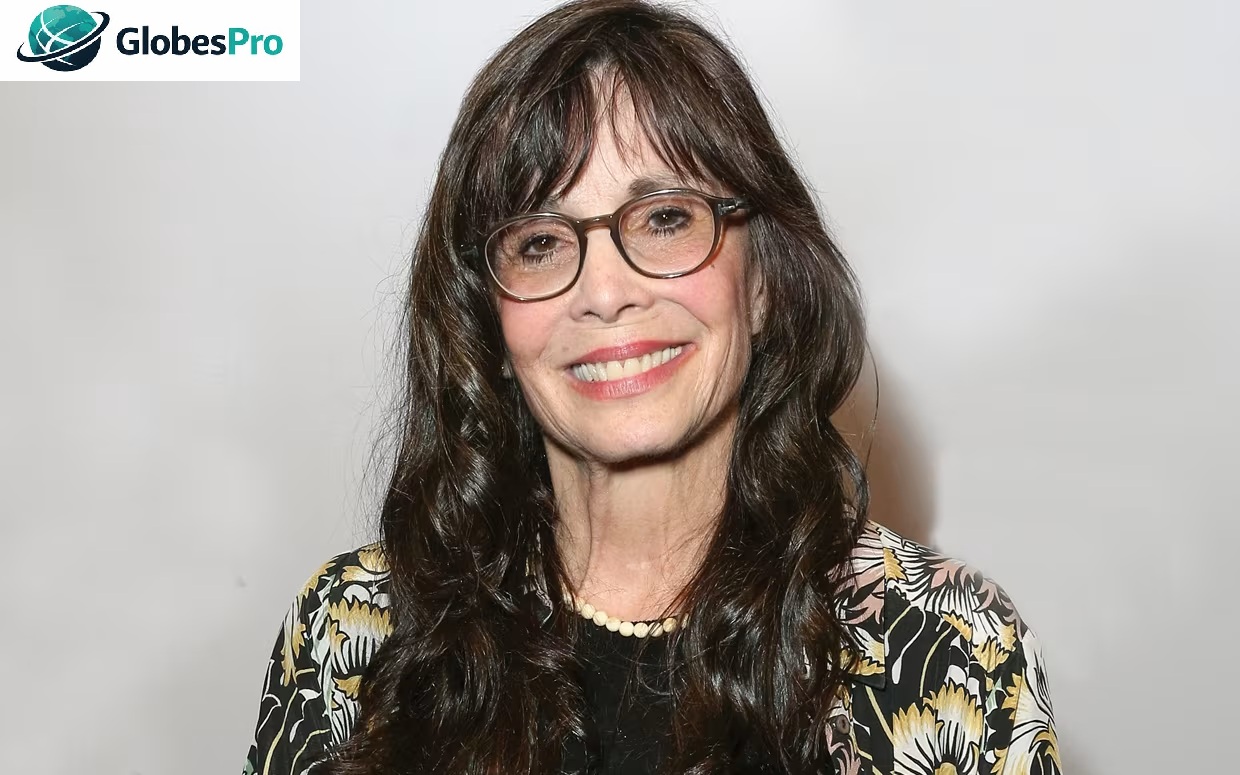
There is a particular kind of acting greatness that the film world consistently undervalues — the greatness of restraint. The greatness of the actor who does less, who finds the character in the silences rather than the speeches, who makes you feel something by holding back rather than pushing forward. Talia Shire has that greatness. In two of the most celebrated film franchises in Hollywood history, she created performances of such quiet emotional precision that they became the beating hearts of stories ostensibly about men, violence, and power. Without Adrian, Rocky is just a boxing movie. Without Connie Corleone, The Godfather loses one of its most human threads. Talia Shire understood both characters in ways that went beyond the page — and delivered them in ways that have lasted fifty years.
For readers looking for a quick answer — Talia Shire is an American actress born Talia Rose Coppola on April 25, 1946, in Lake Success, New York. She is the sister of legendary director Francis Ford Coppola and is best known for playing Adrian Pennino-Balboa in the Rocky franchise and Connie Corleone in The Godfather series. She received two Academy Award nominations — Best Supporting Actress for The Godfather Part II (1974) and Best Actress for Rocky (1976) — making her one of the few actors in history to receive major nominations for two of cinema’s most iconic franchises simultaneously. She is also the mother of actor Jason Schwartzman and musician Robert Schwartzman.
Quick Facts
| Field | Details |
|---|---|
| Full Name | Talia Rose Coppola |
| Stage Name | Talia Shire |
| Born | April 25, 1946 |
| Birthplace | Lake Success, New York, USA |
| Nationality | American |
| Occupation | Actress, Producer |
| Known For | Adrian — Rocky franchise; Connie Corleone — The Godfather |
| Brother | Francis Ford Coppola |
| Academy Award Nominations | 2 — Godfather Part II (Supporting Actress); Rocky (Actress) |
| Children | Matthew Orlando Shire, Jason Schwartzman, Robert Schwartzman |
| Active Years | 1968 – Present |
| Famous Nephew | Nicolas Cage (born Coppola) |
Early Life: Growing Up Coppola
Talia Rose Coppola was born on April 25, 1946, in Lake Success, New York — a small village on Long Island that sits about as far from Hollywood’s mythology as it is possible to be while still being on the American East Coast.
She was born into a family for whom creativity was not an aspiration but a condition of existence. Her father Carmine Coppola was a musician and composer — a man whose relationship with art was professional and passionate simultaneously. Her brother Francis Ford Coppola was already demonstrating the extraordinary creative intelligence that would eventually make him one of the most celebrated directors in American film history.
Growing up in that environment meant growing up with the assumption that making things — films, music, stories — was simply what serious people did. It was not a rarefied pursuit reserved for the specially gifted. It was work. It was craft. It was something you developed through discipline and genuine engagement rather than waiting for inspiration to arrive.
Talia absorbed that framework completely. But she also had to navigate something that came with it — the particular challenge of establishing her own identity within a family whose creative reputation preceded her everywhere she went.
She studied at the Yale School of Drama — one of the most rigorous and respected acting programs in the United States. The decision to pursue formal training rather than relying on family connections reflected both personal integrity and a clear-eyed understanding that the Coppola name would open doors but couldn’t do the actual work for her. She needed to be able to act — genuinely, technically, with the full toolkit that serious dramatic training provides.
That training would eventually allow her to do things in front of a camera that most actors simply cannot do.
The Coppola Connection: Gift and Challenge

Being Francis Ford Coppola’s sister in 1970s Hollywood was simultaneously one of the greatest advantages and one of the most complicated burdens an actor could carry.
By the time Talia’s career was developing in earnest, Francis had already made The Godfather (1972) — a film that immediately entered the conversation about the greatest American movies ever made. He was, without question, one of the most powerful creative figures in Hollywood. His name on a project meant something. His support meant something.
But it also meant that every role Talia was considered for came with the question of whether she was being cast for her talent or her last name. It meant that every performance she gave would be evaluated partly through the lens of her family connection. It meant that the genuine craft she had developed at Yale and through years of professional work would always have to fight through the noise of the famous surname to be seen clearly.
She has spoken about this dynamic in interviews with characteristic directness — acknowledging both the genuine advantages her background provided and the genuine work required to build a reputation that stood independently of it.
The stage name Talia Shire — adopted professionally rather than performing under her birth name Coppola — was partly a response to this challenge. It was a declaration that she intended to be evaluated on her own terms, in her own right, separate from the family mythology.
The subsequent career more than justified that intention.
The Godfather: Connie Corleone
In 1972, Francis Ford Coppola cast his sister as Connie Corleone — the only daughter of the Corleone family — in The Godfather. The casting generated exactly the kind of nepotism conversation that Talia had been navigating her entire professional life.
And then the film came out. And the conversation changed.
Connie Corleone is not a large role in the original Godfather — but it is a demanding one. She is the daughter of a man who controls everything and protects everyone except, crucially, her. Her marriage to Carlo Rizzi — an abusive, corrupt man who ultimately betrays the family — is one of the film’s darkest subplots. The scenes of domestic violence that Talia was required to perform were not comfortable or easy. She played them with a raw authenticity that was immediately recognised.
| Talia Shire in The Godfather Franchise | Film | Role | Notes |
|---|---|---|---|
| The Godfather | 1972 | Connie Corleone | Domestic abuse storyline; Carlo’s wife |
| The Godfather Part II | 1974 | Connie Corleone | Expanded role; Academy nomination |
| The Godfather Part III | 1990 | Connie Corleone | Central role; Connie as power figure |
In The Godfather Part II (1974), Connie’s role expanded significantly — and Talia’s performance expanded with it. The character’s arc across the three films is one of the most interesting in the franchise — from abused wife to grieving daughter to, by Part III, a figure of genuine power within the family structure. Playing that arc across nearly two decades of filmmaking required the kind of sustained character intelligence that distinguishes great actors from merely competent ones.
The Academy Award nomination for Best Supporting Actress for Part II confirmed what serious film observers already knew — Talia Shire was not riding her brother’s coattails. She was doing genuinely remarkable work.
How She Became Adrian
The story of how Talia Shire was cast as Adrian Pennino in Rocky is one of Hollywood’s better casting stories — and it involves Sylvester Stallone making a decision that was, by his own account, both instinctive and non-negotiable.
When Stallone was developing Rocky, he had a very specific sense of who Adrian needed to be. She was not a glamorous love interest. She was not a conventional romantic heroine. She was a shy, overlooked woman working in a pet shop — someone who had spent her life being made to feel invisible and who had never fully believed she deserved to be seen.
Finding an actress who could play that kind of invisible person — who could make an audience care deeply about someone who barely takes up space in a room — was not straightforward. The instinct to cast someone conventionally attractive and simply dress her down was a constant temptation that Stallone resisted.
When he met Talia Shire — already an Academy Award-nominated actress for The Godfather Part II — he recognised immediately that she understood what Adrian required. She had the technical training to find the character’s stillness. She had the emotional intelligence to make that stillness feel genuine rather than performed. And she had a quality on screen that was specific and real rather than generic and polished.
He pushed for her casting with the same determination he had pushed for his own — and the result was one of the great romantic partnerships in American cinema.
Adrian Pennino: Understanding the Performance

Adrian Pennino is one of the most underappreciated characters in the Rocky franchise — consistently discussed as secondary to Rocky himself, consistently described as simply “the love interest,” and consistently misunderstood as a passive figure rather than the active emotional anchor she actually is.
Talia Shire understood Adrian in ways that went well beyond the surface description. Adrian is not shy because she is weak. She is reserved because she has been told — by her brother Paulie, by her circumstances, by the grinding invisibility of her daily life — that she doesn’t matter. Her quietness is not a character flaw. It is a response to a world that has consistently confirmed her worst fears about her own worth.
The journey from that starting point to the woman who stands at Rocky’s corner and gives him permission to fight — who becomes his genuine partner rather than simply his supporter — is one of the most carefully constructed character arcs in the franchise. And Talia Shire plays every step of it with complete conviction.
| Adrian’s Arc — Film by Film | Details |
|---|---|
| Rocky (1976) | Shy pet shop worker; first relationship; famous ice rink scene |
| Rocky II (1979) | Marriage; pregnancy; coma; “Win!” — one of franchise’s great moments |
| Rocky III (1982) | Stable presence; the beach conversation that defines their relationship |
| Rocky IV (1985) | Supports Rocky’s decision to fight Drago despite grief over Apollo |
| Rocky V (1990) | Family under financial pressure; concerned mother |
| Rocky Balboa (2006) | Died between films from cancer; her absence shapes the entire film |
The “Win!” moment in Rocky II — where Adrian emerges from her coma, locks eyes with Rocky, and gives him the one word of permission he has been waiting for — is one of the franchise’s most emotionally powerful moments. It is powerful not because of what is said but because of everything Talia Shire has built into the character across two films that makes those three letters carry the weight they do.
The decision to kill Adrian between films — revealed at the start of Rocky Balboa (2006) — was controversial precisely because her absence is so felt throughout the final film. Stallone has spoken about the decision as a deliberate choice to explore what Rocky is without the person who defined his emotional world. The fact that her death creates that much narrative weight is itself a testament to what Talia Shire built across five films.
The Pet Shop Scene: Where Adrian Was Born
No discussion of Talia Shire’s performance as Adrian is complete without the pet shop scene — the first extended interaction between Rocky and Adrian that establishes their entire relationship dynamic.
Rocky comes into the pet shop where Adrian works — awkward, over-eager, clearly nervous in a way that his physical toughness makes almost comically incongruous. Adrian barely looks at him. She answers in single words. She gives him nothing to work with.
And yet the scene crackles with genuine chemistry — because Talia Shire was not simply playing shy. She was playing someone who desperately wants to be seen and is absolutely terrified of what happens if she is. Every deflection Adrian offers in that scene contains its opposite — the hope that Rocky won’t accept the deflection. That double layer of meaning, communicated almost entirely through physical restraint and micro-expressions, is pure acting craft.
Director John G. Avildsen kept the cameras rolling through multiple variations of the scene — recognising that something real was happening between Stallone and Shire that wouldn’t survive over-direction. Much of what ended up in the film was genuinely improvised — the two actors finding the scene’s truth in real time.
That quality of genuine discovery in performance is one of the rarest things in cinema. Talia Shire had it.
Two Academy Award Nominations: The Full Story
In the history of the Academy Awards, very few actors have received nominations for two completely different iconic franchises in the same period of their career. Talia Shire is one of them.
| Academy Award Nominations | Year | Category | Film | Result |
|---|---|---|---|---|
| Best Supporting Actress | 1975 | Supporting Actress | The Godfather Part II | Lost to Ingrid Bergman (Murder on the Orient Express) |
| Best Actress | 1977 | Lead Actress | Rocky | Lost to Faye Dunaway (Network) |
The 1975 nomination for The Godfather Part II placed her in company that included Diane Ladd, Madeline Kahn, Valentina Cortese, and Ingrid Bergman — who won. It was recognition from the Academy that her work in the Godfather franchise was of the highest standard.
The 1977 nomination for Rocky — in the Lead Actress category — was arguably more remarkable. It acknowledged that Adrian was not a supporting character in the traditional sense but the film’s genuine emotional co-lead. The nomination placed her alongside Marie-Christine Barrault, Liv Ullmann, Sissy Spacek, and Faye Dunaway — who won for Network.
The fact that she didn’t win either is one of those Academy Award outcomes that looks increasingly questionable with the passage of time. Both performances have demonstrably outlasted most of the films they competed against in the cultural conversation.
Being nominated in both the Supporting and Lead categories for two different iconic franchises within three years — while navigating the constant noise about her family connections — is an achievement that deserves considerably more acknowledgment than it typically receives.
Personal Life: Two Marriages, Three Sons
Talia Shire’s personal life has been shaped by love, loss, and the particular richness that comes from building a creative family across generations.
Her first marriage was to David Shire — a highly respected film and theatre composer whose credits include The Conversation, All the President’s Men, and Farewell My Lovely. The marriage produced one son — Matthew Orlando Shire — before the couple divorced.
Her second marriage was to film producer Jack Schwartzman — a significant figure in independent film production whose credits included the James Bond film Never Say Never Again (1983). Together they had two sons — Jason Schwartzman and Robert Schwartzman.
Jack Schwartzman died in 1994 from kidney cancer — leaving Talia widowed with her sons still young. His death was a profound personal loss that she has spoken about with quiet grief in the years since.
| Talia Shire — Family Details | Details |
|---|---|
| First Husband | David Shire — composer (m. 1970, div. 1980) |
| Son | Matthew Orlando Shire |
| Second Husband | Jack Schwartzman — producer (m. 1980) |
| Sons | Jason Schwartzman (b. 1980), Robert Schwartzman (b. 1982) |
| Widowed | 1994 — Jack died of kidney cancer |
| Brother | Francis Ford Coppola |
| Famous Nephew | Nicolas Cage |
| Famous Niece | Sofia Coppola |
Her Famous Sons: Jason and Robert
If Talia Shire’s own career placed her at the centre of Hollywood history, her sons have ensured that the creative legacy continues into the next generation.
Jason Schwartzman has become one of the most distinctive actors of his generation — known for his work with Wes Anderson across multiple films including Rushmore (1998), The Darjeeling Limited (2007), and Asteroid City (2023). His deadpan comedic intelligence and genuine dramatic ability have made him a consistently compelling screen presence. He was nominated for a Screen Actors Guild Award for his work in The Hunger Games franchise.
Robert Schwartzman has built a career as both an actor and musician — fronting the band Rooney and appearing in films including The Princess Diaries (2001). He has also moved into directing and production — extending the family’s creative reach across yet another generation.
| Talia’s Sons | Career | Notable Work |
|---|---|---|
| Jason Schwartzman | Actor | Rushmore, Darjeeling Limited, Asteroid City, Hunger Games |
| Robert Schwartzman | Actor, Musician, Director | The Princess Diaries; Rooney (band) |
The creative dynasty that Talia sits at the centre of — with Francis Ford Coppola as her brother, Nicolas Cage and Sofia Coppola as her nephew and niece, and Jason and Robert Schwartzman as her sons — represents one of the most extraordinary concentrations of creative talent in American entertainment history.
The Coppola Family Dynasty
The Coppola family’s collective impact on American cinema is genuinely without parallel. Understanding Talia’s place within it adds another dimension to her story.
| The Coppola Creative Family | Relation to Talia | Known For |
|---|---|---|
| Francis Ford Coppola | Brother | The Godfather, Apocalypse Now, The Conversation |
| Carmine Coppola | Father | Composer; worked on Godfather films |
| Nicolas Cage | Nephew (born Coppola) | Leaving Las Vegas, Face/Off, Moonstruck |
| Sofia Coppola | Niece | Lost in Translation, The Virgin Suicides, Priscilla |
| Jason Schwartzman | Son | Rushmore, Wes Anderson films |
| Robert Schwartzman | Son | Actor, musician, director |
| Roman Coppola | Nephew | Director, screenwriter |
Nicolas Cage — born Nicolas Coppola — adopted his stage name partly to escape the same family-connection pressure that Talia had navigated with her own name change. The parallel between aunt and nephew in this regard is striking — both talented enough to build extraordinary careers on their own terms, both choosing to modify their public names as a declaration of independent identity.
Sofia Coppola has become one of the most respected directors of her generation — a creative trajectory that mirrors her father’s in ambition if not in style. The Coppola family has effectively shaped American cinema across three generations — an achievement that Talia’s own work is inseparably part of.
Selected Filmography: Beyond Rocky and Godfather
| Film / Project | Year | Role | Notes |
|---|---|---|---|
| The Godfather | 1972 | Connie Corleone | Franchise debut |
| The Godfather Part II | 1974 | Connie Corleone | Academy nomination |
| Rocky | 1976 | Adrian Pennino | Academy nomination; franchise debut |
| Rocky II | 1979 | Adrian Balboa | “Win!” scene |
| Rocky III | 1982 | Adrian Balboa | Beach scene |
| Rocky IV | 1985 | Adrian Balboa | Supporting Rocky after Apollo’s death |
| Rocky V | 1990 | Adrian Balboa | Sage Stallone’s film — see our piece on him |
| The Godfather Part III | 1990 | Connie Corleone | Expanded role |
| Rocky Balboa | 2006 | Adrian (flashbacks) | Died between films; remembered throughout |
| Various TV and theatre | 1970s–2000s | Various | Consistent work beyond franchise roles |
Talia Shire Today
As of 2025, Talia Shire remains a respected and active figure in the entertainment world — though she has always operated more quietly than her public achievements might suggest.
She has continued to take selective acting roles across television and film — maintaining the same standard of craft that defined her peak years without chasing the kind of commercial visibility that her family connections could easily provide.
Her public appearances are measured and purposeful — she is not a figure who seeks the spotlight for its own sake, which is consistent with everything about how she has conducted her career. She appears at industry events that matter to her, supports the work of her sons and other family members, and continues to be recognised by serious film observers as one of the most genuinely accomplished actors of her generation.
The Rocky franchise’s continued cultural relevance — particularly through the Creed trilogy — means that Adrian Balboa remains a living presence in popular culture rather than a purely historical one. New audiences discovering the original films encounter Talia Shire’s performance for the first time and respond to it with the same recognition that audiences did in 1976. That is the definition of a performance that has outlasted its moment.
Legacy: The Greatness of Restraint
Talia Shire’s legacy rests on something that is genuinely difficult to quantify — the greatness of doing less than the scene seems to require and trusting that the audience will meet you there.
In an acting culture that has often valued the demonstrative over the precise — the big speech over the held breath, the dramatic breakdown over the controlled containment — Talia Shire consistently chose precision. She trusted stillness. She trusted silence. She trusted the audience’s intelligence to feel what she was feeling without being told to feel it.
That approach produced two of cinema’s most enduring female characters — Connie Corleone and Adrian Balboa — in two of cinema’s most enduring franchises. The fact that both characters are often discussed as secondary to their male counterparts is a reflection of how those franchises are typically framed rather than a reflection of what Talia Shire actually contributed to them.
| Talia Shire’s Legacy | Details |
|---|---|
| Two iconic franchises | Only actor with major roles in both Rocky and Godfather |
| Two Academy nominations | Recognised for both in same career period |
| Adrian’s emotional legacy | Defined the Rocky franchise’s heart |
| Connie’s dramatic arc | One of Godfather’s most complete character journeys |
| Acting approach | Master of restraint and emotional precision |
| Family legacy | Central figure in Hollywood’s most creative dynasty |
| Influence | Template for playing vulnerability without weakness |
Why Talia Shire’s Story Matters
Talia Shire’s story matters because it is the story of a woman who built a genuine artistic legacy inside one of Hollywood’s most complicated personal contexts — a famous family, a famous brother, a famous name — and did so through craft, discipline, and an unwillingness to take the shortcuts that her circumstances made available.
She played two of cinema’s most beloved female characters in two of its most beloved franchises. She received two Academy Award nominations that are more impressive in retrospect than they were acknowledged to be at the time. She raised two sons who became significant creative figures in their own right. She navigated the Coppola family mythology with her own identity intact.
And she did all of it with the same quality she brought to Adrian and Connie — quietly, precisely, and with complete conviction.
Frequently Asked Questions
1. Who is Talia Shire? Talia Shire is an American actress born Talia Rose Coppola on April 25, 1946. She is best known for playing Adrian in the Rocky franchise and Connie Corleone in The Godfather series. She is the sister of director Francis Ford Coppola and received two Academy Award nominations for both roles.
2. What is Talia Shire’s real name? Her real name is Talia Rose Coppola. She adopted the stage name Talia Shire professionally — taking her first husband’s surname — partly to establish an identity independent of her famous brother Francis Ford Coppola.
3. How many Academy Award nominations did Talia Shire receive? She received two Academy Award nominations — Best Supporting Actress for The Godfather Part II (1974) and Best Actress for Rocky (1976). She did not win either but remains one of very few actors nominated for two different iconic franchises in the same career period.
4. Who are Talia Shire’s sons? She has three sons — Matthew Orlando Shire (from her first marriage to composer David Shire), and Jason Schwartzman and Robert Schwartzman (from her second marriage to producer Jack Schwartzman). Jason has become a highly regarded actor known for his work with Wes Anderson.
5. Is Talia Shire related to Nicolas Cage? Yes. Nicolas Cage — born Nicolas Coppola — is Talia Shire’s nephew. He is the son of her brother August Coppola and adopted his stage name for similar reasons to Talia’s own name change.
6. What happened to Adrian in Rocky Balboa? Adrian Balboa — Talia Shire’s character — died of cancer between the events of Rocky V and Rocky Balboa (2006). Her death is revealed at the start of the film and shapes Rocky’s entire emotional journey throughout it. Talia Shire does not appear in the film except in brief flashbacks.
7. What was Talia Shire’s role in The Godfather? She played Connie Corleone — the only daughter of Vito Corleone — across all three Godfather films. Her character’s arc across the trilogy is one of its most complete — from abused wife in the original to a figure of genuine family power in Part III.
8. Is Talia Shire still acting? Yes — as of 2025, Talia Shire remains active in the entertainment industry, taking selective roles in film and television while maintaining the measured public profile that has characterised her entire career.
Conclusion: The Quiet Heart of Hollywood’s Greatest Stories
The Rocky franchise has its fighter. The Godfather has its patriarch. But both of those stories — in the ways that matter most emotionally — belong equally to the women at their centres. And the woman who gave one of those franchises its heart, and gave the other one of its most quietly devastating character arcs, is Talia Shire.
She grew up in the shadow of one of cinema’s great creative families and built her own shadow — equally long, equally real, and entirely her own. She played quiet women who contained enormous depths and made audiences understand that restraint is not absence but presence of a different kind. She raised sons who became artists. She navigated loss and love and the perpetual noise of a famous surname with the same precision she brought to every character she ever played.
Two Academy Award nominations. Two of cinema’s most enduring franchises. One genuine acting legacy that deserves to be discussed with the seriousness it has always merited.
Talia Shire did the work. The record shows it clearly — for anyone willing to look past the famous last name and the famous husband’s name and the famous son’s name and simply watch what she does when the camera is rolling.
What she does is extraordinary.
