
Author

Jennifer Boyd

Browsing

Proxyium com is an online proxy service that allows users to access the web indirectly through its servers, commonly used to circumvent blockages, provide a minimal amount of anonymity, or to access content that is restricted.

It works as a middle layer between the user and the specific site they are trying to connect to. For example, instead of your browser directly connecting to a site, the request first passes through Proxyium’s servers. You need this because it allows users to access content that might be blocked by their network or region and can also hide their original IP address to some degree.

In this article, we will take a closer look at Proxyium.com, its benefits, and who should use it!

Understanding Web Proxies (Simplified)

Learning about what a web proxy is and its functionalities makes it easier to comprehend proxyium com.

Generally, whenever you go to a site:

  • Your device sends a request directly to the site

  • The site sees your IP address

  • Content is delivered straight back to you

With a web proxy:

  • Your request goes to the proxy server

  • The proxy requests the website on your behalf

  • The website sees the proxy, not you

  • The content is sent back through the proxy

And this is basically the indirect connection that services like proxyium com provide.

Why People Use proxyium com?

Searching for proxy services is not something that people do out of interest. They come searching because they are trying to resolve a specific access issue.

These restrictions can be broken down into a few categories: websites blocked by the school or work network, network-level restrictions, and region-level restrictions. You might be looking for basic IP masking or just checking if a website can be accessed from different locations.

Proxyium com is attractive for its lightweight design, as it usually works straight in a browser with little-to-no installation or complex configuration. It is surprisingly flexible and designed for quick use by people who need an answer on the fly, without any technical complexity.

How proxyium com Typically Works

Most web-based proxy services follow a similar workflow, and proxyium com is no exception.

Typically, the process involves or looks like: 

Step1: The user visits the proxy website

Step 2: User enters the URL of the desired website

Step 3: Proxy fetches the site through its own servers

Step 4: The site loads within the proxy interface

From the user’s perspective, it feels like visiting a normal website. But just with a different address bar and layout.

What Makes proxyium com Appealing to Casual Users

Unlike VPNs or advanced networking tools, web proxies are designed for simplicity.

Key reasons proxyium com attracts users:

  • No software download

  • No account registration in many cases

  • Works on most devices

  • Easy for beginners

This makes it especially popular with users who want a quick solution rather than a long-term privacy tool.

What proxyium com Is Not?

It’s important to understand and set realistic expectations. In general, understand that proxyium com is not:

  • A full VPN replacement

  • A guarantee of complete anonymity

  • A secure tunnel for sensitive data

  • A tool for bypassing all restrictions

Privacy and Anonymity Considerations

The greatest misconception: that a proxy or a VPN, or any other tool, automatically makes you anonymous.

Howeve, in reality:

  • Your IP may be hidden from the destination site

  • The proxy provider can still see traffic

  • Encryption may be limited or partial

  • Browser fingerprinting can still occur

proxyium com might offer some low-level privacy advantages, but really shouldn’t be trusted with anything that would be high-risk or particularly sensitive. Precautions is always better!

Security Risks Users Often Overlook

Since web proxies sit between you and the site you want to access, trust becomes an important factor.

When using a proxy service, all your data is routed to the desired website or service via the proxy’s servers. However, this poses potential risks for users. This has included the risk where the proxy provider could, in theory, intercept data and observe what you’re browsing as you go from page to page. 

It also opens a modified page content risk, meaning the proxy may change what you see on a website. Many proxies may also inject tracking scripts that monitor your behavior, and in some cases, HTTPS protection can be reduced or even disabled.

Now, this does not mean proxyium com is unsafe by default, but rather it explains the nature of why users might want to be more careful. To generalize, you should not enter a password, debit/credit card, or any data that is linked to the person while using any free proxy service, from any provider.

Why proxyium com Is Often Used in Schools and Workplaces

Web proxies provide a simple workaround because they often operate over standard web traffic that isn’t immediately blocked. Restricted networks are a major driver of proxy searches. Institutions often block:

  • Social media

  • Streaming platforms

  • Gaming sites

  • Certain forums

Performance and Speed Expectations

The speed may be affected because the traffic is routed through an extra server. While using it, you might notice the pages load more slowly, broken site features, inconsistent performance, and limited media playback. 

proxyium com prioritizes accessibility over speed, which is typical for browser-based proxy tools.

The Difference Between a Proxy and a VPN

Understanding this difference helps avoid misuse. Here is a quick and simplified comparison between Proxy and VPN:

Feature Web Proxy VPN
Setup Browser-based App-based
Coverage Single tab/site Entire device
Encryption Limited Strong
Speed Variable Usually faster
Privacy Basic Advanced

proxyium com falls squarely into the web proxy category.

Why Free Proxy Services Change Frequently

Since the service is free, you may notice that sometimesproxyium com:

  • Goes offline temporarily

  • Changes interface

  • Loses access to certain sites

This occurs because proxy services must continually adapt to network filtering updates, traffic throttling, and website blocking. Remember, instability here is common and nothing to be worried about. 

Who Should Consider Using proxyium com

This type of service may be suitable for:

  • Casual browsing of blocked sites

  • Non-sensitive research

  • Quick access checks

  • Low-risk experimentation

It is not suitable for:

  • Online banking

  • Account logins

  • Confidential communication

  • Long-term privacy needs

Matching the tool to the task is essential.

Legal and Ethical Considerations

While using a proxy is not illegal in many regions, bypassing network restrictions may violate:

  • School policies

  • Workplace rules

  • Terms of service

It’s crucial to be responsible for understanding the rules of the network you are on.

Why People Keep Searching for proxyium com

Search interest in Proxyium is common and not even surprising. Users are likely searching due to: 

  • Network restrictions continue to grow

  • Users want simple solutions

  • Many alternatives are complex

  • Proxy tools require explanation

Not everyone is looking to use the tool. Some might be interested to know how it works. 

A Smarter Way to Use Web Proxies

If you choose to use proxyium com, here are some important tips to remember:

  • Avoid logging into accounts

  • Close the proxy tab after use

  • Use it only for low-risk browsing

  • Treat it as a temporary tool

Final Thoughts

Proxyium com is a browser-based web proxy wherein the user is taken to a particular website through an intermediate location (the proxy between the user and the final destination). com is a web proxy service that passively allows users to access blocked sites or hide their IP address for a limited period. It offers convenience and accessibility but lacks robust security and full anonymity.

To understand proxyium com is to understand when to use it and when not to. It can be useful when used selectively and for the right purposes. By applying it blindly, you can lose confidence in your privacy and security.

We hope the above article answered your questions properly. 


Robert Griffin III, commonly known as RG3, is a former NFL quarterback and current ESPN analyst who rose to extraordinary heights by winning the 2011 Heisman Trophy at Baylor University before being selected second overall by the Washington Football Team in the 2012 NFL Draft. His promising career was derailed by a devastating knee injury in his rookie playoff game that he never fully recovered from despite multiple comeback attempts.

Born Robert Lee Griffin III on February 12, 1990, in Okinawa, Japan, where his parents were stationed in the U.S. Army, he grew up as a phenomenal dual-threat athlete who could both pass with precision and run with electrifying speed. He became one of college football’s most exciting players before his NFL career became a cautionary tale about rushing injured players back too soon, organizational dysfunction, and the physical toll of the quarterback position.

Personal Information Details
Full Name Robert Lee Griffin III
Common Name RG3
Date of Birth February 12, 1990
Age 34 years old
Place of Birth Okinawa, Japan (military base)
Parents Robert Griffin Jr. and Jacqueline Griffin (both U.S. Army)
Height 6’2″ (188 cm)
Weight 223 lbs (playing weight)
Position Quarterback
College Baylor University
College Achievement 2011 Heisman Trophy winner
NFL Draft 2012, 2nd overall pick by Washington
Rookie Season 2012 – NFL Offensive Rookie of the Year
Major Injury ACL/LCL tear, January 2013 playoff game
NFL Teams Washington (2012-2015), Cleveland Browns (2016-2017), Baltimore Ravens (2018-2020)
Career Record 16-23 as starter
Retirement 2021
Current Career ESPN college football and NFL analyst
First Wife Rebecca Liddicoat (divorced 2016)
Second Wife Grete Sadeiko (married 2018)
Children Four daughters

His rookie season in 2012 was spectacular, earning him NFL Offensive Rookie of the Year honors and leading Washington to the playoffs. However, the knee injury suffered in that playoff game against Seattle fundamentally changed his career trajectory, leading to diminished athleticism, lost confidence, benchings, team changes, and ultimately retirement from playing in 2021 before transitioning successfully to broadcasting.

Robert Griffin III represents one of the most dramatic “what if” stories in recent NFL history—a generational talent whose career was essentially over before it truly began due to injury mismanagement and the inability to adapt his game after losing the explosive athleticism that made him special. Since retiring from playing and joining ESPN as a college football and NFL analyst, Griffin has found success in broadcasting, using his intelligence, charisma, and insider knowledge to provide insightful commentary while also being remarkably candid about the mistakes, injuries, and dysfunction that prevented him from fulfilling his enormous potential.

Early Life and Athletic Development

He was born on a U.S. military base in Okinawa, Japan, on February 12, 1990, to parents Robert Griffin Jr. and Jacqueline Griffin, both serving in the U.S. Army. This military background instilled discipline and structure that would influence Griffin’s approach to athletics and life.

The family eventually settled in Copperas Cove, Texas, a small military town near Fort Hood. Growing up in Texas meant football was central to community life, and Griffin quickly distinguished himself as an exceptional athlete. He excelled not just in football but also in track and field, becoming a championship hurdler with times that would have been competitive at the college level.

His athletic versatility was remarkable—he could throw, run, jump, and had the speed of a world-class sprinter combined with the coordination to hurdle obstacles at full speed. These abilities translated to football, where he played quarterback with the mobility of a running back and the arm of a pocket passer.

Athletic Background

Sport Achievement Significance
Football High school star quarterback Recruited by major programs
Track and Field State champion hurdler Elite speed and athleticism
Basketball Multi-sport athlete Overall athletic development
Academic Strong student Intelligence and discipline

Griffin’s combination of physical gifts, intelligence, and work ethic made him a highly recruited high school athlete. He chose to attend Baylor University, a decision that would prove transformative for both him and the program.

Baylor Years and Heisman Trophy

When Robert Griffin arrived at Baylor in 2008, the football program was struggling, having endured years of losing seasons and NCAA sanctions. However, under head coach Art Briles, Baylor was implementing an innovative spread offense that would perfectly showcase Griffin’s talents.

Griffin became the starting quarterback and immediately elevated the program. His ability to read defenses, make accurate throws, and escape pressure with his legs made him nearly impossible to defend. He could beat teams through the air with precise passes or on the ground with explosive runs that showcased his track speed.

The 2011 season was his masterpiece. Griffin led Baylor to a 10-3 record, the program’s best season in decades. He threw for 4,293 yards and 37 touchdowns while adding 699 rushing yards and 10 rushing touchdowns. His efficiency was remarkable—a 72.4% completion percentage and a quarterback rating of 189.5, one of the highest in college football history.

2011 Heisman Trophy Season

Category Statistics National Ranking
Passing Yards 4,293 Top 10
Passing TDs 37 Top 5
Completion % 72.4% #1 in FBS
QB Rating 189.5 Near record
Rushing Yards 699 Elite for QB
Rushing TDs 10 Elite for QB

His performance earned him the 2011 Heisman Trophy, awarded to college football’s best player. He became Baylor’s first Heisman winner and solidified his status as one of the top quarterback prospects for the 2012 NFL Draft.

The 2012 NFL Draft and Trade

The 2012 NFL Draft featured two exceptional quarterback prospects: Andrew Luck from Stanford and Robert Griffin III from Baylor. Luck was considered the consensus first overall pick, leaving Griffin as the prize for whichever team could position itself to select second.

The St. Louis Rams held the second pick but didn’t need a quarterback. The Washington Football Team, desperate for a franchise quarterback, made an aggressive trade to move up from sixth to second overall. Washington gave up three first-round picks and a second-round pick—a massive haul that reflected both Griffin’s perceived value and Washington’s desperation.

This trade created enormous pressure on Griffin to justify such a significant investment. Washington needed him to be a franchise-altering player immediately, which influenced decisions about his usage and recovery from injuries.

Robert Griffin

Spectacular Rookie Season (2012)

Robert Griffin’s rookie season exceeded even the lofty expectations created by the massive trade. He was immediately installed as the starter and proved ready for the NFL’s speed and complexity. His combination of passing accuracy, mobility, and poise was remarkable for a first-year player.

Griffin threw for 3,200 yards and 20 touchdowns with just 5 interceptions while adding 815 rushing yards and 7 rushing touchdowns. He led Washington to a 10-6 record and their first playoff berth in years. His electricity and charisma made him a marketable star, appearing in numerous commercials and becoming one of the NFL’s most popular players.

2012 Rookie Statistics

Category Total Achievement
Record as Starter 9-6 Led team to playoffs
Passing Yards 3,200 Strong passing numbers
Passing TDs 20 Excellent TD/INT ratio
Interceptions 5 Exceptional ball security
Rushing Yards 815 Most by QB that season
Rushing TDs 7 Dual-threat production
Award NFL Offensive Rookie of the Year Beat out several strong candidates including Andrew Luck

The season was a dream start to his NFL career. However, warning signs emerged. Griffin suffered a minor knee injury mid-season and showed visible discomfort in late-season games, though he continued playing through pain.

The Catastrophic Injury

The 2012 season ended in disaster during a playoff game against the Seattle Seahawks. Playing on a soggy field at FedEx Field, Griffin’s knee gave out during a play in the fourth quarter. He had already been visibly limping and grimacing throughout the game but continued playing despite the obvious injury.

The injury was severe—a torn ACL and LCL—requiring major reconstructive surgery. The decision to keep Griffin in the game when he was clearly compromised became one of the most controversial coaching decisions in recent NFL history and a defining moment in Griffin’s career trajectory.

The Injury and Its Aftermath

Date Event Consequence
January 6, 2013 Knee injury in playoff game Season-ending ACL/LCL tear
January-August 2013 Surgery and rehabilitation Rushed return for 2013 season opener
2013 Season Struggled post-injury Lost athleticism and confidence
2014-2015 Continued decline Benched, lost starting job
2015 Released by Washington First NFL team gives up on him

The rushed rehabilitation and return created a pattern where Griffin was never fully healthy or confident again. The explosive athleticism that made him special was diminished, and he couldn’t compensate with pocket passing skills he hadn’t fully developed.

Decline and Career Struggles

Robert Griffin never recaptured his rookie season form. The 2013 season was disappointing as he played tentatively, clearly not trusting his knee. The 2014 season saw him benched, creating a quarterback controversy that divided the locker room and fanbase. By 2015, Washington had moved on entirely, benching Griffin for the season and releasing him afterward.

He signed with the Cleveland Browns in 2016, hoping for a fresh start, but suffered another injury and was ineffective when healthy. A brief stint with Baltimore Ravens from 2018-2020 saw him primarily serving as Lamar Jackson’s backup, rarely playing.

His career statistics tell the story of unfulfilled potential: 16-23 record as a starter, 9,385 passing yards, 43 touchdowns, and 28 interceptions across parts of eight seasons—numbers far below what seemed achievable after his brilliant rookie year.

Personal Life and Family

His personal life saw significant changes parallel to his career struggles. He divorced his first wife, Rebecca Liddicoat, in 2016 after allegations of infidelity on his part with Grete Sadeiko, an Estonian track and field athlete. The divorce, which occurred while Rebecca was raising their young daughter, became public and messy, damaging Griffin’s public image.

He married Sadeiko in 2018, and they have had three daughters together, giving Griffin a total of four daughters. He has spoken about fatherhood changing his perspective and priorities, providing fulfillment beyond football.

Transition to Broadcasting

After unofficially retiring from playing following the 2020 season, Robert Griffin joined ESPN as a college football analyst in 2021. He has since expanded to NFL coverage as well, appearing on various ESPN programs including “Monday Night Countdown.”

Griffin has proven to be an excellent broadcaster, combining insider knowledge with charisma and willingness to be honest about his own career mistakes. He analyzes quarterback play with particular insight, having experienced both the highest highs and lowest lows of the position.

His broadcasting career has been well-received, suggesting he may have found his true calling. He’s articulate, prepared, and brings authentic perspective that resonates with viewers.

Legacy and “What If” Questions

His legacy is defined by both his remarkable talent and his tragic decline. The “what if” questions are endless: What if he hadn’t played injured in that playoff game? What if Washington’s training staff had been more conservative about his rehabilitation? What if he had developed better pocket passing skills? What if the organizational dysfunction in Washington hadn’t undermined his development?

His story serves as a cautionary tale about multiple issues: the dangers of playing injured players, the importance of proper injury rehabilitation, the challenges of mobile quarterbacks adjusting after losing athleticism, and how organizational dysfunction can destroy promising careers.

Conclusion

Robert Griffin III achieved extraordinary success by winning the 2011 Heisman Trophy at Baylor and enjoying a spectacular 2012 NFL rookie season that earned him Offensive Rookie of the Year honors and seemed to herald a long, successful career as one of the league’s premier quarterbacks. However, a catastrophic knee injury in his first playoff game, combined with rushed rehabilitation, organizational dysfunction in Washington, and inability to adapt his game after losing his elite athleticism, derailed what should have been a Hall of Fame trajectory, turning him into one of football’s great “what if” stories as his career spiraled from stardom to benchings to journeyman backup status before retirement in 2021. Since transitioning to broadcasting with ESPN, Griffin has found success as an analyst, using his intelligence, charisma, and candid willingness to discuss his career’s ups and downs to provide insightful commentary on college and NFL football.

As Robert Griffin III builds his post-playing career at 34, he represents both the tragedy of unfulfilled potential and the possibility of reinvention, transforming from a player whose career was defined by what might have been into a broadcaster whose insider perspective and authentic analysis may ultimately create a longer-lasting and more stable career than his injury-shortened time on the field.

Demond Wilson is an American actor and ordained minister best known for his role as Lamont Sanford, the long-suffering son opposite Redd Foxx’s Fred Sanford in the groundbreaking 1970s sitcom “Sanford and Son,” which ran from 1972 to 1977 and became one of television’s most successful and culturally significant comedies. Born Grady Demond Wilson on October 13, 1946, in Valdosta, Georgia, he served in the Vietnam War before pursuing acting, landing the role that would define his career when he was cast alongside the legendary comedian Redd Foxx in a show that broke new ground by centering on working-class Black characters and their daily struggles, delivered with sharp comedy that addressed race, class, and family dynamics with unprecedented honesty for network television. After the show ended and his acting career declined despite attempts at other projects, Wilson experienced a profound spiritual transformation in the 1980s, becoming an ordained minister and dedicating the latter part of his life to Christian ministry, writing religious books, and speaking about faith, a dramatic pivot from Hollywood stardom to religious service that has defined his life for the past four decades.

Personal Information Details
Full Name Grady Demond Wilson
Stage Name Demond Wilson
Date of Birth October 13, 1946
Age 78 years old
Place of Birth Valdosta, Georgia
Early Life Raised in New York City, Harlem
Military Service U.S. Army, served in Vietnam War
Breakthrough Role Lamont Sanford in “Sanford and Son” (1972-1977)
Co-Star Redd Foxx
Show Duration 6 seasons, 136 episodes
Post-Show Career Various TV roles, declining success
Spiritual Transformation Became born-again Christian in 1980s
Ministry Ordained minister
Author Multiple Christian books
Spouse Cicely Johnston (married 1974)
Children Six
Current Status Retired from acting, active in ministry
Residence California

Demond Wilson represents an increasingly rare type of celebrity—someone who achieved major television success and then deliberately walked away from show business to pursue a higher calling, choosing spiritual fulfillment over continued attempts to recapture past glory or squeeze money from his famous role. While many actors from classic sitcoms spend their later years doing convention appearances, reality shows, or attempting comebacks, Wilson has spent decades as a minister, author of Christian books, and speaker who occasionally discusses his “Sanford and Son” days but primarily focuses on his faith and ministry work. Now 78 years old, Wilson looks back on his television career as one chapter of a longer life journey that has included military service, entertainment success, spiritual awakening, and decades of ministry, making him a unique figure whose story encompasses the heights of 1970s television success, the challenges of life after a hit show ends, and the possibility of finding new purpose and meaning when Hollywood fame fades.

Early Life and Military Service

Grady Demond Wilson was born in Valdosta, Georgia, on October 13, 1946, but his family moved to New York City when he was young, settling in Harlem. Growing up in Harlem during the 1950s and 1960s meant experiencing both the vibrant Black cultural renaissance of the neighborhood and the challenges of poverty, discrimination, and limited opportunities that characterized urban Black communities during that era.

Wilson developed an interest in performing from a young age, participating in theater and developing skills that would later serve his acting career. However, like many young men of his generation, his path was interrupted by the Vietnam War.

Wilson served in the U.S. Army during the Vietnam War, an experience that profoundly affected him and many members of his generation. The war was deeply controversial, with Black soldiers facing the irony of fighting for freedom abroad while their communities struggled for civil rights at home. Veterans returned to a divided country that often failed to honor their service or address their trauma.

Early Life and Service

Period Experience Impact
1946-1950s Birth in Georgia, move to New York Early childhood
1950s-1960s Growing up in Harlem Cultural and community influences
Mid-1960s Military service begins Interrupted civilian life
Vietnam War Combat experience Trauma and maturity
Late 1960s Return from service Pursuing acting career

After completing his military service, Wilson returned to civilian life and pursued acting more seriously. His military experience had given him maturity and discipline that would serve him well in the competitive entertainment industry.

Landing “Sanford and Son”

In the early 1970s, Norman Lear, the legendary television producer who was revolutionizing sitcoms with shows like “All in the Family” and “Maude,” was developing an American adaptation of the British sitcom “Steptoe and Son.” The show would center on a cantankerous junk dealer and his son, transposed to the Black community in Los Angeles.

Redd Foxx, a legendary comedian who had spent decades working in nightclubs and on the “chitlin circuit,” was cast as Fred Sanford, the father. The show needed someone to play his son Lamont, a role requiring an actor who could serve as the straight man to Foxx’s outrageous comedy while also being sympathetic and relatable to audiences.

Demond Wilson auditioned and won the role of Lamont Sanford, the responsible son constantly trying to improve their junk business and lifestyle while his father Fred resisted change and schemed to keep Lamont from leaving him. The chemistry between Wilson and Foxx proved electric, with Wilson’s exasperated reactions perfectly complementing Foxx’s wild comic energy.

“Sanford and Son” Success

Season Years Ratings Cultural Impact
1 1972 Strong debut Immediate hit
2-3 1973-1974 Peak popularity Top-rated show
4-5 1975-1976 Continued success Cultural phenomenon
6 1977 Final season Show ends, legacy established

Sanford and Son” premiered in January 1972 and quickly became a ratings juggernaut. At its peak, it was one of television’s top-rated programs, reaching audiences across racial lines with its sharp humor, memorable characters, and universal themes of family, money struggles, and generational conflict.

The Show’s Cultural Significance

“Sanford and Son” was groundbreaking in several ways. It centered on working-class Black characters whose lives were portrayed with honesty and complexity rather than stereotypes. Fred and Lamont’s relationship—loving but contentious, with genuine conflict over money, ambition, and lifestyle—felt authentic in ways that previous Black sitcom characters often didn’t.

The show addressed race, poverty, and social issues through comedy. Fred’s constant schemes to make money, his resistance to his son’s ambitions, and his neighborhood in Watts represented realities of Black urban life that network television had rarely depicted. The comedy didn’t shy away from discussing racism, economic struggle, and community dynamics.

Demond Wilson’s Lamont was crucial to the show’s success. While Foxx got the flashy comedy and memorable catchphrases, Wilson provided the grounding that made the show work. Lamont was intelligent, responsible, and ambitious—positive characteristics that countered negative stereotypes—while also being funny and relatable with his frustrations about being stuck in the junk business and his father’s manipulation to keep him there.

Behind the Scenes and Relationship with Redd Foxx

The working relationship between Demond Wilson and Redd Foxx was complex. Foxx was a comedy legend, decades older than Wilson, and the clear star of the show. Wilson was relatively unknown and playing a supporting role, though Lamont appeared in nearly every scene.

Tension developed over money and billing. Foxx was paid far more than Wilson, reflecting his star power and the industry’s valuation of comedic talent over straight man roles. Wilson felt undervalued and sought raises and better treatment as the show’s success continued.

There were also creative tensions and personality differences. Foxx could be difficult on set, sometimes holding up production with demands or failing to appear. Wilson had to navigate being professional while also standing up for himself in a situation where power dynamics heavily favored his co-star.

Despite these tensions, both actors recognized that their chemistry made the show work, and they maintained enough professional respect to deliver consistently excellent performances throughout the series run.

Career After “Sanford and Son”

When “Sanford and Son” ended in 1977, Demond Wilson was 30 years old with a famous role but an uncertain future. Television actors who become identified with one character often struggle to find comparable success afterward, and Wilson faced this challenge.

He appeared in various television shows and movies throughout the late 1970s and 1980s, including starring in “Baby, I’m Back” (1978), a sitcom that was quickly canceled. He also appeared in the short-lived “The New Odd Couple” (1982-1983) with Ron Glass. Neither show approached the success of “Sanford and Son.”

Post-“Sanford and Son” Career

Project Year Result
“Baby, I’m Back” 1978 Canceled after one season
Various TV guest appearances 1978-1990s Sporadic work
“The New Odd Couple” 1982-1983 Short run
Film roles 1980s Small parts
Career decline Late 1980s Work drying up

The decline in his acting career was frustrating and financially challenging. Wilson had achieved major success but found himself struggling to get roles and maintain the lifestyle his television salary had supported. This professional difficulty contributed to the spiritual seeking that would eventually transform his life.

Spiritual Transformation

In the 1980s, Demond Wilson experienced a profound religious conversion, becoming a born-again Christian. This spiritual awakening completely changed his priorities and life direction. Rather than continuing to chase acting roles or trade on his “Sanford and Son” fame, Wilson felt called to ministry.

He became an ordained minister and began dedicating himself to Christian service, preaching, teaching, and writing about faith. This transformation was genuine and complete—Wilson didn’t maintain an acting career on the side or use ministry as a publicity stunt, but rather committed fully to his new calling.

His ministry work includes preaching, speaking at churches and Christian events, counseling, and using his testimony about finding faith to encourage others. He speaks about his journey from Hollywood success to spiritual fulfillment, arguing that his ministry work is more meaningful than his acting career ever was.

Author of Christian Books

Demond Wilson has authored multiple books, primarily focused on Christian themes, spiritual warfare, and his interpretations of Biblical prophecy. His books reflect his deep engagement with religious study and his desire to share his faith understanding with others.

Some of his books address controversial topics, including works that explore connections between occult symbolism and the entertainment industry. These works reflect Wilson’s belief that Hollywood contains spiritual darkness that he escaped through faith.

His writing demonstrates serious engagement with religious thought, though some of his interpretations are considered unconventional or conspiratorial by mainstream Christian theologians. Regardless of scholarly assessment, his books reflect genuine spiritual conviction and his attempt to use his platform for what he views as important spiritual teaching.

Personal Life and Family

Demond Wilson married Cicely Johnston in 1974, during the height of “Sanford and Son’s” success. The couple has remained married for 50 years, a rarity in both Hollywood and the general population. They have six children together.

His long, stable marriage stands in contrast to the chaotic personal lives of many entertainment figures and reflects the values Wilson has prioritized since his spiritual transformation. He has spoken about his marriage as a blessing and his family as his primary ministry.

Wilson has been open about the challenges of raising six children, managing finances after his acting income declined, and maintaining faith through difficult times. His testimony includes struggles with pride, anger, and other personal issues that his faith has helped him address.

Current Life and Legacy

Now 78 years old, Demond Wilson lives in California, continues his ministry work, and occasionally discusses his “Sanford and Son” days while emphasizing that his spiritual life is his primary identity. He remains married to Cicely and is active in his faith community.

He has made peace with his entertainment legacy, recognizing the joy “Sanford and Son” brought to millions while also maintaining that his current work as a minister is more significant than his acting ever was. This perspective allows him to honor his past without being trapped by it.

Wilson’s legacy includes being part of one of television’s most important sitcoms, breaking ground for Black actors and stories, and then walking away from fame to pursue spiritual calling. Both aspects of his life—the entertainment success and the ministry commitment—deserve recognition.

Conclusion

Demond Wilson achieved television immortality as Lamont Sanford in the groundbreaking sitcom “Sanford and Son,” playing the exasperated but loving son opposite Redd Foxx’s outrageous Fred Sanford in a show that ran from 1972 to 1977 and became one of the most successful and culturally significant comedies in television history. His portrayal of the responsible, ambitious Lamont provided the perfect counterbalance to Foxx’s wild comedy, and together they created one of television’s great comic partnerships while depicting working-class Black life with unprecedented honesty and humor. After the show ended and subsequent acting projects failed to recapture that success, Wilson experienced a profound spiritual transformation in the 1980s that led him to become an ordained minister, author of Christian books, and dedicated servant of his faith for the past four decades, choosing spiritual fulfillment over continued attempts at entertainment career revival. As Demond Wilson enters his late seventies, his life represents two distinct chapters—the Hollywood success of “Sanford and Son” that brought him fame and the ministry work that has brought him purpose—with both contributing to a legacy that encompasses groundbreaking television, Vietnam War service, spiritual transformation, and the rare example of a celebrity who found something more meaningful than fame and chose to pursue it without looking back.

Joel McHale is an American actor, comedian, television host, and producer who rose to prominence through his razor-sharp wit and commanding presence on screen. Born Joel Edward McHale on November 20, 1971, in Rome, Italy, he became a household name as the longtime host of E! Network’s satirical pop culture show “The Soup” from 2004 to 2015, and simultaneously earned critical acclaim for his portrayal of Jeff Winger in the beloved NBC sitcom “Community” from 2009 to 2015. Standing at an impressive 6’4″, McHale combines physical presence with quick comedic timing, creating a distinctive persona that has made him one of the most recognizable faces in contemporary comedy and entertainment.

Throughout his career spanning over two decades, Joel McHale has demonstrated remarkable versatility, transitioning seamlessly between hosting duties, comedic roles, dramatic performances, and stand-up comedy. His career trajectory reflects the changing landscape of American entertainment, from traditional network television to streaming platforms, while maintaining his signature style of sarcastic humor and cultural commentary. Beyond his professional achievements, McHale has built a reputation as a dedicated family man, balancing the demands of Hollywood with his commitment to his wife Sarah and their two sons, proving that success in entertainment doesn’t require sacrificing personal values or family priorities.

Category Details
Full Name Joel Edward McHale
Date of Birth November 20, 1971
Place of Birth Rome, Italy
Age 53 years old (as of 2024)
Height 6’4″ (193 cm)
Nationality American
Education University of Washington (BA, MFA)
Occupation Actor, Comedian, Television Host, Producer
Years Active 1996–present
Spouse Sarah Williams (married 1996)
Children Two sons (Isaac and Eddie)
Notable Works “The Soup,” “Community,” “The Joel McHale Show”
Recognition Multiple award nominations for hosting and acting

Early Life and Educational Foundation

Joel McHale’s journey began in an unexpected location for an American entertainer. Born in Rome, Italy, where his father worked, McHale’s early years were marked by international exposure before his family returned to the United States. The family eventually settled in the Seattle area of Washington state, where McHale would spend his formative years and develop the sensibilities that would later define his comedic voice.

Growing up in the Pacific Northwest during the 1970s and 1980s provided McHale with a perspective different from those raised in entertainment hubs like Los Angeles or New York. This outsider viewpoint would later serve him well when commenting on Hollywood culture and celebrity excess during his years hosting “The Soup.” The distance from entertainment industry centers gave him the ability to observe and critique with the sharp eye of someone not entirely absorbed by the culture he was examining.

McHale attended Mercer Island High School, where he began developing the confidence and performance skills that would later define his career. His height made him naturally stand out, and rather than shrinking from attention, he learned to command it, a skill essential for anyone aspiring to work in front of cameras.

His educational journey continued at the University of Washington, where he earned a Bachelor of Arts degree in History in 1995. However, his ambitions extended beyond undergraduate education. Recognizing his passion for performance, McHale pursued a Master of Fine Arts degree from the University of Washington Professional Actor Training Program, graduating in 1995. This advanced training provided him with classical acting techniques and theatrical experience that would prove invaluable throughout his career, giving him range beyond what many pure comedians possess.

Joel McHale

Breaking Into Entertainment

The path from Seattle to Hollywood success was neither quick nor easy. After completing his education, McHale began the challenging process of establishing himself in the entertainment industry. The late 1990s and early 2000s involved the typical struggling actor experience—auditions, rejections, small roles, and the constant uncertainty about whether success would ever arrive.

During this period, McHale appeared in various television shows in minor roles, slowly building experience and industry connections. He worked in theater, performed comedy, and took whatever opportunities came his way. This period of struggle, though difficult, built character and work ethic while teaching valuable lessons about resilience and persistence that would serve him throughout his career.

His big break came in 2004 when he was selected to host “The Soup” on E! Network. The show, which provided comedic commentary on the week’s television moments, reality show absurdities, and celebrity culture, proved the perfect vehicle for McHale’s particular talents. His ability to deliver cutting observations with perfect timing, combined with his willingness to embrace absurdity while maintaining a knowing distance from it, made him the ideal host for dissecting the increasingly bizarre landscape of reality television and celebrity culture.

“The Soup” Era and Rising Fame

For eleven years, from 2004 to 2015, McHale became America’s chief commentator on the strange world of reality television and pop culture excess. “The Soup” wasn’t just a job—it became a cultural institution, with McHale’s weekly roundups of the most ridiculous, shocking, and entertaining moments from television becoming appointment viewing for millions.

What made McHale’s hosting distinctive was his ability to be simultaneously incredulous and empathetic. He could mock the absurdity of what he was showing while never being cruel to the individuals involved. This balance kept the show entertaining without crossing into mean-spirited territory, allowing viewers to laugh at the situations without feeling guilty about it.

The show also allowed McHale to develop his persona—the sharp-tongued observer who couldn’t quite believe what he was seeing but was entertained nonetheless. This character became his trademark, influencing how audiences perceived him and how casting directors began thinking about roles he might fill.

“Community” and Acting Recognition

While hosting “The Soup” made McHale famous, his role as Jeff Winger in NBC’s “Community” proved his range as an actor. The show, created by Dan Harmon, premiered in 2009 and quickly developed a passionate cult following despite never achieving massive ratings. McHale played Jeff Winger, a disbarred lawyer forced to attend community college, whose journey from cynical narcissist to genuine friend and leader provided the show’s emotional core.

“Community” challenged McHale as an actor in ways hosting never did. The show was known for ambitious concept episodes, including paintball wars, claymation Christmas specials, and elaborate genre parodies. McHale had to deliver comedy while also providing genuine emotional depth, showing vulnerability and growth while maintaining the character’s essential personality.

The role earned McHale critical recognition and demonstrated he was more than just a host reading jokes from a teleprompter. He could carry a narrative, develop a character over time, and hold his own alongside talented ensemble cast members. This expanded his career possibilities significantly, opening doors to film roles and other acting opportunities that might not have been available based solely on his hosting work.

Film Career and Diversification

Parallel to his television success, McHale built a film career that, while never reaching blockbuster levels, demonstrated his versatility and range. He appeared in comedies like “Ted” and “A Merry Friggin’ Christmas,” showed he could handle action in films like “Spy Kids: All the Time in the World,” and took on various supporting roles that allowed him to work with respected directors and actors.

His film work revealed an actor willing to take supporting roles without ego, understanding that not every part needs to be the lead. This professional humility, combined with his reliability and professionalism on set, made him a welcomed addition to various productions.

Post-“Soup” Evolution

When “The Soup” ended in 2015, many wondered what direction McHale’s career would take. He didn’t have to wait long for answers. He continued acting in various television shows and films, appeared as a guest host on numerous programs, and developed new projects that showcased different aspects of his talents.

In 2018, he launched “The Joel McHale Show with Joel McHale” on Netflix, attempting to recreate some of the magic of “The Soup” for a streaming audience. While the show didn’t achieve the same cultural impact and was cancelled after one season, it demonstrated McHale’s willingness to adapt to changing media landscapes and try new approaches to familiar formats.

He has also returned to stand-up comedy, touring regularly and performing live shows that allow him to connect directly with audiences. Stand-up represents a return to comedy’s roots and provides creative freedom impossible in scripted television or film.

Personal Life and Family Values

Despite decades in Hollywood, McHale has maintained a stable personal life that contrasts sharply with many entertainment industry stories. He married Sarah Williams in 1996, before his career breakthrough, and they have remained together through all the changes success brings. Their relationship, lasting nearly three decades, represents an anomaly in an industry known for brief marriages and frequent divorces.

The couple has two sons, and McHale has been vocal about prioritizing family over career advancement. He has turned down projects that would require extended time away from home and has structured his career around being present for his children. This commitment to family reflects values instilled during his upbringing and represents a conscious choice to define success differently than many in his industry.

McHale’s approach to parenting also includes protecting his children’s privacy. Unlike many celebrities who share family moments on social media, he maintains strict boundaries between his public persona and his private family life, rarely posting photos of his sons or discussing them in detail publicly.

Athletic Background and Physical Comedy

An often-overlooked aspect of McHale’s background is his athletic ability. He played football in high school and has maintained physical fitness throughout his life. His height and athleticism have influenced his comedic style, allowing for physical comedy elements that complement his verbal wit. His comfort with his body translates to confidence on screen and contributes to his commanding presence.

This physicality has also allowed him to take on roles requiring action elements and has influenced how he’s cast. Directors know he can handle physical comedy, fight choreography, and movement-based humor, expanding the range of projects available to him.

Legacy and Cultural Impact

Joel McHale’s influence on comedy and entertainment extends beyond his individual performances. “The Soup” helped define how audiences consume and discuss television, pioneering a format of cultural commentary that has since proliferated across YouTube, podcasts, and social media. His style of humor—knowing, slightly cynical, but ultimately affectionate—influenced a generation of comedians and commentators.

Through “Community,” he contributed to one of the most innovative and beloved sitcoms of the 2000s, a show that pushed boundaries and treated audiences with intelligence and respect. The show’s enduring popularity on streaming platforms introduces new generations to McHale’s work.

Continued Relevance

As McHale enters his fifties, he shows no signs of slowing down. He continues taking interesting roles, performing stand-up, hosting events, and exploring new opportunities in evolving entertainment landscapes. His willingness to adapt while maintaining core elements of his comedic identity has allowed sustained relevance across changing industry conditions.

His recent work includes appearances on various television shows, continued film roles, and involvement in producing projects that interest him. This diversification ensures he remains visible while building skills and experience that will serve him as his career continues evolving.

Conclusion

Joel McHale represents a particular type of entertainment success story—the talented performer who found his niche, exploited it brilliantly, then expanded beyond it without losing what made him special in the first place. From his beginnings as a struggling actor to his years as the face of pop culture commentary on “The Soup,” through his acclaimed work on “Community” and beyond, McHale has built a career characterized by intelligence, versatility, and consistent quality. His ability to balance professional ambition with personal values, maintain relevance across changing media landscapes, and continue challenging himself creatively while staying true to his comedic voice makes him a model for sustainable success in entertainment.

The story of Joel McHale continues to unfold, with each new project adding dimensions to an already impressive career. Whether hosting, acting, performing stand-up, or exploring new creative avenues, he brings the same commitment to excellence and sharp wit that first made audiences take notice over two decades ago, ensuring his place as one of the most distinctive and enduring personalities in American entertainment.

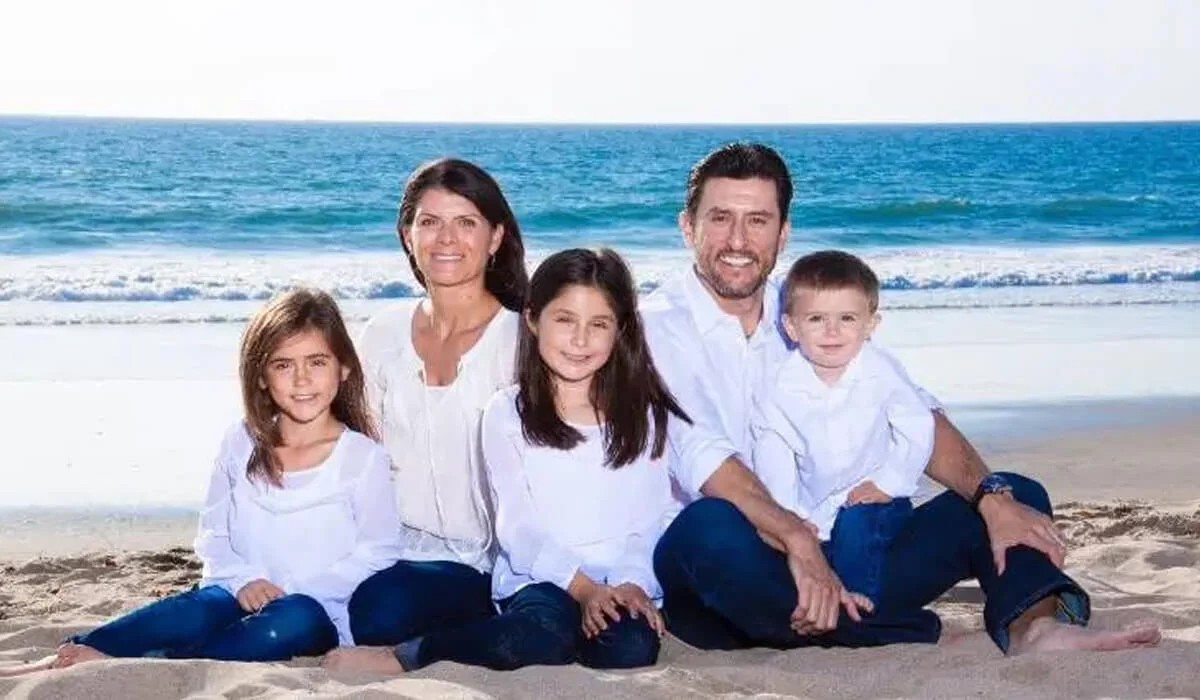
Ava Caroline Garciaparra was born on August 17, 2009, into one of the most celebrated families where sports excellence meets entertainment stardom. As the second daughter of retired baseball superstar Nomar Garciaparra and internationally renowned soccer icon Mia Hamm, Ava represents the next generation of a family that has left an indelible mark on American sports history. Born in Los Angeles, California, she entered a world where athletic achievement and public recognition were simply part of everyday life, surrounded by siblings who share the unique experience of having parents who are both household names in their respective sports.

Growing up as Ava Caroline Garciaparra means navigating childhood with a legacy that few can comprehend. Her father, Nomar Garciaparra, was a six-time All-Star shortstop primarily known for his incredible career with the Boston Red Sox, while her mother, Mia Hamm, is widely considered one of the greatest female soccer players in history, having won two Olympic gold medals and two FIFA Women’s World Cup championships. Despite this extraordinary heritage, Ava’s parents have made concerted efforts to provide their children with as normal an upbringing as possible, balancing the inevitable public interest with the privacy every child deserves.

Category Information
Full Name Ava Caroline Garciaparra
Date of Birth August 17, 2009
Place of Birth Los Angeles, California, USA
Age 15 years old (as of 2024)
Parents Nomar Garciaparra (Father), Mia Hamm (Mother)
Siblings Grace Isabella (twin sister), Garrett Anthony (brother)
Nationality American
Famous For Daughter of sports legends Nomar Garciaparra and Mia Hamm
Ethnicity Mixed (Mexican-American and Irish/Italian heritage)

A Unique Family Heritage

The Garciaparra family represents a fascinating blend of athletic greatness and cultural diversity. Ava’s father brings Mexican-American heritage through his father’s side, while her mother contributes Irish and Italian ancestry. This multicultural background provides Ava with a rich tapestry of traditions, values, and perspectives that shape her identity beyond the athletic accomplishments of her parents.

Nomar Garciaparra’s career in Major League Baseball spanned from 1996 to 2009, coincidentally ending the same year Ava was born. He was known for his exceptional hitting ability, winning two batting titles and earning the American League Rookie of the Year award in 1997. His intense dedication to the game and his pre-batting ritual became iconic among baseball fans.

Mia Hamm’s soccer career is the stuff of legend. She scored 158 international goals, held the record for most international goals by any player, male or female, for many years, and became the face of women’s soccer in America. Her influence extended far beyond the field, as she helped popularize women’s sports and became a role model for millions of young athletes around the world.

Ava Caroline Garciaparra

Twin Bond with Grace Isabella

One of the most significant relationships in Ava’s life is with her twin sister, Grace Isabella Garciaparra. Born on the same day, the twins share an extraordinary bond that goes beyond typical sisterhood. Growing up as twins in a high-profile family creates a unique dynamic where they serve as constants in each other’s lives, navigating the complexities of their family’s fame together.

Twin studies have long shown that twins often develop their own communication styles and provide each other with unparalleled emotional support. For Ava and Grace, this bond likely offers a sanctuary of normalcy and understanding that helps them process the unique circumstances of their upbringing. Whether they share identical interests in sports or have pursued different paths remains largely private, as their parents have successfully shielded much of their children’s personal lives from media scrutiny.

The twin girls also have an older brother, Garrett Anthony, who was also born in 2009, just a few months before them. The three siblings form a close-knit trio, all roughly the same age, creating a unique family dynamic where they essentially grew up as triplets despite not being biologically so.

Parents’ Relationship and Family Life

Nomar Garciaparra and Mia Hamm’s relationship is itself a modern love story between two sports icons. They married on November 22, 2003, in a private ceremony in Goleta, California. Their wedding brought together two worlds—baseball and soccer—and symbolized a union of mutual respect between athletes who understood the demands and dedication required to compete at the highest levels.

Before having their three youngest children, Mia Hamm had two daughters from a previous marriage, making Ava part of a blended family structure. This extended family arrangement has provided Ava with additional siblings and a broader family network. The Garciaparra household emphasizes the importance of family unity regardless of biological connections, creating an inclusive environment where all children are valued equally.

The decision to have children through in vitro fertilization, which resulted in the birth of their three children in 2009, demonstrated the couple’s commitment to expanding their family. For Ava, being born through IVF is simply part of her origin story, representing the lengths her parents went to in order to bring her into the world.

Growing Up in Los Angeles

Los Angeles provides the backdrop for Ava’s childhood and adolescence. The city, known for its entertainment industry, diverse population, and year-round favorable weather, offers numerous opportunities for youth development in sports, arts, and academics. Growing up in Southern California means access to some of the best training facilities, schools, and cultural institutions in the country.

The Los Angeles area also provides a degree of celebrity anonymity that might not be possible in smaller communities. With so many famous individuals residing in the region, the Garciaparra children can experience a relatively normal life without constant attention. This environment allows Ava to develop her own interests and friendships without being defined solely by her parents’ accomplishments.

The Weight of Legacy

Being the child of not one but two sports legends creates unique pressures and expectations. From an early age, Ava has likely fielded questions about whether she would follow in her parents’ athletic footsteps. The sports world watches children of famous athletes with particular interest, eager to see if genetic gifts and environmental advantages translate into the next generation of stars.

However, Nomar and Mia have both spoken publicly over the years about their philosophy of allowing their children to pursue their own passions without pressure. Having experienced the intense demands of professional athletics firsthand, they understand that such a path requires genuine personal dedication and cannot be forced by parental expectation.

This enlightened approach means that whether Ava chooses to pursue soccer, baseball, another sport entirely, or focuses on completely different interests like academics, arts, or business, she has her parents’ full support. The freedom to choose her own path, rather than feeling obligated to continue a family legacy, represents one of the greatest gifts her parents can provide.

Privacy and Protection

One of the most notable aspects of Ava Caroline Garciaparra’s life is how successfully her parents have protected her privacy. In an era of social media oversharing and constant documentation of celebrity children’s lives, Nomar and Mia have taken a decidedly different approach. They rarely post photos of their children on social media and decline most interview requests that focus on their family life.

This protective stance reflects both parents’ understanding of the challenges that come with fame. They experienced media scrutiny throughout their careers and recognize the importance of allowing their children to develop away from public pressure and judgment. By maintaining strict boundaries around their children’s privacy, they’ve given Ava the opportunity to make mistakes, learn, and grow without those moments being documented and dissected by strangers.

The approach also respects Ava’s autonomy and right to decide for herself, when she’s older, how much of her life she wants to share publicly. Rather than having her childhood broadcast for public consumption, she can later choose whether to embrace public life or continue valuing privacy.

Educational Journey

While specific details about Ava’s education remain private, growing up in Los Angeles with successful, accomplished parents likely means access to excellent educational opportunities. The Los Angeles area boasts numerous prestigious private schools known for academic excellence, as well as strong public school options in certain districts.

Children of professional athletes often benefit from parents who understand the value of discipline, hard work, and goal-setting—skills that translate well from sports to academics. Both Nomar and Mia have demonstrated intelligence and strategic thinking in their respective careers, qualities they undoubtedly encourage in their children’s educational pursuits.

At fifteen years old, Ava is likely in high school, navigating the typical challenges of adolescence including academic pressures, social dynamics, and beginning to think about future college and career plans. These teenage years represent a crucial period of identity formation where she’s establishing who she is beyond being the daughter of famous athletes.

Athletic Interests and Abilities

Given her genetic inheritance and environment, speculation about Ava’s athletic abilities is natural. With a father who possessed exceptional hand-eye coordination and a mother known for her speed, endurance, and competitive fire, Ava potentially inherited significant athletic gifts.

Whether she’s chosen to pursue competitive sports remains largely unknown to the public. She may play soccer recreationally, honoring her mother’s legacy, or she might have gravitated toward entirely different athletic pursuits. Perhaps she enjoys individual sports like tennis or swimming, or maybe team sports beyond soccer and baseball capture her interest.

It’s equally possible that Ava’s talents and passions lie in completely non-athletic areas. She might excel in music, art, writing, science, or technology. The assumption that children of athletes must be athletes themselves is a limiting one that her parents seem determined to reject.

Cultural Impact and Representation

As a young woman of mixed heritage growing up in contemporary America, Ava represents the increasingly multicultural face of the nation. Her Mexican-American, Irish, and Italian background reflects the blending of cultures that characterizes modern American identity.

Her mother’s legacy as a pioneering female athlete also provides Ava with a powerful example of women’s achievement in traditionally male-dominated spaces. Mia Hamm’s generation of female soccer players fought for recognition, equal treatment, and opportunities that benefit today’s young female athletes. Growing up with this history as part of her family story gives Ava a unique perspective on gender equality and women’s empowerment.

Future Possibilities

As Ava approaches her later teenage years, the future holds unlimited possibilities. She might choose to attend college, perhaps at one of her parents’ alma maters or an entirely different institution that aligns with her interests. She could pursue athletics at the collegiate level if that’s her passion, or she might focus entirely on academic or artistic pursuits.

The foundation her parents have provided—combining athletic excellence with strong values, education, and respect for privacy—positions Ava well for whatever path she chooses. Whether she eventually becomes a public figure in her own right or maintains the privacy her parents have worked to protect remains entirely her choice.

Conclusion

Ava Caroline Garciaparra embodies the potential and possibility that comes from being raised in a family that values both achievement and autonomy. Born into sports royalty yet protected from many of the pitfalls of growing up famous, she represents a new generation navigating what it means to have a legacy while forging an independent identity. Her parents, Nomar Garciaparra and Mia Hamm, have demonstrated that it’s possible to be public figures while maintaining private family lives, giving their children the gift of choice about their own futures.

As Ava Caroline Garciaparra continues to grow and develop, the world may eventually learn more about her interests, talents, and chosen path, but only if and when she decides to share that with the public. Until then, she remains what every child deserves to be—a young person discovering herself, supported by family, and free to become whoever she chooses to be, regardless of the extraordinary accomplishments that came before her.

Dede Moseley is the wife of retired NASCAR driver Dale Earnhardt Jr., one of the most popular and successful drivers in stock car racing history, whom she married in December 2016 after several years of dating. Born Amy Reimann on March 25, 1982, in Texas, Dede (a nickname she acquired later in life) has a background in interior design and previously worked as a designer before her relationship with Earnhardt brought her into the public eye associated with NASCAR’s most famous racing family. Unlike many spouses of celebrity athletes who embrace public attention and build their own media presence, Dede has maintained a relatively low profile despite being married to the son of the legendary Dale Earnhardt Sr. and becoming the mother of two daughters with Dale Jr., focusing primarily on family life, her design work, and supporting her husband’s various business ventures including his ownership of JR Motorsports and his broadcasting career with NBC Sports following his retirement from full-time racing in 2017.

Dede Moseley represents a modern approach to being a celebrity spouse—active and supportive in her husband’s professional life while maintaining her own identity and career interests, yet protective of her family’s privacy in ways that previous generations of NASCAR wives did not always prioritize or have the ability to control. Her marriage to Dale Earnhardt Jr. came at a transitional moment in his life as he was contemplating retirement from driving due to health concerns related to multiple concussions, and she has been credited with providing stability and support during his decision to step away from the sport that defined his life while transitioning to new roles as a team owner, broadcaster, and father. Since their marriage and the birth of their daughters Isla Rose in 2018 and Nicole Lorraine in 2020, Dede has navigated the unique challenges of being connected to NASCAR royalty while raising young children and maintaining a sense of normalcy despite the intense interest from racing fans who view the Earnhardt name with reverence and devotion.

Personal Information Details
Full Name Amy Reimann Earnhardt (professionally uses Dede Moseley)
Nickname Dede
Date of Birth March 25, 1982
Age 42 years old
Place of Birth Texas, United States
Education University of Kentucky (Interior Design degree)
Profession Interior designer
Spouse Dale Earnhardt Jr. (married December 31, 2016)
Marriage Location Richard Childress’s estate in North Carolina
Children Isla Rose Earnhardt (born April 2018), Nicole Lorraine “Lola” Earnhardt (born October 2020)
Known For Wife of Dale Earnhardt Jr., interior designer
Previous Relationship Formerly married to Tommy Moseley (divorced)
Current Residence North Carolina
Social Media Selective presence, primarily Instagram
Career Focus Interior design, family, supporting husband’s ventures

Early Life and Education

Amy Reimann, who would later become known as Dede, was born on March 25, 1982, in Texas. She grew up in a family that valued education and hard work, though specific details about her childhood and family background remain relatively private. What is known is that she developed an interest in design and aesthetics from a young age, which would eventually lead her to pursue formal education in interior design.

Dede attended the University of Kentucky, where she earned a degree in interior design. The University of Kentucky provided her with both theoretical knowledge about design principles and practical skills in creating functional, beautiful spaces. Her education would prove valuable not just in her professional work but also in managing the various properties and spaces associated with her future husband’s business empire.

During her college years, Dede was also involved in athletics as a member of the Kentucky Wildcats’ cheerleading squad, demonstrating the combination of creativity and athleticism that would serve her well in navigating the high-energy world of NASCAR later in life.

Educational and Early Career Path

Period Activity Outcome
1982-2000 Childhood in Texas Foundation and upbringing
2000-2004 University of Kentucky Interior design degree, cheerleading
Post-graduation Early design career Professional experience in design
Mid-2000s Marriage to Tommy Moseley First marriage (later divorced)
Late 2000s Career development Building design portfolio

After graduating, Dede began working in interior design, developing her skills and building a professional reputation separate from any connection to racing or celebrity. This independent career foundation would later serve her well, providing her with an identity and professional accomplishments beyond being Dale Earnhardt Jr.’s wife.

First Marriage and the Moseley Name

Before meeting Dale Earnhardt Jr., Dede was married to Tommy Moseley, which is where the surname “Moseley” that she professionally uses comes from. The details of her first marriage, including when it began and ended, have been kept private out of respect for all parties involved. The marriage ended in divorce, and Dede retained the Moseley surname for professional purposes even after marrying Earnhardt.

The fact that she continues to use “Dede Moseley” professionally rather than exclusively going by “Amy Earnhardt” or “Dede Earnhardt” suggests a desire to maintain some separation between her professional identity and her identity as Dale Jr.’s wife. This choice reflects modern women’s approaches to marriage and name changes, where professional reputations built under one name are often retained even after marriage changes legal names.

Meeting Dale Earnhardt Jr.

Dede Moseley met Dale Earnhardt Jr. in the late 2000s or early 2010s, though the exact circumstances of their meeting have not been extensively publicized. What is known is that their relationship developed over several years before they married, suggesting a solid foundation built on genuine connection rather than rushed romance.

When they met, Dale Jr. was at the height of his NASCAR career, racing for Hendrick Motorsports and carrying the enormous weight of the Earnhardt name following his father Dale Earnhardt Sr.’s tragic death at the Daytona 500 in 2001. He was NASCAR’s most popular driver for 15 consecutive years, a streak of fan devotion unmatched in the sport’s history.

For Dede, entering a relationship with Dale Jr. meant accepting not just a partner but also the intense scrutiny and expectations that come with the Earnhardt name in NASCAR culture. The Earnhardt family is racing royalty, and Dale Jr. was both blessed and burdened by his legendary father’s legacy.

Relationship Timeline

Year Milestone Significance
~2009-2011 Initial meeting Relationship begins
2009-2016 Dating period Several years building relationship
December 31, 2016 Wedding Married at Richard Childress’s estate
2017 Dale Jr. retires from full-time racing Major life transition
April 2018 First daughter born Isla Rose arrives
October 2020 Second daughter born Nicole Lorraine “Lola” arrives

The couple dated for several years before marrying, allowing them to build a strong foundation before making a legal commitment. This extended courtship period proved wise given the major transitions Dale Jr. would face during the early years of their marriage.

The Wedding

Dede and Dale Earnhardt Jr. married on December 31, 2016, at the estate of Richard Childress, the former NASCAR team owner and close friend of Dale Earnhardt Sr. The New Year’s Eve wedding was a private affair attended by family and close friends, though details and photos were later shared with fans through social media and media coverage.

The choice of location was significant—Richard Childress had been Dale Sr.’s car owner during his championship years, making him deeply connected to the Earnhardt family legacy. Holding the wedding at his estate honored that connection while also providing privacy and security for the event.

The timing of the wedding, coming at the end of 2016, positioned the couple to enter 2017 as husband and wife—a year that would bring major changes as Dale Jr. dealt with concussion issues and eventually announced his retirement from full-time NASCAR competition.

Supporting Dale Jr.’s Retirement Decision

One of the most significant roles Dede played in Dale Jr.’s life came during his decision to retire from full-time racing in 2017. Dale Jr. had suffered multiple concussions during his career, with a particularly severe one in 2016 causing him to miss half the season. The health concerns raised serious questions about whether continuing to race was worth the risk.

Dede reportedly supported Dale Jr. in making the difficult decision to step away from driving, prioritizing his long-term health over the career that had defined his identity since childhood. For a man whose entire life had been about racing and carrying on his father’s legacy, walking away required enormous courage and the support of someone who cared more about his wellbeing than his racing success.

The decision to retire at age 42, while still competitive, allowed Dale Jr. to transition to broadcasting with NBC Sports and focus on his JR Motorsports team ownership while protecting his brain health for the future. Dede’s support during this transition demonstrated the strength of their partnership.

Motherhood and Family Life

Dede became a mother for the first time in April 2018 when she and Dale Jr. welcomed their daughter Isla Rose Earnhardt. Their second daughter, Nicole Lorraine Earnhardt (nicknamed “Lola”), was born in October 2020. Both births were announced to fans through social media, with the couple sharing their joy while also establishing boundaries about privacy for their children.

Becoming parents represented another major life transition for both Dede and Dale Jr., who had married later in life (she was 34, he was 42 at their wedding). Parenthood gave them new priorities and perspectives, with Dale Jr. frequently speaking about how fatherhood changed his outlook on life and risk.

The Earnhardt Daughters

Daughter Birth Date Age Notable
Isla Rose Earnhardt April 30, 2018 6 years old First child, named partly after grandfather’s middle name
Nicole Lorraine “Lola” Earnhardt October 12, 2020 4 years old Second daughter, nicknamed Lola

Dede has approached motherhood with the same privacy-conscious mindset she brings to her public life. While she occasionally shares photos and updates about her daughters on social media, she is careful about how much exposure they receive and protective of their privacy in ways that respect their inability to consent to public attention as young children.

Interior Design Work and Professional Identity

Throughout her relationship and marriage to Dale Jr., Dede has maintained her professional identity as an interior designer. She has worked on various projects, including designing spaces in Dale Jr.’s business properties and their personal residences. This professional work provides her with identity and purpose beyond being a NASCAR wife and mother.

Her design aesthetic tends toward modern, comfortable spaces that blend functionality with style—appropriate for a family with young children who also need to accommodate the business and entertainment demands of Dale Jr.’s career. She has reportedly been involved in design decisions for JR Motorsports facilities and the Earnhardt family properties.

Maintaining her career, even in modified form to accommodate family responsibilities, demonstrates Dede’s commitment to professional identity and personal growth beyond her roles as wife and mother.

Life in the NASCAR Community

As Dale Earnhardt Jr.’s wife, Dede has become part of the NASCAR community, attending races, interacting with other drivers’ families, and supporting her husband’s continued involvement in the sport through team ownership and broadcasting. However, she has maintained appropriate boundaries, avoiding the drama and social media conflicts that sometimes characterize relationships among racing families.

The NASCAR community is tight-knit and intense, with long-standing family connections and fierce loyalties. The Earnhardt name carries special weight in this world, which means Dede’s actions and statements are subject to scrutiny from devoted fans who feel ownership over the family legacy.

Social Media Presence

Dede maintains a selective social media presence, primarily on Instagram, where she shares glimpses of family life, design projects, and support for Dale Jr.’s ventures. Her approach to social media is more restrained than many celebrity spouses, reflecting her overall preference for privacy.

She uses her platform to share moments she chooses rather than documenting every aspect of daily life. This curated approach allows her to connect with fans and supporters while maintaining boundaries that protect her family’s private time.

Supporting JR Motorsports and Broadcasting

Beyond motherhood and her design work, Dede supports Dale Jr.’s business ventures including JR Motorsports, the NASCAR Xfinity Series team he co-owns. She also supports his broadcasting career with NBC Sports, where he works as a race analyst bringing his driving experience and deep knowledge of the sport to viewers.

Her role in these ventures is primarily supportive rather than operational, though her design work may contribute to physical spaces associated with the businesses. She represents the family at events when appropriate and provides the stable home foundation that allows Dale Jr. to travel for broadcasting and team management responsibilities.

Current Life and Future

As of 2024, Dede Moseley is navigating life as a mother to two young daughters while supporting her husband’s continued involvement in NASCAR through team ownership and broadcasting, maintaining her own interior design career, and protecting her family’s privacy despite their connection to racing’s most famous surname. At 42, she is in a life stage focused on raising children, supporting her husband’s post-driving career, and managing the various properties and business interests that come with being married to a successful NASCAR figure.

The coming years will bring new challenges as her daughters grow older and potentially develop their own interests in racing or other pursuits, raising questions about how the next generation of Earnhardts will relate to the family legacy. Dede’s approach to parenting—protective yet supportive, private yet engaged—will shape how Isla and Lola navigate being granddaughters of the legendary Dale Earnhardt Sr.

Conclusion

Dede Moseley has successfully navigated the challenging role of being married to NASCAR royalty while maintaining her own professional identity as an interior designer and protecting her family’s privacy in an environment where the Earnhardt name carries immense weight and public interest. Since marrying Dale Earnhardt Jr. in December 2016 and becoming a mother to their two daughters, Dede has provided stability and support during major life transitions including her husband’s retirement from racing due to health concerns and his move into broadcasting and team ownership. Her approach to celebrity spouse life—selective social media presence, professional career maintenance, protective parenting, and supportive partnership—offers a model for how modern celebrity spouses can balance public interest with private boundaries. As she and Dale Jr. raise the next generation of Earnhardts while managing business ventures and navigating the unique pressures of a surname that represents NASCAR history and legacy, Dede Moseley continues demonstrating that it is possible to be connected to fame and public scrutiny while maintaining dignity, privacy, and a life defined by personal values rather than public expectations.

Kevin Hunter is a former television producer and talent manager who is best known for his 22-year marriage to talk show host Wendy Williams, during which he served as her manager and executive producer of “The Wendy Williams Show” while simultaneously conducting a decade-long affair with Sharina Hudson that produced a child and ultimately destroyed his marriage, career, and public reputation. Born in 1972, Hunter met Williams in the early 1990s when she was a radio personality climbing the ranks in New York’s competitive broadcasting market, and he positioned himself as her business partner and romantic partner, eventually marrying her in 1997 and becoming deeply enmeshed in both her personal life and professional empire as her career transitioned from radio to television stardom. His dual role as husband and manager gave him extraordinary control over Williams’s life and finances, which he allegedly exploited through the affair with Hudson that he funded partly with Williams’s earnings, leading to their explosive divorce in 2019-2020 when the birth of his child with Hudson finally forced the situation into public view and cost him both his marriage and his lucrative position producing one of daytime television’s most successful shows.

Kevin Hunter went from being a powerful figure in daytime television with influence over a multi-million dollar show to a disgraced ex-husband who lost his wife, his job, his income, and much of his relationship with his son due to his infidelity and alleged financial exploitation of Williams. The scandal surrounding his affair and the subsequent revelations about his controlling behavior during the marriage painted a picture of a man who used his position as both husband and business manager to manipulate Williams while betraying her trust in the most fundamental ways. Since the divorce was finalized in January 2020, Hunter has maintained a low public profile, reportedly continuing his relationship with Hudson while dealing with the financial and reputational consequences of his actions, as Williams’s subsequent health decline and placement under guardianship has raised questions about whether Hunter’s exploitation contributed to her current tragic circumstances where she suffers from dementia and has lost control of her own life and finances.

Personal Information Details
Full Name Kevin Hunter
Date of Birth 1972 (exact date not widely publicized)
Age Approximately 52 years old
Place of Birth United States
Profession Television producer, talent manager (former)
Known For Ex-husband of Wendy Williams, producer of her show
Former Spouse Wendy Williams (married 1997-2020)
Marriage Duration Approximately 22 years
Children Kevin Hunter Jr. with Wendy Williams (born 2000), daughter with Sharina Hudson (born 2019)
Affair Partner Lalania Hudson
Affair Duration Approximately 10 years (2009-2019)
Career Peak Executive producer of “The Wendy Williams Show”
Career End Fired in 2019 after affair exposed
Divorce Finalized January 2020
Current Status Low public profile, relationship with Hudson

Early Life and Meeting Wendy Williams

Kevin Hunter was born in 1972, making him eight years younger than Wendy Williams. Specific details about his childhood, family background, and education remain largely private, as Hunter was not a public figure before his relationship with Williams brought him into the spotlight.

Hunter met Wendy Williams in the early to mid-1990s when she was working as a radio DJ in New York City, building her reputation as a controversial shock jock willing to discuss celebrity gossip and personal topics that other hosts avoided. At the time, Williams was divorced from her first husband Bert Girigorie, with whom she had been married for less than a year in 1994-1995.

The exact circumstances of how Hunter and Williams met are not extensively documented, but their relationship developed during a crucial period in Williams’s career. She was becoming increasingly successful and controversial in New York radio, which meant she was also making enemies in the industry due to her confrontational style and willingness to reveal celebrity secrets.

Kevin Hunter

Early Relationship Timeline

Year Development Context
Early-Mid 1990s Hunter meets Williams She is rising radio personality
1994-1995 Williams’s first marriage ends Divorce from Bert Girigorie
1995-1997 Hunter and Williams relationship Courtship period
1997 Marriage Wedding ceremony
Late 1990s Hunter becomes manager Takes control of career

Hunter positioned himself as both romantic partner and career manager, a combination that would give him enormous power over Williams’s life for the next two decades.

The Manager-Husband Dynamic

The dual role Kevin Hunter occupied—being both Wendy Williams’s husband and her manager—created a power dynamic that blurred personal and professional boundaries in potentially problematic ways. In this arrangement, Hunter had control over Williams’s business decisions, contracts, finances, and career direction while also being her intimate partner and the father of her child.

This structure meant that Williams couldn’t easily separate business disagreements from marital conflicts. If she questioned Hunter’s business decisions, it became a marital argument. If she wanted to change management, she’d have to divorce her husband. This intertwining of relationships gave Hunter tremendous leverage and made Williams’s dependency on him both emotional and financial.

Hunter’s role in Williams’s career included negotiating contracts, making business decisions, and eventually serving as executive producer when she transitioned to television. While he may have contributed genuinely to her success in some ways, the arrangement also created opportunities for exploitation and control that would become evident after their separation.

The Television Era and Peak Success

When Wendy Williams’s television show launched in 2008 with national syndication beginning in 2009, Kevin Hunter was positioned as executive producer. This role came with significant income, power, and influence in daytime television. The show was successful, running for 13 seasons and making Williams a household name beyond her radio audience.

As executive producer, Hunter had control over many aspects of the show’s production, staffing, and business operations. He was reportedly involved in hiring and firing decisions, show content, and the business deals surrounding the program. This position provided him with substantial income in addition to what he earned managing Williams’s other business ventures.

Career Peak Period

Aspect Details Hunter’s Benefit
Show Launch 2008-2009 Executive producer role secured
Peak Years 2010-2017 High income, industry influence
Williams’s Success Multiple Emmy nominations Reflected glory, business opportunities
Financial Control Managing Williams’s earnings Access to significant funds
Industry Position Producer of major daytime show Power and connections

During these years, Hunter was living what appeared to be a successful life—married to a famous television host, executive producing a hit show, and earning substantial income. However, beneath this successful exterior, he was conducting the affair with Sharina Hudson that would eventually destroy everything he had built.

The Decade-Long Affair

The affair between Kevin Hunter and Sharina Hudson reportedly began around 2009 and continued for approximately ten years before being exposed in 2019. During this entire period, Hunter was married to Williams, working as her manager and executive producer, and maintaining what appeared publicly to be a committed relationship.

The logistics of maintaining this deception for a decade are staggering. Hunter allegedly kept a separate residence for Hudson, funded her lifestyle, and managed to keep the relationship secret despite his wife being a public figure whose show discussed celebrity gossip and relationships. Reports suggest that Williams’s money—earned through her show and other ventures—was used to support Hunter’s affair, including potentially purchasing a home for Hudson and supporting her financially.

The fact that the affair lasted ten years raises questions about how Hunter managed the deception and whether people in their circle knew but didn’t tell Williams, either out of fear of Hunter’s power or reluctance to get involved in their personal business.

The Exposure and Fallout

The affair was finally exposed in March 2019 when Sharina Hudson gave birth to Hunter’s daughter. The existence of a child made the situation undeniable, even for Williams who had apparently been in some form of denial or acceptance of the affair for years before the baby’s birth forced the issue to a crisis.

In April 2019, just weeks after the baby was born, Wendy Williams filed for divorce and also fired Hunter from his position as executive producer of her show. This simultaneous personal and professional separation was necessary given how intertwined their lives had become.

Timeline of Collapse

Date Event Impact
March 2019 Hudson gives birth Affair undeniably exposed
April 2019 Williams files for divorce Marriage officially ending
April 2019 Hunter fired from show Career position lost
2019-2020 Divorce proceedings Asset division, custody issues
January 2020 Divorce finalized Legal separation complete
2020-present Post-divorce life Dramatic lifestyle change

The divorce settlement details remain largely confidential, but it presumably involved division of assets accumulated during their 22-year marriage, including proceeds from Williams’s show and other business ventures. Hunter also lost his substantial income from the executive producer position, representing a dramatic financial decline.

Control and Alleged Exploitation

After the separation, stories emerged from people close to Williams suggesting that Hunter had been controlling and potentially abusive during the marriage. Reports indicated that he made many of Williams’s decisions for her, isolated her from friends and family members he viewed as threats to his control, and exploited his position as both husband and manager to maintain power over her life.

The financial aspects of his management have also been questioned. Did Hunter use his position to enrich himself inappropriately? Did he make business decisions that benefited him more than Williams? Were funds misused to support his affair? These questions remain partly unanswered, but the fact that Williams immediately removed him from all business roles upon discovering the affair suggests serious trust violations beyond just the personal betrayal.

Impact on Kevin Hunter Jr.

The affair and divorce had significant impact on Hunter’s son with Williams, Kevin Hunter Jr., who was 19 years old when the affair was exposed. The teenager had to process his father’s betrayal of his mother, the existence of a half-sibling born from the affair, and the very public nature of his family’s dissolution.

Reports suggested that the relationship between Hunter and his son suffered significantly after the affair was revealed. For a young man watching his mother’s health decline partly due to the stress of his father’s betrayal while his father continued the relationship with the woman he’d had an affair with, maintaining a close relationship with Hunter would be enormously difficult.

Life After the Divorce

Since the divorce was finalized in 2020, Kevin Hunter has maintained a relatively low public profile. He reportedly continues his relationship with Sharina Hudson and is involved in raising their daughter. However, his career opportunities have been severely limited by the scandal and loss of his position with Williams’s show.

The entertainment industry is relationship-based, and Hunter’s reputation for betraying and potentially exploiting his wife while serving as her manager has likely made him radioactive to potential clients and business partners. Who would trust him to manage their career or business when he so spectacularly betrayed the person whose career made him successful?

Post-Divorce Reality

Aspect Before Divorce After Divorce
Income Executive producer salary plus management fees Dramatically reduced
Reputation Powerful producer Disgraced, untrustworthy
Relationship Married to famous personality Divorced, in relationship with affair partner
Career Prospects Well-positioned in industry Limited opportunities
Family Relationships Father to son Strained relationship with Kevin Jr.

Hunter’s fall from power and success has been dramatic. He went from controlling a major daytime television show and managing a multi-million dollar career to losing everything due to his choices.

Questions About Williams’s Decline

One of the most troubling aspects of the Hunter-Williams story is the question of whether Hunter’s exploitation and betrayal contributed to Williams’s subsequent health decline. After the divorce, Williams’s health problems accelerated—she struggled with substance abuse requiring treatment, showed signs of cognitive decline that were later attributed to dementia, and eventually lost her show and was placed under court-ordered guardianship.

While these health issues have multiple causes, the stress and trauma of discovering a decade-long affair, losing her business partner, and going through a public divorce certainly contributed. Some observers have suggested that Hunter’s control during the marriage prevented Williams from getting help she needed for substance abuse and other issues, and that his betrayal triggered a downward spiral from which she hasn’t recovered.

Current Status and Future Prospects

As of 2024, Kevin Hunter remains largely out of the public eye. He reportedly continues his relationship with Sharina Hudson, though they have not married publicly. He is raising his daughter with Hudson while dealing with the consequences of his choices—damaged reputation, limited career prospects, and strained family relationships.

His prospects for career rehabilitation seem limited. The entertainment industry has long memory for betrayals and exploitation, and Hunter’s actions toward Williams were particularly egregious given the power he held over her life and career. It’s difficult to imagine clients or business partners trusting him given this history.

Conclusion

Kevin Hunter built a life of power and success as Wendy Williams’s husband, manager, and executive producer of her television show, but destroyed everything through a decade-long affair with Sharina Hudson that he allegedly funded with Williams’s money while exploiting his dual role to maintain control over her personal and professional life. The exposure of the affair in 2019 when Hudson gave birth to his child led to immediate divorce, his firing from the show, and the loss of the income, influence, and reputation he had accumulated during his 22-year marriage to Williams. Since the divorce was finalized in 2020, Hunter has faced the consequences of his betrayal with dramatically reduced circumstances, limited career prospects due to his damaged reputation, and a strained relationship with his son who witnessed the devastation his father’s choices inflicted on his mother. As Williams now suffers from dementia and lives under guardianship with her autonomy stripped away, questions persist about whether Kevin Hunter exploited and damaged a vulnerable woman during their marriage, with his betrayal and control contributing to the tragic decline that has left one of daytime television’s most powerful personalities unable to control her own life in a cautionary tale about the dangers of mixing business with marriage and the lasting harm that exploitation and betrayal can inflict.

Steffiana de la Cruz is an actress and former model from the Philippines who is best known as the wife of comedian and actor Kevin James, star of the hit sitcom “The King of Queens” and numerous successful comedy films including “Paul Blart: Mall Cop” and “Grown Ups.” Born on August 28, 1974, in New York City to Filipino parents, Steffiana pursued modeling and acting before meeting Kevin on a blind date arranged by Kevin’s interior decorator in 2001, leading to their marriage in 2004 and the birth of their four children between 2005 and 2011. Unlike many celebrity spouses who actively seek the spotlight, Steffiana has maintained a relatively low public profile throughout her marriage, focusing primarily on raising their children while occasionally appearing in small roles in Kevin’s films and television projects, demonstrating a partnership where she supports her husband’s career while prioritizing family life over her own entertainment industry ambitions.

Steffiana de la Cruz represents a modern celebrity wife who has successfully balanced supporting her husband’s high-profile career with maintaining privacy and normalcy for their family, a feat that becomes increasingly challenging as social media and celebrity culture demand constant public engagement. While she had her own aspirations in modeling and acting before meeting Kevin James, Steffiana chose to step back from pursuing stardom independently, instead taking on the role of mother to their four children—Sienna-Marie, Shea Joelle, Josephine Judith, and Kannon Valentine—while Kevin’s career reached new heights in the 2000s and 2010s. Her Filipino heritage has brought multicultural diversity to the James family, and she has occasionally spoken about maintaining connections to her cultural roots while raising her children in Los Angeles, creating a household that blends Kevin’s working-class New York background with her own Filipino-American identity.

Personal Information Details
Full Name Steffiana de la Cruz
Date of Birth August 28, 1974
Age 50 years old
Place of Birth New York City, New York
Ethnicity Filipino
Nationality American
Height Approximately 5’8″ (173 cm)
Profession Actress, former model
Spouse Kevin James (married June 19, 2004)
Years Married 20 years (as of 2024)
Children Four (Sienna-Marie, Shea Joelle, Josephine Judith, Kannon Valentine)
Known For Wife of Kevin James, occasional actress
Notable Appearances Small roles in Kevin James films
Current Residence Los Angeles area, California
Social Media Limited public presence

Early Life and Filipino Heritage

Steffiana de la Cruz was born in New York City to Filipino immigrant parents, growing up in a household that maintained strong connections to Filipino culture and traditions while adapting to American life. The Filipino-American experience involves navigating between two cultures—honoring the traditions, language, and values of the Philippines while also embracing American identity and opportunities.

The Philippines has a long history of immigration to the United States, particularly to major cities like New York and Los Angeles, with Filipino-Americans forming vibrant communities that preserve cultural practices while contributing to American society. Growing up in this environment would have given Steffiana exposure to both worlds from an early age.

Filipino culture emphasizes family bonds, respect for elders, hospitality, and strong work ethic—values that would later influence how Steffiana approached her own family life with Kevin James. The cultural emphasis on close family relationships and prioritizing children’s wellbeing aligns with the parenting approach she and Kevin have taken with their four children.

Cultural Background

Aspect Details
Birth Location New York City
Parents Filipino immigrants
Cultural Heritage Filipino traditions, language, cuisine
American Integration Growing up in diverse NYC environment
Values Family-oriented, traditional, hardworking
Language Likely bilingual (English and Tagalog/Filipino dialect)

Growing up in New York City, one of the world’s most diverse metropolitan areas, Steffiana would have been exposed to countless cultures and opportunities. This cosmopolitan upbringing prepared her for the entertainment industry and the diverse world she would navigate as Kevin James’s wife.

Modeling and Acting Career

Before meeting Kevin James, Steffiana pursued careers in both modeling and acting. Her height, appearance, and presence made her suitable for modeling work, and she took on various modeling assignments in New York and potentially other markets.

Her acting career included small roles in films and television, though she never achieved major stardom or widespread recognition as an actress. Her credits include appearances in productions like “Paul Blart: Mall Cop” and other projects, some of which involved working with or supporting Kevin James’s productions.

The entertainment industry is notoriously difficult, with thousands of aspiring models and actors competing for limited opportunities. Many talented, attractive people pursue these careers without ever achieving significant success or financial stability. Steffiana’s moderate success in modeling and acting was respectable, but she had not become a household name when she met Kevin.

Meeting Kevin James

The story of how Steffiana de la Cruz met Kevin James has a charming, serendipitous quality. In 2001, Kevin’s interior decorator set them up on a blind date, believing they would be compatible. At the time, Kevin was already famous from “The King of Queens,” which had been on air since 1998 and was a ratings success.

Blind dates arranged by mutual friends or acquaintances can be awkward, but for Steffiana and Kevin, the chemistry was apparently immediate. Despite coming from different backgrounds—Kevin from a working-class Long Island family of German and Italian descent, Steffiana from a Filipino immigrant family in New York City—they connected on fundamental levels.

Relationship Timeline

Year Milestone Details
2001 First meeting Blind date arranged by Kevin’s interior decorator
2001-2004 Dating period Three years of relationship before marriage
June 19, 2004 Wedding Marriage ceremony in California
2005 First child Daughter Sienna-Marie born
2007 Second and third children Daughters Shea Joelle and Josephine Judith born
2011 Fourth child Son Kannon Valentine born
2004-present Marriage 20+ years of marriage

Their three-year courtship before marriage allowed them to genuinely know each other before making the legal and spiritual commitment of marriage. This foundation has apparently served them well, as their marriage has endured over two decades in an industry where celebrity marriages often fail quickly.

Marriage and Family Life

Steffiana and Kevin James married on June 19, 2004, in California, beginning a partnership that has now lasted over twenty years. Their marriage has remained stable and scandal-free, a notable achievement in Hollywood where infidelity, divorce, and public relationship drama are common.

The couple had their first daughter, Sienna-Marie, in 2005, just a year after their marriage. Their second daughter, Shea Joelle, was born in 2007, followed later that same year by their third daughter, Josephine Judith. Their fourth child and only son, Kannon Valentine, arrived in 2011, completing their family.

Having four children within six years meant an intense period of pregnancy, childbirth, and caring for infants and toddlers. This demanding phase of life requires enormous energy, patience, and partnership between spouses. That Steffiana and Kevin navigated this period while Kevin’s career continued to flourish speaks to their ability to balance professional demands with family priorities.

The James Children

Child Birth Year Age (2024) Gender
Sienna-Marie James 2005 19 Female
Shea Joelle James 2007 17 Female
Josephine Judith James 2007 17 Female
Kannon Valentine James 2011 13 Male

The family lives in the Los Angeles area, where Kevin works in the entertainment industry. While Los Angeles offers countless opportunities and experiences for children of wealthy, famous parents, Steffiana and Kevin have reportedly worked to maintain normalcy and privacy for their kids, rarely sharing photos of them on social media and keeping them out of the public eye.

Role in Kevin’s Career

While Steffiana stepped back from pursuing her own independent acting career after starting a family, she has remained connected to the entertainment industry through occasional appearances in Kevin’s projects. She has had small roles in several of his films, including the “Paul Blart: Mall Cop” series.

These appearances serve multiple purposes. They allow Steffiana to stay somewhat connected to acting without the demands of pursuing roles independently. They create opportunities for the couple to work together professionally. And they demonstrate Kevin’s support for his wife’s continued involvement in his creative work.

Beyond on-screen appearances, Steffiana likely plays important behind-the-scenes roles in Kevin’s career—providing feedback on scripts and projects, attending industry events and premieres as his partner, and managing the home front when Kevin is working on location or doing promotional tours.

Parenting Philosophy and Family Privacy

One of the most notable aspects of Steffiana and Kevin’s approach to family life is their commitment to privacy for their children. In an era when many celebrity parents frequently post photos and stories about their children on social media, the James family has taken a different approach.

They rarely share photos of their children publicly, almost never bring them to red carpet events or premieres, and have not allowed them to develop public personas or social media followings. This protective stance reflects a deliberate parenting philosophy that prioritizes their children’s privacy and normalcy over the attention and potential opportunities that could come from leveraging Kevin’s fame.

Privacy Protection Strategy

Approach Implementation Benefit
Limited social media sharing Rarely post children’s photos Protects children’s privacy
No red carpet appearances Children absent from premieres Normal childhood experiences
No public accounts Children not on social media publicly Avoids online scrutiny and pressure
Private education Details kept confidential Safe, stable learning environment
Household stability Focus on family time Strong family bonds

This approach stands in stark contrast to celebrity families where children become Instagram personalities or reality TV stars before they’re old enough to consent to such exposure. The James family’s privacy-first approach suggests they’ve learned from the cautionary tales of celebrity children whose public upbringing led to various problems.

Maintaining Filipino Cultural Connections

As a Filipino-American raising four children, Steffiana faces the common challenge of transmitting cultural heritage to the next generation. Her children are growing up in Los Angeles with a famous American father, which could easily result in disconnection from their Filipino roots.

While specific details about how the family maintains cultural connections remain private, common ways Filipino-American families preserve heritage include celebrating traditional holidays, cooking and eating Filipino cuisine, maintaining relationships with extended family in the Philippines or Filipino communities in the US, and teaching children about their cultural history and values.

The multicultural nature of the James household—blending Kevin’s working-class New York background with Steffiana’s Filipino heritage—creates richness and diversity that benefits their children’s understanding of the world.

Life During Kevin’s Career Peak

Steffiana has been married to Kevin throughout some of his biggest career successes. Films like “Hitch” (2005), “I Now Pronounce You Chuck and Larry” (2007), “Paul Blart: Mall Cop” (2009), the “Grown Ups” series (2010, 2013), and his return to television with “Kevin Can Wait” (2016-2018) all occurred during their marriage.

These successes brought increased wealth, fame, and demands on Kevin’s time. For Steffiana, this meant managing the household and children while Kevin traveled for filming, press tours, and promotional appearances. It also meant navigating the increased attention that comes with being married to an increasingly successful and recognizable star.

That their marriage has remained stable through this period of career escalation and the attendant pressures suggests a strong partnership and shared values about what matters most.

Public Appearances and Media Presence

Unlike some celebrity spouses who actively cultivate their own public personas, Steffiana maintains a relatively low profile. She appears alongside Kevin at major industry events when appropriate—award shows, premieres of his films, charity events—but she doesn’t seek individual media attention or opportunities.

Her social media presence is minimal compared to many people her age, particularly those connected to celebrity. This restraint reflects either personal preference for privacy, strategic thinking about protecting family life, or both.

When she does appear publicly or give rare interviews, Steffiana comes across as warm, grounded, and focused on family rather than fame. This authenticity resonates with people tired of the performative nature of much celebrity culture.

Supporting Kevin Through Challenges

Every long marriage faces challenges, and while the James marriage appears stable and scandal-free, they’ve undoubtedly faced difficulties over two decades together. Kevin has spoken about health challenges, including losing significant weight for health reasons, and the general stresses of maintaining a career in the competitive entertainment industry.

Steffiana’s role during challenging times—providing stability, support, and maintaining family normalcy when Kevin faces professional or personal difficulties—represents an important but often invisible contribution to his continued success and wellbeing.

Current Life and Future

Now 50 years old with children ranging from teenagers to young adults, Steffiana de la Cruz has entered a different phase of life and motherhood. Her oldest daughter is college-age, while her youngest is entering teenage years. This transition from hands-on parenting of young children to guiding teenagers and young adults toward independence brings new challenges and opportunities.

As her children become more independent, Steffiana may choose to pursue more of her own interests, whether in acting, other creative endeavors, charitable work, or simply enjoying the freedom that comes when parenting demands decrease.

The family’s financial security, thanks to Kevin’s successful career, provides Steffiana with options and opportunities that many women her age don’t have. She can choose how to spend her time based on interest and passion rather than financial necessity.

Conclusion

Steffiana de la Cruz represents a particular type of celebrity spouse—someone who had her own career aspirations in modeling and acting but chose to prioritize family over individual stardom after marrying Kevin James in 2004 and having four children within six years. Born in New York City to Filipino parents, Steffiana brought multicultural diversity to her marriage with Kevin, blending her Filipino heritage with his working-class New York background to create a household that values both cultural roots and privacy despite Kevin’s Hollywood success. Her commitment to protecting their children from public scrutiny, maintaining family normalcy despite wealth and fame, and supporting Kevin’s career while staying grounded has contributed to a stable twenty-year marriage that stands as an exception in an industry known for relationship instability. As their children grow into independence and Steffiana de la Cruz enters her fifties, she stands as an example of how celebrity spouses can successfully navigate the challenges of fame while maintaining dignity, privacy, and strong family bonds that prioritize substance over the superficial trappings of Hollywood life.

Christopher Anne Boldt is the mother of Academy Award-winning actors and filmmakers Ben Affleck and Casey Affleck, a Harvard-educated teacher and social activist who raised her two sons largely as a single parent in Cambridge, Massachusetts, after divorcing their father Timothy Byers Affleck in the mid-1980s due to his struggles with alcoholism. Born in 1947, Chris (as she is commonly known) worked as a schoolteacher to support her family while simultaneously exposing Ben and Casey to theater, culture, and education despite limited financial resources, fostering their early interest in acting that would eventually lead to their extraordinary success in Hollywood. Her dedication to providing stability, educational opportunities, and unwavering support during their formative years laid the foundation for both sons’ achievements, with Ben and Casey frequently crediting their mother’s strength, work ethic, and sacrifice as instrumental in their ability to pursue and succeed in the competitive entertainment industry.

Christopher Anne Boldt represents the archetype of the resilient single mother who, through determination and sacrifice, enabled her children to achieve dreams that seemed impossible given their modest circumstances. While her ex-husband Timothy struggled with addiction and worked sporadic blue-collar jobs, Chris maintained consistent employment as an educator, eventually becoming a Freedom School teacher at Harvard University where she worked with underprivileged children and engaged in social activism aligned with her progressive values. Her influence on Ben and Casey extended beyond mere financial support—she instilled in them a sense of social responsibility, intellectual curiosity, and appreciation for education that is evident in the thoughtful roles they choose and the charitable causes they support, making her not just the mother of two famous actors but a formative influence on two men who use their platforms to engage with important social and political issues.

Personal Information Details
Full Name Christopher Anne Boldt
Preferred Name Chris Boldt (Chris Anne Boldt)
Date of Birth 1947
Age Approximately 77 years old
Place of Birth United States
Education Harvard University (later in life)
Profession Schoolteacher, Freedom School teacher, educator
Former Spouse Timothy Byers Affleck (divorced mid-1980s)
Children Ben Affleck (born 1972), Casey Affleck (born 1975)
Known For Mother of Ben and Casey Affleck, raising them as single parent
Work Location Cambridge, Massachusetts schools, Harvard University
Values Education, social justice, progressive activism
Grandchildren Multiple through both sons
Current Status Retired, maintains close relationship with family
Residence Massachusetts area

Early Life and Education

Christopher Anne Boldt was born in 1947, growing up during the post-World War II era in America. While specific details about her childhood and family background are not widely publicized, what is clear is that she valued education and pursued teaching as a career, demonstrating both intellectual inclination and a desire to serve others through education.

Unlike her future husband Timothy Byers Affleck, who would struggle to maintain stable employment throughout his life, Chris pursued a professional path in education that provided both personal fulfillment and reliable income. Teaching in the 1960s and 1970s was one of the primary professional options available to educated women, and Chris embraced this career with dedication.

Her later attendance at Harvard University, where she studied to become a Freedom School teacher, demonstrates lifelong commitment to education and self-improvement. Harvard’s Freedom Schools were designed to provide educational opportunities to underprivileged children, aligning with Chris’s progressive values and social justice commitments.

Meeting Timothy and Starting a Family

Chris met Timothy Byers Affleck in the early 1970s, and the couple married shortly thereafter. Timothy came from California and had a more bohemian, less stable background than Chris’s education-focused trajectory. Their marriage represented a union between Chris’s stability and Timothy’s more free-spirited nature, though this difference would eventually contribute to their marital problems.

The couple’s first son, Benjamin Géza Affleck-Boldt, was born on August 15, 1972, in Berkeley, California. Their second son, Caleb Casey McGuire Affleck-Boldt, arrived on August 11, 1975. Both boys were given hyphenated surnames combining both parents’ last names, though they would eventually drop “Boldt” professionally.

Early Family Timeline

Year Event Significance
Early 1970s Chris marries Timothy Byers Affleck Family formation begins
1972 Ben Affleck born in Berkeley, California First child
1975 Casey Affleck born in California Second child, family complete
Mid-1970s Family moves to Cambridge, Massachusetts Relocation to New England
Late 1970s-Early 1980s Chris works as teacher, Timothy struggles Financial and emotional strain
Mid-1980s Divorce from Timothy Single parenthood begins

The family’s move from California to Cambridge, Massachusetts, when Ben was still very young would prove significant. Cambridge offered a progressive community with strong educational institutions and a vibrant theater scene that would introduce young Ben and Casey to acting.

Life in Cambridge and Single Motherhood

Cambridge in the 1970s and 1980s was a unique environment—home to Harvard University and MIT, it combined intellectual rigor with progressive politics and diverse cultural offerings. However, the Affleck-Boldt family lived in a working-class neighborhood, not the leafy, affluent areas near the universities.

Chris worked as a schoolteacher in the Cambridge public school system, dealing with the challenges of educating children in urban public schools while raising her own two sons. Teaching is demanding work, requiring long hours of preparation, grading, and emotional labor beyond classroom time. Doing this while also serving as the primary parent to two active boys required extraordinary energy and dedication.

As Timothy’s alcoholism worsened during the late 1970s and early 1980s, Chris increasingly bore the burden of parenting alone even before their formal separation. She provided the stability, consistency, and emotional support that Timothy, consumed by his addiction, could not.

Chris’s Responsibilities as Primary Parent

Role Activities Challenges
Financial Provider Full-time teaching job Single income supporting three people
Emotional Support Stability for sons during father’s addiction Managing their confusion and pain
Educational Advocate Homework help, school involvement Ensuring quality education despite financial limits
Cultural Exposure Theater, museums, enrichment activities Providing opportunities on limited budget
Daily Logistics Meals, transportation, household management No co-parent to share responsibilities

The divorce in the mid-1980s, when Ben was approximately 11 and Casey about 8, formalized what had already become the reality—Chris was raising her sons essentially alone. While divorce is always difficult, for Chris it likely brought relief from the chaos and unpredictability of living with an alcoholic partner, even as it meant shouldering full responsibility for the family.

Fostering the Boys’ Interest in Acting

One of Chris’s most important contributions to her sons’ futures was recognizing and nurturing their interest in acting from young ages. Cambridge and nearby Boston had active theater communities, and Chris made sure Ben and Casey had opportunities to participate despite the family’s limited finances.

Ben began acting in local productions as a child, and Casey followed his older brother into performing. Chris supported these interests, driving them to auditions and rehearsals, helping them learn lines, and encouraging them to pursue their passion even when the odds of success in entertainment seemed impossibly long.

For a single mother working full-time as a teacher, supporting her children’s acting aspirations required significant sacrifice. Time spent driving to auditions was time away from grading papers or household chores. Money spent on headshots or acting classes was money that couldn’t go toward other family needs.

Yet Chris recognized that her sons had talent and passion for performing, and she refused to let financial limitations crush those dreams. This support was crucial during the boys’ formative years and established patterns of pursuing their goals with her backing.

The Ben and Matt Damon Friendship

One of the most significant relationships Chris facilitated was the friendship between Ben and his childhood friend Matt Damon. The boys met as children in Cambridge and bonded over their shared interest in acting. Both came from modest backgrounds—Matt’s mother was also a teacher—and both had been bitten by the acting bug early.

Chris welcomed Matt into their home, providing a second family for the boy whose own parents were divorced. The friendship between Ben and Matt, nurtured in Chris’s Cambridge home, would eventually lead to their collaboration on “Good Will Hunting,” the screenplay that launched both their careers and won them Academy Awards.

The “Good Will Hunting” Connection

Aspect Details
Friendship Formation Ben and Matt meet as children in Cambridge
Chris’s Role Welcomed Matt, supported friendship
Setting Working-class Cambridge, similar to film’s setting
Collaboration Boys eventually write “Good Will Hunting” together
Authenticity Film reflects their actual Cambridge upbringing
Success Oscar for Best Original Screenplay (1998)

The fact that “Good Will Hunting” is set in working-class Cambridge and deals with themes of talent emerging from modest circumstances, intellectual potential not determined by wealth, and the importance of mentorship reflects the actual environment Chris created for Ben and Matt. The film’s emotional authenticity stems partly from the boys drawing on their real experiences growing up in Chris’s household.

Social Activism and Progressive Values

Beyond her work as a traditional schoolteacher, Chris became involved with Harvard University’s Freedom Schools, which provided educational opportunities to underprivileged children. This work aligned with her progressive political values and commitment to social justice.

Freedom Schools historically were created during the Civil Rights Movement to provide education to Black children in the segregated South. Harvard’s program continued this tradition of using education as a tool for social change and opportunity expansion.

Chris’s involvement in this work demonstrated to Ben and Casey that success should be used to help others, that education is a right not a privilege, and that people with advantages have responsibilities to those without them. These lessons are evident in both sons’ adult lives—their involvement in charitable causes, political activism, and choice of film projects that address social issues.

Supporting Two Emerging Careers

As Ben and Casey began pursuing acting professionally in their teenage years and early twenties, Chris provided crucial support. Both boys needed to balance education with auditions and acting work, requiring flexibility and understanding from their mother.

Ben’s breakthrough came with “Good Will Hunting” in 1997, when he was 25 years old. The film’s massive success—both critically and commercially—validated Chris’s years of supporting his acting dreams despite the impracticality many would have seen in encouraging a working-class kid from Cambridge to pursue Hollywood stardom.

Casey’s path to success was slower, initially working in his brother’s shadow with small roles before gradually building his own reputation with acclaimed performances in independent films and eventually winning the Academy Award for Best Actor for “Manchester by the Sea” in 2017.

Sons’ Career Milestones

Son Milestone Year Chris’s Role
Ben “Good Will Hunting” success 1997 Decades of support paid off
Ben Oscar for Best Original Screenplay 1998 Witnessed son’s achievement
Ben Oscar for directing “Argo” 2013 Second major Oscar win
Casey Critical acclaim begins Mid-2000s Continued support for younger son
Casey Oscar for “Manchester by the Sea” 2017 Both sons now Oscar winners

For Chris, watching both her sons achieve not just success but critical acclaim and industry recognition must have been profoundly gratifying. She had sacrificed enormously to give them opportunities, and they had made the most of those opportunities.

Relationship with Grandchildren

Chris is now a grandmother to multiple grandchildren through both sons. Ben has three children with his ex-wife Jennifer Garner—Violet, Seraphina, and Samuel. Casey has two sons with his ex-wife, actress Summer Phoenix.

Her role as grandmother allows Chris to enjoy the fruits of her labor—spending time with grandchildren without the primary responsibility she bore raising her own sons. Both Ben and Casey reportedly maintain close relationships with their mother and value her involvement in their children’s lives.

The grandchildren benefit from their grandmother’s wisdom, experience, and the special bond that often exists between grandparents and grandchildren. Chris can share stories of their fathers’ childhoods, providing continuity and family history.

The Public Acknowledgments

Both Ben and Casey have publicly acknowledged their mother’s crucial role in their success. In award acceptance speeches, interviews, and other public forums, they’ve credited Chris’s strength, sacrifice, and unwavering support during difficult years.

Ben in particular has been vocal about his mother’s importance, describing her as the stable force in his childhood when his father’s alcoholism created chaos and uncertainty. He’s noted that she worked tirelessly to provide for them while also supporting their dreams, never suggesting that acting was impractical or that they should pursue more conventional careers.

These public acknowledgments matter not just as gestures of gratitude but as modeling for their fans and the public about the importance of parental support, the particular sacrifices single mothers make, and the ways that family investment in children’s potential can yield extraordinary results.

Later Life and Retirement

Now in her late seventies, Christopher Anne Boldt has presumably retired from teaching and lives in the Massachusetts area, maintaining close relationships with her sons and grandchildren. The details of her daily life remain private, as both Ben and Casey protect their mother’s privacy despite their own public profiles.

Her financial circumstances have undoubtedly improved dramatically from the lean years of single motherhood on a teacher’s salary. Both sons have achieved significant financial success and presumably ensure their mother lives comfortably in her retirement.

Beyond material comfort, Chris likely feels deep satisfaction knowing that her dedication, sacrifice, and unwavering support enabled her sons to achieve their dreams while becoming thoughtful, engaged men who use their platforms responsibly.

Legacy and Influence

The legacy of Christopher Anne Boldt extends beyond simply being the mother of two famous actors. She represents:

  • The power of single mothers to successfully raise children despite significant obstacles
  • The importance of supporting children’s dreams even when they seem impractical
  • The value of education and cultural exposure in developing potential
  • The ways progressive values and social consciousness can be transmitted across generations
  • The possibility of breaking cycles—while her ex-husband struggled with addiction, she provided the stability that allowed her sons to pursue healthier paths

Her influence is visible in her sons’ choices—the thoughtful roles they select, their political engagement, their charitable work, and their own approaches to parenting. The values she instilled during those difficult years in Cambridge continue shaping their lives and work decades later.

Conclusion

Christopher Anne Boldt exemplifies the strength and sacrifice of single mothers who work tirelessly to provide their children with opportunities despite limited resources and challenging circumstances. As a schoolteacher and later Freedom School educator at Harvard, she maintained stable employment while raising Ben and Casey Affleck essentially alone after divorcing their father Timothy Byers Affleck due to his alcoholism. Her unwavering support for her sons’ acting dreams, despite the improbability of success and the family’s modest means, combined with her insistence on education and cultural exposure, created the foundation for both boys to achieve extraordinary success in Hollywood. Beyond their professional achievements, Chris instilled progressive values, social consciousness, and work ethic that shaped Ben and Casey into thoughtful men who use their platforms responsibly. Now a grandmother enjoying the fruits of her decades of sacrifice, Christopher Anne Boldt stands as testament to the profound impact that dedicated parenting can have, proving that a mother’s love, support, and sacrifice can help children achieve dreams that seemed impossible during those difficult years in working-class Cambridge when she was raising two boys alone on a teacher’s salary.

Timothy Byers Affleck is the father of Academy Award-winning actors and filmmakers Ben Affleck and Casey Affleck, who grew up to become two of Hollywood’s most respected talents despite a turbulent childhood marked by their father’s struggles with alcoholism and the eventual divorce of their parents. Born in 1943, Timothy worked various jobs throughout his life including as a stage manager, carpenter, mechanic, and janitor, never achieving the professional success or stability that his sons would later attain in the entertainment industry. His battle with alcohol addiction profoundly affected his relationship with Ben and Casey during their formative years in Cambridge, Massachusetts, where the family lived before Timothy and his wife Chris Anne Boldt separated when the boys were young, leaving Chris to raise them primarily on her own while working as a schoolteacher to support the family.

Timothy Byers Affleck eventually achieved sobriety later in life and reconciled with his sons, who have spoken publicly about their father’s struggles and recovery, with Ben in particular discussing how witnessing his father’s alcoholism influenced his own relationship with alcohol and ultimately contributed to his decision to seek treatment for alcohol addiction as an adult. While Timothy never achieved fame himself, his influence on his sons’ lives—both through his struggles and his eventual recovery—has been significant, and both Ben and Casey have credited their father with teaching them important lessons about resilience, the dangers of addiction, and the importance of confronting personal demons rather than running from them.

Personal Information Details
Full Name Timothy Byers Affleck
Date of Birth August 7, 1943
Age 81 years old (as of 2024)
Place of Birth Berkeley, California
Parents Myron Hopkins Strong Affleck Jr. and Nancy Byers
Spouse Christopher Anne Boldt (divorced)
Marriage Years Married early 1970s, divorced mid-1980s
Children Ben Affleck (born 1972), Casey Affleck (born 1975)
Grandchildren Multiple through both sons
Occupation Stage manager, carpenter, mechanic, janitor, various jobs
Known Struggle Alcoholism (later achieved sobriety)
Education Details not widely publicized
Current Status Sober, reconciled with sons
Residence Believed to be California area

Early Life and Background

Timothy Byers Affleck was born in Berkeley, California, in 1943 to parents Myron Hopkins Strong Affleck Jr. and Nancy Byers. His father Myron worked various jobs and the family had Scottish, English, Irish, and German ancestry. Growing up in mid-20th century California, Timothy came of age during the 1950s and 1960s, a period of significant cultural change in America.

Little is publicly known about Timothy’s childhood, education, or early adult years before he met his future wife. What is clear is that he did not follow a traditional career path or achieve significant professional success, instead working various blue-collar jobs throughout his life to support his family.

Family Heritage

Ancestor/Relative Connection Background
Myron Hopkins Strong Affleck Jr. Father Timothy’s father
Nancy Byers Mother Timothy’s mother, maiden name Byers
Ancestral Heritage Scottish, English, Irish, German Mixed European ancestry
Geographic Roots California and New England Family presence in both regions

The Affleck family name has roots in Scotland, and the family’s mixed heritage represents the typical American melting pot of European immigrant descendants who settled across the United States over generations.

Meeting Chris Anne Boldt

Timothy met Christopher Anne Boldt, who went by Chris, and the couple married in the early 1970s. Chris came from a different background than Timothy—she was educated, career-oriented, and would become a schoolteacher and later a Harvard-educated Freedom School teacher who was involved in social activism.

The contrast between Timothy’s more transient work history and Chris’s stable teaching career would become significant as their marriage progressed and especially after their eventual separation. Chris provided the stability and consistency that Timothy, struggling with alcoholism, could not.

Their first son, Benjamin Géza Affleck-Boldt (Ben Affleck), was born on August 15, 1972, in Berkeley, California. Their second son, Caleb Casey McGuire Affleck-Boldt (Casey Affleck), was born on August 11, 1975, also in California. Both boys would eventually drop the “Boldt” portion of their hyphenated surnames professionally, becoming known simply as Ben Affleck and Casey Affleck.

The Move to Massachusetts

When Ben was still a toddler, the family moved from California to Cambridge, Massachusetts, settling in a working-class neighborhood. This move would prove significant for the boys’ future careers, as Cambridge and nearby Boston had thriving theater communities that would introduce young Ben and Casey to acting.

Cambridge in the 1970s and 1980s was an interesting environment—home to Harvard University and MIT, it had intellectual and cultural resources alongside working-class neighborhoods where the Affleck family lived. This juxtaposition meant Ben and Casey grew up exposed to both blue-collar reality and the possibilities of education and culture.

Life in Cambridge

Aspect Details
Location Cambridge, Massachusetts
Neighborhood Working-class area
Timeframe Mid-1970s through 1980s
Mother’s Work Schoolteacher, later at Harvard
Father’s Work Various jobs, struggled with addiction
Boys’ Education Local public schools
Cultural Exposure Theater, progressive community

During these years, Timothy worked various jobs to help support the family. He worked as a stage manager for theater productions, as a carpenter, mechanic, and at times as a janitor. This inconsistent employment was partly due to his struggle with alcoholism, which was progressively worsening during the boys’ childhood.

The Struggle with Alcoholism

Timothy Byers Affleck’s battle with alcohol addiction became the defining challenge of his life and had profound effects on his family. Alcoholism is a disease that affects not just the individual but everyone around them, and for Ben and Casey, growing up with an alcoholic father meant instability, disappointment, and trauma that would affect them into adulthood.

Ben Affleck has been more open about his father’s alcoholism and its impact than Casey, discussing it in various interviews over the years. He’s described coming home from school not knowing what state his father would be in, the unpredictability and fear that characterized their household, and watching his mother struggle to hold the family together while his father’s addiction worsened.

The effects of parental alcoholism on children are well-documented and include:

  • Trust issues and difficulty forming secure attachments
  • Anxiety about unpredictability and lack of control
  • Taking on adult responsibilities too young
  • Shame and secrecy about family situation
  • Higher risk of developing substance abuse issues themselves

Impact of Timothy’s Alcoholism

Family Member Impact
Ben Affleck Witnessed father’s addiction, later struggled with alcohol himself, sought treatment
Casey Affleck Also affected but has spoken less publicly about it
Chris Boldt Bore primary responsibility for children, worked to support family
Extended Family Strained relationships, difficult family dynamics

Ben has explicitly connected his own later struggles with alcohol to having grown up with an alcoholic father. He entered treatment for alcohol addiction multiple times as an adult, acknowledging the genetic and environmental factors that contributed to his own problems with drinking.

The Divorce

Timothy and Chris Affleck’s marriage could not survive the strain of his alcoholism and the resulting dysfunction. They separated when Ben was approximately 11 or 12 years old, around 1984, though the exact timeline is not completely clear from public records. The divorce left Chris as the primary parent, working as a teacher to support Ben and Casey while Timothy’s involvement in their lives became more sporadic.

For the boys, their parents’ divorce meant dealing with the loss of their father from daily life while simultaneously understanding that the separation was necessary because of his addiction. This creates complex emotions—relief that the chaos is ending, but grief over losing the family structure and the father they wanted him to be.

After the divorce, Chris raised Ben and Casey largely on her own in Cambridge. She worked hard to provide for them and expose them to cultural and educational opportunities despite limited financial resources. She encouraged their interest in acting, which began when they were still quite young, and supported their burgeoning careers even as teenagers.

Timothy’s Relationship with His Sons During Their Rise

As Ben and Casey Affleck began their acting careers as children and teenagers in the 1980s and early 1990s, Timothy was largely absent from their lives due to his continued struggles with alcoholism. Ben has described periods where he wouldn’t hear from his father for extended times, the disappointment of broken promises, and the pain of having a father who was alive but unavailable.

Ben’s breakthrough came with “Good Will Hunting” in 1997, which he co-wrote with his childhood friend Matt Damon. The film won them the Academy Award for Best Original Screenplay and launched Ben’s career as a major Hollywood star. Casey also pursued acting, initially in his brother’s shadow but eventually earning critical acclaim for performances in films like “The Assassination of Jesse James by the Coward Robert Ford” and later winning the Academy Award for Best Actor for “Manchester by the Sea” in 2017.

Sons’ Career Achievements

Son Major Achievement Year Timothy’s Status
Ben Affleck Oscar for “Good Will Hunting” screenplay 1998 Still struggling with sobriety
Ben Affleck Oscar for directing “Argo” 2013 By this time, reconciled and sober
Casey Affleck Oscar nomination for “The Assassination of Jesse James” 2008 Relationship improving
Casey Affleck Oscar for “Manchester by the Sea” 2017 Fully reconciled

During much of their early success, Timothy remained on the periphery, his addiction preventing him from being the father who could fully celebrate and support their achievements. Both sons have mentioned the complexity of achieving success while their father struggled—the wish that he could be part of their success in healthy ways, combined with the reality that his addiction prevented that.

The Path to Sobriety

At some point in the late 1990s or early 2000s, Timothy Byers Affleck achieved sobriety. The exact timeline and circumstances of his recovery are not publicly detailed, but both Ben and Casey have mentioned that their father eventually stopped drinking and worked to rebuild his relationship with them.

Recovery from long-term alcoholism is extremely difficult. It requires not just stopping drinking but addressing the underlying issues that contributed to the addiction, rebuilding damaged relationships, and fundamentally changing one’s life. That Timothy was able to achieve and maintain sobriety, especially after decades of active addiction, represents a significant accomplishment.

For Ben and Casey, their father’s sobriety allowed for reconciliation and the building of adult relationships with him that had been impossible during their childhood. They could finally have the father they’d always wanted, even if it came later than they’d hoped.

Reconciliation with His Sons

Once sober, Timothy worked to make amends with Ben and Casey and build healthier relationships with them. Both sons have spoken about forgiving their father and understanding that addiction is a disease rather than a moral failing. This perspective, while not excusing the harm caused, allowed them to maintain compassion for Timothy while acknowledging the damage his alcoholism had done.

Ben has described his relationship with his father as good now, noting that Timothy’s sobriety and recovery made reconciliation possible. He’s spoken about the importance of forgiveness and second chances, both for his father and for himself when he later faced his own addiction struggles.

The reconciliation has apparently been complete enough that Timothy is involved with his grandchildren—Ben has three children with his ex-wife Jennifer Garner, and Casey has two sons from his marriage to actress Summer Phoenix. These relationships give Timothy opportunities to be the grandfather he couldn’t be as a father during his active addiction.

Ben’s Own Struggle with Alcoholism

In a painful echo of his father’s struggles, Ben Affleck has battled alcohol addiction as an adult. He has entered treatment for alcohol abuse multiple times, in 2001, 2017, and 2018. Ben has been remarkably candid about his struggles, discussing them publicly and acknowledging both the genetic predisposition and the environmental factors from growing up with an alcoholic father that contributed to his own problems.

The cycle of addiction across generations is well-documented. Children of alcoholics have a significantly higher risk of developing alcohol problems themselves, due to both genetic factors and learned behaviors around alcohol use and stress management.

However, Ben has also noted that having witnessed his father’s addiction and its consequences gave him awareness of the problem and motivation to address it earlier than his father did. He sought treatment while still in his career prime rather than letting addiction destroy his relationships and career completely.

Breaking the Cycle

Generation Person Addiction Status Outcome
Second Generation Timothy Byers Affleck Alcoholism, active for decades Eventually achieved sobriety in later life
Third Generation Ben Affleck Alcoholism, struggled as adult Sought treatment multiple times, working on recovery
Third Generation Casey Affleck No public struggles reported Appears to have avoided addiction

The fact that Ben has addressed his addiction through treatment, therapy, and support systems represents an attempt to break the generational cycle and be a better father to his own children than alcoholism allowed Timothy to be.

Timothy’s Legacy

Timothy Byers Affleck’s legacy is complex. He never achieved professional success or fame. His alcoholism caused significant harm to his family and deprived his sons of the father they needed during their formative years. These are painful realities that cannot be erased.

However, his eventual recovery and reconciliation with his sons, his role as grandfather, and the lessons his struggles taught Ben and Casey about addiction, forgiveness, and resilience also form part of his legacy. Both sons have become successful, thoughtful men who do meaningful work and, in Ben’s case, openly discuss mental health and addiction issues, potentially helping others who struggle.

Current Life

Now in his eighties, Timothy Byers Affleck lives a quiet life, presumably in California, though details about his current circumstances are private. He maintains relationships with his sons and grandchildren. The man who struggled for so many years appears to have found peace in sobriety and family reconciliation in his later years.

For someone whose mid-life was defined by the chaos and destruction of addiction, achieving sobriety and rebuilding family relationships in his later years represents redemption, even if it cannot undo the past pain.

Conclusion

Timothy Byers Affleck lived a life defined more by struggle than success, with his decades-long battle with alcoholism overshadowing his various working-class jobs and profoundly affecting his two sons during their childhood in Cambridge, Massachusetts. Though Ben and Casey Affleck would go on to achieve the Hollywood success and acclaim that eluded their father, both have spoken about how growing up with Timothy’s addiction shaped them, with Ben eventually facing his own struggles with alcohol that echo his father’s demons. Yet Timothy’s story also includes redemption—his eventual sobriety and reconciliation with his sons allowed him to build adult relationships with them and be present as a grandfather in ways his addiction prevented during their childhood. In the end, Timothy Byers Affleck represents both the destructive power of addiction across generations and the possibility of recovery, forgiveness, and second chances, with his sons carrying forward both the wounds and the lessons from a childhood marked by instability but also eventual healing.