
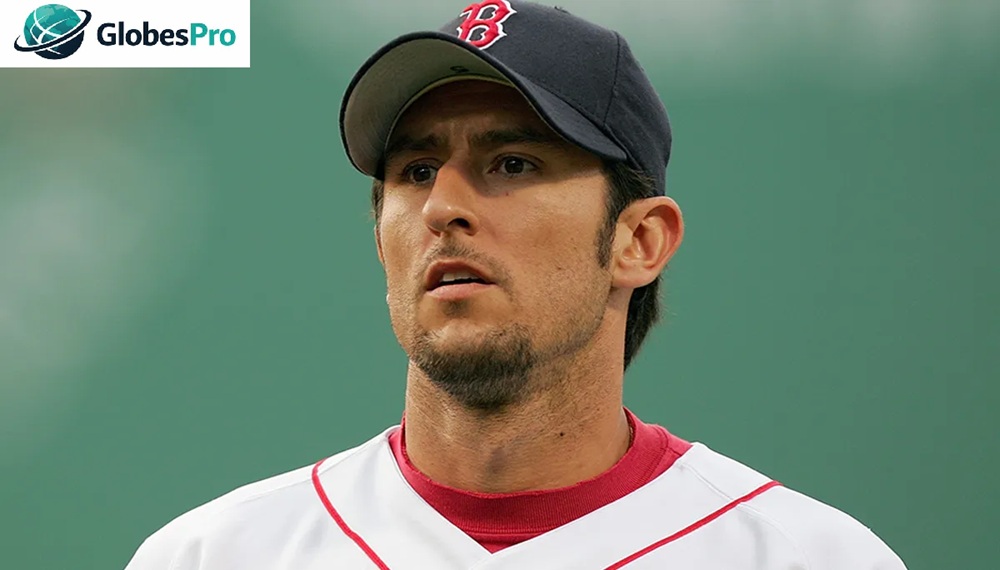
Nomar Garciaparra is a retired American professional baseball shortstop who became one of the most beloved players in Boston Red Sox history and one of the premier hitters of his generation. Born Anthony Nomar Garciaparra on July 23, 1973, in Whittier, California, he burst onto the Major League Baseball scene in 1996 and quickly established himself as a hitting phenomenon, winning the American League Rookie of the Year award in 1997 and earning six All-Star selections during his 14-year career. Known for his exceptional batting ability, intense pregame rituals, and passionate approach to the game, Garciaparra won two American League batting titles and became a central figure in one of baseball’s most storied franchises during the late 1990s and early 2000s, though his departure from Boston in 2004 remains one of the most controversial moments in Red Sox history.
Throughout his distinguished career, Nomar Garciaparra compiled impressive statistics that placed him among the elite shortstops of his era, finishing with a career batting average of .313, 229 home runs, and 936 runs batted in across 1,434 games. His prime years with the Red Sox from 1997 to 2004 showcased a hitter who combined power, average, and consistency in ways rarely seen at the shortstop position, often mentioned alongside Derek Jeter and Alex Rodriguez as part of the golden era of American League shortstops. Beyond his playing days, Garciaparra has remained connected to baseball through broadcasting work and has built a notable personal life married to soccer legend Mia Hamm, with whom he has raised a family while maintaining a lower profile than many retired superstars of his caliber.
| Personal & Career Information | Details |
|---|---|
| Full Name | Anthony Nomar Garciaparra |
| Born | July 23, 1973 |
| Birthplace | Whittier, California, USA |
| Age | 51 years old (as of 2024) |
| Height | 6 ft 0 in (183 cm) |
| Position | Shortstop, Third Base, First Base |
| Bats/Throws | Right/Right |
| MLB Debut | August 31, 1996 |
| Final Game | October 4, 2009 |
| Teams | Boston Red Sox (1996-2004), Chicago Cubs (2004-2005), Los Angeles Dodgers (2006-2009), Oakland Athletics (2009) |
| Career Batting Average | .313 |
| Home Runs | 229 |
| RBIs | 936 |
| Awards | 6× All-Star, 2× AL Batting Champion, AL Rookie of the Year (1997), 2× Silver Slugger Award |
| Spouse | Mia Hamm (married 2003) |
| Children | Ava Caroline Garciaparra |
California Roots and Early Baseball Development
Anthony Nomar Garciaparra grew up in Southern California during the 1970s and 1980s, an environment rich with baseball tradition and opportunity. His unique first name “Nomar” has an interesting origin story—it’s his father’s name “Ramon” spelled backward, a creative decision that gave him a distinctive identity from the beginning. Growing up in Whittier, a city in Los Angeles County, Garciaparra was immersed in youth baseball from an early age, developing skills that would eventually make him one of the most feared hitters in professional baseball.
His father, Ramon Garciaparra, played a crucial role in his development, instilling both the technical skills and the mental approach that would define his playing style. The elder Garciaparra emphasized practice, repetition, and attention to detail—values that Nomar would carry throughout his career and that manifested in the meticulous batting rituals that became his trademark.
Garciaparra attended St. John Bosco High School in Bellflower, California, where he excelled as a multi-sport athlete. His baseball talents were evident early, but he also played soccer, showing the athletic versatility that characterized his generation of athletes. However, baseball was always his primary focus, and his high school performance attracted attention from college recruiters across the country.
College Career at Georgia Tech
Choosing to attend Georgia Institute of Technology in Atlanta represented a significant decision for Garciaparra, taking him away from the California baseball scene to the Atlantic Coast Conference. At Georgia Tech, he played for the Yellow Jackets from 1992 to 1994, developing into one of college baseball’s premier players.
During his time at Georgia Tech, Garciaparra’s hitting ability flourished. He set numerous school records and earned All-American honors, establishing himself as one of the top amateur players in the country. His college performance showcased the hitting prowess that would define his professional career—the ability to make consistent contact, hit for both average and power, and perform in clutch situations.
The college experience also provided important maturation time, allowing Garciaparra to develop physically and mentally before entering professional baseball. The combination of high-level competition, quality coaching, and the academic environment at a prestigious institution like Georgia Tech prepared him well for the challenges ahead.
Draft and Minor League Journey
The Boston Red Sox selected Garciaparra in the first round of the 1994 Major League Baseball draft with the 12th overall pick. The selection represented the beginning of what both the player and the organization hoped would be a long, successful relationship. After signing with Boston, Garciaparra entered the minor league system to continue his development.
His minor league career was brief but impressive. He advanced quickly through the Red Sox farm system, demonstrating at each level that he was ready for greater challenges. His hitting translated seamlessly to professional baseball, and it became clear that Boston had found a potential franchise cornerstone.
By 1996, Garciaparra had reached Triple-A Pawtucket, the final stop before the major leagues. His performance there left no doubt about his readiness for the biggest stage, and on August 31, 1996, he made his major league debut, beginning what would become a storied career.
Rookie Sensation and Early Success
The 1997 season established Garciaparra as one of baseball’s brightest young stars. Playing his first full major league season, he put together one of the greatest rookie campaigns in baseball history. He batted .306 with 30 home runs and 98 RBIs, numbers that were extraordinary for any player but particularly impressive for a rookie shortstop.
His performance earned him the American League Rookie of the Year award unanimously, and he finished eighth in MVP voting. Baseball fans and analysts immediately recognized they were witnessing something special—a shortstop who combined defensive ability with offensive production typically associated with corner positions.
What made Garciaparra particularly captivating was his intensity and focus. His pre-pitch routine—repeatedly adjusting his batting gloves, tapping his toes—became iconic, reflecting a mental preparation process that helped him achieve remarkable consistency. Fans loved the ritual because it demonstrated how seriously he took each at-bat, how much every pitch mattered to him.
The Golden Era of AL Shortstops
Garciaparra’s emergence coincided with what many consider the greatest era for American League shortstops. He, Derek Jeter of the New York Yankees, and Alex Rodriguez of the Seattle Mariners (later Texas Rangers) represented an unprecedented concentration of elite talent at the position, creating endless debates among fans about who was the best.
Each brought different strengths. Jeter had the championships and clutch performances. Rodriguez had the most raw talent and eventually the biggest contract. Garciaparra had the highest batting average during his peak years and perhaps the most intense passion for the game. The comparisons drove all three to excel, creating a competitive dynamic that elevated baseball during the late 1990s and early 2000s.
Between 1997 and 2003, Garciaparra was arguably the best hitter among the three, winning batting titles in 1999 and 2000 with averages of .357 and .372 respectively. His 2000 season was particularly remarkable—he batted .372 with 21 home runs and 96 RBIs in just 140 games, numbers that would have been even more impressive over a full season.
Injuries and the Beginning of Decline
Garciaparra’s career trajectory changed dramatically due to injuries. The 2001 season saw him miss significant time with wrist problems, and injuries would plague the remainder of his career. For a player whose game depended on hand-eye coordination and bat speed, wrist injuries were particularly devastating.
The physical setbacks began affecting not just his performance but his relationship with the Red Sox organization and fans. As injuries mounted, questions arose about his durability and his commitment to playing through pain. The passionate intensity that fans loved when he was performing well began to be interpreted differently when he was sitting out games.
These years revealed the cruel reality of professional sports—that talent and passion aren’t always enough when the body breaks down. For someone who had defined himself through baseball excellence, dealing with physical limitations that prevented him from performing at his previous level created frustration that was visible to everyone watching.
The Controversial Departure from Boston
The summer of 2004 brought one of the most dramatic moments in Garciaparra’s career and Red Sox history. As the trade deadline approached, rumors swirled about his future with the team. Despite being one of the most popular players in franchise history, tensions had developed between Garciaparra and management regarding his injuries and contract situation.
On July 31, 2004, the Red Sox traded Garciaparra to the Chicago Cubs in a four-team deal that brought Orlando Cabrera and Doug Mientkiewicz to Boston. The trade shocked Boston fans and marked the end of an era. For Garciaparra, leaving the only organization he’d known as a professional was emotionally wrenching.
The twist that made the trade even more painful came months later when the Red Sox won the World Series, breaking an 86-year championship drought. Garciaparra had spent eight years trying to help Boston win a championship, and it finally happened just months after he left. The timing was particularly cruel, and Garciaparra has spoken about how difficult it was to watch from afar.
Later Career Stops
After the trade, Garciaparra played for the Cubs through 2005, then signed with the Los Angeles Dodgers for the 2006 season. With the Dodgers, he experienced a late-career resurgence, earning his sixth and final All-Star selection in 2006 while playing primarily first base as his body could no longer handle the demands of shortstop.
The Dodgers years showed Garciaparra could still be productive when healthy, but injuries continued limiting his availability. He played for Los Angeles through 2009, then briefly joined the Oakland Athletics late that season before retiring.
His final statistics, while excellent, represented what might have been had injuries not derailed his prime years. He retired with a .313 career batting average, excellent by any standard, but those who watched his peak knew he was capable of even more.
Life After Baseball
Following retirement, Garciaparra transitioned into broadcasting, working as a baseball analyst for ESPN and later the Red Sox broadcast team. His insights as a former player and his ability to explain the mental aspects of hitting have made him a respected voice in baseball media.
His personal life has been equally fulfilling. His marriage to soccer legend Mia Hamm in 2003 united two of the most accomplished athletes of their generation. Together they’ve raised their children, including twin daughters born in 2009, largely away from the intense public spotlight that characterized their playing days.
The couple has also been involved in various charitable endeavors, using their platform and resources to make positive impacts beyond sports. Their approach to life after athletics has been marked by the same dedication and purpose that characterized their playing careers.
Legacy and Historical Perspective
Time has provided perspective on Garciaparra’s career and place in baseball history. While injuries prevented him from achieving the longevity and cumulative statistics of some peers, his peak performance level was extraordinary. From 1997 to 2003, he was one of baseball’s most feared hitters and most exciting players.
In Boston, despite the controversial departure, he remains beloved by many fans who remember his contributions and the excitement he brought to Fenway Park. His number has not been retired, but his place in Red Sox history is secure.
For younger baseball fans who never saw him play, looking at his statistics doesn’t fully capture what made him special. The intensity, the rituals, the pure hitting ability during his prime—these elements made him must-watch television and a player who elevated everyone around him.
Conclusion
Nomar Garciaparra represents both the heights of baseball excellence and the fragility of athletic careers. During his prime, he was one of the game’s most talented and beloved players, a shortstop who hit like a middle-of-the-order slugger while playing a premium defensive position. His time with the Boston Red Sox created memories that fans still cherish, even as the circumstances of his departure created complications in that relationship. Though injuries prevented him from sustaining his peak performance throughout a longer career, the excellence he displayed when healthy earned him a place among his generation’s finest players.
The story of Nomar Garciaparra reminds us that sports careers are unpredictable, that injuries can derail even the most promising trajectories, and that how we remember athletes should account for both their achievements and the context in which those achievements occurred. His legacy extends beyond statistics to include the passion he brought to the game, the excitement he generated, and the standard of excellence he maintained during his years as one of baseball’s brightest stars.
