
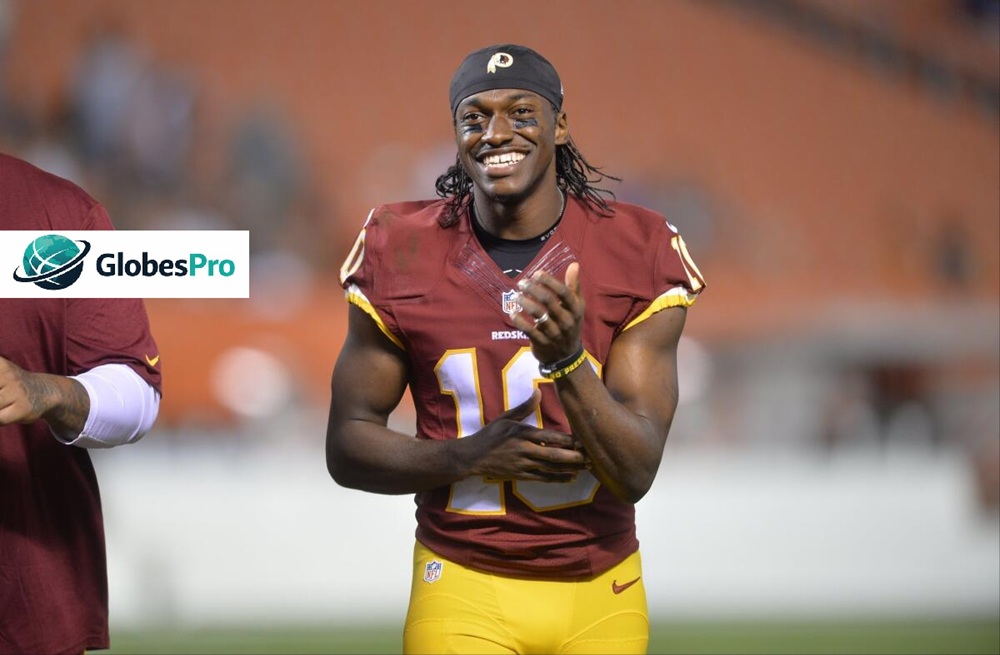
Robert Griffin III, commonly known as RG3, is a former NFL quarterback and current ESPN analyst who rose to extraordinary heights by winning the 2011 Heisman Trophy at Baylor University before being selected second overall by the Washington Football Team in the 2012 NFL Draft. His promising career was derailed by a devastating knee injury in his rookie playoff game that he never fully recovered from despite multiple comeback attempts.
Born Robert Lee Griffin III on February 12, 1990, in Okinawa, Japan, where his parents were stationed in the U.S. Army, he grew up as a phenomenal dual-threat athlete who could both pass with precision and run with electrifying speed. He became one of college football’s most exciting players before his NFL career became a cautionary tale about rushing injured players back too soon, organizational dysfunction, and the physical toll of the quarterback position.
| Personal Information | Details |
|---|---|
| Full Name | Robert Lee Griffin III |
| Common Name | RG3 |
| Date of Birth | February 12, 1990 |
| Age | 34 years old |
| Place of Birth | Okinawa, Japan (military base) |
| Parents | Robert Griffin Jr. and Jacqueline Griffin (both U.S. Army) |
| Height | 6’2″ (188 cm) |
| Weight | 223 lbs (playing weight) |
| Position | Quarterback |
| College | Baylor University |
| College Achievement | 2011 Heisman Trophy winner |
| NFL Draft | 2012, 2nd overall pick by Washington |
| Rookie Season | 2012 – NFL Offensive Rookie of the Year |
| Major Injury | ACL/LCL tear, January 2013 playoff game |
| NFL Teams | Washington (2012-2015), Cleveland Browns (2016-2017), Baltimore Ravens (2018-2020) |
| Career Record | 16-23 as starter |
| Retirement | 2021 |
| Current Career | ESPN college football and NFL analyst |
| First Wife | Rebecca Liddicoat (divorced 2016) |
| Second Wife | Grete Sadeiko (married 2018) |
| Children | Four daughters |
His rookie season in 2012 was spectacular, earning him NFL Offensive Rookie of the Year honors and leading Washington to the playoffs. However, the knee injury suffered in that playoff game against Seattle fundamentally changed his career trajectory, leading to diminished athleticism, lost confidence, benchings, team changes, and ultimately retirement from playing in 2021 before transitioning successfully to broadcasting.
Robert Griffin III represents one of the most dramatic “what if” stories in recent NFL history—a generational talent whose career was essentially over before it truly began due to injury mismanagement and the inability to adapt his game after losing the explosive athleticism that made him special. Since retiring from playing and joining ESPN as a college football and NFL analyst, Griffin has found success in broadcasting, using his intelligence, charisma, and insider knowledge to provide insightful commentary while also being remarkably candid about the mistakes, injuries, and dysfunction that prevented him from fulfilling his enormous potential.
Early Life and Athletic Development
He was born on a U.S. military base in Okinawa, Japan, on February 12, 1990, to parents Robert Griffin Jr. and Jacqueline Griffin, both serving in the U.S. Army. This military background instilled discipline and structure that would influence Griffin’s approach to athletics and life.
The family eventually settled in Copperas Cove, Texas, a small military town near Fort Hood. Growing up in Texas meant football was central to community life, and Griffin quickly distinguished himself as an exceptional athlete. He excelled not just in football but also in track and field, becoming a championship hurdler with times that would have been competitive at the college level.
His athletic versatility was remarkable—he could throw, run, jump, and had the speed of a world-class sprinter combined with the coordination to hurdle obstacles at full speed. These abilities translated to football, where he played quarterback with the mobility of a running back and the arm of a pocket passer.
Athletic Background
| Sport | Achievement | Significance |
|---|---|---|
| Football | High school star quarterback | Recruited by major programs |
| Track and Field | State champion hurdler | Elite speed and athleticism |
| Basketball | Multi-sport athlete | Overall athletic development |
| Academic | Strong student | Intelligence and discipline |
Griffin’s combination of physical gifts, intelligence, and work ethic made him a highly recruited high school athlete. He chose to attend Baylor University, a decision that would prove transformative for both him and the program.
Baylor Years and Heisman Trophy
When Robert Griffin arrived at Baylor in 2008, the football program was struggling, having endured years of losing seasons and NCAA sanctions. However, under head coach Art Briles, Baylor was implementing an innovative spread offense that would perfectly showcase Griffin’s talents.
Griffin became the starting quarterback and immediately elevated the program. His ability to read defenses, make accurate throws, and escape pressure with his legs made him nearly impossible to defend. He could beat teams through the air with precise passes or on the ground with explosive runs that showcased his track speed.
The 2011 season was his masterpiece. Griffin led Baylor to a 10-3 record, the program’s best season in decades. He threw for 4,293 yards and 37 touchdowns while adding 699 rushing yards and 10 rushing touchdowns. His efficiency was remarkable—a 72.4% completion percentage and a quarterback rating of 189.5, one of the highest in college football history.
2011 Heisman Trophy Season
| Category | Statistics | National Ranking |
|---|---|---|
| Passing Yards | 4,293 | Top 10 |
| Passing TDs | 37 | Top 5 |
| Completion % | 72.4% | #1 in FBS |
| QB Rating | 189.5 | Near record |
| Rushing Yards | 699 | Elite for QB |
| Rushing TDs | 10 | Elite for QB |
His performance earned him the 2011 Heisman Trophy, awarded to college football’s best player. He became Baylor’s first Heisman winner and solidified his status as one of the top quarterback prospects for the 2012 NFL Draft.
The 2012 NFL Draft and Trade
The 2012 NFL Draft featured two exceptional quarterback prospects: Andrew Luck from Stanford and Robert Griffin III from Baylor. Luck was considered the consensus first overall pick, leaving Griffin as the prize for whichever team could position itself to select second.
The St. Louis Rams held the second pick but didn’t need a quarterback. The Washington Football Team, desperate for a franchise quarterback, made an aggressive trade to move up from sixth to second overall. Washington gave up three first-round picks and a second-round pick—a massive haul that reflected both Griffin’s perceived value and Washington’s desperation.
This trade created enormous pressure on Griffin to justify such a significant investment. Washington needed him to be a franchise-altering player immediately, which influenced decisions about his usage and recovery from injuries.
Spectacular Rookie Season (2012)
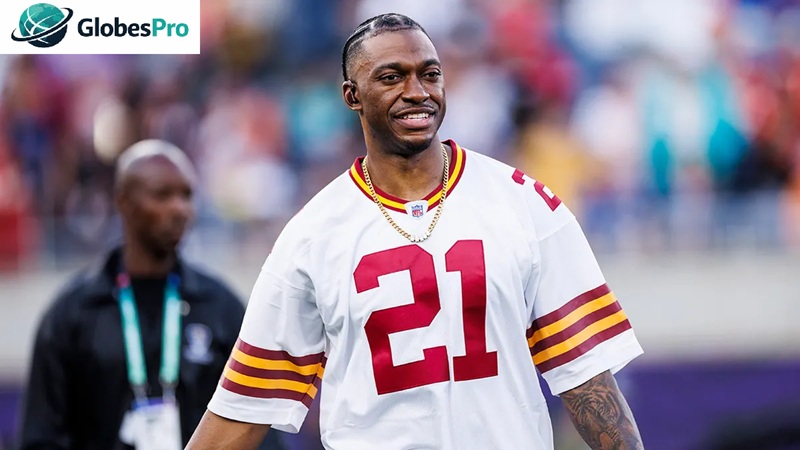
Robert Griffin’s rookie season exceeded even the lofty expectations created by the massive trade. He was immediately installed as the starter and proved ready for the NFL’s speed and complexity. His combination of passing accuracy, mobility, and poise was remarkable for a first-year player.
Griffin threw for 3,200 yards and 20 touchdowns with just 5 interceptions while adding 815 rushing yards and 7 rushing touchdowns. He led Washington to a 10-6 record and their first playoff berth in years. His electricity and charisma made him a marketable star, appearing in numerous commercials and becoming one of the NFL’s most popular players.
2012 Rookie Statistics
| Category | Total | Achievement |
|---|---|---|
| Record as Starter | 9-6 | Led team to playoffs |
| Passing Yards | 3,200 | Strong passing numbers |
| Passing TDs | 20 | Excellent TD/INT ratio |
| Interceptions | 5 | Exceptional ball security |
| Rushing Yards | 815 | Most by QB that season |
| Rushing TDs | 7 | Dual-threat production |
| Award | NFL Offensive Rookie of the Year | Beat out several strong candidates including Andrew Luck |
The season was a dream start to his NFL career. However, warning signs emerged. Griffin suffered a minor knee injury mid-season and showed visible discomfort in late-season games, though he continued playing through pain.
The Catastrophic Injury
The 2012 season ended in disaster during a playoff game against the Seattle Seahawks. Playing on a soggy field at FedEx Field, Griffin’s knee gave out during a play in the fourth quarter. He had already been visibly limping and grimacing throughout the game but continued playing despite the obvious injury.
The injury was severe—a torn ACL and LCL—requiring major reconstructive surgery. The decision to keep Griffin in the game when he was clearly compromised became one of the most controversial coaching decisions in recent NFL history and a defining moment in Griffin’s career trajectory.
The Injury and Its Aftermath
| Date | Event | Consequence |
|---|---|---|
| January 6, 2013 | Knee injury in playoff game | Season-ending ACL/LCL tear |
| January-August 2013 | Surgery and rehabilitation | Rushed return for 2013 season opener |
| 2013 Season | Struggled post-injury | Lost athleticism and confidence |
| 2014-2015 | Continued decline | Benched, lost starting job |
| 2015 | Released by Washington | First NFL team gives up on him |
The rushed rehabilitation and return created a pattern where Griffin was never fully healthy or confident again. The explosive athleticism that made him special was diminished, and he couldn’t compensate with pocket passing skills he hadn’t fully developed.
Decline and Career Struggles
Robert Griffin never recaptured his rookie season form. The 2013 season was disappointing as he played tentatively, clearly not trusting his knee. The 2014 season saw him benched, creating a quarterback controversy that divided the locker room and fanbase. By 2015, Washington had moved on entirely, benching Griffin for the season and releasing him afterward.
He signed with the Cleveland Browns in 2016, hoping for a fresh start, but suffered another injury and was ineffective when healthy. A brief stint with Baltimore Ravens from 2018-2020 saw him primarily serving as Lamar Jackson’s backup, rarely playing.
His career statistics tell the story of unfulfilled potential: 16-23 record as a starter, 9,385 passing yards, 43 touchdowns, and 28 interceptions across parts of eight seasons—numbers far below what seemed achievable after his brilliant rookie year.
Personal Life and Family
His personal life saw significant changes parallel to his career struggles. He divorced his first wife, Rebecca Liddicoat, in 2016 after allegations of infidelity on his part with Grete Sadeiko, an Estonian track and field athlete. The divorce, which occurred while Rebecca was raising their young daughter, became public and messy, damaging Griffin’s public image.
He married Sadeiko in 2018, and they have had three daughters together, giving Griffin a total of four daughters. He has spoken about fatherhood changing his perspective and priorities, providing fulfillment beyond football.
Transition to Broadcasting
After unofficially retiring from playing following the 2020 season, Robert Griffin joined ESPN as a college football analyst in 2021. He has since expanded to NFL coverage as well, appearing on various ESPN programs including “Monday Night Countdown.”
Griffin has proven to be an excellent broadcaster, combining insider knowledge with charisma and willingness to be honest about his own career mistakes. He analyzes quarterback play with particular insight, having experienced both the highest highs and lowest lows of the position.
His broadcasting career has been well-received, suggesting he may have found his true calling. He’s articulate, prepared, and brings authentic perspective that resonates with viewers.
Legacy and “What If” Questions
His legacy is defined by both his remarkable talent and his tragic decline. The “what if” questions are endless: What if he hadn’t played injured in that playoff game? What if Washington’s training staff had been more conservative about his rehabilitation? What if he had developed better pocket passing skills? What if the organizational dysfunction in Washington hadn’t undermined his development?
His story serves as a cautionary tale about multiple issues: the dangers of playing injured players, the importance of proper injury rehabilitation, the challenges of mobile quarterbacks adjusting after losing athleticism, and how organizational dysfunction can destroy promising careers.
Conclusion
Robert Griffin III achieved extraordinary success by winning the 2011 Heisman Trophy at Baylor and enjoying a spectacular 2012 NFL rookie season that earned him Offensive Rookie of the Year honors and seemed to herald a long, successful career as one of the league’s premier quarterbacks. However, a catastrophic knee injury in his first playoff game, combined with rushed rehabilitation, organizational dysfunction in Washington, and inability to adapt his game after losing his elite athleticism, derailed what should have been a Hall of Fame trajectory, turning him into one of football’s great “what if” stories as his career spiraled from stardom to benchings to journeyman backup status before retirement in 2021. Since transitioning to broadcasting with ESPN, Griffin has found success as an analyst, using his intelligence, charisma, and candid willingness to discuss his career’s ups and downs to provide insightful commentary on college and NFL football.
As Robert Griffin III builds his post-playing career at 34, he represents both the tragedy of unfulfilled potential and the possibility of reinvention, transforming from a player whose career was defined by what might have been into a broadcaster whose insider perspective and authentic analysis may ultimately create a longer-lasting and more stable career than his injury-shortened time on the field.
