Category

People

Category

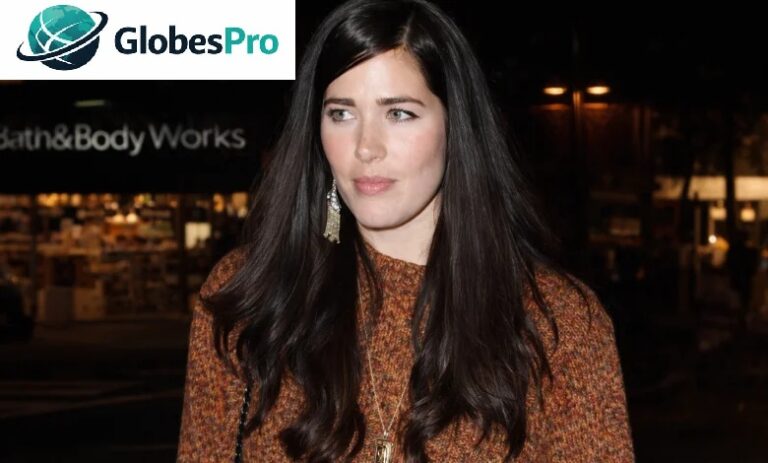
Evi Quaid — born Evzenya Motolanez on August 2, 1963, in New Jersey — is an American-Canadian film director, producer, and photographer. She is best known publicly as the wife of actor Randy Quaid, but that single label dramatically understates who she is. She directed her first feature film before most people knew her name. She modelled nude for Helmut Newton. She set legal precedent protecting a filmmaker’s rights against a financier. And she spent five years living as a fugitive in Canada, defending herself and her husband against charges they insisted were part of a larger conspiracy against Hollywood figures.

She has never been easy to categorise. That’s the point.

Evi Quaid — At a Glance

Detail Info
Birth Name Evzenya (Evgenia Helena) Motolanez
Date of Birth August 2, 1963
Birthplace New Jersey, USA
Heritage Spartan Greek and Russian descent
Left Home Age 12 — permanently
Education Five New England boarding schools (expelled from all five)
Profession Film Director, Producer, Photographer, Actress
Known Films The Debtors (1999), Cold Dog Soup (1989), Star Whackers (2011)
Husband Randy Quaid (m. October 5, 1989)
Children Charlotte Quaid, Kaki Quaid
Citizenship American and Canadian
Net Worth (Est.) ~$1–2 million (shared with Randy)
Notable Distinction Second woman in film history (after Ida Lupino) to direct her own husband in a feature film

A Childhood That Defied Conventional Rules

Evi left home at age 12 — not temporarily, not for a school trip. Permanently.

Her Greek grandfather, recognising something uncontainable in her, financed her education at five different New England boarding schools. She was expelled from all five. The offences were creative rather than violent: violating bedtime curfews, bending dress codes to their breaking point, escaping campus boundaries after dark. Her high school diploma was ultimately withheld for what the school authorities described as bad behaviour.

What that record actually shows is a person who, from childhood, looked at rules and asked why — and then decided whether the answer was good enough.

Her father was born in Canada — a fact that would become legally crucial three decades later. Her heritage is Spartan Greek and Russian, a combination that perhaps explains something about her tenacity.

The Helmut Newton Years: Before Randy

Before any of the legal chaos, before the conspiracy theories, there was a young woman who moved in New York’s art world with genuine credibility.

Evi modelled nude for Helmut Newton — one of the twentieth century’s most acclaimed photographers, known for his provocative, technically brilliant work. Her portraits appeared in Newton’s exhibitions including “Sex and Landscapes,” which showed at the Mary Boone Gallery in the United States and the De Pury Luxembourg Gallery in Europe.

She also appeared in Italian, American, and British Vogue — not as a minor feature but as a subject with a genuine presence.

She was, in the language of that world, an “It girl” — but one who had her own creative ambitions that existed entirely separately from whoever was photographing her.

Meeting Randy: One Night, One Proposal

Evi Quaid and Randy Quaid

In December 1987, Evi and Randy Quaid met on the set of Bloodhounds of Broadway — a film featuring Madonna, among others.

They were introduced during the day. That evening, Randy proposed to her at a Chinese restaurant.

The quote she later gave about that night is remarkable in its honesty — too raw to reproduce verbatim in a family publication, but widely available. The gist: the intimacy that followed felt completely natural, as if they’d known each other their whole lives.

They married on October 5, 1989, at the San Ysidro Ranch in Montecito, California — a luxury resort venue. Randy’s brother Dennis, his then-future sister-in-law Meg Ryan, and Randy’s six-year-old daughter Amanda were among the guests.

The marriage has lasted through everything that followed. That is, depending on how you look at it, either a testament to love or a testament to mutual commitment to a shared worldview — or both.

The Filmmaker: The Debtors and Legal Precedent

In 1999, Evi wrote and directed her first feature film: The Debtors — a screwball comedy in the tradition of Hollywood’s golden era, starring Randy Quaid.

The film was accepted into the Toronto International Film Festival in 1998, where festival director Piers Handling praised it for fearlessly updating the screwball formula for a modern audience.

Then the film was banned from release. A dispute with the film’s financier triggered a legal battle that Evi took all the way through the courts. She won — setting legal precedent protecting a filmmaker’s right to preserve creative control of their work against financial interference.

That victory made her, at the time, the second woman in feature film history — after Ida Lupino — to direct her own husband in a feature film. A genuine milestone, consistently buried under everything that came later.

The Legal Troubles: A Timeline

What followed the late 1990s was a decade-long escalation of legal and financial difficulties that eventually pushed the Quaids out of the United States entirely.

Year Event
2009 Arrested in Santa Barbara for allegedly defrauding an innkeeper ($10,000 hotel bill); Evi pleaded no contest, received 3 years’ probation + 240 hours community service
2010 Charged with burglary after spending 5 days in a property they formerly owned in Santa Barbara; failed to appear in court; warrants issued
October 2010 Fled to Canada; sought asylum under Canadian Immigration and Refugee Protection Act
2011 Evi granted Canadian citizenship (father born in Canada); released separate refugee claim
2011 Randy and Evi premiered Star Whackers documentary in Vancouver; released single of same name
2013 Randy denied Canadian permanent residency; lived in Montreal without official paperwork
2014 Quaids sued US State Department for revoking their passports in 2011
October 2015 Arrested at Vermont border attempting to re-enter US; held on $500,000 bail each
October 15, 2015 Released — judge found no probable cause; bails reduced to $50,000 then dropped
Present California arrest warrants reportedly still outstanding for Randy; status of Evi’s case unresolved

The Star Whackers Theory: What They Actually Claimed

The Star Whackers Theory

This is the part that made them the subject of both ridicule and genuine sympathy, depending on who was listening.

The Quaids claimed that a group they called “Hollywood Star Whackers” — consisting of corrupt accountants, lawyers, and industry insiders — were systematically targeting and eliminating celebrities in order to steal their assets and residual income.

They named specific casualties: Heath Ledger, who died in 2008 from an accidental overdose of prescription medication; David Carradine, who died in 2009. They claimed these deaths were not accidents but murders orchestrated by the same network.

They also claimed that their own legal troubles — the hotel bill, the Santa Barbara property dispute, the warrant cycle — were not genuine charges but engineered harassment designed to destroy Randy’s career and eventually kill them.

Were they right? The mainstream consensus is no. Ledger’s death was ruled accidental by the New York medical examiner. No evidence of a coordinated murder network has ever been produced.

But the Quaids never wavered, and that consistency — however uncomfortable — is worth noting. They were not doing this for attention. They genuinely believed it. The distinction matters for understanding Evi specifically: she was not a bystander being dragged along by a paranoid husband. She was a full co-author of the theory, the loudest public voice defending it, and the person who drove most of the couple’s public communications during the fugitive years.

Evi as a Creative: Beyond the Headlines

Even during the fugitive years, Evi kept creating. She directed Star Whackers (2011) — a documentary-drama about their claims, which she described as both evidence and art. It screened in Vancouver.

She continued her photography work. She maintained a creative identity that had existed before Randy’s fame and continued to exist through all the chaos.

Her earlier work — the Newton portraits, the Vogue appearances, the Toronto-selected film — represents a genuine creative career that predates any of the notoriety.

Randy and Evi Today

As of 2025, the couple remain together — over 35 years of marriage intact.

Randy has continued to be politically vocal, most notably as a vocal supporter of Donald Trump. In 2021, he publicly considered entering the California gubernatorial recall election. Trump retweeted Randy’s content in November 2020 with a personal thank-you message.

Evi has largely stepped back from public statements but has not disappeared. She maintains a presence on social media, occasionally posting creative work, political commentary, and personal observations.

The California warrants from 2010 reportedly remain open, though the practical implications of that status have remained unclear since their 2015 Vermont release.

FAQs

Who is Evi Quaid? She is an American-Canadian film director, producer, photographer, and the wife of actor Randy Quaid. Born Evzenya Motolanez on August 2, 1963, in New Jersey, she is of Greek and Russian descent and has been married to Randy since 1989.

What films has Evi Quaid directed? Her directorial credits include The Debtors (1999), which premiered at the Toronto International Film Festival, and Star Whackers (2011), a documentary about the couple’s conspiracy claims. She is the second woman in film history, after Ida Lupino, to direct her own husband in a feature film.

Why did Evi and Randy Quaid flee to Canada? In October 2010, after failing to appear in court on burglary and vandalism charges, the couple fled to Canada and sought asylum, claiming their lives were in danger from “Hollywood Star Whackers” — a group they claimed was targeting and killing celebrities.

Is Evi Quaid a Canadian citizen? Yes. She was granted Canadian citizenship in 2011 because her father was born in Canada. This is distinct from refugee status — she qualified on the basis of parentage.

What happened with their legal troubles? The most significant charges stemmed from a 2009 hotel fraud case (Evi received probation) and a 2010 burglary charge related to a former Santa Barbara property. They were arrested at the Vermont border in 2015 but released without charges. California warrants reportedly remain outstanding.

Do Evi and Randy Quaid have children? Yes — two daughters: Charlotte Quaid and Kaki Quaid.

Conclusion

Evi Quaid is one of the most genuinely difficult people to write about honestly — not because the facts are unclear, but because the facts are so varied that any single framing misrepresents her.

She is the woman who left home at 12, got expelled from five boarding schools, and modelled nude for one of the greatest photographers of the twentieth century. She is the filmmaker who set legal precedent protecting creative rights. She is the director who took a screwball comedy to Toronto and won critical praise.

She is also the woman who co-authored a conspiracy theory that most of the world found implausible, spent five years as a fugitive in Canada, and defended that position publicly, loudly, and without ever blinking.

The headline version of Evi Quaid is Randy Quaid’s eccentric wife. The real version is considerably more layered, considerably more accomplished, and considerably more human than that.

She left home at 12 because she had somewhere to be. She just took 30 more years to figure out exactly where.

The Man Behind the Camera

If you watch enough prestige television, you will notice a name appearing in the credits of some of the most important dramas ever made. The Sopranos. Boardwalk Empire. Game of Thrones. The Wire. The White Lotus. That name is Timothy Van Patten — and most casual viewers have no idea who he is, which is precisely how a great director likes it.

Timothy Van Patten is an Emmy Award-winning television director widely regarded as one of the most trusted and accomplished drama directors working in American television. What makes his story unusual is that he did not start behind the camera. He started in front of it — as a working actor in the late 1970s and early 1980s — before executing one of the quietest and most successful career pivots in Hollywood history. Today, at 66, he is the person showrunners call when the episode absolutely cannot go wrong.

Quick Facts

Full Name Timothy Van Patten
Date of Birth June 18, 1959
Birthplace New York City, New York, USA
Nationality American
Father Dick Van Patten (actor, Eight Is Enough)
Mother Pat Van Patten
Siblings Nels Van Patten, Jimmy Van Patten
Spouse Wendy Van Patten (private)
Profession Television Director (formerly Actor)
Known For The Sopranos, Boardwalk Empire, Game of Thrones, The White Lotus
Emmy Awards Multiple wins — Outstanding Directing, Drama Series
Estimated Net Worth $5 million – $10 million
Status Active; based in United States

The Van Patten Dynasty

Before Timothy Van Patten became a name whispered with reverence in writers’ rooms and production offices, he was something simpler and rarer: a kid who grew up genuinely loving the work.

His father, Dick Van Patten, was one of American television’s most beloved figures — best known as the warm, bumbling patriarch Tom Bradford in Eight Is Enough (1977–1981), a role that made him a fixture in living rooms across the country for years. Dick Van Patten was not just famous. He was liked — genuinely, warmly liked — in an industry where that distinction matters more than it sounds.

Timothy was born on June 18, 1959, in New York City, the middle of the Van Patten boys. His brothers Nels Van Patten and Jimmy Van Patten also pursued entertainment careers, making the family one of those rare Hollywood dynasties that functions less like a dynasty and more like a working crew — people who share a craft because they genuinely love it, not because it was handed to them.

Growing up with a father like Dick Van Patten means growing up on sets. It means understanding, from childhood, that television is made by people — that the magic has a call sheet, a crew, and a lunch break. That early education in the mechanics of production would prove more valuable than any film school course.

Dick Van Patten passed away in June 2015 at the age of 86. By then, his son Timothy had already surpassed most of what the industry considers a successful career — a fact that Dick, by all accounts, found enormous quiet pride in.

Act One — The Actor

Timothy Van Patten’s first career was as a television actor, and it was a good one. He had his father’s naturalism on screen — an ease, a physical presence, a quality of being watchable without trying too hard.

His most significant acting role came in The White Shadow (1978–1981), one of the most underrated and genuinely groundbreaking dramas in American television history. Created by Bruce Paltrow, the show followed a white former NBA player who becomes the coach of a predominantly Black inner-city Los Angeles high school basketball team.

Timothy played Salami — one of the team’s core players — across the show’s three-season run. It was not a small role. The White Shadow was one of the first network dramas to take race, poverty, and urban youth seriously rather than sentimentally, and Salami was part of the ensemble that made it work.

Acting Credits

Year Production Role Notes
1978–1981 The White Shadow Salami Breakthrough role; critically acclaimed show
1984 Master Ninja Max Keller TV movie / series compilation
1980s Various TV movies & series Supporting roles Consistent working actor

The acting work was steady but not star-making. Van Patten was a strong ensemble player — the kind of actor every good production needs but few productions are built around. By the late 1980s, the writing on the wall was legible: the path forward was not going to be in front of the camera.

What happened next is the more interesting story.

The Pivot — How an Actor Learns to Direct

The transition from actor to director is not uncommon in Hollywood, but it is rarely done well. Most actors who direct do so occasionally, experimentally, as a vanity exercise. Very few commit to it completely and emerge as genuine masters of the craft.

Timothy Van Patten committed completely.

He spent the late 1980s and 1990s building his directing experience methodically — taking television assignments, learning the language of the camera from the other side, developing the skill set that would eventually make him one of the most in-demand drama directors in the business.

What actors bring to directing is something that cannot be taught in a classroom: they understand performance from the inside. They know what a good take feels like before it is reviewed on a monitor. They communicate with cast members not as technicians but as fellow practitioners. On a drama set — where performance is everything — that fluency is invaluable.

Career Pivot Timeline

Period Phase Key Activity
1978–1985 Actor Working TV actor; The White Shadow era
1986–1998 Transition Early directing credits; TV episodic work
1999 Breakthrough Directs The Sopranos Season 1
2000s Establishment Multiple Sopranos episodes; Emmy recognition
2010s–present Prestige tier Boardwalk Empire, Game of Thrones, White Lotus

By the time The Sopranos arrived in 1999, Timothy Van Patten was ready. The question was whether anyone would give him the shot.

David Chase did.

Act Two — The Sopranos

Getting a directing credit on Season 1 of The Sopranos was, in retrospect, like being asked to play on the ground floor of something that would redefine American culture. No one knew that in 1999. They just knew it was a strange, dark, brilliant HBO drama about a New Jersey mob boss in therapy.

Van Patten directed multiple episodes across the series’ eight-year run, building a relationship with David Chase and the production team that was rooted in a simple currency: trust. He understood the show’s tone — the way it moved between violence and domesticity, between operatic tragedy and bleak comedy — and he served that tone rather than imposing his own aesthetic over it.

The pinnacle came with the series finale — “Made in America” (Season 6, Episode 21, 2007). He directed the most debated, discussed, and dissected ending in television history. That cut to black. Those eleven seconds of silence. The decision that has generated more argument than almost any other moment in American pop culture.

Directing a finale of that magnitude — knowing it would be analysed frame by frame for decades — requires a particular kind of nerve. Van Patten had it.

The Sopranos — Key Directing Credits

Season Episode Notes
Season 1 Multiple episodes Ground-floor entry into the series
Season 2–5 Recurring episodes Established as core directing voice
Season 6 Made in America (Finale) Directed the series finale; most discussed episode in TV history

His Emmy Award for Outstanding Directing for a Drama Series — earned through his Sopranos work — was not a lifetime achievement gesture. It was a recognition of specific, measurable excellence in the most competitive field in television.

Boardwalk Empire — Pilot Trust

When HBO greenlit Boardwalk Empire in 2010, they needed someone to set the visual and tonal foundation for a sweeping Prohibition-era crime epic. The pilot — one of the most expensive in television history — was directed with Van Patten’s involvement alongside executive producer Martin Scorsese.

Being trusted with a pilot of that scale is the industry’s highest form of compliment. Pilots are not just episodes. They are the genetic code of a series. Every subsequent director, every actor, every cinematographer uses the pilot as their reference point. Get it wrong and the show never recovers. Get it right and you have created something that can run for years.

Van Patten got it right.

Boardwalk Empire Involvement

Role Details
Pilot Key directing role on series-setting premiere
Series Run Continued directing across multiple seasons
Showrunner Terence Winter
Executive Producer Martin Scorsese
Period 2010–2014

Game of Thrones, The Wire, and The Wider Footprint

By the 2010s, Timothy Van Patten had become something specific and valuable: a director that prestige television trusted with its most important moments.

Game of Thrones — the biggest television event of the decade — brought him in for episodes in Seasons 1 and 2, when the show was still establishing its world and its rules. His work there carried the same quality that defined his Sopranos years: precise, patient, performance-first.

Full Prestige Directing Filmography

Show Network Seasons / Episodes Notes
The Sopranos HBO Seasons 1–6 Including series finale
Boardwalk Empire HBO Seasons 1–5 Including pilot
Game of Thrones HBO Seasons 1–2 World-building episodes
The Wire HBO Selected episodes Another landmark drama
Rome HBO Selected episodes Historical epic
Vinyl HBO Selected episodes Scorsese-produced rock drama
The White Lotus HBO Selected episodes Recent high-profile work

The pattern is unmistakable: HBO, prestige drama, high-stakes episodes. That is his lane and he owns it.

The Emmy Record

Award Category Show Year
Emmy Win Outstanding Directing — Drama Series The Sopranos Multiple nominations / wins
Emmy Nominations Outstanding Directing — Drama Series Various HBO dramas Across career

Emmy recognition at the directing level is not given easily. The drama directing category is filled with accomplished people competing over the best work on the best shows. Van Patten’s wins represent genuine peer recognition — the industry voting for someone it respects.

Net Worth and Industry Standing

Timothy Van Patten does not court celebrity. He has no significant social media presence. He does not give many interviews. His public profile, measured by Instagram followers or tabloid mentions, would suggest someone of moderate achievement.

His professional profile tells a completely different story.

Income Stream Notes
HBO Directing Fees Industry-leading rates for drama episodic work
Pilot Directing Premium fees for high-profile pilots
Residuals The Sopranos, Game of Thrones — among the most-watched dramas in history
Emmy Premium Award recognition increases directing rates significantly

Estimated net worth: $5 million to $10 million — conservative given the volume and prestige of his work, but reflective of a career spent in craft rather than in building a personal brand.

The Person Behind the Credits

Those who have worked with Timothy Van Patten describe him in terms that feel almost old-fashioned in modern Hollywood: prepared, calm, collaborative, kind. He listens more than he talks on set. He communicates with actors in the language of actors. He does not make the work about himself.

His personal life is private. He is married and keeps his family away from the industry spotlight — a choice that, given his upbringing in a Hollywood family, feels deliberate and considered rather than evasive.

His brothers Nels and Jimmy have maintained their own entertainment careers, and the Van Patten family has remained close across decades — something genuinely unusual in an industry that tends to fracture personal bonds under professional pressure.

Timothy Van Patten in 2026

At 66, Timothy Van Patten continues to work at the highest level of American television drama. His reputation is fully cemented. His phone, in industry terms, does not stop ringing.

He is the rare Hollywood figure who genuinely got better with age — who found his true form not in youth but in the accumulated wisdom of a career spent watching, learning, and listening. The actor who played Salami on The White Shadow in 1978 could not have directed the finale of The Sopranos in 2007. But he was necessary for it. Every step of the first career made the second one possible.

Conclusion

Timothy Van Patten’s story is, at its core, a story about reinvention done with patience and grace. He did not announce a pivot. He did not rebranding himself or write a memoir about his transformation. He simply went to work — first as an actor, then as a director — and let the results accumulate quietly into something extraordinary.

He grew up watching his father, Dick Van Patten, show up for work with warmth and professionalism and earn the respect of everyone around him. He absorbed that lesson completely.

In a town that measures success by visibility, Timothy Van Patten chose a different measure. The people who make the best television in the world know his name and want him on their set. That, for someone who simply loves the work, is more than enough.

The Name Behind the Empire

In the world of American motorcycling, few names carry as much weight as Rossmeyer. Walk into any major Harley-Davidson event at Daytona Beach — one of the most iconic motorcycle destinations on earth — and the Rossmeyer presence is impossible to miss. Dealerships, signage, sponsorships, a sprawling entertainment complex: this is not the footprint of someone who stumbled into the industry. This is the result of decades of deliberate, disciplined building.

Wendy Rossmeyer is one of the most influential Harley-Davidson dealership owners in the United States. Alongside her late husband Bruce Rossmeyer, she helped construct a motorcycle business empire centered in Daytona Beach, Florida, that became a landmark in American riding culture. After Bruce’s sudden death in 2008, Wendy did not retreat. She stepped forward, took the wheel, and kept the empire moving. That decision — quiet, resolute, and entirely in character — tells you almost everything you need to know about her.

Quick Facts

Full Name Wendy Rossmeyer
Known For Harley-Davidson dealership empire, Destination Daytona
Nationality American
Residence Daytona Beach, Florida
Profession Businesswoman, Harley-Davidson Dealership Owner
Company Rossmeyer’s Harley-Davidson / Destination Daytona
Spouse Bruce Rossmeyer (deceased, July 2008)
Associated With Daytona Bike Week, NASCAR, American motorsport culture
Estimated Net Worth $10 million – $20 million
Social Media Limited public presence
Status Active in business; based in Florida

Who Is Wendy Rossmeyer?

Wendy Rossmeyer built her name in an industry where women have historically been passengers, not drivers — figuratively speaking. The motorcycle business, particularly at the dealership and ownership level, has long been dominated by men. Wendy never made that the story. She simply got on with the work.

Her entry into the motorcycle world came through her partnership with Bruce Rossmeyer, an entrepreneur with an instinct for both business and speed. Together, they recognised something that others had underestimated: Daytona Beach was not just a racing town or a spring break destination. It was a pilgrimage site for American riders, a place where motorcycle culture ran as deep as the asphalt. They built accordingly.

What makes Wendy’s story distinct from the typical “spouse of a businessman” narrative is that her involvement was never ceremonial. She was embedded in the operation — understanding the inventory, the customer base, the events calendar, the relationship with Harley-Davidson corporate. When Bruce died, the business did not skip a beat under her stewardship. That kind of continuity does not happen by accident.

Within the riding community, she is described consistently in the same terms: genuine, knowledgeable, present. She is not a figurehead. She is someone who understands why people ride and what they want when they walk into a dealership. That understanding is, in many ways, the foundation the whole operation is built on.

The Harley-Davidson Empire

The centrepiece of the Rossmeyer business is the Daytona Beach Harley-Davidson dealership — by most measures, one of the highest-volume Harley-Davidson dealerships in the entire United States. During Daytona Bike Week alone, the location processes a volume of customers that most dealerships do not see in a year.

But the Rossmeyer operation was never just a single store. At its peak, the network spanned multiple Florida locations, each positioned to capture a different segment of the state’s enormous rider population.

Location Known For
Daytona Beach (Flagship) One of the world’s busiest HD dealerships; central to Bike Week
Destination Daytona Complex Retail, hotel, bar, entertainment — a full motorcycle lifestyle campus
Additional Florida Locations Regional dealership presence across the state

What separates the Rossmeyer operation from a standard dealership chain is the integration of experience into commerce. Buying a Harley at Rossmeyer’s Daytona is not a transactional experience — it is an event. The complex surrounding the flagship is designed so that riders want to spend time there, not just money.

Daytona Bike Week and the Rossmeyer Identity

Daytona Bike Week
Daytona Bike Week

To understand how central Wendy Rossmeyer is to American motorcycle culture, you need to understand Daytona Bike Week. Held every March, it draws over 500,000 riders to Daytona Beach over ten days — one of the largest motorcycle rallies in the world. It is part festival, part pilgrimage, part trade show, and entirely chaotic in the best possible way.

The Rossmeyer name is woven into the fabric of that event. Their dealerships become nerve centres during Bike Week — demo rides, limited editions, merchandise, gatherings. Riders who have been coming to Daytona for twenty years associate the Rossmeyer dealership with the event itself, not just as a place to shop but as a place to belong.

This is the brand value that Wendy has maintained and extended. Destination Daytona — the sprawling complex adjacent to the main dealership — is the physical expression of that philosophy. It includes a hotel, a biker bar, retail space, and an outdoor event area. It is designed to be a destination in the truest sense: a place people plan their trip around, not just stop at on the way.

Bruce Rossmeyer — The Partnership and the Loss

Any honest account of Wendy Rossmeyer’s story has to include Bruce — not because her achievements depend on his, but because they built something together and that context matters.

Bruce Rossmeyer was an entrepreneur’s entrepreneur. He had the instinct to see opportunity where others saw niche markets, and he had the operational drive to act on those instincts. In addition to the Harley-Davidson dealership network, he owned the No. 01 NASCAR Craftsman Truck Series team — bringing his passion for motorsport into a formal competitive structure.

Bruce Rossmeyer — Key Facts
Profession Entrepreneur, Harley-Davidson dealer, NASCAR team owner
NASCAR Involvement Owner, No. 01 NASCAR Craftsman Truck Series team
Business Built Rossmeyer Harley-Davidson dealership network
Death July 2008, motorcycle accident on I-95, Florida
Legacy Destination Daytona, one of the US’s largest HD dealership operations

On a July morning in 2008, Bruce was killed in a motorcycle accident on Interstate 95 in Florida. He was on a bike — the same kind of machine that had defined his professional life. He was 58 years old.

The grief was real and public. But Wendy’s response to it was characteristically private and forward-moving. She did not sell. She did not step back. She absorbed the loss and continued leading the business they had built together. There is something quietly extraordinary about that — a person who could have walked away from everything that reminded her of what she had lost, and instead chose to honour it by keeping it alive.

The NASCAR Connection

Bruce’s involvement in NASCAR brought the Rossmeyer name into a second pillar of American motorsport culture. The Craftsman Truck Series team ran under the Rossmeyer banner, and the crossover between Harley culture and NASCAR culture — both rooted in speed, Americana, and the working-class romance of internal combustion — was a natural fit.

NASCAR Involvement Details
Team No. 01 NASCAR Craftsman Truck Series
Series NASCAR Craftsman Truck Series
Owner Bruce Rossmeyer
Era Active during the 2000s
Connection to Brand Sponsorship and branding aligned with Rossmeyer Harley-Davidson

Wendy’s association with NASCAR culture continued after Bruce’s passing — partly through the legacy of the team, partly through the natural overlap between Daytona as a motorcycle town and Daytona as a racing town. The Daytona International Speedway sits in the same city as Bike Week. Speed is the common language, and the Rossmeyer name has always been fluent in it.

Net Worth and What Drives the Value

Estimating Wendy Rossmeyer’s net worth requires understanding what the business is actually worth — and a top-tier Harley-Davidson dealership in a prime market is a substantial asset.

Income / Value Stream Notes
Motorcycle Sales High volume, especially during Bike Week season
Merchandise & Apparel HD merchandise is a significant revenue driver at flagship locations
Destination Daytona Complex Hotel, bar, retail — diversified hospitality revenue
Events & Sponsorships Bike Week positioning brings sponsorship and partnership income
Real Estate Holdings The Daytona complex itself represents significant property value

Based on dealership valuations, property holdings, and the commercial footprint of Destination Daytona, Wendy Rossmeyer’s estimated net worth sits in the range of $10 million to $20 million. Some estimates push higher depending on how the real estate portfolio is assessed. What is not in dispute is that she runs a genuinely large, genuinely profitable operation in one of the most strategically positioned locations in American motorcycling.

The Woman Behind the Brand

Wendy Rossmeyer does not court personal publicity. She does not maintain a significant social media presence or give regular interviews. What is known about her personally comes largely from the motorcycle community — from riders, industry insiders, and people who have dealt with her dealerships over the years.

The picture that emerges is consistent: a woman who is deeply embedded in the culture she serves, who takes the business seriously without losing the human element that makes it work, and who carried a devastating personal loss without letting it define her public identity.

She is estimated to be in her mid-to-late 60s as of 2026. She remains based in the Daytona Beach area. No confirmed personal relationship has been reported since Bruce’s death. Her world, as far as the public can observe, remains the business and the community built around it.

She is involved in charity rides and community events within the Florida rider community — again, not loudly, but consistently. That is the pattern: showing up, doing the work, letting the results speak.

Wendy Rossmeyer in 2026

Destination Daytona remains one of the landmark sites in American motorcycle culture. The flagship dealership remains among the most prominent Harley-Davidson operations in the country. Bike Week still comes to Daytona every March, and the Rossmeyer name is still central to it.

At a point in her life where many people would consider stepping back, Wendy Rossmeyer has maintained active stewardship of an empire that she helped build from the ground up and has kept running for nearly two decades on her own. That is not a footnote. That is the story.

Conclusion

Wendy Rossmeyer is not famous in the way that actors or athletes are famous. Her name does not trend on social media and she does not seek cameras. But within the world she operates in — American motorcycling, Daytona Beach, the culture of the open road — her name carries real, earned authority.

She co-built something remarkable, lost the person she built it with, and chose to keep building anyway. In an industry defined by resilience, freedom, and the refusal to be stopped by anything the road throws at you, Wendy Rossmeyer is the embodiment of exactly that spirit.

The throttle, as they say, only goes one way.


Who Is Ayana Tai Cheadle?

Some people are born into the spotlight and spend their lives chasing it. Others are born into it and quietly, deliberately, step away — carving out a life defined not by the name they inherited, but by the person they chose to become. Beau Tai Cheadle, born Ayana Tai Cheadle in 1994 or 1995 in Los Angeles, California, belongs firmly to the second category.

The firstborn child of Academy Award-winning actor Don Cheadle and actress-turned-interior designer Bridgid Coulter, Beau grew up in one of Hollywood’s most admired and quietly activist families. Today, at approximately 31 years old, he works behind the camera in film production and cinematography — a creative path shaped by a household where art, social conscience, and privacy were all held in equal regard. His journey, which includes a gender transition that his family has supported with vocal and public solidarity, is one of authenticity navigated with remarkable grace.

Quick Facts

Birth Name Ayana Tai Cheadle
Preferred Name Beau Tai Cheadle
Date of Birth 1994 / 1995 (approximate)
Birthplace Los Angeles, California, USA
Parents Don Cheadle (father), Bridgid Coulter (mother)
Sibling Imani Cheadle (younger sister, born 1997)
Education Emerson College (enrolled 2013)
Gender Identity Transgender man
Pronouns He/him
Profession Cinematographer / Film Production Crew
Notable Credit Alex of Venice (2014) — credited as Tai Cheadle
Estimated Net Worth ~$400,000
Status Private; resides in California

A Child of Two Worlds

When Ayana Tai Cheadle was born in the mid-1990s, both of their parents were already navigating the complex currents of the American entertainment industry. Don Cheadle had established himself as one of the most compelling character actors of his generation, while Bridgid Coulter was building her own presence as an actress. Yet for all their professional visibility, Don and Bridgid made a conscious and consistent choice: their children’s lives would belong to their children.

This was not a passive decision. It required active resistance against the machinery of celebrity — the press junkets that become family photo opportunities, the red carpets that turn into generational showcases, the social media that monetises intimacy. The Cheadle household kept its doors closed not out of coldness, but out of conviction. The message to their children was clear: you are not accessories to our careers. You are your own people.

That philosophy would prove especially meaningful as Ayana grew into Beau. In 2019, Don Cheadle appeared on Saturday Night Live wearing a T-shirt that read “Protect Trans Kids” — a statement widely understood by those paying attention as deeply personal, not merely political. Bridgid Coulter, meanwhile, marked National Son’s Day on Instagram with a reference to her son — a quiet but unmistakable acknowledgement of Beau’s identity. In a world where public support for transgender family members is often abstract, the Cheadles made theirs concrete.

The Parents: Don Cheadle and Bridgid Coulter

Don Cheadle and Bridgid Coulter

To understand Beau Tai Cheadle, it helps to understand the home he grew up in — and that home was built by two people whose careers and values have always been intertwined.

Don Cheadle — born November 29, 1964, in Kansas City, Missouri — is one of American cinema’s most decorated performers. His career spans decades and genres: the morally conflicted Mouse Alexander in Devil in a Blue Dress (1995), the searing Paul Rusesabagina in Hotel Rwanda (2004, which earned him an Academy Award nomination), the swaggering Petey Greene in Talk to Me (2007), and the sardonic James Rhodes / War Machine across the Marvel Cinematic Universe. In 2022, he won a Tony Award as producer on A Strange Loop — a Pulitzer Prize-winning musical centering a queer Black man, a choice that speaks directly to the family’s values.

Beyond performance, Don is a committed humanitarian. He co-founded and co-chairs the ENOUGH Project, an organisation dedicated to ending genocide and crimes against humanity, with particular focus on the Darfur region of Sudan. His activism is not a sideline — it is woven into who he is as a public figure and, clearly, as a father.

Bridgid Coulter, born March 12, 1968, in San Diego, California, worked as an actress throughout the 1990s — appearing in projects including Rosewood (1997), where she and Don grew close. She has since built a second career as an interior designer, founding Bridgid Coulter Design. The couple have been together since 1992 and married quietly during the COVID-19 pandemic in 2020 — a ceremony that, true to form, they kept entirely private.

Growing Up in the Spotlight’s Shadow

Beau’s childhood unfolded against the backdrop of his father’s rising fame. During the late 1990s and early 2000s, Don Cheadle became one of the most in-demand actors in Hollywood — appearing in Boogie Nights (1997), Ocean’s Eleven (2001), and Crash (2004). Yet the children rarely appeared in public.

One notable exception came in 2015, when Beau attended the 53rd New York Film Festival for the premiere of Miles Ahead, a film Don directed and starred in as jazz legend Miles Davis. The same year, the family attended the 72nd Golden Globe Awards together — a rare, visible display of a unit otherwise kept carefully out of the press.

The family also traveled internationally, including trips to Africa — experiences shaped in part by Don’s deep engagement with the continent following Hotel Rwanda and his advocacy through the ENOUGH Project. For the Cheadle children, Africa was not an abstraction or a backdrop; it was a place their father had committed to understanding, and they were brought into that understanding.

Shielded from media scrutiny and raised with intention, Beau and his younger sister Imani grew up with something rare for children of celebrity: the privacy to figure out who they actually were.

Education

Beau enrolled at Emerson College in Boston in 2013. Emerson is widely regarded as one of the premier institutions for communication, media arts, and performing arts in the United States — a fitting choice for someone with a developing interest in cinematography and directing. His specific field of study has not been publicly confirmed, but his subsequent work in film production is consistent with the college’s creative programs.

His younger sister Imani took a markedly different path, studying Marine Science at Boston University — a reminder that even in a family steeped in entertainment, children are allowed to follow their own curiosity rather than the family profession.

The Gender Journey

Beau Tai Cheadle’s transition is not a story of struggle against his family. It is, in many ways, a story of a family that made space for truth long before the legal process formalised it.

Don Cheadle spoke publicly, years before the transition, about his child being gay and navigating social difficulties at school — a disclosure that, while framed in the language of a different time, signalled the family’s openness and willingness to stand visibly beside their child. When Beau’s journey deepened and became more defined, the family’s support deepened with it.

The legal name change was filed on March 15, 2019 at Santa Monica Courthouse in Los Angeles. The new legal name — Beau Tai Cheadle — was finalised approximately two months later, in May 2019. The retention of “Tai” is notable: it preserves continuity and suggests that this was a journey of becoming more fully oneself, not an erasure of what came before.

Don’s Saturday Night Live appearance later that year — the “Protect Trans Kids” T-shirt worn quietly but unmistakably during a nationally televised broadcast — completed a picture of a father who does not compartmentalise his activism from his love. Bridgid’s social media acknowledgement of her son followed in the same spirit: not a press release, but a natural expression of who her family is.

Key Milestones

Year Event
1994/1995 Born as Ayana Tai Cheadle in Los Angeles
2013 Enrolled at Emerson College
2014 Camera crew credit on Alex of Venice (credited as Tai Cheadle)
2015 Attended 53rd New York Film Festival and 72nd Golden Globes with family
March 15, 2019 Legal name change filed at Santa Monica Courthouse
~May 2019 Name change finalised: Beau Tai Cheadle
2019 Don Cheadle wears “Protect Trans Kids” T-shirt on Saturday Night Live
2026 Age ~31; continues working in film production

Career: Behind the Camera

Beau Tai Cheadle’s professional life has been shaped by the same creative environment that surrounded his childhood, but built entirely on his own terms. His interest in cinematography and directing — confirmed through family references and professional credits — places him behind the lens rather than in front of it.

His most visible credit to date is a camera crew role on Alex of Venice (2014), directed by Chris Messina and starring Mary Elizabeth Winstead. He was credited on the production as Tai Cheadle — a name that, in retrospect, reads as a transitional identity, the middle name retained while the full legal process was still ahead. Don Cheadle appeared in a supporting role in the same film, suggesting that family connections may have opened a door, but Beau’s own skills and interests are what he walked through it.

Since then, he has continued working in American film production in roles that remain largely out of the public eye — consistent with his broader approach to life: engaged, creative, productive, and private.

Sibling: Imani Cheadle

Born in 1997, Imani Cheadle is Beau’s younger sister and, by all accounts, a close companion in the ongoing project of being a Cheadle. While Beau gravitated toward cinematography, Imani pursued Marine Science at Boston University — a discipline as far from Hollywood as one can reasonably go.

She has since circled back toward the family’s creative world, working as a script reader and development associate at Don’s production company, This Radicle Act Productions (formerly Radicle Act Productions). It is a role that places her at the intersection of literature, storytelling, and industry — a quietly influential position for someone clearly developing a discerning eye for narrative.

Don offered a glimpse of his children’s shared values in a conversation with Stephen Colbert, mentioning that both had gotten ready together for a Black Lives Matter rally. It was an offhand remark, but it captured something important: two people who grew up in the same home, followed very different paths, and arrived at the same place when it mattered.

The Cheadle Family: Activism, Art, and Awareness

To understand Beau Tai Cheadle’s story fully, it is necessary to understand the values that surrounded his formation — values that Don and Bridgid did not merely profess but demonstrated.

Don’s humanitarian record is substantial: his work with the ENOUGH Project has raised international awareness about genocide in Darfur and other conflict zones; his film choices have consistently centred underrepresented and challenging stories; his public statements have been unfailingly direct about racism, inequality, and the protection of marginalised communities. In 2022, he produced A Strange Loop on Broadway — a show about a queer Black man navigating a hostile world — and it won both the Pulitzer Prize for Drama and the Tony Award for Best Musical.

Bridgid, through Bridgid Coulter Design, has built a practice that emphasises thoughtful, community-rooted design. Her social media presence, while personal rather than promotional, reflects the same sensibility: warmth, directness, and a deep investment in the people she loves.

Both children were raised within this atmosphere — not just exposed to activism but included in it, not just adjacent to art but immersed in it. The BLM rally, the Africa trips, the creative household: these were not curated experiences designed to produce well-rounded résumés. They were simply life as the Cheadles lived it.

Personal Life and Net Worth

Beau Tai Cheadle maintains a deliberately private personal life. No confirmed relationship has been publicly reported, and his social media presence — if it exists at all — is minimal and not under any publicly known account.

He resides in California, consistent with the family’s long-established base in the Los Angeles area. His estimated net worth, based on film industry work in production and camera crew roles, sits at approximately $400,000 — a figure that reflects genuine professional contribution rather than inherited wealth or a monetised public profile.

In a landscape where the children of celebrities are increasingly expected to leverage their adjacency to fame through social media, brand partnerships, and reality television, Beau’s refusal to do so is itself a quiet statement. His value system, like his family’s, prizes depth over visibility.

Beau Tai Cheadle in 2026

At approximately 31 years old, Beau Tai Cheadle is fully himself in a way that takes most people far longer to achieve. He has a career rooted in genuine craft, a family that has stood beside him through every stage of his journey, and a life that he has consciously chosen to live on his own terms.

His father continues to work at the highest levels of American cinema and theatre. His mother continues to shape spaces and lives through her design practice. His sister continues to develop her eye for storytelling from within the industry. And Beau continues to do what he has always done: show up, do the work, and resist the pressure to make any of it a performance.

Africa trips remain a family tradition. The Cheadle household, even as its members have dispersed into their own adult orbits, maintains the gravitational pull that comes from a shared set of values genuinely held.

Conclusion

Beau Tai Cheadle — born Ayana, shaped by Los Angeles, educated at Emerson, working behind cameras, living privately — is a person whose story resists easy summarisation. He is not famous in his own right, and that appears to be a deliberate choice rather than an accident. He is the child of famous people who was given the extraordinary gift of not being reduced to that fact.

His transition was not a scandal. It was supported, documented quietly, and folded into the ongoing story of a family that has always understood authenticity as a form of activism. When Don Cheadle put on a T-shirt on national television and Bridgid Coulter acknowledged her son on social media, they were doing what they have always done: telling the truth about who they are and who they love.

In a Hollywood culture that mistakes visibility for significance, Beau Tai Cheadle offers a different model — one built on craft, integrity, and the quiet confidence of someone who knows exactly who he is. The apple doesn’t fall far from the tree. It just finds its own branch.

LeTesha Marrow is an American television host, radio personality, producer, and CEO — best known as the eldest daughter of rapper, actor, and cultural icon Ice-T. Born on March 20, 1976, in New York City, she is the daughter of Ice-T (Tracy Lauren Marrow) and his high school girlfriend Adrienne Marrow. The two were still teenagers when LeTesha was born — a detail that shapes the entire early chapter of her story.

Today, LeTesha is the founder and CEO of T-Tea-V Behind the Scenes, a media platform covering celebrity events, entertainment, and behind-the-scenes content. She is the mother of three children — Elyjah, Cojahlei, and Sah’cyah — and has built a career that, while occasionally intersecting with her father’s world, is genuinely her own.

Wiki Table: LeTesha Marrow at a Glance

Detail Information
Full Name LeTesha Marrow
Date of Birth March 20, 1976
Birthplace New York City, New York, USA
Age (2026) 50 years old
Nationality American
Ethnicity African-American
Zodiac Sign Pisces
Name Meaning Derived from Latin Laetitia — joy and gladness
Father Ice-T (Tracy Lauren Marrow)
Mother Adrienne Marrow
Siblings Tracy Marrow Jr. (half-brother, b. 1991); Chanel Nicole Marrow (half-sister, b. 2015)
Profession TV Host, Radio Personality, Producer, CEO, Photographer, Writer
Platform T-Tea-V Behind the Scenes
Radio Work Claim Your Fame (Atlanta); #TheStreetSizTalking
TV Appearances Ice Loves Coco (E! 2011–2013); Unsung (TV One)
Children Elyjah Marrow (b. 1995), Cojahlei Marrow, Sah’cyah Marrow
Relationship Status Private; no confirmed marriage publicly
Estimated Net Worth ~$1–2 million USD
Social Media @tteavbaby (Instagram/Twitter)

Born to Teenagers — An Unconventional Beginning

There is something important to understand about LeTesha’s childhood before anything else is said: her parents were children themselves when she arrived.

Ice-T was 18 years old — still attending Crenshaw High School in Los Angeles — when LeTesha was born in 1976. Her mother Adrienne was equally young. The two were high school sweethearts who were not prepared, in any traditional sense, for parenthood. They never married.

Ice-T would later speak about those early years with rare honesty: “When I had my first kid, I was in the middle of the wildness of becoming Ice-T, all the people that were after me, and I had my head down. I really wasn’t concentrating on them. I was concentrating on survival.”

That confession says something real — not just about him, but about what LeTesha grew up inside. A father figuring himself out. A mother raising a daughter largely on her own. A family held together more by love and proximity than by design.

LeTesha was primarily raised by Adrienne. Her educational background — schools attended, further study — has never been publicly confirmed, in keeping with how carefully she has always guarded her private life.

Growing Up Ice-T’s Daughter — Privilege, Pressure, and Distance

As Ice-T’s career exploded through the 1980s, LeTesha watched from a distance that was partly geographic and partly circumstantial. Her father was becoming a rap legend — Rhyme Pays (1987), Power (1988), AmeriKKKa’s Most Wanted collaborations, then Body Count — while she was growing up in a household where his presence was more symbolic than daily.

She took singing lessons from the age of five and showed early creative instincts. But she was not pushed into the spotlight by her father, nor did she seek it herself. That pattern — creative but guarded, present but not performing — would define her adult approach to public life entirely.

When she was eight, her father began a serious relationship with model Darlene Ortiz. In 1991, when LeTesha was 15, her half-brother Tracy Marrow Jr. was born. The family grew around her in unconventional ways.

Despite the complications, LeTesha maintained a close bond with Ice-T. He may not have been the most present father in her earliest years, but both have spoken warmly about the relationship they built over time — one built on mutual respect, shared creative instinct, and genuine affection.

The Marrow Family — Three Siblings, Three Eras

LeTesha sits at the beginning of a three-generation family story. Ice-T has three children in total, each from a different relationship, spread across nearly four decades.

Sibling Mother Born Notable For
LeTesha Marrow Adrienne Marrow March 20, 1976 Eldest; T-Tea-V CEO and host
Tracy Marrow Jr. (Little Ice) Darlene Ortiz November 23, 1991 Musician; vocalist in Body Count; Grammy recipient
Chanel Nicole Marrow Coco Austin November 28, 2015 Youngest; 28 years LeTesha’s junior; social media presence

The age gap between LeTesha and Chanel — 39 years — is one of the more striking details in this family. LeTesha became an aunt figure to a little girl young enough to be her grandchild. By all visible accounts, she embraced it fully.

The family came together publicly in February 2023 when Ice-T received his star on the Hollywood Walk of Fame. LeTesha was there, standing alongside Tracy Jr., Coco, and a then seven-year-old Chanel. Ice-T shouted out each of his children by name from the podium. “Let me shout out my family. My son, my daughter, Coco, my wife.”

The photograph from that ceremony — all of them together, all ages, all chapters of the same story — is one of the cleaner images of what this unconventional family actually looks like when it’s in the same room.

T-Tea-V Behind the Scenes — Her Biggest Professional Move

Right out of high school, LeTesha launched herself into the entertainment world by creating T-Tea-V Behind the Scenes — a media platform built around behind-the-scenes access to celebrity events, interviews, and entertainment news.

She didn’t start as CEO. She started as the host — learning the mechanics from the front of the camera before stepping behind it. Over time she grew into the role of CEO and assistant director, managing the full operation herself.

T-Tea-V Behind the Scenes Details
Type Entertainment media platform
Format Hosted show; behind-the-scenes celebrity content
Creator & CEO LeTesha Marrow
LeTesha’s Role CEO, Host, Assistant Director
Focus Celebrity events, interviews, entertainment news
Also Featured On Her father Ice-T’s world and touring life

The platform gave her something essential — professional identity that was entirely separate from the family brand. She wasn’t trading on the name Ice-T. She was building something called T-Tea-V, under her own name, with her own vision.

Radio, Photography, and the Full Creative Portfolio

Beyond T-Tea-V, LeTesha has maintained an active career across multiple platforms simultaneously.

Her radio work included Atlanta-based show Claim Your Fame and #TheStreetSizTalking — both platforms where her natural communication style translated well to audio. She has also contributed photography to websites, radio stations, and magazines, adding a visual dimension to her creative output.

Her Twitter bio has at various points described her as a writer and actor — confirming that her professional identity extends well beyond any single lane.

Career Area Platform / Role
Television T-Tea-V Behind the Scenes — CEO, Host, AD
Reality TV Ice Loves Coco (E! Network, 2011–2013)
Radio Claim Your Fame (Atlanta); #TheStreetSizTalking
Photography Websites, magazines, radio stations
Writing & Acting Self-described; various projects
IMDB Credit Unsung (TV One)

Ice Loves Coco — A Supporting Role, Played Well

Ice Loves Coco
Ice Loves Coco

When Ice-T and Coco Austin launched their E! reality series Ice Loves Coco in June 2011, LeTesha appeared in several episodes — typically during family gatherings and celebrations. She was not a regular cast member, not a main character, not there to be dramatic for ratings.

She was simply herself — grounded, warm, clearly at ease with both her father and his wife. Audiences noticed. Her calm presence amid the show’s higher-energy tone made her one of the more genuinely likeable figures in the periphery of the series.

The show ran until 2013. LeTesha’s involvement remained appropriately measured throughout.

Motherhood — Her Three Children

LeTesha is the mother of three children — two sons and a daughter — whose privacy she has consistently and deliberately protected.

Child Notes
Elyjah Marrow Born 1995; Ice-T’s first grandchild
Cojahlei Marrow Details kept private
Sah’cyah Marrow Details kept private; described as being in high school as of 2021

Elyjah’s birth in 1995 made Ice-T a grandfather for the first time — at age 37. The milestone was noted publicly with some warmth.

LeTesha has spoken about motherhood with the same matter-of-fact directness she brings to everything else. Her children are the priority. The public story comes second.

Elyjah Marrow — The Chapter Nobody Wanted

In June 2014, Elyjah Marrow — then 19 years old — was arrested in Marietta, Georgia, in connection to the death of his roommate, Daryus Johnson. Elyjah had shot Johnson, reportedly accidentally, with a stolen firearm. Johnson died from the injury.

Elyjah was charged with involuntary manslaughter, theft by receiving stolen property, possession of marijuana, and related offences. He admitted to substance abuse issues during proceedings.

LeTesha said nothing publicly. She did not give interviews. She did not issue statements. She held the grief and the fear as a private matter — the way her father held the chaos of early fame as a private matter — and she focused on her son.

Elyjah served his sentence and was released. The family, by all subsequent accounts, remained intact and supportive throughout the process.

What LeTesha did during that period — showing up quietly for her child in one of the worst situations a parent can face, without making it a media moment — says more about her character than any television credit could.

Personal Life — What She Has and Hasn’t Shared

LeTesha has never publicly confirmed a marriage. Some older sources suggest she may have had a long-term relationship in the early 1990s, but no name has ever been confirmed and she has made no statements on the subject.

Her social media presence — @tteavbaby — is active but measured. She shares professional content, family moments, and glimpses of her personal life without ever tipping into overshare.

Her name, derived from the Latin Laetitia, means joy and gladness. It is a quietly fitting description of how she shows up — not loudly, not dramatically, but with a warmth that comes through in every public appearance she has made.

Net Worth and Financial Standing

Income Source Estimated Annual Earnings
T-Tea-V CEO / Host $100K–$193K (CEO average)
Radio Hosting $50K–$80K
Photography Variable
Television Appearances Variable
Estimated Net Worth (2026) ~$1–2 million USD

These are not the numbers of someone coasting on a famous surname. They are the numbers of someone who has worked consistently, across multiple disciplines, for over two decades.

LeTesha Marrow in 2026 — A Full Life, Lived Quietly

LeTesha turned 50 in March 2026. She is the CEO of her own media company, the mother of three children, the daughter of a Hollywood Walk of Fame honoree, and the grandmother figure to a half-sister who is young enough to be her own child.

Her Instagram handle still reads @tteavbaby. She continues producing content under the T-Tea-V banner. She photographs. She writes. She hosts. She does the work — the same way she always has.

Area 2026 Status
Age 50
Career T-Tea-V active; radio and media work ongoing
Children All three in their lives; Elyjah post-release
Relationship Private; no confirmed partner
Family Bond Attends Ice-T family events; close with Chanel
Net Worth ~$1–2 million USD

Final Thoughts

The name LeTesha means joy and gladness. Whoever chose it did not know they were writing a description of the woman she would become — but they were.

She grew up with a teenage father finding his footing. She watched that father become a legend. She built her own platform in a media landscape that constantly tried to define her as someone’s daughter first. She raised three children, navigated a crisis with one of them with total dignity, and kept showing up to work.

In the Marrow family, she is the original. The first child. The one who bridged the gap between a teenager still chasing survival and the icon standing on the Hollywood Walk of Fame forty-seven years later.

She didn’t need the spotlight to do any of it. She just needed to keep going.

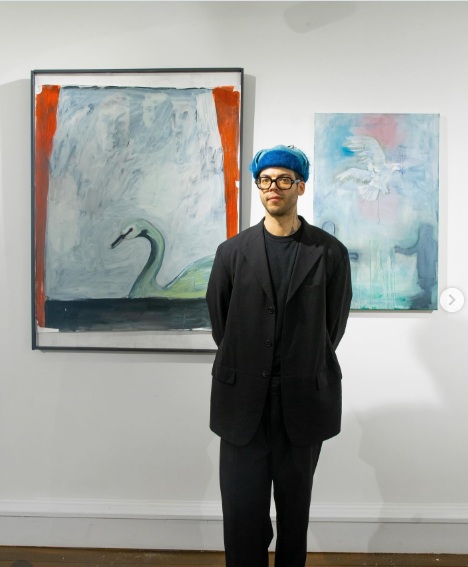
Leyman Lahcine is a French-Algerian visual artist born in 1987 in Grenoble, France, who lives and works in London. He is a resident artist at the Sarabande Foundation — the legacy arts organisation established by the late fashion designer Lee Alexander McQueen — and is known for a painting style best described as faux naïf: bright colours, cartoon-like figures, and childlike line work that, on closer inspection, carries real emotional weight. His work weaves together religious symbolism, mythological references, and the concept of transgenerational trauma into imagery that feels simultaneously playful and deeply unsettled.

He is also, more widely, known as the former long-term partner of British singer and cultural icon Paloma Faith. But to introduce him only through that lens would be to miss the point of who he actually is.

Quick Facts: Leyman Lahcine

Detail Information
Full Name Leyman Lahcine
Born 1987
Birthplace Grenoble, France
Nationality French-Algerian
Based In London, England
Profession Visual Artist, Designer
Artistic Style Faux naïf; bright colour, cartoon imagery, dark emotional undertones
Medium Painting, Drawing, Sculpture
Foundation Sarabande Foundation, London (resident artist)
Commercial Platform House of Bandits (Sarabande’s sales platform)
Notable Collaboration Roland Mouret x Etat Libre d’Orange — Une Amourette (2019)
Key Exhibition Tides of Consciousness solo show, Sarabande Foundation (Feb–Mar 2024)
Former Partner Paloma Faith (together approx. 2013–2022)
Children Two daughters
Key Artistic Influence The City of Lost Children (Jeunet & Caro, 1995); Jean Cocteau; Daniel Johnston

Early Life — Grenoble, Algeria, and Growing Up Between Worlds

Grenoble sits in a valley in southeastern France, surrounded by the Alps. It is an industrial city with a strong North African immigrant community — and it is where Leyman Lahcine was born and raised in 1987, the child of Algerian parents.

Growing up with dual French-Algerian identity is not a simple experience. It means navigating two sets of cultural expectations, two histories that don’t always sit comfortably beside each other, and a constant low-level question of where, exactly, you belong. That tension doesn’t disappear when you grow up. It gets absorbed into the body, the worldview, and — in Lahcine’s case — the work.

He has spoken about finding his way to art through darkness rather than light. The film that changed everything for him was La Cité des Enfants PerdusThe City of Lost Children — the 1995 surrealist dark fantasy by Jean-Pierre Jeunet and Marc Caro. He watched it obsessively as a child, almost every day for several years.

“I am most influenced by film,” he told AnOther Magazine. “One of my favourite films is The City of Lost Children. That film was a starting point for me. I was so young when it came out, and I watched it every day for a few years as a kid. It’s a dark film. I think you have to be in a good place to step into that darkness. I think that film made me realise I didn’t have to be the same as other people; that it was okay to be different.”

The film — about a mad scientist who kidnaps children to steal their dreams — has an eerie resonance with what Lahcine would eventually build as an artist: a world full of figures carrying things they didn’t choose to carry, in spaces where childhood and dread inhabit the same room.

Drawing became his first language.

“I started drawing as a way to write my nightmares or frustrations — it’s always been a kind of diary for me.”

Education — From France to New York to London

Lahcine eventually studied at the University for the Creative Arts (UCA) in England, before completing a Master’s degree in Fashion at Kingston University London, graduating in 2016. The fashion training gave him a formal structural framework for thinking about the body, about material, about how images relate to the physical world — something that still shows in the way he makes his frames and incorporates found materials into his pieces.

Before London became home, there was a chapter in New York. He worked there as a designer, eventually founding his own fashion label — Gentlemen’s Recess — and absorbing the specific energy of the New York art and fashion scene. But he didn’t stay. London, eventually, won out. Partly because of where his practice was heading. Partly because of who he met there.

Artistic Style — What “Faux Naïf” Actually Means

The label faux naïf gets attached to Lahcine frequently, and it’s worth unpacking what it actually describes — because it isn’t a dismissal. It’s a precise aesthetic category.

Naïf art typically refers to work that appears childlike or untrained — simple forms, flat perspective, bright unmodulated colours. Faux naïf means deliberately choosing that aesthetic while being fully trained, using apparent simplicity as a conscious artistic strategy rather than a limitation.

In Lahcine’s case, the cartoon figures and playful line work aren’t evidence of technical limitation. They are the method. The simplicity of the visual surface creates a kind of dissonance — because what’s happening inside those simple forms is heavy. Grief. Inheritance. The invisible weight of what one generation passes to the next without meaning to.

His paintings don’t announce their darkness. They wear it lightly, which somehow makes it more persistent.

The Sarabande Foundation describes his visual vocabulary plainly: bright colour, cartoon-like imagery operating in a dark and melancholic mood. That friction — the joyful surface against the sombre interior — is the engine of the work.

He also has a genuinely voyeuristic practice. Characters in his paintings frequently originate from overheard conversations — fragments of other people’s lives that he catches in passing and carries back to the studio.

“It’s a little like walking past someone’s window and peeking inside, then feeling guilty because you have caught their eye,” he told AnOther.

The paintings often incorporate rustic, artist-made frames — hand-built, sometimes using cobbled found materials — which adds a sculptural quality to the pieces. They become objects as much as images. The frame isn’t neutral; it’s part of the work.

Key Themes in His Work

Theme How It Appears
Transgenerational trauma Figures bearing burdens passed down from previous generations
Religious iconography Sacred symbols, ritual imagery woven into secular scenes
Mythology Classical and North African mythological references
The unconscious mind Dream logic, symbols, surreal juxtaposition
Childhood & innocence Cartoon aesthetics, nostalgic visual language
Cultural identity French-Algerian heritage expressed through visual choices
Love and human connection Tender, emotionally charged imagery of connection
The overheard moment Characters born from fragments of strangers’ conversations

The Sarabande Foundation — A Studio Above the Stadium

The Sarabande Foundation was established in 2006 by Lee Alexander McQueen — the late, visionary fashion designer — with the explicit ambition of supporting the most creatively fearless artists of the future. After McQueen’s death in 2010, the foundation carried that mission forward, providing studio space, mentorship, exhibition platforms, and commercial infrastructure for emerging artists.

Lahcine became a resident artist at Sarabande’s North London townhouse — located across a walkway from Tottenham Hotspur’s stadium in Haggerston — and it is from that small third-floor studio that much of his recent work has emerged.

A journalist visiting him in spring 2024 for Something Curated described the scene: sketchbooks open on the desk, ambient sound from an old NTS radio show, the smell of palo santo and dried oil paint in the air. Lahcine showed them a tuning fork, tapped it, and waited for it to ring out.

“I think I like this idea of harmony,” he said. “It’s peace.”

That image — the tuning fork as a symbol of something sought rather than achieved — says a great deal about the sensibility that runs through his work.

Tides of Consciousness — His Solo Exhibition (2024)

Tides of Consciousness

In February and March 2024, Lahcine held his solo exhibition Tides of Consciousness at the Sarabande Foundation. It ran from 29 February to 3 March.

The show used paintings, drawings, and sculpture to explore the relationship between conscious and unconscious thought — how symbols emerge from the depths of the mind, how we make meaning from images we didn’t choose to dream.

The Sarabande Foundation described the exhibition as an exploration of symbols as expressions of the unconscious, with works attempting to capture the dialogue between the two states of mind. Religious and mythological references appeared throughout, alongside the recurring concept of collective subconscious and the emotional burdens passed between generations.

It was not a simple show. But it didn’t try to be.

Available Works — Through House of Bandits

House of Bandits is Sarabande Foundation’s commercial sales platform, where artists’ works are made available directly to collectors and the public. Lahcine’s pieces have been listed there at various price points.

Work Medium Price (incl. VAT)
Shadows in the Corridor Acrylic and Oil on Panel, Wood Frame with Steel Fastening £812.50
The Martyr in Water Mixed media £1,000.00
Love Dance Mixed media £1,333.33

Love Dance is described in the listing with notable warmth: emotionally charged, exuberant, and joyous — a celebration of love and companionship in bright paint. It sits in interesting contrast with some of the heavier work in his catalogue. But that contrast is very much the point.

He was also included in Sarabande’s 2024 Summer Group Show — A Place: Part 2: …Stay Longer — which ran through August and into early September 2024, featuring ten resident artists responding to the concept of place.

The Roland Mouret Collaboration — 50 Bottles, Hand-Drawn

In 2019, fashion designer Roland Mouret commissioned Lahcine to create a limited-edition artwork for his fragrance Une Amourette — a scent produced in collaboration with the French perfume house Etat Libre d’Orange, first launched in 2017.

Rather than designing something to be printed onto the bottles, Lahcine drew directly onto each one by hand. Every single bottle was individually illustrated — which meant each of the 50 was genuinely unique. No two were identical.

Mouret asked Lahcine what an amourette — French for a brief fling, a moment of passion — meant to him. The answer came back as imagery: the moon gazing at the sun in its embrace; hands and petals; romantic, almost childlike drawings that Roland Mouret described as capturing a bold, playful, and somewhat irreverent spirit. A celebration of love, visualised.

The 50 bottles were sold exclusively in the UK, through Mouret’s flagship store at 8 Carlos Place in Mayfair and online.

Lahcine was direct about his approach to the collaboration. “I always try to follow and trust my creativity, so I stay loyal to my identity as an artist,” he said. “Shaping a style that is personal to me is the most important aspect of being creative.”

That principle — staying loyal to his identity regardless of context — runs through everything he has done publicly.

Leyman Lahcine and Paloma Faith — A Decade Together

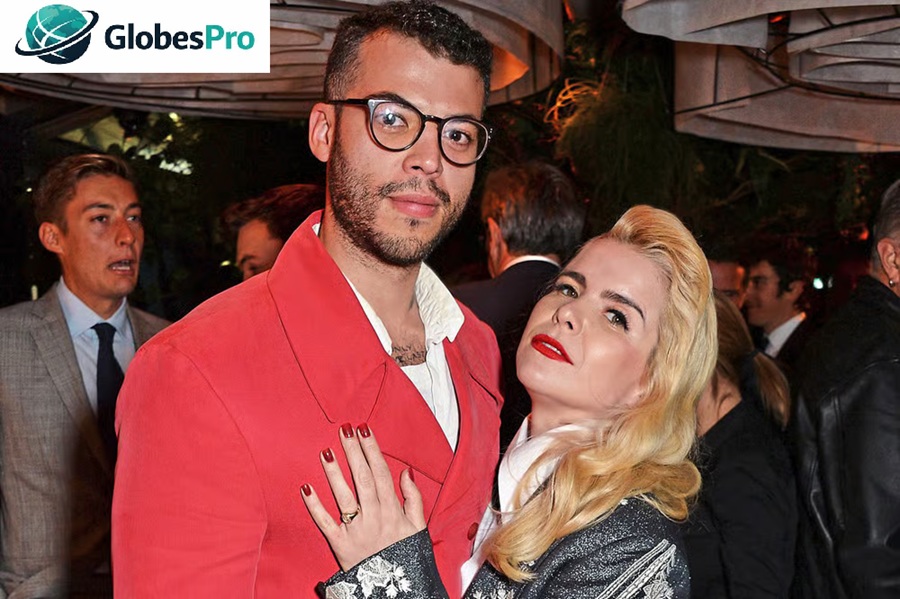
Leyman Lahcine and Paloma Faith

Lahcine and Paloma Faith met around 2013 and were together for roughly nine years. Faith is one of Britain’s most distinctive singer-songwriters — known equally for her voice, her eccentric vintage style, and her genuine willingness to speak about hard personal experiences in public.

She spoke often about Lahcine with real warmth. “Leyman is my husband,” she said in a widely quoted interview. “You don’t need a marriage certificate.” That was a statement of conviction, not a legal loophole. She meant it literally: he was her partner in every meaningful sense.

Their first daughter was born in December 2016, after a pregnancy that had followed some early difficulties. Their second daughter was born in February 2021, conceived through their sixth round of IVF — a journey that Faith documented publicly, with characteristic honesty, including the miscarriage she experienced in 2019 and the emotional toll of repeated fertility treatment.

Throughout all of that, Lahcine remained mostly out of the picture publicly — in the best sense. He was present in her life; he was just not interested in being present in the coverage of it.

In 2022, Paloma Faith confirmed that the couple had separated. She described the split as the worst thing that had happened to her. Both have continued to co-parent their daughters, and by all public accounts the co-parenting relationship has been handled with maturity and mutual respect.

His Artistic Philosophy — In His Own Words

A few quotes, gathered from interviews over the years, give a real sense of the interior life behind the work:

Quote Context
“I started drawing as a way to write my nightmares or frustrations — it’s always been a kind of diary for me.” On the origins of his practice
“I just like drawing the way children draw.” When asked if he considers himself a political artist
“I always try to follow and trust my creativity, so I stay loyal to my identity as an artist.” On the Roland Mouret collaboration
“It’s a little like walking past someone’s window and peeking inside, then feeling guilty because you have caught their eye.” On the voyeuristic nature of his painting
“I think I like this idea of harmony. It’s peace.” Holding a tuning fork in his studio, spring 2024

That last image is perhaps the most revealing. A man sitting in a studio above a football stadium, thumbing through old sketchbooks, tapping a tuning fork, and waiting for the resonance to settle. That is the sensibility. Not dramatic. Not performative. Just genuinely curious about what equilibrium feels like.

Artistic Influences — The Figures Behind the Work

Lahcine’s reference points are specific and reveal a lot about where his aesthetic sits.

Influence Why It Matters
Jean Cocteau French polymath; combined mythology with childlike drawing; emotional surrealism
Daniel Johnston American outsider artist and musician; raw, personal, emotionally direct imagery
Chapman Brothers British artists known for disturbing imagery inside cartoonish aesthetics
The City of Lost Children (Jeunet & Caro) Surrealist dark fantasy; childhood and nightmare occupying the same space
NTS Radio, ambient music The sonic environment of his studio practice
Overheard conversations The raw material of his character work

The Chapman Brothers comparison is particularly interesting. Their work — Grand Macabre sculptures, defaced Goya prints — uses the visual language of children’s toys and cartoons to house genuinely disturbing content about war, death, and human cruelty. Lahcine operates in related territory, though his darkness is more personal and less provocative. It’s grief and inheritance, not spectacle.

Why Leyman Lahcine Matters Now

There is a broader conversation happening in contemporary art around outsider aesthetics, diaspora identity, and the representation of inherited trauma. Lahcine sits right in the middle of it — not because he chose that positioning strategically, but because it is simply what he is.

A French-Algerian man making images about the weights we carry, in London, at a foundation built by a working-class kid from East London who became one of the most important fashion designers of his generation. There is something fitting about that institutional home.

His work asks questions that don’t have tidy answers. What do we inherit from people who never meant to pass anything difficult to us? How do symbols move between generations, between cultures, between the sleeping mind and the waking one? What does it look like when joy and grief occupy the same image?

Those are not niche questions. They are, in many ways, the questions of the moment.

Conclusion

Leyman Lahcine is not a celebrity-adjacent figure who also happens to paint. He is a genuinely serious artist who also happened to be, for a decade, the partner of a very famous woman. The distinction matters — because collapsing those two things means missing what he is actually doing in that third-floor studio above the Tottenham stadium.

He draws the way children draw. He paints the things that keep you up at night. He combines religious symbols with cartoon figures and calls the result a meditation on transgenerational trauma. He hand-drew 50 perfume bottles for Roland Mouret and charged every one with the imagery of the moon in love with the sun.

And then he goes back to the studio, picks up the tuning fork, and listens for harmony.

That is the work. It is worth paying attention to.

Alison Ogilvie is a British occupational therapist, best known as the first wife of actor and television presenter Robson Green. The two married on 22 June 1991 at St. George’s Church in Ashington, Northumberland, after being introduced by a mutual friend two years earlier. Their marriage lasted eight years before ending in divorce in 1999. No children were born from the union.

Since the divorce, Alison has chosen a life of complete and total privacy. No interviews. No social media. No public appearances. While Robson Green went on to become one of Britain’s most enduringly watchable television actors, Alison quietly returned to her career as an occupational therapist and stepped away from the public story entirely.

That choice — deliberate, sustained, and seemingly absolute — is perhaps the most interesting thing about her.

Quick Facts: Alison Ogilvie

Detail Information
Full Name Alison Ogilvie
Nationality British
Hometown Ashington, Northumberland, England
Profession Occupational Therapist
Known For First wife of Robson Green
Married 22 June 1991
Divorced 1999
Children None
Current Status Intensely private; out of public life

Early Life — What We Know and What We Don’t

Alison Ogilvie’s personal background is not publicly documented in any meaningful way. No confirmed birth date exists on record. There is no verified information about her parents, her schooling, or her upbringing beyond the broad strokes.

What is known is that she came from Ashington — a former mining town in Northumberland, shaped by working-class values and a tight sense of community. It’s the kind of place where people get on with things quietly, without making a fuss. Her wedding took place there, at St. George’s Church, which suggests deep roots in that community.

That detail matters more than it might seem. Ashington is the same world that produced Robson Green, who grew up nearby in Dudley, Tyne and Wear, the son of a miner. The two of them, at their roots, came from remarkably similar ground — same county, same class, same general understanding of what ordinary northern life looks like. Before fame entered the picture, they were simply two people from the same part of England.

Who Is Robson Green? (Brief Context)

Robson Green
Robson Green

To understand Alison’s story, you first need a sense of who Robson Green was when they met — and who he became while they were still married.

Born on 18 December 1964 in Hexham, Northumberland, Robson grew up working-class, left school without drama training, spent time working in the local shipyard, and somehow pivoted into acting in his early twenties. It was an unlikely leap. It worked.

Year Career Milestone
1989 Breakout role as porter Jimmy Powell in Casualty (BBC)
1991 Joined Soldier Soldier as Fusilier Dave Tucker (ITV)
1995 Soldier Soldier ends — established national television star
1995 Formed pop duo Robson & Jerome with co-star Jerome Flynn
1995 Debut single “Unchained Melody” — UK No. 1
1996 Debut album sold over 1.4 million copies in the UK
1998 Touching Evil — shift toward serious dramatic work
2002 Wire in the Blood launches — long-running ITV crime drama
2014 Grantchester — continues to present day

The trajectory across those years was steep and fast. When Alison married Robson in 1991, he was a 26-year-old actor known mostly to Casualty viewers. By the time their marriage ended in 1999, he had been a pop star, a No. 1 recording artist, and one of the most recognisable faces on British television.

That shift — from local hopeful to national icon — sat at the centre of everything.

How They Met — The Andrew Gunn Connection

The story of how Alison and Robson found each other is one of the more interesting threads in this article, and one that rarely gets the attention it deserves.

In 1989, television director Andrew Gunn introduced the two of them through what amounted to a blind date. Gunn wasn’t a casual contact — he and Robson had a real history inside the North East’s creative scene. Gunn had directed a short film starring a young Robson Green that won the Young Film-maker Award at the Tyneside International Film Festival in 1987. He later went on to direct episodes of Life on Mars and was closely involved in Channel 4’s BAFTA-winning Green Wing.

So this wasn’t a random meeting. It was an introduction arranged by someone who knew both of them, rooted in the tight-knit Northumberland world they each inhabited.

What’s notable is that neither of them rushed. A full year passed after that initial meeting before they bought a home together in Tynemouth, on the North East coast. That kind of slow, deliberate beginning suggests two serious people — not swept up in romantic impulsiveness, but building something carefully.

The Wedding — June 22, 1991

They married at St. George’s Church in Ashington — Alison’s hometown — on 22 June 1991. It was a traditional ceremony, unpretentious and community-rooted. No celebrity fanfare, no tabloid cameras lining the street outside.

The timing is worth pausing on. Robson had just joined Soldier Soldier, which would go on to run until 1995 and make him a household name. On the day of the wedding, he was still relatively unknown outside Casualty‘s fanbase. The life-altering fame was coming, but it hadn’t arrived yet.

Alison, meanwhile, was already established as an occupational therapist — a career that existed entirely outside the entertainment industry, with its own demands, its own identity, its own rewards. That professional independence would define how she navigated everything that followed.

Life During the Marriage — Fame Changes Everything

The early years of the marriage were, by most accounts, grounded. Two North East people in a home in Tynemouth, getting on with their lives. Then Soldier Soldier became a phenomenon, and the ground shifted beneath them.

Between 1991 and 1997, Robson’s life transformed completely. He went from working actor to television star to pop sensation — selling millions of records, appearing on magazine covers, touring the country with Jerome Flynn. By his own later admission, he got swept up in the parties, the drinking, and the intoxicating chaos of sudden fame. He was in his late twenties, and the world had decided he was extraordinary. That is a difficult thing to keep your footing inside.

Alison, throughout all of this, continued working as an occupational therapist. She did not become a fixture on the celebrity circuit. She did not use her husband’s fame as a launching pad for anything of her own. She was doing what she had always done — quiet, skilled, professional work in a field that has nothing to do with television.

The contrast between their two worlds during this period is stark.

Robson’s World (1991–1999) Alison’s World (1991–1999)
National television fame Continued occupational therapy career
Pop stardom with Robson & Jerome No public profile
Award ceremonies, tours, media appearances Private life in Northumberland
Admitted struggles with alcohol and fame No known public difficulties
Multiple reported infidelities Maintained dignified silence throughout

The Affairs and the Fracture

The breakdown of the marriage was not a gradual drifting apart. It was marked by infidelity — and by that infidelity eventually becoming public knowledge through press reporting.

Reports emerged of a relationship between Robson and Jenni White, an extra on Soldier Soldier. A second relationship — with public relations executive Pam Sharrock — was later publicly confirmed, described as lasting approximately four years. That timeline would have placed it squarely in the middle of Robson’s most high-profile period.

Robson, in later interviews, did not deny that the marriage had faltered badly. He spoke openly about his struggles with fame, alcohol, and making decisions he would come to regret. He was notably careful to avoid public criticism of Alison — and specifically expressed regret about the pain caused to her family.

“Things change in everybody’s life and I am no different,” he said. “But I wish people would leave Alison’s folks alone. They don’t deserve to be involved.”

It is one of the more honest and human things he said publicly about that entire period — not defensive, not self-justifying, just a man acknowledging that his choices had consequences for people beyond himself.

The Divorce — 1999

The divorce was finalised in 1999. The marriage had lasted eight years. There were no children.

Alison made no public statement. She did not speak to the press. She gave no interviews, authorised no “her side of the story” features, and made no attempt to use the situation to build any kind of public profile. She simply, and completely, stepped away.

Robson later said he sought counselling in the aftermath and found genuine peace of mind through therapy. He moved forward publicly and visibly — as public figures tend to do.

Alison moved forward privately — as she had always done.

Robson Green After Alison — A Timeline

Year Event
1999 Divorce from Alison finalised
2000 Met Vanya Seager, former secretary at BMG Records
April 2000 Son Taylor Robin Green born
March 2001 Married Vanya Seager
2013 Divorced Vanya Seager after 12 years
2016 Met Zoila Brozas at a gym in Newcastle
2018 Relationship with Zoila confirmed publicly
Present Together with Zoila; has stated he will not marry again

When asked about marriage in recent interviews, Robson has been direct: “No, I’ve done enough of that. We’re very happy together.”

Where Is Alison Ogilvie Now?

This is the question most people are actually asking when they search her name. The honest answer is: no one outside her personal circle knows.

Since 1999, there are no confirmed public appearances from Alison Ogilvie. No interviews, no statements, no verified reports of remarriage. No social media presence that has been publicly identified. No charity work done under her name in connection to her former marriage. No book, no documentary appearance, no “where are they now” feature done with her cooperation.

For someone connected to a figure of Robson Green’s visibility — a man who has been on British television almost continuously for over thirty years — this level of invisibility is genuinely rare. It requires sustained, active effort to stay this private in the digital age.

Everything points to Alison having returned full-time to her career as an occupational therapist, living a life entirely of her own making, entirely on her own terms. Whether she is in Northumberland or elsewhere, whether she has built a new relationship or not — none of that is publicly known.

And that appears to be exactly how she wants it.

Understanding Alison’s Career: What Occupational Therapists Actually Do

Given that Alison’s professional life is the most concrete thing we know about her, it deserves more than a passing mention. Occupational therapy is serious, skilled, demanding work — and it says something real about who she is as a person.

Occupational therapists help people regain independence and quality of life following illness, injury, disability, or mental health challenges. They work across a broad range of settings and patient groups.

Area of OT Practice What It Involves
Physical rehabilitation Recovery support after strokes, surgeries, accidents, or injuries
Mental health Supporting those living with anxiety, depression, or trauma
Paediatrics Helping children with developmental or sensory challenges
Elderly care Maintaining independence and daily function for older adults
Community OT Home adaptations, mobility aids, daily living assessments
Neurological conditions Working with MS, Parkinson’s, or brain injury patients

It is patient, empathetic, highly skilled work. It requires the ability to build trust with people at their most vulnerable — to meet someone at a moment of real difficulty and help them find a way forward. There is nothing glamorous about it. There is also nothing small about it.

The fact that Alison built and maintained this career through a high-profile marriage, a painful divorce, and the sustained media interest that followed says something meaningful about her character. She had her own purpose. She never lost sight of it.

Why People Still Search Alison Ogilvie’s Name

It is worth asking — nearly 25 years after the divorce — why people continue to search for Alison Ogilvie at all.

Part of it is simple curiosity about the people behind famous ones. Robson Green remains visible and active, appearing on screens in Grantchester and various travel and fishing programmes. New audiences discover him, look him up, and find themselves wondering about the life that existed before Taylor and Vanya and Zoila.

But there’s something else too. Alison represents a particular type of person that the internet age finds genuinely fascinating precisely because they cannot be found. In a world where everyone is searchable, traceable, and more or less permanently documented, someone who simply chose not to participate in any of that carries a quiet intrigue.

She was married to one of Britain’s most famous men during one of the most high-profile periods of his life. She watched him become a pop star and a television icon. She was hurt, privately and publicly, by choices he made. And when it was over, she walked away without a word — not bitterly, not loudly, just cleanly.

There is a kind of dignity in that which resonates with people, even if they couldn’t quite articulate why.

Final Thoughts

Alison Ogilvie is not a footnote. She is not simply “Robson Green’s first wife” — a supporting character in someone else’s more interesting story. She is a professional woman who built a meaningful career, entered a marriage in good faith, endured its collapse with grace, and then got on with living a life that belongs entirely to her.

We know her hometown. We know her profession. We know the date she married and the year she divorced. Beyond that, she has given the world nothing — and she doesn’t owe anyone anything more than that.

In an age of relentless oversharing, there is something quietly radical about a person who simply declines to be a public story. Alison Ogilvie did not fade away. She chose away. And from everything that can be observed from the outside, that choice has served her well.

Clare Sarah Branson was the firstborn child of entrepreneur Richard Branson and his partner Joan Templeman. Born at just 25 weeks’ gestation in Inverness, Scotland in 1979 — roughly three months premature — she weighed barely 1–2 pounds and faced overwhelming medical odds from the very first moment she arrived. Despite the efforts of the medical team at Raigmore Hospital, Clare passed away from respiratory failure just four days after birth. Her lungs, like those of most babies born that early in that era, were simply too underdeveloped to sustain life.

Though her time on earth lasted only four days, Clare’s presence quietly shaped everything that followed for the Branson family — the values they carried, the grief they processed together, the children they raised, and the kind of human beings Richard and Joan grew to become. This is her story.

Who Were Richard Branson and Joan Templeman in 1979?

In 1979, Richard Branson was 28 years old and already a rising name in British business. Virgin Records was gaining real momentum, and he was beginning to lay the groundwork for what would eventually become one of the most recognizable brand names in the world. But behind the headlines and the buzzing business deals, there was a personal life that rarely made it into the press.

Joan Templeman, a warm and grounded Scottish woman born in Glasgow in 1945, had met Richard in 1976. He was immediately taken with her — she was unpretentious, sharp, and refreshingly unimpressed by his usual charm. He later wrote that he fell for Joan almost from the moment he first saw her. She had a quiet steadiness about her that balanced his restless energy in a way no one else quite managed.

By the time Clare was conceived, the couple had been together for roughly two years. The pregnancy itself came about under unexpected circumstances — Joan believed she was suffering from appendicitis while they were in Inverness, Scotland. When doctors investigated, they discovered the truth: she was pregnant, and the physical distress had triggered early labor at only 25 weeks.

Clare Sarah Branson — Her Birth and the Medical Challenge

At 25 weeks, a baby is extraordinarily fragile. The lungs, among the last organs to fully develop in a fetus, are nowhere near ready to function on their own. In modern medicine, survival at this gestational age is possible with intensive neonatal care. In 1979, the odds were stacked steeply against any infant born this early.

Clare arrived at Raigmore Hospital in Inverness weighing between 1 and 2 pounds. She was placed immediately into an incubator, and the medical team did everything within their capability. Richard later recalled standing beside that incubator, reaching through the porthole to hold her tiny hand.

“Although we were told our baby was technically a miscarriage, I was able to hold her hand as she lay in an incubator, and it was very human,” Richard said in a later interview. “These are the kind of memories I will keep in my mind forever.”

For four days, Richard and Joan held on to hope. But Clare’s condition was too critical. She passed away from respiratory failure — the same fate that claimed the lives of countless premature infants in that decade, before the development of surfactant therapy and advanced neonatal ventilators changed everything.

Neonatal Care Then vs. Now: What Clare Faced

The contrast between what was medically available in 1979 and what exists today is stark. It helps explain why Clare’s story ended the way it did, and it also turns her brief life into an unintentional reminder of how far medicine has come.

Factor 1979 Today
Survival rate at 25 weeks Less than 10% 50–80%
Surfactant therapy Not available Standard treatment
Ventilator technology Basic positive pressure Highly sophisticated oscillators
NICU staffing Limited, generalist Specialized neonatal teams
Antenatal steroid treatment Rarely administered Routine before preterm birth
Earliest viability threshold ~28 weeks ~22–23 weeks

These numbers tell only part of the story. Behind each percentage point is a family like Richard and Joan’s — people who sat by an incubator and hoped. Clare had almost no statistical chance in 1979. A baby born at the same gestational age today, in a well-equipped hospital, has a genuine fighting chance. That shift represents decades of research, funding, and advocacy — some of it motivated by losses exactly like Clare’s.

The Burial — A Private Goodbye in the Scottish Highlands

Because Clare was born at 25 weeks, the medical and legal classification of her birth was complicated. Authorities at the time placed her birth at the threshold of what was formally defined as a miscarriage. As a result, Richard and Joan faced real constraints in how they could formally mark her passing.

Clare was laid to rest at Tomnahurich Cemetery in Inverness — a serene, wooded burial ground often called the “Hill of the Fairies” by locals, on a gentle rise above the River Ness. She was buried in a communal area alongside other infants who had not survived, which was common practice at the time.

Richard and Joan arranged a small, private service. A plaque bearing Clare’s name was placed in a local Catholic church nearby — a quiet, personal act of love within the constraints they faced. For years, there was no individual headstone over her grave. It was a painful detail, one that Richard later spoke about with clear emotion.

How Grief Changed Richard and Joan

Richard and Joan
Richard and Joan

Losing a child does things to a person that no other loss quite replicates. For Richard and Joan, Clare’s death became one of the defining passages of their lives together — not one that broke them, but one that reshaped them.

Richard has spoken about the experience in interviews over the years with a vulnerability that sits in contrast to his usual exuberance. He described the weeks after Clare’s death as dark and disorienting. Work provided some distraction, but it couldn’t reach the deeper grief. Joan, by his own account, bore her loss in a quieter, more internal way — she processed it privately, in that characteristically understated manner she brought to most things.

What’s notable is that Clare’s death did not drive a wedge between them. If anything, it drew them closer. Shared grief has a way of either pushing people apart or binding them in a way nothing else can. For Richard and Joan, it was the latter.

Joan quietly channeled her grief into something purposeful. Over the years following Clare’s death, she became a steady supporter of premature birth charities and neonatal causes — never loudly, never for publicity, but with genuine personal investment. It was her way of honoring the daughter she lost.

Clare’s Siblings: Holly and Sam Branson

Holly Branson
Holly Branson
Sam Branson
Sam Branson

Two years after Clare’s death, Joan gave birth to Holly Branson in 1981. Sam Branson followed in 1985. Both grew up knowing about Clare — she was never a secret, never a name whispered only in private moments.

Name Born Known For
Clare Sarah Branson 1979 Firstborn; lived four days
Holly Branson 1981 Doctor turned Virgin Group Director
Sam Branson 1985 Filmmaker, entrepreneur, philanthropist

Holly has spoken openly about Clare in interviews, describing her as a real presence in the family’s story even though she never met her. There’s something in the way the Branson children discuss Clare that suggests she was raised as part of the family narrative rather than a painful footnote to be avoided.

Sam, too, has reflected on the family’s losses with emotional honesty — particularly after Joan Templeman, his mother, passed away in November 2025 at the age of 80. In tributes to Joan, Sam described her as a deeply loving, selfless woman who had weathered tremendous loss with quiet grace. Clare’s shadow moved through those tributes in an unspoken but present way.

Joan Templeman: The Thread Running Through It All

Joan Templeman married Richard Branson in 1989, a decade after Clare’s death. The ceremony took place on Necker Island in the British Virgin Islands — a private, characteristically unconventional celebration for a couple who had already spent thirteen years building a life together.

She remained one of the quieter figures in the Virgin story, a deliberate choice. While Richard became a global face of entrepreneurship, Joan preferred the background. She was deeply involved in their philanthropic efforts and remained connected to premature birth causes throughout her life.

When Joan passed away on November 25, 2025, at the age of 80, Richard and his children shared tributes that were tender and specific — full of the kind of detail that only comes from genuine closeness. Richard described her as the love of his life, the person who grounded every version of himself he had ever been.

For those who knew Clare’s story, there was something quietly poignant in reading those tributes. Joan had carried the memory of Clare for 46 years. When she died, she took with her the most intimate experience of those four days in Inverness that no one else could fully share.

What Clare’s Story Means Beyond the Branson Family

It would be easy to reduce Clare Sarah Branson to a footnote in her father’s biography — a tragedy mentioned in passing before the real story of Virgin Atlantic and space tourism and billion-dollar ventures begins. But that framing misses something important.

Clare’s story is, at its core, a story about premature birth, infant loss, and the long shadow those experiences cast over families. The Bransons are famous, yes — but what they experienced in that hospital in Inverness in 1979 is something that thousands of families experience every year without fame, without wealth, and without a public platform to speak from.

Richard Branson has used that platform, however imperfectly, to acknowledge the experience rather than bury it. In doing so, he joined a relatively small group of public figures willing to speak about infant loss in a way that acknowledges its full emotional weight.

There is also something worth sitting with in the question of what Clare’s life — just four days long — actually contained. Richard held her hand. Joan watched her breathe. A name was chosen, a plaque was placed, a grave was marked. A family was changed forever. None of that is diminished by the brevity of the time.

The Broader Legacy: Premature Birth Awareness

The year 2025 marked more than Joan Templeman’s passing. It was also a year in which global premature birth awareness continued to grow, with organizations like Bliss in the UK and the March of Dimes in the US expanding their advocacy work.

Organization Focus Based In
Bliss Premature & sick baby support United Kingdom
March of Dimes Premature birth research & advocacy United States
Tommy’s Miscarriage, stillbirth, premature birth United Kingdom
Little Heartbeats Stillbirth & premature loss support Australia

Joan’s lifelong quiet support of these causes never made headlines — which was entirely in keeping with who she was. But for families navigating premature birth today, the infrastructure of support that exists owes something to the cumulative weight of losses like Clare’s and the people who refused to let those losses simply disappear.

A Note on How the Branson Family Has Spoken About Clare

One thing that stands out when you look at how this family has handled Clare’s memory is the consistency of their honesty. Richard has never avoided the subject when asked. Joan spoke about it quietly but openly. Holly and Sam grew up knowing.

There was no spin, no carefully managed narrative designed to protect a brand. Just a family that experienced something devastating and chose, collectively, to acknowledge it.

That choice matters — not just for the Bransons, but for anyone who has experienced infant loss and felt the particular loneliness of a grief that the world often doesn’t know how to hold. When a public figure says, simply and without performance, “I held her hand and she was very human,” it does something for every parent who has ever stood at an incubator and felt the same thing.

Clare Sarah Branson — A Summary

Detail Information
Full Name Clare Sarah Branson
Born 1979, Inverness, Scotland
Parents Richard Branson & Joan Templeman
Gestation at birth Approximately 25 weeks
Time lived Four days
Cause of death Respiratory failure (underdeveloped lungs)
Buried Tomnahurich Cemetery, Inverness
Siblings Holly Branson (b. 1981), Sam Branson (b. 1985)

Final Thoughts

Clare Sarah Branson lived for four days. She never opened her eyes to see the world that her father would go on to try to make a little more interesting, or the mother who would spend the rest of her life quietly honoring her memory. She didn’t get the chance.

But she was real. She was held. She was named and grieved and remembered. And in a family that has spent decades in the public eye, her memory has been carried forward with a dignity and honesty that says something genuine about the people who loved her.

In the end, perhaps the most human thing about Richard Branson — a man who has been mythologized and caricatured and celebrated in equal measure — is this: that he once stood beside an incubator in a hospital in Scotland, reached through a small porthole, and held his daughter’s hand for four days until he couldn’t anymore.

Clare Sarah Branson. Four days old. Never forgotten.

George Philip Gein was the father of Edward Theodore Gein — better known to history as Ed Gein, the Butcher of Plainfield, one of America’s most notorious criminals. Born on August 4, 1873, in Bergen, Wisconsin, George died on April 1, 1940, from heart failure caused by chronic alcoholism. He was 66 years old — and he never lived to see his son’s crimes, his arrest, or the horror that unfolded on that isolated Wisconsin farmstead after his death.

He is not a famous man. He is not a villain in the traditional sense. He is, in many ways, the forgotten figure in a story that has been told thousands of times — a deeply flawed father whose failures helped shape one of the most disturbing cases in American criminal history.

George Philip Gein: Quick Facts

Detail Info
Full Name George Philip Gein
Born August 4, 1873
Birthplace Bergen, Wisconsin, USA
Died April 1, 1940
Death Cause Heart failure (caused by alcoholism)
Burial Plainfield Cemetery, Plainfield, Wisconsin
Wife Augusta Wilhelmine Lehrke (m. December 11, 1900)
Sons Henry George Gein (1901–1944), Edward Theodore Gein (1906–1984)
Occupation Tanner, carpenter, grocery store worker
Portrayed By Darin Cooper (Monster: The Ed Gein Story, Netflix, 2025)

Early Life & Background

George was born into a Wisconsin farming family of German descent. His early years were unremarkable by the standards of rural Wisconsin in the 1870s and 1880s — hard work, limited opportunity, and a life defined largely by the land and the seasons.

He grew up in Bergen, a small community in Vernon County, and worked as a tanner and carpenter in his adult years. Neither profession was glamorous, and neither provided the kind of stable, prosperous foundation that would have made the Gein family’s later struggles easier to bear.

On December 11, 1900, George married Augusta Wilhelmine Lehrke in Hamburg, Vernon County, Wisconsin. He was 27. Augusta was 22. What looked like a conventional rural marriage at the turn of the century would turn into something far more complicated.

The Marriage to Augusta: A Household Built on Resentment

The Gein marriage was, by all historical accounts, a deeply unhappy one — and that unhappiness had consequences that rippled forward across generations.

Augusta was a deeply religious woman, a fervent Lutheran who believed with total conviction that the world was inherently sinful, that alcohol was evil, and that women — all women except herself — were instruments of the devil. She was controlling, cold, and psychologically domineering.

George was nearly her opposite. He drank. He struggled to hold down steady employment. He lacked the drive and discipline that Augusta demanded of everyone around her. She despised him for it.

Aspect George Augusta
Personality Passive, alcoholic, disengaged Controlling, religious, domineering
Role in Family Provider (inconsistent) Absolute moral authority
Relationship With Sons Distant, limited Possessive, psychologically abusive
Stance on Marriage Largely absent emotionally Stayed due to religious beliefs against divorce

Augusta never pursued divorce despite her contempt for George — her religious convictions made that impossible in her mind. So the marriage persisted, cold and resentful, while two boys grew up watching it.

The sons, Henry and Ed, were raised in that atmosphere. George’s alcoholism and passivity meant that Augusta filled the entire emotional and moral space of the household. She became the only authority, the only voice, the overwhelming presence in her sons’ lives.

George as a Father: Absent in the Ways That Mattered

George fathered two sons. Henry George Gein was born in January 1901. Edward Theodore Gein followed in August 1906.

He provided for the family in a basic material sense — working various jobs, helping run the household. But emotionally and psychologically, he was checked out. The alcoholism was a significant part of that. A man who drank excessively was not a man who showed up consistently for his children’s development.

Augusta moved the family to a farm on the outskirts of Plainfield, Wisconsin, partly to isolate herself and her sons from outside influences she considered immoral. That isolation compounded the boys’ limited social world. They had no real community, no friendships outside school that Augusta permitted to develop. They had each other — and they had two parents who modeled dysfunction on a daily basis.

George worked as a grocer at Augusta’s small grocery store for a time, and also continued work as a carpenter and handyman. Community members who knew him during those years described the brothers — Henry and Ed — as reliable and honest workers. George himself doesn’t feature prominently in the community’s collective memory of the Gein family. He was there. He worked. He drank. He faded into the background of a household dominated entirely by his wife.

George’s Death: April 1, 1940

George Philip Gein died on April 1, 1940, in Plainfield, Wisconsin. He was 66 years old. The cause of death was heart failure, directly caused by his decades of heavy drinking.

By the time he died, both his sons were grown men — Henry was 39, Ed was 33. The family had been living on the Plainfield farm for years. Augusta had long since established total control of the household.

His death changed the family dynamic in one specific and important way: it left Ed and Henry to pick up more of the financial slack. The brothers took on additional odd jobs as handymen, and neighbors found them dependable. It was a brief period of apparent normalcy — two adult men supporting a household, working honestly, getting on with their lives.

But George’s death also removed the last buffer, however inadequate, between Augusta and her sons. Whatever presence George had provided — even a passive, alcoholic one — was now gone entirely. Augusta’s grip on Ed in particular tightened further.

What George’s Life Meant for Ed Gein

Ed Gein
Ed Gein

Trying to trace the roots of what Ed Gein became is not a simple exercise, and it would be wrong to reduce it to any single cause. Criminal psychology doesn’t work that way. But the family environment is impossible to ignore.

George represented, in Augusta’s household theology, everything she preached against. He drank. He failed. He was weak. She held him up as an example — implicitly and explicitly — of what men became without moral discipline. She told her sons he was useless. She made clear she despised him.

And yet George never fought back. He never offered a counter-narrative. He never stood between Augusta and her sons in any meaningful way. His passivity gave Augusta total dominance over the household.

Ed, in particular, absorbed everything Augusta taught. He idolized her. He accepted her worldview completely. George was, in Ed’s emotional landscape, an absence — a man who existed in the house but exerted no real influence.

When George died, Ed barely seemed affected. When Augusta died five years later in 1945, Ed was devastated. He preserved her bedroom exactly as she had left it. He sealed off parts of the house. He descended, over the following decade, into the crimes that would eventually define his name in American history.

George’s shadow over all of this is real — not because he was cruel or monstrous, but because he was absent in the ways that mattered most.

George in Popular Culture: Monster — The Ed Gein Story (2025)

The Netflix series Monster: The Ed Gein Story, which premiered on October 3, 2025, as the third installment in Ryan Murphy and Ian Brennan’s anthology series, brought fresh attention to the entire Gein family — including George.

Actor Darin Cooper portrays George Philip Gein in the series. Notably, his character appears in only one scene — which is itself a telling creative choice. George was a peripheral figure in the real story, and the series reflects that accurately.

Charlie Hunnam stars as Ed Gein, with Laurie Metcalf playing Augusta. The series focuses heavily on Ed’s relationship with his mother — the central psychological thread that most historians and criminologists consider the dominant influence in his development.

The renewed interest in the series brought many viewers to search for George Philip Gein specifically, wanting to understand who this man was, what he actually did, and how much responsibility — if any — he bears for what his son became.

Production Detail Info
Series Monster: The Ed Gein Story
Network Netflix
Premiere Date October 3, 2025
Actor Portraying George Darin Cooper
Actor Portraying Ed Charlie Hunnam
Actor Portraying Augusta Laurie Metcalf
George’s Screen Time One scene

George Philip Gein vs. Augusta Gein: The Contrast

It’s impossible to discuss George without comparing him to Augusta, because the contrast between them is what defined the Gein household.

Augusta has received extensive psychological analysis over the decades. She is widely considered one of the primary figures in understanding Ed’s psychology — her religious extremism, her possessiveness, her contempt for all women outside herself, and her emotional manipulation of Ed are well-documented.

George gets far less attention. He was, in a sense, the anti-Augusta — passive where she was active, weak where she was forceful, disengaged where she was consuming. In a healthier family structure, a father’s stable, grounded presence can provide a counterweight to an overbearing mother. George provided no such counterweight.

That failure is not the same as malevolence. George Gein was not a cruel man. He was not violent. He was not a monster. He was an alcoholic who couldn’t keep steady work, married a woman who made no secret of her contempt for him, and raised two sons in a household where he had effectively surrendered all authority.

The result, in the case of his younger son, was catastrophic.

Henry Gein: The Brother Who Saw Clearly

Henry Gein
Henry Gein

George and Augusta’s older son Henry deserves mention here because his story is directly connected to his father’s legacy and his own complicated death.

Henry was born on January 17, 1901, making him five years older than Ed. He worked alongside Ed as a handyman after their father’s death and, unlike Ed, showed signs of breaking free from Augusta’s influence. He began dating a divorced woman with two children — something Augusta would have found deeply objectionable. He spoke critically of his mother around Ed, openly questioning her behavior.

On May 16, 1944, Henry and Ed were burning marsh vegetation on the farm property. The fire got out of control. When the firefighters left at the end of the day, Ed reported Henry missing. A search party found Henry’s body face down in an area that had not been touched by the fire.

Henry had bruises on his head. No autopsy was performed. The official cause of death was listed as asphyxiation. No investigation was conducted.

Many criminologists and historians have since concluded it is likely — possible at minimum — that Ed killed his brother. Henry had been pulling away from Augusta. Ed could not tolerate that. With Henry gone, Ed and Augusta were alone together for the final year of her life.

George Gein never knew any of this. He was already four years dead.

Burial & Legacy

George Philip Gein is buried at Plainfield Cemetery in Plainfield, Wisconsin — the same cemetery where Augusta and Ed are also interred. The Gein family plot sits in a small, quiet corner of a small, quiet Wisconsin town that became famous for all the wrong reasons.

Ed’s gravestone was repeatedly vandalized by souvenir seekers over the years, with pieces chipped away until the stone itself was stolen in 2000. It was recovered near Seattle in 2001 and placed in storage. Ed’s grave has remained unmarked since.

George and Augusta’s graves have received far less attention. They are not the names people come looking for.

FAQs

Who was George Philip Gein? He was the father of serial killer Ed Gein, born in Bergen, Wisconsin on August 4, 1873. He worked as a tanner, carpenter, and grocer, and died of heart failure caused by alcoholism on April 1, 1940.

What did George Philip Gein do for a living? He worked as a tanner, carpenter, and helped operate Augusta’s small grocery store. He also took on handyman work throughout his adult life.

How did George Philip Gein die? He died on April 1, 1940, at the age of 66, from heart failure caused by his chronic alcoholism.

Was George Philip Gein abusive? There is no historical record of George being physically violent or abusive. He was largely passive and disengaged — an alcoholic who effectively surrendered authority in the household to Augusta entirely.

Who plays George Philip Gein in the Netflix series? Actor Darin Cooper portrays George Philip Gein in Monster: The Ed Gein Story (Netflix, 2025), though the character appears in only one scene.

Where is George Philip Gein buried? He is buried at Plainfield Cemetery in Plainfield, Waushara County, Wisconsin.

Did George Gein know about Ed’s crimes? No. George died in 1940 — seventeen years before Ed’s arrest in 1957. He had no knowledge of what his son would eventually become.

Conclusion

George Philip Gein was not a remarkable man. He was an alcoholic carpenter from rural Wisconsin who married a woman who despised him, fathered two sons he couldn’t adequately parent, and died quietly at 66 from the consequences of his own choices.

He was not evil. He was not monstrous. He was inadequate in ways that had consequences far beyond anything he could have imagined — or lived to see.

History remembers the Gein name for Ed’s crimes. Augusta gets analyzed extensively for her psychological impact. George gets one scene in a Netflix series and a footnote in most books.

But understanding who George was — his passivity, his alcoholism, his complete surrender of parental presence — is part of understanding how a household becomes the kind of place that shapes a broken person. He didn’t create Ed Gein. Nothing is ever that simple. But he also never stood in the way of what Augusta was building, and that absence has its own weight.

He is buried in Plainfield. The town has never fully shaken the name his son made famous. And George Philip Gein, the man who started it all by simply not being present enough, rests quietly beside the family he never really held together.

Kristi Branim Fox is an American school guidance counselor and the older sister of actress Megan Fox. Born on June 2, 1974, in Oak Ridge, Tennessee, she has spent over two decades building a career in education — most recently as Head Counselor at Beverly Hills High School in Los Angeles. She is not a celebrity, has no interest in becoming one, and has quietly built a life that stands entirely on its own merit.

That’s the direct answer. People search her name because of her famous sister — but Kristi’s story is worth reading for completely different reasons.

Quick Bio: Kristi Branim Fox at a Glance

Detail Info
Full Name Kristi Michelle Fox Bond (formerly Branim)
Date of Birth June 2, 1974
Birthplace Oak Ridge, Tennessee, USA
Ethnicity Irish, Scottish, Welsh, French, English, Native American
Education Florida Atlantic University (B.A. & M.A., Educational Counseling)
Profession Head Counselor, Beverly Hills High School
First Marriage Douglas Ray Branim (1995–2018)
Second Marriage Mr. Bond (2019, Beverly Hills Police Officer)
Children Kyler Branim (b. 2001), Caleb Branim (b. 2003)
Sister Megan Fox (actress)
Net Worth (Est.) ~$1 million
Social Media Minimal / Private

Early Life & Family Background

Kristi grew up in a working-class household in Tennessee with parents who instilled discipline and responsibility early. Her father, Franklin Thomas Fox, worked as a parole officer — a job that demands patience, fairness, and strong moral grounding. Her mother, Gloria Darlene, worked in real estate.

Her parents divorced when Kristi was still a teenager. Her mother later remarried Tony Tonachio, a strict and deeply religious man, and the family relocated to Florida. Both Kristi and Megan attended a private Christian school under Tonachio’s watch — a structured, rule-heavy environment that Megan has spoken about candidly in interviews over the years.

Kristi is nearly 12 years older than Megan, which means she was already a teenager navigating her own life by the time her little sister was born in 1986. That age gap shaped their dynamic — Kristi naturally fell into the role of protector and role model for Megan growing up.

Education: Building the Foundation

After high school, Kristi enrolled at Florida Atlantic University in Boca Raton, where she studied education and school counseling. She earned both her undergraduate and master’s degrees in Educational Counseling and went on to obtain her Pupil Personnel Services certification — a credential required to practice as a licensed school counselor in the United States.

Qualification Institution Focus
Bachelor’s Degree Florida Atlantic University Educational Counseling
Master’s Degree Florida Atlantic University Educational Counseling
PPS Certification State of California School Counseling Licensure

She didn’t pursue this path casually. Educational counseling at the master’s level requires serious academic commitment and a genuine desire to help people navigate difficult decisions. Kristi had both.

Career: Over Two Decades in Education

Kristi has worked in education for more than 20 years and built her career steadily, step by step, without shortcuts.

She started as a College and Career Counselor at Mira Costa High School in Manhattan Beach, California — a respected institution in the South Bay area of Los Angeles County. From there she took on Counseling Director roles at several high schools on the East Coast, broadening her experience and sharpening her skills across different student populations and communities.

She also served as a guidance counselor at Fort Pierce Central High School in Florida before eventually returning to California.

In 2014, she became Head Counselor at Beverly Hills High School — one of the most recognizable school names in America. The irony isn’t lost. Her sister became famous partly through Hollywood’s culture; Kristi ended up working inside the institution that educated generations of the very community her sister inhabits professionally.

Career Stop Role Location
Mira Costa High School College & Career Counselor Manhattan Beach, CA
East Coast High Schools Counseling Director Various
Fort Pierce Central High Guidance Counselor Fort Pierce, FL
Beverly Hills High School Head Counselor (2014–present) Beverly Hills, CA

Her work involves helping students plan for college and careers, manage personal challenges, navigate mental health concerns, and build confidence in their futures. She is known for using a multilingual, culturally sensitive approach — meeting students where they are rather than expecting them to conform to a single standard.

She has mentored students applying to Ivy League universities and art schools alike. She has organized mental health awareness events within her school district. She holds over 20 years of licensed counseling experience. None of that makes headlines. All of it matters.

Marriage & Personal Life

Kristi married Douglas Ray Branim in 1995, when she was 21 years old. Douglas was a physical education teacher — two educators building a life together. They had two sons: Kyler, born in 2001, and Caleb, born in 2003.

After over two decades of marriage, they divorced in 2018. The split was handled privately. No public statements, no drama. Kristi kept her focus on her sons and her career and moved forward.

In 2019, she remarried — this time to a man known publicly as Mr. Bond, a Beverly Hills police officer. Details about him remain private, which is consistent with how Kristi handles most things in her personal life.

Her Sons: Kyler and Caleb

Both of Kristi’s sons have grown up with her values — hard work, focus, and staying grounded.

Child Birth Year Known Details
Kyler Branim 2001 Varsity football player at Notre Dame High School; graduated 2019; attended UCLA
Caleb Branim 2003 Lives privately; close to both parents

Kyler was a standout athlete — a varsity football player at Notre Dame High School in Sherman Oaks before graduating and heading to UCLA. The fact that her son attended one of the most competitive academic universities in the country while also excelling athletically reflects the kind of household Kristi built. She raised him on her own terms, through a divorce, with a full-time demanding career, and he thrived.

Caleb keeps a lower profile, which again seems to run in the family.

Kristi & Megan: A Real Sisterhood

Kristi Fox & Megan Fox

The age gap between them is significant — nearly 12 years — but it has never created distance. If anything, it deepened their bond in a particular way. Kristi was old enough to be a protective presence during Megan’s childhood, and she stayed that role into adulthood.

There’s a story that surfaced when Megan appeared on The Tonight Show with Jay Leno in 2012 that perfectly captures their dynamic. Megan revealed that Kristi had a massive crush on Brian Austin Green — the actor Megan later met on set and eventually married. Kristi had apparently known Brian since childhood and referred to him as her “Justin Timberlake.” Years later, Megan ended up marrying him.

They were still close enough in 2012 that they were photographed having coffee together while Megan was pregnant with her first child. The fact that Megan casually shared that story on national television — laughing about it, not protecting Kristi’s privacy on that particular point — suggests the kind of easy, trusting relationship two sisters build when they actually like each other.

Megan has spoken warmly about Kristi across various interviews over the years, always with genuine affection and respect.

Why She Stays Out of the Spotlight

Kristi has no public Instagram, no Twitter, no real social media footprint to speak of. She has never given a solo interview. She doesn’t appear at Megan’s events unless personally invited. She doesn’t leverage the family connection professionally in any visible way.

This is a deliberate, principled choice — and it makes complete sense for someone in her profession. School counselors work with vulnerable young people. Their credibility rests on trust, confidentiality, and being seen as stable, grounded adults. Being publicly linked to Hollywood gossip cycles would undermine all of that.

Beyond the professional reasons, she simply doesn’t seem interested. She’s built a life around things she finds meaningful — her students, her sons, her marriage, her community. Public attention adds nothing to any of that.

Net Worth

Kristi’s estimated net worth sits at around $1 million, built entirely from her career in education. It’s not a flashy figure by any standard, but it represents over 20 years of consistent, skilled professional work in a field that serves people rather than accumulates capital.

Person Estimated Net Worth Source
Kristi Branim Fox ~$1 million Education career
Megan Fox ~$8 million Acting, modeling, brand deals

The contrast with Megan’s estimated $8 million is significant in dollar terms and completely irrelevant in every other way. They chose different lives. Both are doing well in the terms that matter to each of them.

FAQs

Who is Kristi Branim Fox? She is an American school guidance counselor, currently serving as Head Counselor at Beverly Hills High School, and the older sister of actress Megan Fox.

What does Kristi Branim Fox do for a living? She works as a licensed school counselor with over 20 years of experience, helping high school students navigate college planning, career decisions, and personal challenges.

Where did Kristi Branim Fox go to school? She attended Florida Atlantic University, earning both her bachelor’s and master’s degrees in Educational Counseling, along with her Pupil Personnel Services certification.

Is Kristi Branim Fox married? She was previously married to Douglas Ray Branim from 1995 to 2018. She remarried in 2019 to a Beverly Hills police officer known publicly as Mr. Bond.

Does Kristi Branim Fox have children? Yes — two sons. Kyler Branim, born in 2001, attended UCLA after a standout high school football career. Caleb Branim, born in 2003, maintains a private life.

What is Kristi Branim Fox’s net worth? Her net worth is estimated at approximately $1 million, earned through her career in education.

Is Kristi Branim Fox on social media? She maintains a minimal and largely private digital presence, with no known public profiles on major social platforms.

Conclusion

Kristi Branim Fox is not famous. She has never tried to be. She went to university, earned two degrees, built a two-decade career helping thousands of young people make better decisions about their futures, raised two sons on her own terms through a divorce, and remarried quietly. She shows up for her sister when it counts and otherwise keeps her life exactly the way she wants it.

In a culture obsessed with visibility, that kind of intentional, values-driven life is genuinely rare — and worth far more than the spotlight she has never once chased