
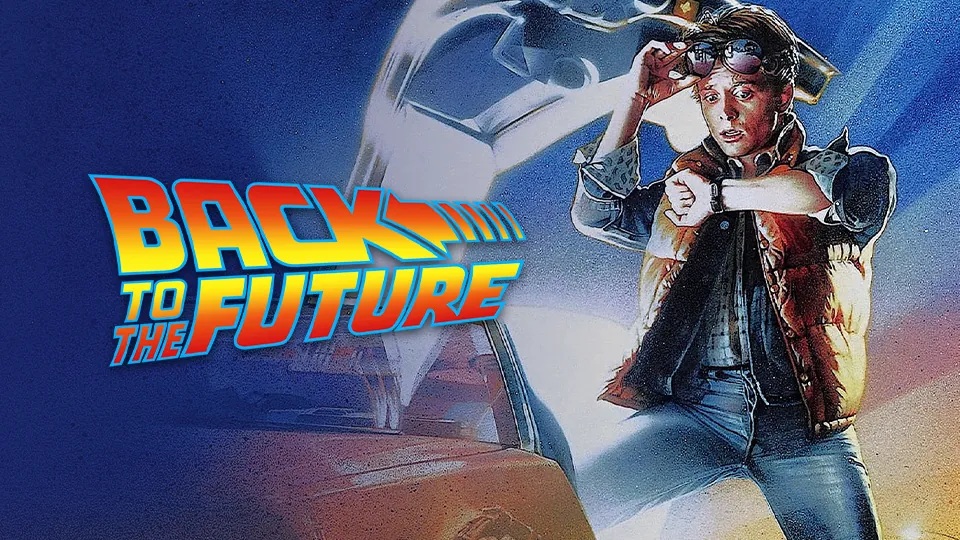
The Back to the Future trilogy is one of the most beloved film series in cinema history. Three movies, three eras, one DeLorean — and behind all of it, a mountain of fascinating stories about how it all came together. From the chaos of recasting the lead actor to the very real physical dangers of filming the Wild West, the making of this trilogy is as entertaining as the films themselves.
Let’s go through the best of it — organized by theme across all three films.
Quick Trilogy Overview
| Detail | Part I (1985) | Part II (1989) | Part III (1990) |
|---|---|---|---|
| Setting | 1985 / 1955 | 2015 / 1955 | 1885 |
| Director | Robert Zemeckis | Robert Zemeckis | Robert Zemeckis |
| Budget | ~$19 million | ~$40 million | ~$40 million |
| Box Office | $381 million | $332 million | $244 million |
| Release Date | July 3, 1985 | November 22, 1989 | May 25, 1990 |
| Filmed Together? | No | Yes — Parts II & III filmed back to back | Yes — with Part II |
The Cast Across All Three Films
| Actor | Character | Parts |
|---|---|---|
| Michael J. Fox | Marty McFly | I, II, III |
| Christopher Lloyd | Dr. Emmett Brown | I, II, III |
| Lea Thompson | Lorraine Baines-McFly | I, II, III |
| Thomas F. Wilson | Biff / Griff / Buford Tannen | I, II, III |
| Crispin Glover | George McFly | I only |
| Jeffrey Weissman | George McFly (with prosthetics) | II, III |
| Claudia Wells | Jennifer Parker | I only |
| Elisabeth Shue | Jennifer Parker | II, III |
| Mary Steenburgen | Clara Clayton | III only |
| James Tolkan | Principal Strickland | I, II |
| Huey Lewis | Audition Judge | I (cameo) |
The Casting Chaos That Almost Derailed Everything
Eric Stoltz — The Ghost in the Machine

Perhaps the most dramatic casting story in Hollywood history belongs to Part I. Eric Stoltz was cast as Marty McFly and filmed for approximately five full weeks before director Robert Zemeckis and writer Bob Gale made the gut-wrenching decision to replace him.
Stoltz is a genuinely talented actor — that was never the issue. The problem was tone. He played Marty with an intensity that belonged in a drama, not a time-travel comedy. The scenes were technically fine but emotionally wrong. The laughs weren’t coming.
Watching back the footage, Zemeckis knew immediately. The call was made. Stoltz was out.
Michael J. Fox — The Exhausted Hero

Michael J. Fox had been the first choice all along — but his commitment to the NBC sitcom Family Ties had made him unavailable initially. After Stoltz was let go, negotiations reopened and a solution was found — Fox would film Family Ties during the day and Back to the Future at night and weekends.
For months, Fox ran on minimal sleep, shuttling between two sets, two characters, two completely different worlds. His performance in the finished film is so loose and natural that none of that exhaustion shows — which is its own kind of remarkable achievement.
Jennifer Parker — Recast Between Films
Part I:

Parts II and III:

Claudia Wells played Jennifer in Part I but did not return for the sequels due to a family illness. Elisabeth Shue stepped into the role for Parts II and III. Interestingly, the opening scenes of Part II actually reshot the ending of Part I with Shue replacing Wells — so audiences watching the sequel saw a scene they recognized, but with a different actress in it.
George McFly — The Legal Battle

Crispin Glover did not return for Parts II or III following a breakdown in negotiations over both salary and creative disagreements. The filmmakers cast Jeffrey Weissman in the role and used prosthetic makeup to make him resemble Glover — even using footage from the original film.
Glover sued, arguing his likeness was being used without consent. He won in a meaningful way — the case directly led to the Screen Actors Guild establishing new rules protecting actors from having their likeness recreated without permission. A genuinely significant legal legacy from a casting dispute.
The Script That Nobody Wanted
Bob Gale and Robert Zemeckis faced over 40 rejections before Back to the Future got made. Disney passed because the mother-falling-for-her-son storyline felt inappropriate for a family film. Other studios found it too soft, too odd, or too unclear in its commercial appeal.
The breakthrough came when Zemeckis directed Romancing the Stone in 1984 and it became a hit. Suddenly, studios were interested in what he wanted to make next. Universal said yes — and the rest is history.
The title itself almost didn’t survive either. A Universal executive reportedly pushed hard for the name “Spaceman from Pluto.” Zemeckis responded by writing back to thank him for the hilarious joke — which diplomatically killed the suggestion without creating an enemy.
Building Three Different Worlds
One of the most impressive achievements of the trilogy is how completely different each film feels visually — 1955 small-town America, 2015 hover-board future, 1885 Wild West frontier — while still feeling like one coherent story.
The Future That Wasn’t (Part II)
Part II’s vision of 2015 has been endlessly analyzed now that the actual year has come and gone. Flying cars and hover boards didn’t materialize, but the film got some things surprisingly right — flat screen TVs, video calling, wearable technology, and the general sense of information overload.
The production design team built the future Hill Valley entirely on the Universal backlot, creating an immersive environment that required months of construction. The hoverboard — one of the most iconic props in the film — was a non-functioning prop on set, with the hovering effect created through careful wirework and camera angles.
Michael J. Fox famously told interviewers at the time that hoverboards were real but toy companies had suppressed them for safety reasons. This was entirely untrue — but a remarkable number of people believed it.
The Wild West (Part III)

Part III presented the biggest logistical challenge of the trilogy. Filming an authentic-feeling 1885 western required entirely different locations, costumes, horses, and a completely different physical vocabulary for the actors.
Much of Part III was filmed on location in Monument Valley, Arizona and Sonora, California — genuine western landscapes that gave the film a visual grandeur the previous two entries didn’t need. The production essentially became a western film that happened to involve a time-traveling DeLorean.
Christopher Lloyd has spoken enthusiastically about filming Part III, describing it as his favorite of the three shoots. His character’s romance with Clara Clayton — played warmly by Mary Steenburgen — gave Doc Brown an emotional depth that the earlier films had only hinted at. Lloyd apparently embraced the love story wholeheartedly, and the chemistry between him and Steenburgen is one of the unexpected pleasures of the trilogy’s final chapter.
The Physical Demands Nobody Talks About
Fox’s Triple Role in Part II
In Part II, Michael J. Fox played three separate characters — Marty McFly, his future son Marty Jr., and his future daughter Marlene. Playing multiple roles required careful scheduling, costume changes, and in some scenes, Fox essentially acting opposite himself.
The technical challenges of shooting those scenes — split screen work, body doubles, precise timing — added significant complexity to an already demanding production.
Thomas F. Wilson’s Villain Workout

Thomas F. Wilson played three versions of Biff Tannen across the trilogy — regular Biff in Parts I and II, future crime boss Griff Tannen in Part II, and Wild West outlaw Buford ‘Mad Dog’ Tannen in Part III. Each required a different physicality, different costume, different accent in the case of Buford, and a different psychological approach.
Wilson has spoken in interviews about the challenge of keeping each version distinct while maintaining the essential Tannen DNA. He apparently found Buford the most fun — the Wild West setting gave him more theatrical room to work with than the suburban bully of the first film.
The Train Sequence — Real Danger

The climax of Part III involves a steam locomotive pushing the DeLorean up to 88 miles per hour on a railroad track. This sequence was filmed using a genuine, fully operational vintage steam train — not a mock-up or a digital creation.
The production sourced a real period locomotive, restored it to working condition, and filmed the climax on actual railroad tracks. The logistical complexity of coordinating a moving vintage train, multiple camera crews, and actors in period costume on an active piece of railway equipment was enormous — and genuinely dangerous by modern production standards.
The Musical DNA of the Trilogy
Alan Silvestri’s score for Back to the Future is one of the most recognizable in cinema history — that thundering brass theme is instantly identifiable to multiple generations of filmgoers. What makes it more impressive is that Silvestri composed and recorded the score for Part I in under four weeks.
The theme carried through all three films, providing musical continuity across three completely different visual and narrative worlds. Silvestri adapted it for the 1950s setting of Part I’s climax, the futuristic soundscape of Part II, and the western instrumentation of Part III — always keeping the core identity intact.
Huey Lewis and the News contributed The Power of Love and Back in Time to Part I’s soundtrack. Huey Lewis himself appeared in a cameo as an audition judge who rejects Marty’s band for being “too loud” — a neat piece of self-referential humor that still lands perfectly.
Parts II and III — Filmed Back to Back
One of the most significant production decisions of the entire trilogy was filming Parts II and III simultaneously. After the success of Part I, Universal wanted sequels — and Zemeckis and Gale decided that rather than returning to production twice, they would complete both films in one extended shoot.
This was a massive undertaking. The cast essentially lived with their characters for an extended period, moving between three different time periods and two entirely different film tones — the zippy futurism of Part II and the dusty warmth of Part III.
The back-to-back production meant that continuity had to be managed across two films simultaneously — a significant challenge for every department from costume to production design to visual effects.
It also meant that when Part II ended on a cliffhanger — Doc Brown being sent back to 1885, Marty receiving a letter from him, the DeLorean being destroyed by lightning — audiences didn’t have to wait years for resolution. Part III arrived just six months later in May 1990.
The Numbers Behind the Magic
| Fact | Detail |
|---|---|
| Total trilogy box office | Over $957 million worldwide |
| Script rejections (Part I) | 40+ |
| Weeks Eric Stoltz filmed | ~5 weeks |
| Years between Part I and III release | 5 years (1985–1990) |
| Time periods visited across trilogy | 1885, 1955, 1985, 2015 |
| Actors playing multiple roles | Fox (3 roles in Part II), Wilson (3 Tannens) |
| Parts filmed simultaneously | II and III |
| Alan Silvestri score recording time | Under 4 weeks (Part I) |
The Detail That Ties It All Together
Across all three films, one small detail rewards careful viewers — the clock tower in Hill Valley appears in every time period visited. It’s there in 1885 being constructed, in 1955 getting struck by lightning, in 1985 as a preserved monument, and in 2015 still standing.
It was a deliberate creative choice by Zemeckis and Gale — a visual anchor that tells the audience, no matter how disorienting the time travel gets, that this is still the same place. Same town, same tower, different century.
That kind of thoughtful storytelling detail, threaded quietly through three films made over five years, is exactly why the Back to the Future trilogy has never really dated. The people who made it genuinely cared about every single frame.
And audiences, across four decades and counting, have always been able to tell.
