
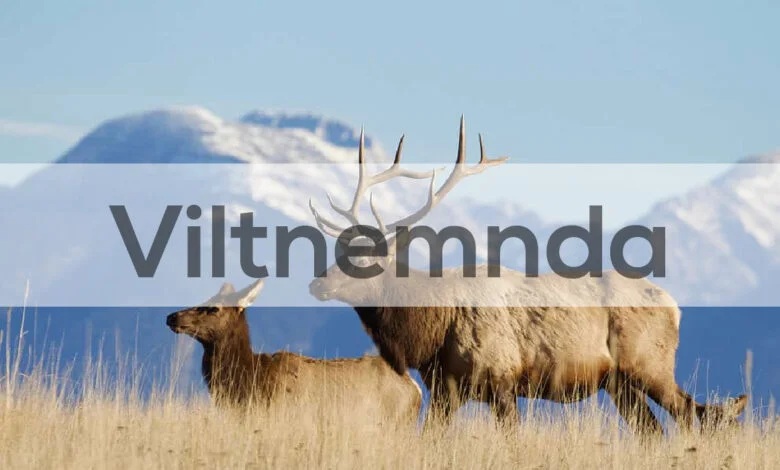
What Is Viltnemnda?
Viltnemnda — pronounced vilt-nem-da — is the Norwegian term for a municipal wildlife committee. Every municipality (kommune) in Norway is legally required to have one. These locally appointed bodies are responsible for managing wild game, setting hunting quotas, monitoring wildlife populations, resolving human-wildlife conflicts, and coordinating public safety responses when animals and people collide.
Think of viltnemnda as the bridge between Norway’s national wildlife laws and the reality on the ground — the forest roads, the farms, the highways, and the rivers where wildlife actually lives. National authorities set the framework. Viltnemnda makes it work locally.
At a Glance (Quick Reference Table)
| Field | Details |
|---|---|
| Norwegian Term | Viltnemnda (singular: viltnemnd; plural: viltnemndene) |
| Translation | “Wildlife committee” or “game board” |
| Type | Municipal wildlife management body |
| Legal Basis | Wildlife Act (Viltloven, Act No. 38, May 29, 1981); Nature Diversity Act (2009) |
| Appointing Authority | Municipal council (kommunestyre) |
| Oversight | Norwegian Environment Agency; County Governor (Statsforvalteren) |
| Typical Size | 5–7 members |
| Typical Members | Hunters, farmers, landowners, ecologists, municipal officials |
| Key Species Managed | Moose (elg), red deer, roe deer, wild reindeer, predators |
| Covers | All approximately 356 Norwegian municipalities |
| Reporting | Annual wildlife reports to County Governor |
| Meetings | Typically several times per year; emergency sessions as needed |
A Brief History: From Survival Hunting to Structured Governance
Norway’s relationship with wildlife goes back thousands of years. Hunting was once purely about survival — food, clothing, tools. As industrialization, population growth, and improved transport increased pressure on wild animal populations through the early 20th century, it became clear that informal local arrangements were not enough.
National authorities recognized that centralized control could not realistically manage the ecosystems of a country that spans from the Arctic tundra to western fjords to boreal interior forests. The terrain is too varied. The species ranges are too wide. The local conditions are too different.
The decisive turning point came with the Wildlife Act of May 29, 1981 — Viltloven, Act No. 38. This law formalized viltnemnda as a legal institution within every Norwegian municipality and established the framework that still governs wildlife management today. The Nature Diversity Act of 2009 added a science-based, precautionary dimension — requiring all decisions to be grounded in population data and ecological evidence.
| Year | Development |
|---|---|
| Early 20th century | Informal local wildlife management; overhunting concerns grow |
| 1981 | Wildlife Act (Viltloven) formally establishes viltnemnda |
| 2009 | Nature Diversity Act adds ecosystem-based, precautionary principles |
| Present | ~356 municipal viltnemndas operating across Norway |
Who Sits on a Viltnemnda?
Members are appointed by the municipal council (kommunestyre) — which means they are accountable to the local community, not to a national bureaucracy. A typical committee has five to seven members, deliberately drawn from different backgrounds to ensure that competing interests are all represented at the table.
A typical committee includes hunters and hunting association representatives, farmers and landowners, environmental or ecological voices, and at least one municipal official who chairs the committee and ensures alignment with local policy.
These are not full-time civil servants. They are local people — often people who farm the land, walk the forests, and drive the roads that their decisions affect. That proximity to the landscape is precisely the point. When a moose quota is being set in a small Norwegian municipality, the person setting it can probably see the forest where those moose live from their kitchen window.
What Viltnemnda Actually Does
The responsibilities are broad and genuinely consequential. Here are the core functions:
Quota Setting and Hunting Regulation
The most prominent function is setting annual hunting quotas for moose and other deer species. Quotas are calculated using population surveys, habitat carrying capacity assessments, and agricultural damage data — not guesswork.
Norway’s moose population sits between 100,000 and 150,000 animals. Between 25,000 and 40,000 moose are harvested annually — a number that has hovered around 30,000 in recent seasons. Red deer numbers have risen sharply since the 1980s, from around 10,000 harvested annually to over 50,000 per year by the early 2020s, largely due to population explosions driven by reduced predator pressure and increased agricultural yields.
| Species | Estimated Population | Annual Harvest (approx.) |
|---|---|---|
| Moose (elg) | 100,000–150,000 | 25,000–40,000 |
| Red deer | Rapidly growing | 50,000+ (early 2020s) |
| Roe deer | Widespread | Managed locally; varies by municipality |
| Wild reindeer | Mountain populations | Carefully controlled quotas |
Viltnemnda also approves hunting plans submitted by landowners and hunting collectives, issues area-specific permits, defines hunting zones, and monitors compliance.
Population Monitoring
Viltnemnda collects data continuously — field observations, hunter reports, scientific surveys, and habitat condition assessments. Annual reports are submitted to the County Governor. For migratory species like moose, coordination happens across municipal boundaries through regional wildlife management areas (hjorteviltregioner), ensuring that animals moving across landscapes are managed consistently, not fragmented by invisible administrative lines.
Human-Wildlife Conflict Resolution
This is where the work gets most human. Crop-damaging deer, predators near livestock, moose wandering into suburban gardens — these are real, costly, sometimes frightening situations for the people who experience them.
Viltnemnda handles these cases systematically. Non-lethal measures are always prioritized first — fencing, deterrents, flow devices for beaver dams, scaring techniques for birds on farmland. Targeted culling permits are issued only when damage is significant and prevention has been attempted. When permits are issued, they are typically narrow, time-bound, and location-specific to minimize broader population impact.
Road Safety and Emergency Response
Wildlife-vehicle collisions — particularly with moose — are a genuine public safety issue in Norway. A full-grown moose can weigh over 500 kilograms. A collision at highway speed is frequently fatal for both the animal and the vehicle’s occupants.
Viltnemnda coordinates first-response procedures when accidents occur, tracks collision hotspots, works with road authorities on infrastructure solutions like wildlife crossings and warning signs, and dispatches trained personnel when injured animals need to be humanely dispatched.
The Three Pillars of Its Work
Across all Norwegian municipalities, viltnemnda’s work consistently falls into three core areas:
| Pillar | What It Involves |
|---|---|
| Population Stewardship | Reviewing harvest data, advising on quotas, approving multi-year herd plans (bestandsplaner), ensuring herds are healthy and sustainable |
| Damage Prevention and Conflict Mitigation | Non-lethal deterrence first; targeted culling when necessary; compensation advice; mediation between farmers, hunters, and conservationists |
| Public Safety Response | Injured animals on roads, animals in urban areas — mobilizing trained personnel, coordinating with police and emergency services |
The Legal Framework: What Gives It Authority
Viltnemnda operates within a clear national hierarchy. The Norwegian Environment Agency (Miljødirektoratet) sets national policy and protected species lists. The County Governor (Statsforvalteren) oversees municipal implementation and receives annual reports. Viltnemnda executes at the local level.
The Wildlife Act’s core principle is that all wildlife is a shared national resource belonging to the state — not to private landowners. Municipalities are granted the authority to manage it locally, but within strict national parameters. Municipalities can introduce more restrictive rules than national minimums. They cannot introduce weaker ones.
| Level | Role |
|---|---|
| Norwegian Environment Agency | National policy, protected species, binding minimum standards |
| County Governor | Regional oversight, approval of certain decisions, receives annual reports |
| Viltnemnda | Local quota-setting, permit issuing, conflict resolution, monitoring |
| Landowners / Hunting Associations | Submit hunting plans; operate within approved frameworks |
Challenges Viltnemnda Faces Today
The job is not getting easier. Several pressures are reshaping wildlife management across Norway:
Climate change is altering migration routes, breeding timing, and which species appear in which regions. Viltnemnda must adapt regulations continuously to shifting ecological baselines.
Predator politics remains one of the most contentious areas. Wolves and lynx are protected under conservation law — but farmers whose livestock is killed by predators do not always see conservation value in the species killing their animals. Viltnemnda sits in the middle of this tension, every time.
Funding and capacity are real constraints. Committee members are not paid professionals. They are volunteers with day jobs who attend meetings and make consequential decisions in their spare time. As the complexity of wildlife management grows, that model is increasingly strained.
Illegal hunting and poaching require coordination with local law enforcement, which stretches resources further.
Why the Model Works — And What the World Can Learn From It
Norway’s decentralized approach to wildlife governance is studied internationally — and for good reason. The principle it embodies is simple but powerful: effective environmental governance requires local knowledge operating within a national framework.
A quota set by an official in Oslo who has never walked the specific forest in question is a worse quota than one set by someone who has hunted there for twenty years and watched the moose population change across seasons. That is not romanticism. It is a practical argument for proximity.
As human-wildlife conflict increases globally — driven by habitat loss, climate displacement, and expanding urban footprints — the viltnemnda model offers a tested blueprint. Decentralize the decisions. Mandate the science. Keep the people who will live with the consequences in the room.
Final Thoughts
Viltnemnda is not glamorous. It does not appear in wildlife documentaries. Nobody writes feature films about municipal quota-setting committees.
But somewhere in Norway right now, a group of local people is sitting around a table — a farmer, a hunter, a municipal official, an ecologist — looking at population data and making decisions that will shape what their forests look like in twenty years. They will drive home through the same landscape those decisions affect. They will see the moose in the fields the following morning.
That closeness is the whole point. Norway’s wildlife does not manage itself. Viltnemnda is the reason it gets managed well.
