
Category

People

Category

Jessica Camacho is the kind of actress that the American television industry quietly depends upon — the performer who elevates every scene she enters, who brings genuine emotional intelligence and physical precision to roles across genres as different as superhero drama, legal procedural, supernatural thriller, and prestige HBO limited series, and who has done all of this while remaining one of the most consistently underrated talents in the business. Born in Chicago to Puerto Rican parents, raised in Florida, trained at one of San Francisco’s most demanding conservatories, and forged through years of guest appearances and recurring roles before breaking into the lead roles her talent always deserved, her story is one of patience, preparation, and the particular kind of strength that comes from knowing exactly who you are and where you come from.

Biography / Wiki Table

Detail Information
Full Name Jessica Lisa Camacho
Date of Birth November 28, 1982
Age (2025) 42 years old
Place of Birth Chicago, Illinois, USA
Raised In St. Petersburg, Florida
Nationality American
Ethnicity Puerto Rican
Height 5 ft 5 in (165 cm)
Eye Color Brown
Hair Color Dark Brown
Training American Conservatory Theater (ACT), San Francisco
Early Base San Francisco (waitress while training); Chicago (theatre and early TV); Los Angeles
Union Status SAG-AFTRA
Known For All Rise (CBS/OWN), The Flash (CW), Sleepy Hollow (Fox), Watchmen (HBO), Taken (NBC), Countdown (Prime Video)
Breakthrough TV Role FBI Agent Sophie Foster — Sleepy Hollow Season 3 (Fox, 2015–16)
Lead TV Role Emily Lopez — All Rise (CBS/OWN, 2019–2023)
Most Recent DEA Agent Amber Oliveras — Countdown (Prime Video, 2025); Bosch: Legacy; S.W.A.T.; DMV (2026)
Film Work Think Like a Man (2012), Roman J. Israel Esq. (2017), Suburban Gothic (2014), Nothing Like the Holidays
Heritage Openly celebrates Puerto Rican identity and family traditions
Net Worth (est.) Approximately $2 million
IMDb nm2886648

Early Life: Chicago Roots and a Florida Childhood

Jessica Lisa Camacho was born on November 28, 1982, in Chicago, Illinois, to parents of Puerto Rican heritage — a cultural identity she has spoken about openly and proudly throughout her career, discussing family traditions, her connection to the island, and the ways in which her Puerto Rican background has shaped both who she is and the characters she is drawn to play. She was raised in St. Petersburg, Florida, a city on the Gulf Coast of Pinellas County — a very different environment from Chicago’s urban density, and one that gave her a quieter, more community-centred upbringing during the formative years that most directly shape a person’s character.

She has not spoken extensively in public about her childhood or family in specific biographical detail, preferring to let her professional work speak for itself. What is known is that acting was not her first path. She discovered it as a young adult through the suggestion of a friend — a casual recommendation to take an acting class that, by her own account, she followed without any particular expectation and with results that were, in her word, immediate. She fell in love with the craft the moment she engaged with it seriously. The experience of finding the thing you are genuinely meant to do, later than you expected and through a door you hadn’t been looking for, is a particular kind of grace — and it set the direction of everything that followed.

Training: The American Conservatory Theater

The decision that most clearly defined the seriousness with which Jessica Camacho approached her new craft was her move to San Francisco to study at the American Conservatory Theater — known universally as ACT. She supported herself as a waitress while attending night classes, a quintessentially committed actor’s arrangement that says everything about the degree of her investment. ACT is one of the United States’ most rigorous and respected theatre training institutions, with a conservatory programme that has produced a remarkable number of significant American performers. Its emphasis is on technical precision, classical foundation, and the development of a fully trained instrument — voice, body, emotional range — that can serve a performer across the entire breadth of what theatre and screen demand.

The night-school waitress-to-conservatory-student path is not glamorous. It is demanding, tiring, and financially precarious. It is also exactly the kind of foundation that produces actresses who are still building compelling careers in their forties, because the technical craft that conservatory training develops does not diminish with time or trend — it deepens.

After San Francisco, she moved to Chicago, where she began working in theatre and accumulating her earliest television credits — including obtaining her Screen Actors Guild membership card, the professional credential that signals an actor has crossed from amateur to professional standing in the eyes of the industry. From Chicago, she eventually relocated to Los Angeles to pursue screen work full time — the final leg of a journey that had taken her from the Gulf Coast of Florida to San Francisco to Chicago before she settled in the city where most of the screen work she wanted was being made.

The Guest Years: Building a Foundation One Role at a Time

Jessica Camacho’s early television career was characterised by the steady, patient accumulation of guest credits across some of the most respected dramas on American network and cable television. These were not leading roles. They were the kind of carefully chosen, precisely executed single-episode appearances that demonstrate professional reliability and build industry relationships — the invisible infrastructure of a sustainable acting career.

She appeared in Dexter — the Showtime serial killer drama starring Michael C. Hall that was one of the defining cable dramas of its era. She appeared in Justified — the FX crime drama starring Timothy Olyphant as Deputy US Marshal Raylan Givens, set in the coal country of rural Kentucky, and widely regarded as one of the finest written dramas of the 2010s. She appeared in Gossip Girl on the CW, The Mentalist on CBS, and Law & Order: Special Victims Unit on NBC — three very different network productions that collectively represent an enormous range of tone, genre, and production culture.

Early Guest Credits Network Year
Dexter Showtime 2010
Justified FX 2010
Undercovers NBC 2010
The Mentalist CBS 2011
Gossip Girl CW 2011
Law & Order: SVU NBC 2011
The Beast 2011
Wedding Band 2012
NCIS: Los Angeles CBS 2012
Hello Ladies HBO 2013
Castle ABC 2013
Bones Fox 2014
Stalker CBS 2014
Rizzoli & Isles TNT 2015

Each of these appearances placed her opposite experienced, established performers in high-quality productions — a deliberate strategy of using guest work to build professional fluency across different production environments while demonstrating to casting directors and showrunners that she was consistently, reliably excellent regardless of role size.

First Recurring Roles: Last Resort and Nikita

Jessica Camacho’s first sustained recurring television work came through two productions in 2012 and 2013 that gave her the kind of extended character development that single guest appearances cannot provide.

On Last Resort — the ABC military drama created by Karl Gajdusek and Shawn Ryan, starring Andre Braugher as the captain of a US Navy submarine that refuses an illegal order and takes refuge on a foreign island — she played Pilar Cortez, a recurring character whose arc unfolded across the show’s single-season run from 2012 to 2013. Last Resort was critically praised for its intelligence and moral complexity, and its cancellation after one season was widely lamented by critics who considered it one of the more sophisticated network dramas of its period.

On Nikita — the CW spy thriller based on the French film Nikita and its subsequent adaptations, starring Maggie Q as a rogue assassin battling the secret organisation that trained her — she appeared in a recurring capacity during the show’s later seasons. Nikita had built a devoted following during its four-season run, and her presence within it demonstrated the growing confidence with which casting directors were assigning her recurring rather than one-off roles.

Sleepy Hollow: The First Major Network Lead

The role that first established Jessica Camacho as a genuine television lead was FBI Agent Sophie Foster in Sleepy Hollow — the Fox supernatural drama starring Tom Mison as Ichabod Crane and Nicole Beharie as Abbie Mills, which reimagined Washington Irving’s classic American horror story as a contemporary paranormal procedural. She joined the show for its third season in 2015, becoming a co-lead alongside Mison and Beharie in a season that the production hoped would reinvigorate the show’s narrative.

Sleepy Hollow

Sophie Foster — a young FBI agent who becomes entangled in the supernatural investigations at the heart of the show — required exactly the combination of qualities that Camacho had been developing throughout her earlier career. The role demanded physical credibility, emotional range, and the ability to hold her own opposite two experienced lead performers who had established a strong audience relationship across the show’s first two seasons. She brought all three, and her performance was consistently praised by critics and fans as one of the season’s strongest elements.

The Sleepy Hollow credit was a genuine career inflection point — the moment at which the industry’s perception of her shifted definitively from accomplished recurring presence to lead-capable actress. What followed confirmed that shift with accumulating force.

The Flash: Gypsy and the Arrowverse

In 2017, Jessica Camacho joined The Flash — the CW’s superhero drama set in the DC Universe, starring Grant Gustin as Barry Allen / The Flash — as the recurring character Gypsy. In the comics, Gypsy is a superhero with illusory powers; in the show’s adaptation, she became Cynthia Reynolds, a skilled bounty hunter from Earth-19 who uses vibrational powers to move between alternate dimensions.

The Flash

The role was significant for several reasons. It placed her within the Arrowverse — the extended universe of DC superhero productions that had built one of the most loyal and engaged fanbases in American television — and it did so in a recurring capacity that spanned two seasons (2017–2018). It demonstrated her comfort with the specific demands of the superhero genre: the physical choreography, the science-fiction exposition, the green-screen work, and the particular tone that blends genuine emotional stakes with the broader-than-life qualities of the comic book world.

Her chemistry with Carlos Valdes — who played Cisco Ramon / Vibe, Gypsy’s love interest and comedic foil — was one of the show’s most warmly received character pairings during her tenure, giving her access to comedic dimensions that her more dramatically intensive work in Sleepy Hollow had not showcased.

Taken: Action Lead on Network Television

In 2018, Camacho joined the cast of Taken — NBC’s prequel series to the Liam Neeson action film franchise, following a younger version of Bryan Mills before the events of the films — as Santana, a lead character in the show’s second season. The role required a physical credibility and action-oriented screen presence that her training and career had fully prepared her for, and it demonstrated that she was as capable at the centre of an action production as she was in supernatural drama or superhero procedural.

Roman J. Israel, Esq. (2017): Hollywood’s Most Prestigious Rooms

One of the most significant single credits in Jessica Camacho’s filmography is her appearance in Roman J. Israel, Esq. — the 2017 legal drama written and directed by Dan Gilroy and starring Denzel Washington in the title role, for which he received an Academy Award nomination for Best Actor. The film also features Colin Farrell in a prominent supporting role.

Her appearance placed her in scenes alongside one of the greatest screen actors alive, in a serious, adult, critically ambitious legal drama with major studio backing. These are the kinds of professional environments that shape careers not just through the credit they add to a résumé but through the standard of craft they demand and the professional relationships they produce. She performed with the quiet authority that characterises all of her best work, holding her own in scenes that required nothing less.

Watchmen (HBO, 2019): Prestige Television at Its Peak

Perhaps the most critically prestigious single television credit in Jessica Camacho’s career to date is her appearance in Watchmen — the HBO limited series created by Damon Lindelof as a continuation and expansion of Alan Moore and Dave Gibbons’s landmark graphic novel, starring Regina King in the lead role of Angela Abar. Watchmen was one of the most celebrated and discussed American television productions of 2019, winning eleven Emmy Awards including Outstanding Limited or Anthology Series and Outstanding Lead Actress in a Limited Series for Regina King.
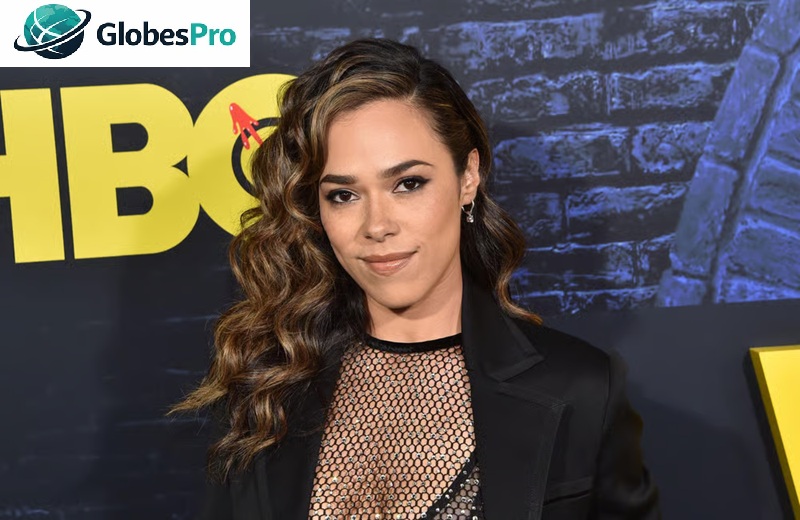
Watchmen

Camacho played FBI Agent Dale Petey in the series — a role within one of the year’s most important and carefully crafted productions. Working in an ensemble that included Regina King, Jeremy Irons, Don Johnson, Tim Blake Nelson, and Jean Smart placed her at the absolute peak of American television drama, and doing so with the precision and intelligence that Lindelof’s complex, layered storytelling demanded confirmed her status as a performer of the highest professional calibre.

All Rise (CBS / OWN, 2019–2023): Series Lead for Four Seasons

The role that represents the fullest expression of Jessica Camacho’s capabilities as a series lead is Emily Lopez in All Rise — the legal drama that premiered on CBS in 2019, was cancelled by CBS after two seasons, and was subsequently revived by OWN (the Oprah Winfrey Network) for a third and final season. She played Emily for the show’s entire run — 48 episodes across four years — opposite Simone Missick as Judge Lola Carmichael.

Emily Lopez is a public defender — a passionate, fiercely committed advocate for clients who cannot afford private legal representation, operating within a legal system that does not always make that advocacy easy. The role required Camacho to sustain a complex, evolving character across multiple seasons of dramatic storytelling, building the kind of cumulative emotional depth that only extended series work can produce. She brought warmth, intelligence, and genuine advocacy energy to a character whose professional idealism was consistently tested by the realities of the system she worked within.

All Rise was warmly received for its representation — in particular for centring a predominantly Black and Latino cast in a legal drama that treated their professional lives and personal stories with full dramatic seriousness — and Camacho’s Emily Lopez was a central pillar of that representation effort.

Jessica camacho movies and tv shows: The Complete Record

No overview of her career is complete without acknowledging the full breadth of jessica camacho movies and tv shows that have accumulated across her fifteen-plus-year screen career — a record that spans broadcast network drama, premium cable, streaming prestige, superhero franchises, and feature film work with Academy Award-nominated directors and performers.

Year Project Role Type
2008 Nothing Like the Holidays Feature Film
2009 Come On Over Short Film
2010 Dexter TV Guest (Showtime)
2010 Justified TV Guest (FX)
2010 Undercovers TV Guest (NBC)
2011 Gossip Girl TV Guest (CW)
2011 The Mentalist TV Guest (CBS)
2011 Law & Order: SVU TV Guest (NBC)
2012 Think Like a Man Feature Film
2012–2013 Last Resort Pilar Cortez Recurring TV (ABC)
2012–2013 Nikita Recurring TV (CW)
2013 Castle TV Guest (ABC)
2013 Hello Ladies TV Guest (HBO)
2014 Bones TV Guest (Fox)
2014 Stalker TV Guest (CBS)
2014 Suburban Gothic Feature Film
2014 Veronica Mars Feature Film
2014 Ana Maria in Novela Land Feature Film
2014 NCIS: Los Angeles TV Guest (CBS)
2015 Rizzoli & Isles TV Guest (TNT)
2015 Longmire TV Guest (Netflix)
2015 Minority Report TV Guest (Fox)
2015–2016 Sleepy Hollow FBI Agent Sophie Foster Series Regular / Lead (Fox)
2016 Harley and the Davidsons TV (Discovery)
2016 Frequency Recurring TV (CW)
2017 Crave: The Fast Life Film
2017 The Babymoon Feature Film
2017 Roman J. Israel, Esq. Feature Film (Sony/Columbia)
2017–2018 The Flash Gypsy / Cynthia Reynolds Recurring TV (CW)
2018 Taken Santana Series Regular (NBC)
2018 Casual TV (Hulu)
2019 Watchmen FBI Agent Dale Petey TV (HBO)
2019 Another Life TV (Netflix)
2019–2023 All Rise Emily Lopez Series Regular / Lead (CBS/OWN) — 48 episodes
2021 A Christmas Proposal TV Film
2022 S.W.A.T. Guest TV (CBS)
2023 Bosch: Legacy Guest TV (Amazon Freevee)
2023 Secret Level Animated TV (Amazon)
2024 DMV Film
2025 Countdown DEA Agent Amber Oliveras Series Regular (Prime Video)
2026 DMV Film (release)

Countdown (Prime Video, 2025): A New Chapter Begins

The most recent major chapter in Jessica Camacho’s career is her series regular role as DEA Special Agent Amber Oliveras in Countdown — the Prime Video crime series that debuted in 2025. Described as a thriller built around a high-stakes countdown premise, the show places her at the centre of a law enforcement narrative that draws directly on the kind of authority, physicality, and dramatic presence she has been refining since her first major lead role in Sleepy Hollow a decade earlier.

The Prime Video credit is a significant platform expansion — placing her in front of an international streaming audience that her previous work, while consistently high quality, had not fully accessed. DEA Agent Amber Oliveras is her most action-forward series regular role since Taken, and the combination of streaming platform reach with an action-driven dramatic premise positions this as potentially the highest-profile chapter of her career to date.

The Qualities That Define Jessica Camacho

Across every credit in her career — from the early guest appearances in Justified and Dexter through the prestige HBO ensemble of Watchmen to the four-season lead in All Rise to the new Prime Video platform of Countdown — certain qualities remain consistent and define what makes Jessica Camacho a genuinely exceptional performer.

The first is technical foundation. The ACT training is audible in the precision of her dialogue work and visible in the physical specificity she brings to every role. She does not waste movements or words. Every choice is earned.

The second is cultural authenticity. Her Puerto Rican heritage is not a demographic checkbox or a marketing talking point — it is an active, genuine source of identity that she brings to roles where it is relevant and that shapes the warmth and strength that characterises her entire screen presence.

The third is range. The distance between Gypsy in The Flash and Emily Lopez in All Rise and FBI Agent Dale Petey in Watchmen and DEA Agent Amber Oliveras in Countdown is not small — and traversing it with equal credibility in every direction requires a performer of genuine technical and emotional depth.

And the fourth — perhaps the quality most responsible for the longevity and growing momentum of her career — is her apparent lack of interest in the shortcuts. She took the night classes. She waited tables. She did the guest appearances. She built the conservatory foundation. She accepted the supporting roles when the leads weren’t yet available. And she has arrived, at 42, with more career momentum than she has ever had — precisely because the foundation she built was real.

Career Timeline

Year Milestone
November 28, 1982 Born in Chicago, Illinois, to Puerto Rican parents
Childhood Raised in St. Petersburg, Florida
Early adulthood Discovers acting through a friend’s suggestion; moves to San Francisco
~2005–2008 Studies at American Conservatory Theater (ACT) while waitressing; moves to Chicago
~2008–2009 Works in Chicago theatre; earns SAG card; relocates to Los Angeles
2008 Film debut in Nothing Like the Holidays
2010–2012 Guest credits on Dexter, Justified, Gossip Girl, Law & Order SVU, The Mentalist
2012 Appears in feature film Think Like a Man
2012–2013 First major recurring role as Pilar Cortez in Last Resort (ABC)
2013–2014 Recurring on Nikita (CW); guest credits on Castle, Bones, NCIS LA
2014 Films Suburban Gothic, Veronica Mars, Ana Maria in Novela Land
2015–2016 Lead role as FBI Agent Sophie Foster — Sleepy Hollow Season 3 (Fox)
2017 Appears in Roman J. Israel, Esq. (Columbia Pictures / Denzel Washington)
2017–2018 Recurring as Gypsy — The Flash (CW)
2018 Series regular as Santana — Taken Season 2 (NBC)
2019 Appears in Watchmen (HBO) as FBI Agent Dale Petey
2019 Joins All Rise (CBS) as series regular Emily Lopez — runs through 2023
2020–2023 All Rise continues (CBS, then OWN) — 48 total episodes
2022–2023 Guest credits on S.W.A.T., Bosch: Legacy, Secret Level
2025 Joins Countdown (Prime Video) as series regular DEA Agent Amber Oliveras
2026 DMV film release; career continues at peak momentum

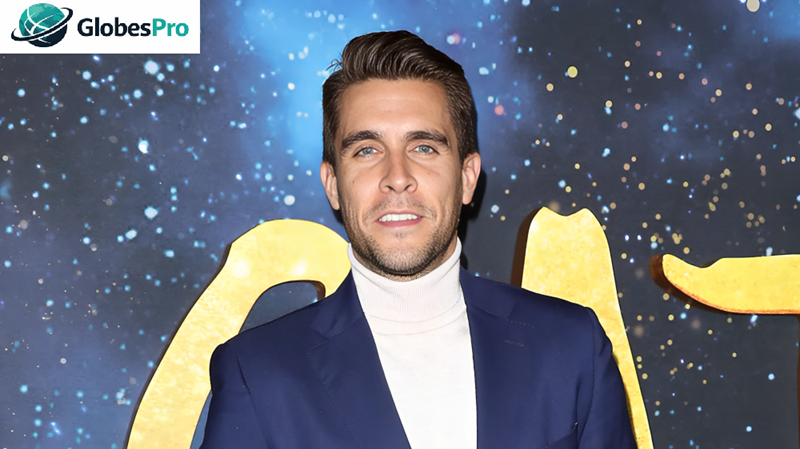
Josh Segarra is the kind of performer who makes every room he enters impossible to ignore. Whether he is playing a charming villain in a superhero drama, a beloved husband in a Latin music icon’s life story, a scene-stealing comedy sidekick, or a warm-hearted dramatic presence in an ensemble cast, Segarra arrives fully prepared and fully alive in every role — and has spent nearly two decades building one of the most genuinely versatile careers in American entertainment. From singing for the governor of Florida as a teenager to originating a role on Broadway to becoming one of television’s most reliably excellent character actors, his journey is a testament to what relentless preparation and authentic Puerto Rican pride can produce.

Biography / Wiki Table

Detail Information
Full Name Joshua Segarra
Date of Birth June 3, 1986
Age (2025) 38 years old
Place of Birth Longwood, Florida, USA
Raised In Orlando, Florida area
Nationality American
Ethnicity Puerto Rican
Religion Pentecostal Christian upbringing
Languages English, Spanish (fluent)
Height 5 ft 11 in (180 cm)
Eye Color Brown
Hair Color Dark Brown
High School Florida-based; extensive theatre and a cappella involvement
University NYU Tisch School of the Arts (graduated 2008, Theatre)
Wife Brace Rice Segarra (married October 17, 2014)
Son Gus Maine Segarra (born September 2016)
Known For Arrow (CW), Sirens (USA), On Your Feet! (Broadway), The Other Two (HBO Max)
Breakthrough TV Role Adrian Chase / Prometheus — Arrow Season 5
Broadway Debut Lysistrata Jones (Off-Broadway → Broadway)
Broadway Featured Role Emilio Estefan — On Your Feet! (Marquis Theatre, 2015–2016)
Film Work Trainwreck (2015), Scream VI (2023), Friendship (2024), Overboard
Recent TV The Big Door Prize (Apple TV+), Laid (Netflix), Abbott Elementary (ABC), Animal Control
Representation Abrams Artists Agency; ATA Management; Jackoway
IMDb nm2019219
Net Worth (est.) Approximately $3 million

Early Life: A Florida Kid With a Church Voice and a Wrestling Dream

Joshua Segarra was born on June 3, 1986, in Longwood, Florida — a suburb of Orlando in Seminole County — into a Puerto Rican family that would shape both his cultural identity and his earliest artistic instincts. He grew up in the Orlando area, steeped in the Pentecostal church community that his family belonged to, and it was there that he first found his voice. The Pentecostal tradition places enormous emphasis on music in worship — on singing with full commitment, full volume, and genuine spiritual investment — and the young Josh Segarra absorbed that ethos completely. He sang in church with a seriousness that went beyond childhood participation, developing both his vocal instrument and his relationship to performance as an act of genuine expression.

What makes the origin story particularly charming is what he wanted to be when he grew up: not an actor, not a singer — a professional wrestler. He has spoken about his early obsession with professional wrestling and the desire to pursue it as a career path, an ambition that, while ultimately unfulfilled, speaks to the theatrical, physical, larger-than-life qualities that would eventually find their perfect home on stage and screen. There is a direct line, in some ways, from the spectacle and performance of professional wrestling to the roles that would make Segarra famous — including a character who is himself defined by theatrical villainy and physical menace.

By the time he reached high school, theatre had claimed him entirely. He threw himself into musical theatre with an energy and commitment that quickly separated him from his peers. His high school productions included leading roles in The Music Man as Harold Hill, Footloose as Ren McCormick, and Fame: The Musical as both Nick Piazza and Joe Vegas — three roles that demanded very different qualities and that demonstrated from early on his ability to inhabit distinct characters without losing his own natural charisma. He won a Best of Show award in Duet Musical at the Florida Thespian State Competition, a significant regional honour. His a cappella group was accomplished enough to perform for the governor of Florida — not the kind of gig that most high school performers can claim on their résumé.

NYU Tisch: Forging a Professional Foundation

Josh Segarra arrived at NYU’s Tisch School of the Arts in the early 2000s, joining one of the most rigorous and respected theatre training programmes in the United States. Tisch has produced a remarkable number of significant American performers, writers, and directors — a legacy built on its commitment to combining technical craft with genuine artistic ambition. For Segarra, the programme was both a continuation of everything he had been building in Florida and a significant step forward in terms of discipline, exposure, and professional network.

During his time at Tisch, he demonstrated a characteristic refusal to stay in a single lane. He acted, as expected. But he also sang, beat boxed, and served as the featured rapper for N’harmonics — described as a premiere a cappella group at NYU — performing on stages including Lincoln Center for the International A Cappella Super Finals. The beat boxing and rapping alongside his classical theatre training is not an incongruous combination for someone of Segarra’s background; it reflects the same musical eclecticism and performance versatility that the Pentecostal church tradition, hip-hop culture, and musical theatre all share, and that Segarra had been absorbing since childhood.

Even while completing his degree, he was already accumulating professional credits. During his freshman year, he appeared in the CBS television movie Vampire Bats, starring Lucy Lawless. In his sophomore year he performed in the Off-Broadway musical Fools in Love. He graduated in 2008 with his degree in Theatre — and immediately set about putting it to use.

Early Career: Television Foundations and Broadway Beginnings

The years immediately following graduation from Tisch were characterised by the kind of busy, varied, accumulative professional activity that distinguishes actors who build genuinely durable careers. Josh Segarra did not wait for a single breakout opportunity. He took roles across film, television, and theatre simultaneously, building fluency in each medium while establishing himself as a reliable, versatile, and thoroughly professional presence wherever he appeared.

His early film credits included The Narrows, Blood Night: The Legend of Mary Hatchet, The Ministers, and The Music Never Stopped — a range of genres that gave him experience across horror, drama, and character-driven storytelling. On television, he appeared in Homeland, the Emmy-winning Showtime espionage drama starring Claire Danes and Damian Lewis, and The Following, the Kevin Bacon-led Fox thriller. These were not lead roles, but they were significant productions with high professional standards, and appearing in them at an early stage of his career demonstrated that the industry was taking him seriously.

The role that first gave him genuine recurring television prominence was Hector Ruiz on PBS’s The Electric Company — a children’s educational television programme aimed at elementary-school-aged viewers. It ran from 2009 to 2011 and gave Segarra two seasons of sustained on-screen work, a national audience, and the experience of carrying a recurring character across an extended run.

In the theatre world, he was making equally significant strides. He originated the role of Mick in Lysistrata Jones — first in the Off-Broadway production and subsequently on Broadway. Lysistrata Jones, a contemporary musical reimagining of the ancient Greek comedy Lysistrata set in a college basketball context, was directed by Dan Knechtges and received strong notices for its energy and theatrical invention. Being part of a new musical’s journey from Off-Broadway to Broadway is a meaningful credit, and originating a role — rather than stepping into one previously created by someone else — is a particular badge of honour in the theatrical world.

He followed this with Boland in the Second Stage Theater’s production of Dogfight — a musical adaptation of the 1991 film, with music and lyrics by Benj Pasek and Justin Paul (who would go on to write the score for Dear Evan Hansen and the film La La Land), directed by Joe Mantello. Working with Mantello, one of Broadway’s most respected and in-demand directors, was another meaningful professional relationship — the kind that signals growing status within the theatre world’s specific hierarchy.

Sirens and Chicago P.D.: Recurring Television Momentum

Josh Segarra’s television profile grew significantly through his work on two very different network productions in the mid-2010s. On Sirens — the USA Network comedy about a dysfunctional Chicago ambulance crew — he played Billy Cepeda, beginning as a recurring character in the first season before being promoted to series regular in the second. The show, though ultimately cancelled after two seasons, was a sharp, fast-paced ensemble comedy that gave him extended experience in the particular demands of multi-camera and single-camera comedy performance.

Overlapping with Sirens, he joined the cast of Chicago P.D. on NBC — part of Dick Wolf’s sprawling Chicago franchise — in a recurring capacity, playing Justin Voight. The role placed him in one of the most commercially successful and consistently watched police procedural dramas on American network television, adding another major credit to a résumé that was becoming notably impressive in its breadth and quality.

Between these two commitments, he also appeared in Judd Apatow’s Trainwreck (2015) — the widely praised romantic comedy starring Amy Schumer and Bill Hader — in a small but credited film role that gave him his first genuine Hollywood feature film experience with one of the industry’s most respected comedy directors.

On Your Feet!: Originating Emilio Estefan on Broadway

The Broadway credit that most significantly elevated Josh Segarra’s profile in the theatrical world was his origination of the role of Emilio Estefan Jr. in On Your Feet! — the biographical jukebox musical celebrating the lives and music of Gloria and Emilio Estefan, which opened at the Marquis Theatre on Broadway on November 5, 2015.

On Your Feet! told the story of Gloria Estefan’s rise from a Cuban immigrant family in Miami to becoming one of the best-selling Latin music artists in history, with the Miami Sound Machine and as a solo artist. Emilio Estefan — Gloria’s husband, producer, and creative partner — is the person who discovered her talent, shaped her sound, and stood beside her through every stage of one of the most extraordinary careers in popular music history, including her remarkable recovery from a near-fatal tour bus accident in 1990.

Playing Emilio required Segarra to embody not a fictional character but a living public figure — a music industry legend whose career and personal story are matters of documented record. The demands of the role included capturing Emilio’s Cuban-American cultural identity, his entrepreneurial drive, his deep romantic and creative partnership with Gloria, and the specific emotional weight of the accident and recovery sequence that serves as the show’s most dramatically intense passage. He performed the role opposite Ana Villafañe as Gloria, and his final performance was on July 10, 2016.

The production was a meaningful commercial and cultural moment for Latin representation on Broadway, and Segarra’s contribution to it was an important part of its success.

Arrow: Becoming the Season’s Most Terrifying Villain

In the autumn of 2016, Josh Segarra joined the cast of the CW’s superhero drama Arrow as a series regular for its fifth season — taking on what would become one of the most celebrated villain roles in the show’s history. He portrayed Adrian Chase, the district attorney of Star City who is secretly Prometheus — a master manipulator and lethal antagonist whose plan for Green Arrow (Stephen Amell) is considerably more complex, personal, and psychologically devastating than any previous villain the show had produced.

What made the performance extraordinary was not merely its physicality — though Segarra committed fully to the physical demands of the role — but its psychological depth. Adrian Chase/Prometheus is not a straightforward villain. He is a man consumed by grief and rage who has engineered a years-long deception so complete that the audience, like Oliver Queen himself, cannot be entirely certain when Chase is performing and when he is being genuine. The role required Segarra to hold that ambiguity with absolute precision across an entire season of television, without ever letting the mask slip prematurely.

The performance was widely praised by critics and fans as one of the strongest villain portrayals in the entire Arrowverse, the extended universe of DC superhero shows built around Arrow’s success. He returned in guest appearances during seasons six and eight, and the character’s impact on the show’s mythology continued to be felt long after his exit.

Josh Segarra TV Shows: Comedy, Drama, and Everything Between

Since Arrow, Josh Segarra has demonstrated a remarkable ability to move between tonal registers with apparent ease — from superhero drama to sitcom comedy to heartfelt ensemble storytelling. His Josh Segarra tv shows record from 2019 onwards reads as a masterclass in career diversification.

He joined The Other Two on Comedy Central and later HBO Max as a recurring presence — a sharp, satirical comedy about two siblings navigating the sudden pop-star fame of their younger brother. He appeared in AJ and the Queen, the Netflix comedy series starring RuPaul, playing a role that allowed him to bring warmth and charm to a production defined by its celebration of queer identity and chosen family. He appeared in Orange Is the New Black on Netflix. He played Marco in The Moodys — a “commodities broker with exquisite phone skills,” as the production described the character — and contributed to FBI on CBS.

His more recent television work has expanded into prestige and premium comedy territory. He joined The Big Door Prize on Apple TV+ — the philosophical small-town comedy based on M.O. Walsh’s novel — as a recurring presence, bringing his characteristic warmth to a show defined by its meditation on human potential and life’s missed possibilities. He appeared in Abbott Elementary, the beloved ABC mockumentary comedy that has become one of network television’s most critically acclaimed sitcoms. He appeared in Laid on Netflix and in Animal Control. And in February 2026, his name was announced as part of the cast for a marathon reading event of Tracy Letts theatrical work — a sign of continued engagement with serious theatre alongside his screen career.

Year Project Role / Notes Type
2004 Vampire Bats Early television appearance CBS TV Movie
2009–2011 The Electric Company (PBS) Hector Ruiz — Series Regular TV Series
2011 Homeland Guest TV Series
2012 The Following Guest TV Series
2012 Blue Bloods Guest TV Series
2012 Dogfight (Second Stage Theater) Boland Broadway
2013 Sirens (USA) Billy Cepeda — Recurring / Series Regular S2 TV Series
2014–2016 Chicago P.D. (NBC) Justin Voight — Recurring TV Series
2015 Trainwreck Feature Film
2015–2016 On Your Feet! (Broadway) Emilio Estefan — Originated Role Broadway
2016–2018 Arrow (CW) Adrian Chase / Prometheus — Series Regular S5 TV Series
2018 Overboard Feature Film
2019 The Other Two Recurring TV / HBO Max
2019 The Moodys Marco TV Series
2019 Katy Keene Guest TV Series
2020 AJ and the Queen (Netflix) TV Series
2020 FBI (CBS) Special Agent TV Series
2020 Dolly Parton’s Christmas on the Square Pastor TV Film / Netflix
2021 God Friended Me Guest TV Series
2022 She-Hulk: Attorney at Law (Disney+) TV Series
2022–2023 The Big Door Prize (Apple TV+) Recurring TV Series
2023 Scream VI Feature Film
2024 Friendship Feature Film
2024 Laid (Netflix) TV Series
2024 Abbott Elementary (ABC) Guest TV Series
2024–2025 Animal Control Series Regular TV Series
2025 Best Medicine TV Series

Personal Life: Grounded in Family and Faith

Despite the breadth and success of his professional life, Josh Segarra remains notably grounded and private when it comes to his personal world. He married his longtime girlfriend Brace Rice on October 17, 2014, in what was reported as a warm, intimate celebration. Together they have a son, Gus Maine Segarra, born in September 2016 — the same period during which Josh was at the height of his Arrow work as one of the CW’s most talked-about season villains.

Josh Segarra

His Puerto Rican heritage remains an active and openly celebrated part of his public identity. He is fluent in Spanish and has spoken in interviews about the influence of his cultural background on his approach to roles that involve Latin identity, language, and experience. His bilingualism is not merely a professional asset — it is a marker of an identity that he has never wanted to minimise or leave behind in pursuit of mainstream acceptance.

The Pentecostal church upbringing that first gave him his voice has also remained a quiet but visible thread through his adult life — not in any restrictive or performative religious sense, but in the values of community, gratitude, and service that characterise the way he speaks about his life and his work in the interviews he gives.

He is represented professionally by Abrams Artists Agency, ATA Management, and the Jackoway firm — three established industry names whose combined representation places him firmly at the centre of the Hollywood talent ecosystem.

What Makes Josh Segarra Irreplaceable

The defining quality of Josh Segarra’s career — the thing that explains why he keeps appearing in projects that matter, across genres that could not be more different, working with creative teams that represent the best of both theatrical and screen storytelling — is a combination of genuine technical excellence and irreducible personal warmth.

josh segarra

He is a trained singer, a physical performer, a fluent bilingual actor, a comedy specialist, and a dramatic villain of rare psychological precision. He originated roles on Broadway. He delivered one of the most acclaimed villain performances in superhero television. He has appeared in Judd Apatow’s feature films, in prestige limited series, in network procedurals, in children’s educational television, and in Apple TV+ philosophical comedies. He has done all of this while remaining, by every available account, a devoted husband and father and a person his colleagues consistently describe with genuine affection.

At 38, with Animal Control on his current schedule and multiple other projects on the horizon, Josh Segarra is exactly where his talent deserves to have placed him — at the working centre of American entertainment, trusted by the best creative teams in the business, and still with plenty of the story left to tell.

Career Timeline

Year Milestone
June 3, 1986 Born in Longwood, Florida
Childhood Sings in Pentecostal church; aspires to be a professional wrestler
High School Leads productions of The Music Man, Footloose, Fame; a cappella group performs for governor of Florida; wins Best of Show at Florida Thespian State Competition
2004–2008 Attends NYU Tisch School of the Arts; sings and raps in N’harmonics a cappella group; performs at Lincoln Center
2004 Freshman year TV movie debut in Vampire Bats (CBS)
2008 Graduates NYU Tisch with Theatre degree
2009–2011 Series regular as Hector Ruiz on The Electric Company (PBS)
2011–2012 Guest roles on Homeland, The Following, Blue Bloods
2011–2012 Originates role of Mick in Lysistrata Jones (Off-Broadway → Broadway)
2012 Appears in Dogfight (Second Stage Theater, directed by Joe Mantello)
2013–2015 Billy Cepeda in Sirens (USA Network) — recurring, then series regular
2014–2016 Recurring role as Justin Voight on Chicago P.D. (NBC)
October 2014 Marries Brace Rice
2015 Appears in Trainwreck (Judd Apatow, Universal)
November 2015 On Your Feet! opens on Broadway; originates role of Emilio Estefan
July 2016 Final performance in On Your Feet!
September 2016 Son Gus Maine Segarra born
October 2016 Joins Arrow (CW) as series regular; plays Adrian Chase / Prometheus in Season 5
2019 Joins The Other Two (HBO Max); appears in The Moodys
2020 AJ and the Queen (Netflix); FBI; Christmas on the Square (Netflix)
2022 She-Hulk: Attorney at Law (Disney+)
2022–2023 Recurring on The Big Door Prize (Apple TV+)
2023 Scream VI (feature film)
2024 Laid (Netflix); Abbott Elementary (ABC); Friendship (feature)
2024–2025 Series regular on Animal Control
2025 Best Medicine; announced for Tracy Letts marathon reading event

The story of jason giambi is one of the most compelling narratives in modern American sports, representing a bridge between the gritty, high-octane “Moneyball” era of the late 1990s and the veteran-led clubhouse cultures of the early 2010s. Known for his incredible plate discipline and left-handed power, he established himself as a premier offensive force, culminating in his 2000 American League Most Valuable Player award. Over a career spanning twenty seasons, he wore the jerseys of the Oakland Athletics, New York Yankees, Colorado Rockies, and Cleveland Indians, leaving an indelible mark on each franchise through both his statistical contributions and his larger-than-life personality.

To answer the core of his professional profile, jason giambi finished his career with 440 home runs, over 2,000 hits, and a lifetime on-base percentage of .399, one of the highest of his generation. While his career was not without its public trials and controversies, particularly regarding the steroid era, he is widely regarded by peers and fans as one of the most honest and resilient figures to play the game. His transition from a long-haired rebel in Oakland to a pinstriped superstar in New York, and finally to a respected elder statesman in Cleveland, offers a unique window into the evolution of a professional athlete.

Biographical Wiki Table

Category Information
Full Name Jason Gilbert Giambi
Born January 8, 1971 (West Covina, California)
MLB Debut May 8, 1995 (Oakland Athletics)
Last Appearance September 27, 2014 (Cleveland Indians)
Positions First Baseman, Designated Hitter
Batting Average .277
Home Runs 440
Runs Batted In 1,441
Primary Teams Athletics, Yankees, Rockies, Indians
Major Awards AL MVP (2000), 5x All-Star, 2x Silver Slugger

California Roots and the “Dirtbag” Philosophy

The foundation of the career of jason giambi was laid in the suburbs of West Covina, California. Growing up in a hyper-competitive but supportive household, Jason and his younger brother Jeremy were immersed in sports from a young age. At South Hills High School, Jason was not just a baseball standout; he was a three-sport star, excelling in basketball and playing quarterback for the football team. This multi-sport background gifted him with a level of athleticism and spatial awareness that would later serve him well at the professional level, even as he transitioned into a high-bulk power hitter.

After high school, he chose to stay close to home, attending Long Beach State University. It was here that he embraced the “Dirtbag” mentality—a term used to describe the gritty, unpolished, and high-effort style of the school’s baseball program. Under this philosophy, Jason refined his approach at the plate, focusing on the strike zone discipline that would become his trademark. His success at the collegiate level, including a stint with the 1992 U.S. Olympic team in Barcelona, made him a high-value prospect. The Oakland Athletics selected him in the second round of the 1992 draft, setting the stage for his rise to stardom.

The Rise of the Alpha in Oakland

When he first reached the major leagues in 1995, he entered an Oakland clubhouse that was in transition. The “Bash Brothers” era of Jose Canseco and Mark McGwire was winding down, and the team was looking for a new identity. Under the mentorship of McGwire, Jason learned the nuances of professional hitting and the importance of physical conditioning. When McGwire was traded to St. Louis in 1997, the leadership mantle fell squarely on Jason’s shoulders.

The years from 1999 to 2001 were the peak of his physical and technical prowess. He became the face of a young, exciting Athletics team that defied traditional scouting by emphasizing on-base percentage. In 2000, he delivered a season for the ages, batting .333 with 43 home runs and a staggering .476 on-base percentage. This performance earned him the American League MVP award, narrowly beating out Frank Thomas. His look during this time—long hair, a goatee, and an approachable, blue-collar charm—made him a cult hero in Northern California. He wasn’t just a player; he was the heartbeat of the Coliseum.

The Bronx Transition: Lights, Pressure, and Pinstripes

In late 2001, the baseball world shifted when Jason signed a monumental seven-year, $120 million contract with the New York Yankees. The move required a significant personal transformation. To adhere to the strict grooming policies of Yankees owner George Steinbrenner, he had to shave his signature facial hair and cut his long locks. The transition from the relaxed atmosphere of Oakland to the high-pressure environment of the Bronx was immediate and intense.

Initially, he thrived in New York. In his first two seasons with the Yankees, he hit 41 and 41 home runs respectively, proving that his power could play on the game’s biggest stage. He became a staple in the middle of a lineup that featured legends like Derek Jeter and Bernie Williams. However, the move also brought increased scrutiny. Every slump was magnified, and the expectations of a championship-starved city weighed heavily. Despite the pressure, he remained a beloved figure in the clubhouse, known for his generosity and his ability to keep the team loose during the grueling 162-game schedule.

Navigating the BALCO Scandal

The most difficult period of his career began in 2004, when his name became entangled in the BALCO investigation. Unlike many of his contemporaries who chose a path of denial or silence, Jason took a different approach. After reports surfaced of his grand jury testimony, he held a press conference in early 2005. While legal constraints prevented him from being fully explicit at the time, he offered a heartfelt apology to his fans, teammates, and the organization.

This moment of public vulnerability was a turning point. Although he faced criticism and a decline in physical performance due to health issues—including a benign tumor and various injuries—he worked tirelessly to rebuild his reputation. In 2005, he won the AL Comeback Player of the Year award, hitting 32 home runs and leading the league in walks. This second act in New York was defined more by his resilience and his status as a “survivor” of an era that had tarnished many of its biggest stars.

Career Statistical Comparison

The following table highlights the remarkable consistency of his offensive output during his prime years, showcasing his elite ability to reach base and drive in runs.

Year Team Home Runs RBI Walks OBP
1999 Oakland 33 123 105 .422
2000 Oakland 43 137 137 .476
2001 Oakland 38 120 129 .477
2002 New York 41 122 109 .435
2003 New York 41 107 129 .412
2005 New York 32 87 108 .440

The Sage of the Clubhouse: The Final Chapters

As his thirties progressed, his role shifted from a cornerstone superstar to a vital veteran mentor. After leaving the Yankees, he had a brief return to Oakland before finding a new home with the Colorado Rockies. In Denver, he became a legendary pinch-hitter, delivering several clutch, walk-off home runs that endeared him to a new generation of fans. His value was no longer measured just by his box score, but by the wisdom he imparted to younger players like Troy Tulowitzki and Carlos Gonzalez.

His final years in Cleveland were a testament to his love for the game. Even at 43 years old, he remained a threat at the plate and a “player-coach” in the dugout. When he finally retired in 2015, he was the last player named in the Mitchell Report to still be active in the major leagues. He left the game not as a pariah, but as a respected elder whose career had come full circle. He had survived the storms of his own making and the pressures of the sport to finish his journey on his own terms.

Conclusion: A Legacy of Power and Perseverance

The legacy of jason giambi is as vast and varied as the two decades he spent on the diamond. He was a player who embodied the extremes of the sport—the incredible highs of an MVP trophy and the deep lows of public scandal. Yet, through it all, his fundamental nature as a “ballplayer’s ballplayer” never wavered. He remains a figure of intense study for those who appreciate the art of the walk and the raw mechanics of a power swing. More importantly, he is remembered for his character, his willingness to own his mistakes, and his dedication to the teammates he served. Whether in the green and gold of Oakland or the pinstripes of New York, the impact of jason giambi on the game of baseball is undeniable and enduring.

When people search for jeremy giambi net worth, they’re usually looking for a clear number. At the time of his passing in 2022, Jeremy Giambi’s estimated net worth was between $1 million and $3 million. That figure reflects his Major League Baseball salaries, signing bonuses, and short post-career income streams.

While he didn’t reach the financial heights of some MLB superstars, Giambi built respectable wealth during his professional career. His earnings came primarily from his time with teams like the Kansas City Royals, Oakland Athletics, Philadelphia Phillies, and Boston Red Sox. Let’s take a closer look at how he earned his money and what shaped his financial legacy.

Jeremy Giambi – Detailed Wiki & Bio Table

Field Details
Full Name Jeremy Dean Giambi
Date of Birth September 30, 1974
Date of Passing February 9, 2022
Age at Passing 47 years
Birthplace San Jose, California, USA
Height 6 ft 1 in (185 cm)
Profession Professional Baseball Player
MLB Debut September 1, 1998
Position Outfielder / First Baseman
Batting Style Left-handed
MLB Teams Kansas City Royals, Oakland Athletics, Philadelphia Phillies, Boston Red Sox
Years Active 1998–2003
Estimated Net Worth $1 million – $3 million

What Was Jeremy Giambi Net Worth at the Time of His Passing?

Jeremy Giambi’s estimated net worth ranged between $1 million and $3 million. During his MLB career from 1998 to 2003, he earned several million dollars in salary alone. However, after taxes, agent fees, lifestyle expenses, and limited endorsement opportunities, his retained wealth was significantly lower than his total career earnings.

Unlike long-term franchise players who sign massive multi-year contracts, Giambi played five MLB seasons and never signed a blockbuster deal. Still, for a professional athlete with a relatively short career, his financial standing remained solid.

Childhood, Family, and Early Influences

Jeremy Giambi grew up in San Jose, California, in a sports-oriented household. Baseball wasn’t just a hobby—it was part of daily life. His older brother, Jason Giambi, would go on to become one of the most recognizable names in Major League Baseball.

The Giambi brothers shared a deep love for the game. Jeremy often trained alongside Jason, sharpening his skills through competition at home. While Jason eventually became the bigger star, Jeremy carved out his own path.

Education and College Baseball Career

Jeremy attended California State University, Fullerton, where he played college baseball and developed into a serious MLB prospect. His college performance attracted scouts, and he was drafted by the Kansas City Royals in 1996.

College baseball didn’t just improve his skills—it also set the stage for his professional earning potential. Once drafted, his financial journey officially began.

Jeremy Giambi’s Major League Baseball Journey

Jeremy made his MLB debut in 1998 with the Kansas City Royals. His career may have been shorter than many fans expected, but it had notable moments.

Jeremy giambi net worth

Kansas City Royals Era

Giambi debuted in September 1998. Early in his career, he showed promise as a solid hitter with on-base ability. His performance in 1999 was particularly strong, batting .285 with impressive offensive contributions.

His salary during this early phase was modest compared to veterans, but as a young player, he was building financial momentum.

Oakland Athletics Period

Jeremy joined the Oakland Athletics in 2000, reuniting with his brother Jason. This was arguably the most memorable stretch of his career.

During the 2001 season, he hit 12 home runs and posted one of his most productive offensive campaigns. Being part of a competitive Oakland roster increased his visibility and earning power.

However, despite decent performance numbers, he never secured a long-term, high-value contract.

Philadelphia Phillies and Boston Red Sox

Giambi later played for the Philadelphia Phillies and briefly for the Boston Red Sox in 2003. His role diminished over time, and by 2003, his MLB career effectively ended.

A shorter career naturally limited his total earnings compared to players with 10–15 years in the league.

Career Earnings and MLB Contracts Explained

Jeremy Giambi earned several million dollars during his MLB tenure. While exact figures vary slightly, estimates suggest total career earnings between $3 million and $5 million before taxes.

Here’s a simplified breakdown:

Year Team Estimated Salary
1998 Kansas City Royals $170,000
1999 Kansas City Royals $200,000
2000 Oakland Athletics $215,000
2001 Oakland Athletics $300,000
2002 Philadelphia Phillies $800,000+
2003 Boston Red Sox $700,000+
Estimated Total $3M–$5M

Keep in mind, MLB players also pay federal and state taxes, agent commissions (usually 3–5%), and living expenses.

Breaking Down jeremy giambi net worth

When analyzing jeremy giambi net worth, it’s important to distinguish between career earnings and actual retained wealth.

Here’s how his finances likely broke down:

  • Gross career salary: $3–$5 million
  • Taxes (approx. 40–50% combined): Significant deduction
  • Agent & management fees: 3–5%
  • Lifestyle expenses: Travel, housing, training
  • Post-career income: Limited public information

After these deductions, a net worth between $1 million and $3 million is realistic.

Unlike superstar players who invest heavily in businesses or media ventures, Giambi kept a relatively low public profile after baseball.

Comparing Jeremy Giambi’s Net Worth With His Brother Jason

It’s impossible to discuss Jeremy’s finances without mentioning his brother Jason Giambi, who had a much longer and more lucrative MLB career.

Category Jeremy Giambi Jason Giambi
MLB Seasons 5 20
Career Earnings $3M–$5M $140M+
Estimated Net Worth $1M–$3M $30M+

Jason signed massive contracts, including a $120 million deal with the New York Yankees. Jeremy’s career trajectory simply didn’t reach that level.

However, comparison doesn’t diminish Jeremy’s accomplishments. Reaching the MLB alone is a rare achievement.

Did Jeremy Giambi Have Endorsements or Business Ventures?

Unlike top-tier MLB superstars, Jeremy Giambi did not secure major national endorsement deals. Most of his income came directly from baseball salaries.

There’s no significant public record of large business ventures or brand partnerships. His marketability was solid but not at superstar level.

Lifestyle, Assets, and Spending Habits

Jeremy lived relatively privately after retiring from professional baseball. There were no widely reported extravagant purchases, luxury real estate empires, or flashy investments.

Former MLB players often maintain comfortable lifestyles rather than ultra-luxurious ones, especially if their careers are shorter.

Based on available financial estimates, Giambi likely maintained a stable, middle-to-upper-class lifestyle rather than extreme wealth.

Controversies and Their Effect on Earnings

Like many players from the late 1990s and early 2000s, Jeremy Giambi’s career occurred during baseball’s steroid era. This period affected reputations and sometimes limited endorsement opportunities.

Public perception can influence earning potential. While he continued playing professionally, long-term financial opportunities may have been impacted.

Financial Standing in His Final Years

After his MLB career ended in 2003, Jeremy did not remain heavily involved in public-facing baseball roles such as broadcasting or coaching at the highest level.

His financial standing appeared stable but not expanding significantly in his later years.

Jeremy Giambi’s Legacy in Baseball

Money tells only part of the story. Jeremy Giambi remains remembered as:

  • A competitive MLB player
  • A teammate on playoff-caliber teams
  • Part of a rare brother duo in Major League Baseball

His legacy extends beyond numbers. Baseball fans still remember key moments, especially during his time with the Oakland Athletics.

Frequently Asked Questions About Jeremy Giambi Net Worth

1. What was Jeremy Giambi’s highest MLB salary?

His highest annual salary was estimated at over $800,000 during his later MLB seasons.

2. How much did Jeremy Giambi earn in total?

He earned approximately $3 million to $5 million during his MLB career.

3. Was Jeremy Giambi richer than Jason Giambi?

No. Jason Giambi had a significantly longer and more lucrative MLB career.

4. Did Jeremy Giambi have endorsement deals?

There are no major public records of national endorsement deals.

5. What teams did Jeremy Giambi play for?

He played for the Kansas City Royals, Oakland Athletics, Philadelphia Phillies, and Boston Red Sox.

6. What was Jeremy Giambi’s financial status at retirement?

He was financially stable, with estimated retained wealth in the low millions.

Final Thoughts on jeremy giambi net worth

In summary, jeremy giambi net worth was estimated between $1 million and $3 million at the time of his passing. While he did not achieve superstar-level wealth, he built solid financial success through his MLB career.

His story reflects something important: professional sports careers can be rewarding, but longevity often determines the largest fortunes. Jeremy Giambi’s legacy remains rooted in his time on the field, his connection to baseball history, and his place in a unique MLB family.

Hannah pick-goslar, known to millions as “Hanneli” from the pages of Anne Frank’s diary, was a Holocaust survivor whose life story serves as one of the most vital links to the history of the Jewish experience during World War II. Born on November 12, 1928, in Berlin, she became a resident of Amsterdam where she formed an inseparable bond with Anne Frank. While she is often remembered through the lens of that friendship, her own survival is a monumental feat of endurance; she navigated the transit camp of Westerbork and the brutal conditions of the Bergen-Belsen concentration camp while acting as the sole protector for her younger sister, Gabi.

The definitive answer to her historical significance lies in her final meetings with Anne Frank in February 1945. Separated by a barbed-wire fence draped with straw, Hannah risked her life to throw a bundle of food to a starving Anne, providing a rare moment of humanity in a place designed for destruction. After the war, Hannah emigrated to Israel, became a nurse, and spent her long life ensuring that the true, human side of the victims was never forgotten. She passed away in 2022 at the age of 93, having fulfilled her self-imposed mission to be a voice for those who were silenced.

Biographical Profile

Detail Information
Full Name Hannah Elisabeth Pick-Goslar
Maiden Name Goslar
Nickname Hanneli
Date of Birth November 12, 1928
Place of Birth Berlin, Weimar Republic
Date of Death October 28, 2022
Place of Death Jerusalem, Israel
Parents Hans Goslar and Ruth Judith Klee
Spouse Walter Pinchas Pick
Camps Survived Westerbork, Bergen-Belsen
Occupation Nurse, Holocaust Educator

The Early Years: From Berlin to Amsterdam

The life of hannah pick-goslar began in a household of high intellectual and political standing. Her father, Hans Goslar, was the deputy minister for domestic affairs in the Weimar Republic, and her mother, Ruth Judith Klee, came from a distinguished family. This background of privilege was quickly eroded when the Nazi Party rose to power in 1933. Recognizing the existential threat, the Goslars moved to London briefly before settling in Amsterdam, where Hans hoped to find a stable environment for his family.

It was in Amsterdam, at the 6th Montessori School, that Hannah met Anne Frank. The two girls were part of a close-knit group of Jewish refugees. Hannah often recalled that Anne was a “spicy” child—vivacious, talkative, and prone to mischief—while Hannah was more reserved and observant. Their childhood was a mixture of typical adolescent joy and the creeping dread of Nazi decrees. They played marbles and shared secrets, oblivious for a time that the world was closing in on them. When the German occupation of the Netherlands began in 1940, the “Little Circle” of friends began to fracture as anti-Jewish laws dictated where they could walk, shop, and go to school.

The Great Disappearance

In July 1942, a pivotal moment occurred that would haunt Hannah for years. She went to the Frank house to borrow a scale, only to find the apartment empty and in disarray. A neighbor told her that the family had fled to Switzerland. For the next several years, Hannah lived with the belief that her best friend was safe in a neutral country. In reality, the Franks had moved into the Secret Annex just a few miles away.

This period was also one of profound personal tragedy for Hannah. Her mother died in childbirth in late 1942, leaving the fourteen-year-old girl to care for her baby sister, Gabi, and her aging father. The family’s only hope lay in their status as “Exchange Jews.” Hans Goslar had managed to obtain South American passports and recognition as Zionist activists, which placed them on a list of people who might be traded for German prisoners of war. This status was a thin shield, but it was the only thing that kept them from being sent to the gas chambers of Poland.

The Descent into Bergen-Belsen

In June 1943, the Goslars were arrested and sent to Westerbork. In February 1944, they were moved to Bergen-Belsen. Unlike the extermination camps, Bergen-Belsen was initially designed as a holding facility. However, as the war progressed, it became a site of mass starvation and disease. Hannah found herself in the “Star Camp,” a section where prisoners were allowed to stay in family units and keep their own clothes, though they were still subjected to grueling forced labor and meager rations.

Hannah’s daily life was a battle against entropy. She had to manage her father’s declining health and ensure that young Gabi remained hidden and fed. She worked in the “shoe commando,” a labor detail where prisoners spent twelve hours a day cutting the leather off old shoes to be recycled. The psychological pressure was immense; she was a teenager bearing the weight of an entire family’s survival in a place where death was the only constant.

Hannah Pick-Goslar

The Fence: A Final Reunion

The most famous chapter of her life occurred in early 1945. Hannah learned that a group of Dutch Jews had arrived in the “Lower Camp,” a much harsher section of Bergen-Belsen separated from her by a high, straw-filled barbed-wire fence. Through whispers and luck, she discovered that Anne Frank was among them. When they finally spoke through the fence, the reunion was not joyous; it was a scene of utter despair. Anne, who was once so full of life, was weeping, her spirit broken by the belief that her parents were dead.

Hannah managed to collect some crackers and a pair of stockings from other prisoners in her section. She threw the bundle over the fence. On the first attempt, another prisoner caught it and ran away. On the second attempt, Anne caught the package. It was the last time they would ever speak. Anne died shortly after, just weeks before liberation. Hannah’s account of this meeting provided the world with the only testimony of Anne’s final days, stripping away the idealized version of the girl in the attic and replacing it with the reality of a victim of systemic cruelty.

Survival and the Lost Train

As the war neared its end, the Nazis attempted to hide their crimes by moving prisoners. Hannah and Gabi were forced onto a train that wandered the rails for thirteen days with no food and little water. Their father died shortly before this journey, and Hannah herself was suffering from advanced typhus. When the train was finally liberated by Soviet soldiers in the village of Troebitz, the sisters were among the few survivors.

Hannah’s recovery was slow. She spent months in a hospital, eventually reuniting with Otto Frank, the only member of the Frank family to survive. Otto treated Hannah as a surrogate daughter, helping her and Gabi move to Switzerland for rehabilitation. In 1947, fulfilling her father’s dream, Hannah emigrated to the British Mandate of Palestine, which would soon become the State of Israel.

Timeline of Key Events

Period Location Key Event
1933 Berlin to Amsterdam Fleeing Nazi Germany
1934-1942 Amsterdam Childhood friendship with Anne Frank
1942 Amsterdam Death of mother; Franks go into hiding
1943 Westerbork Arrest and first stage of deportation
1944 Bergen-Belsen Arrival at the “Star Camp”
1945 (Feb) Bergen-Belsen Last meeting with Anne Frank at the fence
1945 (April) Troebitz Liberation from the “Lost Train”
1947 Israel Emigration and start of professional life
1997 Global Publication of her memoirs with Alison Leslie Gold

A Legacy of Education

In Israel, Hannah lived a life of quiet but determined service. She trained as a pediatric nurse, a role that allowed her to care for the next generation of children in a way she had once cared for Gabi. She married Walter Pick and had three children, eleven grandchildren, and over thirty great-grandchildren. She often remarked that her large family was her greatest “revenge” against the Nazis.

In her later years, hannah pick-goslar became a global ambassador for Holocaust memory. She traveled the world, speaking to students and historians. She was adamant that Anne Frank should not be viewed as a saintly figure or a fictional character, but as a real girl who was robbed of her future. Her collaboration with author Alison Leslie Gold on the book Memories of Anne Frank became a bestseller and was later adapted into the film My Best Friend Anne Frank.

Conclusion: The Unbroken Link

The life of hannah pick-goslar is a narrative of profound transitions—from a privileged child in Berlin to a starving prisoner in Germany, and finally to a respected matriarch in Jerusalem. Her survival was not merely a matter of luck; it was the result of her iron-willed dedication to her sister and her ability to maintain her humanity in a world that had discarded it. By sharing her story, she bridged the gap between the silent pages of a diary and the living memory of the Holocaust.

When she passed away in 2022, the world lost one of the last remaining links to the inner circle of the Frank family. However, the work of hannah pick-goslar remains. Through her testimony, she ensured that the lessons of the past were not buried in the archives but were instead kept alive in the hearts of those who listen. She proved that while hate is powerful, the bond of friendship and the duty of a witness are ultimately more enduring

Gabi goslar, known formally as Rachel Gabriela Ida Goslar, is a German-born Jewish survivor of the Holocaust who is most recognized as the younger sister of Hannah Pick-Goslar, the childhood best friend of Anne Frank. Born in 1940, Gabi was just a toddler when the Nazi occupation of the Netherlands forced her family into hiding and eventually into the concentration camp system. Her story is a rare account of early childhood survival, as she was one of the few very young children to endure the horrific conditions of the Bergen-Belsen concentration camp and the subsequent “Lost Train” evacuation in 1945.

Her life is defined by a series of narrow escapes and the protective bond of her older sister. Despite losing both her mother and father during the war, Gabi survived due to her family’s “Exchange Jew” status and the sheer willpower of Hannah, who acted as her primary caregiver in the camps. Following the war, she emigrated to Israel, where she built a life in the nursing profession, standing as a living witness to a history that many of her peers did not survive to tell.

Biographical Summary

Personal Information Details
Full Name Rachel Gabriela Ida Goslar
Born October 25, 1940
Place of Birth Amsterdam, Netherlands
Parents Hans Goslar and Ruth Judith Klee
Siblings Hannah Pick-Goslar
Primary Survival Locations Westerbork and Bergen-Belsen
Liberation April 1945 (The Lost Train)
Post-War Residence Jerusalem, Israel
Occupation Nurse

A Childhood in the Shadow of War

The story of the Goslar family is one of displacement and the search for safety. Hans and Ruth Goslar were German Jews who sensed the rising danger of the Nazi party early on. They fled to Amsterdam in the 1930s, hoping the Netherlands would remain a neutral haven. It was in this atmosphere of precarious peace that Gabi was born. However, by 1940, the year of her birth, the German army had already invaded, and the “Jewish quarters” of Amsterdam were becoming increasingly isolated.

Growing up as a toddler in Amsterdam during the occupation meant that Gabi’s earliest memories were likely colored by the yellow stars her family was forced to wear and the disappearing neighbors on Merwedeplein. Unlike her sister Hannah, who had a vivid social life with friends like Anne Frank, Gabi was a baby during the height of the restrictions. The family suffered a devastating blow in 1942 when Gabi’s mother, Ruth, died during childbirth along with the infant. This tragedy left the two-year-old Gabi without a maternal figure at the exact moment the Nazi “Final Solution” was being implemented in the Netherlands.

The Transit to Westerbork

In 1943, the inevitable happened: the Goslar family was arrested. Because of Hans Goslar’s prominent role as a former high-ranking German official and their possession of South American passports, they were not sent directly to death camps. Instead, they were taken to Westerbork, a transit camp. For a child of Gabi’s age, Westerbork was a place of confusing noise and constant movement. While it was a “model” camp compared to what lay ahead, the fear of the weekly “transport lists” permeated every moment.

The family remained in Westerbork for several months. During this time, Hannah took over many of the household duties, trying to provide Gabi with a sense of normalcy in a place where families were being torn apart every Tuesday morning. Their “privileged” status as potential exchange prisoners kept them off the trains to Auschwitz, but it eventually led them to a different kind of hell: the Star Camp at Bergen-Belsen.

Endurance in Bergen-Belsen

When the family arrived at Bergen-Belsen in early 1944, Gabi was only three and a half years old. The conditions were abysmal. The “Star Camp” was meant for prisoners who were to be exchanged for German nationals held abroad, which meant they were allowed to keep their own clothes and stay in family units. However, “better” was a relative term. Food was scarce, consisting mostly of watery turnip soup and a small ration of hard bread.

Gabi’s survival in this environment is nothing short of miraculous. Young children were particularly vulnerable to the diseases that swept through the barracks. Gabi contracted jaundice and suffered from chronic malnutrition. In the final months of the war, the camp was overwhelmed by thousands of prisoners evacuated from the East, leading to a massive typhus epidemic. Throughout this, Hannah would save crumbs of bread or trade her own belongings for a few drops of milk or a piece of clothing to keep Gabi warm. The human element of their survival was rooted entirely in this sibling bond; without Hannah’s maternal instincts, it is unlikely Gabi would have survived the winter of 1944.

Gabi goslar

The Tragedy of the Lost Train

In April 1945, as British forces approached Bergen-Belsen, the Nazis attempted to move the “Exchange Jews” to Theresienstadt. They were loaded onto a train that would become known as the “Lost Train.” For thirteen days, the train wandered through the German countryside, often caught in the crossfire between Soviet and German troops. There was no food, and typhus was rampant in the crowded cars.

During this journey, Gabi’s father, Hans, passed away. The two sisters were now completely alone. By the time the train was finally liberated by the Red Army near the village of Troebitz, Gabi was extremely ill and skeletal. The liberation was not an immediate relief but a slow, painful process of medical recovery. The sisters were eventually taken to a temporary hospital where they had to be carefully nursed back to health, as their bodies were too weak to process normal food.

Life After the Holocaust

After a period of recuperation in Switzerland, Gabi and Hannah eventually made their way to Israel in 1947. This move was a fulfillment of their father’s Zionist dreams. In Israel, Gabi was finally able to have a “real” childhood, though she carried the physical and emotional scars of the camps. She grew up to become a nurse, a choice that many believe was influenced by her own experiences of being cared for by her sister and the medical staff who saved her life after liberation.

While Hannah became a public figure, giving lectures and interviews about her friendship with Anne Frank, Gabi lived a more private life. However, she remained an essential part of the narrative. Her existence was the proof that life could continue after the unimaginable. She married, changed her name to Rachel Posten, and had children of her own, ensuring that the legacy of the Goslar family would not end in the mud of Bergen-Belsen.

Summary of Life Milestones

Year Event
1940 Birth in Amsterdam during Nazi occupation.
1942 Death of mother and infant sibling.
1943 Arrest and transport to Westerbork transit camp.
1944 Arrival at Bergen-Belsen; family held as “Exchange Jews.”
1945 Death of father and liberation from the “Lost Train” by the Red Army.
1947 Emigration to Israel to start a new life.
1950s-Present Career in nursing and building a family in Jerusalem.

The Enduring Spirit of the Youngest Survivors

The history of the Holocaust is often viewed through the diaries of teenagers or the testimonies of adults, but the perspective of a child like gabi goslar offers a different kind of weight. Her story reminds us that even those who were too young to fully understand the political ideology of their oppressors were subjected to the same cruelty. Her survival was a combination of luck, status, and the fierce, unyielding love of a sister who refused to let her go.

Today, her life is memorialized in books and films that focus on the “best friend” of Anne Frank, but it is important to view Gabi as an individual survivor. She represents the thousands of children who never got the chance to grow up, while her own long life stands as a quiet victory over the forces that sought to destroy her. The memory of gabi goslar continues to inspire those who study the period, reminding us that even in the darkest corners of human history, the human spirit—especially when protected by the love of family—is incredibly difficult to break.

Bridget Rooney is an American actress, socialite, and heiress to one of the most powerful dynasties in American professional sports — the Rooney family, longtime owners of the Pittsburgh Steelers NFL franchise. She is perhaps best known publicly as the woman who had a brief relationship with Hollywood actor Kevin Costner in the mid-1990s, which resulted in the birth of their son Liam Costner in 1996, following a publicly documented paternity dispute.

But reducing her to that single chapter is a significant disservice to a life that is far richer and more layered. She is the granddaughter of the legendary Art Rooney Sr., who founded the Pittsburgh Steelers in 1933, and has carried that family legacy with the kind of quiet confidence that comes from genuinely extraordinary roots.

Key Facts: Bridget Rooney Details
Full Name Bridget Rooney Koch
Birthdate August 3, 1966
Age (2025) 58 years old
Birthplace United States
Family Dynasty Rooney family — Pittsburgh Steelers owners
Grandfather Art Rooney Sr. (Steelers founder)
Father Tim Rooney (horse racing executive)
Profession Actress, socialite, heiress
Notable Films Zombie Nightmare (1987)
Son with Kevin Costner Liam Costner (b. November 15, 1996)
Husband Bill Koch (billionaire businessman, married 2005)
Children with Bill Koch Wyatt Koch, Hartley Koch
Stepchildren Robin Koch, Kaitlin Koch, William Koch Jr.
Net Worth (est.) $10 million+ (personal); Koch family billions via marriage)

She later married billionaire businessman Bill Koch in 2005 — one of the Koch brothers whose combined family wealth sits among the largest private fortunes in American history. The arc of her life therefore runs from NFL royalty through a Hollywood scandal to life as the wife of one of America’s wealthiest industrialists, all while maintaining a personal discretion that most people in her position would find almost impossible to sustain.

Her story is not one of manufactured celebrity. It is the story of a woman born into one American dynasty who built her adult life within another, navigating extraordinary privilege and extraordinary public scrutiny with consistent composure.

The Rooney Dynasty: Where It All Begins

To understand Bridget Rooney, you first need to understand what the Rooney name means in American sports and culture. Art Rooney Sr. founded the Pittsburgh Steelers in 1933 during the depths of the Great Depression, paying $2,500 for the franchise. What began as a modest investment became one of the most storied franchises in NFL history — a team that won six Super Bowl championships and became synonymous with working-class Pittsburgh identity.

The Rooney family’s stewardship of the Steelers is unusual in professional sports for its continuity and its values. Unlike many sports franchises that have changed hands multiple times through corporate acquisitions, the Steelers remained a genuine family enterprise across multiple generations — a source of enormous civic pride in Pittsburgh and a foundation of genuine community connection.

Bridget’s father, Tim Rooney, was a prominent figure in American horse racing — owner and operator of Yonkers Raceway, one of the major harness racing tracks in the northeastern United States. The Rooney family’s involvement in both football and horse racing placed them at the intersection of two deeply American sporting traditions.

The Rooney Family Legacy Details
Family Patriarch Art Rooney Sr. — Steelers founder
Franchise Founded 1933
Original Purchase Price $2,500
Super Bowl Championships Six
Father’s Career Tim Rooney — Yonkers Raceway owner
Family Industries NFL football + horse racing
Family Base Pittsburgh, Pennsylvania
Family Character Catholic, working-class values, civic engagement

Growing up as a Rooney meant growing up with both the privileges and responsibilities of a family whose name carried genuine public meaning. It also meant an upbringing shaped by the values that Art Rooney Sr. had instilled in the family — integrity, community commitment, and a certain unpretentiousness unusual for families of comparable wealth.

Acting Career: A Brief Hollywood Chapter

Before the Kevin Costner story defined her public identity, Bridget Rooney made genuine attempts at an acting career. She appeared in the 1987 horror film Zombie Nightmare — a low-budget Canadian production that became better known for its appearance on Mystery Science Theater 3000 than for any genuine artistic achievement.

The film itself is not the point. What is interesting is that Bridget pursued acting at all — that someone with her financial security and social position chose to enter one of the most competitive and rejection-heavy industries in the world. The choice reflects either a genuine creative ambition or a desire to build an identity independent of her family name, or likely both.

Her acting career did not develop into a sustained professional pursuit. Like many individuals who enter entertainment from positions of financial independence, the absence of financial desperation — which is paradoxically one of the most powerful motivators for professional actors — may have made the persistent grind of auditions and rejections less compelling than it would be for someone who had no other options.

Bridget Rooney: Acting Career Details
Film Debut Zombie Nightmare (1987)
Genre Horror
Production Low-budget Canadian film
Later Fame of Film Featured on Mystery Science Theater 3000
Career Duration Brief — not sustained professionally
Industry Assessment Participant rather than career professional

The Kevin Costner Chapter: Public, Complicated, Consequential

In the mid-1990s, Bridget Rooney had a relationship with Kevin Costner — at the time one of the most commercially successful actors in Hollywood, fresh from Dances with Wolves, The Bodyguard, and a string of major box office successes. The relationship was brief, occurring during a turbulent period in Costner’s personal life as his first marriage to Cindy Silva was ending.

When Bridget became pregnant, the situation quickly became complicated and public. Kevin Costner requested a paternity test before acknowledging the child — a decision that generated significant media attention and placed both Bridget and the unborn child at the centre of a very public dispute.

Once the test confirmed Costner’s paternity, he accepted legal and financial responsibility. He established a trust fund for their son and eventually developed a relationship with Liam, who has grown into a young man with his father’s surname and his mother’s commitment to privacy. The paternity dispute was handled through legal channels rather than public drama on Bridget’s part — a response that reflected both her personal dignity and the influence of a family that had long understood the importance of managing public narratives with restraint.

The Kevin Costner Relationship Details
Relationship Period Mid-1990s
Kevin Costner’s Status at the Time Post-Dances with Wolves fame; first marriage ending
Outcome Pregnancy — Liam Costner born November 15, 1996
Paternity Test Requested by Kevin; confirmed paternity
Financial Resolution Trust fund established by Kevin Costner
Bridget’s Public Response Restrained; handled privately
Current Co-parenting Reportedly civil and functional

Marriage to Bill Koch: Another American Dynasty

In 2005, Bridget Rooney married Bill Koch — a move that joined two of America’s most significant private dynasties in a single household. Bill Koch is the younger brother of Charles and David Koch, whose combined business empire spans energy, manufacturing, and finance at a scale that makes them among the most economically powerful private families in American history.

Bill himself is a distinct figure within the Koch family — an avid yachtsman who won the 1992 America’s Cup, an art collector of serious standing, and a businessman who has operated largely independently of his brothers’ political activities. He and Bridget have built a life together across multiple properties, raising their children — Wyatt Koch and Hartley Koch — in a household that combines the Rooney family’s sports dynasty heritage with the Koch family’s industrial wealth.

Wyatt Koch, their son, became briefly famous in his own right when he launched a clothing line — WYK by Wyatt Koch — that attracted considerable media attention for its unconventional designs. The business venture was treated with gentle ridicule by fashion media, but it reflected the kind of entrepreneurial confidence that tends to emerge from households where risk-taking is culturally normalised.

Marriage to Bill Koch Details
Marriage Date 2005
Husband Bill Koch — billionaire businessman
Koch Family Wealth Among largest private fortunes in America
Bill’s Known Achievement Won 1992 America’s Cup
Bill’s Other Interests Art collecting, wine, energy business
Children Together Wyatt Koch, Hartley Koch
Bill’s Stepchildren Robin Koch, Kaitlin Koch, William Koch Jr.
Family Residences Multiple — Florida, Colorado, Massachusetts

Life as a Private Public Figure

One of the most consistent threads running through Bridget Rooney’s life is the management of privacy within extraordinary public circumstances. She was born into a family that attracted public attention. She had a relationship that generated national tabloid coverage. She married into one of America’s wealthiest families. And through all of it, she has maintained a personal profile that remains far more private than any of those circumstances would seem to allow.

This is not accidental. The Rooney family instilled in its members a deeply Catholic sensibility about the relationship between private life and public identity — a conviction that who you are at home matters more than how you appear in the press. That value system appears to have shaped Bridget’s approach to every public challenge she has faced.

She is not on social media in any visible public capacity. She does not give interviews. She does not leverage her extraordinary connections for personal celebrity. She attends events with her husband, raises her children, and lives a life that is, by the standards of her circumstances, genuinely quiet.

Conclusion

Bridget Rooney defies the easy categorisations that celebrity culture tends to apply to women in her position. She is not simply the woman in Kevin Costner’s paternity story. She is not simply the wife of a Koch brother. She is not simply an NFL heiress with a failed acting career. She is all of those things simultaneously, and none of them completely — a woman whose life has intersected with multiple chapters of American wealth, fame, and sporting history, and who has navigated every one of them with a composure and dignity that reflect both exceptional personal character and the values of a family that built one of American football’s great dynasties on something more durable than money. The full story of Bridget Rooney is one worth knowing in its own right — not as context for someone else’s biography, but as a genuinely compelling life lived on terms that are, by choice and by character, very much her own.

Meredith Hagner is an American actress whose career spans soap operas, prestige dark comedy, horror, streaming drama, and feature films — a range that reflects both genuine versatility and the kind of sustained professional commitment that the entertainment industry rewards slowly but durably. Born on May 31, 1987, she began her career portraying Liberty Ciccone on the CBS soap opera As the World Turns from 2008 to 2010, which earned her a Daytime Emmy Award nomination for Outstanding Younger Actress in a Drama Series in 2009.

The detail that makes her origin story instantly compelling: the day she got the job as Liberty Ciccone on As the World Turns, she had $10 in the bank. That is not a polished anecdote shaped for interviews — it is a genuine snapshot of where most working actors actually start, and it gives everything that followed a foundation of earned rather than inherited credibility.

Key Facts: Meredith Hagner Details
Full Name Meredith Kathleen Hagner
Date of Birth May 31, 1987
Age (2025) 37 years old
Birthplace / Raised Chapel Hill, North Carolina; later Houston, Texas
Education Chapel Hill High School (2005); Boston Conservatory (briefly)
Career Start Age 15 — small roles on CSI: Miami, In Plain Sight
Breakthrough Role Liberty Ciccone — As the World Turns (2008–2010)
Emmy Nomination 2009 — Outstanding Younger Actress, Daytime
Signature Role Portia Davenport — Search Party (2016–2022)
Recent Major Project Bad Monkey — Apple TV+ (2024)
Husband Wyatt Russell (married September 2, 2019)
Children Buddy Prine Russell (b. March 2021); Boone Joseph Russell (b. February 2024)
Net Worth (est.) ~$2 million
Other Talents Songwriter, pianist, guitarist

Raised in Chapel Hill and later Houston, Texas, she developed an early passion for performing arts, participating in local theater. Hagner graduated from Chapel Hill High School in 2005 and briefly attended the Boston Conservatory for musical theater before moving to New York at 18 to pursue acting.

The Boston Conservatory detour — however brief — is a telling detail. Meredith is also an avid songwriter who plays both piano and guitar. She did not arrive in New York as purely an actress. She arrived as a musician and a performer in the broadest sense — someone for whom creativity takes multiple forms simultaneously. That foundation runs quietly through everything she has done since.

Early Career: Building From the Ground Up

At the tender age of 15, Meredith Hagner began her entertainment career as an actress, with roles in the series CSI: Miami, In Plain Sight, and Royal Pains. These early credits are the unglamorous but essential building blocks of a real acting career — small roles, guest appearances, the accumulation of professional experience that teaches you how sets work, how to hit your marks, how to make something real out of limited screen time.

The jump from those early guest appearances to a series-regular role on As the World Turns was significant. Soap operas are one of the most demanding training grounds in television — long shooting days, enormous amounts of dialogue learned rapidly, and the requirement to deliver emotionally consistent performances at industrial pace. Many actors who later find success in prestige television trace their discipline back to soap work, and Meredith is no exception.

Her two-year stint earned her a 2009 Daytime Emmy nomination for Outstanding Younger Actress, despite having only $10 in her bank account when cast. That juxtaposition — poverty-level bank balance, Emmy nomination — captures something essential about the early career of most working actors in a way that more polished origin stories rarely do.

The Primetime Transition: Lights Out to Men at Work

Following her departure from As the World Turns, she appeared as a series regular on the FX drama Lights Out in 2011 and the TBS sitcom Men at Work from 2012 to 2014. These two projects represent the breadth of her range even at an early stage — an FX drama and a TBS sitcom are genuinely different registers, and moving between them without losing credibility in either is not as simple as it sounds.

Lights Out was a critically respected boxing drama, and her presence in it signalled that she was not limiting herself to the lighter end of the performance spectrum. Men at Work, by contrast, was a conventional network sitcom — commercially oriented, audience-friendly, and a very different professional environment from the prestige cable drama she had just come from.

She also appeared in a recurring role in the medical comedy Royal Pains on USA Network as Libby, a teenager with an extreme case of cyberchondria from 2009 to 2011, and guest-starred on In Plain Sight, CSI: Miami, and The Following. The pattern across these years is one of constant professional activity — never the headline name, always present, always accumulating range.

Meredith Hagner

Early-Mid Career Television Years Network Role
As the World Turns 2008–2010 CBS Liberty Ciccone
Royal Pains 2009–2011 USA Network Libby
Lights Out 2011 FX Series regular
Men at Work 2012–2014 TBS Amy Jordan
The Following Guest role Fox
CSI: Miami Guest role CBS

Search Party: The Role That Defined a Career Chapter

If any single project brought Meredith Hagner to widespread critical attention, it is Search Party — the dark comedy that began on TBS and later moved to HBO Max. Hagner gained further prominence for her role as Portia Davenport in the TBS and HBO Max dark comedy series Search Party from 2016 to 2022, receiving critical praise for her performance.

Portia Davenport is one of the most precisely constructed comic characters in recent television — a shallow, self-absorbed aspiring actress whose obliviousness is played with such commitment and internal consistency that she becomes simultaneously ridiculous and oddly sympathetic. Her portrayal of the shallow hipster actress was named by Rolling Stone magazine as one of the “20 Best TV Characters In 2016.”

What makes the Portia performance so impressive technically is the restraint underneath the apparent lack of restraint. Playing a character who is unaware of how she appears requires the actor to be acutely aware of exactly how she appears — at every moment, in every scene, across six years of storytelling. That is skilled, disciplined work dressed up as effortless silliness.

Search Party Details
Show Search Party
Network TBS (Seasons 1–4); HBO Max (Season 5)
Years 2016–2022
Character Portia Davenport
Character Description Self-absorbed aspiring actress; comedic foil
Critical Recognition Rolling Stone “20 Best TV Characters In 2016”
Seasons 5
Genre Dark comedy — shifts toward thriller and horror

Film Work: A Parallel Career of Genuine Range

While her television work has been the primary driver of her public profile, Meredith has simultaneously built a film career that covers impressively diverse ground.

Hagner’s film roles include Hits (2014), Folk Hero & Funny Guy (2016), The Oath (2018), Brightburn (2019), Palm Springs (2020), and You’re Cordially Invited (2025). The range across that list is striking — Brightburn is a horror film, Palm Springs is a critically beloved time-loop romantic comedy, The Oath is a dark political comedy. Each represents a genuinely different tonal and genre challenge.

Palm Springs deserves particular mention. The 2020 Hulu film became one of the most discussed and beloved streaming releases of that year, earning strong critical praise and a devoted audience. Being part of an ensemble that worked that well on screen is a career marker that lingers — it demonstrates both that she can hold her own alongside strong material and that directors and producers working at that level were choosing her.

Bad Monkey: Apple TV+ and the Latest Chapter

In 2024, Hagner had a main cast role in the Apple TV+ series Bad Monkey. Apple TV+ represents the current apex of prestige television — its productions are well-resourced, its cast selections are considered carefully, and its audience is engaged and discerning. A main cast role there in 2024 is a meaningful career statement.

The series, based on Carl Hiaasen’s novel and starring Vince Vaughn, gave Meredith a platform that matches the quality her career has been building toward across fifteen-plus years of consistent, serious work.

Marriage to Wyatt Russell: A Love Story That Started on Set

Hagner began a relationship with actor Wyatt Russell after meeting on the set of the film Folk Hero & Funny Guy in 2015. They became engaged in December 2018 and married in 2019.

They married on September 2, 2019, at a ceremony held at Goldie Hawn’s house in Aspen, Colorado, where the Hawn-Russell family often vacations. The wedding had a Western theme and guests arrived at the family home in school buses. The image of wedding guests — including Kate and Oliver Hudson — arriving in school buses at a Western-themed ceremony at Goldie Hawn’s Aspen property is so specific and vivid that it requires no embellishment.

The couple welcomed their first son, Buddy Prine Russell, in March 2021, and their second, Boone Joseph Russell, in February 2024. Both children carry names that feel entirely consistent with the family’s personality — distinctive, warm, slightly unconventional.

A Multidimensional Person Beyond the Roles

One dimension of Meredith’s identity that rarely receives much attention in standard profiles is her advocacy work. Her advocacy for inclusivity, particularly through her involvement with the Special Olympics due to her sister’s condition, underscores her multifaceted career. That commitment — quiet, consistent, personal rather than performative — reflects the same groundedness that characterises her professional choices.

Her musical abilities add another layer. Playing piano and guitar, writing songs — these are not celebrity hobbies. They are the creative habits of someone for whom artistic expression is simply how they move through the world, regardless of whether a camera is present.

Conclusion

Meredith Hagner is the kind of actress whose career rewards close attention — someone whose best work is consistently better than the projects it appears in, whose range exceeds what any single role would suggest, and whose professional trajectory reflects genuine commitment to craft over more than two decades. From $10 in her bank account to an Emmy nomination to a main cast role on Apple TV+, from Portia Davenport’s exquisitely calibrated obliviousness to the warmth she brings to every public account of her personal life, Meredith Hagner has built something durable — a career that keeps growing, a family that keeps expanding, and a creative identity that belongs entirely to her.

Liam Costner is the son of Academy Award-winning actor Kevin Costner and Bridget Rooney — a member of the influential Rooney family, owners of the NFL’s Pittsburgh Steelers. Born on November 15, 1996, Liam is 28 years old in 2025, and despite carrying one of Hollywood’s most recognisable surnames, he has built his life and career in a world entirely removed from the film industry. He works as a real estate agent in Florida, keeps an almost nonexistent public profile, and has consistently made choices that prioritise substance over spectacle.

That deliberate quietness is itself the most interesting thing about him. He started a career in real estate and stays out of the public eye — and even though he avoids fame, being Kevin Costner’s son means people know him in Hollywood anyway. The gap between who the world expects him to be and who he has chosen to become is a genuinely compelling story.

Key Facts: Liam Costner Details
Full Name Liam Timothy Costner
Date of Birth November 15, 1996
Age (2025) 28 years old
Birthplace Los Angeles, California
Father Kevin Costner (actor, director, producer)
Mother Bridget Rooney (actress, heiress)
Stepfather Bill Koch (billionaire businessman)
Half-Siblings Annie, Lily, Joseph (Kevin’s first marriage); Cayden, Hayes, Grace (Kevin’s second marriage)
Career Real Estate Agent — Frankel Bell Group
Location Northern Palm Beach County, Florida
Marital Status Unmarried (as of 2025)
Net Worth (est.) $1 million – $8 million
Father’s Net Worth ~$800 million
Stepfather’s Net Worth ~$1.8 billion

Liam was born in November of 1996 to iconic Hollywood star Kevin Costner and his partner Bridget Rooney. He experienced his parents’ separation as a child and grew up in a diverse, blended family. He has six siblings — three older half-siblings, Annie, Lily, and Joseph, from his father’s first marriage, and three younger half-siblings, Cayden, Hayes, and Grace, from his father’s second marriage.

The family tree Liam was born into is extraordinary by any measure — Hollywood royalty on one side, NFL dynasty on the other. And yet the man himself has navigated it all with a grounded pragmatism that makes his story refreshing rather than predictable.

The Paternity Controversy: A Difficult Start

The circumstances of Liam’s birth were not simple. Kevin Costner and Bridget Rooney’s relationship was brief and complicated — occurring at a period when Kevin’s first marriage to Cindy Silva was ending. The paternity dispute arose when Kevin Costner requested a paternity test to confirm whether he was indeed Liam’s biological father. This public controversy undoubtedly profoundly impacted young Liam, as his family life was thrust into the spotlight during a sensitive and formative time.

Once the test proved Kevin was the father, Kevin accepted responsibility and set up a trust fund to secure Liam’s future. That outcome — a confirmed biological bond, financial security, and an eventual relationship with his father — resolved the legal situation, but the experience of having one’s parentage publicly questioned is not the kind of thing that leaves no mark.

Growing up in the shadow of this high-profile paternity dispute, it’s understandable that Liam developed a preference for privacy in his personal life. This experience could have influenced Liam’s decision to forge a career path separate from the entertainment industry. If the theory holds — and the pattern of his life choices supports it — then the paternity controversy gave Liam a very early and very clear understanding of what unwanted public exposure feels like. He has spent the years since ensuring it does not happen again.

Growing Up Between Two Dynasties

Liam spent most of his childhood living with his mother Bridget and his stepfather Bill Koch, who is a billionaire businessman. Bill Koch is one of the Koch brothers — one of the wealthiest families in American business history — which means Liam’s upbringing, regardless of the paternity turbulence, was one of extraordinary privilege and opportunity.

The contrast between his two family environments could not be more stark or more interesting. On the paternal side, the Costner world is one of cinematic achievement, Oscar-winning artistry, and the particular kind of American fame that comes from being the face of iconic films. On the maternal side, the Rooney and Koch worlds are ones of industrial wealth, sports dynasty, and the kind of financial power that operates largely outside of public view.

Family Dynasty Overview Details
Costner Side Hollywood — Kevin’s Oscar-winning acting career
Rooney Side NFL — Pittsburgh Steelers ownership
Koch Side Business — billionaire stepfather Bill Koch
Combined Influence Hollywood, sport, and industry in one family
Financial Security Trust fund set up by Kevin + Koch wealth
Cultural Influence Arts, athletics, and enterprise simultaneously

Despite the potential challenges of such a complex family tree, Kevin has always worked hard to foster close relationships among all his children. Family gatherings, shared vacations, and special occasions have been cornerstones in maintaining these bonds, providing Liam with a rich and supportive family environment.

Education and Early Development

Liam only attended the best schools because of his family’s dedication to high-quality education. As a child, he received primary and secondary education at Oxbridge Academy. Oxbridge Academy is a highly regarded private school in Palm Beach County, Florida — geographically consistent with the area where he would later build his real estate career, suggesting the Rooney-Koch household provided him with a genuinely settled and well-resourced upbringing despite the complexity of his family situation.

Details about his higher education are not publicly confirmed — a reflection of the privacy he has maintained consistently. He is believed to have focused on business and finance courses, which correlates with his professional aspirations. Whether or not that is precisely accurate, the career trajectory that followed suggests someone who approached post-secondary education with professional purpose rather than aimless exploration.

The Real Estate Career: Building Something His Own

Unlike many children of celebrities, Liam Costner chose a path far from the bright lights of Hollywood. This decision wasn’t a whim but a deliberate choice to forge his own identity. Instead of riding on his father’s coattails, Liam set his sights on the world of real estate. His journey in this field began with careful steps, eventually leading him to join the Frankel Bell Group — a company that specialises in luxury properties, allowing Liam to carve out his niche in a competitive industry.

He works for Frankel Bell Realty, a respected real estate agency in Northern Palm Beach County, Florida. Liam has been involved in several high-profile real estate transactions throughout his career. He has sold numerous luxury properties across Florida, showcasing his expertise in the high-end real estate market. One of his notable achievements is selling a multi-million dollar beachfront property in Palm Beach, which he closed within a short timeframe.

The choice of Northern Palm Beach County as his professional base is strategically astute. At the Frankel Bell Realty, Liam holds a key position as a real estate agent. He is known for his keen eye for detail, excellent communication skills, and ability to understand his clients’ needs. His dedication and professionalism have earned him a reputation as one of the rising stars in the company.

Liam’s Real Estate Career Details
Employer Frankel Bell Group
Location Northern Palm Beach County, Florida
Specialisation Luxury properties
Notable Achievement Multi-million dollar beachfront property sale
Professional Reputation Detail-oriented, strong communicator
Career Standing Considered a rising star in the firm
Career Choice Motivation Self-made identity, away from Hollywood

Kevin Costner’s Legacy and the Father-Son Bond

Kevin Costner

Understanding Liam Costner fully requires a fair understanding of his father — not because Liam is defined by Kevin, but because the relationship between them shapes the context of everything Liam has chosen to do differently.

Kevin Costner’s career achievements are staggering. He won Academy Awards for directing and producing Dances with Wolves, starred in The Bodyguard, Field of Dreams, JFK, and Bull Durham, and more recently achieved a late-career television triumph with Yellowstone. He is one of the most complete filmmaker-actors of his generation — a towering presence in American cinema who could plausibly have provided his son with an easy entry point into the industry.

Kevin’s protective nature towards Liam is evident in his efforts to shield him from the paparazzi and media frenzy. This has allowed Liam to develop a strong sense of self, grounded in family values rather than public opinion. The bond between father and son is a testament to the dedication Kevin has shown in balancing his professional obligations with his responsibilities as a parent.

That protection — maintained despite the paternity controversy’s rocky start — is one of the more quietly admirable aspects of this family’s story. Whatever complications marked Liam’s early life, the adult relationship between father and son appears to be one of genuine warmth and mutual respect.

Personal Life: Privacy as a Principle

Liam Costner is unmarried as of 2025 and likes to keep his personal life private. He is currently living in Florida, where he works as a real estate agent. He keeps a private life and stays away from the spotlight, focusing on his career instead of Hollywood.

His social media presence reflects the same philosophy. Liam’s modest online presence is just another way he sets himself apart. It is rare to see someone with his background opt for such a reserved digital footprint. This choice reinforces his narrative as a grounded individual, focused on real connections rather than online fame.

In an era where celebrity-adjacent individuals routinely monetise their connections — launching lifestyle brands, building Instagram followings, appearing on reality television — Liam’s refusal to do any of this is a genuine statement of character rather than mere shyness.

A Net Worth Built on Merit, Not Just Inheritance

Liam’s wealth has two sources. The first is his real estate career, and the second is the money he has inherited from his father and stepfather. Since his father’s net worth is $800 million and his stepfather’s is $1.8 billion, Liam is rich — very rich.

But the more interesting dimension of his financial story is the earned portion. Liam’s success shows that he has been able to use the advantages of his family background while avoiding some of the downsides of fame. Even though he has a lot of money, Liam doesn’t show it off. He lives a pretty normal life, focusing on his work and personal relationships rather than trying to be famous or flashy.

Conclusion

The story of Liam Costner is ultimately a story about deliberate choice — the choice to be a person rather than a persona, to build something real rather than inherit something famous, and to live privately in a world that has every structural incentive to pull you into the spotlight. Born between two dynasties, tested early by public controversy, and raised with access to extraordinary privilege, he chose Florida real estate over Hollywood premieres, client relationships over social media followings, and professional integrity over reflected fame. In doing so, Liam Costner has arguably achieved something more difficult than starring in a blockbuster — he has become, quietly and entirely on his own terms, himself.

Sanne Hamers is a Dutch-American stylist and design consultant best known to the wider world as the former wife of actor and retired ice hockey player Wyatt Russell — son of Hollywood legends Kurt Russell and Goldie Hawn. She was born in Dronten, Netherlands, in June 1987 and grew up in Amsterdam, later relocating to Groningen in the northern Netherlands for her university education. Long before any Hollywood connection defined her public identity, she was a Dutch student with a sharp eye for aesthetics and a clear sense of the career she wanted to build.

She married Wyatt Russell in 2012 and divorced in 2017. But reducing Sanne to a footnote in someone else’s biography misses the more interesting story — that of a European woman who navigated the surreal experience of marrying into one of Hollywood’s most iconic families, maintained her professional identity throughout, and then quietly rebuilt a life of genuine contentment entirely on her own terms after the marriage ended.

Key Facts: Sanne Hamers Details
Full Name Sanne Hamers
Date of Birth June 1987
Birthplace Dronten, Netherlands
Raised In Amsterdam, Netherlands
Nationality Dutch-American (dual citizen)
Education University of Groningen
Profession Stylist; Design Consultant
Notable Employer California Closets
Ex-Husband Wyatt Russell (actor, former ice hockey player)
Marriage Date March 14, 2012
Separation March 2015
Divorce Finalised October 24, 2017
Current Partner Joe Young
Children One son — Skipper Cassin Young (born March 2, 2021)
Net Worth (est.) Approximately $1 million

Growing up in Europe — a region known for its rich fashion culture — influenced her sense of aesthetics and interest in design. Her exposure to both European and American fashion cultures helped shape her unique styling approach, blending modern trends with classic European sophistication.

What makes Sanne Hamers genuinely compelling as a figure is not the marriage that brought her into public view — it is the consistent, grounded identity she has maintained despite that spotlight. She was a stylist before Hollywood. She remained one throughout it. And she has continued building that career independently after it, adding design consultancy to her repertoire and living a life that is, by every available account, quietly and authentically fulfilled.

Dutch Roots: Growing Up Between Dronten and Amsterdam

Sanne’s early life in the Netherlands gave her a foundational sensibility that has run through everything she has done professionally. The Dutch design tradition — characterised by clean lines, functional elegance, and the rejection of excess — is arguably the most direct influence on her professional aesthetic.

Her early years were focused on building experience, experimenting with looks, and collaborating with other creatives. Her warm personality and creative energy helped her quickly form valuable connections, laying the groundwork for her future career in Hollywood styling and design.

She attended the University of Groningen before relocating to the United States, where she continued her studies and pursued her dream of working in the fashion world. The University of Groningen is one of the Netherlands’ most prestigious institutions — a choice that reflects both academic seriousness and a deliberate investment in professional foundations before the much more unpredictable world of fashion and styling.

Early Life Details Information
Birthplace Dronten, Netherlands
Childhood Base Amsterdam
University University of Groningen
Dutch Design Influence Clean lines, functional elegance, anti-excess
Early Professional Interest Fashion, styling, aesthetics
Move to United States Post-graduation, to pursue styling career

How Sanne Met Wyatt Russell: A Salsa Bar in Holland

The story of how Sanne and Wyatt Russell crossed paths is one of those real-life coincidences that feels implausible. Wyatt Russell joined the Groninger Grizzlies of the Dutch Ice Hockey League in 2009. The first time he met Sanne was when he was a member of the Groningen club. They initially met at a neighbourhood salsa bar and were attracted to one another as soon as they saw each other.

When Sanne Hamers met Wyatt Russell in a salsa bar, it was not just the dance steps that synchronised but their hearts too. At the time, Sanne was still a student pursuing her dreams in the fashion industry, whereas Russell was a hockey player in Europe. Despite their different worlds — a Dutch fashion student and an American hockey player from one of Hollywood’s most recognisable families — the connection was immediate and genuine.

They dated for approximately two years before getting engaged. Before being married on March 14, 2012, they dated for a few years. After being married, Sanne relocated to California and began residing with her spouse at their house in Malibu.

Sanne Hamers

Life as a Member of the Russell-Hawn Family

Marrying Wyatt Russell did not simply mean marrying a man — it meant entering one of Hollywood’s most storied family units. Kurt Russell and Goldie Hawn are among the entertainment industry’s most enduring partnerships, and their extended family includes Kate Hudson and Oliver Hudson as half-siblings to Wyatt.

For Sanne, the transition from Dutch student to Malibu resident and daughter-in-law of two Hollywood legends was an extraordinary cultural shift — one she handled with characteristic composure. Despite being part of a famous Hollywood family, Sanne managed to maintain her individuality and continued to pursue her career as a stylist, demonstrating that one can still hold onto their dreams and ambitions while being part of the glitz and glamour of Hollywood.

Goldie Hawn introduced her to Rachel Zoe, a well-known celebrity stylist, after she moved to the US. Sanne even took on the role of personal stylist for her then mother-in-law. Being trusted with the personal styling of Goldie Hawn — one of the most photographed women of her generation — was both a professional compliment and a significant career opportunity that Sanne handled with evident skill.

The Russell-Hawn Family Connection Details
Father-in-Law Kurt Russell (actor)
Mother-in-Law Goldie Hawn (actress)
Siblings-in-Law Kate Hudson, Oliver Hudson
Goldie Hawn’s Professional Gift Introduction to celebrity stylist Rachel Zoe
Sanne’s Role Personal stylist to Goldie Hawn
Family Residence Malibu, California
Living Arrangement Mobile home in Malibu shared with Wyatt

The Divorce and What Came After

Over time, their paths began to differ as their careers took them in separate directions. The couple eventually separated in 2015 and finalised their divorce in 2017. Although the marriage ended, both maintained mutual respect and privacy regarding their relationship.

The divorce settlement reflected the relatively modest financial arrangements of a couple whose wealth was not stratospheric at the time. She received $25,000 from her divorce with Wyatt and complete ownership of her artworks, jewellery, screenplay ideas, and other personal belongings. Wyatt received the mobile home, a Toyota Tundra truck, and other items.

What followed the divorce was not a dramatic public reinvention or a search for media attention. After the divorce, Sanne didn’t chase more fame or try to stay in the spotlight. Instead, she stepped away quietly and chose to live a more private life. She kept working in fashion and design, using her skills to help others create beautiful spaces.

A Career Pivot: From Stylist to Design Consultant

One of the most interesting evolutions in Sanne’s post-divorce life was the expansion of her professional identity from pure fashion styling into design consultancy — a field that draws on the same foundational skills but applies them to living spaces rather than wardrobes.

She changed occupations following her divorce and is now a Design Consultant in California. She works with the renowned interior design firm California Closets. Sanne is a master of organising. She enjoys making use of all the crevices and crannies in a space. She says in her bio on CaliforniaClosets.com: “I feel that starting your day in an ordered place decreases stress and helps you to focus on what matters most.”

That philosophy — order as a form of wellbeing — reflects both the Dutch design sensibility she grew up with and a personal wisdom that appears to have been deepened by the experience of navigating major life transitions with grace.

Sanne’s Career Evolution Details
Early Career Styling assistant — fashion houses, photographers, production studios
Hollywood Phase Personal stylist to Goldie Hawn; celebrity styling
Post-Divorce Pivot Design consultancy — California Closets
Design Philosophy Order reduces stress; function meets elegance
Current Specialisation Home styling, closet organisation, space optimisation
Professional Style European minimalism meets American practicality

Personal Life Today: Partner, Son, and Quiet Contentment

Sanne gave birth to Skipper Cassin Young on March 2, 2021, marking her first time being a mother. About her son, she and her partner have created a particular Instagram account for him and post cherished pictures of their child on the account.

She shares cosy family moments — like weekend walks, sunny picnics, and quiet mornings. There is nothing fancy or over-the-top. Just simple, beautiful memories being made every day. It is a calm and gentle life. Far from flashing cameras and red carpets. And that seems to be exactly what Sanne wanted.

Her current partner is Joe Young — a relationship that has developed quietly and away from any public performance. Today, Sanne Hamers is believed to be living in California. She still works as a stylist and design consultant, but on her own terms. Her Instagram page gives a small peek into her design taste — clean, natural, and peaceful.

Conclusion

The story of Sanne Hamers is ultimately a story about identity — specifically, about what happens when you maintain yours even when the world around you is pulling toward someone else’s. She moved from Dronten to Amsterdam to Groningen to Malibu, from Dutch student to Hollywood daughter-in-law to California design consultant and mother, and through each of those transitions she carried the same core: a Dutch sensibility about function and beauty, a professional commitment to her craft, and a personal preference for substance over spectacle. The world may have first noticed Sanne Hamers because of who she married. But the reason she remains interesting is entirely her own.