
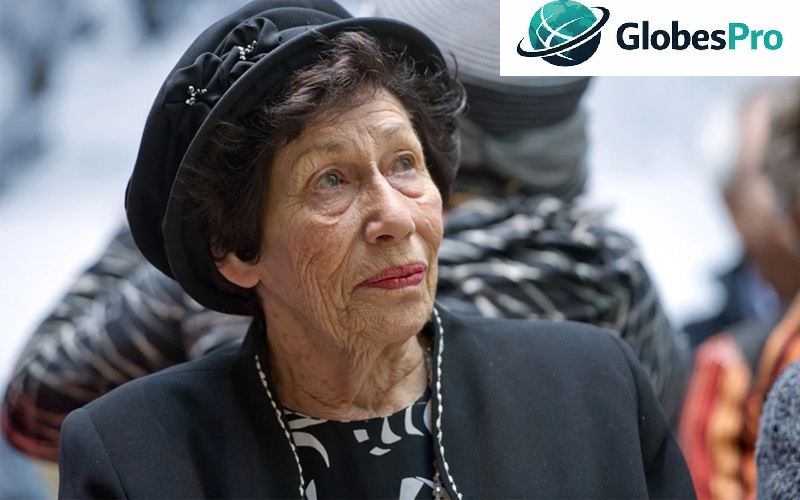
Hannah pick-goslar, known to millions as “Hanneli” from the pages of Anne Frank’s diary, was a Holocaust survivor whose life story serves as one of the most vital links to the history of the Jewish experience during World War II. Born on November 12, 1928, in Berlin, she became a resident of Amsterdam where she formed an inseparable bond with Anne Frank. While she is often remembered through the lens of that friendship, her own survival is a monumental feat of endurance; she navigated the transit camp of Westerbork and the brutal conditions of the Bergen-Belsen concentration camp while acting as the sole protector for her younger sister, Gabi.
The definitive answer to her historical significance lies in her final meetings with Anne Frank in February 1945. Separated by a barbed-wire fence draped with straw, Hannah risked her life to throw a bundle of food to a starving Anne, providing a rare moment of humanity in a place designed for destruction. After the war, Hannah emigrated to Israel, became a nurse, and spent her long life ensuring that the true, human side of the victims was never forgotten. She passed away in 2022 at the age of 93, having fulfilled her self-imposed mission to be a voice for those who were silenced.
Biographical Profile
| Detail | Information |
| Full Name | Hannah Elisabeth Pick-Goslar |
| Maiden Name | Goslar |
| Nickname | Hanneli |
| Date of Birth | November 12, 1928 |
| Place of Birth | Berlin, Weimar Republic |
| Date of Death | October 28, 2022 |
| Place of Death | Jerusalem, Israel |
| Parents | Hans Goslar and Ruth Judith Klee |
| Spouse | Walter Pinchas Pick |
| Camps Survived | Westerbork, Bergen-Belsen |
| Occupation | Nurse, Holocaust Educator |
The Early Years: From Berlin to Amsterdam
The life of hannah pick-goslar began in a household of high intellectual and political standing. Her father, Hans Goslar, was the deputy minister for domestic affairs in the Weimar Republic, and her mother, Ruth Judith Klee, came from a distinguished family. This background of privilege was quickly eroded when the Nazi Party rose to power in 1933. Recognizing the existential threat, the Goslars moved to London briefly before settling in Amsterdam, where Hans hoped to find a stable environment for his family.
It was in Amsterdam, at the 6th Montessori School, that Hannah met Anne Frank. The two girls were part of a close-knit group of Jewish refugees. Hannah often recalled that Anne was a “spicy” child—vivacious, talkative, and prone to mischief—while Hannah was more reserved and observant. Their childhood was a mixture of typical adolescent joy and the creeping dread of Nazi decrees. They played marbles and shared secrets, oblivious for a time that the world was closing in on them. When the German occupation of the Netherlands began in 1940, the “Little Circle” of friends began to fracture as anti-Jewish laws dictated where they could walk, shop, and go to school.
The Great Disappearance
In July 1942, a pivotal moment occurred that would haunt Hannah for years. She went to the Frank house to borrow a scale, only to find the apartment empty and in disarray. A neighbor told her that the family had fled to Switzerland. For the next several years, Hannah lived with the belief that her best friend was safe in a neutral country. In reality, the Franks had moved into the Secret Annex just a few miles away.
This period was also one of profound personal tragedy for Hannah. Her mother died in childbirth in late 1942, leaving the fourteen-year-old girl to care for her baby sister, Gabi, and her aging father. The family’s only hope lay in their status as “Exchange Jews.” Hans Goslar had managed to obtain South American passports and recognition as Zionist activists, which placed them on a list of people who might be traded for German prisoners of war. This status was a thin shield, but it was the only thing that kept them from being sent to the gas chambers of Poland.
The Descent into Bergen-Belsen
In June 1943, the Goslars were arrested and sent to Westerbork. In February 1944, they were moved to Bergen-Belsen. Unlike the extermination camps, Bergen-Belsen was initially designed as a holding facility. However, as the war progressed, it became a site of mass starvation and disease. Hannah found herself in the “Star Camp,” a section where prisoners were allowed to stay in family units and keep their own clothes, though they were still subjected to grueling forced labor and meager rations.
Hannah’s daily life was a battle against entropy. She had to manage her father’s declining health and ensure that young Gabi remained hidden and fed. She worked in the “shoe commando,” a labor detail where prisoners spent twelve hours a day cutting the leather off old shoes to be recycled. The psychological pressure was immense; she was a teenager bearing the weight of an entire family’s survival in a place where death was the only constant.
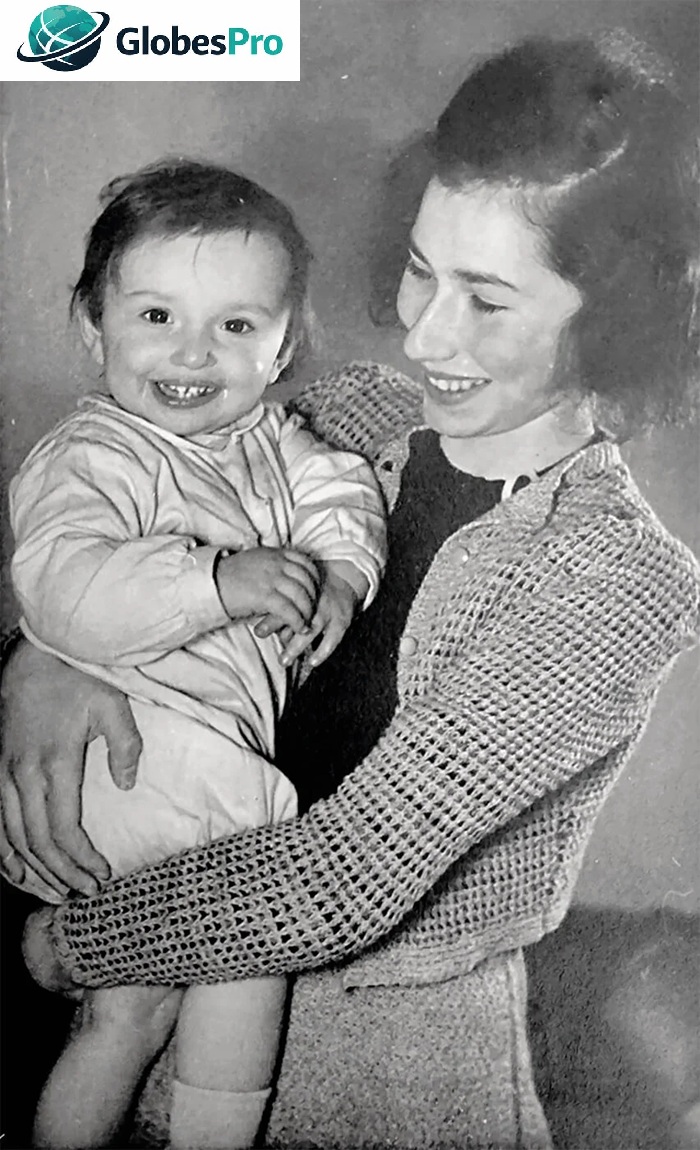
The Fence: A Final Reunion
The most famous chapter of her life occurred in early 1945. Hannah learned that a group of Dutch Jews had arrived in the “Lower Camp,” a much harsher section of Bergen-Belsen separated from her by a high, straw-filled barbed-wire fence. Through whispers and luck, she discovered that Anne Frank was among them. When they finally spoke through the fence, the reunion was not joyous; it was a scene of utter despair. Anne, who was once so full of life, was weeping, her spirit broken by the belief that her parents were dead.
Hannah managed to collect some crackers and a pair of stockings from other prisoners in her section. She threw the bundle over the fence. On the first attempt, another prisoner caught it and ran away. On the second attempt, Anne caught the package. It was the last time they would ever speak. Anne died shortly after, just weeks before liberation. Hannah’s account of this meeting provided the world with the only testimony of Anne’s final days, stripping away the idealized version of the girl in the attic and replacing it with the reality of a victim of systemic cruelty.
Survival and the Lost Train
As the war neared its end, the Nazis attempted to hide their crimes by moving prisoners. Hannah and Gabi were forced onto a train that wandered the rails for thirteen days with no food and little water. Their father died shortly before this journey, and Hannah herself was suffering from advanced typhus. When the train was finally liberated by Soviet soldiers in the village of Troebitz, the sisters were among the few survivors.
Hannah’s recovery was slow. She spent months in a hospital, eventually reuniting with Otto Frank, the only member of the Frank family to survive. Otto treated Hannah as a surrogate daughter, helping her and Gabi move to Switzerland for rehabilitation. In 1947, fulfilling her father’s dream, Hannah emigrated to the British Mandate of Palestine, which would soon become the State of Israel.
Timeline of Key Events
| Period | Location | Key Event |
| 1933 | Berlin to Amsterdam | Fleeing Nazi Germany |
| 1934-1942 | Amsterdam | Childhood friendship with Anne Frank |
| 1942 | Amsterdam | Death of mother; Franks go into hiding |
| 1943 | Westerbork | Arrest and first stage of deportation |
| 1944 | Bergen-Belsen | Arrival at the “Star Camp” |
| 1945 (Feb) | Bergen-Belsen | Last meeting with Anne Frank at the fence |
| 1945 (April) | Troebitz | Liberation from the “Lost Train” |
| 1947 | Israel | Emigration and start of professional life |
| 1997 | Global | Publication of her memoirs with Alison Leslie Gold |
A Legacy of Education
In Israel, Hannah lived a life of quiet but determined service. She trained as a pediatric nurse, a role that allowed her to care for the next generation of children in a way she had once cared for Gabi. She married Walter Pick and had three children, eleven grandchildren, and over thirty great-grandchildren. She often remarked that her large family was her greatest “revenge” against the Nazis.
In her later years, hannah pick-goslar became a global ambassador for Holocaust memory. She traveled the world, speaking to students and historians. She was adamant that Anne Frank should not be viewed as a saintly figure or a fictional character, but as a real girl who was robbed of her future. Her collaboration with author Alison Leslie Gold on the book Memories of Anne Frank became a bestseller and was later adapted into the film My Best Friend Anne Frank.
Conclusion: The Unbroken Link
The life of hannah pick-goslar is a narrative of profound transitions—from a privileged child in Berlin to a starving prisoner in Germany, and finally to a respected matriarch in Jerusalem. Her survival was not merely a matter of luck; it was the result of her iron-willed dedication to her sister and her ability to maintain her humanity in a world that had discarded it. By sharing her story, she bridged the gap between the silent pages of a diary and the living memory of the Holocaust.
When she passed away in 2022, the world lost one of the last remaining links to the inner circle of the Frank family. However, the work of hannah pick-goslar remains. Through her testimony, she ensured that the lessons of the past were not buried in the archives but were instead kept alive in the hearts of those who listen. She proved that while hate is powerful, the bond of friendship and the duty of a witness are ultimately more enduring
