

Who Is Bobby Flay?
Bobby Flay is an American celebrity chef, restaurateur, television personality, and author who has spent more than three decades building one of the most recognizable brands in the food industry. He is best known for his bold Southwestern cooking style, his long-running presence on the Food Network, and his competitive television format — most notably Beat Bobby Flay and Iron Chef America — that turned cooking into must-watch entertainment.
If you’re here for the quick answer: Bobby Flay is a 60-year-old Manhattan-born chef with an estimated net worth of $60 million, making him one of the wealthiest celebrity chefs in the world. He is still actively cooking, still on television, and still opening restaurants in 2025. His journey from high school dropout to food empire is one of the more genuinely compelling stories in modern American culture.
Quick Facts – Bobby Flay
| Detail | Info |
|---|---|
| Full Name | Robert William Flay |
| Date of Birth | December 10, 1964 |
| Place of Birth | Manhattan, New York City |
| Nationality | American |
| Occupation | Chef, Restaurateur, TV Personality, Author |
| Years Active | 1982 – Present |
| Known For | Beat Bobby Flay, Iron Chef America, Mesa Grill, Southwestern cuisine |
| Restaurants | Amalfi, Bobby’s Burgers, Brasserie B, Bobby Flay Steak |
| TV Shows | 16+ Food Network productions |
| Marriages | Debra Ponzek (1991–93); Kate Connelly (1995–98); Stephanie March (2005–15) |
| Children | Sophie Flay (b. 1996) |
| Net Worth | $60 Million (2025) |
| Awards | James Beard Award, Hollywood Walk of Fame Star |
Early Life – A Manhattan Kid Who Didn’t Fit the Mold
Bobby Flay was born Robert William Flay on December 10, 1964, in Manhattan, New York City. He grew up on the affluent Upper East Side — a world of private schools and clear expectations — and managed to feel out of place in almost all of it.
His parents divorced when he was young. His father Bill was a partner at a prominent law firm. His mother Dorothy raised him primarily, and by most accounts, the household was comfortable in every material sense. What it couldn’t provide was a path that made sense to Bobby.
School never worked for him. He was disinterested, easily distracted, and heading nowhere fast academically. The one early sign of what was coming was almost comically on-the-nose — as a young child watching cartoons, he saw an advertisement for an Easy-Bake Oven and immediately wanted one. His parents got it for him. He loved it.
His father, trying to give him some direction, got him a job at a Baskin-Robbins ice cream shop. Bobby hated it. Ice cream, it turned out, was not the point. The kitchen was.
He dropped out of high school at 17 and took a job making salads at Joe Allen Restaurant in New York’s Theatre District. It was unglamorous work. It was also the moment everything changed.
The Deal That Changed Everything
Joe Allen — the restaurant’s owner — noticed something in the teenage kid making salads. Natural instinct, genuine curiosity, a willingness to learn that hadn’t shown up anywhere in a classroom.
Allen made him an offer: he would pay Bobby’s tuition at the French Culinary Institute in Manhattan if Bobby committed to the craft seriously.
Bobby’s father also stepped in to support his son’s tuition. Two men — his employer and his father — saw potential in a high school dropout that he was only beginning to recognize in himself.
In 1984, Bobby graduated from the French Culinary Institute as a member of its first graduating class, earning a degree in culinary arts. The education gave him technique, discipline, and a framework for the instincts he already had.
Without either of those two men making that investment, the story ends very differently.
Early Career – Finding His Flavors
After graduating, Flay worked his way through New York’s demanding restaurant scene. He took on a sous chef role, then was unexpectedly promoted to executive chef at the Brighton Grill on Third Avenue when the previous chef was fired.
He took the job — and then quit it. Not because he couldn’t handle the pressure, but because he was honest enough with himself to know he wasn’t ready to run a kitchen alone. That self-awareness, at that age, in that industry, is genuinely rare.
The pivotal culinary influence during this period was chef Jonathan Waxman, who introduced Flay to Southwestern flavors — bold chiles, aggressive spice, grilling techniques that Manhattan’s fine dining scene had largely ignored. It wasn’t French. It wasn’t Italian. It was something different, something with real energy, and Flay recognized the opportunity immediately.
The Southwestern influence never left him. It became the foundation of everything he built.
Mesa Grill – The Restaurant That Started the Empire
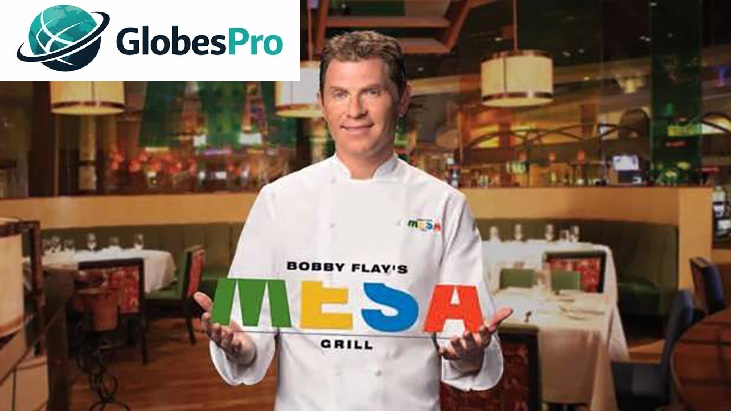
In 1991, Bobby Flay opened Mesa Grill in Manhattan’s Flatiron District at the age of 26. The concept was simple and bold: Southwestern flavors, done seriously, in one of the most competitive restaurant markets in the world.
New York diners responded. Critics paid attention. The New York Times awarded it two stars. The James Beard Foundation named Flay its Rising Star Chef of the Year in 1993 — an industry recognition that carries genuine weight.
Mesa Grill was revolutionary for its moment. It introduced mainstream American diners to Southwestern cuisine as a serious culinary category — not Tex-Mex, not casual, but thoughtfully constructed food with real depth of flavor.
The restaurant ran for more than two decades before closing in 2013. Twenty-two years for a Manhattan restaurant isn’t luck — it’s a concept that genuinely worked, maintained over a very long time.
International expansions followed — Las Vegas and the Bahamas — before the concept ultimately wound down. Flay has spoken about the closure with the kind of pragmatic acceptance of someone who understands the restaurant business clearly: things open, things close, what matters is what you built while it was running.
Television Career – From Chef to Superstar
Bobby Flay joined the Food Network in 1994, among its earliest roster of on-air talent. His first show, Grillin’ & Chillin’, premiered in 1996 and established what would become a 30-year television relationship.
What the camera revealed was something that can’t be taught: natural presence. Flay understood intuitively how to talk to an audience, how to make technical cooking feel exciting and accessible, and how to project confidence without tipping into arrogance. At least most of the time.
Full TV Show History
| Show | Network | Years | Format |
|---|---|---|---|
| Grillin’ & Chillin’ | Food Network | 1996–1999 | Grilling instruction |
| Hot Off the Grill | Food Network | 1999–2000 | Cooking show |
| Boy Meets Grill | Food Network | 1997–2009 | Signature grilling |
| Iron Chef America | Food Network | 2004–2018 | Competition |
| Throwdown! with Bobby Flay | Food Network | 2006–2010 | Challenge format |
| BBQ Addiction | Food Network | 2011–2014 | BBQ techniques |
| Brunch @ Bobby’s | Food Network | 2010–2016 | Brunch cooking |
| Beat Bobby Flay | Food Network | 2013–Present | Competition |
| Bobby’s Triple Threat | Food Network | 2022–Present | Team competition |
Across more than 16 shows and specials, Flay has been one of the Food Network’s most consistent and commercially valuable personalities. His contract with the network, at its peak, was reported to be worth around $100 million — a figure that reflects both his individual draw and his production involvement.
The Iron Chef Moment – Standing on the Cutting Board
No discussion of Bobby Flay on television is complete without the cutting board story.
When the original Japanese Iron Chef came to American television, Flay was invited to compete. He later described the call as one of the greatest of his life. The show carried enormous prestige in culinary circles even before it crossed the Pacific.
After winning his battle, Flay climbed up and stood on his cutting board in a moment of triumph. In Japanese culinary culture, this was considered deeply disrespectful. A cutting board is a tool that deserves reverence — standing on it is an insult to the craft. The moment caused genuine controversy both in Japan and among serious American food people.
Flay later acknowledged the cultural misstep. But the moment also — accidentally, ironically — made him internationally famous overnight. It became one of the most talked-about incidents in food television history.
Beat Bobby Flay took that competitive energy and built an entire franchise around it. Two chefs compete, the winner faces Bobby. The format works because Flay understood something essential about American television: audiences love confidence, and they love watching confident people get tested. He delivered on both sides of that equation consistently.
Restaurant Empire – Every Concept
Over three decades, Flay has opened more than 20 restaurant concepts. Not all survived — that’s the honest reality of the restaurant industry — but the portfolio at its peak was genuinely impressive, and the current operating roster remains strong.
| Restaurant | Concept | Location | Status |
|---|---|---|---|
| Mesa Grill | Southwestern fine dining | NYC, Las Vegas, Bahamas | Closed (2013–2017) |
| Bolo | Spanish-influenced | NYC | Closed |
| Bar Americain | American brasserie | NYC, Connecticut | Closed |
| Bobby Flay Steak | Steakhouse | Atlantic City | Operating |
| Bobby’s Burger Palace | Fast casual | Multiple US | Operating |
| Bobby’s Burgers | Burger chain | Multiple locations | Operating |
| Gato | Mediterranean | NYC | Closed |
| Amalfi by Bobby Flay | Italian coastal | Las Vegas (Caesars) | Operating |
| Brasserie B | Parisian steakhouse | Las Vegas (Caesars) | Operating (opened 2024) |
His Las Vegas presence at Caesars Palace has been particularly strong and consistent. Amalfi and Brasserie B represent his current flagship fine dining presence, and both have received strong reviews since opening.
Bobby Flay Net Worth – The Full Breakdown
Bobby Flay’s estimated net worth of $60 million is built across multiple streams developed over 30+ years of consistent work.
| Income Source | Estimated Contribution | Notes |
|---|---|---|
| Food Network TV contracts | Very High | Peak contract ~$100M reported |
| Restaurant revenue | High | Multiple operating concepts |
| Cookbook sales | Significant | 14+ books, multiple bestsellers |
| Brand endorsements | Moderate | Kohl’s, Campbell’s, others |
| Production company | Growing | Owns show production rights |
| Made By Nacho (cat food) | Supplementary | Launched 2021 |
| Horse racing and breeding | Supplementary | Serious investment |
| Real estate | Significant | Properties in NYC and LA |
Annual income is estimated at around $2 million from combined restaurant and television activity, not counting investment returns, royalties, or other passive income streams.
What’s notable about how Flay talks about money is the groundedness. He once said, “You’ve got to flip a lot of burgers to make $1 million” — the kind of line that only makes sense coming from someone who actually started by making salads at someone else’s restaurant.
Cookbooks – Building the Brand on the Page
Flay has authored more than 14 cookbooks, most of them genuine bestsellers rather than celebrity vanity projects. They reflect his actual cooking philosophy and have sold millions of copies worldwide.
| Book | Year | Theme |
|---|---|---|
| Bobby Flay’s Bold American Food | 1994 | Southwestern debut |
| Bobby Flay’s From My Kitchen to Your Table | 1998 | Everyday cooking |
| Boy Gets Grill | 2004 | Outdoor grilling |
| Bobby Flay’s Grill It! | 2008 | Grilling techniques |
| Bobby Flay Fit | 2017 | Health-focused cooking |
| Bobby Flay’s Bar Americain Cookbook | 2011 | Restaurant recipes |
| Bobby at Home | 2019 | Home cooking |
His cookbook output has been consistent enough that it functions as both a revenue stream and a brand reinforcement tool — every new book reintroduces him to home cooks who may not follow the television side as closely.
Personal Life – Three Marriages and One Daughter
Bobby Flay’s personal life has been as public as his professional one, sometimes uncomfortably so.
His first marriage was to fellow chef Debra Ponzek in 1991. They were both young and ambitious, and the marriage didn’t survive the pressure of two serious culinary careers in the same city. They divorced in 1993.
His second marriage was to Kate Connelly, a television host, in 1995. Their daughter Sophie was born in 1996. That marriage also ended, in 1998.
His third and most high-profile marriage was to actress Stephanie March — known for her role as ADA Alexandra Cabot on Law & Order: SVU — in 2005. The relationship had genuine longevity and public warmth for a decade before it collapsed very publicly in 2015. The divorce proceedings were tabloid fodder, with allegations of infidelity and a messy financial dispute playing out in the press. It was a difficult period that Flay handled about as well as anyone can handle their personal life being dissected publicly.
More recently, Bobby has been linked romantically to Brooke Williamson, his co-host on Bobby’s Triple Threat, following her divorce finalization in early 2024.
Sophie Flay – The Next Generation

Sophie Flay, Bobby’s daughter with Kate Connelly, has built her own media career as a journalist and on-air personality — separate from and independent of her father’s name, even while occasionally appearing alongside him.
The Always Hungry podcast, which Bobby hosts with Sophie, is one of the more genuine and relaxed versions of Bobby Flay that fans get to see. He’s clearly proud of her, and she’s clearly her own person with her own perspective on food, culture, and the industry she grew up adjacent to.
Sophie represents the next chapter — not a succession plan, but a continuation of something that started in a family kitchen and turned into something much larger.
The Side of Bobby Flay Nobody Talks About – Cat Food and Racehorses
Here’s where the story gets genuinely surprising.
In 2021, Flay launched a premium cat food brand called Made By Nacho, named after his cat Nacho. It became a legitimate business — a real product that found a real market — not a celebrity stunt.
Then there are the racehorses. Flay owns and breeds thoroughbred racehorses and has described horse racing as his second business alongside food — one he takes just as seriously. He has been involved in the racing world for years, investing real time and money into it, not just lending his name.
It adds up to a picture of someone whose entrepreneurial instincts extend well beyond a kitchen or a TV studio.
Awards & Recognition
| Award | Year | Notes |
|---|---|---|
| James Beard Award – Rising Star Chef | 1993 | Industry’s highest recognition |
| French Culinary Institute Outstanding Graduate | 1993 | Alumni recognition |
| Hollywood Walk of Fame Star | 2015 | First TV chef ever honored |
| Multiple Daytime Emmy nominations | Various | Television recognition |
| Food Network Icon | Ongoing | 30+ years of industry standing |
His Hollywood Walk of Fame star in 2015 was a genuine milestone — not just for him personally but for food television as a medium. He was the first television chef to receive the honor, which marked a cultural acknowledgment that what chefs do on screen has genuine entertainment value and lasting cultural impact.
Bobby Flay’s Cooking Philosophy
Ask Bobby Flay what he believes about food and the answer has been remarkably consistent for 30 years.
Bold flavors over complexity. Honest ingredients over pretension. Cook for your audience, not for critics.
His signature elements — roasted chiles, aggressive spice rubs, flame-forward grilling, unexpected ingredient combinations — haven’t changed because they work. He found something that was authentically his and committed to it completely rather than chasing whatever trend was dominating food media at any given moment.
He has said repeatedly that his success in New York specifically comes from understanding New York diners — what they want, how they want it, what they’ll respond to. It sounds simple. It took decades to develop and is harder to replicate than it looks.
His philosophy extends to the business side too. He genuinely believes that restaurants are ultimately about people — the people who cook, the people who eat, and the relationship between them. It’s a philosophy that has survived three decades of industry change remarkably intact.
What Is Bobby Flay Doing in 2025?
Bobby Flay is as active in 2025 as he has been at any point in his career.
On the restaurant side, Brasserie B at Caesars Palace in Las Vegas — his Parisian steakhouse concept opened in 2024 — is his newest and most talked-about venture. Amalfi continues to perform strongly in Las Vegas. Bobby’s Burgers is expanding its footprint across multiple US locations.
On television, Bobby’s Triple Threat returned for its fourth season on the Food Network in September 2025, with Flay competing alongside co-hosts Brooke Williamson, Michael Voltaggio, and Ayesha Nurdjaja against rotating challenger chefs.
The Always Hungry podcast with Sophie continues to build an audience. His Made By Nacho cat food brand continues to grow. His horse racing interests remain active.
He is also chef-in-residence at Misfits Market, a food and produce delivery service, adding another dimension to a portfolio that refuses to stop expanding.
Cultural Legacy – What Bobby Flay Meant for American Food
Bobby Flay’s cultural contribution goes beyond the sum of his restaurants and television credits.
He took Southwestern cuisine — regional, underrepresented in fine dining, largely invisible to New York’s food establishment — and put it on the national map at a moment when the industry was ready to receive it. That required courage and conviction that the food world often doesn’t give him enough credit for.
He made grilling a serious culinary art form rather than a backyard hobby. His television work, at its best, communicated that outdoor cooking deserves the same respect and technique as anything happening in a professional kitchen.
He brought chef culture to mainstream American television in a way that made the industry exciting and accessible to millions of people who would never have picked up a food magazine. The generation of home cooks and aspiring chefs who grew up watching him on the Food Network is enormous — and the influence is real.
The Southwestern niche he carved also proved strategically brilliant. While dozens of chefs competed in French, Italian, and contemporary American categories, Flay owned a territory with fewer serious competitors. The positioning protected his brand from the commodity comparisons that eroded others.
Conclusion
Bobby Flay’s story starts with a kid on the Upper East Side who couldn’t sit still in a classroom, saw an ad for an Easy-Bake Oven during Saturday morning cartoons, and felt something wake up that never went back to sleep.
It runs through a high school dropout making salads at someone else’s restaurant, through culinary school paid for by a generous employer and a supportive father, through the bold bet of Mesa Grill at 26, through 30 years of Food Network television, through marriages and divorces played out too publicly, through cat food and racehorses and podcast episodes recorded with his daughter.
He once told aspiring restaurant workers to make different choices than he did. Stay in school. Don’t drop out. Take summer jobs in good kitchens and see if you actually love it before committing. There’s real self-awareness in that advice — a recognition of how much of his success depended on luck, on two men who believed in him, on timing that could easily have gone another way.
At 60, with $60 million built across three decades, new restaurants still opening in Las Vegas, television still calling, and a daughter carving out her own place in the same industry — Bobby Flay is proof that the right passion, pursued with discipline and competitive fire and a willingness to keep betting on yourself, can build something that genuinely lasts.
