

Thomas Boone Quaid is the fraternal twin son of acclaimed Hollywood actor Dennis Quaid and his third wife, real estate professional Kimberly Buffington. Born on November 8, 2007, alongside his twin sister Zoe Grace Quaid, Thomas entered the world prematurely via surrogate and immediately faced a life-threatening medical crisis that would make international headlines. Just twelve days after birth, Thomas and his sister were victims of a catastrophic medical error at Cedars-Sinai Medical Center in Los Angeles, receiving a heparin dosage 1,000 times stronger than prescribed. The twins survived this harrowing incident, which sparked widespread discussions about patient safety and medical protocols, and their parents became vocal advocates for healthcare reform to prevent similar errors from harming other families.
Thomas Boone Quaid has grown up in the unique intersection of Hollywood privilege and protective parenting, with his famous father working to balance a high-profile career against his children’s need for privacy and normalcy. Now seventeen years old, Thomas represents a generation of celebrity children whose parents have learned from past mistakes in how fame affects young lives. While his father Dennis continues working in film and television with recent projects keeping him in the public eye, Thomas has been raised largely away from cameras and media attention, allowed to develop his own identity separate from his father’s decades-long entertainment legacy.
| Personal Information | Details |
|---|---|
| Full Name | Thomas Boone Quaid |
| Date of Birth | November 8, 2007 |
| Place of Birth | Santa Monica, California |
| Age | 17 years old |
| Parents | Dennis Quaid (father), Kimberly Buffington (mother) |
| Siblings | Zoe Grace Quaid (fraternal twin sister), Jack Quaid (half-brother) |
| Birth Circumstances | Premature birth via gestational surrogate |
| Medical Incident | Heparin overdose at 12 days old (survived) |
| Nationality | American |
| Heritage | Irish, English, Scots-Irish descent |
| Current Residence | United States |
| Public Presence | Minimal, protected by parents |
The Medical Crisis That Defined His Beginning
The story of Thomas Boone Quaid’s early days cannot be told without addressing the medical emergency that nearly claimed both his and his sister’s lives. On November 18, 2007, when the twins were merely twelve days old, they were being treated at Cedars-Sinai Medical Center for a staph infection—a relatively common complication for premature infants that typically responds well to treatment. However, what happened next transformed a routine medical situation into a parent’s worst nightmare and a national news story about healthcare safety.
Due to a pharmacy error, Thomas and Zoe Grace were administered heparin, a blood-thinning medication, at a concentration of 10,000 units per milliliter instead of the prescribed 10 units per milliliter. This represented a dosage error of 1,000 times the intended amount—a catastrophic mistake that put both infants at extreme risk for internal bleeding and other life-threatening complications.
The Medical Error Timeline
| Date | Event | Details |
|---|---|---|
| November 8, 2007 | Birth | Thomas and Zoe born prematurely via surrogate |
| Mid-November 2007 | Staph Infection | Twins develop infection, hospitalized |
| November 18, 2007 | First Wrong Dose | Heparin overdose administered |
| November 19, 2007 | Second Wrong Dose | Error repeated despite concerns |
| November 20, 2007 | Error Discovered | Medical staff realize the mistake |
| Following Days | Intensive Monitoring | Close observation for bleeding complications |
| Weeks After | Recovery | Both twins survive without long-term damage |
| 2008-2009 | Legal Action | Quaid family files lawsuit against manufacturer |
The error was compounded by the fact that it occurred not once but twice—the incorrect dosage was given on two consecutive days before medical staff discovered the mistake. During those critical hours, Dennis Quaid and Kimberly Buffington faced the terrifying possibility of losing both their newborn children to a preventable error.
Remarkably, both Thomas and Zoe Grace survived the overdose without apparent long-term health consequences. The incident required intensive monitoring and medical intervention, with doctors watching closely for signs of internal bleeding or other complications that could have resulted from the excessive blood thinner in their tiny bodies.
Becoming Advocates for Patient Safety
The trauma of nearly losing Thomas and his sister transformed Dennis Quaid from simply a concerned parent into a passionate advocate for patient safety and medical error prevention. Rather than simply accepting a settlement and moving on, the Quaid family chose to use their platform and the media attention surrounding the incident to push for systemic changes in healthcare protocols.
Dennis became particularly vocal about the importance of barcode scanning systems in hospitals, standardized drug packaging, and improved communication protocols between pharmacy and nursing staff. He testified before Congress, gave interviews about their experience, and worked with patient safety organizations to raise awareness about preventable medical errors.
Patient Safety Advocacy Outcomes
| Initiative | Focus | Impact |
|---|---|---|
| Congressional Testimony | Medical error prevention | Raised national awareness |
| Lawsuit Against Baxter Healthcare | Drug packaging issues | Highlighted labeling problems |
| Public Speaking | Patient advocacy | Education for families |
| Media Appearances | Sharing their story | Wider discussion of safety protocols |
| Support for Safety Organizations | Systemic change | Contributing to policy reform |
For Thomas, this advocacy work by his parents means that his near-death experience as a newborn has contributed to making healthcare safer for countless other infants and patients. The Quaid family’s willingness to speak publicly about what happened helped shine a light on an issue that often remains hidden—medical errors that result from systemic problems rather than individual negligence.
Growing Up as Dennis Quaid’s Son
Thomas Boone Quaid’s life beyond that initial medical crisis has been shaped significantly by who his father is and the choices Dennis has made about parenting in the public eye. Dennis Quaid has been a Hollywood fixture since the late 1970s, with a career spanning over four decades and including memorable roles in films like “The Right Stuff,” “The Parent Trap,” “Frequency,” “The Day After Tomorrow,” and more recently “A Dog’s Purpose” and “I Can Only Imagine.”
This level of sustained fame means that Thomas has never known a life where his father isn’t recognized in public. However, Dennis appears to have learned from his previous experiences as a parent—Thomas’s much older half-brother Jack Quaid, born in 1992 to Dennis and actress Meg Ryan, grew up during the peak of both parents’ fame in a different media environment.
Family Structure and Relationships
| Family Member | Relationship | Age Gap | Shared Experience |
|---|---|---|---|
| Zoe Grace Quaid | Fraternal Twin Sister | Same Age | Shared birth trauma, daily life |
| Jack Quaid | Half-Brother | 15 years older | Different generations, same father |
| Dennis Quaid | Father | 51 years older | Active parenting relationship |
| Kimberly Buffington | Mother | Approximately 30 years older | Primary caregiver during childhood |
| Laura Savoie | Stepmother | Married to Dennis since 2020 | Part of extended family structure |
The fifteen-year age difference between Thomas and his half-brother Jack means they’ve had very different childhood experiences. Jack grew up in the 1990s during the height of his parents’ fame and their very public relationship and subsequent divorce. By the time Thomas was born, social media was just emerging, and the media landscape was changing in ways that allowed for more control over privacy.
Navigating Parents’ Divorce
Like his twin sister Zoe Grace, Thomas’s childhood has been significantly affected by his parents’ lengthy and complicated divorce process. Dennis Quaid and Kimberly Buffington first filed for divorce in 2012, when Thomas was just five years old. However, the situation became more complex when the couple attempted reconciliation before ultimately separating for good.
The divorce wasn’t finalized until 2018, meaning that Thomas spent a significant portion of his childhood—from age five to age eleven—in a state of family uncertainty. This extended timeline of separation, attempted reconciliation, and eventual divorce created an unstable family structure during crucial developmental years.
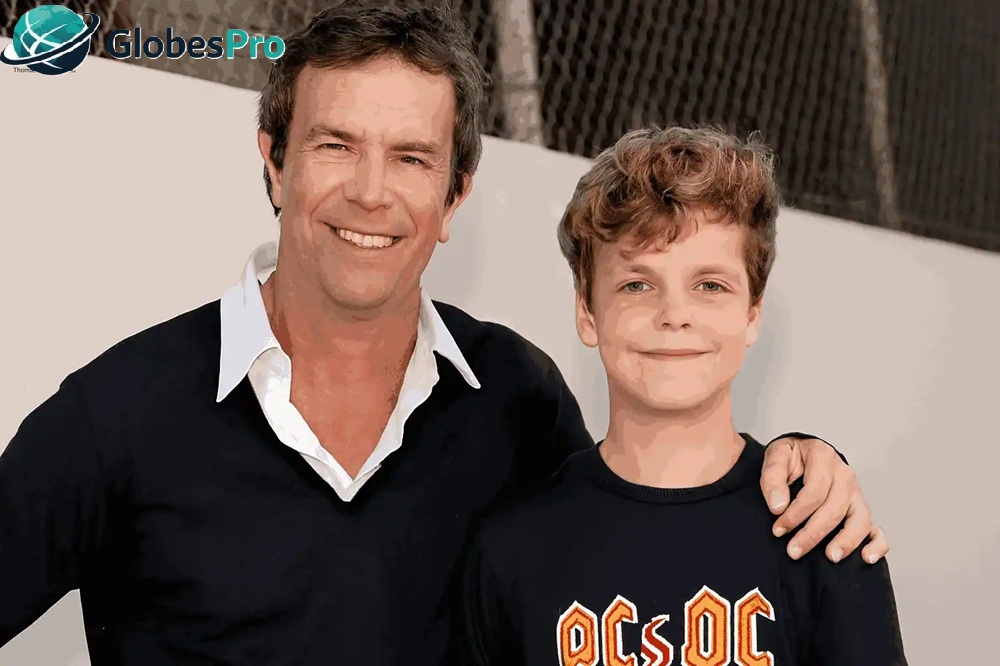
Impact of Divorce on Thomas’s Childhood
| Age | Year | Family Status | Developmental Stage |
|---|---|---|---|
| 5 | 2012 | First divorce filing | Early childhood |
| 6 | 2013 | Attempted reconciliation | Starting school |
| 9 | 2016 | Second separation | Middle childhood |
| 11 | 2018 | Divorce finalized | Pre-adolescence |
| 13 | 2020 | Dennis remarries Laura Savoie | Early teens |
| 17 | 2025 | Current situation | Late adolescence |
The divorce proceedings addressed custody arrangements, child support, and how Thomas and Zoe Grace would divide their time between their parents. Both Dennis and Kimberly have reportedly worked to maintain a functional co-parenting relationship despite their personal differences, recognizing the importance of stability for their children.
For Thomas, this meant adapting to life split between two households, different routines in each home, and the emotional complexity of loving both parents who could no longer maintain their marriage. The addition of Dennis’s new wife, Laura Savoie—whom he married in 2020 when Thomas was thirteen—added another layer to the family dynamics.
Education and Personal Interests
While specific details about Thomas Boone Quaid’s education are kept private for security and privacy reasons, we can infer certain aspects based on his family’s resources and location. Growing up in California with access to his father’s considerable wealth means Thomas likely has opportunities for excellent educational experiences, whether through elite private schools or well-resourced public institutions.
The teen years are critical for identity formation and discovering personal interests and talents. For Thomas, these years involve determining who he is separate from being “Dennis Quaid’s son” or “the twin who survived a medical error.” Whether he has interests in sports, academics, arts, technology, or other pursuits remains private, reflecting his parents’ decision to protect his personal development from public scrutiny.
Potential Aspects of His Upbringing
| Category | Likely Elements |
|---|---|
| Schooling | High-quality private or public education |
| Activities | Sports, arts, music, or academic pursuits |
| Travel | Exposure to different cultures and places |
| Technology | Growing up as digital native |
| Social Life | Friendships both within and outside entertainment circles |
| Privacy | Limited social media presence or private accounts |
The challenge for any parent raising teenagers in the modern era is managing technology use and social media presence. For someone like Thomas, whose father is famous, this challenge is amplified. Does Thomas have Instagram or TikTok accounts? If so, are they private? How does he navigate classmates and friends knowing who his father is? These questions represent the everyday reality of growing up as a celebrity child in the digital age.
The Twin Bond with Zoe Grace
Perhaps the most significant relationship in Thomas Boone Quaid’s life is with his fraternal twin sister, Zoe Grace. From their shared traumatic beginning—surviving the heparin overdose together—to navigating their parents’ divorce and their father’s fame, Thomas and Zoe Grace have shared every major experience of their lives.
Twin relationships are unique in human development. Twins literally share their entire existence from conception, experiencing family events, developmental milestones, and life changes in parallel. For Thomas and Zoe Grace, this bond is intensified by their shared medical crisis as newborns, an experience that created a literal life-or-death connection between them that most siblings never face.
Research on twin development shows that twins often develop their own communication styles, provide each other emotional support in ways that even parents cannot replicate, and serve as constant companions during childhood. For Thomas, having Zoe Grace means always having someone who truly understands his specific family situation, his relationship with both parents, and his experience of growing up in unusual circumstances.
The Question of Following in Jack’s Footsteps
Thomas’s half-brother Jack Quaid has successfully built an acting career in his own right, becoming known for his role in the Amazon Prime series “The Boys” among other projects. Jack initially faced the challenge of being known as “Meg Ryan and Dennis Quaid’s son” but has managed to establish his own identity as a talented actor separate from his famous parents.
This creates an interesting dynamic for Thomas as he approaches adulthood. Does he have any interest in following his father and half-brother into the entertainment industry? Or will he deliberately choose a different path to establish an identity completely separate from the family business?
Career Path Considerations
| Option | Advantages | Challenges |
|---|---|---|
| Acting/Entertainment | Family connections, natural pathway | Living in father’s shadow, nepotism criticism |
| Different Creative Field | Using creativity differently | Still subject to comparisons |
| Non-Entertainment Career | Complete independence | Explaining why not acting |
| Education First | Delaying career decisions | Building foundation for any path |
The advantage Thomas has is time and resources to explore different interests before making major career decisions. Unlike many young people who must immediately pursue employment after high school or college, Thomas has the luxury of exploring passions, trying different experiences, and taking time to discover what genuinely interests him.
Life in the Social Media Era
Thomas Boone Quaid is part of Generation Z, growing up entirely in the age of smartphones, social media, and constant digital connectivity. For most teenagers, platforms like Instagram, TikTok, and Snapchat are central to social interaction and identity expression. However, for celebrity children, social media presents unique challenges and potential dangers.
The choice about whether and how to maintain a social media presence represents an important decision for Thomas and his parents. Some celebrity children embrace public social media accounts, building their own followings and sometimes becoming influencers in their own right. Others maintain strictly private accounts visible only to approved friends and family. Still others avoid social media entirely.
Thomas appears to have maintained a relatively low profile online, suggesting either private accounts or minimal social media presence. This restraint could reflect parental guidance about privacy, personal preference for keeping his life private, or both.
Dennis Quaid’s Later Life Choices
Dennis Quaid’s personal life has continued evolving as Thomas grows up. In 2020, Dennis married Laura Savoie, a doctoral student in philosophy who is significantly younger than him—closer in age to his son Jack than to Dennis himself. This marriage occurred when Thomas was thirteen, an age when family changes can be particularly challenging.
The introduction of a stepmother who is considerably younger than his father creates complex family dynamics that Thomas must navigate. While Dennis has expressed happiness in his new marriage, blended families always require adjustment from everyone involved, including teenage children from previous relationships.
Looking Toward Adulthood
As Thomas Boone Quaid approaches age eighteen and legal adulthood, questions naturally arise about his future path. Will he attend college? If so, where and what will he study? Will he pursue entertainment like his father and half-brother, or forge a completely different path? Will he use his platform—however reluctantly it may have been given to him—to advocate for causes like patient safety that affected his own life?
The answers to these questions remain to be seen, but what’s clear is that Thomas has a foundation of experiences—both challenging and privileged—that will inform whatever choices he makes. The medical crisis that began his life, his parents’ divorce, his father’s fame, and his twin sister’s companionship have all shaped who he is and who he’s becoming.
Conclusion
Thomas Boone Quaid represents a new generation of celebrity children—those whose parents have learned to balance public careers with children’s privacy needs, who grow up in the digital age with all its challenges and opportunities, and who must forge their own identities despite the weight of family legacy and public curiosity. His life began with a medical crisis that transformed his parents into patient safety advocates and brought international attention to preventable healthcare errors. Now seventeen, Thomas stands at the threshold between adolescence and adulthood, carrying experiences both traumatic and privileged that most people never encounter. Whether Thomas Boone Quaid chooses to step into the public eye or maintain the privacy his parents have worked to protect, his journey from that near-fatal medical error to healthy teenager represents a story of resilience, family complexity, and the ongoing challenge of growing up in extraordinary circumstances while seeking an ordinary life.
