
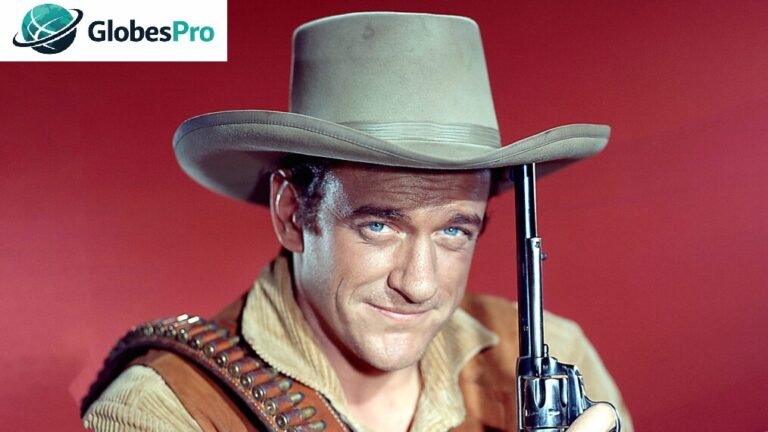
For twenty years, James Arness walked the streets of Dodge City as Marshal Matt Dillon — the longest-running lead performance in American primetime television history. He did not seek the role. He was not sure he wanted it. John Wayne personally talked him into taking it, told the audience it was worth their time in a filmed introduction, and then watched his friend become one of the most recognizable faces in the history of the medium.
Arness was more than a television star. He was a decorated World War II combat veteran who nearly lost his leg at Anzio, a man of genuine physical stature — six feet seven inches — who turned that presence into something quieter and more durable than conventional Hollywood stardom. He worked for two decades on a single show, raised a complicated family, endured profound personal loss, and remained largely indifferent to the celebrity machinery that surrounded him. That indifference may be the most interesting thing about him.
Wiki Info Table
| Field | Details |
|---|---|
| Full Name | James King Arness |
| Born | May 26, 1923 — Minneapolis, Minnesota |
| Died | June 3, 2011 — Brentwood, California (aged 88) |
| Nationality | American |
| Heritage | Norwegian and German |
| Father | Rolf Cirkler Aurness — businessman |
| Mother | Ruth Duesler Aurness |
| Brother | Peter Graves — actor (Mission: Impossible) |
| First Wife | Virginia Chapman (m. 1948 — div. 1960) |
| Second Wife | Janet Surtees (m. 1978 — div. 1981) |
| Third Wife | Janet Surtees (remarried 2003 — his death 2011) |
| Children | Rolf Arness; Jenny Lee Arness (1950–1975); Craig Arness |
| Education | Belzer Military Academy; University of Minnesota (attended briefly) |
| Military Service | U.S. Army — 3rd Infantry Division; wounded at Battle of Anzio, Italy (January 1944); Purple Heart |
| Occupation | Actor |
| Known For | Marshal Matt Dillon — Gunsmoke (CBS, 1955–1975) |
| Gunsmoke Run | 20 seasons; 635 episodes — longest-running American primetime drama |
| Other Notable Roles | The Thing from Another World (1951); Them! (1954); How the West Was Won (1978) |
| John Wayne Connection | Personal friend; Wayne recommended Arness for Gunsmoke and filmed the pilot introduction |
| Awards | Golden Globe — Best TV Actor (1959); Western Heritage Awards; TV Land Legend Award |
| Net Worth | ~$8 million at time of death |
| Personal Tragedy | Daughter Jenny Lee Arness died May 12, 1975 — ruled suicide |
Early Life: Minneapolis and the Aurness Family
James King Aurness — he later changed the spelling to Arness for his professional career — was born May 26, 1923, in Minneapolis, Minnesota, to Rolf Cirkler Aurness and Ruth Duesler Aurness. The family was Norwegian and German by heritage, solidly middle-class, and produced two sons who would each become recognizable American television faces through entirely different paths.
His younger brother Peter Graves — born James Arness’s junior by four years and who kept a variation of the family surname as his stage name — would go on to star in Mission: Impossible for seven seasons. Two brothers from Minneapolis becoming two of American television’s most enduring leading men is a coincidence the industry has never quite replicated.
Arness attended Belzer Military Academy and briefly enrolled at the University of Minnesota before the war interrupted everything. He was not yet twenty when his life took the turn that would define the decade that followed.
World War II: Anzio and Its Aftermath
James Arness served with the U.S. Army’s 3rd Infantry Division during World War II — one of the most decorated and most heavily engaged American divisions of the war. The 3rd Division fought in North Africa, Sicily, and Italy before eventually pushing into France and Germany. Arness was part of its Italian campaign.
On January 22, 1944, Allied forces launched the amphibious assault at Anzio — Operation Shingle — designed to outflank the German Winter Line and open the road to Rome. What followed was not the swift breakthrough Allied commanders had anticipated but four months of brutal, grinding combat in a confined beachhead under sustained German counterattack.
Arness was severely wounded in the right leg at Anzio — a wound serious enough that amputation was considered. He survived with the leg intact but was left with a permanent limp and chronic pain that would follow him through the rest of his life, including his two decades on the Gunsmoke set. He was awarded the Purple Heart. The experience left him with the particular gravity that combat veterans carry — a quality that would translate, years later, into the stillness and authority at the core of Matt Dillon.
He was twenty years old when he was wounded. The war shaped everything that came after it.
The Road to Hollywood
Arness arrived in Los Angeles after the war with no particular plan for an acting career. He was working odd jobs — including as a ski instructor and a real estate agent — when his height attracted attention. At six feet seven inches, he was physically impossible to ignore, and Hollywood in the late 1940s had uses for men of his dimensions.
He made his film debut in 1947 and worked steadily through the early 1950s in supporting roles and B-pictures. Two films from this period stand out. The Thing from Another World (1951), Howard Hawks’s science fiction thriller, cast Arness as the alien creature — a role in which his imposing physical presence was the entire point, his face largely obscured. The film is now regarded as a classic of the genre.
Them! (1954), Warner Bros.’ giant ant horror film, gave him a more conventional starring role as an FBI agent investigating a mutant ant colony in the New Mexico desert. It was among the highest-grossing films of that year and demonstrated that Arness could anchor a major studio picture. Neither role, however, pointed obviously toward the career that was about to begin.
John Wayne and the Gunsmoke Decision
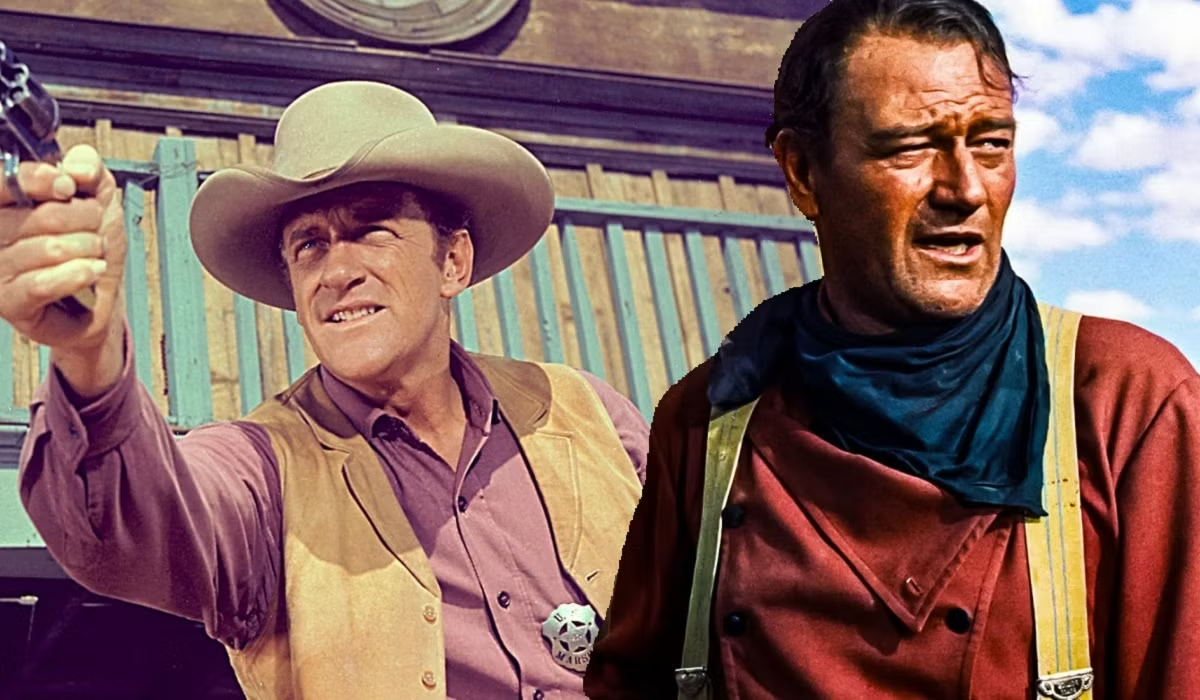
The story of how James Arness came to play Matt Dillon is inseparable from John Wayne — and it is one of the more generous acts in Hollywood friendship on record.
CBS was developing a television adaptation of the Gunsmoke radio drama in 1955. The network wanted Wayne himself for the lead role. Wayne declined — he was a film star and had no interest in the weekly grind of television production — but rather than simply saying no, he recommended his friend Arness and personally vouched for him in a filmed introduction to the pilot episode.
Wayne looked directly at the camera and told the audience that Arness was a big man and a big actor and that he was going to be watching the show himself. For a network trying to establish credibility for a new western drama in 1955, an endorsement of that kind from the biggest film star in America was worth more than any advertising budget could buy.
Arness himself was ambivalent about taking the role. He was uncertain about the long-term commitment, uncertain about television’s prestige relative to film, and uncertain whether a weekly western drama was where he wanted his career to go. Wayne’s counsel — and the opportunity itself — persuaded him. He would not leave Dodge City for twenty years.
Gunsmoke: Twenty Years as Matt Dillon
Gunsmoke premiered on CBS on September 10, 1955. It ran for twenty seasons and 635 episodes, ending on March 31, 1975. No American primetime drama has matched that run before or since. Arness appeared in every season, anchoring the show through cast changes, format shifts, and two decades of evolving television landscape.
Matt Dillon was not a conventional western hero. He was thoughtful, occasionally fallible, morally serious without being preachy, and capable of genuine ambiguity in situations that lesser westerns would have resolved with a gunfight. Arness played him with a physical restraint that suited both the character and his own temperament — Dillon’s authority came from presence and stillness rather than aggression, a quality that Arness brought naturally from his own personality.
The show was not just a ratings success. It was a cultural institution. At its peak it drew audiences that modern network television cannot approach. It ran concurrently with the entire Kennedy presidency, the Vietnam War escalation, the civil rights movement, and the social upheaval of the late 1960s and early 1970s — providing a weekly anchor of moral clarity in a period when American culture was anything but clear.
The supporting cast that surrounded Arness over the years — Dennis Weaver as Chester, Milburn Stone as Doc Adams, Amanda Blake as Kitty Russell, Ken Curtis as Festus — became as familiar to American audiences as members of their own families. But the show was always built around Dillon, and Dillon was always Arness.
He won the Golden Globe for Best Television Actor in 1959. He was nominated repeatedly throughout the run. The awards, by his own account, mattered less to him than the work itself.
Personal Life: Marriage and Family
Arness married Virginia Chapman in 1948. They had three children together: Rolf, Jenny Lee, and Craig. The marriage ended in divorce in 1960 — the strain of his extraordinary professional schedule, his physical pain from war wounds, and the other complications of a life lived mostly on a soundstage taking their toll on a domestic life that was never his primary focus.
His relationship with Janet Surtees followed. They married in 1978, divorced in 1981, and remarried in 2003 — a reconciliation that lasted until his death in 2011. Whatever the complications of the intervening years, they found their way back to each other.
Jenny Lee: The Family Tragedy
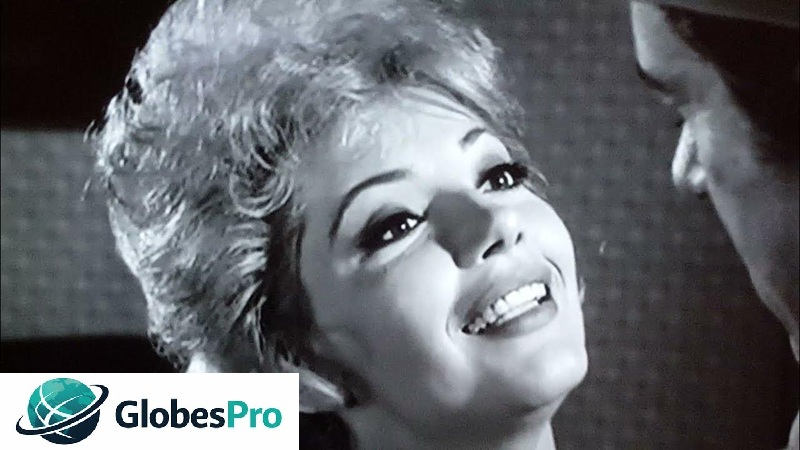
Jenny Lee Arness was born in 1950. She made two guest appearances on Gunsmoke in 1964 — one of the few times her father’s show served as a family enterprise — and educated in Switzerland. She was twenty-four years old and living in Malibu when she died on May 12, 1975, eleven days before her twenty-fifth birthday.
Her death was ruled a suicide — the result of a heroin overdose. She died three weeks before Gunsmoke aired its final episode.
The timing was devastating in a way that went beyond coincidence. Arness was ending the defining chapter of his professional life at the precise moment he lost his daughter. He spoke about Jenny rarely and carefully in subsequent years — with the restraint of a man who understood that some grief belongs entirely to the person carrying it.
Her death cast a permanent shadow over the Gunsmoke years in his personal reckoning of them. The show’s ending and Jenny’s death arrived together and left together in his memory.
After Gunsmoke
Arness did not retire after Gunsmoke ended. He returned to television in How the West Was Won (1978–1979), a miniseries adaptation of the MGM film in which he played Zeb Macahan across multiple installments. The show was a ratings success and demonstrated that his audience had followed him out of Dodge City.
He returned to Matt Dillon five more times in television movies between 1987 and 1994 — Gunsmoke: Return to Dodge, Gunsmoke: The Last Apache, Gunsmoke: To the Last Man, Gunsmoke: The Long Ride, and Gunsmoke: One Man’s Justice. Each drew substantial audiences. The character, and Arness’s embodiment of him, had lost none of its hold on the American public after more than a decade away.
He worked sporadically into the 1990s before largely withdrawing from public life. The chronic pain from his Anzio wound — which had never left him — became more limiting as he aged. He gave interviews rarely and selectively, maintaining the same indifference to the celebrity apparatus that had characterized his entire career.
Legacy
James Arness’s legacy rests on a number — 635 — and on what that number represents. Twenty years on a single show, playing a single character, without the creative restlessness that drives most performers away from long-running commitments toward new challenges. He found Matt Dillon worth playing for two decades because Dillon, properly written, was worth playing — a character of genuine moral weight in a genre that usually settles for moral simplicity.
His brother Peter Graves achieved his own television immortality with Mission: Impossible. The two brothers never appeared together professionally in any significant capacity — a curiosity of two parallel careers in the same medium that somehow never intersected on screen.
Arness died on June 3, 2011, in Brentwood, California, at eighty-eight years old. He had outlived Gunsmoke by thirty-six years and Jenny Lee by thirty-six years — a symmetry that says nothing and somehow says everything.
Conclusion
James Arness was not the most complicated man in Hollywood, and he would not have wanted to be. He was a soldier who became an actor, an actor who became an institution, and a father who carried a loss that no amount of professional success could balance. Marshal Matt Dillon rode into Dodge City in 1955 and never fully left. Neither, in the ways that mattered, did James Arness.
FAQs
What is James Arness best known for? Playing Marshal Matt Dillon on Gunsmoke for twenty seasons and 635 episodes — the longest-running lead performance in American primetime television history.
How was James Arness related to Peter Graves? They were brothers — born James Aurness and Peter Aurness respectively in Minneapolis. Both changed their surnames and became major American television stars independently.
Was James Arness in World War II? Yes — he served with the 3rd Infantry Division and was severely wounded at the Battle of Anzio in January 1944, receiving the Purple Heart.
What was his connection to John Wayne? Personal friends, Wayne recommended Arness for Gunsmoke when CBS approached him about the role, and filmed the pilot’s opening introduction personally endorsing his friend to the audience.
What happened to his daughter Jenny Lee? Jenny Lee Arness died on May 12, 1975, at age twenty-four — ruled a suicide by heroin overdose, three weeks before Gunsmoke aired its final episode.
Did James Arness ever return to Gunsmoke after the series ended? Yes — he reprised Matt Dillon in five television movies between 1987 and 1994, each drawing substantial audiences more than a decade after the original series concluded.