
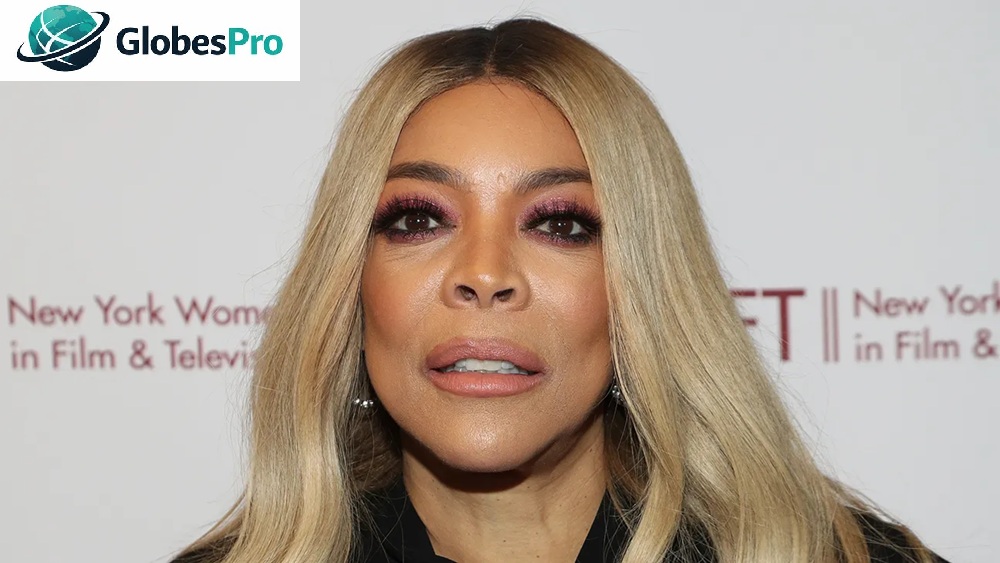
Wendy Williams is a polarizing television host, media personality, and former radio DJ who rose to fame through her controversial radio show before launching “The Wendy Williams Show” in 2008, a daytime talk program that ran for 13 seasons and made her a household name known for celebrity gossip, unfiltered opinions, and her signature catchphrase “How you doin’?” Born Wendy Joan Williams on July 18, 1964, in Asbury Park, New Jersey, she built her career on being unapologetically bold and willing to discuss topics and celebrity secrets that others avoided, creating a persona that was simultaneously beloved by fans who appreciated her authenticity and criticized by those who found her approach cruel or invasive. Her professional success was matched by equally public personal struggles, including a tumultuous marriage to Kevin Hunter that ended in 2019 amid revelations of his decade-long affair and secret child, battles with substance abuse including cocaine addiction, health crises involving her thyroid condition and lymphedema, and recent reports of dementia and guardianship issues that have raised serious concerns about her wellbeing and autonomy.
Wendy Williams represents both the peak of confessional daytime television and a cautionary tale about the costs of living one’s life in public while dealing with serious personal and health challenges. Her career trajectory—from scrappy radio personality willing to say anything for ratings to daytime television fixture earning millions annually, followed by a devastating decline marked by health problems, exploitation concerns, and loss of independence—illustrates both the opportunities and dangers of celebrity culture. In 2024, Williams exists in a tragic state of diminished capacity, reportedly suffering from progressive aphasia and frontotemporal dementia while under court-ordered guardianship, unable to control her own finances or make autonomous decisions about her life, a stark contrast to the powerful, outspoken woman who once commanded daytime television and built an empire on her fearless, take-no-prisoners approach to celebrity gossip and personal revelation.
| Personal Information | Details |
|---|---|
| Full Name | Wendy Joan Williams |
| Date of Birth | July 18, 1964 |
| Age | 60 years old |
| Place of Birth | Asbury Park, New Jersey |
| Education | Northeastern University (Communications degree) |
| Career Start | Radio DJ in Virgin Islands (1986) |
| Major Breakthrough | Hot 97 in New York (1989-1998) |
| Television Show | “The Wendy Williams Show” (2008-2022) |
| Former Spouse | Bert Girigorie (married 1994-1995) |
| Children | Kevin Hunter Jr. (born 2000) |
| Known For | Celebrity gossip, controversial opinions, daytime talk show |
| Signature Phrase | “How you doin’?” |
| Health Issues | Graves’ disease, lymphedema, substance abuse, dementia |
| Current Status | Under guardianship, diagnosed with aphasia and dementia |
| Net Worth | Estimated millions (exact amount disputed) |
Early Life and Education
Wendy Joan Williams was born in Asbury Park, New Jersey, and raised in Ocean Township in a middle-class African American family. Her parents, Thomas and Shirley Williams, emphasized education and achievement. Wendy has two siblings, and by her own accounts, she felt pressure to succeed and stand out in her family.
She attended Ocean Township High School, where she was involved in various activities but struggled with feeling different or like an outsider—feelings that would later fuel her desire to create a bold, attention-grabbing persona. After high school, Wendy attended Northeastern University in Boston, Massachusetts, where she earned a degree in communications.
During her college years, Wendy developed her interest in radio and media. She worked at the college radio station, honing skills that would serve her throughout her career. Her education provided technical knowledge about broadcasting, but it was her natural gift for conversation, her willingness to be provocative, and her fearlessness about addressing controversial topics that would truly define her career.
Educational and Early Career Path
| Period | Activity | Significance |
|---|---|---|
| 1964-1982 | Childhood in New Jersey | Middle-class upbringing, pressure to succeed |
| 1982-1986 | Northeastern University | Communications degree, college radio experience |
| 1986 | First radio job in Virgin Islands | Professional career begins |
| 1986-1989 | Various radio markets | Building skills and reputation |
| 1989 | Hired at Hot 97 in NYC | Major market breakthrough |
Radio Career and the “Shock Jock” Persona
Wendy Williams’s radio career began in 1986 at WVIS in the Virgin Islands, followed by positions in various markets including Washington DC and Philadelphia. However, her breakthrough came when she was hired by Hot 97, a hip-hop and R&B station in New York City in 1989.
At Hot 97 and later at WBLS and 107.5 WBLS, Wendy developed the provocative, boundary-pushing style that would define her career. She wasn’t afraid to start feuds with celebrities, reveal industry secrets, or discuss topics that other radio personalities avoided. She asked invasive questions, made bold accusations, and created drama that kept listeners tuning in.
Her willingness to discuss celebrity rumors and personal lives—often in ways the celebrities found offensive or invasive—made her both popular with audiences and controversial within the entertainment industry. She had public feuds with numerous celebrities including Whitney Houston, Aaliyah, Method Man, and many others, often revealing personal information or making comments that crossed lines of privacy and decency.
This approach earned Wendy both devoted fans who appreciated her “keeping it real” and powerful enemies who resented her invasive tactics. She was fired from Hot 97 in 1998, reportedly due to pressure from industry figures she had angered, but quickly landed at WBLS where she continued her successful radio show.
Transition to Television
After building a massive radio following, Wendy transitioned to television with “The Wendy Williams Show,” which debuted in 2008 as a limited run before being picked up for national syndication in 2009. The show brought her radio persona to daytime television—celebrity gossip, unfiltered opinions, audience interaction, and discussions of her own personal life.
The show’s format included several signature segments: “Hot Topics” where Wendy discussed celebrity news and gossip, celebrity interviews, audience games, and fashion segments. Wendy’s catchphrase “How you doin’?” became iconic, as did her purple chair, her direct camera address, and her willingness to discuss her own struggles including past drug use and marital problems.
Television Career Timeline
| Year | Development | Impact |
|---|---|---|
| 2008 | Show test run | Successful limited debut |
| 2009 | National syndication begins | Becomes daytime fixture |
| 2010-2017 | Peak years | Multiple Daytime Emmy nominations, high ratings |
| 2017-2019 | Health and personal problems emerge | Extended absences, declining health |
| 2019 | Divorce from Kevin Hunter | Personal life chaos goes public |
| 2020-2021 | COVID impacts, health decline | Show struggles continue |
| 2022 | Final episode airs | Show ends after 13 seasons |
The show was successful for years, earning Daytime Emmy nominations and solid ratings. Wendy became a fixture of daytime television, with millions of viewers tuning in to hear her take on celebrity news and watch her interact with famous guests.
Marriage to Kevin Hunter
Wendy married Kevin Hunter in 1997, when she was still primarily a radio personality. Hunter eventually became her manager and executive producer of her television show, making their relationship both personal and professional—a combination that can be beneficial when things are working but catastrophic when they’re not.
Their son, Kevin Hunter Jr., was born in 2000. For years, Wendy publicly presented their marriage as strong, even as rumors circulated about Hunter’s infidelity and controlling behavior. She defended him on her show and in interviews, dismissing rumors and projecting an image of a successful power couple.
However, the reality was far darker. Hunter allegedly had a decade-long affair with Sharina Hudson, with whom he fathered a child in 2019. This revelation finally prompted Wendy to file for divorce, which was finalized in 2020.
Marriage Timeline
| Period | Events | Details |
|---|---|---|
| 1997 | Marriage begins | Wendy marries Kevin Hunter |
| 2000 | Son born | Kevin Hunter Jr. arrives |
| 2000s-2010s | Hunter manages career | Professional and personal entanglement |
| 2009-2019 | Alleged affair | Hunter’s relationship with Sharina Hudson |
| March 2019 | Hunter’s child born | Affair baby forces revelation |
| April 2019 | Divorce filed | Wendy ends marriage |
| January 2020 | Divorce finalized | Marriage officially over |
The end of her marriage coincided with the beginning of Wendy’s most serious decline. The emotional toll, combined with her health issues and substance abuse problems, created a perfect storm that would eventually lead to the loss of her show and independence.
Health Struggles
Wendy Williams has faced numerous health challenges throughout her career, some that she has been open about and others that emerged more recently:
Graves’ Disease: Wendy has hyperthyroidism caused by Graves’ disease, which affects her thyroid and contributed to her bulging eyes, a physical characteristic she addressed publicly. The condition requires ongoing treatment and can cause various symptoms including fatigue and mood changes.
Lymphedema: She has suffered from lymphedema in her legs, causing swelling and requiring treatment.
Substance Abuse: Wendy has been open about past cocaine addiction, revealing that she struggled with drug abuse earlier in her career and in her marriage. She has attended rehabilitation facilities multiple times.
Mental Health: She has discussed anxiety, depression, and the emotional impact of her divorce and other life stresses.
Recent Dementia Diagnosis: In 2024, it was revealed that Wendy has been diagnosed with primary progressive aphasia and frontotemporal dementia, progressive conditions that affect communication and cognitive function.
The Guardianship Controversy
Perhaps the most tragic aspect of Wendy Williams’s recent story is her placement under court-ordered guardianship. In 2022, a financial guardian was appointed to manage her finances after concerns were raised about her ability to handle her own affairs and potential exploitation by those around her.
This guardianship stripped Wendy of financial autonomy, with a court-appointed professional making decisions about her money and business affairs. The arrangement has raised serious questions about elder abuse, exploitation, and whether guardianship is being used appropriately or whether it represents undue control over someone who should retain independence.
Guardianship Details
| Aspect | Details |
|---|---|
| Year Established | 2022 |
| Type | Financial guardianship |
| Reason | Concerns about competency and exploitation |
| Guardian | Court-appointed professional (not family) |
| Impact | Wendy cannot control her own finances |
| Controversy | Questions about necessity and appropriateness |
| Current Status | Ongoing as of 2024 |
Family members, including Wendy’s son and niece, have expressed concerns about the guardianship, suggesting that Wendy is being isolated and controlled in ways that aren’t in her best interest. The situation has sparked broader conversations about guardianship abuse and the rights of individuals with cognitive decline.
Dementia Diagnosis and Current Condition
In February 2024, a documentary revealed that Wendy Williams has been diagnosed with primary progressive aphasia and frontotemporal dementia. These are serious, progressive neurological conditions that affect language, behavior, and cognitive function.
Primary progressive aphasia gradually impairs the ability to communicate, affecting speech, comprehension, reading, and writing. Frontotemporal dementia affects the frontal and temporal lobes of the brain, causing changes in personality, behavior, and language.
These diagnoses help explain the concerning behaviors observers noted in Wendy’s final years on television—confusion, inappropriate comments, difficulty communicating clearly, and erratic behavior that went beyond her normally controversial persona.
For someone whose entire career was built on communication—on being quick-witted, sharp-tongued, and able to verbally spar with anyone—these diagnoses represent a particularly cruel irony.
Financial Exploitation Concerns
Multiple reports have raised concerns that Wendy Williams has been financially exploited by various parties, potentially including her ex-husband Kevin Hunter during their marriage and potentially by others after their divorce. The guardianship was established partly to protect her from such exploitation, though questions remain about whether the guardianship itself serves Wendy’s best interests.
With an estimated net worth in the millions from her television show and other ventures, Wendy represents a vulnerable target for exploitation as her cognitive abilities decline. The competing claims about who should control her finances and make decisions on her behalf highlight the difficult questions that arise when someone with significant wealth loses capacity.
Legacy and Cultural Impact
Despite the tragic circumstances of her recent years, Wendy Williams’s impact on media and pop culture cannot be denied. She pioneered a style of celebrity gossip and personal revelation that influenced countless talk shows and media personalities. Her willingness to be messy, vulnerable, and authentic resonated with audiences tired of overly polished celebrity personas.
She gave voice to opinions that others kept private, asked questions that others were too polite to ask, and built an empire on refusing to conform to expectations about how women, particularly Black women, should behave in media.
However, her legacy is also complicated by questions about whether her approach crossed ethical lines, whether she contributed to harmful gossip culture, and whether her vulnerability and personal struggles were exploited for entertainment rather than met with appropriate concern and care.
Conclusion
Wendy Williams rose from radio DJ to daytime television royalty through sheer force of personality, building a 13-year talk show empire on celebrity gossip, unfiltered opinions, and her signature confrontational style that made her both beloved and controversial. Her journey from the “Queen of All Media” to a woman stripped of her independence through guardianship, diagnosed with progressive dementia, and unable to control her own life represents one of the most dramatic and tragic falls in modern entertainment history. The personal struggles that she once shared with audiences as part of her authentic brand—substance abuse, toxic marriage, health problems—ultimately contributed to a decline that has left her vulnerable and isolated, raising serious questions about exploitation, guardianship abuse, and how society treats aging celebrities with diminished capacity. As Wendy Williams faces an uncertain future under guardianship and lives with progressive dementia that robs her of the communication skills that built her career, her story serves as both a testament to her undeniable impact on media culture and a sobering reminder of how quickly success can crumble when health fails and those who should protect become those who control.
