
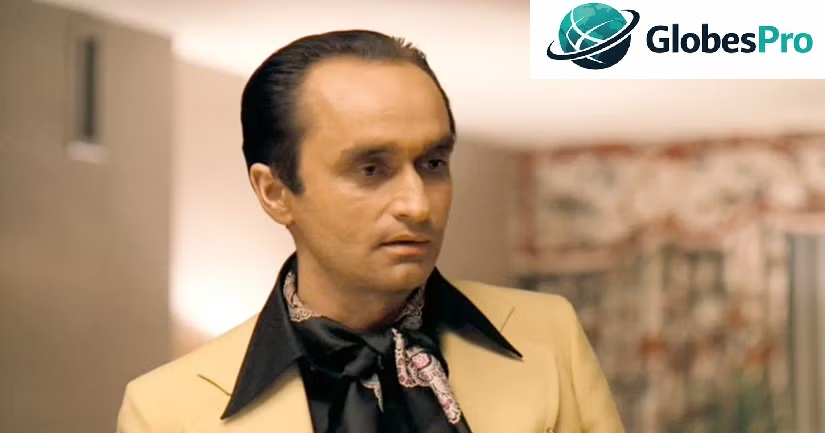
There is a statistic attached to John Cazale’s film career that sounds, when you first encounter it, like something someone invented to make a point. He appeared in exactly five films. All five were nominated for the Academy Award for Best Picture. Three of them won. No other actor in the history of cinema has achieved this. Not Meryl Streep, whose career spans decades and dozens of celebrated performances. Not Jack Nicholson. Not Marlon Brando. Not anyone. The man who played Fredo Corleone — the weak, betrayed, heartbreaking middle son of the most powerful crime family in American fiction — appeared in only five films across a career cut short by lung cancer at the age of forty-two, and every single one of those films was considered by the Academy of Motion Picture Arts and Sciences to be among the best films of its year. That is not luck. That is not coincidence. That is the most complete demonstration of artistic judgment in the history of Hollywood.
For readers looking for a quick answer — John Holland Cazale was an American actor born on August 12, 1935, in Revere, Massachusetts. He is best known for playing Fredo Corleone — the tragic middle son of the Corleone family — in The Godfather (1972) and The Godfather Part II (1974). He appeared in exactly five films across his career — The Godfather, The Conversation, The Godfather Part II, Dog Day Afternoon, and The Deer Hunter — all of which were nominated for the Academy Award for Best Picture, three of which won. He was the longtime partner of Meryl Streep and died of lung cancer on March 13, 1978, at the age of 42.
Quick Facts
| Field | Details |
|---|---|
| Full Name | John Holland Cazale |
| Born | August 12, 1935 |
| Birthplace | Revere, Massachusetts, USA |
| Died | March 13, 1978 (age 42) |
| Cause of Death | Lung cancer |
| Nationality | American |
| Heritage | Italian-American father; Irish-American mother |
| Known For | Fredo Corleone — The Godfather I and II |
| Total Films | 5 — all nominated for Best Picture |
| Best Picture Wins | 3 of his 5 films won |
| Partner | Meryl Streep (1976–1978) |
| Theatre | McGinn/Cazale Theatre — named in his honour |
| Awards | Two Obie Awards; Golden Globe nomination |
Early Life: Revere and Winchester, Massachusetts
John Holland Cazale was born on August 12, 1935, in Revere, Massachusetts — a working-class coastal city just north of Boston whose specific character is shaped by its Italian-American community, its proximity to the Atlantic, and the particular combination of toughness and warmth that characterises the immigrant cultures of the Boston metropolitan area.
His heritage was itself a cultural combination — his father was Italian-American, his mother Cecilia Holland was Irish-American — the specific blend of two of the most dominant immigrant cultures in the New England Catholic community of the mid-twentieth century. The Italian surname. The Irish middle name. Both traditions present in a single person who would eventually play the most Italian of characters with a completeness that reflected genuine cultural rootedness.
His father worked as a wholesale coal salesman — a profession that kept him frequently away from home, leaving the family’s domestic life shaped primarily by his mother and structured around the specific rhythms of a household where the father’s absence was a recurring fact of daily life. The dynamic of a family organised around a father who is present but not reliably present — whose authority exists but whose daily emotional availability is limited — is not a bad preparation for playing Fredo Corleone.
The family moved from Revere to the more affluent suburb of Winchester as John was growing up — a social transition that placed him in a different kind of community and that gave him the observer’s perspective of someone who has moved between social worlds and understands both without being completely claimed by either.
It was at Buxton School in Williamstown, Massachusetts — a progressive boarding school whose educational philosophy emphasised creative expression alongside academic rigour — that John Cazale first discovered theatre. The quiet, thoughtful boy who had grown up in the transitional space between Italian-American Revere and suburban Winchester found, in the specific collaborative world of theatrical performance, the environment in which his particular intelligence and emotional sensitivity had a natural home.
Education: From Oberlin to Boston University to New York
John Cazale’s formal education followed the path of someone who knew from early that performance was his vocation but who approached that vocation with the intellectual seriousness that his temperament demanded.
He began at Oberlin College in Ohio — one of America’s most intellectually serious liberal arts institutions, with a long history of artistic and political progressivism that attracted exactly the kind of thoughtful, independently minded student that Cazale was. He studied drama there before transferring to Boston University — where he worked under director and teacher Peter Kass and completed the performing arts degree that gave his talent a formal professional foundation.
| John Cazale — Education | Details |
|---|---|
| Buxton School | Williamstown, Massachusetts — theatre discovery |
| Oberlin College | Ohio — drama studies; transferred |
| Boston University | Performing arts degree — studied under Peter Kass |
| Graduation | Early 1960s |
| Post-graduation | Moved to New York City |
| Survival jobs | Cab driver; photographer; messenger |
The move to New York City after graduation was the obvious and necessary step for a serious theatre actor in the early 1960s — the city was the centre of the American theatrical world and the place where the specific kind of work Cazale wanted to do was being invented and performed at the highest level.
What followed was the years of odd jobs and serious craft-building that characterise the early careers of the most committed theatre actors — driving cabs, working as a photographer, delivering messages as a courier for Standard Oil. It was at Standard Oil, working as a messenger, that John Cazale first encountered Al Pacino.
Meeting Al Pacino: The Friendship That Defined Two Careers

The encounter between John Cazale and Al Pacino at Standard Oil — two young actors working survival jobs while building their theatrical careers — produced one of the most significant professional friendships in American acting history.
Pacino’s memory of that first encounter reflects the immediate quality of what he recognised in Cazale. He has described the specific magnetism of Cazale’s presence — the way that people were naturally drawn to him, the quality of attention and intelligence he brought to every interaction, the specific stillness that made him compelling without effort.
What the friendship produced, almost immediately, was professional collaboration. Both were building their careers in the New York theatre world of the early 1960s — the Off-Broadway scene, the workshops, the productions that generated little money and enormous craft development.
Their first significant collaboration came in Israel Horovitz’s The Indian Wants the Bronx — a two-hander that placed both actors in a raw, confrontational piece of New York drama and that demonstrated the specific chemistry their friendship produced on stage.
| The Indian Wants the Bronx | Details |
|---|---|
| Playwright | Israel Horovitz |
| John’s Role | Joey |
| Al Pacino’s Role | Murph |
| Award | Both won Obie Awards for their performances |
| Significance | First major collaboration; established both in Off-Broadway world |
| Chemistry | The friendship producing extraordinary on-stage work |
Both actors won Obie Awards for their performances — the Off-Broadway theatre community’s most significant recognition, confirming that what was happening between Cazale and Pacino on stage was genuine and exceptional.
Israel Horovitz — the playwright whose work launched their collaboration — was so affected by his relationship with Cazale that he dedicated his entire Wakefield Plays cycle to him. It is the kind of tribute that reflects not simply professional admiration but genuine personal love.
Thirteen Years of Theatre: Building the Foundation
Between his arrival in New York in the early 1960s and his film debut in The Godfather in 1972, John Cazale spent thirteen years building his craft in the theatre — a period of sustained, serious, often financially unrewarding professional development that produced the specific depth and completeness that his film performances drew from.
He worked across the full range of New York’s theatrical landscape — Off-Broadway productions, regional theatre, Joseph Papp’s Shakespeare in the Park, the Long Wharf Theatre Company in New Haven. He worked in the specific collaborative spirit of the serious theatre world — the world where the work is the point and where the craft is developed through sustained engagement with serious material rather than through the commercial calculations of the entertainment industry.
| John Cazale — Theatre Highlights | Production | Notes |
|---|---|---|
| The Indian Wants the Bronx | Israel Horovitz | Obie Award — with Pacino |
| Line | Israel Horovitz | The production that led to The Godfather casting |
| Shakespeare in the Park | Joseph Papp productions | Multiple productions |
| Long Wharf Theatre | New Haven | Regional theatre commitment |
| Broadway work | Various productions | Building legitimate theatre credentials |
| Dedication | Wakefield Plays cycle | Israel Horovitz’s tribute |
The thirteen years were not a delay or a failure. They were the investment that made everything else possible. Every performance he gave in the theatre — every character he inhabited, every emotional truth he found in material that required genuine depth rather than technical competence — was deposited into the reservoir of craft that his five films subsequently drew from.
When Francis Ford Coppola eventually saw what John Cazale was capable of, he was seeing the product of thirteen years of serious, disciplined, unglamorous theatrical work. That is what great film performances are built from.
How He Got The Godfather Role

The specific circumstances of how John Cazale was cast in The Godfather involve a chain of connections that reflects both the specific smallness of the New York theatre world and the specific quality of what Cazale was doing that made everyone who saw him immediately certain he was right for the role.
Fred Roos — the casting director working with Coppola on The Godfather — saw Cazale performing in Israel Horovitz’s Line at the Théâtre de Lys in Greenwich Village. Richard Dreyfuss — who was also in the production — personally invited producer Albert S. Ruddy to see the play. Ruddy came. He saw Cazale. He was immediately convinced.
Coppola was brought to see the same production and had the same immediate response. Al Pacino — already cast as Michael Corleone and already Cazale’s closest friend — was part of the conversation about who could play Fredo. The combination of Coppola’s recognition, Ruddy’s enthusiasm, and Pacino’s personal advocacy produced a casting decision that was as close to inevitable as casting decisions ever get.
The role of Fredo Corleone — the weak, passed-over, ultimately betraying middle son of the most powerful crime family in American fiction — required exactly the specific qualities that thirteen years of serious theatre had built in John Cazale. The intelligence to understand the character’s complexity. The emotional availability to inhabit its tragedy without sentimentalising it. The physical restraint to communicate weakness without making it cartoonish. The specific quality of someone who makes you simultaneously love and pity and fear for a character — which is the most difficult emotional combination in acting to produce authentically.
Fredo Corleone: The Character
Fredo Corleone is one of the great tragic figures in American fiction — a man whose entire life is defined by the gap between who he is and who his family needed him to be.
He is the middle son — older than Michael, younger than Sonny. In a family where power flows through demonstrated strength and where the succession of the patriarch’s authority requires the kind of ruthless capability that Fredo simply does not possess, his position is inherently tragic from the beginning.
He is not stupid — though the family’s treatment of him, and eventually his own furious self-assertion (“I’m smart! Not like everybody says!”), suggests that he has internalised the verdict of a family that has never believed in him. He is sensitive in a world that treats sensitivity as weakness. He is loving in a family whose love comes wrapped in obligation and threat. He wants to matter in a context that has already decided he doesn’t.
| Fredo Corleone — Character Profile | Details |
|---|---|
| Position | Middle son — between Sonny and Michael |
| Core Tragedy | Passed over for succession; inadequate by family standards |
| The Betrayal | Dealing with Hyman Roth against Michael’s interests |
| Motivation | Wanting to matter; wanting to be taken seriously |
| Key Line | “I’m smart! Not like everybody says!” |
| Fate | Shot by Al Neri on Michael’s orders — Lake Tahoe |
| Emotional Register | Love; shame; desperation; tragic self-knowledge |
| What He Requires | Complete emotional availability; no sentimentality |
The betrayal that defines Part II — Fredo’s dealing with Hyman Roth against Michael’s interests — is not the act of a villain. It is the act of a man so desperate to matter, so hungry for the respect that his family has always withheld, that he makes a catastrophic miscalculation about where his loyalties can most profitably lie.
His fate — shot by Al Neri on a Nevada lake while reciting a Hail Mary — is one of cinema’s most devastating moments precisely because Cazale had spent two films making Fredo completely, heartbreakingly human.
The Godfather (1972): Fredo in Part I

In the first Godfather film, Fredo’s role is relatively limited — but the specific quality of what Cazale does with the limited material establishes the character’s internal life with a completeness that makes the expanded Part II role feel like the natural continuation of something already fully formed.
The critical moment in Part I is the assassination attempt on Vito Corleone — when Vito is shot multiple times on a New York street and Fredo, who is supposed to be protecting him, drops his gun and collapses in shock and paralysis rather than responding effectively.
| Fredo’s Key Moments — The Godfather (1972) | Scene | What It Communicates |
|---|---|---|
| Vito’s assassination attempt | Drops gun; collapses in shock | The fundamental inadequacy that defines him |
| Las Vegas | Sent away — managing casino | The family’s way of keeping him useful and distant |
| Michael’s arrival | The humiliation of being managed by his younger brother | Fredo’s position in the new order |
| Throughout | The watching; the awareness of his own position | The internal life that Cazale builds continuously |
The paralysis scene is not played as cowardice — which would be too simple and too easy. It is played as the specific, involuntary failure of someone whose nervous system simply cannot process the demand being made of it. Fredo does not choose to fail. He fails in spite of himself. That distinction — between chosen cowardice and constitutive inadequacy — is the specific thing that Cazale communicates in the scene and that makes Fredo a tragic figure rather than simply a weak one.
The Godfather Part II (1974): Fredo’s Full Arc

Francis Ford Coppola significantly expanded Fredo’s role for Part II — recognising in John Cazale’s Part I performance a depth and a complexity that the material had not yet fully exploited. The result is one of the great character arcs in American cinema.
The confrontation scene between Michael and Fredo — in which Fredo finally breaks under the weight of Michael’s knowledge of his betrayal and releases the rage and shame and desperation that have been building across both films — contains the most celebrated single speech that John Cazale ever delivered on screen.
“I was passed over! Me! I was stepped over! … I’m your older brother, Mike, and I was stepped over! … I’m smart! Not like everybody says — like dumb — I’m smart and I want respect!”
The delivery of those lines — the specific combination of furious self-assertion and desperate self-knowledge, the awareness that the argument he is making is simultaneously true and completely insufficient — is the kind of performance that defines an actor’s legacy. It is completely, devastatingly human. It contains no false notes. It is the full expression of a character that Cazale had been building across two films and three years of sustained creative commitment.
| Fredo’s Key Moments — The Godfather Part II (1974) | Scene | Significance |
|---|---|---|
| Cuba — New Year’s Eve | Fredo reveals his connection to Roth | The betrayal confirmed |
| The confrontation | “I’m smart! Not like everybody says!” | The character’s defining moment |
| Michael’s kiss | “I know it was you, Fredo” | The kiss of death |
| Lake Tahoe — fishing | Hail Mary recitation; shot by Neri | The most devastating scene in the trilogy |
| Throughout | The shame; the love; the impossible position | Cazale building the full human complexity |
The final scene — the fishing boat, the Hail Mary, Richard Bright’s Al Neri delivering the single shot to the back of the head — works as completely as it does because Cazale had spent two films making you love Fredo despite everything. The devastation of that scene is entirely dependent on the quality of what Cazale had built in the scenes that preceded it. Neri’s impassivity and Fredo’s prayer are the two sides of the same devastating coin — and both required their performers to be operating at the absolute peak of their respective abilities.
The Five Films: The Extraordinary Statistical Fact
The most remarkable fact about John Cazale’s career is also the most verifiable — a statistic so clean and so complete that it requires no interpretation or contextualisation to communicate its significance.
| John Cazale — Five Films | Year | Oscar Nomination | Won? |
|---|---|---|---|
| The Godfather | 1972 | Best Picture | ✅ Won |
| The Conversation | 1974 | Best Picture | ❌ Nominated |
| The Godfather Part II | 1974 | Best Picture | ✅ Won |
| Dog Day Afternoon | 1975 | Best Picture | ❌ Nominated |
| The Deer Hunter | 1978 | Best Picture | ✅ Won |
Five films. Five Best Picture nominations. Three wins.
No other actor in cinema history carries this record. Not performers with fifty-film careers. Not the most celebrated actors of any generation. Not anyone. Only John Cazale — who appeared in exactly five films and somehow, through a combination of extraordinary artistic judgment and the specific quality of work that attracted the best filmmakers of his era, managed to appear in only films that the Academy considered the best of their year.
The three Best Picture winners from his five films — The Godfather, The Godfather Part II, and The Deer Hunter — represent an extraordinary concentration of recognised cinematic excellence. The two that did not win — The Conversation and Dog Day Afternoon — are themselves considered among the finest American films of the 1970s.
This is not luck. The films were made by different directors — Coppola twice, Sidney Lumet, Michael Cimino. They were produced by different studios. They were released across seven years. The only common factor across all five films is John Cazale’s presence in them. That presence reflects the specific quality of artistic judgment — about what material to commit to, what directors to trust, what characters to inhabit — that produced the statistical impossibility.
The Conversation (1974): Coppola Again

Between the two Godfather films, John Cazale worked with Francis Ford Coppola on The Conversation (1974) — the paranoid surveillance thriller that many critics consider Coppola’s most personal and most intellectually complex film of the decade.
He played Stan — the assistant to Harry Caul (Gene Hackman), the surveillance expert whose moral awakening forms the film’s central narrative. The role was smaller than Fredo — a supporting part in an ensemble built around Hackman’s extraordinary central performance — but it demonstrated Cazale’s ability to contribute meaningfully to a film’s texture and human reality from a position that required integration rather than prominence.
| The Conversation (1974) | Details |
|---|---|
| Director | Francis Ford Coppola |
| John’s Role | Stan — Harry Caul’s assistant |
| Lead | Gene Hackman — Harry Caul |
| Oscar Nomination | Best Picture — lost to The Godfather Part II |
| Critical Status | Considered one of Coppola’s greatest films |
| What It Demonstrated | Cazale’s range beyond the Fredo character |
| Significance | Third Coppola collaboration — trust fully established |
The irony that The Conversation lost the Best Picture Oscar to The Godfather Part II — meaning that Cazale was simultaneously in both the film that won and the film it defeated — is one of the more remarkable footnotes in the history of a career composed entirely of remarkable footnotes.
Dog Day Afternoon (1975): The Best Cazale-Pacino Collaboration
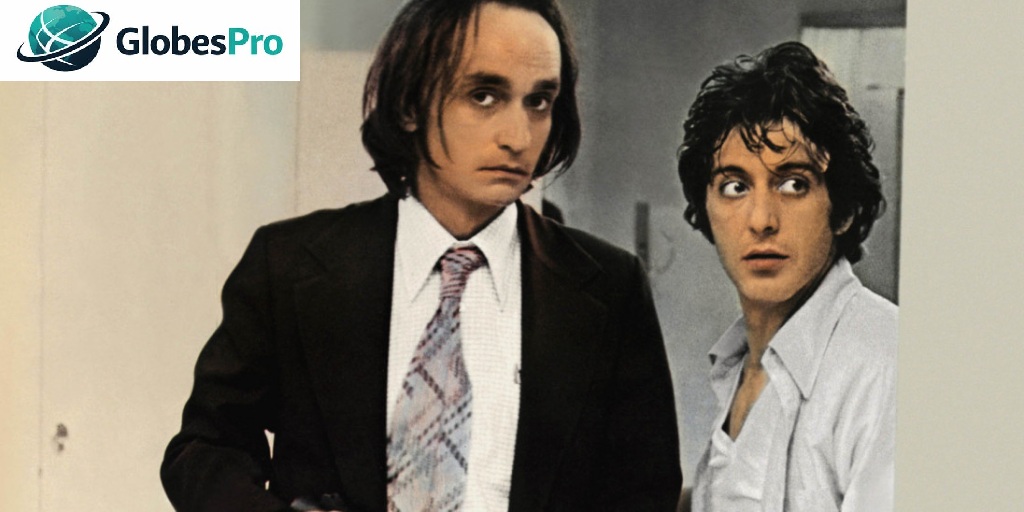
Dog Day Afternoon (1975) — directed by Sidney Lumet from a screenplay by Frank Pierson — brought John Cazale and Al Pacino together on screen in their most fully realised film collaboration. Where the Godfather films had placed them in a family relationship defined by power differential and tragic distance, Dog Day Afternoon put them side by side as partners in a Brooklyn bank robbery that goes catastrophically wrong.
He played Sal — the anxious, volatile, deeply unstable partner of Pacino’s Sonny Wortzik — a character whose combination of genuine menace and childlike vulnerability required the specific kind of emotional complexity that Cazale had spent his career developing.
The real Sal on whom the character was based was eighteen years old. Cazale was thirty-nine. He won the role in an audition that left Sidney Lumet with no doubt whatsoever — the director described Cazale’s audition as one of the most immediate and complete demonstrations of rightness for a role he had ever witnessed.
| Dog Day Afternoon (1975) | Details |
|---|---|
| Director | Sidney Lumet |
| John’s Role | Sal — bank robber |
| Al Pacino’s Role | Sonny Wortzik — the leader |
| Based On | Real 1972 Brooklyn bank robbery |
| Real Sal’s Age | 18 — Cazale was 39 |
| Golden Globe Nomination | Best Supporting Actor — John Cazale |
| Oscar Nomination | Best Picture |
| Critical Reception | Immediate classic — Cazale specifically celebrated |
| Philip Seymour Hoffman | Cited the performance as a primary inspiration |
His Golden Globe nomination for Best Supporting Actor — the only formal major film award recognition of his career — acknowledged what the performance clearly deserved. The specific quality of Sal — the way Cazale inhabited the character’s terrifying unpredictability alongside his genuine vulnerability, making the audience simultaneously afraid of him and desperately sorry for him — is one of the great supporting performances of American cinema’s greatest decade.
Philip Seymour Hoffman — himself one of the finest character actors of the generation that followed — cited Cazale’s performance in Dog Day Afternoon as a primary inspiration for his own approach to acting. When one of the finest character actors of the next generation identifies your work as foundational to their own, the legacy is confirmed in the most meaningful way available.
Meeting Meryl Streep

In 1976 — the year after Dog Day Afternoon and the year before his cancer diagnosis — John Cazale met Meryl Streep during a Joseph Papp production of Measure for Measure at Shakespeare in the Park.
Streep was twenty-six years old. Cazale was forty. The connection between them was immediate and complete — a recognition of shared artistic seriousness and genuine personal compatibility that produced, in the two years they had together, a love story whose depth was demonstrated most completely in how Streep conducted herself during the illness that followed.
Streep has spoken about Cazale across the decades since his death with a consistency and a specificity that reflects genuine, sustained love rather than the performed grief that public figures sometimes offer for lost colleagues. She has described what he taught her about acting — about emotional availability, about the specific courage of genuine vulnerability in performance, about what it means to fully commit to a character’s truth regardless of how uncomfortable that truth is.
She has also described what he was as a person — the warmth, the intelligence, the specific quality of presence that made everyone who encountered him feel completely seen and completely valued.
The relationship that developed through 1976 and into 1977 was simultaneously a love story and an artistic partnership of the kind that occasionally produces remarkable creative results when two people of genuine ability find each other at the right moment.
The timing of the diagnosis that followed made the love story something else entirely.
The Diagnosis: Terminal Lung Cancer
In 1977 — at the age of 41 — John Cazale was diagnosed with terminal lung cancer that had already metastasised to his bones.
He was a chain smoker — a habit whose connection to his diagnosis is direct and documented. The cancer was advanced at the point of discovery — the bone metastasis indicating a disease that had been developing for long enough to spread beyond its point of origin.
The prognosis was what terminal means. There was no realistic prospect of recovery. The question was not whether he would die of this disease but how much time remained and how he would spend it.
His choice — the choice that defines as clearly as any of his performances what kind of person John Cazale was — was to keep working.
He had been cast in Michael Cimino’s The Deer Hunter before the diagnosis. The production was his professional commitment. He intended to honour it.
The Deer Hunter (1978): Filming While Dying
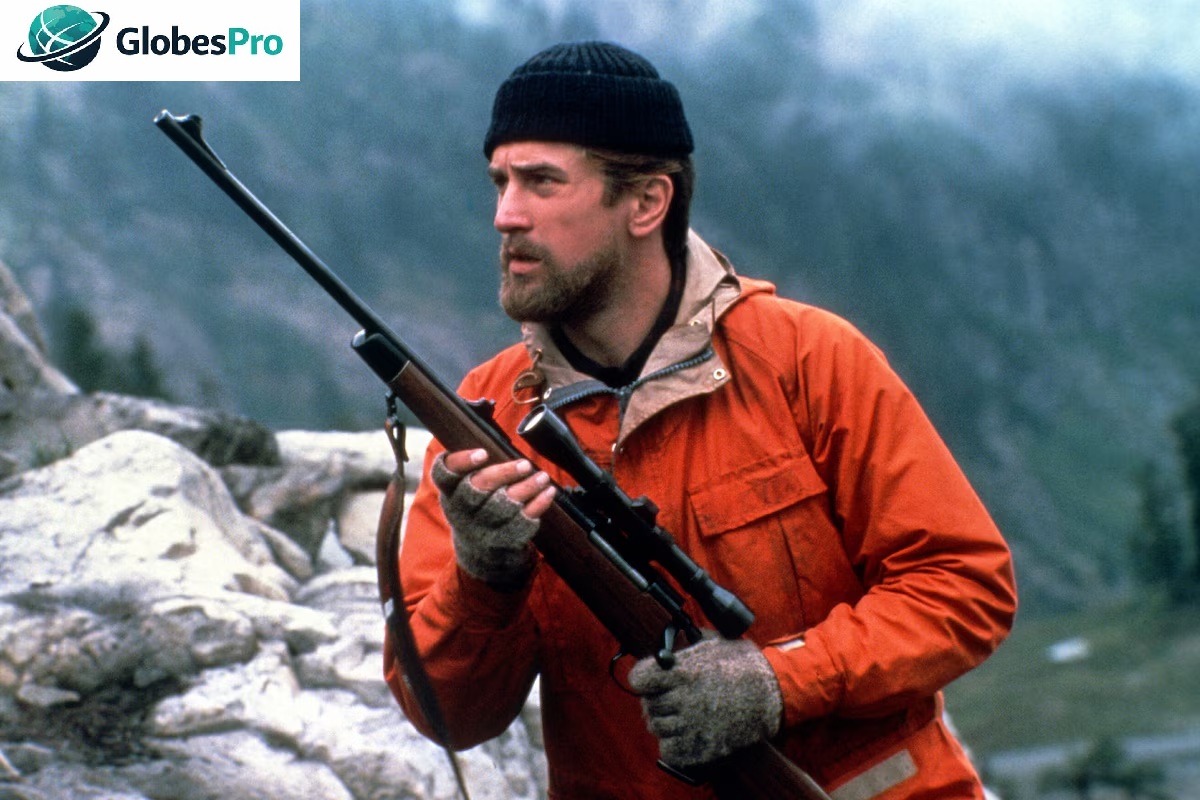
The Deer Hunter — Michael Cimino’s epic study of the Vietnam War’s effect on a small Pennsylvania steel town — was John Cazale’s final film. He was dying while he made it. The performances he delivered while dying are among the most complete in the film.
When the studio — Universal Pictures — discovered the extent of his illness during pre-production, the response was immediate and commercially rational. They wanted him removed from the production. His medical condition represented an insurance risk that the studio’s financial logic could not accommodate.
What happened next says everything about the people who had worked with John Cazale and understood what he was.
Meryl Streep — cast in the same film — told the studio directly that if Cazale was removed from the production she would leave with him. She had already committed to the role. She was withdrawing that commitment if they took him off the film.
Robert De Niro — the film’s star and one of the most powerful actors in Hollywood at the peak of his post-Godfather II and post-Taxi Driver career — stood firm in the same position. Cazale was staying.
Michael Cimino supported his cast completely.
| The Deer Hunter — John Cazale’s Situation | Details |
|---|---|
| John’s Role | Stan — one of the group of friends |
| Diagnosis | Terminal lung cancer — bone metastasis |
| Studio Response | Wanted him removed — insurance risk |
| Meryl Streep | Threatened to quit if he was fired |
| Robert De Niro | Stood firm in support |
| Cimino’s Solution | Filmed Cazale’s scenes first |
| John’s Condition | Visibly ill during production |
| Performance Quality | Complete and fully committed |
| Oscar Result | Best Picture winner |
Cimino’s practical accommodation of the situation was to film all of Cazale’s scenes first — ensuring that whatever happened subsequently, his contribution to the film would be complete and captured. The production was structured around the reality of his illness with the specific combination of logistical pragmatism and human respect that the situation demanded.
What his colleagues witnessed during the production — a man completing serious professional work while dying, maintaining the commitment and the quality that his entire career had demonstrated — was described by those present with a consistent emotion: not pity, but awe. The specific awe of watching someone choose craft over suffering, work over surrender, the obligation to the material over the entirely understandable alternative of simply stopping.
Meryl Streep’s presence throughout the production — and throughout the illness — was what Al Pacino later described as an “overwhelming act of love.” She was at his side at work and away from it. She was the human presence that accompanied him through the final chapter of a life and a career that deserved more time than it received.
Death: March 13, 1978
John Holland Cazale died on March 13, 1978, in New York City. He was 42 years old. Meryl Streep was at his side.
The Deer Hunter — the film he had completed while dying — premiered at the New York Film Festival in September 1978, six months after his death. It won the Academy Award for Best Picture at the ceremony the following year — the fifth and final Best Picture nomination associated with his five films, and the third winner.
He did not live to see it. He had known what it was while he was making it.
Israel Horovitz — the playwright who had dedicated his Wakefield Plays cycle to Cazale and who had known him since the beginning of his New York career — wrote a eulogy in the Village Voice that contained a line that has become the definitive statement of what John Cazale represented:
“John Cazale happens once in a lifetime.”
Al Pacino’s grief was the grief of someone losing the closest professional friend and one of the most important personal relationships of his life. He has spoken about Cazale across the decades since — consistently, specifically, with the particular quality of love that genuine admiration produces when it is combined with genuine personal connection.
The Oscar Omission
John Cazale was never nominated for an Academy Award.
In the context of his career — five films, three Best Picture winners, two of the most celebrated supporting performances of the decade — this omission is one of the Academy’s more discussed historical failures. It is the kind of omission that becomes more striking with each passing year, as the critical consensus about the quality of what he did continues to solidify and the absence of formal recognition becomes more obviously incongruous.
The specific irony of the Corleone family situation is pointed — every other member of the Corleone family received Oscar attention. Marlon Brando won Best Actor for Part I. Al Pacino, James Caan, and Robert Duvall were all nominated for Best Supporting Actor for Part I. Robert De Niro won Best Supporting Actor for Part II. Michael V. Gazzo was nominated for Part II.
Fredo Corleone — the character with the most tragic arc across both films, the performance that makes the trilogy’s most devastating scene work as completely as it does — was played by the only member of the ensemble who received no nomination.
| Oscar Nominations — The Corleone Family | Actor | Character | Nomination |
|---|---|---|---|
| Marlon Brando | Vito Corleone | Best Actor — WON | |
| Al Pacino | Michael Corleone | Best Supporting Actor (Part I); Best Actor (Part II) | |
| James Caan | Sonny Corleone | Best Supporting Actor (Part I) | |
| Robert Duvall | Tom Hagen | Best Supporting Actor (Part I); Best Actor (Part II) | |
| Robert De Niro | Young Vito Corleone | Best Supporting Actor (Part II) — WON | |
| Michael V. Gazzo | Frank Pentangeli | Best Supporting Actor (Part II) | |
| John Cazale | Fredo Corleone | Nothing |
The omission does not reflect what happened on screen. It reflects the specific mechanisms of Academy voting — the campaigning, the visibility, the studio investment in particular nominations — and the particular invisibility of character actors whose work is most effective when it appears effortless.
Legacy: The Documentary and The Theatre
The primary documentary account of John Cazale’s life and career — I Knew It Was You (2009), directed by Richard Shepard — was screened at the Sundance Film Festival and brought together an extraordinary collection of people whose lives he had touched to speak about what he was and what he meant.
Al Pacino, Meryl Streep, Robert De Niro, Gene Hackman, Francis Ford Coppola, Sidney Lumet, Steve Buscemi, and Richard Dreyfuss all appeared — a collection of American cinema’s most significant figures gathering to bear witness to someone most of the general public had never heard of by name despite having seen his face in some of the greatest American films ever made.
The consistent quality of the testimony — the specific language of love and awe that each person used to describe Cazale — produced a documentary portrait of someone whose personal and professional significance to the people around him was completely disproportionate to his public recognition.
The McGinn/Cazale Theatre — located on Broadway at 76th Street in New York City, home to the Roundabout Theatre Company’s intimate productions — bears his name as a permanent institutional acknowledgment of what he contributed to the theatrical world that formed him.
| John Cazale’s Legacy | Details |
|---|---|
| I Knew It Was You | 2009 Sundance documentary |
| McGinn/Cazale Theatre | Broadway at 76th Street — named in his honour |
| Five films | All nominated for Best Picture — unique record |
| Philip Seymour Hoffman | Cited as primary inspiration |
| Israel Horovitz | Dedicated entire Wakefield Plays cycle to him |
| Meryl Streep | Describes him as the formative relationship of her life |
| Al Pacino | Has advocated for his recognition across decades |
| National Film Registry | All five films preserved |
Philip Seymour Hoffman — who became one of the finest character actors of his generation before his own premature death — spoke about Cazale’s influence on his own approach to acting with the specificity of someone who had genuinely studied the work and absorbed its lessons.
Why John Cazale’s Story Matters
John Cazale’s story matters for reasons that go beyond the statistical impossibility of his filmography and the genuine tragedy of his early death.
It is a story about artistic judgment — about the specific quality of discernment that leads someone to choose only material that is genuinely worthy of their commitment, regardless of commercial calculation or career management logic.
It is a story about craft — about what thirteen years of serious theatre produces in a performer, about the specific depth that sustained engagement with difficult material builds over time, about what it means to approach every role with the complete commitment that Cazale brought to everything he did.
It is a story about love — the specific love of Meryl Streep, who stood beside him through the illness and refused to let a studio’s insurance calculations determine whether a dying man got to complete his final performance.
And it is a story about what cinema loses when it loses a performer of genuine quality too soon — about the films that were never made, the characters that were never inhabited, the specific human understanding that only John Cazale could have brought to them.
“John Cazale happens once in a lifetime.” Israel Horovitz was right. The statistical record confirms it. The people who knew him confirm it. The films confirm it.
Once in a lifetime. Five films. All the way to the end.
Frequently Asked Questions
1. Who was John Cazale? An American actor who played Fredo Corleone in The Godfather trilogy. He appeared in exactly five films — all nominated for Best Picture — before dying of lung cancer at 42.
2. What is John Cazale’s most famous role? Fredo Corleone in The Godfather (1972) and The Godfather Part II (1974) — the tragic middle son whose betrayal and death form the trilogy’s most devastating arc.
3. How many films did John Cazale appear in? Exactly five — The Godfather, The Conversation, The Godfather Part II, Dog Day Afternoon, and The Deer Hunter. All five were nominated for Best Picture.
4. Was John Cazale ever nominated for an Oscar? No — remarkably, despite appearing in three Best Picture winners and giving two of the decade’s most celebrated supporting performances, he was never nominated.
5. Who was John Cazale’s partner? Meryl Streep — they met during a Shakespeare in the Park production in 1976 and were together until his death in 1978. She threatened to quit The Deer Hunter if the studio removed him due to his illness.
6. How did John Cazale die? Lung cancer — diagnosed in 1977 at age 41 with bone metastasis. He completed The Deer Hunter while terminally ill and died on March 13, 1978.
7. What is the McGinn/Cazale Theatre? A Roundabout Theatre Company venue on Broadway at 76th Street in New York City — named in John Cazale’s honour to recognise his contribution to American theatre.
8. What makes John Cazale’s filmography unique? He is the only actor in cinema history whose entire film career consists exclusively of films nominated for Best Picture — five films, five nominations, three wins.
Conclusion: Once in a Lifetime
John Cazale drove a cab in New York City. He delivered messages for Standard Oil. He spent thirteen years building his craft in theatres that paid him almost nothing. He made five films. All five were nominated for the greatest award in cinema. Three of them won.
He played a man who wanted desperately to matter in a world that had decided he didn’t — and he played him with such complete humanity that the scene of his death on a Nevada lake remains, fifty years later, one of the most devastating moments in American cinema. He played a bank robber whose instability terrified the audience even as his vulnerability made them love him. He played a soldier’s friend in a film about what war does to the people it leaves behind — and he played those scenes while his own body was losing the battle that no amount of craft or courage could win.
Meryl Streep stayed at his side. Al Pacino grieved. Israel Horovitz wrote the truest sentence in the history of acting tributes. The Deer Hunter won Best Picture six months after he died.
He never received an Oscar nomination. He received something rarer — the specific recognition of the people who actually know what acting is, who have dedicated their lives to it, who understand from the inside what it costs and what it produces when it is done at the highest level.
“John Cazale happens once in a lifetime.”
He did. He was. The five films are still there.
