
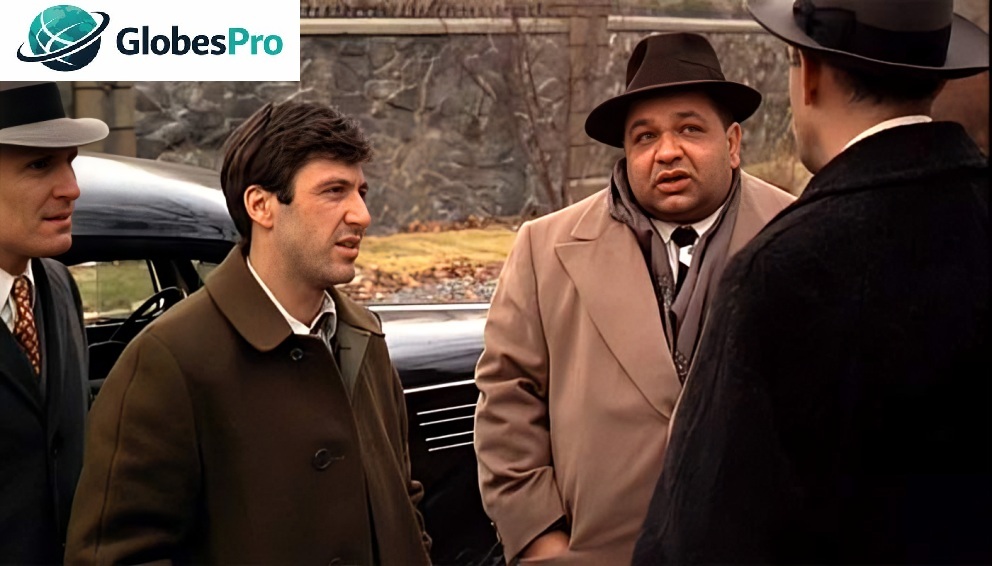
There are lines in cinema that belong to the screenplay. And then there are lines that belong to the actor — words that were never written, never planned, never anticipated by the director or the studio, but that emerge from the specific humanity of a performer who understands his character so completely that he knows what that character would say in a moment that the script left empty. “Leave the gun. Take the cannoli.” Those six words — delivered by a heavyset Bronx-born actor named Richard S. Castellano in a scene about the disposal of a body — have been quoted, parodied, referenced, and celebrated for more than fifty years. They are among the most recognisable lines in the history of American cinema. They were not in the script. Richard Castellano made them up on the spot. And Francis Ford Coppola was wise enough to keep them.
For readers looking for a quick answer — Richard Salvatore Castellano was an American actor born on September 4, 1933, in The Bronx, New York City, to Sicilian immigrant parents. He is best known for playing Peter Clemenza — the warm, dangerous, cannoli-loving capo — in The Godfather (1972). He received an Academy Award nomination for Best Supporting Actor for Lovers and Other Strangers (1970) and a Tony Award nomination for the same role on Broadway. He was reportedly the highest-paid actor in The Godfather cast. He died on December 10, 1988, from a heart attack at the age of 55 — leaving behind one of the most quoted ad-libs in cinema history.
Quick Facts — Wiki Style
| Field | Details |
|---|---|
| Full Name | Richard Salvatore Castellano |
| Born | September 4, 1933 |
| Birthplace | The Bronx, New York City, USA |
| Died | December 10, 1988 (age 55) |
| Cause of Death | Heart attack — North Bergen, New Jersey |
| Nationality | American |
| Heritage | Sicilian-Italian — parents from Castrofilippo, Sicily |
| Oscar Nomination | Best Supporting Actor — Lovers and Other Strangers (1970) |
| Tony Nomination | Best Supporting Actor — Lovers and Other Strangers (Broadway) |
| Known For | Peter Clemenza — The Godfather (1972) |
| Spouse | Ardell Sheridan |
| Highest Paid | Reportedly highest-paid actor in The Godfather cast |
Early Life: The Bronx, 1933
Richard Salvatore Castellano was born on September 4, 1933, in The Bronx, New York City — the borough that in the early twentieth century was absorbing an enormous wave of Italian and Sicilian immigration and that was developing the specific Italian-American urban culture that would later become one of the most recognisable social landscapes in American popular fiction.
His parents were Sicilian immigrants — from Castrofilippo, a small commune in the province of Agrigento in south-central Sicily. Castrofilippo is the kind of place that Sicilian immigrants carried with them to America not as a location but as a set of values — the specific combination of family loyalty, communal obligation, personal dignity, and the particular warmth that Sicilian culture wraps around all of its harder edges.
His middle name Salvatore was not simply a family tradition. It was a memorial — given to honour an older brother who had died before Richard was born. Carrying a dead sibling’s name is a specific kind of inheritance — a reminder, present in every formal document and every introduction, of what came before you and what was lost.
Growing up in the Bronx as the son of Sicilian immigrants in the 1930s and 1940s meant growing up inside a specific Italian-American community whose social structures, values, and cultural references were shaped by the immigrant experience in ways that were simultaneously American and deeply Sicilian.
The neighbourhood gave Richard Castellano the specific thing that made his Peter Clemenza so completely convincing — authentic, lived, embodied knowledge of exactly the culture he was portraying. He was not researching Italian-American working-class life. He had grown up inside it.
The New Yiddish Theatre: An Unlikely Foundation
Richard Castellano’s entry into professional performance came through one of the more unexpected channels available to a young Italian-American actor in New York — the New Yiddish Theatre.
The Yiddish theatrical tradition in New York was one of the most vital and demanding repertory theatre environments in the city — rooted in the specific cultural and emotional world of Jewish immigrant experience but offering, through its repertory structure and its performance demands, exactly the kind of rigorous professional training that a serious actor needs regardless of cultural background.
Working in the New Yiddish Theatre gave Castellano an early education in ensemble performance, in the specific discipline of repertory work, and in the emotional directness and physical commitment that the tradition demanded. It was an unexpected foundation for a Sicilian-American actor — and it was precisely the right one.
The cultural crossover implicit in his Yiddish theatre work reflects something important about the specific character of New York immigrant culture — the way that Italian and Jewish communities, despite their differences, shared enough of the immigrant American experience to create genuine artistic and professional connections across the cultural boundaries that might otherwise have separated them.
A View From the Bridge: 643 Performances
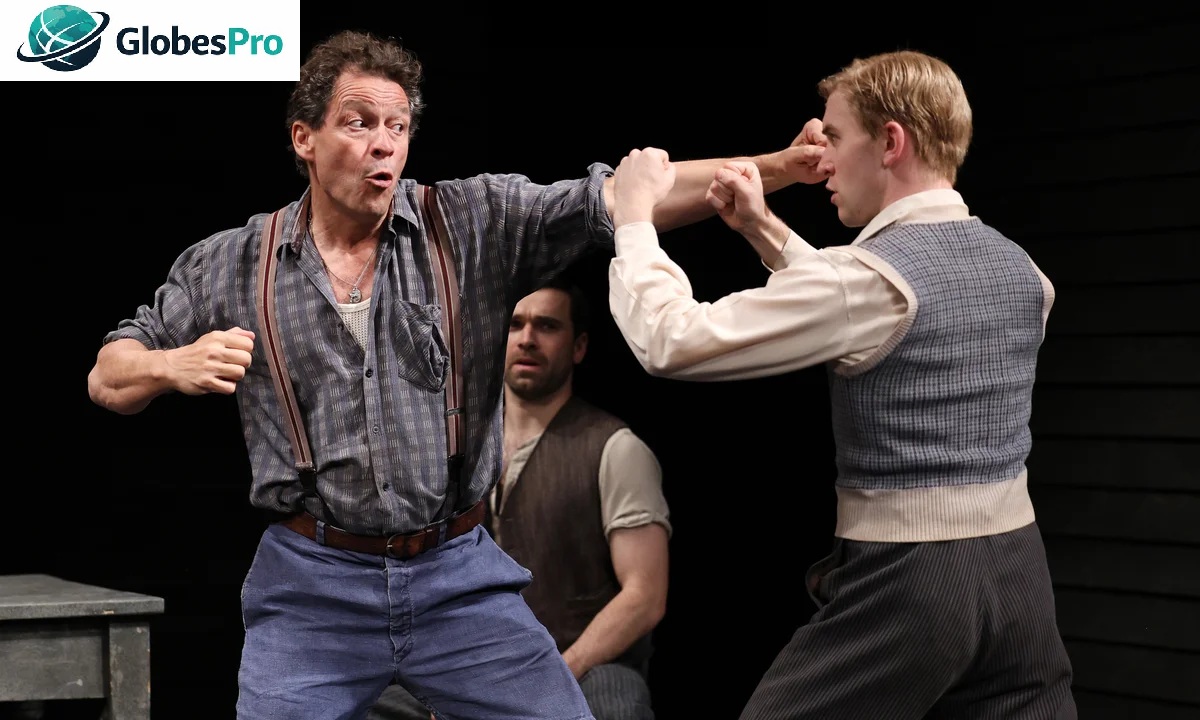
Richard Castellano’s sustained theatrical career included a remarkable run in Arthur Miller’s A View From the Bridge — an Off-Broadway production that ran for 643 performances and that placed him in one of the most significant pieces of American dramatic writing about the Italian-American immigrant experience.
Miller’s play — set in the Red Hook neighbourhood of Brooklyn, among the longshoremen and their families of the Italian-American waterfront community — is precisely the world that Castellano had grown up adjacent to in the Bronx. The cultural authenticity he brought to the material was not simply the result of research or technique. It was the result of genuine experiential proximity to the world Miller was dramatising.
643 performances in a single production is a number that deserves a moment of reflection. It represents the specific discipline and endurance of serious repertory theatre — the ability to find something new and genuine in material you have performed hundreds of times, to maintain the freshness and emotional availability that an audience deserves regardless of how many times you have stood in the same spot and spoken the same words.
That endurance — that capacity for sustained, consistent, quality work across an enormous number of repetitions — is the foundation of the specific reliability and depth that Castellano brought to every subsequent role.
Broadway: Lovers and Other Strangers

The theatrical work that brought Richard Castellano to the attention of the Broadway establishment — and that directly produced both his Tony nomination and his Oscar nomination — was Renée Taylor and Joseph Bologna’s Lovers and Other Strangers — a comedy about love, marriage, and the specific emotional dynamics of Italian-American family life in New York.
He played Frank Vecchio — a role whose combination of comic warmth, genuine emotional weight, and specific Italian-American cultural authenticity was precisely the intersection of qualities that Castellano embodied more completely than virtually any other actor of his generation.
The Tony Award nomination for Best Supporting Actor placed him in the formal acknowledgment of the Broadway establishment — recognising that what he was doing in the role was not simply competent or effective but genuinely exceptional.
What the role revealed about his specific gifts was the quality that would later make Peter Clemenza so unforgettable — the ability to be simultaneously funny and dangerous, warm and threatening, a man whose laughter never quite conceals the capacity for violence and whose violence never quite eliminates the genuine human warmth underneath it.
His Wife: Ardell Sheridan — The Real Life Connection
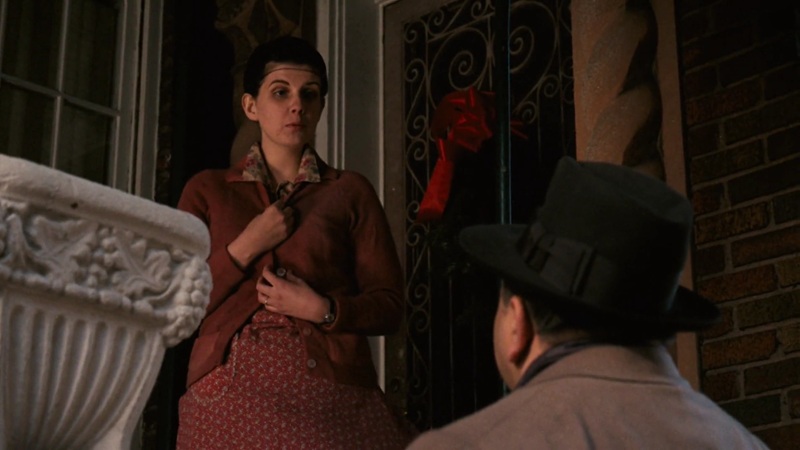
One of the more remarkable production details of Richard Castellano’s career is the recurring fact of his wife appearing alongside him in his most significant roles — not as a nepotistic casting decision but as a genuine creative choice that reflected the specific chemistry and the authentic relationship that real-life partnership produces on screen.
Ardell Sheridan — an actress in her own right — married Richard Castellano and subsequently appeared alongside him in two of his most important professional contexts.
In The Godfather — she played Clemenza’s wife, the woman who reminds her husband to bring back cannoli when he goes to dispose of Paulie Sal’s body. The line she delivers — “Don’t forget the cannoli” — is the prompt that produces Richard’s immortal ad-lib response.
| Ardell Sheridan and Richard Castellano | Details |
|---|---|
| Relationship | Wife and professional partner |
| The Godfather | Played Clemenza’s wife — “Don’t forget the cannoli” |
| The Super | Played his wife again |
| Professional Status | Actress in her own right |
| Post-Death | Wrote to People magazine (1991) defending his reputation |
| Cannoli Suggestion | Credited with suggesting the cannoli detail |
| Significance | Real marriage producing authentic on-screen chemistry |
The specific detail that makes the cannoli line so perfectly delivered is partly explained by Ardell Sheridan’s involvement — she is credited with suggesting the cannoli detail to Richard, which he then incorporated into his improvised response. The most quoted ad-lib in cinema history was, in a meaningful sense, a collaborative product of a real marriage.
Her subsequent defence of his professional reputation — writing to People magazine in 1991 to correct what she considered inaccurate characterisations of his conduct around the Godfather Part II dispute — reflects the sustained loyalty and clear-eyed advocacy of someone who knew exactly what her husband was and was not capable of.
Lovers and Other Strangers (1970): The Oscar Nomination
The film adaptation of Lovers and Other Strangers (1970) — directed by Cy Howard — gave Richard Castellano the opportunity to reprise his Tony-nominated Broadway performance of Frank Vecchio for a film audience.
The transition from stage to screen is not always straightforward — the specific calibrations that work in a theatre, where the performer must project to the back row, do not always translate to the intimacy of the camera, which punishes overstatement and rewards interior work. Richard Castellano made the transition with a naturalness that reflected both his genuine versatility and the specific quality of his Italian-American authenticity.
| Lovers and Other Strangers (1970) | Details |
|---|---|
| Director | Cy Howard |
| Richard’s Role | Frank Vecchio |
| Co-Stars | Gig Young, Anne Meara, Bea Arthur, Diane Keaton |
| Richard’s Oscar Nomination | Best Supporting Actor |
| Lost To | John Mills — Ryan’s Daughter |
| Box Office | Successful commercially |
| Critical Reception | Strong — Castellano specifically praised |
| Diane Keaton | Early film role — before The Godfather |
| Significance | Brought him to Coppola’s attention |
The Academy Award nomination for Best Supporting Actor — in the same year that John Marley received his nomination for Love Story — confirmed what the Broadway recognition had established. He was not simply a competent character actor. He was an exceptionally gifted performer whose specific abilities were being formally recognised by the industry’s most significant acknowledgment mechanisms.
He lost the Oscar to John Mills for Ryan’s Daughter — but the nomination placed him squarely in the awareness of every major director and casting executive in Hollywood at exactly the moment when Francis Ford Coppola was assembling the cast for the most important American film of the decade.
The Godfather (1972): Peter Clemenza
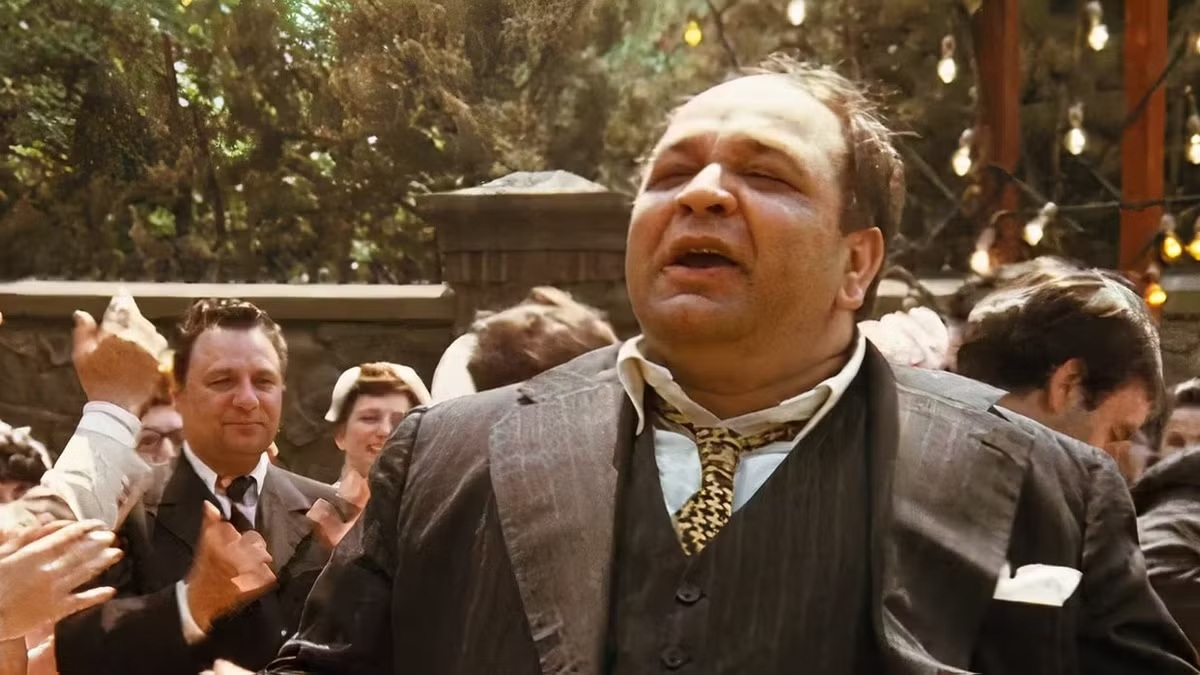
When Francis Ford Coppola cast The Godfather, Peter Clemenza — one of the two senior capos of the Corleone family and one of Vito Corleone’s oldest and most trusted friends — required an actor who could embody a very specific combination of qualities simultaneously.
Clemenza needed to be warm and dangerous. Funny and lethal. A man whose love of food and genuine human warmth coexisted completely naturally with the capacity for the most casual and efficient violence. He needed to be authentically Italian-American in a way that went beyond surface detail to genuine cultural embodiment. He needed to be someone you would want to eat with and someone you would be very careful never to cross.
Richard Castellano was the only possible choice.
| Peter Clemenza — Character Profile | Details |
|---|---|
| Character | Peter Clemenza — senior capo, Corleone family |
| Background | Old friend of Vito Corleone; one of the founding members |
| Personality | Warm; funny; loves food; completely ruthless when required |
| Role in Film | Mentor to Michael; cultural interpreter; practical operator |
| Key Scenes | Teaching Michael to cook; Paulie’s murder; fish message |
| Relationship to Michael | Teacher; protector; the human face of the family business |
| Richard’s Salary | Reportedly highest-paid actor in the cast |
| Richard’s Age | 38 at filming |
The detail about his salary — reportedly the highest in the Godfather cast, above Marlon Brando, Al Pacino, and James Caan — reflects the specific professional leverage that his Tony nomination, Oscar nomination, and Broadway reputation gave him in the contractual negotiations. He came to the film not as a character actor grateful for a significant role but as an Oscar-nominated Broadway star who commanded and received top dollar.
The irony of that financial achievement — being the highest-paid cast member of the greatest American film of its era while playing a supporting character — is a specific kind of Hollywood story that only the particular confluence of theatrical reputation and film timing could have produced.
Teaching Michael to Cook: The Human Heart of the Film
The scene in which Peter Clemenza teaches Michael Corleone how to make tomato sauce — while simultaneously explaining the mechanics of a gang war — is one of The Godfather’s most quietly significant moments.
On the surface, it is a cooking lesson. Underneath, it is the scene in which an old man of the Corleone world — a man who has survived everything the family business has produced across decades — passes practical knowledge to the young man who will eventually inherit that world.
Clemenza’s instructions — “You start out with a little bit of oil… fry some garlic… then you throw in some tomatoes, tomato paste… you fry it and you make sure it doesn’t stick… you get it to a boil, you shove in all your sausage and your meatballs…” — delivered simultaneously with tactical information about the gang war’s likely duration, create one of cinema’s most perfect moments of tonal complexity.
Richard Castellano delivers it with the complete ease of a man for whom cooking and killing are simply two practical skills that a capable person needs to have. There is no tonal distinction between his instructions for the sauce and his instructions for survival. Both are equally important. Both are equally natural.
That tonal equality — that refusal to separate the domestic warmth from the professional violence — is the specific quality that makes Clemenza one of the most fully realised characters in the film despite being a supporting role.
“Leave the Gun, Take the Cannoli”: Cinema’s Greatest Ad-Lib
The scene in question takes place after Clemenza and Rocco Lampone have taken Paulie Sal — the treacherous family driver — for a final drive. Paulie is shot in the car. Clemenza gets out to urinate by the roadside. He walks back to the car where Rocco waits with the body.
The original scripted line — the line that Mario Puzo and Francis Ford Coppola had written — was simply a direction to leave the gun.
What Richard Castellano actually said was: “Leave the gun. Take the cannoli.”
| “Leave the Gun, Take the Cannoli” | Details |
|---|---|
| Scripted Line | “Leave the gun” |
| What Castellano Said | “Leave the gun. Take the cannoli.” |
| The Cannoli | Box in the back seat — established earlier in scene |
| Ardell Sheridan’s Role | Credited with suggesting the cannoli detail |
| Coppola’s Decision | Kept the ad-lib — immediately recognised its perfection |
| Why It Works | The domestic interrupting the deadly; warmth amid violence |
| Cultural Legacy | One of the most quoted lines in cinema history |
| What It Reveals | Clemenza’s complete moral compartmentalisation |
The genius of the line is in its absolute tonal flatness — the complete absence of any distinction between the disposal of a murder weapon and the retrieval of a dessert. To Clemenza, both are practical matters of equal weight. The gun is a liability. The cannoli is a pleasure. Both require attention. Neither requires commentary.
Ardell Sheridan is credited with the suggestion that became the second half of the line — the specific detail of the cannoli connecting back to the earlier scene in which Clemenza’s wife reminded him to bring them home. The line is thus not only an ad-lib but a callback — a moment that ties the domestic warmth of the Clemenza household to the professional brutality of the family business in a single breath.
Coppola recognised immediately what Castellano had given him. He kept it. The rest is cinema history.
The line has been quoted in films, television shows, political speeches, business books, and everyday conversation for more than fifty years. It has been used to describe everything from corporate strategy to household priorities. It has been parodied so many times that the parodies themselves have become cultural references.
None of that would exist without Richard Castellano standing next to a car containing a dead body in 1971 and deciding, in the moment, that the cannoli deserved a mention.
“Luca Brasi Sleeps with the Fishes”
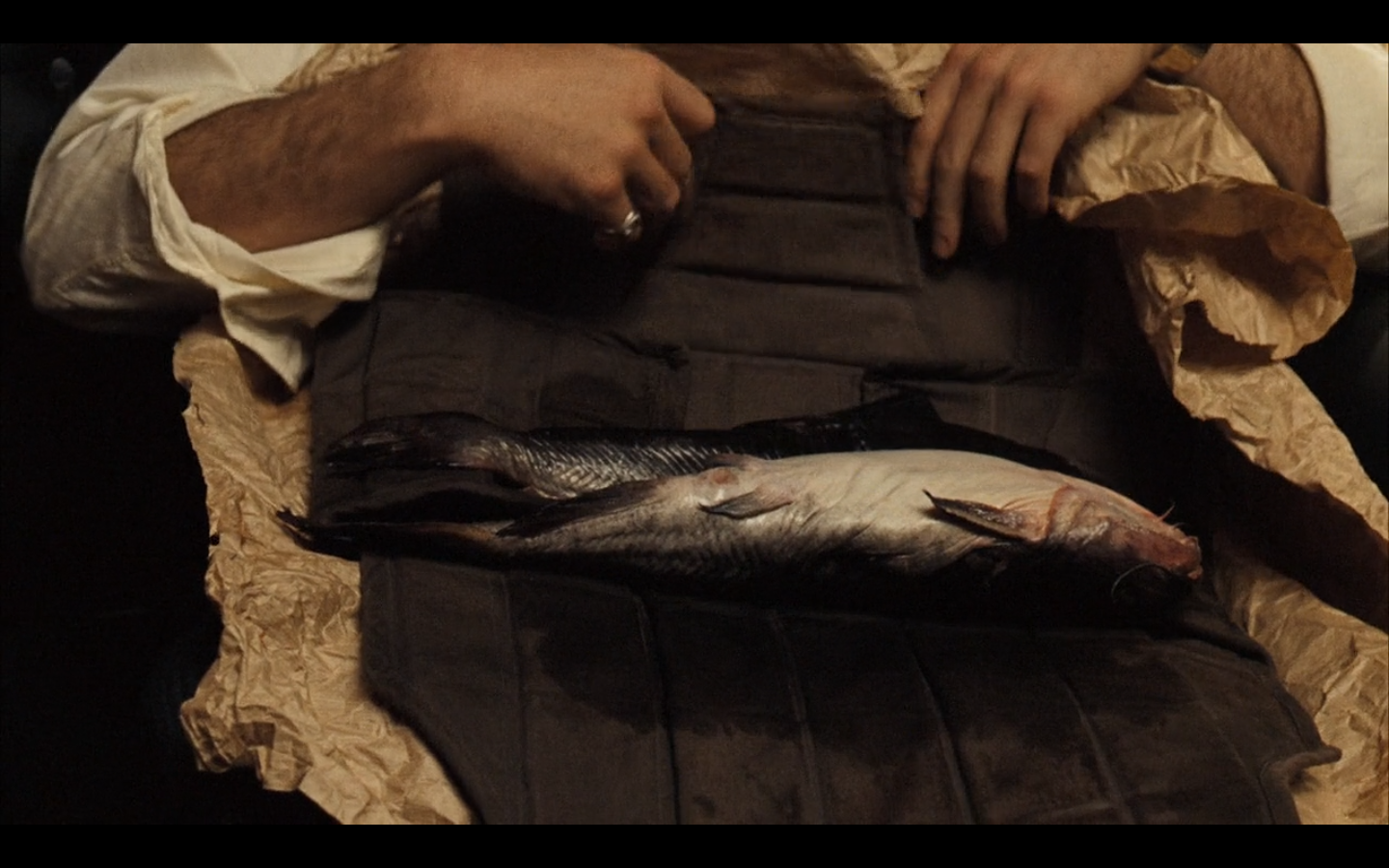
Clemenza’s other great moment of cultural interpretation — explaining the Sicilian message of the fish — demonstrates another dimension of what Richard Castellano brought to the role.
When the Corleone family receives a package containing Luca Brasi’s bulletproof vest wrapped around fish — the Sicilian message that Brasi has been killed and sleeps with the fishes — it is Clemenza who explains the tradition to the non-Sicilian members of the household.
“It’s a Sicilian message. It means Luca Brasi sleeps with the fishes.”
The delivery is matter-of-fact — the cultural translator explaining a tradition with the casual authority of someone for whom this is simply common knowledge. There is no drama in the explanation. The drama is in what the message means. Clemenza’s job is to be clear.
This function — the cultural interpreter who makes the Sicilian world accessible to an audience that does not share its codes — is one of the structurally important things that Clemenza does across the film. He is the human bridge between the specific cultural world of the Corleone family and the audience watching it.
Richard Castellano performs this function with the naturalness of someone for whom the cultural knowledge is genuine — because, rooted in his Sicilian heritage and Bronx upbringing, it was.
The Highest Paid Actor in The Godfather
The contractual detail that Richard Castellano was reportedly the highest-paid actor in The Godfather cast — above Marlon Brando, above Al Pacino, above James Caan — is one of the more striking facts in the film’s production history.
The explanation lies in the specific leverage that his combined Tony and Oscar nominations gave him at exactly the moment when Paramount and Coppola needed him. He was the most formally recognised member of the cast at the time of negotiations — Brando and Pacino’s legendary status was either established in different contexts or not yet confirmed at the level it would subsequently reach.
The irony is complete and characteristic of Hollywood’s specific economics — the actor who delivered the most quoted six words in the film’s history, in a supporting role, was paid more than any of the stars whose names would dominate the marketing.
Why Clemenza Didn’t Return for Part II
The absence of Peter Clemenza from The Godfather Part II (1974) — replaced by the entirely new character of Frank Pentangeli (played by Michael V. Gazzo) — is one of the more discussed production disputes in the trilogy’s history.
Two competing narratives exist about why Richard Castellano did not return.
| The Part II Dispute — Two Versions | Version | Details |
|---|---|---|
| Coppola’s Account | Contract dispute | Castellano demanded right to rewrite his own dialogue |
| Castellano’s Account | Character integrity | Refused changes he felt violated Clemenza’s established character |
| Ardell Sheridan’s Account | 1991 People magazine letter | Disputed characterisations; defended Richard’s professional conduct |
| Weight loss dispute | Additional element | Reports that Coppola wanted Richard to lose weight for Part II |
| Outcome | Neither returned | Frank Pentangeli created; Michael V. Gazzo nominated for Oscar |
| Cost to Castellano | Significant | Missed the defining role of the decade’s defining film sequel |
| Cost to Part II | Debated | Pentangeli works; but Clemenza’s absence is genuinely felt |
Ardell Sheridan’s 1991 letter to People magazine — written three years after Richard’s death — represents her sustained defence of her husband’s professional conduct and her rejection of characterisations she considered unfair to his memory.
What the dispute cost Richard Castellano professionally is significant and clear — he missed the opportunity to be part of the film that won the Academy Award for Best Picture and that many critics regard as the greatest sequel ever made. The ripple effects of that absence on the subsequent trajectory of his career are visible and difficult.
What the dispute reveals about his character is more complicated — it reflects either the professional stubbornness of someone who refused to compromise the integrity of a character he had made his own, or the contractual inflexibility of someone who misread his own leverage. Possibly both simultaneously.
Michael V. Gazzo — who replaced him as Frank Pentangeli — received his own Academy Award nomination for Best Supporting Actor for the role. The character he played was written specifically because Richard Castellano was not available. The Oscar nomination Gazzo received for playing the character that Castellano declined to play is one of Hollywood’s more pointed ironies.
The Super (1972): Television Stardom
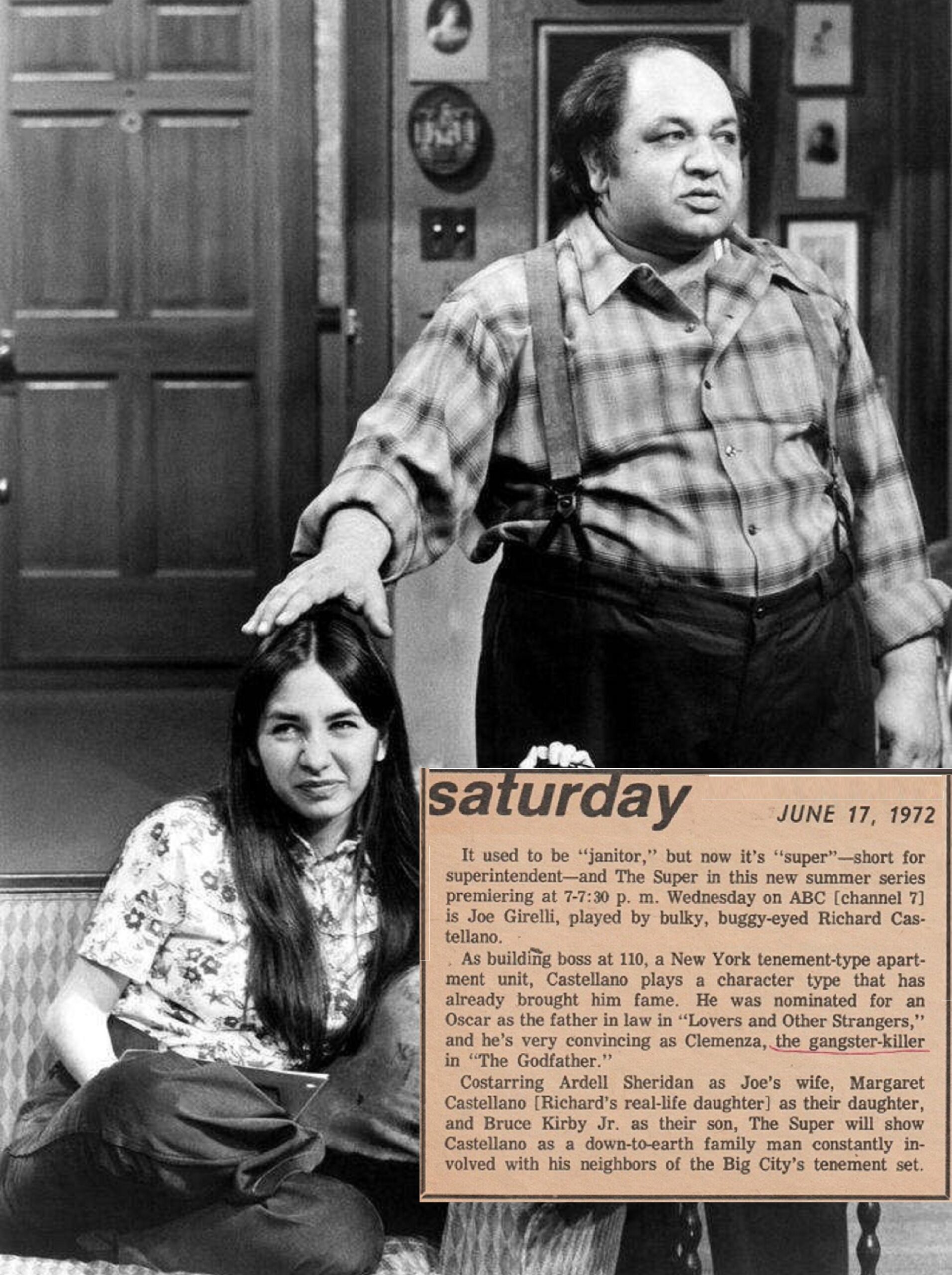
In the same year that The Godfather was released, Richard Castellano starred in The Super — an ABC television series in which he played Joe Girelli, the superintendent of a New York City apartment building.
The show ran for ten episodes — a brief but genuine television starring vehicle that demonstrated his comic range and his ability to carry a lead role through the different demands of weekly television production.
The casting detail that most distinguishes the show is that his real daughter Margaret played his daughter in the series — creating another instance of the real-life family connection that characterised his most significant professional work. Real wife in The Godfather. Real daughter in The Super. The pattern reflects a specific approach to performance that valued authentic human connection over manufactured chemistry.
Joe and Sons (1975–1976)
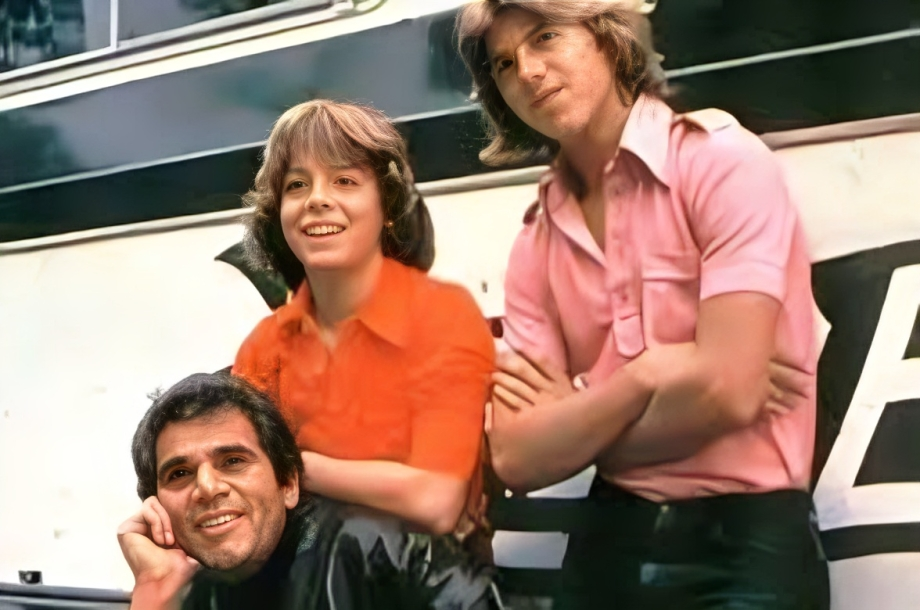
Richard Castellano’s second significant television starring role came in Joe and Sons — a CBS sitcom that ran from 1975 to 1976 and in which he played Joe Vitale, a widowed Italian-American factory worker raising two sons in Hoboken, New Jersey.
The show’s premise — an Italian-American working-class father navigating single parenthood in a New Jersey industrial city — was precisely the cultural territory that Castellano inhabited most naturally and most convincingly.
| Joe and Sons (1975–1976) | Details |
|---|---|
| Network | CBS |
| Character | Joe Vitale — widowed factory worker |
| Setting | Hoboken, New Jersey |
| Run | 1975–1976 — one season |
| Cultural Territory | Italian-American working-class family life |
| Significance | Second TV starring vehicle post-Godfather |
The show’s single-season run reflected the specific commercial challenges of early 1970s television comedy rather than any deficiency in Castellano’s performance — he was, by all available accounts, doing exactly what the role required. Television’s brutal ratings calculus simply did not deliver the audience numbers that network economics demanded.
Other Notable Film Work
Beyond The Godfather and Lovers and Other Strangers, Richard Castellano built a film career that — while never again reaching the commercial heights of the early 1970s — demonstrated consistent professional quality and the specific range that his theatrical foundation had built.
| Richard Castellano — Notable Filmography | Year | Production | Notes |
|---|---|---|---|
| Lovers and Other Strangers | 1970 | Film | Oscar nomination |
| The Godfather | 1972 | Film | Peter Clemenza — career defining |
| Honor Thy Father | 1973 | Film | TV movie — Bonnano family story |
| The Super | 1972 | Television | Lead role — ABC series |
| Joe and Sons | 1975–76 | Television | Lead role — CBS sitcom |
| Gangster Wars | 1981 | Television | Al Capone |
| Dear Mr. Wonderful | 1982 | Film | West German production |
Honor Thy Father (1973) — a television film about the Bonanno crime family — placed him in the gangster genre that his Clemenza had defined, demonstrating both the typecasting that significant roles generate and the specific authority he brought to that cultural territory.
The Paul Castellano Controversy
One of the more persistent and more disputed aspects of Richard Castellano’s public profile was the claim — advanced most publicly by Ardell Sheridan — that he was the nephew of Paul Castellano, the Gambino crime family boss who was murdered on December 16, 1985, on the orders of John Gotti.
The claim created an obvious and immediate association — the actor who played the most famous fictional Italian-American crime family capo was alleged to be a blood relative of one of New York’s most powerful real organised crime figures.
| The Paul Castellano Controversy | Details |
|---|---|
| Claim | Richard was nephew of Gambino boss Paul Castellano |
| Source | Ardell Sheridan — Richard’s wife |
| Counter-claim | Richard’s sister — “we are not related to Paul” |
| Paul Castellano | Gambino boss; murdered December 16, 1985 |
| Professional Impact | Created persistent organised crime association |
| Resolution | Never definitively resolved publicly |
Richard’s own sister disputed the claim directly — stating clearly that the families were not related. The shared surname and the Sicilian heritage created an easy narrative connection that may have been more convenient than accurate.
The controversy itself — never definitively resolved — added another layer to the already complicated public narrative around a man whose most famous role placed him in the fictional version of the world that Paul Castellano allegedly inhabited in reality.
Physical Presence and Acting Style
Richard Castellano’s physical presence was central to his screen effectiveness — and deserves specific acknowledgment because it was integral to what Peter Clemenza required and what he so completely delivered.
His stocky, powerful build — he normally weighed approximately 200 pounds and occasionally played heavier — communicated the specific physical authority of a man accustomed to physical work and physical presence. He was not large in the way of a threatening heavy. He was solid in the way of a man who has always taken up exactly the space he needed.
His face — with its heavy-set features, expressive eyes, and the specific quality of warmth that genuine Italian-American familial culture produces in its most characteristic expressions — communicated simultaneously the capacity for genuine human connection and the capacity for the most pragmatic violence.
That simultaneity — the ability to be genuinely warm and genuinely dangerous within the same expression — is the specific quality that made Clemenza so unforgettable and that no amount of technical acting training can produce in someone who has not genuinely lived adjacent to the cultural world that produces it.
He brought to every role the specific authenticity of lived experience — the Bronx Sicilian-American son of immigrants who understood, from personal knowledge rather than research, exactly what these people sounded like, moved like, cooked like, and killed like.
Death: December 10, 1988
Richard Salvatore Castellano died on December 10, 1988, from a heart attack at his home in North Bergen, New Jersey. He was 55 years old.
The age at death is the fact that most demands reflection — fifty-five is not old. At fifty-five, with an Oscar nomination, a Tony nomination, and one of the most iconic supporting performances in American cinema history on his record, Richard Castellano had every reasonable expectation of a significant further chapter of professional work.
The career that was cut short at fifty-five had already produced work of permanent cultural significance. What the additional years might have produced — the roles that the restored professional momentum of a mature character actor with his specific qualities might have generated — is simply not knowable.
His funeral was held at Lady of Libero Roman Catholic Church — a specifically Italian-American Catholic community that reflected the heritage and values of the family that produced him. He was subsequently cremated at the Garden State Crematory in North Bergen.
| Richard Castellano’s Death | Details |
|---|---|
| Date | December 10, 1988 |
| Cause | Heart attack |
| Location | North Bergen, New Jersey |
| Age | 55 |
| Funeral | Lady of Libero Roman Catholic Church |
| Cremated | Garden State Crematory, North Bergen |
| Career at Death | Significantly curtailed post-Godfather dispute |
Legacy: The Line That Never Dies
Richard S. Castellano’s legacy is carried primarily by six words — words he improvised in a moment of creative instinct on a film set in 1971 and that have never stopped being quoted since.
“Leave the gun. Take the cannoli.”
Those six words are his permanent cultural monument — more durable than any award, more widely known than any biographical detail, more likely to be remembered a hundred years from now than anything else connected to his name.
| Richard Castellano’s Legacy | Details |
|---|---|
| The cannoli line | Most quoted ad-lib in cinema history |
| Peter Clemenza | One of cinema’s great supporting characters |
| Oscar nomination | Formal recognition of exceptional craft |
| Tony nomination | Broadway establishment acknowledgment |
| Sicilian authenticity | The cultural embodiment that cannot be manufactured |
| The highest-paid | Above Brando and Pacino at peak |
| Late bloomer | Construction manager to Oscar nominee |
| Character actor legacy | The soul of great ensemble cinema |
Beyond the line, he left Peter Clemenza — one of the most fully realised supporting characters in American cinema, a man whose warmth and danger, whose love of food and capacity for violence, whose specific Italian-American humanity is as vivid and as real fifty years after the film’s release as it was on the day he delivered it.
He was a construction company manager who became an Oscar-nominated Broadway actor who became the most quoted improviser in cinema history. He was the Bronx-born son of Sicilian immigrants who brought the specific truth of that heritage to the greatest American film of its era. He was the man who understood, in a moment of pure creative instinct, that the cannoli was as important as the gun.
He was right. He is still right. He will always be right.
Frequently Asked Questions
1. Who was Richard S. Castellano? A Bronx-born actor of Sicilian heritage, Oscar-nominated for Lovers and Other Strangers (1970) and immortal as Peter Clemenza in The Godfather (1972).
2. Did Richard Castellano ad-lib the cannoli line? Yes — “Leave the gun. Take the cannoli” was not in the script. He improvised it on set and Coppola immediately kept it.
3. Was Richard Castellano really the highest-paid actor in The Godfather? He was reportedly paid more than Brando, Pacino, and Caan — reflecting the leverage his Tony and Oscar nominations gave him at the time of negotiations.
4. Why didn’t Clemenza appear in Part II? A contractual and creative dispute between Castellano and Coppola — the exact cause is disputed. His character was replaced by Frank Pentangeli, played by Michael V. Gazzo.
5. Was Richard Castellano related to Paul Castellano? Disputed — his wife claimed a family connection to the Gambino boss but his own sister denied it. Never definitively resolved.
6. Who was Richard Castellano’s wife? Ardell Sheridan — an actress who played his wife in The Godfather and The Super, and who famously prompted the cannoli suggestion.
7. How did Richard Castellano die? A heart attack at his North Bergen, New Jersey home on December 10, 1988. He was 55 years old.
8. What was Richard Castellano’s background before acting? He worked as a construction company manager and attended Columbia University before entering the theatre through the New Yiddish Theatre.
Conclusion: The Cannoli Matters
Richard S. Castellano was a Bronx kid from Sicilian stock who managed construction sites before he ever set foot on a stage. He worked his way through the New Yiddish Theatre and Off-Broadway and Arthur Miller and Broadway until an Oscar nomination confirmed what the theatre world already knew. He walked onto the set of the greatest American film of its era and played the warmest, most dangerous, most human character in the ensemble. And in a single unscripted moment — standing next to a car containing a dead man, looking at a box of Italian pastries in the back seat — he said six words that have never stopped being repeated.
The gun had to be left. The cannoli had to be taken. Both things were equally obvious to a man who had grown up knowing that the pleasures of life and the obligations of loyalty were not in conflict — they were simply the two practical dimensions of the same Sicilian truth.
Richard Castellano understood that truth completely. He said it in six words. Cinema has been quoting him ever since.
