Category

Entertainment

Category

Yes — Princess Lilibet’s long red hair is absolutely real, absolutely stunning, and has been featured in multiple new photos shared by her mother Meghan Markle across several recent occasions. The most talked-about images include a Valentine’s Day 2026 photo of Lilibet in a soft pink ballerina-style outfit running toward her father Prince Harry, her auburn waves flowing loose and longer than ever. A Christmas 2025 family card also showed her gorgeous red hair clearly — and earlier images from International Women’s Day, International Day of the Girl, and behind-the-scenes footage from Meghan’s lifestyle brand As Ever have all put Lilibet’s remarkable hair front and center.

The four-year-old princess — currently one of the most searched children in the world — has inherited a shade of red hair so vivid, so unmistakably connected to her father Prince Harry and the broader Spencer family gene pool, that every new photo featuring it stops people mid-scroll. She is growing fast, her hair is growing faster, and the world simply cannot get enough of either.

Quick Facts — Princess Lilibet Diana

Detail Information
Full Name Lilibet Diana Mountbatten-Windsor
Date of Birth June 4, 2021
Age 4 years old (as of 2025)
Birthplace Santa Barbara, California, USA
Nationality American / British
Title Princess of the United Kingdom
Father Prince Harry, Duke of Sussex
Mother Meghan Markle, Duchess of Sussex
Sibling Prince Archie Harrison (born May 2019)
Current Residence Montecito, California, USA
Hair Color Vibrant auburn / strawberry red
Named After Queen Elizabeth II (“Lilibet”) and Princess Diana

The Photos That Everyone Is Talking About

Over the past several months — particularly since Meghan Markle rejoined Instagram in early 2025 — the Sussex family has shared more glimpses of their children than at any point since moving to California. And in almost every single image that features Lilibet, one thing stands out above everything else: that hair.

Here is a breakdown of the most significant recent photo moments featuring Lilibet’s red hair:

Date Occasion What the Photo Showed
February 2026 Valentine’s Day Lilibet in a pink ballerina outfit, hair loose and flowing, racing toward Harry
December 2025 Christmas Card Lilibet in a floral tea dress, long red hair clearly visible, running in the Montecito garden
November 2025 Thanksgiving Volunteering Lilibet at Archewell Foundation charity event, red hair in braids
October 2025 International Day of the Girl Lilibet running through garden in pink outfit, hair in low ponytail showing full length
March 2025 International Women’s Day Lilibet cuddled up to Harry, hair loose, resemblance to father striking
March 2025 As Ever brand launch Behind-the-scenes footage of Lilibet arranging flowers, hair longer than ever
April 2025 Garden Sunday Lilibet and Archie both visible, matching red hair glowing in California sunshine

Each of these moments has generated enormous public response. The Valentine’s Day image alone — Lilibet in her pink ballerina outfit running toward her father — went viral within hours of being posted, with fans drawing immediate comparisons to Harry as a little boy.

The Hair That Runs in the Family — A Royal Red Legacy

Red hair in the British Royal Family is not new. It is not accidental. And it is not going away anytime soon.

The genetic thread of auburn and red hair that runs through the Spencer family — Princess Diana’s family — is one of the most discussed and celebrated in royal history. Diana herself did not have red hair, but she carried the gene. It expressed itself visibly in her son Harry — the most famous royal redhead of his generation — and has now passed through him into both of his children with remarkable force.

Prince Harry has spoken about this with open delight. At the WellChild Awards in 2024, he told a journalist that both Archie and Lilibet had been “blessed with their mother’s thick hair” — self-deprecatingly noting that his own is thinner — and marveled that it would not be long before Lilibet could “sit on hers.” On The Late Show with Stephen Colbert in 2023, he put it even more plainly: “The Spencer gene is very, very strong. I actually genuinely thought there was no way the ginger gene would stand up to my wife’s genes — but I was wrong.”

He was very, very wrong. And he seems absolutely delighted about it.

Red Hair Through the Royal Generations

Royal Family Member Hair Color Generation
Diana Spencer (Princess of Wales) Carrier of red gene Harry & William’s mother
Prince Harry Vibrant ginger / auburn Diana’s son
Prince William Blonde / light brown Diana’s son
Prince George Light brown William’s son
Princess Charlotte Darker blonde William’s daughter
Prince Louis Light auburn hints William’s youngest
Prince Archie Vibrant red Harry’s son
Princess Lilibet Deep auburn / strawberry red Harry’s daughter

The pattern is clear. The Spencer red gene skipped William almost entirely and landed squarely on Harry — and then passed through Harry into both of his children with extraordinary intensity. Lilibet and Archie are, genetically speaking, the most vivid expression of the Spencer red hair gene in this generation of the royal family.

That is not just a fun fact. For fans who loved Princess Diana, there is something genuinely moving about seeing her genetic legacy — that specific, fiery, unmistakable colour — alive and running through a garden in Montecito in the sunshine.

Who Is Princess Lilibet? The Child Behind the Hair

It is easy, when an image goes viral, to reduce a person to the detail that made them famous. Lilibet is not just a head of red hair. She is a fully formed, fast-growing, increasingly spirited four-year-old with a personality that has already revealed itself in flashes through her parents’ social media.

Lilibet Diana Mountbatten-Windsor was born on June 4, 2021, at Santa Barbara Cottage Hospital in California — making her the first member of the British Royal Family to be born on American soil. Her birth came after Harry and Meghan had stepped back from senior royal duties and relocated to Montecito, a wealthy coastal enclave in Santa Barbara County that has become their permanent home.

Her name was chosen with deep intention. Lilibet was the private nickname of Queen Elizabeth II — used only by her closest family members, the people who knew her not as a monarch but as a woman. To give a child that name was to carry something deeply personal forward. Her middle name, Diana, was chosen to honor Prince Harry’s mother — the woman he lost at age twelve, the grandmother Lilibet will only ever know through photographs and stories.

She carries, in her name alone, two of the most significant women in the modern history of the British Royal Family.

Growing Up in Montecito — A California Childhood

Lilibet’s world is Montecito — and Montecito could not be more different from the palaces and royal estates where her father spent his childhood.

She lives in a sprawling home with a rose garden, a vegetable patch, a chicken coop, and family dogs named Guy, Pula, and Momma Mia. Her parents have spoken about building a life rooted in normalcy, nature, and genuine family connection. She goes to the local farmers market. She plays in the garden. She helps her mother arrange flowers and make jam. She watches her brother Archie do the things older brothers do.

She is, in the most meaningful sense, a California kid — sun-kissed, outdoors-loving, growing up in warm weather with space to run.

Meghan has shared glimpses of this world in posts that feel genuine rather than staged. The behind-the-scenes footage from the As Ever brand shoot — Lilibet in a cream summer dress, helping arrange blooms, her red hair longer than ever — felt like exactly that: a real moment from a real family’s life, captured in passing.

That authenticity is part of what makes each new image resonate so strongly. These are not carefully managed royal photo calls. They are a mother sharing her life with her daughter in it.

Princess Lilibet's Long Red Hair Is Featured in New Photos

Archie and Lilibet — The Red-Haired Siblings

One of the most talked-about details across all the recent Sussex family photos is not just Lilibet’s hair — it is the fact that both Sussex children have it.

Prince Archie Harrison, now six years old, has the same vibrant, unmistakable red hair as his younger sister. The April 2025 garden photos — showing both children from behind in the rose garden, their matching auburn heads glowing in the California afternoon light — sent social media into an extended moment of collective joy.

The comments were overwhelmingly centred on one theme: Princess Diana. Fan after fan noted that both Archie and Lilibet had inherited the Spencer red gene — the same gene that runs through Diana’s family, the same gene their father carries, the same colour that has become one of the most recognizable in the royal family. For many people who loved Diana, seeing it alive in her grandchildren felt like something close to a gift.

Harry has spoken about making sure his children know who their grandmother was. He has shown Archie photos of Diana. He has told him the stories — including the famous landmine walk that Diana did in Angola, which he discussed with Archie after visiting a similar site with the Invictus Games. These are children who will grow up knowing Diana through the eyes of a father who loved her deeply and lost her far too soon.

The red hair is one more thread of connection — visible, undeniable, and beautiful.

Harry on His Children’s Hair — In His Own Words

Prince Harry has spoken about his children’s red hair multiple times publicly — always with a warmth and humor that is genuinely endearing.

At the WellChild Awards, he marveled that Lilibet’s hair was growing so fast it would not be long before she could sit on it. On The Late Show, he laughed about how thoroughly the Spencer gene had won out over any assumptions he had made early in his relationship with Meghan. He called the ginger gene “strong” and admitted he had been completely wrong to think otherwise.

There is something very human about those moments. This is a man who grew up carrying his own red hair as both a source of connection to his mother’s family and — occasionally — a source of unwanted attention and commentary. Now he watches it reappear in his children and responds with pure, uncomplicated delight.

That delight is contagious. And it is a big part of why these photos land the way they do.

Why Lilibet Captures the World’s Attention

Princess Lilibet is four years old. She has appeared publicly only a handful of times. She has no social media presence of her own. She has given no interviews. She has attended no royal events in the traditional sense.

And yet she is one of the most searched children in the world.

Why?

The answer is layered. She is the daughter of two of the most discussed people on earth. She carries one of the most emotionally weighted names in British royal history. She is being raised in deliberate, carefully maintained privacy — which makes every glimpse feel like a gift rather than a given. She has inherited a physical trait — that extraordinary red hair — that connects her visibly to people the world loved and lost. And she is, by every available account, a thoroughly charming, spirited, fast-growing little girl who smiles easily, runs everywhere, and clearly adores her father.

All of that together creates an irresistible combination. The world is not just curious about Lilibet. The world is rooting for her.

Conclusion

Princess Lilibet’s long red hair has featured in multiple new photos — and it shows no signs of slowing down in either length or color. From Valentine’s Day ballet photos to Christmas card garden shots to International Women’s Day cuddles with her dad, Lilibet’s hair has become one of the most-discussed details in royal family coverage.

But the hair is really just the entry point. What people are actually responding to — what makes them stop scrolling, share the image, and leave the kind of warm, emotional comments that these photos consistently generate — is the fuller picture.

A little girl growing up loved, in a garden in California, with the Spencer red gene blazing in her hair and her grandmother’s name in her heart.

Princess Diana is gone. But she is, it turns out, not entirely absent. She is there in the color that runs through her son and now through his children — vivid, unmistakable, and more beautiful than ever

When viewers search for tv shows with Josh Segarra, what they find is not a neat, one-genre résumé — they find a career that has moved deliberately and ambitiously across children’s television, police procedurals, superhero dramas, dark comedies, prestige comedies, animated series, and ensemble ensemble casts spanning over fifteen years. Josh Segarra is one of those rare Puerto Rican performers who has built a screen identity rooted not in a single defining role but in an extraordinary accumulation of them — each chosen with care, each inhabited with full commitment, and each demonstrating something new about what this Florida-born, NYU-trained, Broadway-tested actor can do.

Biography / Wiki Table

Detail Information
Full Name Joshua Segarra
Date of Birth June 3, 1986
Age (2025) 38 years old
Place of Birth Longwood, Florida, USA
Nationality American
Ethnicity Puerto Rican
Languages English, Spanish (fluent)
Height 5 ft 11 in (180 cm)
Eye Color Brown
Hair Color Dark Brown
Education NYU Tisch School of the Arts (Theatre, graduated 2008)
Religion Pentecostal upbringing
Wife Brace Rice Segarra (married October 17, 2014)
Son Gus Maine Segarra (born September 2016)
Broadway On Your Feet! (Emilio Estefan), Lysistrata Jones, Dogfight
Signature TV Role Adrian Chase / Prometheus — Arrow (CW, Season 5)
Current TV Animal Control (Fox), Best Medicine
Net Worth (est.) Approximately $3 million
Social Media Active on Instagram
Representation Abrams Artists Agency; ATA Management; Jackoway

Introduction: Why Josh Segarra Keeps Showing Up on Your Screen

There is a specific kind of television actor who does not merely appear in shows — who makes the shows they appear in measurably better. Josh Segarra is that actor. From the moment he first gained national television attention playing Hector Ruiz on PBS Kids’ The Electric Company through to his most recent work as a series regular on Fox’s Animal Control and his casting in the Netflix limited series Sirens, he has never phoned in a performance, never allowed a supporting role to become invisible, and never stopped expanding the range of what he brings to the screen.

His Puerto Rican heritage, his bilingual fluency, his Pentecostal church-trained voice, his physical commitment, and the rigorous theatrical foundation he built at NYU’s Tisch School of the Arts all combine in a screen presence that is simultaneously warm and authoritative, funny and dramatically serious, quietly grounded and capable of explosive intensity. Understanding the full arc of his television work is to understand how a genuinely gifted performer builds a sustainable, genre-spanning career across more than a decade of professional television.

The Beginning: The Electric Company (PBS, 2009–2011)

Josh Segarra’s first major television role came in 2009 when he was cast as Hector Ruiz — a series regular on the PBS Kids educational programme The Electric Company. The show, a revival of the iconic 1970s series, ran for two seasons from 2009 to 2011 and was aimed at elementary-school-aged children, combining live-action performance with an emphasis on literacy and language skills.

Playing a series regular on a children’s educational programme is not a glamorous credit by Hollywood standards — but it is an enormously demanding one. Children’s television requires a performer who can hold young attention with genuine warmth and energy, maintain consistent characterisation across a long episode run, and bring the same commitment to the fifteenth take of a literacy sketch as the first. Segarra did all of this for two full seasons, building exactly the kind of professional discipline that would serve him in every subsequent role.

Establishing Presence: Homeland, The Following, Blue Bloods (2011–2014)

As The Electric Company wound down, Segarra began accumulating the guest credits that signal an actor transitioning from recurring to genuinely sought-after. He appeared in Homeland — the Showtime espionage drama starring Claire Danes and Damian Lewis that was at the peak of its critical reputation during his appearance — and in The Following, the Fox psychological thriller built around Kevin Bacon’s performance as a former FBI agent pursuing a cult-leading serial killer.

He also appeared in Blue Bloods on CBS — the long-running procedural drama about a family of New York law enforcement professionals, starring Tom Selleck and Donnie Wahlberg. His episode, “Knockout Game” in Season 4, placed him opposite two of network television’s most experienced procedural performers, and he held his ground entirely.

These were not large roles. But the productions were significant, the professional standards were high, and appearing in them demonstrated that the industry was already viewing Segarra as a credible, reliable screen presence worth booking for quality material.

First Breakthrough: Sirens (USA Network, 2013–2015)

The first television role that gave Josh Segarra genuine recurring prominence was Billy Cepeda in Sirens — the USA Network comedy about a dysfunctional Chicago ambulance crew. He joined as a recurring character in the first season before being promoted to series regular in the second. The show was cancelled after two seasons, but the experience was significant: it placed him at the centre of a fast-paced ensemble comedy, gave him sustained character development across multiple episodes, and demonstrated a comedic ease that his earlier dramatic guest work had not fully shown.

Sirens also served as his introduction to the specific demands of the single-camera comedy format — the timing, the naturalism, the ability to make funny moments feel entirely unperformed — that would serve him in the comedy-heavy work he would take on later in his career.

Chicago P.D. (NBC, 2014–2016): Entering the Dick Wolf Universe

Running concurrently with and then following Sirens, Segarra joined the cast of Chicago P.D. on NBC as Justin Voight — a recurring character in one of Dick Wolf’s sprawling interconnected Chicago procedural franchise. Chicago P.D. was, and remains, one of the most commercially successful police dramas on American network television, with a massive and loyal weekly audience.

Chicago P.D.

The role gave him access to a production infrastructure and viewership scale that USA Network could not match, and it placed him in scenes alongside Jason Beghe, Patrick Flueger, and Jesse Lee Soffer — experienced network drama performers whose professional standards are uncompromising. He held his own across multiple seasons of appearances, building the kind of industry relationships that sustain long careers.

The Defining Role: Arrow — Adrian Chase / Prometheus (CW, 2016–2018)

If one television credit changed everything for Josh Segarra, it was his casting as Adrian Chase — the District Attorney of Star City who is secretly Prometheus — as a series regular in the fifth season of the CW’s superhero drama Arrow. The role was the most complex, demanding, and high-profile of his screen career to that point, and he delivered one of the most celebrated villain performances in the entire Arrowverse.

What made Prometheus exceptional as a villain — and what made Segarra’s performance so remarkable — was its psychological sophistication. Adrian Chase is not a straightforward antagonist. He is a man whose plan for Oliver Queen / Green Arrow has been years in the making, who wears the mask of a respected civic official while concealing an identity built entirely around vengeance. The role required Segarra to hold absolute ambiguity — to make the audience genuinely uncertain, across an entire season, when Chase is performing and when he is being honest — while simultaneously delivering the physical intensity that the show’s action sequences demanded.

Critics and fans responded with unusual enthusiasm. The Prometheus arc is consistently ranked among Arrow’s finest seasons, and Segarra’s contribution to its success is inseparable from that assessment. He returned in guest appearances in seasons six and eight, and the character’s shadow continued to fall across the show’s mythology long after his departure.

Comedy Range: The Other Two (Comedy Central / HBO Max, 2019–2023)

After the intensity of Arrow, Segarra demonstrated his tonal range by joining The Other Two — the sharp, satirical comedy about two siblings navigating the sudden pop-star fame of their younger brother. Created by former SNL writers Chris Kelly and Sarah Schneider, The Other Two is one of the smartest and most precisely observed comedies in recent American television, and appearing in it placed Segarra firmly in the conversation about his comedic credentials.

The show, which ran on Comedy Central before moving to HBO Max, attracted a devoted critical following for its skewering of celebrity culture, digital media, and the particular absurdity of contemporary fame. Segarra’s recurring role within its ensemble gave him the chance to operate at the highest level of comedy writing, demonstrating the lightness and specificity that the best comedic television demands.

AJ and the Queen (Netflix, 2020) and Orange Is the New Black (Netflix)

His Netflix credits further expanded his reach. On AJ and the Queen — the comedy series created by and starring RuPaul, about a drag queen touring America with a stowaway child — Segarra brought warmth and genuine charm to a production defined by its celebration of queer identity, chosen family, and the unexpected connections that cross-country travel produces.

AJ and the Queen

His appearance in Orange Is the New Black, Netflix’s landmark drama-comedy set in a women’s federal prison, placed him in one of the decade’s most culturally significant American television productions — a show that fundamentally changed conversations about representation, incarceration, and the scope of ensemble storytelling on streaming platforms.

Dolly Parton’s Christmas on the Square (Netflix, 2020)

One of the more distinctive single credits in Segarra’s filmography is his appearance in Dolly Parton’s Christmas on the Square — the Netflix holiday musical starring Dolly Parton herself, Jenifer Lewis, and Christine Baranski. He played Pastor Christian Hathaway, a character who serves as a moral and community anchor in a story about a wealthy woman confronting the better angels of her nature at Christmas. The production was directed by Debbie Allen and featured original songs by Dolly Parton. It won the Emmy Award for Outstanding Television Movie. For Segarra — with his musical theatre background and his genuinely warm screen presence — the role was a natural fit, and the production’s Emmy win made it one of the more prestigious single credits on his résumé.

She-Hulk: Attorney at Law (Disney+, 2022)

His entry into the Marvel Cinematic Universe came with She-Hulk: Attorney at Law — the Disney+ legal comedy-drama following Jennifer Walters, a lawyer who acquires the ability to transform into a large green superhero. Segarra appeared as Pug, a fellow attorney in Jennifer’s orbit whose character provided both comic support and genuine warmth within the show’s ensemble. The MCU credit placed him in the most commercially powerful entertainment universe on earth and introduced his work to the global audience of Marvel fans who might not have previously encountered it.

The Big Door Prize (Apple TV+, 2023–2024): Prestige Comedy in Full Bloom

Among the most critically celebrated television work of Segarra’s recent career is his recurring role as Giorgio in The Big Door Prize — the Apple TV+ philosophical comedy based on M.O. Walsh’s novel, created by Emmy Award winner David West Read of Schitt’s Creek. The show, starring Chris O’Dowd, centres on a small-town community grappling with the arrival of a mysterious machine that reveals each person’s true life potential.

The Big Door Prize

Segarra appeared as a regular across both seasons of the show, working within an ensemble that included Gabrielle Dennis, Ally Maki, Damon Gupton, Crystal Fox, and others. The Big Door Prize received strong critical notices for its warmth, its intelligence, and its genuine emotional depth — qualities that Segarra’s Giorgio contributed to meaningfully. The show demonstrated his ability to anchor a prestige comedy ensemble with the same naturalism and presence that he brings to more dramatically intensive work.

Abbott Elementary (ABC, 2024): The Critics’ Darling

His guest appearance as Manny — a school district representative for Philadelphia — in the acclaimed ABC mockumentary comedy Abbott Elementary placed him in one of the most beloved sitcoms on American network television. Abbott Elementary has consistently been praised as one of the finest comedies produced in the United States during the 2020s, earning multiple Emmy Awards and a devoted audience. A guest credit on the show is a meaningful mark of the industry’s esteem, and Segarra’s appearance added to the list of significant ensemble comedies in which his work has been recognised.

Sirens (Netflix, 2025): Limited Series With Julianne Moore

In 2024, it was announced that Segarra had joined the cast of Netflix’s limited series Sirens — an entirely separate production from the USA Network comedy of the same name in which he appeared a decade earlier. This Sirens is a female-driven dark comedy created by Emmy-nominated writer and showrunner Molly Smith Metzler, starring Julianne Moore, Meghann Fahy, and Milly Alcock. Segarra’s casting in a limited series with this calibre of lead performer and creative team represents another significant step forward in a career that has been characterised by steady, intelligent upward movement.

Animal Control (Fox, 2024–Present): Series Regular

His most sustained current television commitment is as a series regular on Animal Control — the Fox comedy about a group of local animal control workers whose daily professional encounters with the animal world provide a comedic lens through which to examine human nature. The show, which premiered on Fox and has built a loyal audience, gave Segarra his first series regular credit on a major broadcast network comedy — a meaningful career milestone that placed him at the centre of a weekly primetime production.

His character Sheriff Mark Mylow in the show’s 2026 season continues to receive attention as one of the production’s most reliably entertaining elements, reflecting what audiences and casting directors have known about Segarra for years: that his warmth, his comedic timing, and his physical presence make him an anchor for ensemble casts rather than simply a supporting element within them.

Complete TV Shows Filmography Table

Year TV Show Network / Platform Role Status
2005 Vampire Bats CBS Miles TV Movie
2009–2011 The Electric Company PBS Kids Hector Ruiz Series Regular
2011 Homeland Showtime Guest Drama
2013 The Following Fox Guest Drama
2014 Blue Bloods CBS Guest (S4 E17) Drama
2013–2015 Sirens (USA) USA Network Billy Cepeda Series Regular (S2)
2014–2016 Chicago P.D. NBC Justin Voight Recurring
2016–2017 Arrow (CW) CW Adrian Chase / Prometheus Series Regular (S5)
2018 Arrow (CW) CW Prometheus Guest (S6)
2019 The Other Two Comedy Central Recurring Comedy
2019 The Moodys Fox Marco Recurring
2019 Katy Keene The CW Guest Drama
2020 AJ and the Queen Netflix Recurring
2020 Orange Is the New Black Netflix Guest
2020 FBI CBS Special Agent Guest
2020 Dolly Parton’s Christmas on the Square Netflix Pastor Christian Hathaway TV Movie (Emmy Winner)
2020 Arrow (CW) CW Prometheus Guest (S8)
2021 God Friended Me CBS Guest Drama
2022 She-Hulk: Attorney at Law Disney+ Pug Recurring
2023–2024 The Big Door Prize Apple TV+ Giorgio Recurring (S1–S2)
2023 Laid Netflix Guest
2024 Abbott Elementary ABC Manny Guest (S3)
2024 Animal Control Fox Sheriff Mark Mylow Series Regular
2025 Sirens (limited series) Netflix Limited Series
2025 Best Medicine Raymond Series
2026 Animal Control Fox Sheriff Mark Mylow Series Regular (continuing)
2026 The Threesome Kevin Film / Series

What the Television Career of Josh Segarra Tells Us

Looked at as a whole — from the PBS Kids classroom of The Electric Company to the Marvel Cinematic Universe to the prestige Apple TV+ comedy of The Big Door Prize to the primetime Fox series regular work of Animal Control — the television career of Josh Segarra tells a consistent story. It is the story of a performer who has never settled for less than the best project available to him at each stage of his career, who has used every credit to develop a new muscle or demonstrate a new dimension of his craft, and who has brought to every role the combination of genuine talent and relentless preparation that his NYU training, his Broadway experience, and his Florida-raised Puerto Rican character have always demanded.

He is 38 years old. He is currently a series regular on a Fox primetime comedy. He is in a Netflix limited series with Julianne Moore. He has an Emmy-winning Netflix credit on his résumé. He has been in the Marvel Cinematic Universe. He has been one of the Arrowverse’s most celebrated villains. He originated a role on Broadway opposite a biographical portrait of one of Latin music’s most beloved figures. And by every indication, he is not finished yet.

The tv shows with Josh Segarra that have already been made are remarkable. The ones yet to come are the part of the story still being written.

Career Timeline

Year Television Milestone
2005 TV debut in Vampire Bats (CBS)
2009 Joins The Electric Company (PBS) as series regular Hector Ruiz
2011 Guest roles on Homeland (Showtime) and The Following (Fox)
2014 Guest on Blue Bloods (CBS); joins Chicago P.D. (NBC) as recurring Justin Voight
2013 Joins Sirens (USA Network) as Billy Cepeda; promoted to series regular S2
2016 Cast as series regular Adrian Chase / Prometheus on Arrow (CW) Season 5
2019 Joins The Other Two (Comedy Central); The Moodys (Fox)
2020 AJ and the Queen (Netflix); Orange Is the New Black (Netflix); Dolly Parton’s Christmas on the Square (Netflix — Emmy winner)
2022 She-Hulk: Attorney at Law (Disney+) as Pug
2023–2024 Giorgio in The Big Door Prize (Apple TV+) Seasons 1–2
2024 Guest on Abbott Elementary (ABC); series regular on Animal Control (Fox)
2025 Joins Sirens limited series (Netflix) with Julianne Moore
2026 Continues as series regular on Animal Control (Fox)

Dennis Quaid has remained one of Hollywood’s most recognizable and versatile actors for over four decades, captivating audiences with his trademark smile, commanding screen presence, and ability to inhabit characters ranging from heroic astronauts to troubled musicians. Born on April 9, 1954, in Houston, Texas, this accomplished performer has built a remarkable filmography that spans multiple genres and generations, earning him critical acclaim and a devoted fan base. With more than 100 film and television credits to his name, Quaid has proven himself as both a bankable leading man and a character actor willing to take creative risks.

Throughout his extensive career, Dennis Quaid has demonstrated an exceptional range that few actors can match. From his breakout role in “Breaking Away” to his recent portrayal of Ronald Reagan in the biographical drama “Reagan,” Quaid has consistently delivered memorable performances that resonate with audiences. His ability to convey both vulnerability and strength has made him a favorite among directors and casting agents, while his dedication to his craft has earned him respect throughout the entertainment industry.

Personal Information

Dennis Quaid
Born Dennis William Quaid
April 9, 1954
Houston, Texas, U.S.
Occupation Actor, musician
Years active 1975–present
Spouses P.J. Soles (m. 1978; div. 1983)
Meg Ryan (m. 1991; div. 2001)
Kimberly Buffington (m. 2004; div. 2018)
Laura Savoie (m. 2020)
Children 3
Jack Quaid (with Meg Ryan)
Thomas Boone Quaid (with Kimberly Buffington)
Zoe Grace Quaid (with Kimberly Buffington)
Relatives Randy Quaid (brother)
Musical career Dennis Quaid and the Sharks

Early Life and Path to Stardom

Dennis William Quaid grew up in the Bellaire neighborhood of Houston, Texas, as the younger brother of actor Randy Quaid. His father, William Rudy Quaid, worked as an electrician, while his mother, Juanita Bonniedale Jordan, was a real estate agent. Growing up in a working-class family, Quaid developed a strong work ethic that would serve him well throughout his career.

Dennis Quaid

Initially pursuing a degree in drama at the University of Houston, Quaid made the bold decision to drop out and move to Los Angeles to pursue acting full-time. This leap of faith came after observing his older brother Randy’s success in Hollywood. The move proved to be pivotal, as Quaid quickly began landing small roles in television and film during the mid-1970s.

Breakthrough Years and Rise to Fame

Quaid’s career gained significant momentum in 1979 when he starred in “Breaking Away,” a coming-of-age sports drama that became both a critical and commercial success. His portrayal of Mike, one of four working-class friends in Bloomington, Indiana, showcased his natural charisma and acting abilities. The film received five Academy Award nominations and established Quaid as a promising young talent.

The 1980s proved to be a transformative decade for the actor. He delivered a powerful performance in “The Right Stuff” in 1983, playing astronaut Gordon Cooper in this epic chronicle of America’s early space program. This role demonstrated his ability to handle complex, historically significant characters and opened doors to more substantial projects.

His performance in “The Big Easy” in 1987 further cemented his status as a leading man. Playing a charismatic New Orleans police detective, Quaid brought charm and depth to a role that could have been one-dimensional in less capable hands. The film became a cult classic and showcased his ability to carry a film as the central protagonist.

Career Defining Performances

The 1990s and early 2000s saw Quaid tackle an impressive variety of roles. In “Great Balls of Fire!” in 1989, he portrayed rock and roll legend Jerry Lee Lewis, delivering a performance that required him to learn piano and capture the wild energy of the pioneering musician. His commitment to authenticity earned him widespread praise.

“Wyatt Earp” in 1994 allowed Quaid to step into the Western genre, playing the legendary lawman Doc Holliday alongside Kevin Costner. His nuanced portrayal of the tubercular gunfighter added layers of complexity to the historical figure, earning critical acclaim for his sensitive and detailed performance.

Perhaps one of his most commercially successful films came in 2004 with “The Day After Tomorrow,” a disaster epic directed by Roland Emmerich. As a paleoclimatologist trying to save his son during a catastrophic climate event, Quaid anchored the film’s emotional core while delivering action-hero moments. The film grossed over $544 million worldwide, confirming his box office appeal.

Notable Filmography

Year Title Role Notes
1979 Breaking Away Mike Breakthrough performance
1983 The Right Stuff Gordon Cooper Depicted Mercury Seven astronaut
1987 The Big Easy Remy McSwain Established as leading man
1988 D.O.A. Dexter Cornell Neo-noir thriller
1989 Great Balls of Fire! Jerry Lee Lewis Learned piano for the role
1990 Postcards from the Edge Jack Falkner Alongside Meryl Streep
1994 Wyatt Earp Doc Holliday Western epic
1998 The Parent Trap Nick Parker Family comedy remake
2000 Frequency Frank Sullivan Saturn Award for Best Actor
2002 Far from Heaven Frank Whitaker SAG Award nomination
2004 The Day After Tomorrow Jack Hall Box office: $544 million
2004 The Rookie Jim Morris Based on true story
2009 G.I. Joe: The Rise of Cobra General Hawk Action franchise
2017 A Dog’s Purpose Ethan Montgomery Family drama
2019 A Dog’s Journey Ethan Montgomery Sequel
2024 Reagan Ronald Reagan Biographical drama

Awards and Recognition

Award Year Category Work Result
Independent Spirit Award 2003 Best Male Lead Far from Heaven Nominated
Screen Actors Guild Award 2003 Outstanding Performance by a Male Actor Far from Heaven Nominated
Saturn Award 2001 Best Actor Frequency Won
Golden Globe Award 1988 Best Actor – Motion Picture Drama The Big Easy Nominated
Hollywood Walk of Fame 2005 Motion Pictures Career Achievement Star awarded

Musical Talents and Personal Interests

Beyond acting, Quaid has pursued his passion for music throughout his life. He formed Dennis Quaid and the Sharks, a band that performs a mix of rock, country, and blues. The group has performed at various venues and events, allowing Quaid to express another dimension of his artistic personality. His musical abilities have occasionally intersected with his acting career, as seen in his portrayal of Jerry Lee Lewis and other musically-inclined characters.

Dennis Quaid

Quaid is also an accomplished pilot with instrument and multi-engine ratings. This personal interest added authenticity to his performances in aviation-related films and reflects his adventurous spirit. He has spoken publicly about his love of flying and how it provides him with a sense of freedom and perspective.

Personal Life and Family

Marriage Spouse Duration Children
First P.J. Soles (actress) 1978-1983 None
Second Meg Ryan (actress) 1991-2001 Jack Quaid (born 1992)
Third Kimberly Buffington (real estate agent) 2004-2018 Thomas Boone Quaid (born 2007)
Zoe Grace Quaid (born 2007)
Fourth Laura Savoie (doctoral student) 2020-present None

Personal Life and Overcoming Challenges

Quaid’s personal life has been the subject of significant media attention over the years. He has been married four times, with his most high-profile marriage being to actress Meg Ryan from 1991 to 2001. The couple had one son together, Jack Quaid, born in 1992, who has followed in his parents’ footsteps to become a successful actor in his own right, known for his role in the hit series “The Boys.”

The actor has been open about his struggles with substance abuse, particularly cocaine addiction during the 1990s. His willingness to discuss his recovery journey has inspired many and demonstrated his personal courage. Quaid has stated that overcoming addiction was one of his greatest accomplishments and credits his faith and support system for helping him through difficult times.

In 2004, Quaid married real estate agent Kimberly Buffington, and in 2007, at age 53, he became a father to twins Thomas Boone Quaid and Zoe Grace Quaid. The twins made headlines shortly after birth when they were accidentally given a massive overdose of the blood thinner heparin at Cedars-Sinai Medical Center. Both children survived, and Quaid became an advocate for patient safety, working to prevent similar medical errors. His marriage to Buffington ended in divorce in 2018.

In 2020, Quaid married his fourth wife, Laura Savoie, a doctoral student 39 years his junior. His family life remains important to him, and he has spoken about the joy of being a father at different stages of his life, with his children spanning different generations.

Recent Work and Career Evolution

In recent years, Dennis Quaid has continued to remain active and relevant in Hollywood. His role in “A Dog’s Purpose” in 2017 and its sequel “A Dog’s Journey” in 2019 introduced him to a new generation of moviegoers. These family-friendly films showcased his warmth and accessibility as a performer.

His portrayal of President Ronald Reagan in the 2024 biographical film “Reagan” marked another significant milestone in his career. The role required extensive preparation and allowed Quaid to embody one of America’s most iconic political figures. His performance received attention for its depth and nuanced approach to a complex historical figure.

Quaid has also embraced television work, appearing in series such as “Goliath” and “The Art of More,” demonstrating his adaptability to the evolving entertainment landscape where prestige television has become increasingly prominent.

Career by Genre

Genre Notable Films Contribution
Drama Far from Heaven, The Rookie, Soul Surfer Showcased emotional depth and range
Science Fiction Innerspace, The Day After Tomorrow, Pandorum Demonstrated versatility in spectacle films
Action/Thriller D.O.A., Vantage Point, Flight of the Phoenix Proved capability as action lead
Comedy The Parent Trap, Yours, Mine & Ours, Playing by Heart Displayed comedic timing and charm
Biographical Great Balls of Fire!, The Rookie, Reagan Committed to authentic portrayals
Western Wyatt Earp Brought nuance to classic genre
Family A Dog’s Purpose, A Dog’s Journey Connected with multi-generational audiences

Television Appearances

Year Title Role Type
2016-2017 The Art of More Samuel Brukner Main role
2019 Goliath Wade Blackwood Recurring role
2020-2021 Merry Happy Whatever Don Quinn Main role
2022 Joe vs Carole Joe Exotic Limited series

Legacy and Impact on Cinema

Dennis Quaid’s contribution to American cinema extends beyond his individual performances. He represents a particular type of Hollywood actor: the everyman hero who can project both strength and vulnerability. His ability to move seamlessly between genres—from intimate dramas to big-budget action films—has made him a valuable asset to filmmakers seeking a dependable, talented performer.

His influence can be seen in the careers of younger actors who have cited him as an inspiration. His eldest son, Jack Quaid, has acknowledged learning from watching his father’s approach to the craft, particularly his professionalism and dedication to preparation. Jack has carved out his own successful career with roles in “The Hunger Games,” “Logan Lucky,” and the critically acclaimed series “The Boys.”

Box Office Performance

Film Year Worldwide Gross Budget Role Type
The Day After Tomorrow 2004 $544 million $125 million Lead
G.I. Joe: The Rise of Cobra 2009 $302 million $175 million Supporting
The Parent Trap 1998 $92 million $15 million Lead
A Dog’s Purpose 2017 $205 million $22 million Lead
Frequency 2000 $68 million $31 million Lead

Conclusion

The remarkable career of Dennis Quaid stands as a testament to talent, perseverance, and adaptability in an industry known for its fickleness. From his early days as a fresh-faced newcomer in Houston to his current status as a respected veteran of stage and screen, Quaid has navigated the challenges of Hollywood with grace and determination. His filmography reads like a survey of American cinema over the past four decades, touching on nearly every genre and working with some of the industry’s most celebrated directors and actors.

As he continues to take on new projects and challenge himself creatively, Quaid remains a vital presence in entertainment. His willingness to embrace both mainstream blockbusters and smaller independent films demonstrates an artist who values the work itself over simply chasing commercial success. Beyond his professional achievements, his role as father to Jack Quaid, Thomas Boone Quaid, and Zoe Grace Quaid represents another dimension of his life’s work, with his eldest son Jack following successfully in his footsteps. For fans of quality cinema and compelling performances, Dennis Quaid will undoubtedly continue to deliver memorable characters for years to come, cementing his legacy as one of Hollywood’s most enduring and beloved actors.

Zoe Grace Quaid is the daughter of acclaimed Hollywood actor Dennis Quaid and his third wife, Kimberly Buffington. Born as part of fraternal twins in November 2007, Zoe Grace entered the world alongside her brother Thomas Boone Quaid in what became one of the most talked-about birth stories in celebrity news due to a medical error that occurred shortly after their arrival. Now a teenager, Zoe Grace represents the next generation of the Quaid family, growing up in the unique environment that comes with having a famous parent while her family works to maintain a sense of normalcy and privacy in her upbringing.

Zoe Grace Quaid and her twin brother have lived relatively private lives despite their father’s significant fame in the entertainment industry. Dennis Quaid, known for his roles in films spanning multiple decades including “The Parent Trap,” “Frequency,” “The Day After Tomorrow,” and more recently “A Dog’s Purpose,” has been intentional about balancing his public career with his children’s need for a normal childhood. Zoe Grace’s story is intertwined with both the privileges and challenges of growing up in a celebrity household, navigating her parents’ divorce, and developing her own identity separate from her father’s Hollywood legacy.

The Dramatic Birth Story

The arrival of Zoe Grace Quaid and her twin brother Thomas became international news not just because of their celebrity parentage, but due to a serious medical error that occurred when they were just twelve days old. The twins were accidentally given a massive overdose of heparin, a blood thinner, while being treated for a staph infection at Cedars-Sinai Medical Center in Los Angeles. The incident involved a dosage that was 1,000 times stronger than what the infants should have received.

Birth and Early Life Details

Category Information
Full Name Zoe Grace Quaid
Date of Birth November 8, 2007
Place of Birth Santa Monica, California
Parents Dennis Quaid and Kimberly Buffington
Siblings Thomas Boone Quaid (fraternal twin), Jack Quaid (half-brother)
Birth Circumstances Premature birth via surrogate
Medical Incident Heparin overdose at 12 days old
Current Age 17 years old

The medical error was a terrifying experience for the Quaid family, and both twins required close monitoring for potential bleeding complications. Fortunately, both Zoe Grace and Thomas survived without long-term health consequences. Dennis Quaid and Kimberly Buffington later became advocates for patient safety, using their platform to raise awareness about medical errors and the importance of protocols to prevent such incidents. This traumatic beginning shaped the family’s perspective on health, safety, and the fragility of life.

Family Background and Heritage

Zoe Grace Quaid comes from a family with deep roots in the entertainment industry, though her exposure to this world has been carefully managed by her parents. Her father, Dennis Quaid, has been a Hollywood fixture since the 1970s, building a career characterized by versatility and longevity. He has played everything from romantic leads to dramatic roles, astronauts to presidents, establishing himself as one of the most reliable and talented actors of his generation.

Her mother, Kimberly Buffington, comes from a different background entirely. A real estate agent from Texas, Kimberly brought a grounding influence to the relationship and has worked to ensure her children maintained connections to life outside the Hollywood bubble. This blend of Hollywood glamour and Texas practicality has influenced how Zoe Grace and her brother have been raised.

Extended Family Connections

Family Member Relationship Notable Information
Dennis Quaid Father Actor with 40+ year career
Kimberly Buffington Mother Real estate professional
Thomas Boone Quaid Twin Brother Born same day, fraternal twin
Jack Quaid Half-Brother Actor, son of Dennis Quaid and Meg Ryan
Randy Quaid Uncle Actor, Dennis’s brother
Buddy Quaid Grandfather Electrician (deceased)
Juanita Quaid Grandmother Real estate agent (deceased)

Zoe Grace also has a significantly older half-brother, Jack Quaid, from her father’s marriage to actress Meg Ryan. Jack, born in 1992, has followed in both his parents’ footsteps to become an actor, known for his role in “The Boys” and other projects. The age difference between Zoe Grace and Jack means they experienced very different childhoods, but they maintain a sibling relationship despite the gap.

Growing Up in the Public Eye

Being the daughter of a famous actor means that Zoe Grace Quaid has had cameras pointed at her from birth. However, her parents have made deliberate choices about how much exposure their twins receive. Unlike some celebrity children who are frequently featured on social media or at red carpet events, Zoe Grace and Thomas have been largely shielded from the constant public attention that could have defined their childhood.

Dennis Quaid has occasionally brought his children to public events, premieres, and award shows, but these appearances have been selective rather than routine. This measured approach allows Zoe Grace to experience some aspects of her father’s world without being overwhelmed by it. The strategy seems designed to let the twins develop their own identities and interests without the pressure of constant public scrutiny.

zoe grace quaid

Navigating Parents’ Divorce

In 2012, when Zoe Grace was just five years old, her parents Dennis Quaid and Kimberly Buffington filed for divorce. However, the situation became complicated when the couple attempted reconciliation before ultimately separating for good. The divorce was finalized in 2018 after years of back-and-forth, legal proceedings, and attempts to make the marriage work for the sake of their children.

Family Timeline

Year Event
2004 Dennis Quaid and Kimberly Buffington marry
2007 Zoe Grace and Thomas born
2012 First divorce filing
2013 Reconciliation attempt
2016 Second separation
2018 Divorce finalized
2020 Dennis Quaid remarries (Laura Savoie)

Divorce is challenging for any child, but the prolonged nature of her parents’ separation meant that Zoe Grace spent much of her formative years in a state of uncertainty about her family structure. The custody arrangements and co-parenting dynamics have evolved over the years, with both parents reportedly committed to maintaining stability for the twins despite their personal differences.

The divorce proceedings included discussions about custody, child support, and how the children would split time between their parents. For Zoe Grace, this meant adapting to two households, different routines, and the emotional complexity of loving both parents who could no longer be together.

Education and Personal Development

While specific details about Zoe Grace Quaid’s education are kept private for security and privacy reasons, it’s known that her parents have prioritized quality education and normal childhood experiences. Growing up in California provides access to excellent schools, both public and private, and the Quaid family has the resources to ensure their children receive top-tier educational opportunities.

Beyond academics, childhood development for celebrity children often includes exposure to various activities, travel, and cultural experiences that come with having successful parents. Zoe Grace has likely had opportunities to explore different interests, from sports to arts, music to academics, as she discovers her own passions and talents.

Typical Aspects of Her Upbringing

Category Likely Elements
Education Private or high-quality public schooling
Extracurricular Sports, arts, music lessons
Travel Exposure to different cultures and places
Privacy Limited social media presence
Values Balance of privilege with grounded expectations
Family Time Split between both parents

The challenge for parents like Dennis and Kimberly is raising children who understand their privilege while developing empathy, work ethic, and independence. Many celebrity parents struggle with this balance, sometimes producing children who feel entitled or disconnected from reality. The approach taken with Zoe Grace appears to emphasize normalcy where possible while acknowledging the unique aspects of their family situation.

Relationship with Famous Half-Brother

The relationship between Zoe Grace and her half-brother Jack Quaid is an interesting dynamic in the family. With a fifteen-year age gap, they occupy very different life stages, but they share the experience of being Dennis Quaid’s children. Jack has spoken publicly about his famous parents and his own journey in acting, providing something of a roadmap for how one might navigate being a celebrity child.

Jack Quaid’s success as an actor in his own right, separate from his famous parents’ shadows, might offer inspiration or cautionary tales for Zoe Grace as she approaches adulthood and considers her own path. Whether she has any interest in following the family business into entertainment remains to be seen, but having a half-brother who has navigated that path successfully could be valuable.

Life in the Social Media Age

Zoe Grace Quaid is coming of age in an era where social media dominates teenage life, yet she maintains a remarkably low profile online. This could be a result of parental guidance, personal preference, or both. While many teenagers, especially those with famous parents, use platforms like Instagram and TikTok extensively, Zoe Grace appears to have either private accounts or a minimal social media presence.

This restraint is increasingly rare and arguably healthy. The pressure on young people to curate perfect online personas, gain followers, and constantly share their lives can be damaging to mental health and personal development. For someone like Zoe Grace, who already has reduced privacy due to her father’s fame, maintaining boundaries in the digital space represents an important form of self-protection.

The Influence of Dennis Quaid’s Later Life Choices

Dennis Quaid’s personal life has continued to evolve as Zoe Grace grows up. In 2020, he married Laura Savoie, a doctoral student who is significantly younger than him. This marriage means Zoe Grace has a stepmother who is closer in age to her half-brother Jack than to her father. While such age gaps can create complex family dynamics, Dennis has expressed happiness in his new marriage and continues to be involved in his children’s lives.

These family changes require adaptation and maturity from everyone involved, including teenage children like Zoe Grace. Blended families, step-parents, and evolving relationships are common in modern family structures, but they still require emotional intelligence and flexibility from all parties.

Looking Toward the Future

As Zoe Grace Quaid approaches young adulthood, questions naturally arise about what path she will choose. Will she follow her father and half-brother into entertainment? Will she pursue something entirely different? The advantage of her situation is that she has options and resources that many young people don’t have, but she also faces expectations and assumptions that come with her family name.

Potential Future Paths

Possibility Considerations
Acting/Entertainment Family connections, natural pathway
Education First College before career decisions
Different Industry Forging independent path
Private Life Maintaining distance from public eye
Advocacy Work Using platform for causes

The medical crisis she and her brother experienced as newborns could also influence future interests, perhaps in healthcare, patient safety, or medical advocacy. Her parents’ work in this area following the incident demonstrates how personal experiences can shape professional and philanthropic directions.

The Bond with Her Twin Brother

Perhaps the most important relationship in Zoe Grace Quaid’s life is with her fraternal twin brother, Thomas Boone. Twins often share a unique bond, having literally shared life from the very beginning. For Zoe Grace and Thomas, this bond includes the shared trauma of their medical crisis as newborns, the experience of their parents’ divorce, and growing up in the unique circumstances of celebrity childhood.

Having a twin means always having someone who truly understands your specific experience. While friends can be supportive and parents can be loving, a twin shares your exact family situation, your age-specific challenges, and your perspective on family dynamics. This relationship likely provides stability and support for both Zoe Grace and Thomas as they navigate adolescence and approach adulthood.

Conclusion

The life of Zoe Grace Quaid represents a modern celebrity childhood—one where privacy is valued but not always achievable, where privilege comes with unique pressures, and where normal developmental milestones occur against an unusual backdrop of fame and public interest. As the daughter of Dennis Quaid, she has access to opportunities and experiences that most teenagers never encounter, yet her parents have worked to ensure she also experiences the grounding influences of education, family values, and appropriate boundaries.

At seventeen, Zoe Grace stands at the threshold of adulthood with choices ahead about education, career, and how public she wants her life to be. Whether she embraces the entertainment industry, pursues academic or professional goals in other fields, or chooses a private life away from cameras, the foundation laid by her family experiences—both positive and challenging—will influence her path forward. The story of Zoe Grace Quaid continues to unfold, and like any young person, her future remains unwritten, full of possibility and potential.

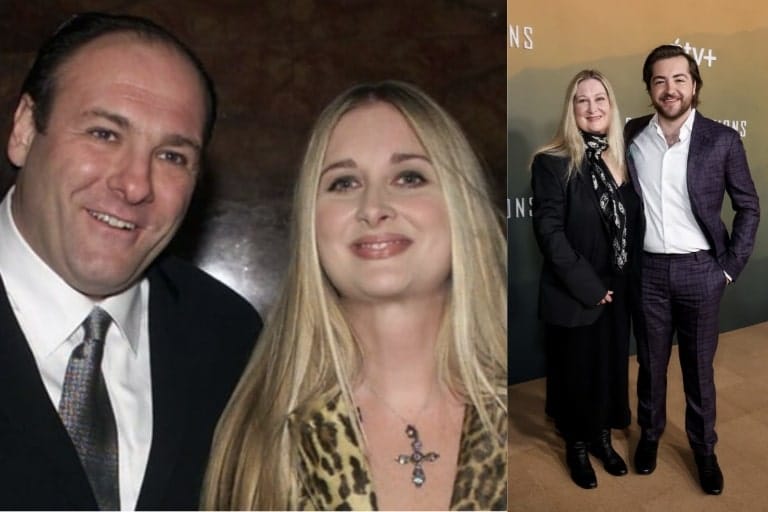
Marcy Wudarski is best known as the first wife of the late legendary actor James Gandolfini, who immortalized the character of Tony Soprano in the groundbreaking HBO series “The Sopranos.” While her marriage to one of television’s most iconic actors brought her into the public consciousness, Marcy’s story extends far beyond her relationship with Gandolfini. She is a film producer, a devoted mother, and a woman who navigated the complexities of marriage to a rising star during one of the most transformative periods in television history. Her life represents the untold stories of those who stand beside greatness, supporting careers while building their own identities in an industry that often overlooks contributions made behind the scenes.

Marcy Wudarski and James Gandolfini’s relationship began in the 1990s, before the actor achieved worldwide fame as the complex mob boss Tony Soprano. Their marriage, which lasted from 1999 to 2002, produced one son and coincided with the early years of “The Sopranos,” a period that would forever change the landscape of television drama. While the marriage ultimately ended in divorce, Marcy’s role during this pivotal time in entertainment history and her subsequent life as a single mother and professional in the film industry deserves recognition and understanding.

Early Life and Career Beginnings

Aspect Details
Birth Year Approximately 1967
Nationality American
Profession Film Producer
Industry Experience Entertainment and Production
Known For First wife of James Gandolfini, film production work

Marcy Wudarski grew up in the United States during a time when the entertainment industry was undergoing significant changes. While specific details about her early childhood and family background remain private, what is known is that she developed an interest in the film and entertainment industry from a relatively young age. This passion would eventually lead her to pursue opportunities in film production, a challenging field that requires dedication, networking skills, and an understanding of both the creative and business aspects of moviemaking.

Before meeting James Gandolfini, Marcy was already working to establish herself in the entertainment industry. The film production world is notoriously difficult to break into, particularly for women in the 1980s and 1990s when gender disparities in Hollywood were even more pronounced than they are today. Despite these challenges, Marcy persevered, developing skills and connections that would serve her throughout her career.

Meeting James Gandolfini

The story of how Marcy Wudarski met James Gandolfini is one rooted in the New York entertainment scene of the mid-1990s. At the time, Gandolfini was a working actor with notable theater credits and supporting film roles, but he had not yet achieved the stardom that would come with “The Sopranos.” Their meeting occurred through mutual connections in the industry, and the two quickly formed a bond based on shared interests and their understanding of the entertainment world.

Relationship Timeline

Year Milestone
Mid-1990s Marcy and James meet in New York
1999 Marriage ceremony
2000 Son Michael Gandolfini is born
1999-2002 Marriage coincides with early “Sopranos” success
2002 Divorce finalized
Post-2002 Co-parenting relationship maintained

Their relationship developed during a particularly interesting time in Gandolfini’s career. He was talented and respected among theater circles and had worked with prestigious directors, but mainstream recognition remained elusive. Marcy saw something special in James—not just his talent, but his authenticity, his dedication to his craft, and his complexity as a person. These qualities would later become central to his portrayal of Tony Soprano.

Marriage During “The Sopranos” Revolution

Marcy Wudarski and James Gandolfini married in 1999, the same year that “The Sopranos” premiered on HBO and changed television forever. The show’s debut in January 1999 marked the beginning of what many critics call the golden age of television, with its complex characters, cinematic storytelling, and willingness to explore moral ambiguity in ways network television never had.

Being married to the lead actor of such a groundbreaking show came with unique challenges. As Tony Soprano became a cultural phenomenon and James Gandolfini’s face appeared on magazine covers and billboards across the country, the couple’s private life became subject to increasing public scrutiny. The intense production schedule, the emotional demands of playing such a complex character, and the sudden fame all put pressure on their relationship.

Marcy Wudarski

The Impact of Fame

Challenge Description
Media Attention Increased scrutiny of personal life
Work Schedule Long filming hours and promotional commitments
Public Recognition Loss of anonymity and privacy
Industry Pressure Expectations and demands from networks and studios
Personal Strain Emotional toll of fame on relationship dynamics

In 2000, Marcy gave birth to their son, Michael Gandolfini. This joyous occasion brought new dimensions to their lives, but also additional responsibilities during an already demanding time. James was navigating newfound stardom while trying to remain grounded, and Marcy was adjusting to motherhood while supporting her husband’s career and maintaining her own professional identity.

Life as a Mother

The birth of Michael Gandolfini became the defining aspect of Marcy Wudarski’s life. Despite the challenges in her marriage to James, both parents remained committed to providing their son with stability and love. Michael, who would later follow in his father’s footsteps to become an actor himself, has spoken warmly about both of his parents and the effort they made to co-parent effectively after their divorce.

Marcy’s approach to motherhood emphasized normalcy and protection from the often harsh glare of celebrity culture. She worked to ensure that Michael had as typical a childhood as possible, despite having a famous father. This meant setting boundaries with media, maintaining privacy when possible, and creating a home environment that prioritized family over fame.

Parenting Philosophy

Principle Application
Privacy Protection Shielding Michael from excessive media exposure
Normalcy Maintaining regular routines and experiences
Education Focus Prioritizing academic and personal development
Co-parenting Maintaining positive relationship with James for Michael’s benefit
Stability Creating consistent home environment

Her dedication to motherhood became even more crucial after her divorce from James in 2002. As a single mother, Marcy took on the primary responsibility of raising Michael while ensuring he maintained a strong relationship with his father. This balancing act required maturity, selflessness, and a commitment to putting her son’s needs above any personal grievances from the marriage.

Professional Life in Film Production

Throughout her marriage and after her divorce, Marcy Wudarski continued to pursue her career in film production. The entertainment industry is notoriously challenging, and maintaining a career while raising a child as a single parent requires exceptional organizational skills and determination. Marcy managed to do both, working on various projects while ensuring her son received the attention and care he needed.

Film production encompasses many roles and responsibilities, from development and pre-production through post-production and distribution. While specific credits and projects associated with Marcy remain relatively private, her continued involvement in the industry demonstrates her passion for the work and her ability to maintain professional relevance despite personal challenges.

The Divorce and Its Aftermath

The divorce between Marcy Wudarski and James Gandolfini in 2002 marked the end of their marriage but not the end of their connection as co-parents. Divorces, particularly those involving public figures, can become contentious and damaging for all parties involved. However, both Marcy and James appeared committed to handling their separation with as much grace as possible for the sake of their young son.

Post-Divorce Dynamics

Aspect Outcome
Custody Shared arrangement prioritizing Michael’s wellbeing
Co-parenting Maintained communication and cooperation
Privacy Both parties avoided public disputes
Michael’s Relationship Strong bonds maintained with both parents
Professional Respect Continued mutual respect despite separation

The years following the divorce saw both Marcy and James moving forward with their lives while maintaining their parental responsibilities. James would go on to marry again and have another child, while Marcy focused on raising Michael and continuing her work in the entertainment industry. Despite the end of their romantic relationship, they successfully navigated co-parenting in a way that benefited their son.

The Tragic Loss of James Gandolfini

In June 2013, the world was shocked by the sudden death of James Gandolfini while on vacation in Italy. He suffered a heart attack at the age of 51, leaving behind his wife, children, and millions of fans who had been touched by his work. For Marcy Wudarski, this tragedy meant not only the loss of her former husband but the loss of her son’s father during Michael’s formative teenage years.

The grace with which Marcy handled this devastating loss speaks to her character. She supported Michael through his grief while dealing with her own feelings about losing someone who had been such a significant part of her life. The entertainment industry mourned Gandolfini’s passing, and tributes poured in from colleagues, fans, and critics who recognized his immense talent and contribution to the art of acting.

Michael Gandolfini’s Acting Career

One of the most poignant chapters in Marcy Wudarski’s story is watching her son Michael follow in his father’s footsteps. Michael Gandolfini has pursued an acting career, and in a deeply meaningful turn, he portrayed a young Tony Soprano in “The Many Saints of Newark,” the 2021 prequel film to “The Sopranos.” Playing the younger version of the character that made his father famous was an emotional experience that connected Michael to his father’s legacy in a profound way.

Michael’s Career Milestones Year
Acting debut 2018
“The Many Saints of Newark” casting 2019
Portraying young Tony Soprano 2021
Additional film and television roles Ongoing

Marcy’s support for Michael’s decision to become an actor demonstrates her understanding of his need to connect with his father’s memory and forge his own path in the industry. She raised a young man capable of handling the pressure of such a meaningful role while developing his own artistic identity.

A Legacy of Strength and Privacy

Marcy Wudarski represents a particular type of strength—the kind that doesn’t seek attention or validation from public recognition. In an era where many associated with famous individuals leverage those connections for personal gain or publicity, Marcy has consistently chosen privacy and dignity. She has rarely given interviews, maintained a low public profile, and focused her energy on what matters most: her son and her work.

This approach to life after divorce from a celebrity, and especially after that celebrity’s untimely death, is admirable. It would have been easy to capitalize on her connection to James Gandolfini’s legacy, to tell stories or write memoirs that might generate income and attention. Instead, Marcy has protected both her own privacy and her son’s, allowing Michael to develop his own relationship with his father’s memory without interference or exploitation.

Conclusion

The story of Marcy Wudarski is one that often goes untold in discussions of Hollywood and television history. While James Gandolfini rightfully receives recognition for his transformative performance as Tony Soprano, the people who supported him during his rise to fame deserve acknowledgment as well. Marcy was there during the crucial early years of “The Sopranos,” navigating the challenges of marriage to a suddenly famous actor while raising their son and maintaining her own career in film production.

Her life after divorce, particularly following James’s tragic death, has been marked by grace, strength, and a commitment to privacy that stands in stark contrast to contemporary celebrity culture. Through her dedication to motherhood and her support of Michael’s own acting career, Marcy Wudarski continues to contribute to the Gandolfini legacy in the most meaningful way possible—by raising a son who honors his father’s memory while forging his own path in the world.

In the world of Hollywood marriages, where relationships often crumble under the weight of fame and public scrutiny, Stacie Zabka stands as a testament to privacy, grace, and unwavering support. As the wife of actor William Zabka, best known for his iconic role as Johnny Lawrence in “The Karate Kid” franchise and the hit series “Cobra Kai,” Stacie has masterfully maintained a life away from the relentless glare of paparazzi cameras while being the cornerstone of her family. Her story is one of intentional privacy, devoted partnership, and the quiet strength that often goes unnoticed in celebrity circles.

Stacie Zabka represents a rare breed in today’s social media-obsessed culture—someone who has consciously chosen authenticity over attention, substance over superficiality. While her husband enjoys renewed fame and critical acclaim for his work in “Cobra Kai,” Stacie continues to prioritize what matters most: family, privacy, and a life built on genuine values rather than public validation. This approach has not only preserved her own sense of self but has also created a stable foundation for her marriage and children.

Personal Information

Category Details
Spouse William Zabka
Marriage Year 2008
Children Two sons
Nationality American
Known For Wife of William Zabka, maintaining privacy in celebrity culture
Public Presence Minimal to none
Social Media No verified public accounts
Residence United States

A Private Beginning

Unlike many celebrity spouses whose every detail is catalogued and disseminated across entertainment news outlets, Stacie Zabka’s early life remains largely shielded from public consumption. This privacy isn’t accidental—it’s a deliberate choice that speaks volumes about her character and values. What is known is that she comes from a background that emphasized traditional values, family bonds, and the importance of maintaining one’s identity separate from the spotlight.

Before becoming Mrs. Zabka, Stacie lived a life that many would consider refreshingly normal. She wasn’t pursuing fame, wasn’t seeking the limelight, and wasn’t building a personal brand designed for public consumption. This grounded approach to life would later become one of the defining characteristics of her relationship with William Zabka and their family dynamic.

The exact circumstances of how Stacie and William met remain part of their private narrative, another detail they’ve chosen to keep sacred in an age where every romantic gesture becomes content for public consumption. What matters more than the specifics is the foundation they built—one rooted in mutual respect, shared values, and a commitment to preserving their relationship away from Hollywood’s often toxic glare.

The Marriage That Defied Hollywood Odds

Stacie and William Zabka tied the knot in 2008, embarking on a journey that would prove remarkably different from the typical celebrity marriage trajectory. In an industry where marriages often serve as publicity opportunities, complete with exclusive magazine spreads and carefully orchestrated social media announcements, the Zabkas chose a different path. Their wedding was an intimate affair, reflecting their shared commitment to keeping their most precious moments private.

Marriage Timeline

Year Milestone
2008 Married William Zabka in private ceremony
2008-Present Maintained private family life
2018 Supported husband during “Cobra Kai” premiere
2020-2024 Continued support through show’s Netflix success
2025 Over 16 years of marriage

Since their marriage, Stacie has been a constant source of support for William’s career while maintaining her own identity. This balance is particularly impressive given the resurgence of William’s career with “Cobra Kai,” which premiered on YouTube Premium in 2018 before moving to Netflix, where it became a global phenomenon. As Johnny Lawrence became a cultural touchstone once again, Stacie remained steadfast in her role as wife and mother, proving that one can be married to a celebrity without becoming a public figure oneself.

The longevity of their marriage—over fifteen years and counting—speaks to the strength of their partnership. In Hollywood, where the average celebrity marriage lasts just six years, the Zabkas have built something enduring. This success isn’t accidental; it’s the result of deliberate choices, mutual respect, and a shared understanding of what truly matters in life.

Motherhood and Family Values

Stacie and William are proud parents to two sons, though true to form, the couple has kept details about their children largely private. The names, ages, and images of their children are not plastered across social media or entertainment news sites. This protective approach to parenting in the digital age demonstrates Stacie’s commitment to giving her children something increasingly rare: a normal childhood.

Family Structure

Family Member Relationship Public Information
William Zabka Husband Actor, producer, known for “The Karate Kid” and “Cobra Kai”
Son 1 Child Name and details kept private
Son 2 Child Name and details kept private

In an era where many celebrity children become involuntary influencers before they can even consent to such exposure, Stacie’s approach is both refreshing and admirable. She understands that her children didn’t choose to have a famous father, and they deserve the opportunity to develop their own identities, make their own mistakes, and navigate childhood without the added pressure of public scrutiny.

Her parenting philosophy appears to emphasize normalcy, privacy, and real-world values over the artificial glamour of Hollywood. While William attends red carpet events and promotional tours for “Cobra Kai,” Stacie ensures that home remains a sanctuary—a place where fame doesn’t dictate daily life and where family bonds are nurtured away from cameras and public commentary.

stacie zabka

Supporting a Career Renaissance

The success of “Cobra Kai” has brought William Zabka a career renaissance that few actors experience. The show, which brilliantly subverts the original “Karate Kid” narrative by presenting Johnny Lawrence’s perspective, has earned critical acclaim and developed a passionate fanbase spanning multiple generations. William’s performance has been praised for its depth, humor, and emotional authenticity, earning him recognition that extends far beyond the nostalgia factor.

William Zabka’s Career Highlights (During Marriage)

Year Project Stacie’s Role
2010 Various film and TV projects Behind-the-scenes support
2018 “Cobra Kai” Season 1 premiere Private family support
2020 “Cobra Kai” moves to Netflix Maintaining family stability
2021-2023 “Cobra Kai” Seasons 3-5 Continued partnership
2024-Present “Cobra Kai” final season Steadfast support system

Throughout this career resurgence, Stacie has remained William’s most important supporter, though she does so from behind the scenes. She doesn’t accompany him to every premiere or awards show, doesn’t maintain a public Instagram account documenting their life together, and doesn’t give interviews about their relationship. Instead, she provides something far more valuable: a stable home life that allows William to take creative risks and fully invest in his craft.

This type of support—quiet, consistent, and unglamorous—often goes unrecognized in celebrity culture, where we tend to celebrate the more visible forms of partnership. Yet it’s precisely this kind of foundation that allows artists to do their best work. Knowing that home is a place of peace, privacy, and unconditional support enables William to navigate the pressures and uncertainties of the entertainment industry.

The Philosophy of Privacy

In today’s hyper-connected world, where privacy is increasingly viewed as something to be traded for likes, followers, and influence, Stacie Zabka’s commitment to maintaining boundaries is both countercultural and courageous. She doesn’t have verified social media accounts where fans can follow her daily activities, doesn’t share family photos for public consumption, and doesn’t monetize her connection to William’s fame.

Privacy Choices Comparison

Aspect Stacie Zabka’s Approach Typical Celebrity Spouse Approach
Social Media No verified public accounts Active Instagram, Twitter presence
Children’s Privacy Names and photos kept private Regular family photos shared publicly
Public Appearances Rare or minimal Frequent red carpet appearances
Media Interviews None Regular interviews about relationship
Brand Partnerships None known Influencer collaborations common
Personal Details Kept confidential Shared for publicity

This approach raises an important question: What does privacy mean in the modern age, and why is it valuable? For Stacie, privacy isn’t about hiding or being antisocial—it’s about protecting what’s sacred. It’s about recognizing that not everything needs to be shared, that some moments are more meaningful when they remain private, and that true intimacy requires boundaries.

Her philosophy stands in stark contrast to the prevailing celebrity culture, where personal lives become content, children become brand extensions, and even grief and struggle are performed for public consumption. By refusing to participate in this ecosystem, Stacie preserves her autonomy, protects her family, and maintains relationships built on genuine connection rather than public perception.

Life Away From the Cameras

What does Stacie Zabka do with her time away from the public eye? While specific details remain private, it’s clear that she has built a fulfilling life that doesn’t depend on fame or public recognition. Whether she pursues professional interests, engages in philanthropic work, or focuses primarily on family life, these activities remain her own—not fodder for tabloid speculation or social media content.

This privacy allows Stacie to maintain genuine relationships, pursue authentic interests, and develop as an individual without the distorting lens of public opinion. She can make mistakes, change her mind, and grow without those processes being documented and judged by strangers. This freedom is increasingly rare, making it all the more precious.

Friends and acquaintances who know the Zabka family describe Stacie as warm, intelligent, and deeply committed to her family. These descriptions, though limited, paint a picture of someone whose values align with her choices—someone who measures success not by public acclaim but by the quality of her relationships and the integrity of her life.

The Broader Impact

Stacie Zabka’s approach to life as a celebrity spouse has broader implications for how we think about fame, privacy, and success. In choosing to remain private, she challenges the assumption that association with fame requires participation in celebrity culture. She demonstrates that it’s possible to support a partner’s public career while maintaining personal boundaries and that doing so doesn’t make someone less supportive or less interesting—if anything, it makes them more admirable.

stacie zabka

Core Values Demonstrated

Value How Stacie Embodies It
Privacy Maintains personal boundaries despite husband’s fame
Family First Prioritizes children’s wellbeing over public exposure
Authenticity Lives according to personal values, not public expectations
Stability Provides consistent support system for family
Independence Maintains own identity separate from spouse’s celebrity
Protection Shields children from premature public scrutiny


Her example also offers a counternarrative to the prevailing belief that visibility equals value. In a culture that often conflates social media followers with importance and public recognition with achievement, Stacie reminds us that meaningful lives can be lived entirely outside the spotlight. The work of building a strong marriage, raising children with solid values, and maintaining one’s integrity doesn’t require an audience.

For young people growing up in an era where privacy is often undervalued and oversharing is normalized, Stacie’s choices offer an alternative model. They suggest that it’s not only acceptable but potentially more fulfilling to keep certain aspects of life private, to value substance over image, and to build relationships based on genuine connection rather than public performance.

Conclusion

The story of Stacie Zabka is ultimately a story about choice—the choice to live authentically, to protect what matters most, and to define success on one’s own terms. In a world that constantly demands more visibility, more sharing, and more access, her commitment to privacy is an act of quiet rebellion and profound wisdom.

As William Zabka continues to enjoy success with “Cobra Kai” and other projects, Stacie remains the steady foundation that makes such success possible. She doesn’t need public recognition for this role because she understands something fundamental: the most important work we do in life often happens away from cameras and applause, in the daily choices we make to honor our values and nurture our relationships. Through her example, Stacie Zabka teaches us that in an age of constant exposure, choosing privacy isn’t hiding—it’s an act of courage and self-respect that deserves our admiration.

If you ever received a message with hb in it and took some time to ask what does hb mean in text, you are not the only one. The simple and quick answer is that the text abbreviation hb often means happy birthday, and is most commonly used in casual conversation, social media comments, or fast responses to a message. It is just something that is used to save time, space, and effort, especially in platforms where things need to be faster than they need to be formal. 

But here’s the thing. This is not the only meaning. Although hb more commonly means happy birthday, it could also mean more than that, based on the platform, context, and relationship. So, to know what HB is, pay attention to the reason for it and also who and how it is used in the conversation.

In this article, we have broken down the meaning of “hb” without guesswork or confusion. Let’s get started!

The Most Common Meaning of “hb” (With Examples)

Here are some of the most common meanings of “hb” in texts: 

1. “Happy Birthday” (Most Common Use)

One of the most common and widely known meanings of “hb” in text messages and on social media translates to “happy birthday.” It is often used to wish someone or remark upon a birthday casually.

When you see that message around or in someone’s birthday, please note that it means wishing someone a happy birthday, and the abbreviation is “hb”.

Examples include:

  • “hb 🎉”
  • “hb bro, have a good one”
  • “hb! hope today’s amazing”
  • “Sorry I’m late but hb 😂”

Less Common Meanings of “hb” (Context Matters)

2. “How ’Bout” (Casual Planning or Suggestions)

In casual or information conversation, “hb” is usually used as a short form for “how about” especially when discussing a plan or an idea. This meaning comes during mid-conversation and is generally followed up after a question or a suggestion. 

Examples:

  • “hb we go out tonight?”
  • “hb pizza instead?”
  • “hb you text me when you’re free?”
  1. “Heartbroken” (Emotional Context)

In another situation, “hb” is used to express emotional or relationships and translates to “heartbroken.” And this usage is pretty rare and also very contextual. So, for example, if the discussion is about setbacks, feelings, or heartbreaks, “hb” means heartbroken.

Examples:

  • “I’m still hb after everything that happened”
  • “She left and I’m completely hb”
  • “Feeling hb but trying to move on”
  1. “Hit Back” or “Hold Back” (Situational / Action-Based)

“Hb” can ocassaional means “hold back” or “hit back” during a conversation about confrontation, gaming chats, or group planning. 

Examples (Hit Back):

  • “If they attack first, hb immediately”
  • “Wait for my signal then hb”

Examples (Hold Back):

  • “Don’t hb yet, let’s see what happens”
  • “hb for now, we need more info”

This meaning is rare and almost always appears alongside instructions or strategy.

Quick Tip to Avoid Confusion

If you’re unsure about what “hb” means when talking to someone, ask yourself one question — Is this message in context to the conversation happening about a plan, emotions, or birthday? 

Situations can include: 

  • Birthday → Happy Birthday
  • Planning → How ’bout
  • Emotional → Heartbroken
  • Strategy/Action → Hit back / Hold back

Context is everything in the conversation to understand what “hb” stands for.

Every morning, thousands of puzzle enthusiasts worldwide turn to their favorite sources for gentle guidance on the New York Times Connections game, and connections hint Forbes has emerged as one of the most trusted resources for players seeking that perfect balance between help and challenge. Forbes provides daily hints that guide players toward solutions without immediately spoiling the satisfaction of discovery. This careful approach to puzzle assistance has made their coverage essential reading for both beginners struggling with basic patterns and experienced solvers tackling particularly deceptive groupings. The platform’s hints typically offer thematic clues, difficulty indicators, and strategic suggestions that preserve the puzzle’s integrity while preventing the frustration that leads many players to abandon their daily streaks.

The popularity of connections hint Forbes reflects a broader truth about modern puzzle culture: players want to succeed through their own thinking but appreciate nudges that help them see patterns they might have missed. Forbes understands this psychology, structuring their daily coverage to provide graduated assistance. Readers can stop at category themes if they only need minimal help, or continue reading for more explicit guidance if they’re completely stuck. This layered approach respects player agency while ensuring no one has to give up entirely on a puzzle that’s stumped them. The hints don’t just solve today’s puzzle—they teach pattern recognition skills that make future puzzles easier, transforming assistance into education.

Understanding the Connections Puzzle

The New York Times Connections game presents players with sixteen words that must be sorted into four groups of four based on shared connections or themes. What appears simple at first glance quickly reveals layers of complexity. Words often seem to fit multiple categories, requiring players to identify not just any connection but the specific grouping the puzzle creator intended.

Each puzzle assigns difficulty colors to categories: yellow represents the easiest connections, green indicates moderate difficulty, blue presents challenging groupings, and purple contains the trickiest associations often involving wordplay or obscure relationships. This color-coding system helps players strategize their approach, though the actual difficulty can vary based on individual knowledge and thinking patterns.

The game allows only four mistakes before revealing all answers, creating pressure that can cloud judgment. This limited margin for error explains why many players seek hints rather than guessing randomly. One wrong grouping can waste precious attempts, making strategic thinking essential.

What makes Connections particularly challenging is the deliberate inclusion of red herring words—terms that appear to belong together but actually split across different categories. The puzzle creators intentionally design these traps, knowing players will see obvious connections that aren’t the intended groupings.

Why Forbes Became the Go-To Resource

Forbes distinguished itself in the crowded puzzle hint space through consistent quality, timely publication, and respect for the puzzle experience. Their daily coverage appears shortly after each new puzzle releases, ensuring players can access help when they need it most without waiting hours for assistance.

Forbes Hint Advantages How It Helps Players
Non-Spoiler Approach Provides category themes without revealing specific words
Difficulty-Based Organization Offers yellow/green hints first, purple hints last
Strategic Guidance Teaches solving approaches beyond today’s puzzle
Clear Structure Easy to stop reading once you’ve gotten enough help
Consistent Timing Published daily shortly after puzzle release
Educational Focus Explains why words connect, building pattern recognition

The platform’s reputation stems partly from its established credibility in other content areas. Readers trust Forbes generally, and that trust extends to puzzle coverage. When players search connections hint Forbes today, they’re seeking not just answers but reliable guidance from a source with editorial standards.

Forbes also balances accessibility with depth. Beginners find the hints approachable and clear, while experienced players appreciate subtle clues that challenge without overwhelming. This broad appeal has built a loyal daily readership that returns regardless of skill level.

The hints avoid common frustrations found in other sources: vague clues that don’t actually help, immediate spoilers that remove all challenge, or poorly organized information that’s hard to navigate quickly. Forbes learned what puzzle players value and consistently delivers it.

How to Use Hints Effectively

Strategic hint usage maximizes improvement while maintaining puzzle enjoyment. The ideal approach involves attempting puzzles independently first, identifying where you’re stuck, then seeking targeted guidance rather than reading hints before trying.

Start by scanning all sixteen words without selecting anything. This initial survey helps your brain unconsciously process potential connections. Some players find that stepping away briefly after this scan allows subconscious pattern recognition to surface insights that weren’t immediately obvious.

When genuinely stuck, read Forbes hints gradually. Start with the highest-level category descriptions, then pause to apply those insights before reading further. This measured approach preserves as much discovery as possible while still receiving help.

Focus on solving yellow and green categories first when using hints. These easier groupings reduce the word pool, making blue and purple connections clearer. Forbes structures hints to support this strategy, offering simpler category clues before more complex ones.

Track which types of connections consistently stump you. If purple categories involving wordplay always cause trouble, that reveals an area for skill development. Forbes hints can become learning tools when you study how they explain tricky connections after solving or checking answers.

Avoid becoming dependent on hints for every puzzle. Challenge yourself to solve at least the yellow category independently each day. Gradually reduce hint usage as pattern recognition improves, treating assistance as training wheels you eventually remove rather than permanent supports.

Common Connection Types

Understanding recurring connection patterns helps solve puzzles faster and reduces hint dependency. The puzzle creators draw from a relatively consistent set of relationship types that appear frequently across different puzzles.

Synonym groups represent the most straightforward connection type, collecting words with similar meanings. These often appear as yellow categories, though clever puzzle design sometimes makes synonyms less obvious by using words with multiple meanings where only one definition connects them.

Category membership groups words belonging to shared classifications—types of fish, musical instruments, kitchen appliances, or geometric shapes. These connections test general knowledge across diverse subjects from pop culture to academic topics.

Common phrase completions group words that precede or follow the same term. For example, words that all work before “house” or after “time” create thematic connections based on linguistic patterns rather than meanings.

Wordplay categories represent the trickiest connections, often coded purple. These might involve homophones, words containing hidden phrases, terms that rhyme, anagrams, or other linguistic manipulations requiring different thinking than straightforward meaning-based connections.

Part-of-speech relationships sometimes connect words serving similar grammatical functions or sharing specific linguistic characteristics like being verbs, adjectives ending in specific suffixes, or words with particular etymological roots.

Cultural reference groups draw from shared knowledge of movies, music, literature, history, or current events. These connections depend on recognizing references that might be obscure to players unfamiliar with specific cultural domains.

Strategic Solving Approaches

Developing systematic solving methods improves consistency and reduces reliance on external hints. Expert players employ specific strategies that increase success rates across varied puzzle types.

The elimination strategy works backward from certainty. Identify your most confident grouping first, even if it’s not yellow. Once you lock in four words with absolute certainty, the remaining twelve become easier to parse since you’ve eliminated one entire category from consideration.

Look for outliers—words that seem unlike all others. Sometimes the puzzle includes one obviously unique term that doesn’t fit any apparent pattern. Identifying what makes that word special often reveals the category it actually belongs to, which then illuminates its three partners.

Consider multiple meanings for every word. Connections frequently exploits ambiguity, using words that can function as different parts of speech or have multiple definitions. That word that seems like it should be a noun might actually work as a verb in the intended grouping.

Test potential groupings mentally before committing. If you’ve identified four words that might connect, imagine presenting that grouping to someone else. Can you articulate a clear, specific connection? If your explanation feels vague or strained, the grouping probably isn’t correct.

Use process of elimination on the final two categories. When you’ve solved two groups and have eight words remaining, the challenge shifts. You no longer need to identify what connects words—you just need to determine how eight words split into two groups of four.

Pay attention to difficulty progression. If you’ve solved yellow and green but remain stuck, the remaining categories are blue and purple. This knowledge should shift your thinking toward more creative or challenging connection types rather than continuing to search for obvious links.

Learning from Daily Puzzles

Each Connections puzzle offers learning opportunities beyond the immediate challenge. Approaching the game with growth mindset transforms daily play into skill development that accumulates over time.

After solving or checking answers, review all four groupings to understand the puzzle’s logic. Even categories you solved correctly reward analysis. Understanding why the puzzle creator chose specific words and how the categories relate to each other deepens pattern recognition.

Notice your mistakes without judgment. When you submit an incorrect grouping, that reveals thinking patterns worth examining. Did you focus too narrowly on one meaning while missing others? Did you force a connection that seemed clever but wasn’t intended? These insights prevent similar errors in future puzzles.

Track categories that consistently challenge you. If music references always stump you, that suggests a knowledge gap you might enjoy filling. If wordplay categories prove difficult, you might benefit from specific practice with linguistic puzzles emphasizing similar skills.

Study Forbes explanations after solving to see if puzzle creators employed techniques you missed. Their hints often reveal patterns you didn’t consciously recognize, even if you successfully solved the puzzle. This awareness makes those patterns easier to spot next time.

Compare your solving process with others when possible. Online communities discuss daily puzzles, revealing diverse approaches to the same challenge. Seeing how differently people think about identical word sets expands your own solving toolkit.

The Psychology of Puzzle Hints

Understanding why hints help and when they hinder illuminates optimal usage strategies. The psychology behind hint-seeking reveals deeper truths about learning, motivation, and satisfaction in puzzle-solving.

Hints reduce frustration that otherwise leads to abandonment. When players feel completely stuck with no path forward, continued effort becomes counterproductive. A well-timed hint restores momentum, allowing the solving experience to continue rather than ending in defeated surrender.

However, hints also risk undermining the achievement satisfaction that makes puzzles rewarding. Successfully solving difficult challenges produces pleasure partly because difficulty made success uncertain. Hints that come too easily or reveal too much diminish that earned satisfaction.

The ideal hint provides just enough information to restart independent thinking without solving the puzzle outright. Forbes succeeds by offering thematic nudges that help players see what they missed while leaving actual solution work to them. This preserves agency while removing specific obstacles.

Hint-seeking can become habitual if not monitored. Starting to read hints before genuinely attempting puzzles transforms assistance into crutch. Maintaining discipline around when to seek help versus when to persist independently preserves the activity’s cognitive and satisfaction benefits.

Social acceptability of hint usage varies among players. Some view any assistance as “cheating” while others consider hints completely legitimate tools. Neither perspective is objectively correct, but understanding your own values helps align behavior with what makes the experience personally meaningful.

Advanced Pattern Recognition

As players progress beyond beginner status, developing sophisticated pattern recognition accelerates solving and reduces hint dependency. Advanced techniques separate casual players from puzzle expert


If you searched for sbmm, you’re most likely trying to understand one clear thing: what does it actually mean, and how does it affect gameplay? The direct answer is that sbmm stands for skill-based matchmaking, a system used in many online games to group players of similar skill levels together in matches. Its main goal is to create fairer, more balanced games by reducing extreme mismatches between beginners and highly skilled players.

In simple terms, sbmm tries to ensure that you play with and against players close to your ability level. Instead of random matchmaking, the system evaluates performance data and uses it to decide who you are matched with, aiming to make games competitive rather than one-sided.

Understanding Skill-Based Matchmaking in Plain Language

Traditional matchmaking was often random. Players could be paired with anyone online at the same time, regardless of experience. This led to chaotic results—some matches felt easy, others impossibly hard.

sbmm was introduced to solve that problem. It works by estimating how good a player is and placing them into lobbies with others who have similar performance levels. The idea is simple: closer skill levels lead to more engaging and less frustrating matches.

However, simplicity in concept doesn’t always mean simplicity in execution.

How sbmm Decides Player Skill

Most players assume sbmm looks only at wins and losses, but it’s usually more complex than that.

Common factors used to estimate skill include:

  • Kill-to-death ratio
  • Accuracy or damage output
  • Match performance consistency
  • Win/loss trends
  • Objective-based contributions

The system combines these signals to form a hidden skill rating. Players don’t usually see this rating, but it heavily influences matchmaking.

Why Game Developers Use sbmm

From a developer’s perspective, sbmm exists for one main reason: player retention.

Balanced matches tend to:

  • Reduce frustration for new players
  • Prevent repeated one-sided losses
  • Encourage longer play sessions
  • Create a sense of progression

If beginners are constantly overwhelmed, they quit. If advanced players dominate every match, competition disappears. sbmm attempts to keep everyone engaged.

Where sbmm Is Commonly Used

sbmm is most common in competitive or online-focused games.

You’ll typically find it in:

  • First-person shooters
  • Battle royale games
  • Competitive multiplayer titles
  • Ranked and unranked playlists

Some games use sbmm lightly, while others rely on it heavily across all modes.

Ranked vs Casual Modes

One of the biggest points of debate is whether sbmm belongs in casual modes.

Mode Type How sbmm Is Usually Applied
Ranked Strong and strict
Competitive Very strict
Casual / Public Moderate to heavy
Private matches None

Many players expect ranked modes to be skill-based, but opinions differ when it comes to casual playlists.

Why sbmm Is So Controversial

Despite good intentions, sbmm is one of the most debated systems in gaming.

Common criticisms include:

  • Matches feeling “sweaty” or exhausting
  • Lack of relaxed or experimental gameplay
  • Constant pressure to perform well
  • Difficulty playing casually with friends of different skill levels

For some players, every match feels like a tournament instead of a game.

The “Sweaty Match” Effect

One frequent complaint is that sbmm removes the feeling of variety.

When players are constantly matched with others at the same level:

  • Every game feels intense
  • Mistakes are punished quickly
  • There are fewer standout moments

This can make casual play feel mentally draining, even if matches are technically fair.

How sbmm Affects Different Skill Levels

sbmm doesn’t impact all players the same way.

New Players

  • Protected from high-skill opponents
  • Learn mechanics more comfortably
  • Less likely to quit early

Average Players

  • Experience consistent challenge
  • Often feel the system working most strongly
  • May feel stuck at a certain level

High-Skill Players

  • Face constant top-tier competition
  • Rarely experience relaxed matches
  • Often voice the strongest criticism

This difference in experience fuels much of the debate.

sbmm and Playing With Friends

One of the biggest drawbacks is how sbmm handles mixed-skill groups.

If a high-skill player joins a low-skill friend:

  • The lobby often adjusts upward
  • Lower-skill players may struggle
  • Group enjoyment can drop

This makes casual social play more difficult, especially across wide skill gaps.

Is sbmm the Same as Ranked Play?

Not exactly.

Ranked play usually:

  • Shows visible ranks
  • Uses stricter rules
  • Rewards progression

sbmm often:

  • Uses hidden ratings
  • Applies in the background
  • Affects matchmaking without explanation

This lack of transparency frustrates players who want to understand why matches feel harder or easier.

Why sbmm Feels “Inconsistent”

Players often report matches swinging wildly in difficulty. This happens because sbmm systems constantly adjust based on recent performance.

If you:

  • Have a strong match, difficulty may increase
  • Perform poorly, difficulty may drop

This creates a cycle where players feel punished for doing well and rewarded for struggling, even if unintentionally.

Arguments in Favor of sbmm

Despite criticism, sbmm has clear benefits.

Supporters argue it:

  • Makes games fairer overall
  • Reduces new-player abuse
  • Encourages skill improvement
  • Keeps competitive integrity intact

Without it, many online games would become hostile environments for newcomers.

Arguments Against sbmm

Critics argue that sbmm:

  • Removes fun unpredictability
  • Turns casual modes into ranked play
  • Penalizes improvement
  • Creates mental fatigue

They believe some randomness is essential for enjoyment.

Why Developers Rarely Remove sbmm

Even when communities complain loudly, sbmm usually stays.

That’s because:

  • Data often shows higher retention
  • New players are more protected
  • Match quality is easier to control
  • Complete randomness creates imbalance

Developers must balance vocal feedback with long-term player health.

Is sbmm Here to Stay?

While systems may evolve, skill-based matchmaking is unlikely to disappear. Instead, developers experiment with:

  • Looser sbmm in casual modes
  • Separate social playlists
  • Better transparency
  • Hybrid systems mixing skill and connection quality

The goal is balance, not elimination.

How Players Can Adapt

While you can’t usually disable sbmm, you can adjust expectations.

Helpful approaches include:

  • Playing to learn, not dominate
  • Taking breaks to avoid burnout
  • Using casual modes for experimentation
  • Playing with similarly skilled friends

Understanding the system makes it less frustrating.

The Bigger Picture

sbmm reflects a larger shift in gaming—from chaotic fun toward structured competition. This shift benefits some players more than others, which is why opinions are so divided.

Neither side is entirely wrong.

Final Thoughts

So, what is sbmm really?

It is a skill-based matchmaking system designed to create fairer and more balanced online matches by grouping players of similar ability. While it helps protect new players and maintain competitive integrity, it also changes how games feel—sometimes making casual play more intense than expected.

Understanding sbmm helps explain why modern multiplayer games feel different from older ones, and why debates around fairness, fun, and competition are unlikely to end anytime soon.


If you are searching for play hiezcoinx2.x9 winning, you are most likely trying to figure out one clear thing: is this a real way to win, and what does it actually mean? The direct and honest answer is this: “play hiezcoinx2.x9 winning” is commonly used to describe a gameplay mode, multiplier system, or promotional phrase suggesting higher reward potential, but it does not guarantee consistent or predictable wins. Instead, it usually refers to a game mechanic where payouts are multiplied under specific conditions.

In simple terms, play hiezcoinx2.x9 winning implies a chance-based system where rewards can be increased by a factor such as 2x or 9x, depending on in-game outcomes. Like most multiplier-based games, the excitement comes from possibility—not certainty.

Breaking Down the Phrase Itself

To understand what players are actually looking for, it helps to break the phrase into parts.

  • “Play” suggests active participation in a game or platform
  • “Hiezcoinx2.x9” implies a multiplier-based reward mechanic
  • “Winning” reflects the player’s goal of maximizing returns

Together, the phrase signals interest in a game mode or system that advertises higher payout potential rather than guaranteed success.

What Kind of Game Uses Multipliers Like x2 or x9?

Multiplier systems are common in many digital games and platforms, especially those built around chance, timing, or progression.

These systems often appear in:

  • Casual online games
  • Crypto-themed or token-based games
  • Reward-based platforms
  • Arcade-style probability games

The multiplier increases the value of a win if certain conditions are met, but the odds of triggering higher multipliers are usually lower.

How Multiplier Mechanics Typically Work

Multiplier-based games follow a predictable design logic.

Here is a simplified overview:

  1. The player starts a round or session
  2. The game assigns random or semi-random outcomes
  3. Certain outcomes activate multipliers
  4. Higher multipliers occur less frequently
  5. The round ends with a calculated reward

The system is designed to balance excitement with sustainability, meaning high wins are possible but not common.

Why Players Are Drawn to High Multipliers

Psychologically, multipliers are powerful motivators.

They create:

  • Anticipation and excitement
  • A sense of “almost winning”
  • Hope for a breakthrough round
  • Strong emotional engagement

Seeing x2 or x9 attached to a reward makes the outcome feel more significant, even if the base value is small.

The Reality Behind “Winning” Claims

One of the biggest misunderstandings around phrases like play hiezcoinx2.x9 winning is the assumption that there is a reliable strategy to trigger constant wins.

In reality:

  • Outcomes are usually randomized
  • Player input has limited influence
  • Systems are designed to average out over time
  • Short-term wins do not indicate long-term success

Winning streaks can happen, but they are not proof of a repeatable method.

Is There a Guaranteed Way to Win?

The honest answer is no.

Games using multiplier mechanics are built so that:

  • Not every player wins
  • Not every session is profitable
  • Higher multipliers carry higher risk

Any claim suggesting guaranteed or consistent winning misunderstands how these systems are designed.

Why “x2” Feels Achievable but “x9” Feels Tempting

Lower multipliers like x2 are often designed to trigger more frequently. They provide small wins that keep players engaged.

Higher multipliers like x9:

  • Appear rarely
  • Feel more exciting
  • Create memorable moments
  • Encourage continued play

This balance keeps the experience engaging without breaking the game’s economy.

Skill vs Chance in These Games

Many players wonder whether skill plays a role.

In most cases:

  • Core outcomes are chance-based
  • Skill may affect timing or pacing
  • Decision-making may influence duration, not odds

Understanding this distinction helps set realistic expectations.

Common Myths Around Multiplier Games

There are several persistent myths worth clearing up.

  • Playing longer does not improve odds
  • Winning early does not mean better chances later
  • Losses do not “guarantee” future wins
  • Timing tricks rarely affect outcomes

Believing these myths often leads to frustration rather than success.

Why Search Interest Keeps Growing

Searches for play hiezcoinx2.x9 winning continue to increase because:

  • Players share wins online
  • Screenshots create hype
  • People want shortcuts to success
  • Clear explanations are rare

What is usually missing is context about probability and design.

Understanding Risk vs Reward

Multiplier systems are built on risk-reward balance.

Lower risk:

  • Smaller rewards
  • More frequent outcomes

Higher risk:

  • Larger rewards
  • Much lower probability

The player’s experience depends on how they engage with this balance.

Responsible Expectations for Players

A healthy approach is essential.

Players should:

  • Treat gameplay as entertainment
  • Set limits before starting
  • Avoid chasing losses
  • Understand that outcomes vary

Viewing the game as a guaranteed income source leads to disappointment.

Why Some Players Feel “Close” to Winning

Near-miss design is common in games with multipliers.

This happens when:

  • The system shows high multipliers narrowly missed
  • Visual cues suggest progress
  • Outcomes feel just out of reach

These elements are designed to keep players engaged, not to signal improved odds.

Can Patterns Be Predicted?

Most modern systems use algorithms designed to prevent predictable patterns.

That means:

  • Previous rounds do not affect future ones
  • Streaks are coincidental
  • Perceived patterns are often random clusters

Trying to “crack” the system usually leads nowhere.

How to Approach These Games Wisely

A practical mindset helps.

Think of it this way:

  • Wins are bonuses, not expectations
  • High multipliers are rare events
  • Enjoyment matters more than outcomes

This approach reduces stress and improves overall experience.

The Bigger Picture

play hiezcoinx2.x9 winning represents a broader trend in digital games: using multipliers and big-number visuals to drive engagement. These systems are not inherently bad, but they require understanding.

Games are designed to be entertaining, not predictable.

Final Thoughts

So, what does play hiezcoinx2.x9 winning really mean?

It refers to a multiplier-based gameplay concept where rewards can increase under certain conditions, sometimes dramatically. While winning is possible, it is not guaranteed, and outcomes are usually driven by chance rather than skill. High multipliers like x9 exist to create excitement, not consistency.

Understanding play hiezcoinx2.x9 winning is about managing expectations—recognizing the thrill of possibility while staying grounded in how such systems truly work.