
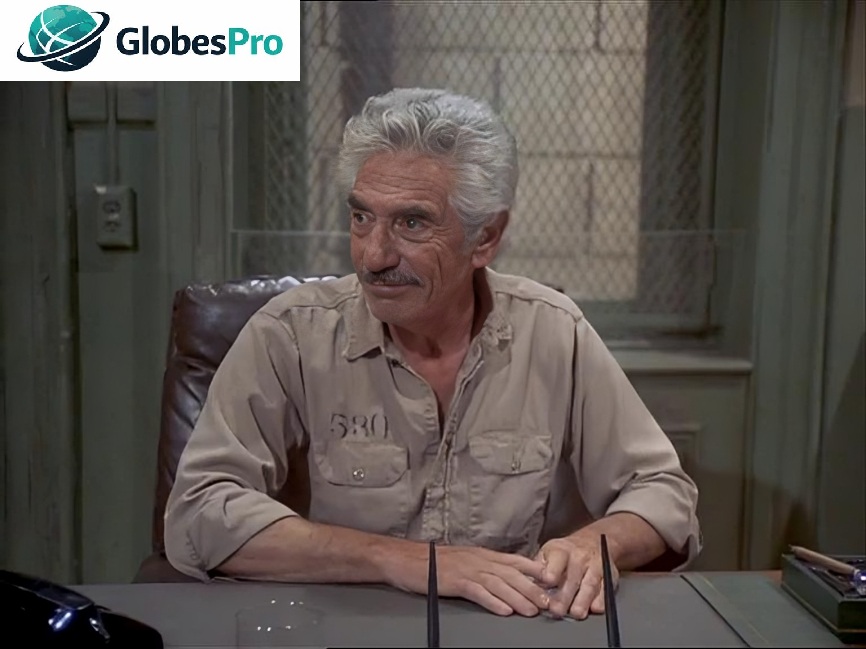
There are performances in cinema that last ten minutes and live forever. Jack Woltz — the arrogant Hollywood mogul who dismisses the Corleone family’s request with contemptuous certainty and wakes up screaming in a bed soaked with the blood of his prized racehorse — is on screen for perhaps fifteen minutes across two scenes. Those fifteen minutes, delivered by a character actor named John Marley who had spent forty years in near-obscurity before anyone outside the theatre world knew his name, constitute one of the most perfectly executed supporting performances in the history of American cinema. The horse head is what everyone remembers. John Marley is why it works.
For readers looking for a quick answer — John Marley was an American actor born Mortimer Leon Marlieb on October 17, 1907, in Harlem, New York City, the son of Russian-Jewish immigrant parents. He spent four decades building his craft in theatre and minor film roles before achieving recognition with his Venice Film Festival Volpi Cup for Faces (1968) and an Academy Award nomination for Best Supporting Actor for Love Story (1970). He is best known to general audiences as Jack Woltz in The Godfather (1972) — the Hollywood producer who wakes to find the severed head of his prize horse in his bed. He died on May 22, 1984, at the age of 76.
Quick Facts
| Field | Details |
|---|---|
| Full Name | John Marley (born Mortimer Leon Marlieb) |
| Born | October 17, 1907 |
| Birthplace | Harlem, New York City, USA |
| Died | May 22, 1984 (age 76) |
| Cause of Death | Complications from open-heart surgery |
| Nationality | American |
| Occupation | Actor, Theatre Director |
| Known For | Jack Woltz — The Godfather (1972) |
| Oscar Nomination | Best Supporting Actor — Love Story (1970) |
| Venice Film Festival | Volpi Cup Best Actor — Faces (1968) |
| Marriages | Sandra Marley; Stanja Lowe |
| Children | Four |
| Active Years | 1947–1984 |
Early Life: Harlem, 1907
John Marley was born Mortimer Leon Marlieb on October 17, 1907, in Harlem, New York City — a neighbourhood that in the early twentieth century was undergoing the rapid demographic transformation that would eventually make it one of the most culturally significant urban communities in American history.
His parents were Russian-Jewish immigrants — part of the enormous wave of Eastern European Jewish migration to New York City in the late nineteenth and early twentieth centuries that brought millions of people fleeing poverty, persecution, and the particular violence of the Russian Empire’s treatment of its Jewish population to the tenement districts of Lower Manhattan and the expanding immigrant communities of upper Manhattan.
Growing up in Harlem as the child of Russian-Jewish immigrants in the 1910s and 1920s meant growing up in a specific kind of urban toughness — the neighbourhood was simultaneously culturally rich and physically demanding, a place where the combination of immigrant ambition and economic constraint produced people with a specific kind of resilience and directness.
The young Mortimer Marlieb — who would eventually reshape himself as John Marley for professional purposes — was drawn to performance early. In a neighbourhood where the streets provided one kind of education and the cultural institutions of immigrant New York provided another, he found his way toward theatre rather than the gangs and street culture that claimed other young men from similar backgrounds.
He attended City College of New York — the tuition-free institution that served as the intellectual passport for generations of New York working-class and immigrant families — before dropping out to pursue acting more directly. The decision to leave City College was the decision of someone who had already concluded that the formal academic path was not going to lead where he wanted to go.
World War II: The Army Signal Corps
Like virtually every American man of his generation, John Marley’s career was interrupted by World War II — he served in the US Army Signal Corps, the branch responsible for military communications, intelligence, and the technical infrastructure that modern warfare requires.
The Signal Corps attracted people with specific technical and communications abilities — and the experience of serving in that capacity during the most significant conflict in human history gave Marley the kind of direct encounter with the full range of human experience that no acting class can replicate.
Actors who served in World War II — and there were many who became the defining performers of postwar American cinema — consistently describe the war as a transformative experience that deepened their understanding of human behaviour under extreme conditions. For John Marley, the Signal Corps years were part of the long, slow accumulation of life experience that eventually made his performances so convincingly grounded in human reality.
He returned to civilian life after the war and refocused his professional energies on acting — embarking on the long apprenticeship that would consume the next two decades of his career.
Early Career: The Forty-Year Apprenticeship
John Marley’s career before his late-life recognition is a testament to a specific kind of professional dedication that the contemporary entertainment industry — with its emphasis on rapid breakthrough and instant visibility — rarely produces or rewards.
He made his Broadway debut in 1947 in Skipper Next to God — a production that placed him in the legitimate theatre world and established the theatrical foundation from which all of his subsequent work would draw. Broadway in the late 1940s was the serious actor’s primary proving ground — the place where craft was developed, tested, and measured against the highest available standards.
From that beginning, he built a career through the 1950s and 1960s across a combination of stage work, small film roles, and the growing television industry — accumulating credits in the enormous volume of work that sustains a working actor without ever quite producing the breakthrough moment that transforms a career.
| John Marley — Early Career Credits | Year | Production | Notes |
|---|---|---|---|
| Skipper Next to God | 1947 | Broadway | Stage debut |
| My Six Convicts | 1952 | Film | Early film role |
| Carrie | 1952 | Film | With Laurence Olivier |
| The Rack | 1956 | Film | With Paul Newman |
| I Want to Live! | 1958 | Film | Supporting role |
| Cat Ballou | 1965 | Film | Supporting role |
| Nevada Smith | 1966 | Film | Supporting role |
| Hawaii Five-O | 1960s | Television | Guest appearances |
The credit alongside Laurence Olivier in Carrie (1952) and Paul Newman in The Rack (1956) indicates a professional level that was genuine and consistent — he was working alongside serious actors in serious productions, building the craft and the professional relationships that would eventually produce his recognition.
The forty years between the Broadway debut and the Godfather were not wasted years. They were the years in which John Marley became the actor who could deliver Jack Woltz with the specific gravity and conviction that the role required.
Faces (1968): The Late Breakthrough
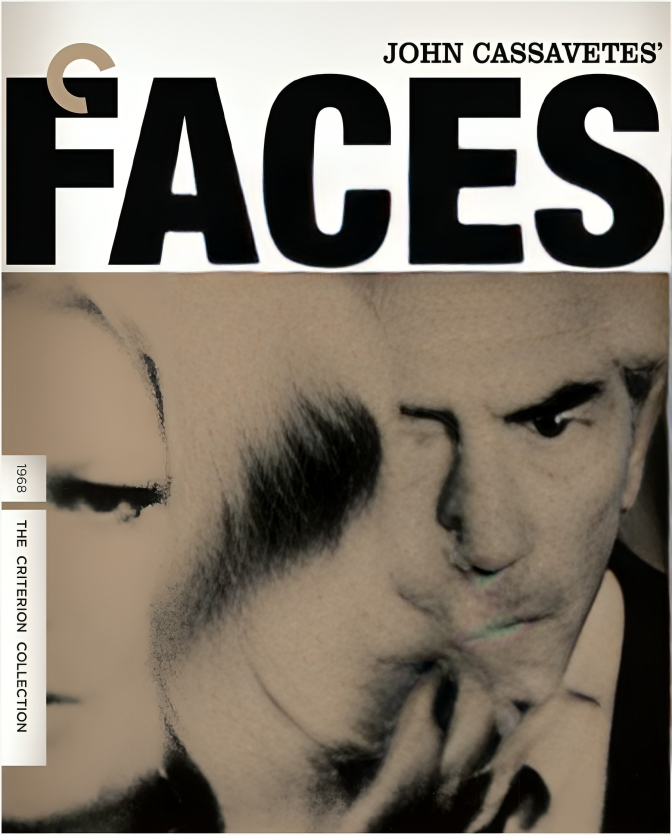
The turning point in John Marley’s career came not through a Hollywood studio production but through his collaboration with John Cassavetes — the pioneering independent filmmaker whose improvisational, character-driven approach to cinema was producing some of the most distinctive American films of the 1960s.
Faces (1968) was Cassavetes at his most demanding — a raw, improvisational examination of a crumbling marriage, shot in black and white with a documentary intensity that stripped away every conventional element of Hollywood filmmaking and demanded performances of absolute authenticity.
John Marley played Richard Forst — a middle-aged businessman whose marriage is disintegrating — and the performance he delivered in Cassavetes’ specific working method was extraordinary. Cassavetes’ process required actors to find the truth of their characters through improvisation and emotional availability rather than scripted certainty — and Marley, whose forty years of craft had built exactly the kind of deep emotional access that process required, delivered work that was immediately recognised as exceptional.
| Faces (1968) | Details |
|---|---|
| Director | John Cassavetes |
| John’s Role | Richard Forst — disintegrating marriage |
| Format | Black and white; improvisational |
| Venice Film Festival | Volpi Cup — Best Actor |
| John’s Age | 60 at time of filming |
| Significance | First major recognition after 40-year apprenticeship |
| Critical Reception | Immediate recognition as extraordinary performance |
| Legacy | Confirmed Cassavetes as major American filmmaker |
The Venice Film Festival Volpi Cup for Best Actor — awarded to John Marley at the age of sixty for his work in Faces — is one of the more moving moments in the history of acting recognition. Here was a man who had spent four decades doing serious work in professional obscurity, finally receiving the kind of formal acknowledgment that his craft deserved.
The award did not immediately transform his career into mainstream stardom — the world of independent cinema and major studio production were still largely separate in 1968 — but it established his serious credentials in a way that the subsequent casting decisions that produced Love Story and The Godfather clearly reflect.
Love Story (1970): The Oscar Nomination

Love Story (1970) — directed by Arthur Hiller from Erich Segal’s enormously popular novel — was one of the most commercially successful films of its era, generating both massive box office returns and the cultural penetration that produced its famous tagline as one of the most recognised phrases in American popular culture.
John Marley played Phil Cavalleri — the working-class Italian-American father of Jenny Cavalleri (Ali MacGraw), whose relationship with wealthy Harvard student Oliver Barrett IV (Ryan O’Neal) forms the film’s central emotional architecture.
The role required a specific combination of roughness and tenderness — a man whose working-class dignity and genuine love for his daughter are expressed through the particular emotional vocabulary of someone who has never learned to say what he feels in the language of middle-class emotional fluency.
| Love Story (1970) | Details |
|---|---|
| Director | Arthur Hiller |
| John’s Role | Phil Cavalleri — Jenny’s father |
| Co-Stars | Ali MacGraw, Ryan O’Neal |
| Box Office | $106 million on $2.2 million budget |
| Oscar Nomination | Best Supporting Actor — John Marley |
| Golden Globe | Nominated — Best Supporting Actor |
| Lost To | John Mills — Ryan’s Daughter |
| John’s Age | 62 at release |
| Significance | Brought him to mainstream Hollywood attention |
The Academy Award nomination for Best Supporting Actor placed John Marley — at sixty-two years old — in the company of the most recognised performers of the year. He did not win — John Mills took the award for Ryan’s Daughter — but the nomination confirmed what the Venice Volpi Cup had established: that the craft he had built across forty years of professional work was genuine and significant.
It also placed him directly in the awareness of Francis Ford Coppola and the Paramount Pictures casting apparatus that was assembling the extraordinary ensemble for the film that would define both the studio and the decade.
The Godfather (1972): Immortality in Fifteen Minutes
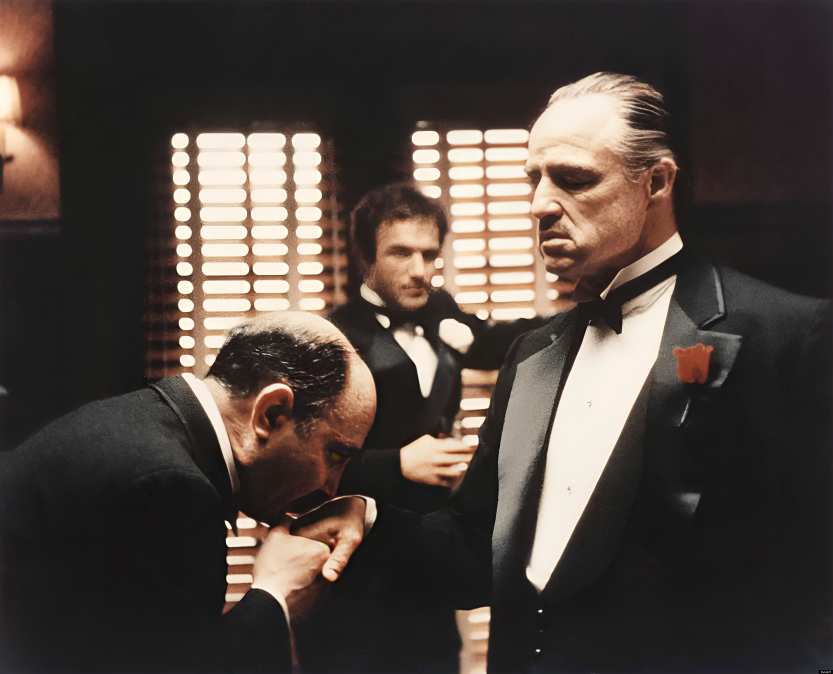
When Francis Ford Coppola was casting The Godfather in 1971, he was assembling what would become one of the greatest acting ensembles in the history of American cinema. Every role — from the central Corleone family to the most peripheral supporting part — was cast with the specific gravity and authenticity that Coppola’s vision required.
Jack Woltz — the arrogant Hollywood studio mogul who refuses the Corleone family’s request to cast singer Johnny Fontane in his new war film — is a pivotal character who appears in only two scenes and yet whose role in establishing the nature of the Corleone family’s power is absolutely essential to the film’s architecture.
John Marley was cast as Woltz — and the reasons are immediately apparent to anyone who watches the performance. His craggy face, dark intense eyes, and the specific quality of authority mixed with arrogance that his physical presence communicated made him the perfect embodiment of a certain kind of powerful, self-made man who has convinced himself that his power is absolute.
| Jack Woltz — Character Profile | Details |
|---|---|
| Character | Jack Woltz — Hollywood studio mogul |
| First Scene | Dismisses Tom Hagen’s request contemptuously |
| Key Line | “I’m gonna make him an offer he can’t refuse” — what he refuses |
| Relationship to Story | Establishes Corleone power through what he refuses |
| Second Scene | Wakes screaming in blood-soaked bed |
| Screen Time | Approximately 15 minutes across two scenes |
| Impact | One of cinema’s most unforgettable scenes |
| John’s Performance | Contempt to terror — complete and convincing |
The first Woltz scene — the dinner at his estate with Tom Hagen (Robert Duvall) — is a masterclass in the performance of arrogance. Woltz is charming enough to be initially welcoming, confident enough to be dismissive without embarrassment, and specific enough in his contempt to make the subsequent retribution feel completely earned. John Marley plays every beat with the precision of someone who has spent forty years learning exactly how human beings reveal themselves in conversation.
The transition between the dinner scene’s contemptuous dismissal and the bedroom scene’s primal terror — separated in the narrative by the implied horror of what happens in between — requires the audience to believe completely in both states. John Marley makes both states completely believable.
The Horse Head: Behind the Cinema’s Most Shocking Scene

The horse head scene in The Godfather is one of the most discussed, most analysed, and most frequently referenced moments in the history of cinema. The story of how it was filmed — and specifically of the decision to use a real horse head — is one of the production’s most enduring behind-the-scenes narratives.
The production initially worked with a fake horse head — a prop that was used in rehearsals and early preparations for the scene. The fake head was, by the accounts of everyone involved, unconvincing — not because the craftsmanship was poor but because the specific quality of something genuinely dead is simply not reproducible in synthetic materials.
Francis Ford Coppola made the decision to source a real horse head from a New Jersey slaughterhouse — an animal that had been scheduled for slaughter and whose head was obtained and preserved specifically for the film.
| The Horse Head Scene — Behind the Scenes | Details |
|---|---|
| Initial Plan | Fake prop horse head for the scene |
| Problem | Fake head unconvincing; lacked authenticity |
| Coppola’s Decision | Use real horse head |
| Source | New Jersey slaughterhouse |
| John Marley’s Knowledge | Did NOT know real head would be used |
| His Reaction | Genuine terror — not acting |
| Why It Works | Real fear is impossible to replicate |
| Cultural Impact | Permanent fixture in cinema history |
| Phrase Generated | “I’ll make him an offer he can’t refuse” — connected |
The critical detail — the one that explains why John Marley’s reaction in that scene has the specific quality that distinguishes it from every similar moment in cinema — is that he did not know the real head would be used.
When the bedsheets were pulled back and John Marley encountered the genuine, preserved head of a horse — with all the visceral reality that entails — his scream was not a performance. It was a genuine human reaction to a genuinely horrifying stimulus. The terror on his face is real because the terror was real.
Coppola’s decision to withhold this information from his actor — to engineer genuine shock rather than asking for a performance of shock — is one of the more morally complicated directorial decisions in the history of Hollywood filmmaking. It is also, undeniably, one of the most effective. The scene works because John Marley’s reaction is authentic — and it is authentic because Coppola ensured he had no opportunity to prepare for it.
The scene’s cultural legacy is permanent. The horse head has become one of cinema’s most recognisable images — referenced, parodied, quoted, and analysed across more than fifty years of subsequent film culture. And at the centre of that image, captured in a single unguarded moment of genuine human terror, is John Marley.
Why the Woltz Scenes Are Essential
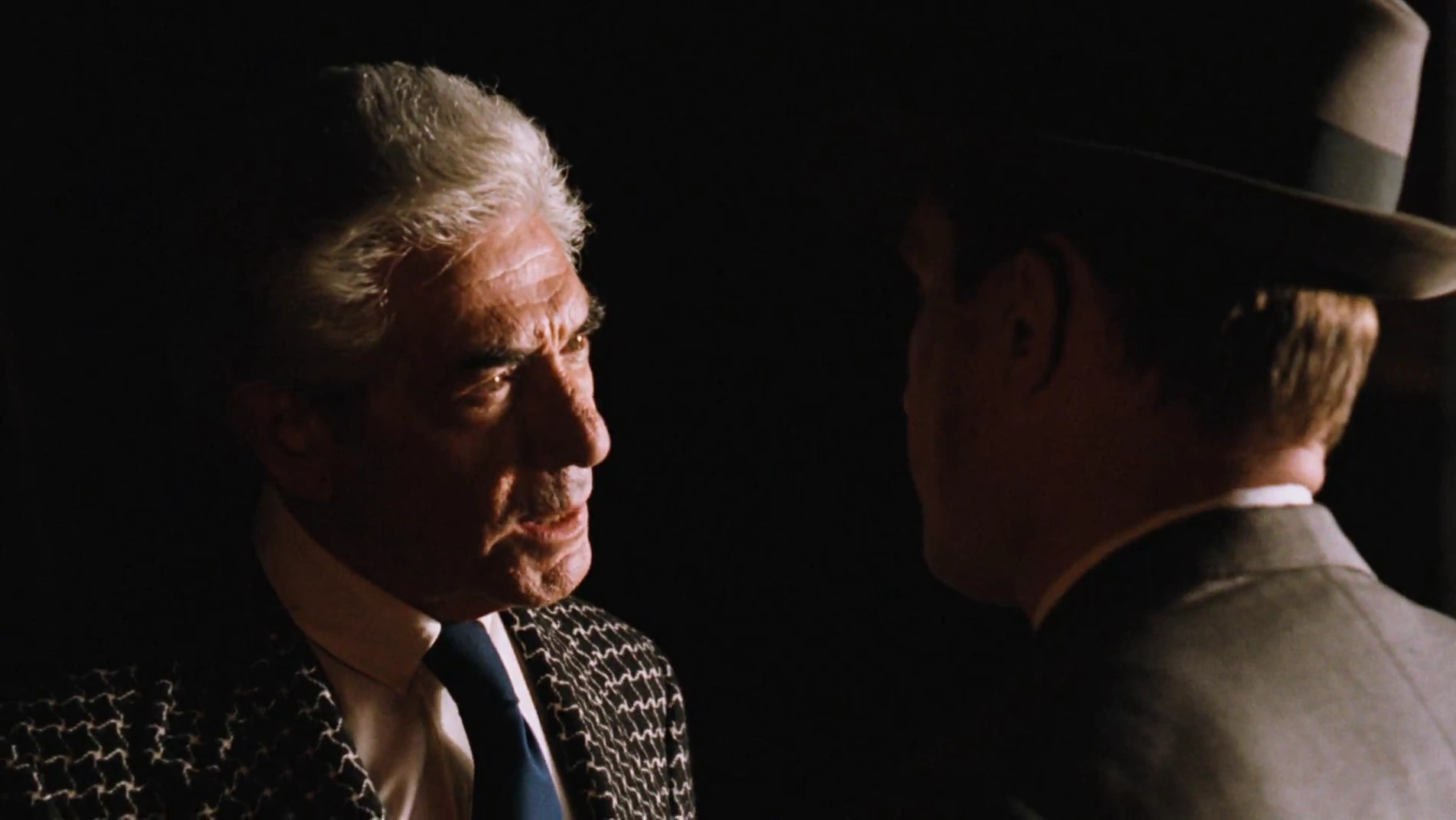
The Jack Woltz sequence in The Godfather does something that is structurally essential to the entire film — it establishes, early and with absolute clarity, the nature and the reach of the Corleone family’s power before the film has fully committed to its central narrative.
Without the Woltz sequence, the audience’s understanding of what the Corleone family is capable of remains theoretical rather than demonstrated. Woltz is the proof — the powerful man who says no, who believes his power protects him from consequences, and who discovers in the most visceral possible way that the Corleone family operates in a world where his kind of power is irrelevant.
The economy of the storytelling — two scenes, fifteen minutes, a complete arc from contemptuous authority to primal horror — is a demonstration of how efficiently great cinema can communicate when the casting, the writing, and the performance are all operating at their highest level simultaneously.
John Marley’s specific contribution is to make Woltz real enough to feel genuine consequences for. A cardboard villain who is obviously going to get what’s coming to him produces no emotional resonance. A fully realised human being — arrogant, powerful, specific in his cruelties, and comprehensible in his motivations — produces the horror that the horse head requires.
Career After The Godfather
The recognition that Love Story and The Godfather brought John Marley produced a final decade of professional activity that was more visible and more commercially significant than anything that had preceded it — though the character actor’s path, by definition, never produces the kind of starring vehicles that generate headline-level attention.
He worked consistently through the 1970s and into the early 1980s — appearing in a wide range of productions that demonstrated the versatility and professional reliability that forty years of craft had built.
| Post-Godfather Filmography Highlights | Year | Film/Show | Notes |
|---|---|---|---|
| The Car | 1977 | Film | Horror — James Brolin |
| Hooper | 1978 | Film | With Burt Reynolds |
| Tribute | 1980 | Film | Canadian Genie Award win |
| The Amateur | 1981 | Film | Thriller |
| Hawaii Five-O | 1970s | Television | Guest appearances |
| Kolchak: The Night Stalker | 1974 | Television | Guest role |
| The Incredible Hulk | 1970s | Television | Guest appearance |
| On the Edge | 1985 | Film | Posthumous release |
His work in Tribute (1980) — a Canadian production in which he played opposite Jack Lemmon — earned him a Canadian Genie Award for Best Supporting Actor, adding another formal recognition to a late-career body of work that the earlier decades had not produced.
The television work — guest appearances across the major dramatic series of the 1970s — reflects the working actor’s reality: consistent professional activity across whatever platforms the industry provides, maintaining the craft and the professional relationships that sustain a career.
Theatre: The First Love
Throughout his film and television career, John Marley maintained a parallel commitment to the theatre — the world in which his professional identity had been formed and that continued to claim a significant part of his creative energy.
His Broadway credits extended across multiple productions through the 1950s and 1960s — building on the 1947 debut in Skipper Next to God with a body of stage work that his film career’s growing demands eventually made structurally difficult to sustain at the same level.
He also directed Little Theatre productions — taking on the creative responsibility of the director’s role in smaller theatrical contexts that allowed him to engage with the full architecture of dramatic production rather than simply the actor’s portion of it.
The theatrical training is visible in everything about his film work — the economy of gesture, the precision of emotional transition, the ability to hold a scene through internal rather than external performance. These are qualities developed on stage, where the audience’s attention cannot be manipulated through editing or camera movement and where the actor’s instrument must be capable of complete and self-sufficient expression.
Personal Life
John Marley’s personal life was conducted with the privacy that characterises people who understand clearly that the work is the public thing and the life is their own.
His first marriage to Sandra Marley — herself an actress — produced three children and lasted through the middle portion of his career. The marriage to a fellow actor reflected the practical reality of a professional life in which the people most likely to understand the demands of the work are those doing the same work.
His second marriage to Stanja Lowe — a script supervisor whose own professional life kept her close to the film industry — produced a fourth child and sustained through the final years of his life.
| John Marley’s Personal Life | Details |
|---|---|
| First Wife | Sandra Marley — actress |
| Children from First Marriage | Three |
| Second Wife | Stanja Lowe — script supervisor |
| Fourth Child | From second marriage |
| Personal Approach | Consistently private |
| Professional Reputation | Respected; reliable; serious |
The four children he raised — largely away from public attention — are the personal legacy of a man whose professional legacy is so dramatically defined by a single fifteen-minute sequence that the fuller human picture requires deliberate recovery.
Physical Presence and Acting Style
John Marley possessed a physical appearance that communicated specific things immediately and reliably — qualities that casting directors and directors recognised as exactly what certain roles required.
The craggy face — weathered, deeply lined, carrying the visible evidence of decades of experience — communicated a specific kind of hard-won authority. The dark, bushy eyebrows — which in his later career had turned to a distinctive silver-and-dark combination — gave his eyes an intensity and weight that registered powerfully on camera. The compact, solid physicality communicated strength and self-possession without requiring size.
These qualities made him the perfect Jack Woltz — a man whose entire life story is visible in his face, who has built himself from nothing into enormous power and who carries both the evidence of the building and the pride of the having-built in his physical presence.
His acting style was grounded in the specific — the particular gesture, the precise vocal quality, the exact emotional temperature of a given moment — that characterises performers trained in the Method and its related approaches. He did not generalise. He specified. And that specificity is what makes performances that occupy fifteen minutes of screen time feel as complete and as real as performances that occupy two hours.
Death: May 22, 1984
John Marley died on May 22, 1984, at Cedars-Sinai Medical Center in Los Angeles — fourteen days after undergoing open-heart surgery on May 8. He was 76 years old.
The surgery — a procedure that in 1984 carried significantly higher risk than it does in the contemporary medical environment — was an attempt to address the cardiac condition that would ultimately claim his life. He did not survive the post-operative period.
He was interred at Cedar Park Cemetery in Paramus, New Jersey — returning, in death, to the northeastern geography of his origins.
His final film — On the Edge (1985) — was released posthumously, adding a final credit to a filmography that by the end of his career extended to nearly 250 film and television productions across four decades of professional activity.
| John Marley’s Death | Details |
|---|---|
| Date | May 22, 1984 |
| Location | Cedars-Sinai Medical Center, Los Angeles |
| Cause | Complications from open-heart surgery (May 8) |
| Age | 76 |
| Burial | Cedar Park Cemetery, Paramus, New Jersey |
| Final Film | On the Edge (1985) — posthumous release |
| Total Credits | Nearly 250 film and television productions |
Legacy: The Unsung Actor Who Woke Up Screaming
John Marley’s legacy operates on multiple levels that deserve careful distinction.
At the broadest cultural level, he is the man in the horse head scene — the actor whose genuine terror, captured in a single unguarded moment by Francis Ford Coppola’s calculated directorial deception, produced one of cinema’s most indelible images. That association will persist as long as The Godfather is watched and discussed — which is to say, indefinitely.
At the craft level, he is a demonstration of what sustained professional dedication produces over time — the Venice Film Festival award at sixty, the Oscar nomination at sixty-two, the Godfather immortality at sixty-four. These are not the achievements of a career that peaked early and faded. They are the achievements of a career that spent forty years building toward a peak that most actors never reach at any age.
| John Marley’s Legacy | Details |
|---|---|
| The Godfather scene | Permanent fixture in cinema history |
| Venice Volpi Cup | Major international acting recognition |
| Oscar Nomination | Academy acknowledgment at 62 |
| Nearly 250 credits | Extraordinary professional longevity |
| Character actor model | The backbone of great ensemble cinema |
| Late bloomer | Definitive example of sustained craft over rapid stardom |
| Genuine reaction | The authenticity that makes great cinema great |
At the personal level, he is a Russian-Jewish immigrant’s son from Harlem who changed his name, learned his craft on Broadway, served his country in wartime, and spent four decades doing serious professional work before the world caught up with what he was doing.
Why John Marley’s Story Matters
John Marley’s story matters because it challenges the entertainment industry’s prevailing narrative about what a career looks like and when success arrives.
He was sixty years old when John Cassavetes recognised what he was capable of. He was sixty-two when the Academy nominated him. He was sixty-four when Coppola placed him in the scene that would define his cultural legacy.
The forty years that preceded those moments were not failure. They were preparation — the long, serious, unglamorous accumulation of craft that made those moments possible.
In an industry that fetishises youth and rapid breakthrough, John Marley’s career is a standing argument for the different kind of value that patience, dedication, and sustained professional seriousness produce.
The horse head scene is famous. The actor who made it work spent forty years becoming capable of doing so.
That is the more important story.
Frequently Asked Questions
1. Who was John Marley? An American character actor born in 1907 in Harlem, best known for playing Jack Woltz in The Godfather (1972) and earning an Oscar nomination for Love Story (1970). He died in 1984 at age 76.
2. What is John Marley most famous for? The horse head scene in The Godfather — playing Hollywood mogul Jack Woltz who wakes to find a severed horse head in his bed. His genuine reaction of terror is one of cinema’s most memorable moments.
3. Did John Marley win an Oscar? He was nominated for Best Supporting Actor for Love Story (1970) but did not win. He won the Venice Film Festival Volpi Cup for Best Actor for Faces (1968).
4. Was John Marley’s reaction to the horse head real? Yes — Coppola used a real horse head from a New Jersey slaughterhouse without telling Marley, ensuring his reaction of genuine shock and terror rather than a performance of it.
5. What was John Marley’s background? He was born Mortimer Leon Marlieb to Russian-Jewish immigrant parents in Harlem. He served in the US Army Signal Corps in World War II before building his acting career.
6. How many films did John Marley appear in? He accumulated nearly 250 film and television credits across a career spanning from 1947 to his death in 1984.
7. When did John Marley become famous? He achieved recognition relatively late — his breakthrough came with Faces (1968) at age 60, followed by Love Story (1970) and The Godfather (1972). His career peak came after four decades of professional work.
8. What was John Marley’s last film? On the Edge (1985) — released posthumously after his death on May 22, 1984, from complications following open-heart surgery.
Conclusion: Forty Years for Fifteen Minutes That Last Forever
John Marley spent forty years becoming good enough to play Jack Woltz. He built his craft on Broadway in the late 1940s. He worked through the 1950s in the minor supporting roles that sustain a career without defining it. He found John Cassavetes and discovered what his forty years had actually made him capable of. He sat across from Robert Duvall and made contempt look completely natural. And then he pulled back the bedsheets and screamed — genuinely, authentically, without preparation — and gave cinema one of its defining moments.
The horse head is what people remember. But John Marley is what makes it matter.
He was the son of Russian immigrants who came to America with nothing and built something. He was a character actor who understood that the supporting role done perfectly is as significant as the starring role done brilliantly. He was a man who spent forty years in near-obscurity and never stopped working, never stopped learning, and never stopped being exactly as good as the craft required.
Hollywood woke up screaming because of what the Corleone family was capable of. Cinema is richer because of what John Marley was capable of.
Both things are permanently true.
