
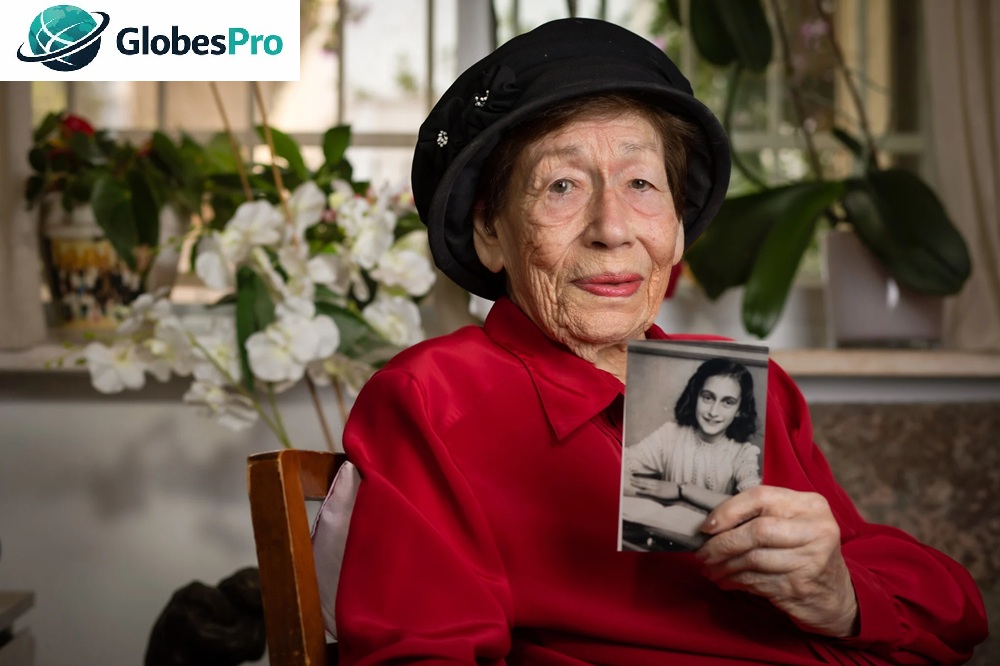
Gabi goslar, known formally as Rachel Gabriela Ida Goslar, is a German-born Jewish survivor of the Holocaust who is most recognized as the younger sister of Hannah Pick-Goslar, the childhood best friend of Anne Frank. Born in 1940, Gabi was just a toddler when the Nazi occupation of the Netherlands forced her family into hiding and eventually into the concentration camp system. Her story is a rare account of early childhood survival, as she was one of the few very young children to endure the horrific conditions of the Bergen-Belsen concentration camp and the subsequent “Lost Train” evacuation in 1945.
Her life is defined by a series of narrow escapes and the protective bond of her older sister. Despite losing both her mother and father during the war, Gabi survived due to her family’s “Exchange Jew” status and the sheer willpower of Hannah, who acted as her primary caregiver in the camps. Following the war, she emigrated to Israel, where she built a life in the nursing profession, standing as a living witness to a history that many of her peers did not survive to tell.
Biographical Summary
| Personal Information | Details |
| Full Name | Rachel Gabriela Ida Goslar |
| Born | October 25, 1940 |
| Place of Birth | Amsterdam, Netherlands |
| Parents | Hans Goslar and Ruth Judith Klee |
| Siblings | Hannah Pick-Goslar |
| Primary Survival Locations | Westerbork and Bergen-Belsen |
| Liberation | April 1945 (The Lost Train) |
| Post-War Residence | Jerusalem, Israel |
| Occupation | Nurse |
A Childhood in the Shadow of War
The story of the Goslar family is one of displacement and the search for safety. Hans and Ruth Goslar were German Jews who sensed the rising danger of the Nazi party early on. They fled to Amsterdam in the 1930s, hoping the Netherlands would remain a neutral haven. It was in this atmosphere of precarious peace that Gabi was born. However, by 1940, the year of her birth, the German army had already invaded, and the “Jewish quarters” of Amsterdam were becoming increasingly isolated.
Growing up as a toddler in Amsterdam during the occupation meant that Gabi’s earliest memories were likely colored by the yellow stars her family was forced to wear and the disappearing neighbors on Merwedeplein. Unlike her sister Hannah, who had a vivid social life with friends like Anne Frank, Gabi was a baby during the height of the restrictions. The family suffered a devastating blow in 1942 when Gabi’s mother, Ruth, died during childbirth along with the infant. This tragedy left the two-year-old Gabi without a maternal figure at the exact moment the Nazi “Final Solution” was being implemented in the Netherlands.
The Transit to Westerbork
In 1943, the inevitable happened: the Goslar family was arrested. Because of Hans Goslar’s prominent role as a former high-ranking German official and their possession of South American passports, they were not sent directly to death camps. Instead, they were taken to Westerbork, a transit camp. For a child of Gabi’s age, Westerbork was a place of confusing noise and constant movement. While it was a “model” camp compared to what lay ahead, the fear of the weekly “transport lists” permeated every moment.
The family remained in Westerbork for several months. During this time, Hannah took over many of the household duties, trying to provide Gabi with a sense of normalcy in a place where families were being torn apart every Tuesday morning. Their “privileged” status as potential exchange prisoners kept them off the trains to Auschwitz, but it eventually led them to a different kind of hell: the Star Camp at Bergen-Belsen.
Endurance in Bergen-Belsen
When the family arrived at Bergen-Belsen in early 1944, Gabi was only three and a half years old. The conditions were abysmal. The “Star Camp” was meant for prisoners who were to be exchanged for German nationals held abroad, which meant they were allowed to keep their own clothes and stay in family units. However, “better” was a relative term. Food was scarce, consisting mostly of watery turnip soup and a small ration of hard bread.
Gabi’s survival in this environment is nothing short of miraculous. Young children were particularly vulnerable to the diseases that swept through the barracks. Gabi contracted jaundice and suffered from chronic malnutrition. In the final months of the war, the camp was overwhelmed by thousands of prisoners evacuated from the East, leading to a massive typhus epidemic. Throughout this, Hannah would save crumbs of bread or trade her own belongings for a few drops of milk or a piece of clothing to keep Gabi warm. The human element of their survival was rooted entirely in this sibling bond; without Hannah’s maternal instincts, it is unlikely Gabi would have survived the winter of 1944.
The Tragedy of the Lost Train
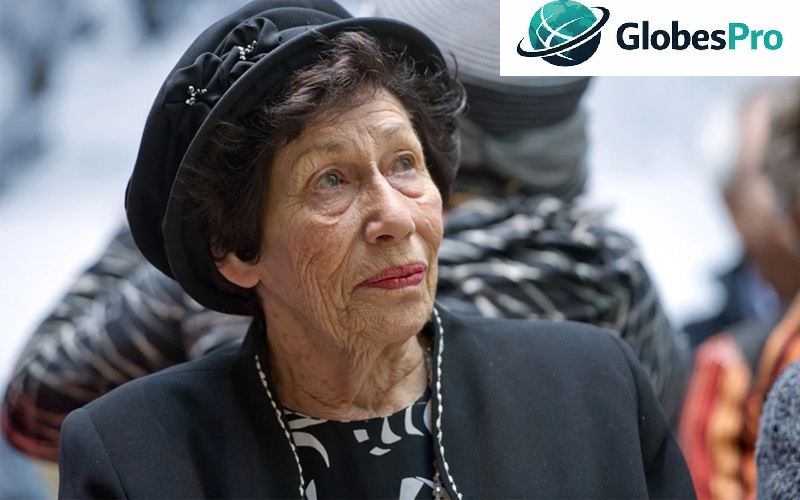
In April 1945, as British forces approached Bergen-Belsen, the Nazis attempted to move the “Exchange Jews” to Theresienstadt. They were loaded onto a train that would become known as the “Lost Train.” For thirteen days, the train wandered through the German countryside, often caught in the crossfire between Soviet and German troops. There was no food, and typhus was rampant in the crowded cars.
During this journey, Gabi’s father, Hans, passed away. The two sisters were now completely alone. By the time the train was finally liberated by the Red Army near the village of Troebitz, Gabi was extremely ill and skeletal. The liberation was not an immediate relief but a slow, painful process of medical recovery. The sisters were eventually taken to a temporary hospital where they had to be carefully nursed back to health, as their bodies were too weak to process normal food.
Life After the Holocaust
After a period of recuperation in Switzerland, Gabi and Hannah eventually made their way to Israel in 1947. This move was a fulfillment of their father’s Zionist dreams. In Israel, Gabi was finally able to have a “real” childhood, though she carried the physical and emotional scars of the camps. She grew up to become a nurse, a choice that many believe was influenced by her own experiences of being cared for by her sister and the medical staff who saved her life after liberation.
While Hannah became a public figure, giving lectures and interviews about her friendship with Anne Frank, Gabi lived a more private life. However, she remained an essential part of the narrative. Her existence was the proof that life could continue after the unimaginable. She married, changed her name to Rachel Posten, and had children of her own, ensuring that the legacy of the Goslar family would not end in the mud of Bergen-Belsen.
Summary of Life Milestones
| Year | Event |
| 1940 | Birth in Amsterdam during Nazi occupation. |
| 1942 | Death of mother and infant sibling. |
| 1943 | Arrest and transport to Westerbork transit camp. |
| 1944 | Arrival at Bergen-Belsen; family held as “Exchange Jews.” |
| 1945 | Death of father and liberation from the “Lost Train” by the Red Army. |
| 1947 | Emigration to Israel to start a new life. |
| 1950s-Present | Career in nursing and building a family in Jerusalem. |
The Enduring Spirit of the Youngest Survivors
The history of the Holocaust is often viewed through the diaries of teenagers or the testimonies of adults, but the perspective of a child like gabi goslar offers a different kind of weight. Her story reminds us that even those who were too young to fully understand the political ideology of their oppressors were subjected to the same cruelty. Her survival was a combination of luck, status, and the fierce, unyielding love of a sister who refused to let her go.
Today, her life is memorialized in books and films that focus on the “best friend” of Anne Frank, but it is important to view Gabi as an individual survivor. She represents the thousands of children who never got the chance to grow up, while her own long life stands as a quiet victory over the forces that sought to destroy her. The memory of gabi goslar continues to inspire those who study the period, reminding us that even in the darkest corners of human history, the human spirit—especially when protected by the love of family—is incredibly difficult to break.
